
A winter moth and tractors
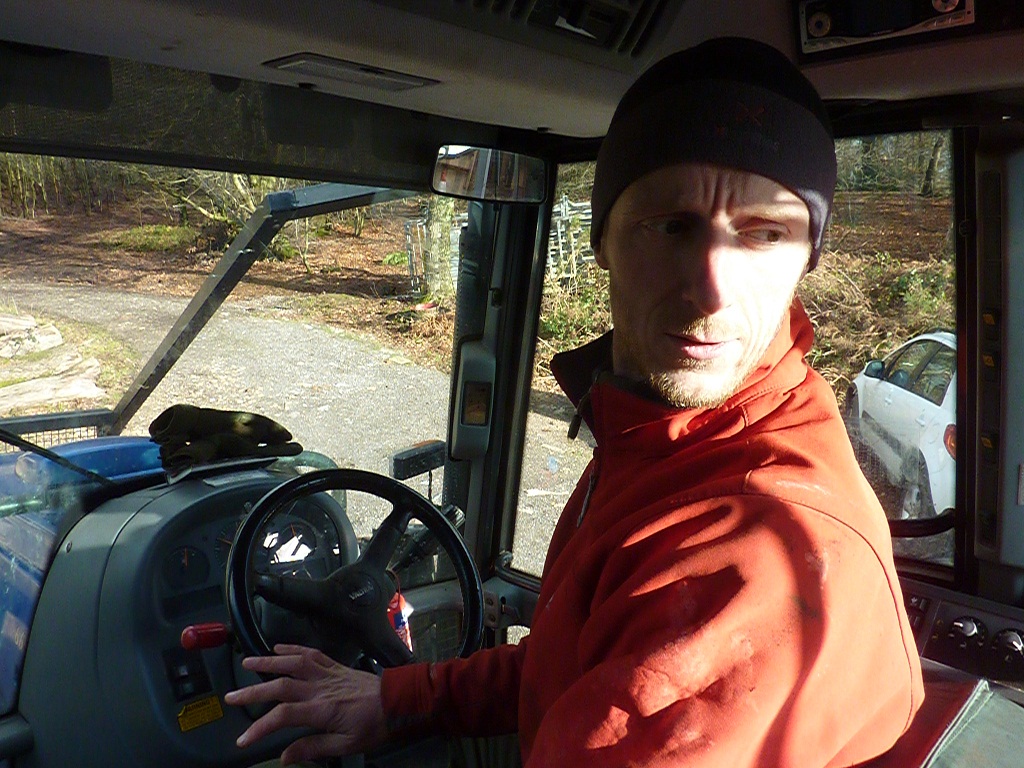
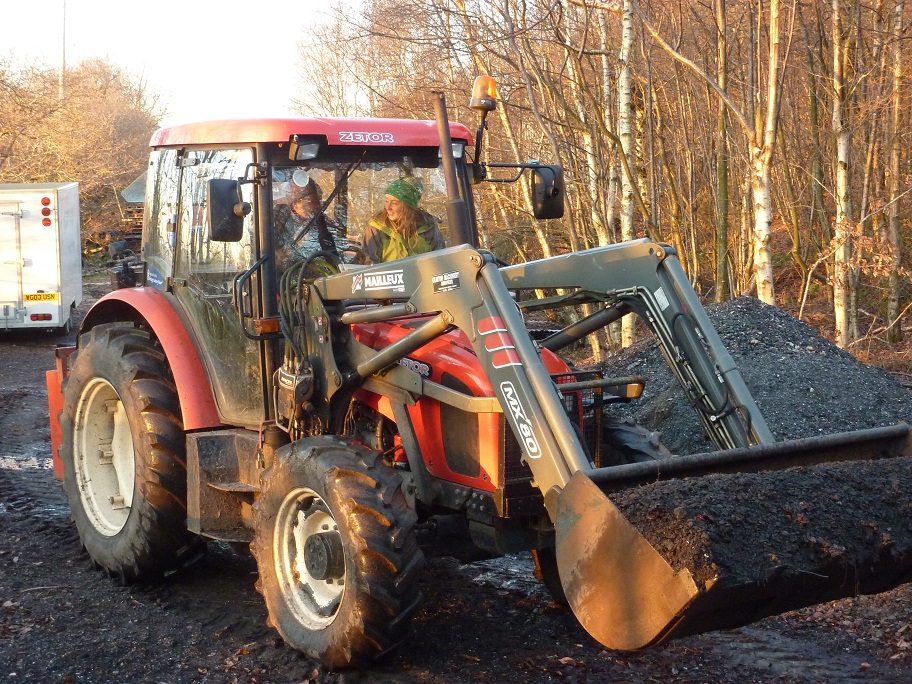
As an extra special birthday present the RSPB have put my through some tractor training. Thanks to the marvellous, patient Ray Piper for teaching us the ways of the PTO and 3 point linkage. On day three (today) we were assessed by Ray, and I’ve now been given the go ahead to get tractoring. It’s all a bit mad really. At least one of the tractors that we drive is the size of a small house. It has power steering, no, power everything, and feels as easy, if not easier, than driving a car. And yet, if the driver was to take their eye off the ball for a couple of seconds he/she could find that they had just driven over a car. Apparently 13 year olds are allowed to drive tractors, and 16 year olds can take them on roads.
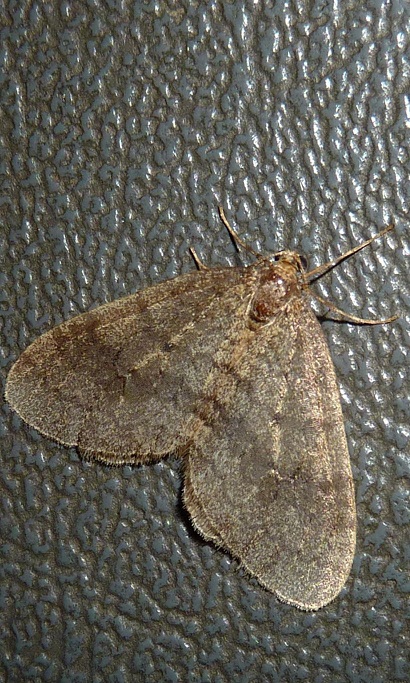
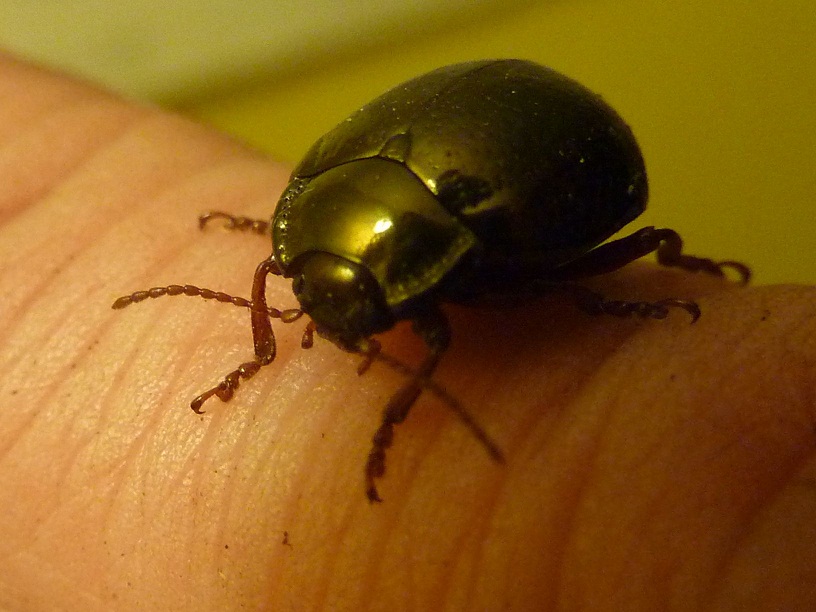
Here are some wildlife photos taken in the Land Rover and cottage. The moth (in the LR) is a winter moth (Operophtera brumata). Apparently it has an internal anti-freeze that prevents it allows it to fly through the winter. Top stuff. The beetle was found wandering the cottage looking for st john’s wort.
-
- Winter moth
-
- Chrysolina hyperici – the st john’s wort eating beetle. Sadly, this one had become lost.
-
- Here I can be seen nonchalantly reversing over a barn
-
- Here Tia and Yasmin head for the M5 with a loader full of grit
Stockland Turbaries
The big project at RSPB Aylesbeare at the moment is to ‘restore’ habitat in an area called the Stockland turbaries. Historically, the Stockland turbaries were areas of bog or lowland heath where peat was dug and used for fuel. Typically these areas are dominated by heather and gorse (gorse was also used for fodder). But the area that we’re working in is also a stronghold for bog myrtle in Devon. The decline of traditional heathland practices has resulted in a reduction of the wildlife associated with heathland.
This is a contentious issue. I don’t want to use this blog as a tool to promote or knock heathland, but I can see that there are good reasons for protecting heathland where it exists, and hence preventing species loss if those species have evolved to live in such a habitat. I have found it a little more difficult to come to terms with the removal of semi-mature woodland in the name of habitat restoration. Whilst carrying out the work Dr David Allen has been out to view our progress on numerous occasions, and his enthusiasm is persuasive. But I’ve still a lot to learn about these habitats, and I hope to better understand both sides of the argument before I move on to pastures new in a couple of months.
In the mean time, the work itself is a lot of fun. I’m spending a lot of time on the chainsaw, working out cuts, wind direction, safety, etc, and then hauling about big lumps of wood. I’m tired at the end of each day (most of us fall asleep in the LR on the way back to base), but it’s a good tired, and I’m sure my general strength levels have improved enormously.
-
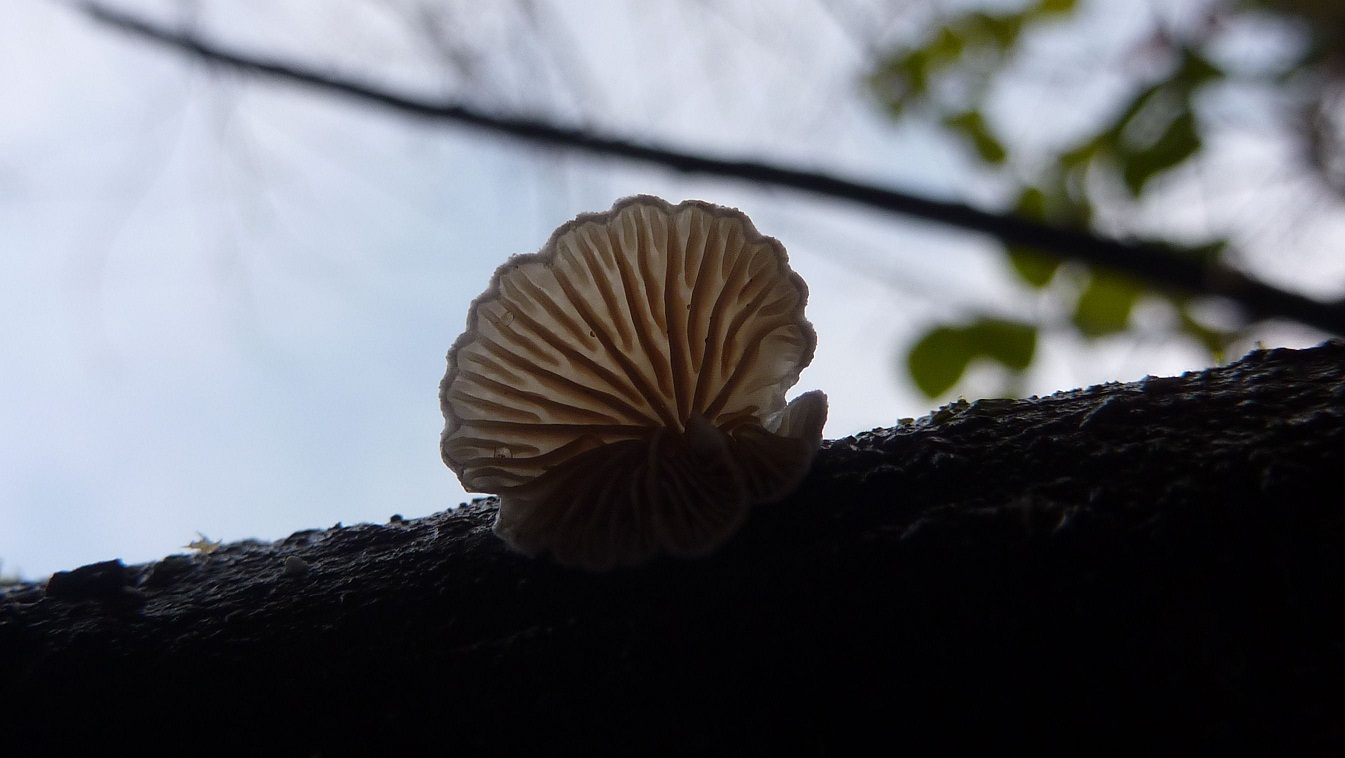
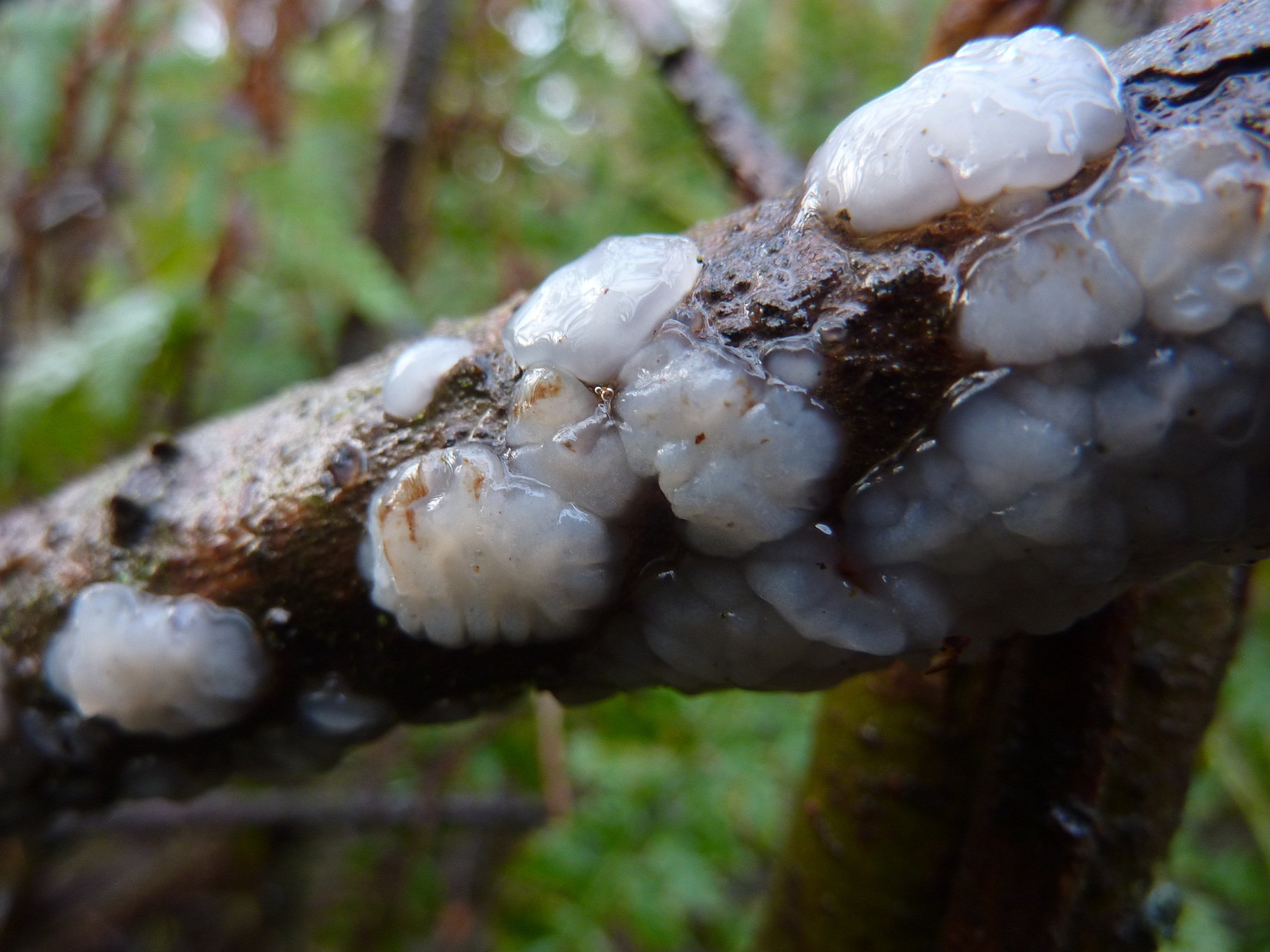
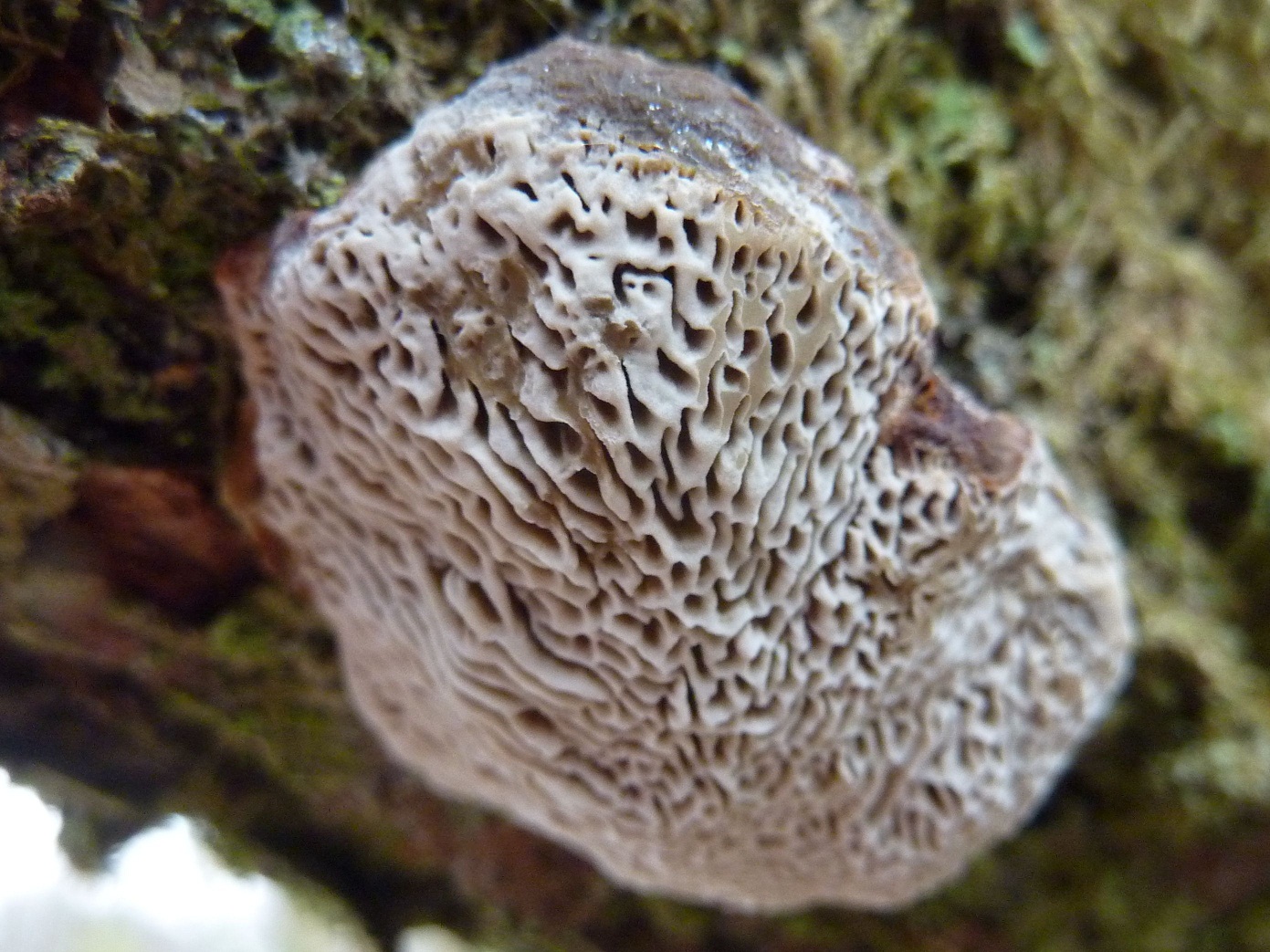
- Hmm, I know this isn’t porcelain mushroom, but…



Dinan Way reclaimed woodland
The site where we worked today used to be an old rubbish tip, in Exmouth. The story goes that Brenda Taylor, whilst Mayor proposed that the site be set up as a woodland, and Toby, RSPB Aylesbeare warden, suggested that the RSPB could get involved by supplying work parties. That was 10 years ago and a great variety of trees have been planted on the site since. The RSPB still make time to visit the site at least once a year to check that things are ok.
Today, being Wednesday, was also the Wednesday-vols day. Every Wednesday our numbers are boosted with a group of local volunteers. Some come along to gain experience for a course they are studying, and others have been involved with the RSPB for years. As the work today was not the usual slash and burn, and with it being so close to Christmas, there was a festive spirit in the air, helped with servings of mulled wine, and Christmassy cakes.
The woodland has great views of Exmouth, but is currently closed to the public while the methane is vented from the site. It will be interesting to keep an eye on it over the coming years, and should be a beautiful and worthwhile place for the people of Exmouth to visit in years to come.


Us vs the Laurel
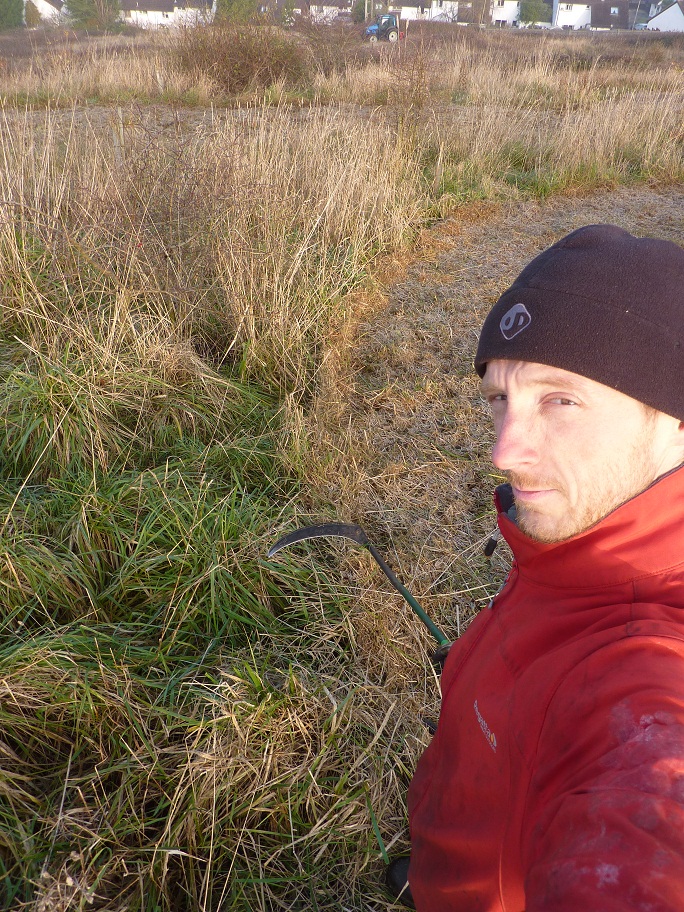
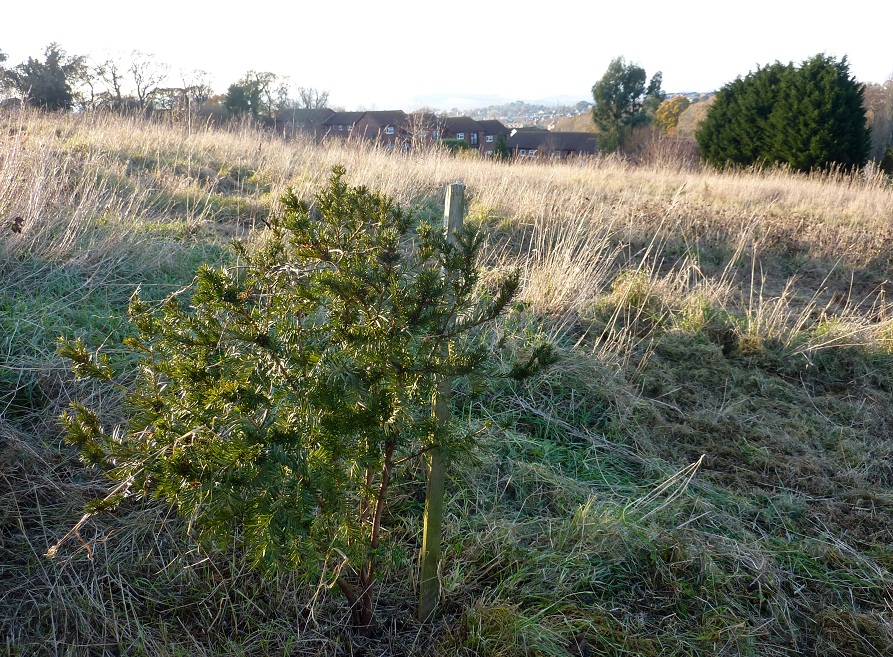
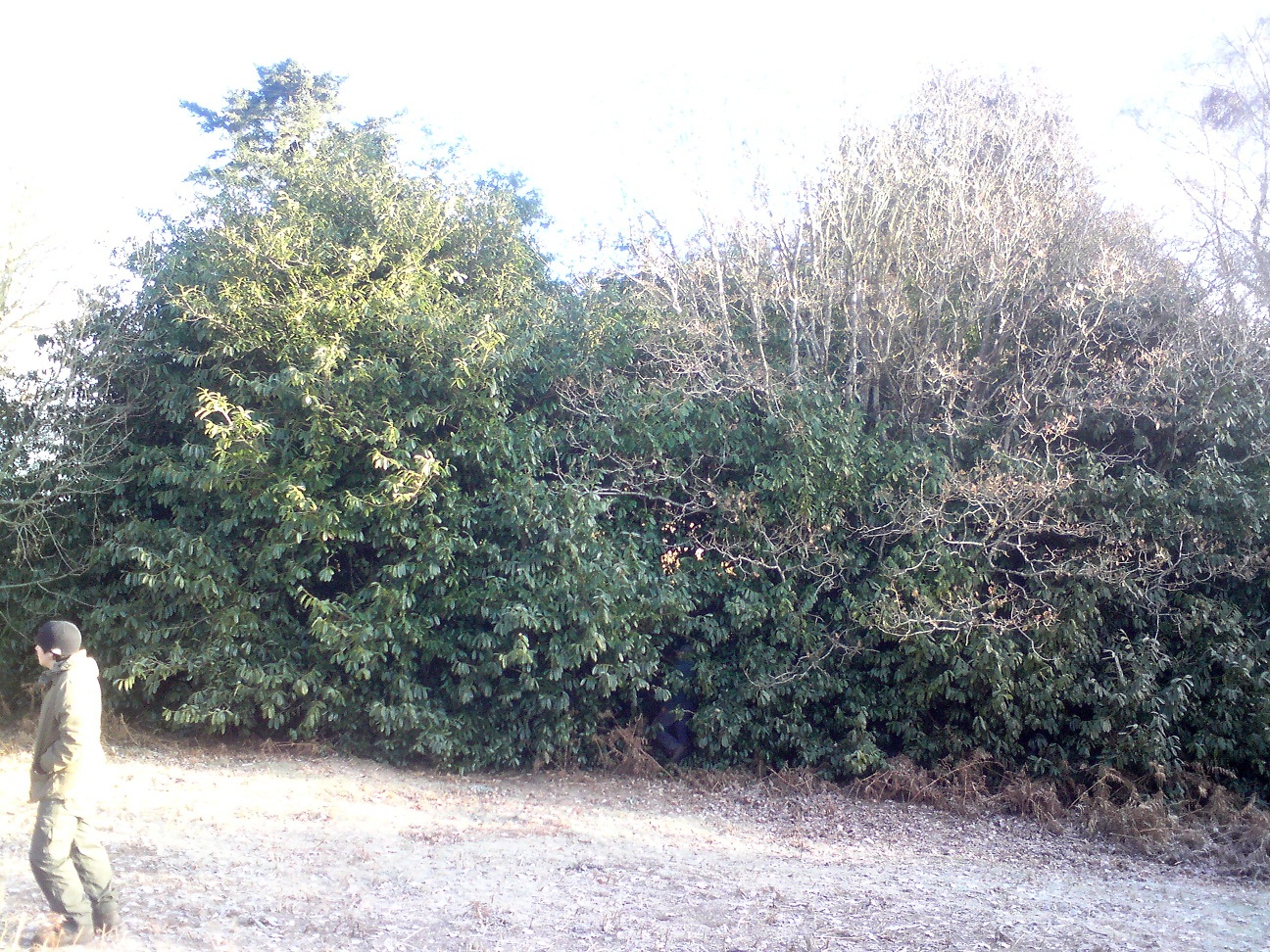
For the last few days we’ve been trying to reduce the powers of some mighty runaway Laurel on one corner of the reserve. This tree system seems to have been growing away unchecked for about 40 years, and has now swamped all the ground vegetation in the area, as well as some smaller trees. It even seems to be contributing to the shape of a couple of Oak trees in it’s midst.
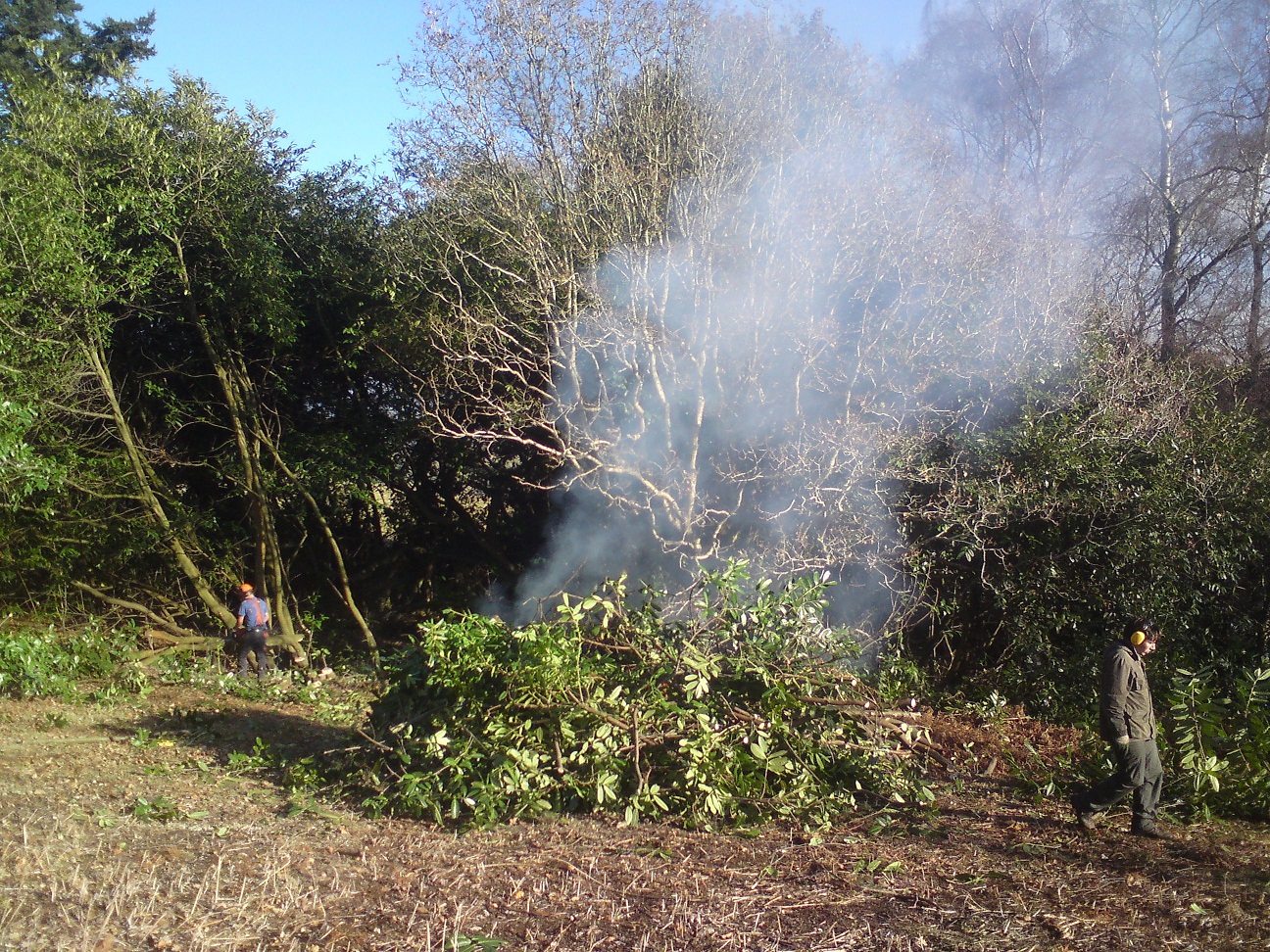
This job is an ideal role for me to practice my chainsaw skills on. Plenty of leaning or lying compression/tension tests, as well as boring and dog tooth cuts. Also, the Laurel is incredibly dense, and seems to be very weighty stuff, so misjudging a cut can lead to a stuck saw, or very dangerous kick back. Thankfully, the biggest issue we experienced was trying to remove a number of branches tangled up in the Oak. I’m sure the Oak was very relieved to see it go.
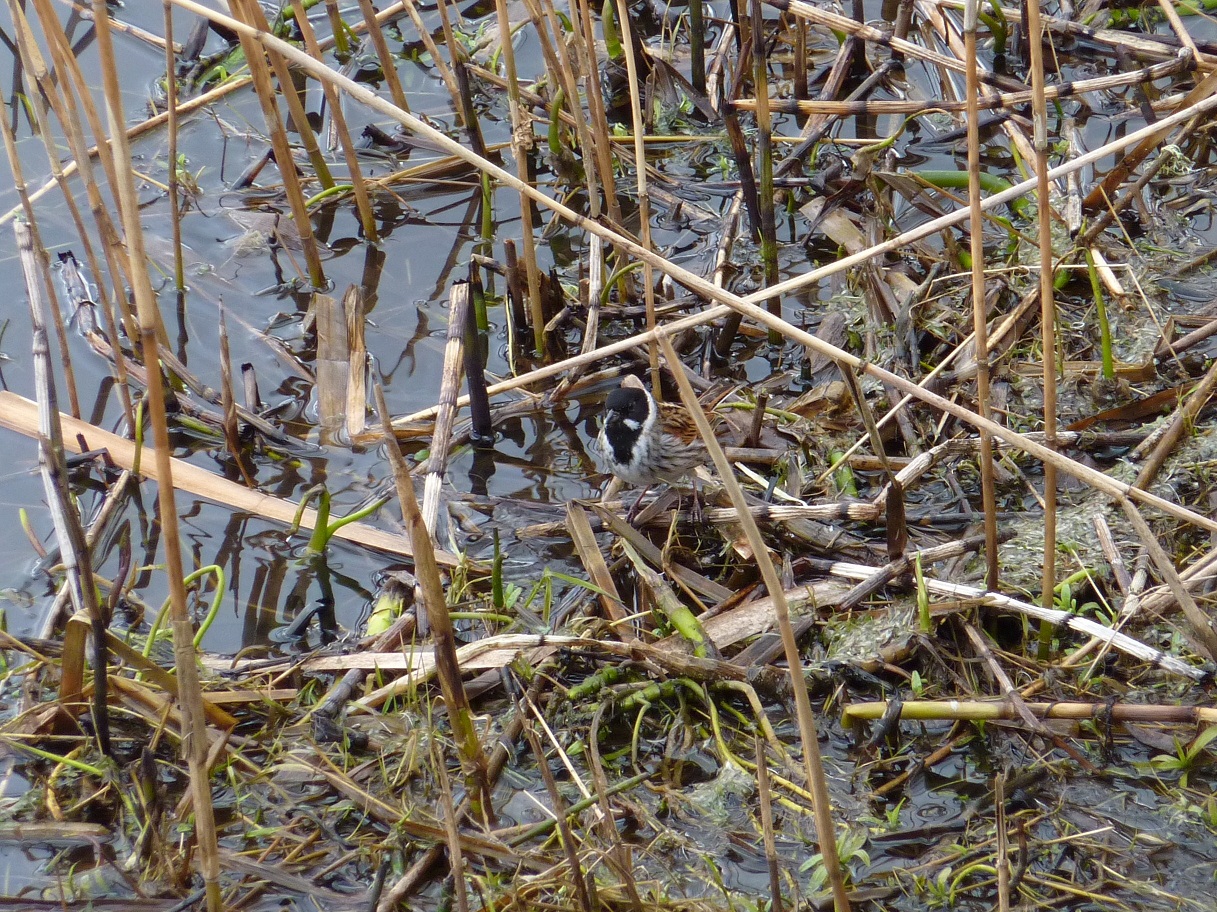
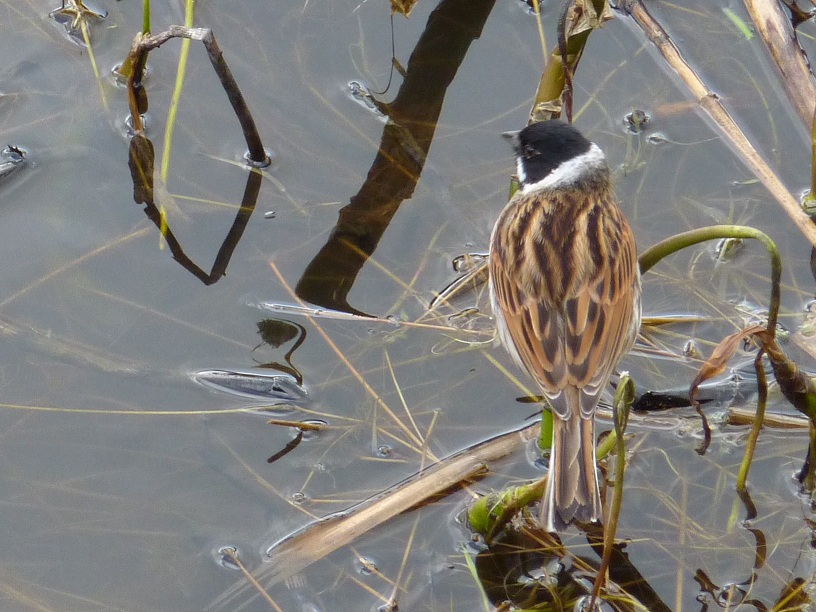
On Friday, I carried out the reserve’s winter bird transect, with Richard. No Shrike this time, but we did get a little too excited when we thought we’d come across a Cirl Bunting. Further research showed it to be a Reed Bunting with a rather more yellow than usual bib. Still, that’s cool, we love Reed Buntings too.
-
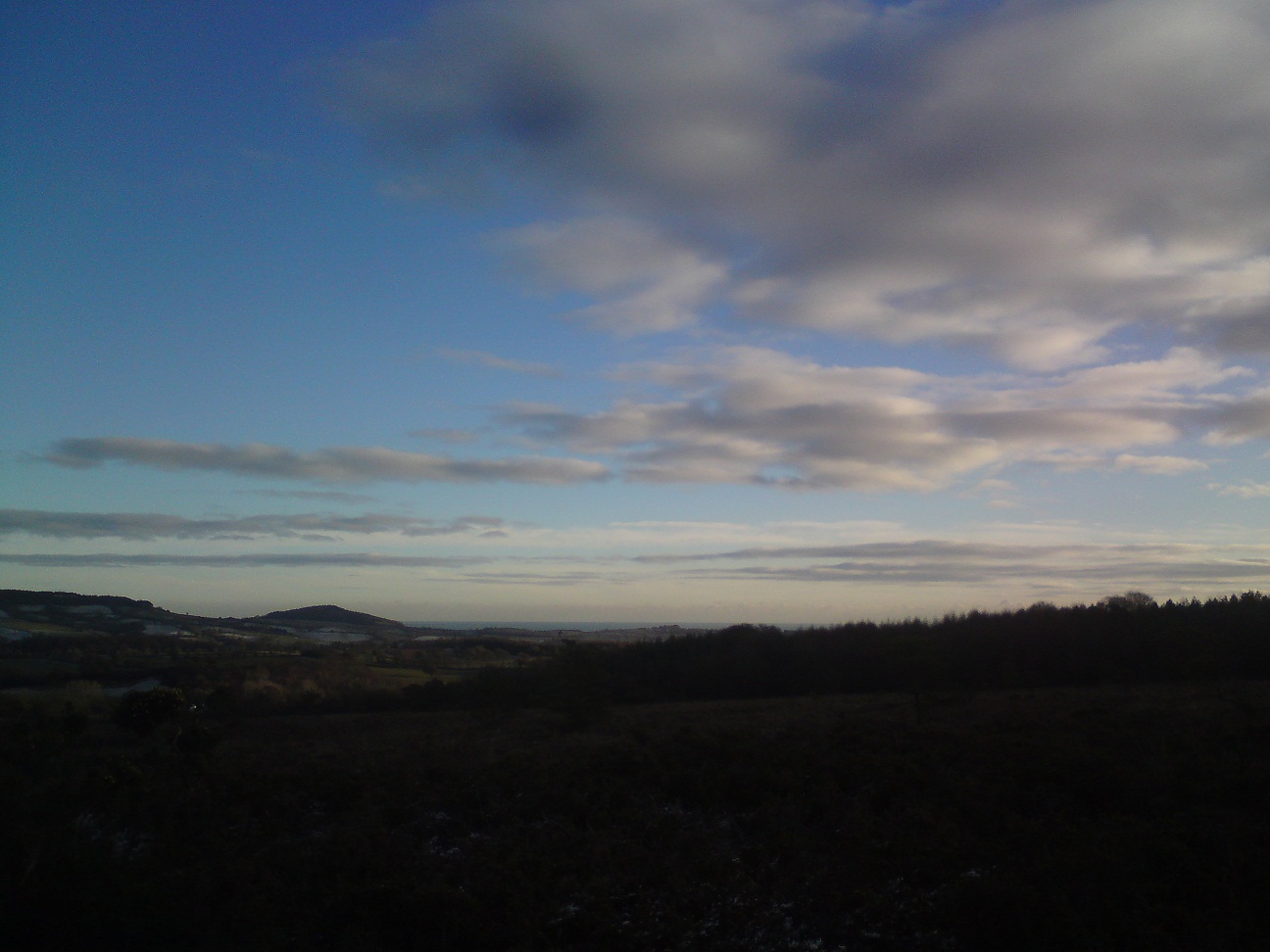
- It is possible to see the sea, just below Sidmouth, from the reserve
-

- Rob, one of the Exe vols, surveys the scene, while Ed goes in…
-
- After 3 day’s work, the Oak is free
-
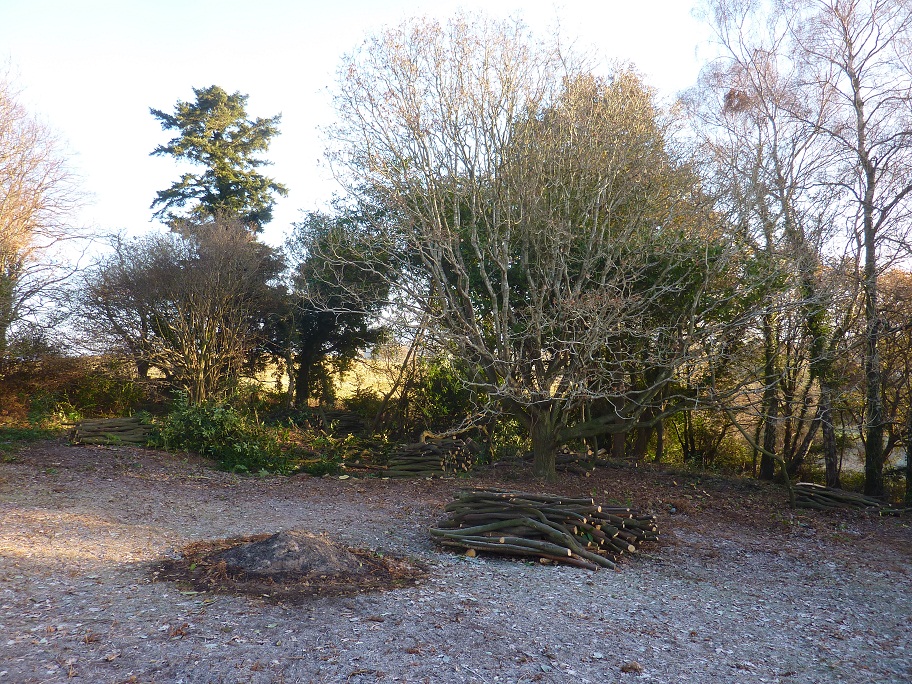
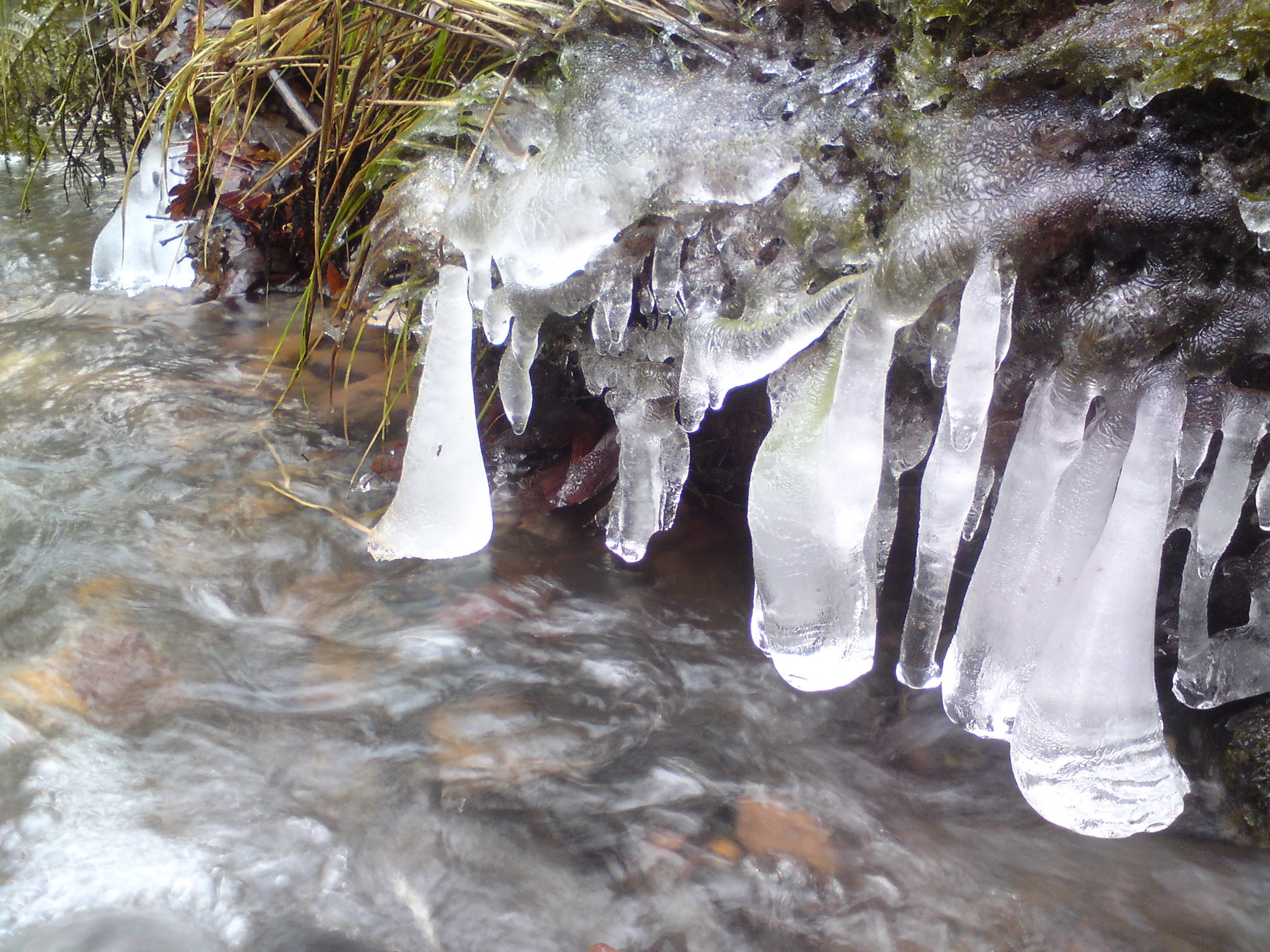
- Although a little warmer of late, there’s still some beautiful winter features on the reserve
Cold, ponies and electric fences
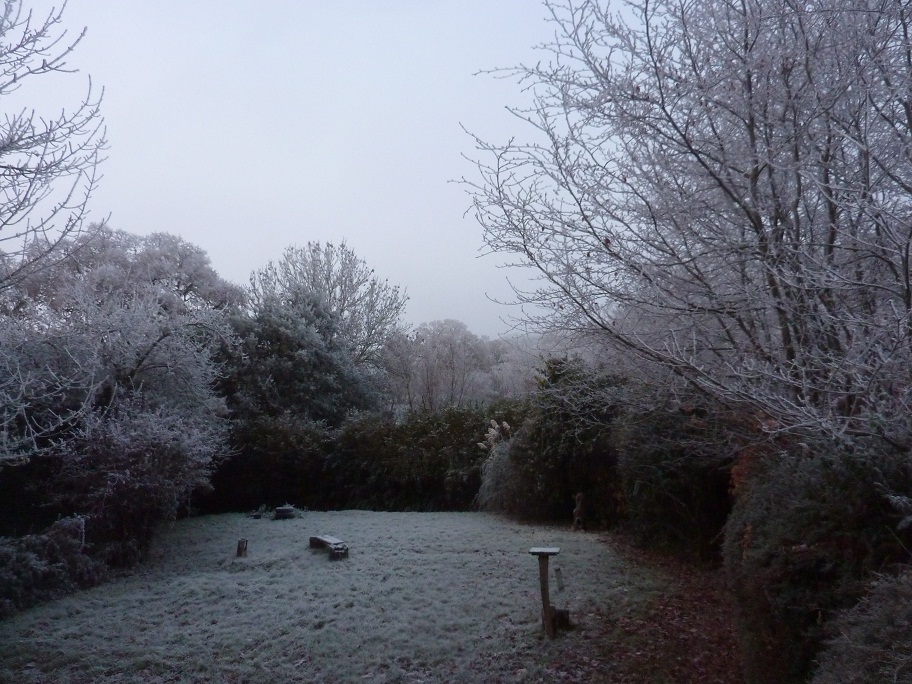
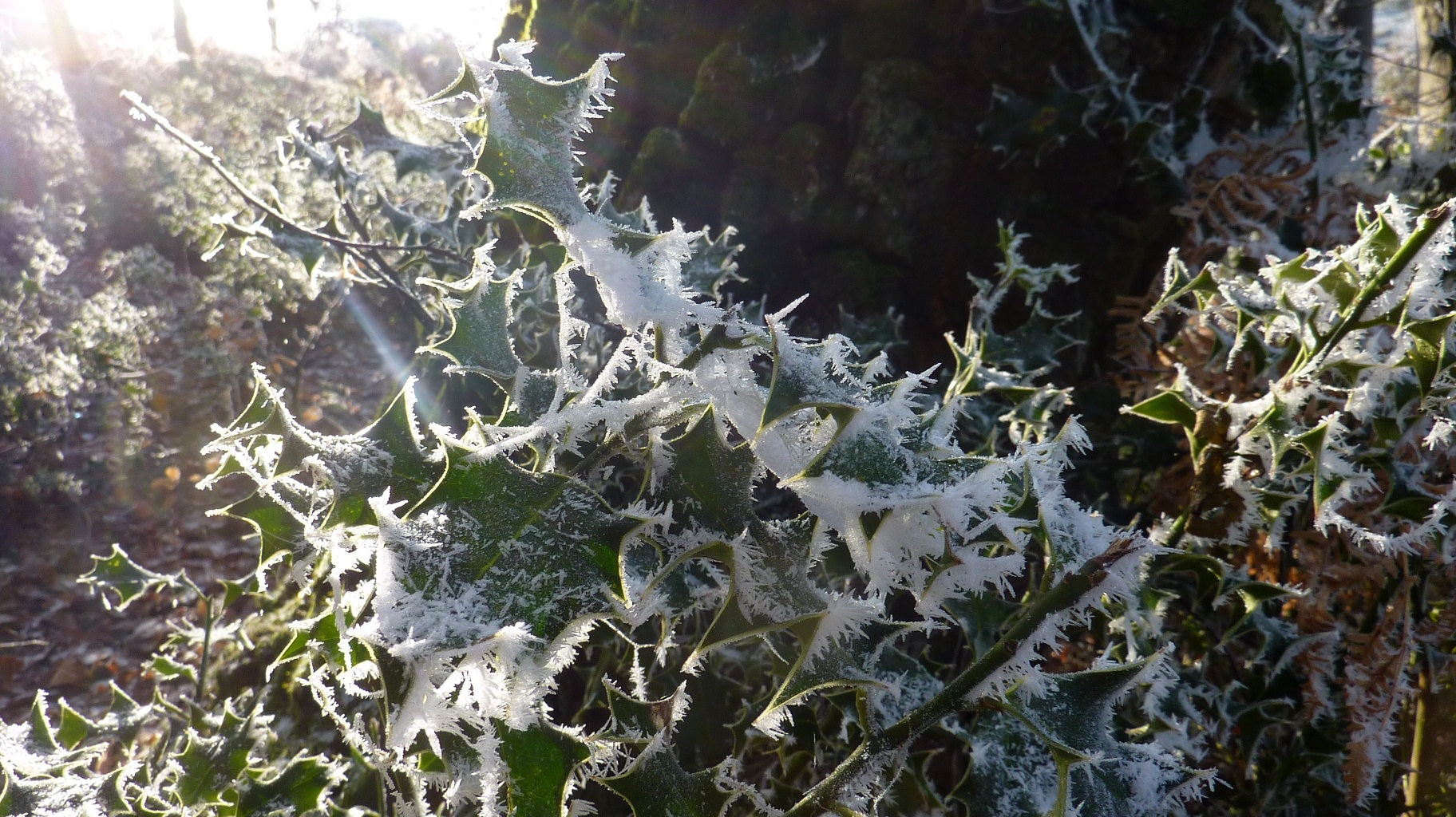
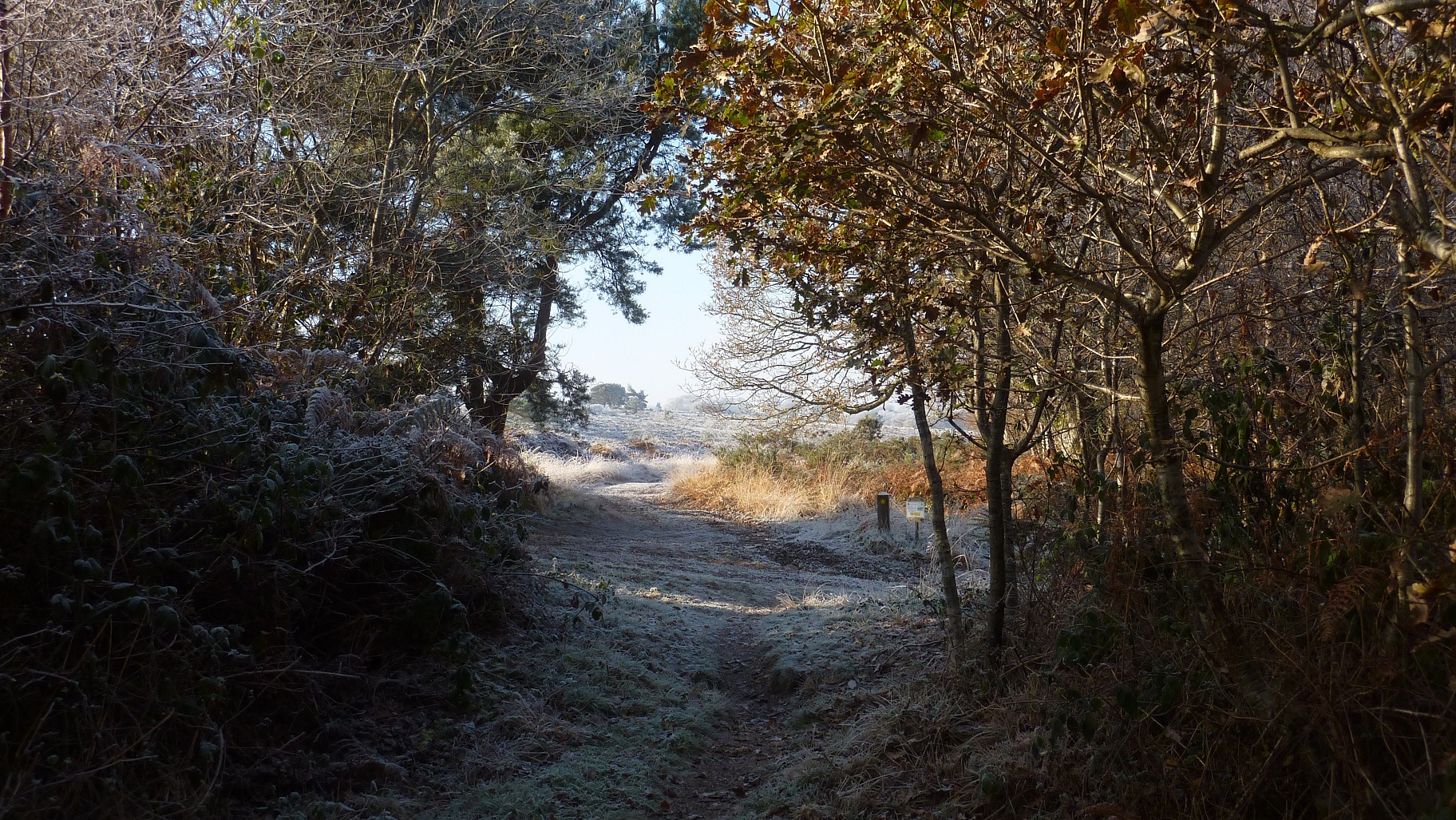
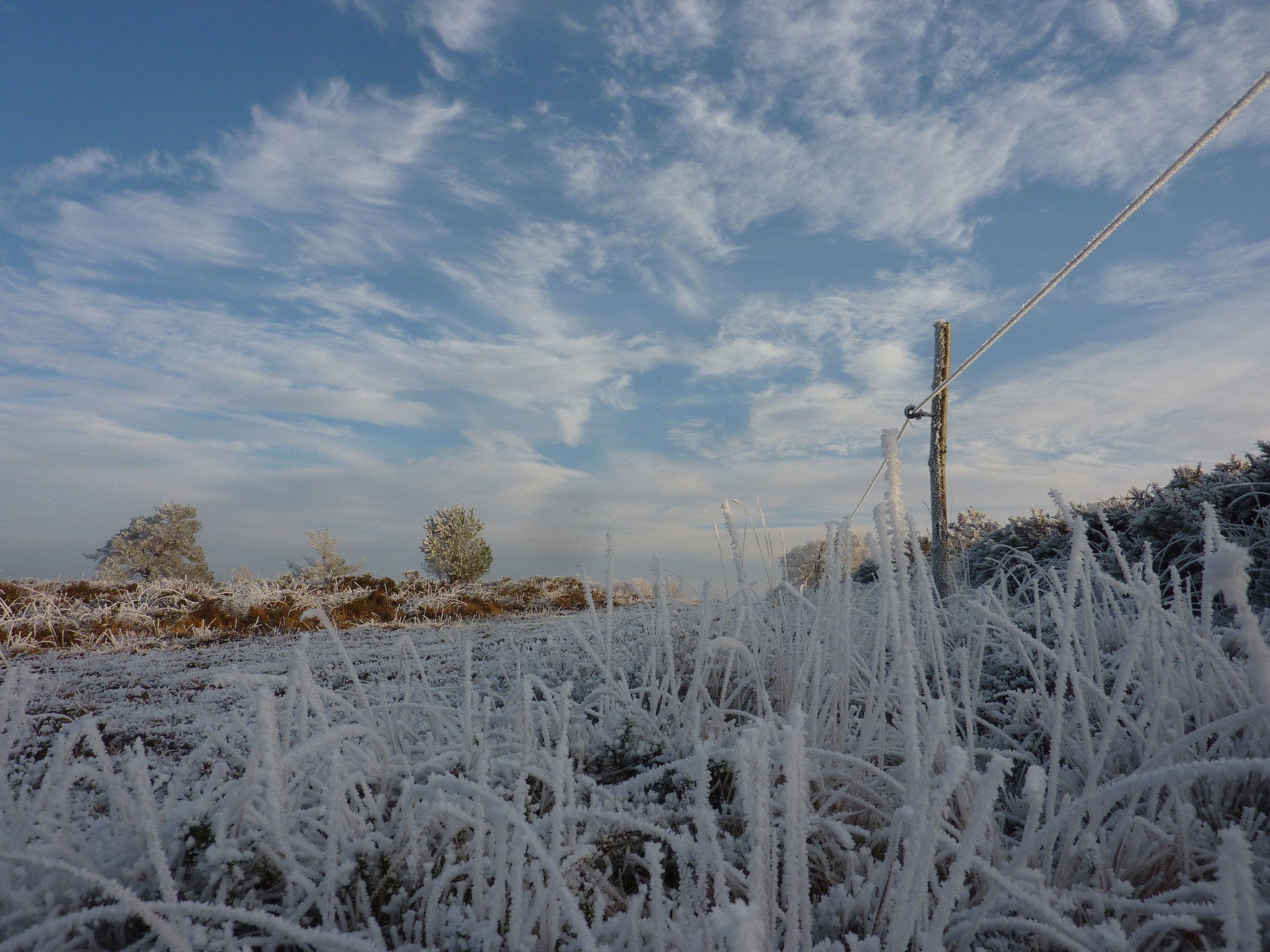
So, it’s pretty cold on the reserve at the moment, and last night we had a proper hoar frost, making everything look very spectacular today. The temperature was -6C last night and doesn’t get above freezing during the day.
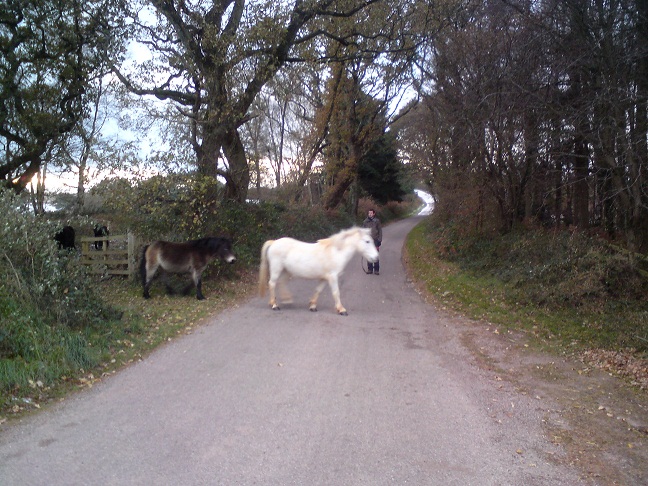
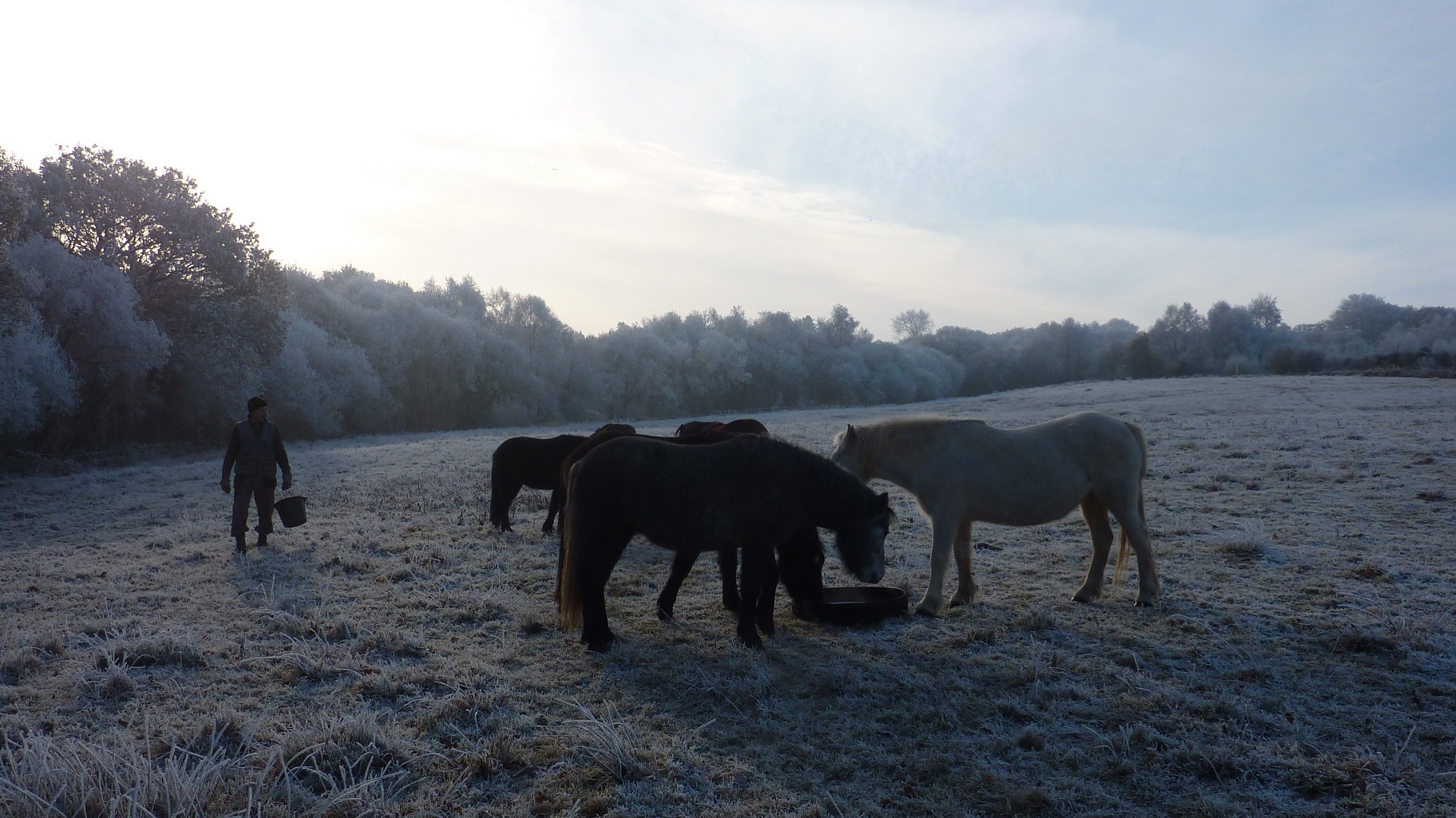
In the last couple of days I’ve been working with Vlad, who is Polish and has some great stories to tell about his trips away from communist Poland. Yesterday we were clearing up stumps, and felling a few trees at a place called Outer Hanger, where the Sunday volunteers had been working. Today we checked on all the groups of ponies that we currently manage, and rerouted an electric fence to allow easier winter access to a bridleway.
-
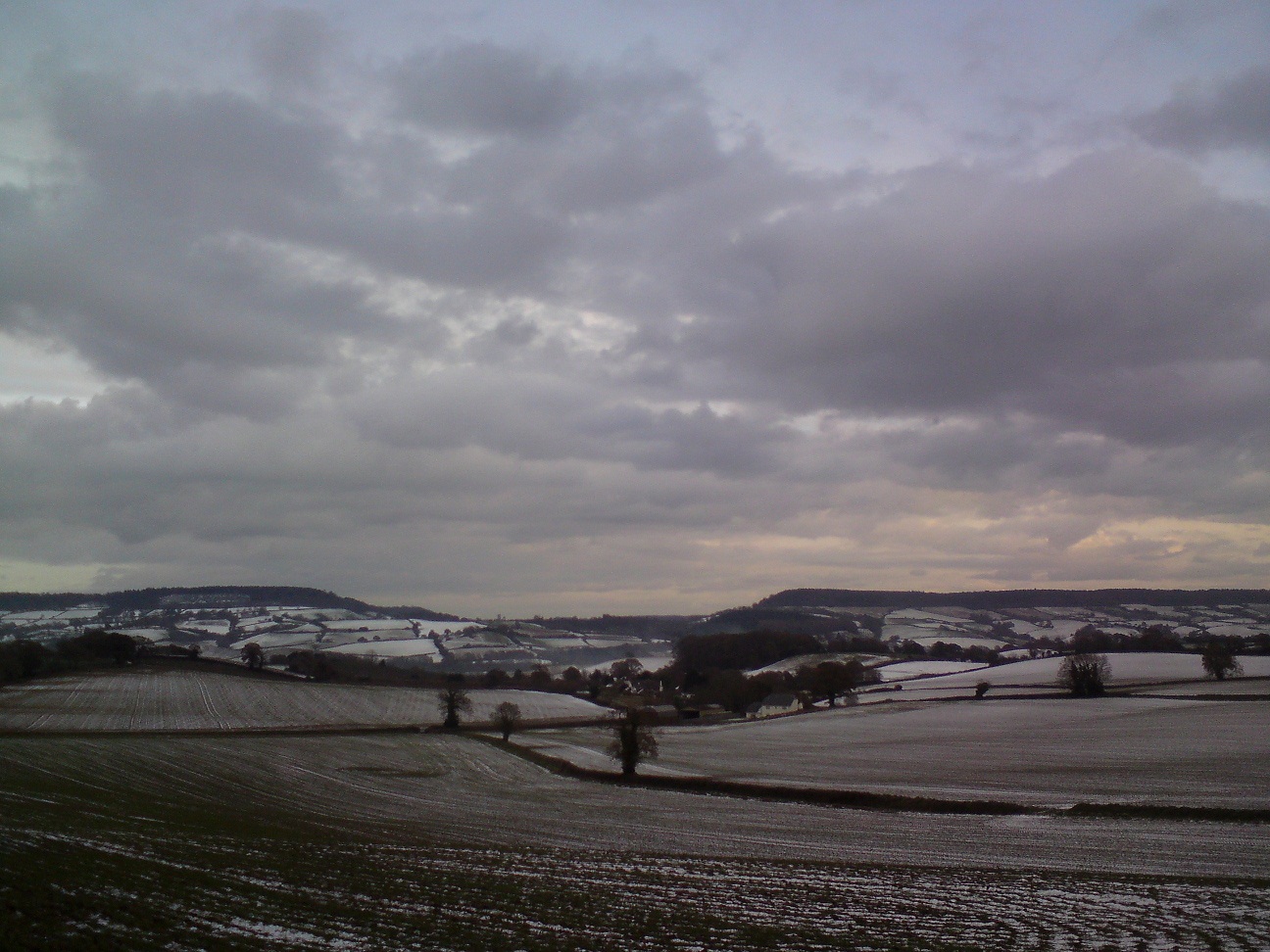
- The Ottery (East) hills
-

- Myself and Sam help Vlad move some ponies

-

- Hmm, I quite like this one
My first week at RSPB Aylesbeare
My first week with the RSPB crew at Aylesbeare has brought on some mixed feelings. On the one hand I’ve met a fine bunch of people, including numerous staff and volunteers from the South West region at the winter regional meeting on Thursday; seen a bird I’ve never seen before; and spent the week working outside. And on the other hand I’ve been introduced to the details of the heathland management process.
Heathland has been around for a long time. Maybe even thousands of years in this part of Devon. So there are a number of flora and fauna species that are well adapted to live in it. However, the environment is man made. Nature is always trying to reclaim those areas that are suitable as woodland or scrubland. In order to prevent this from happening trees and mature gorse are removed from the encroaching areas along with all leaf litter and other unwanted nutrients. Wood is taken away to be sold, and the rest is burnt. In many cases the most abundant trees in these areas are the silver/downy birch. I’ve cut down plenty of non-native trees on TFL weeks, but this is, I think, the first time I’m having to remove native species.
Today I was lucky enough to carry out the regular bird survey with Johnny, the current assistant warden. We saw plenty of tits, yellowhammers, dunnocks, etc, but the highlight was watching a great grey shrike chase what looked like a dartford warbler over some gorse bushes. This bird is a predator to smaller birds and often creates a “larder” of it’s catches by storing them on spikes on fencing or spiky trees/bushes. I’d already seen the bird on Tuesday, in flight and sat in the top of a tree, but watching it chasing a very agile small bird was a brilliant site to see. Unfortunately, I was rather under-prepared, without camera in hand.
-
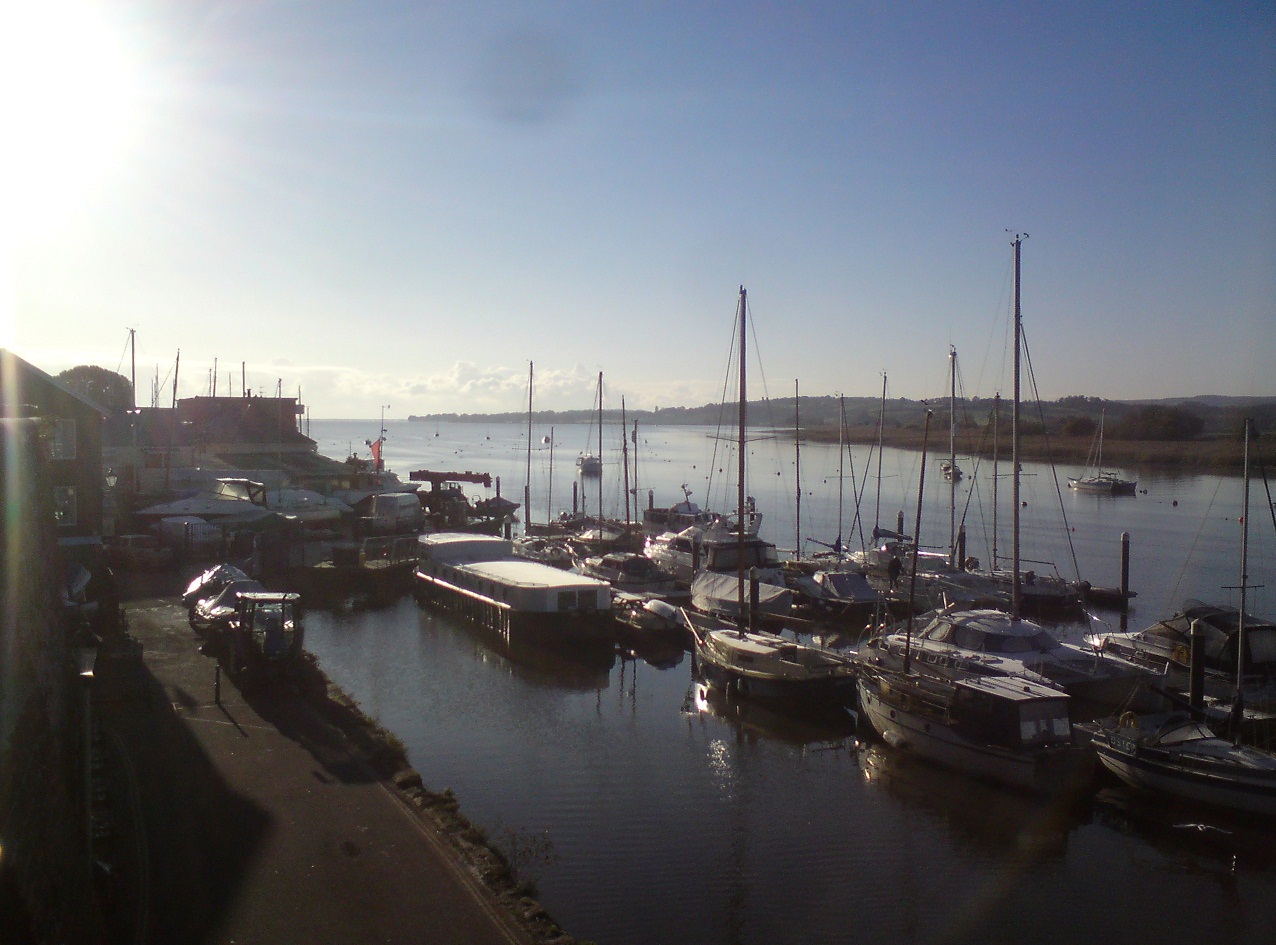
- The view down the Exe from Topsham
-

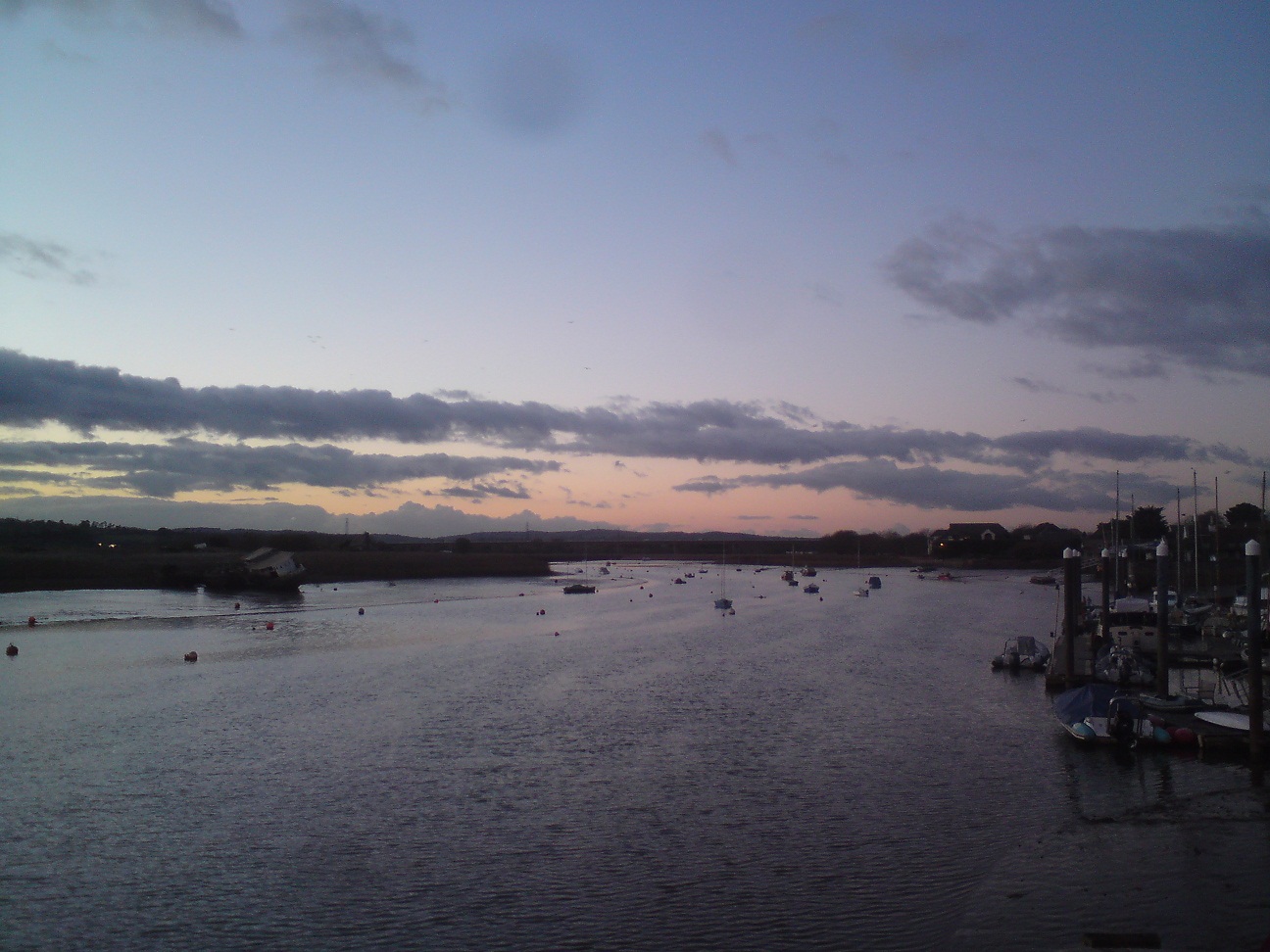
- …And up the Exe
-

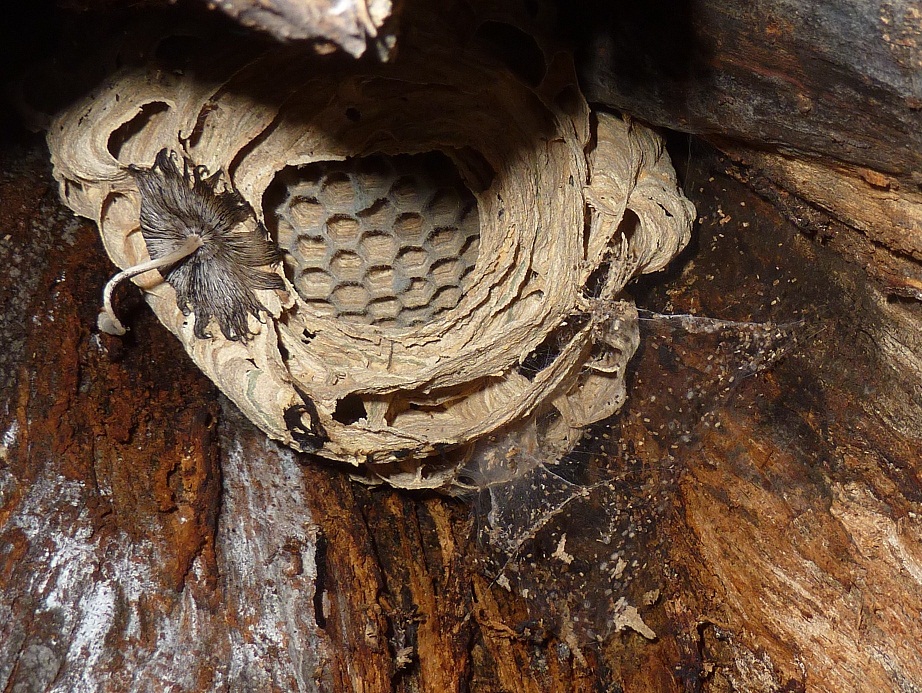
- Apparently an abandoned hornet’s nest
-
- Aylesbeare common.
Using a chainsaw
Up to now the only weapon that I consider myself trained to use is a car (apart from the occasional axe throwing session with John Garrett). This week I’ve been learning how to use a chainsaw. It seems that a lot of practical roles in environmental work require chainsaw experience. And I know that knowing how to use one could be of great benefit if I want to get involved in habitat management. As part of my RSPB placement, which begins next week, the RSPB have kindly agreed to train me up, in the use of a chainsaw, this week.
The training took place at RSPB Arne, where I was based for two weeks in the summer. Last time I was there, in early August, there were Nightjars and other summer breeding birds mixing with the first of the autumn migrants. Now the summer visitors have left, and the estuaries and mud flats are fillng with wintering waders and wildfowl. Unfortunately I didn’t get an opportunity to take much of a look around during daylight hours, having arrived late on Sunday, and then heading off after finishing the course on Friday evening. But, with the help of Will, the volunteer from Radipole (Weymouth), who was also on the course, I did manage to ID a flock of Avocet from where we were training.
-
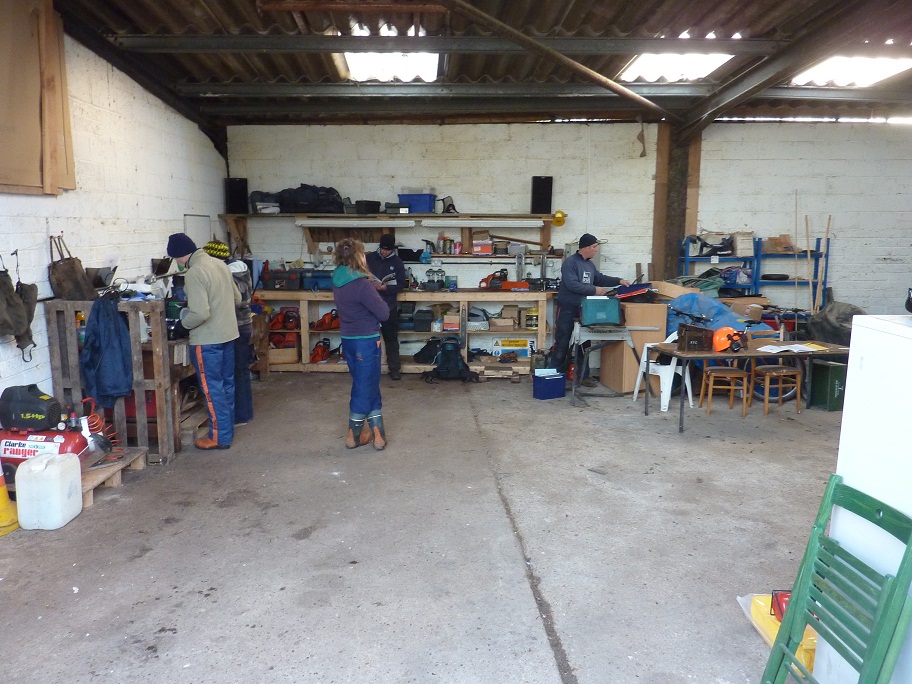
- A lot of chainsaw work seems to be about maintenance and tea
-
- Here we are practising our crosscuts. Oooh, where’s the compression?

-
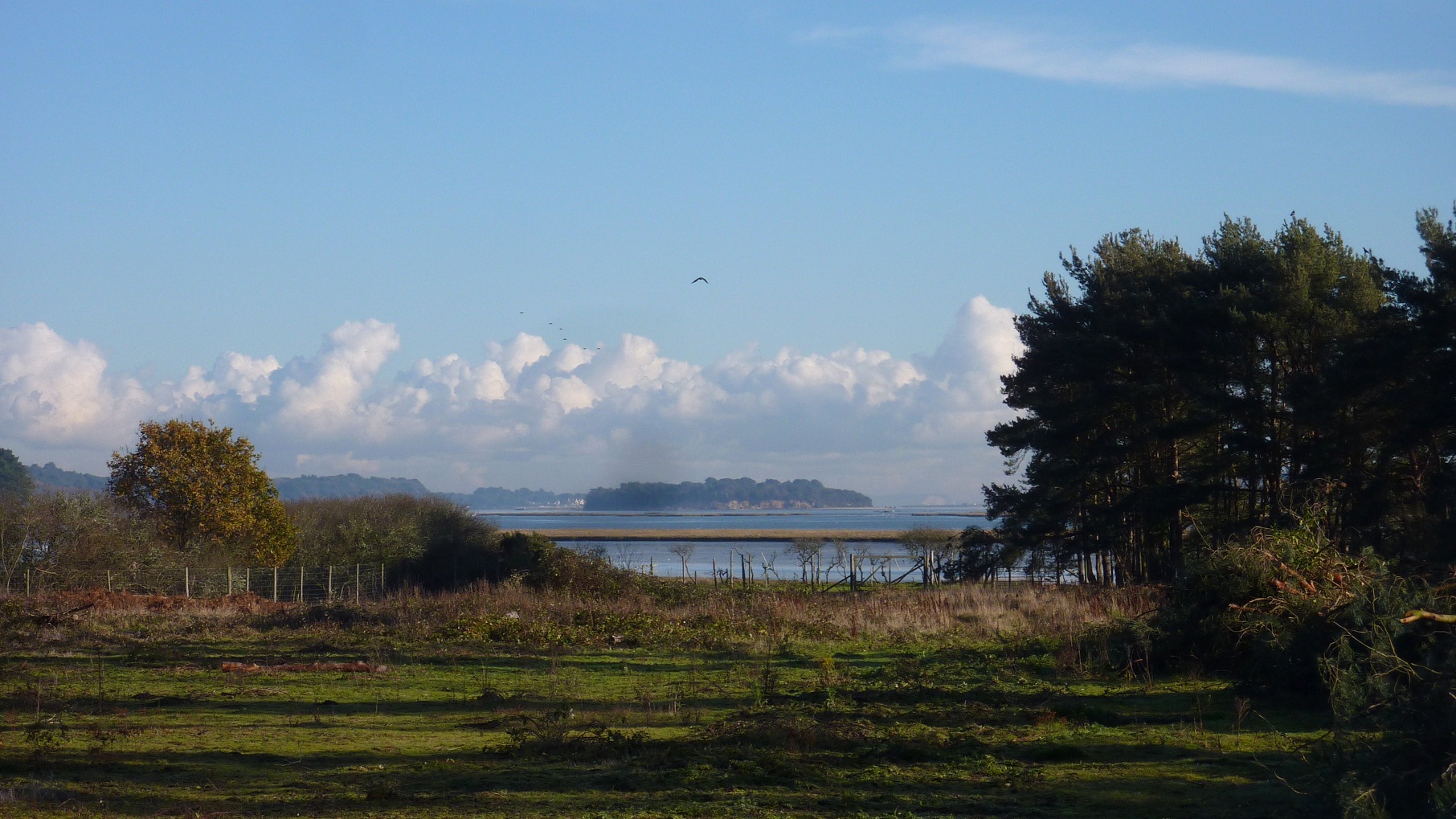
- Mostly the weather was kind to us
A holiday in the Glen Affric Nature Reserve, 9th Oct to 16th
At the third time of trying, since my first Focaliser (work week leader) week, I was once again foiled in my efforts to partake in a TFL week as a volunteer. The previous two occasions had been firstly due to a Focaliser becoming otherwise engaged, and then a college block-booking taking priority. This time, with a lot less notice, one of the Focalisers was unable to make it following a trip to the hospital during the night before the week started. As luck would have it, this gave me the opportunity to spend the week Focalising with Andrew.
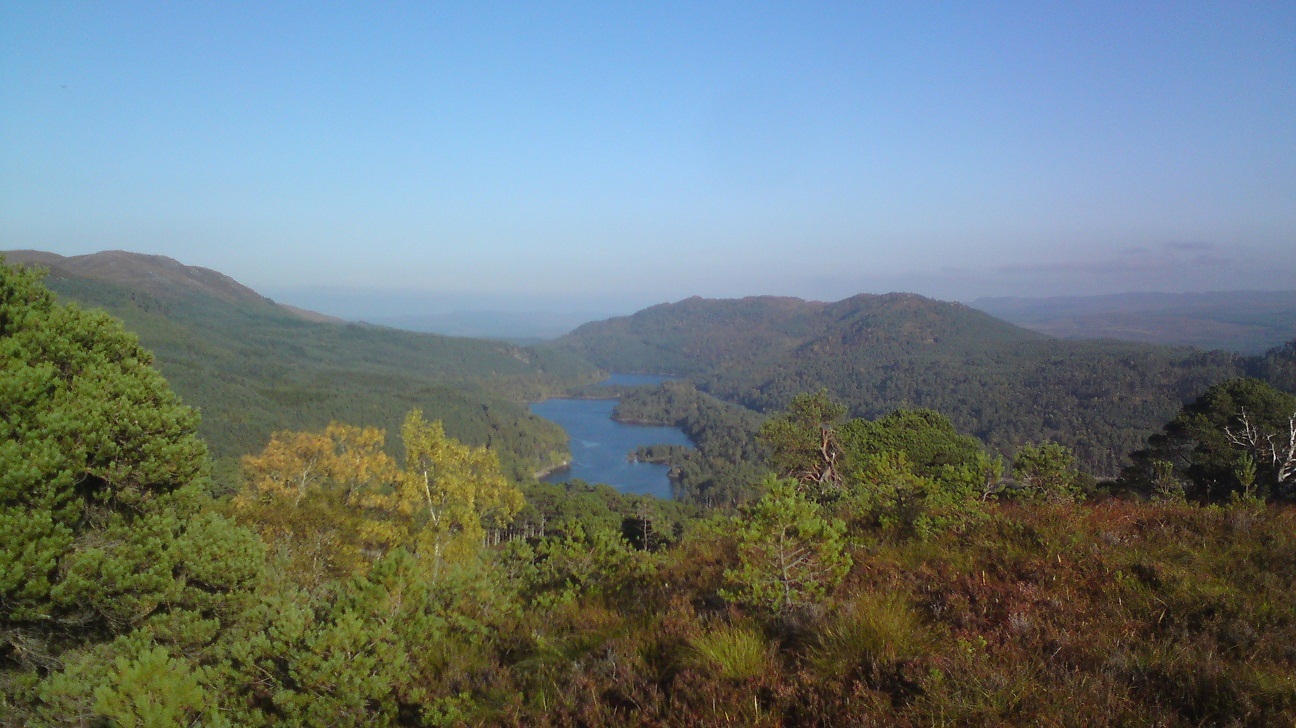
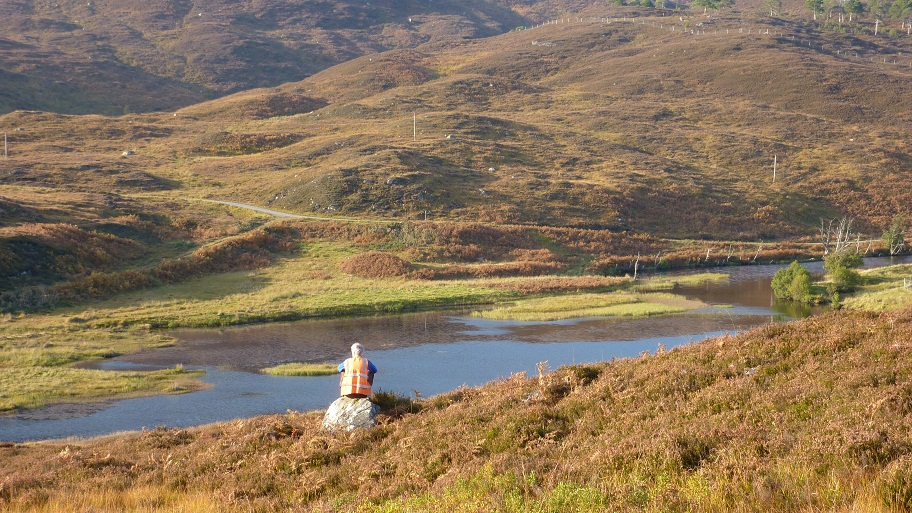
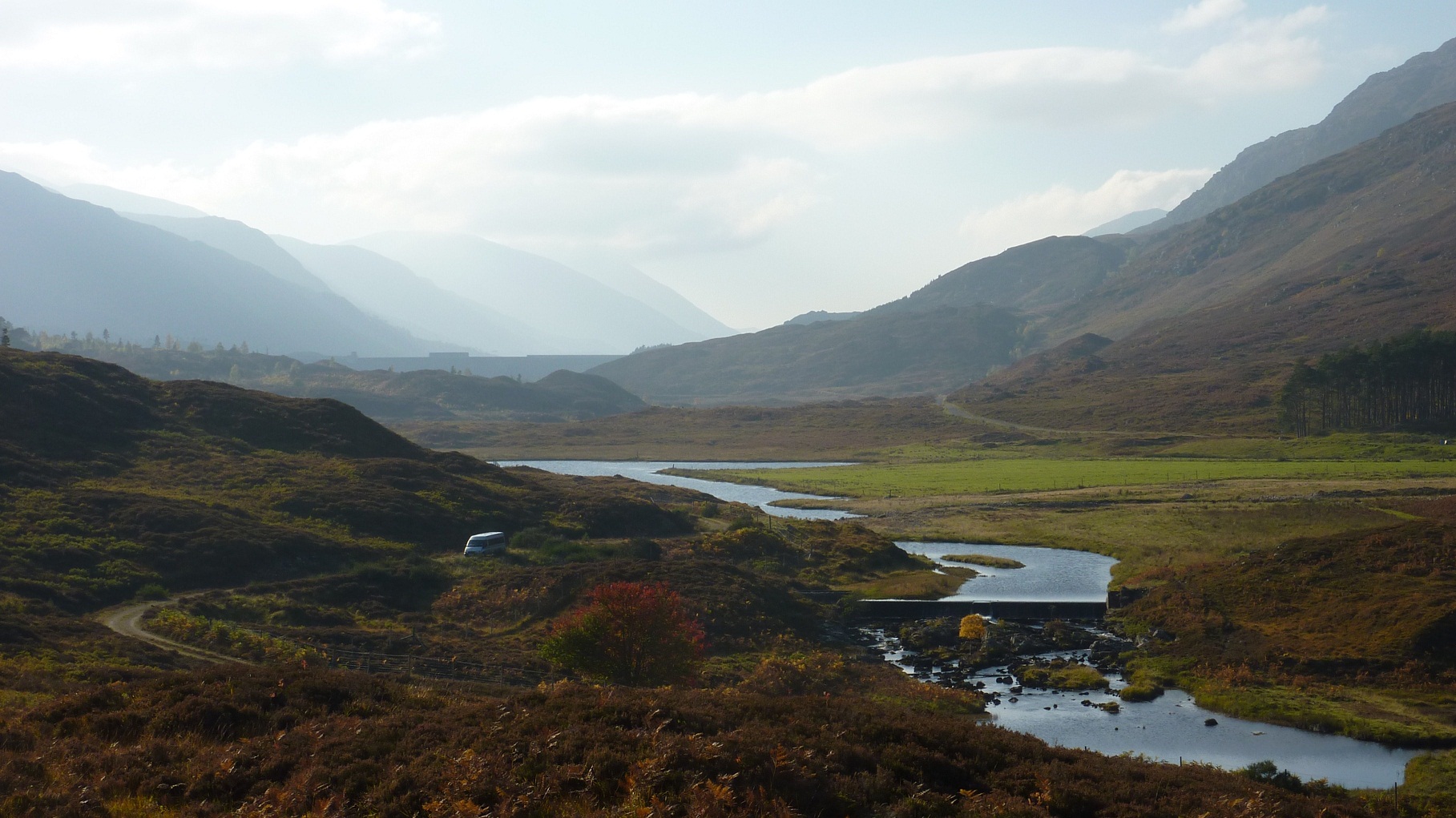
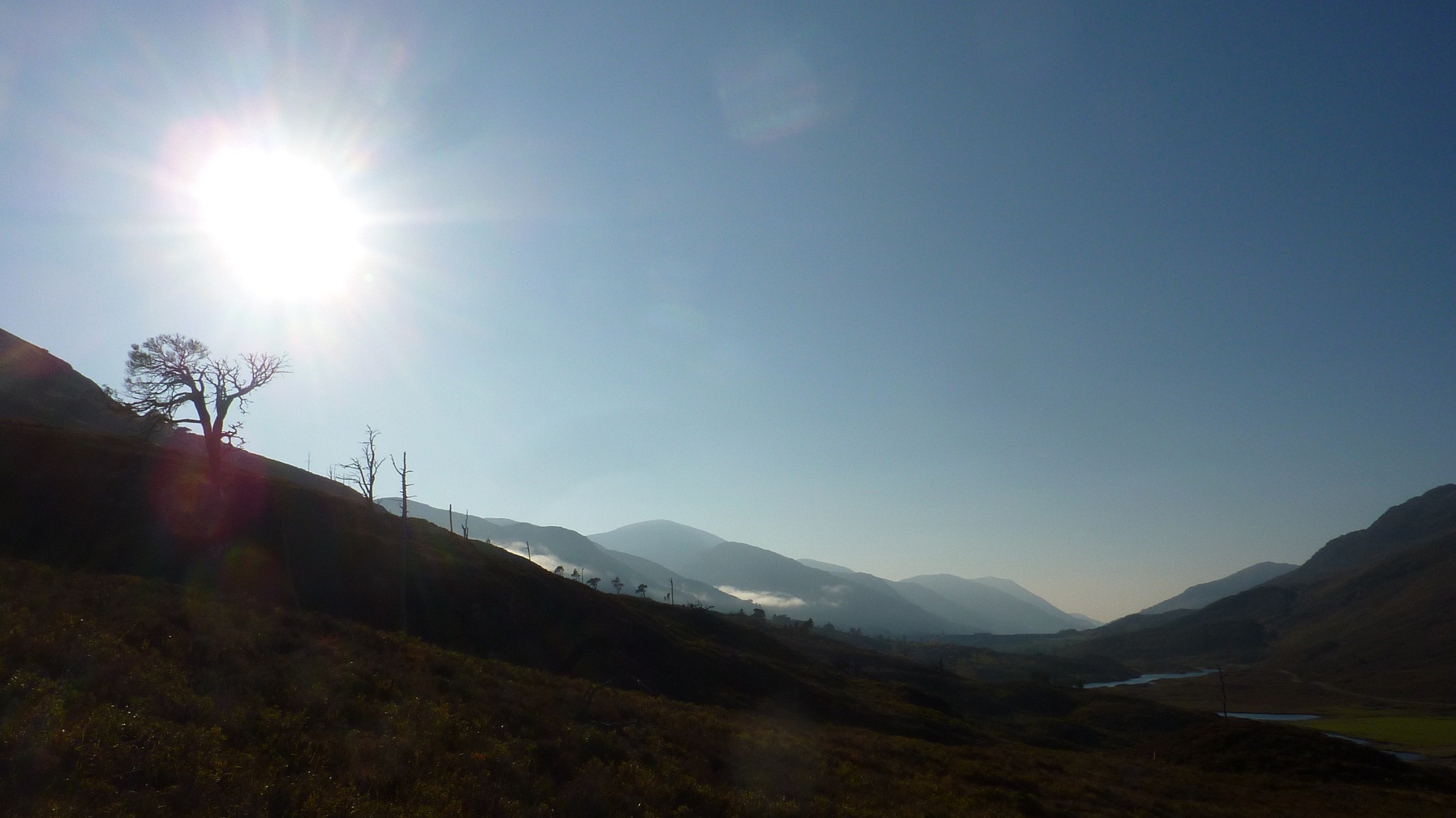
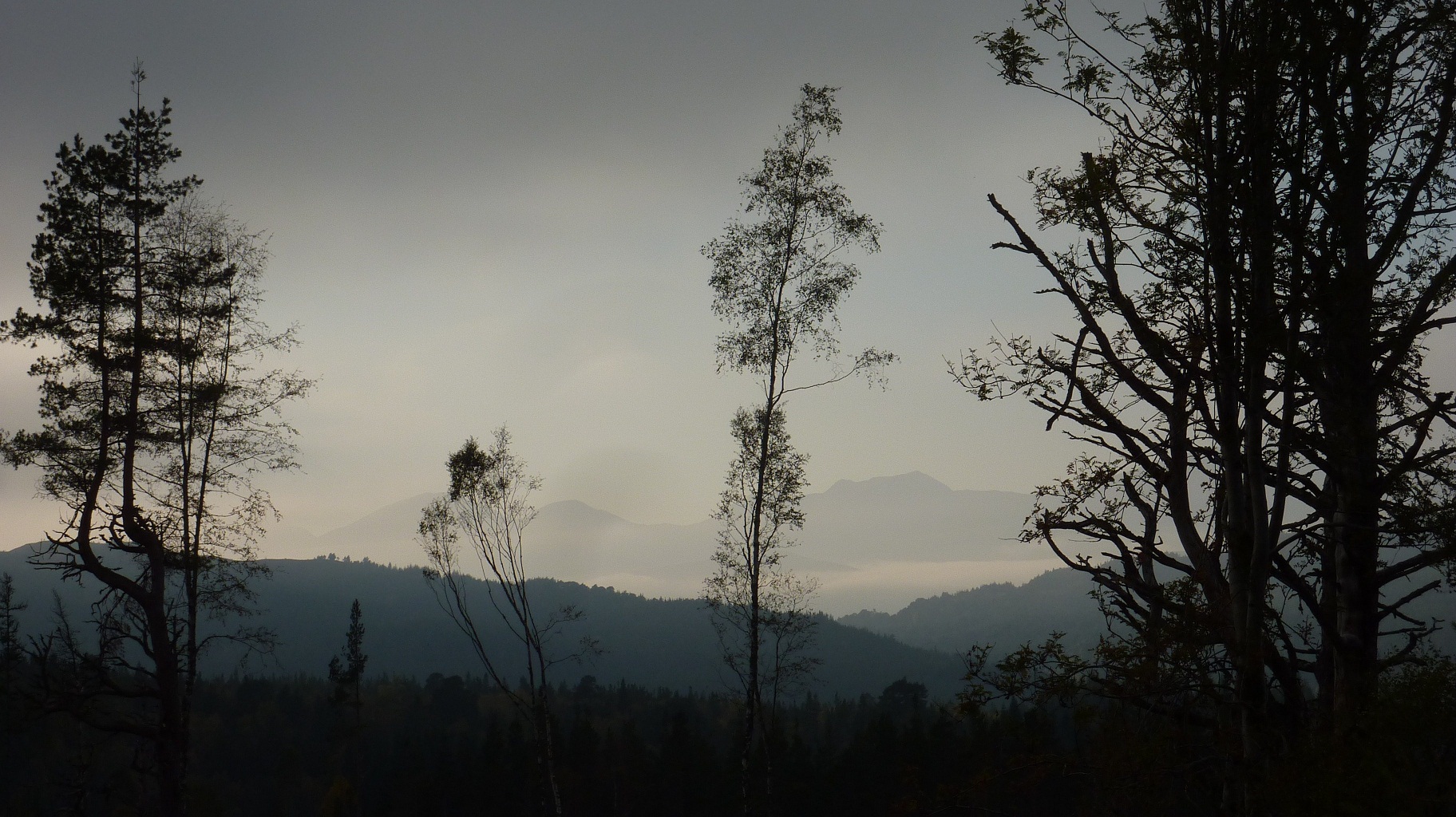
During the week we planted 1435 trees, mostly Birch with some Alder, Rowan and Goat Willow, in Glen Cannich. We had sunshiny days for the most part, but even so, the views up and down the Glen are spectacular, and the atmosphere was improved further by the almost constant sound of rutting stags in the distance.
We also spent some time removing non-native Spruce, Larch and Hemlock (and one Lodgepole Pine) from an area above Plodda called Farmer’s Wood. Here we were treated to noisy flying displays by a local family of Ravens, whilst flocks of Tits came and went and a Great Spotted Woodpecker made various announcements from the nearby trees.
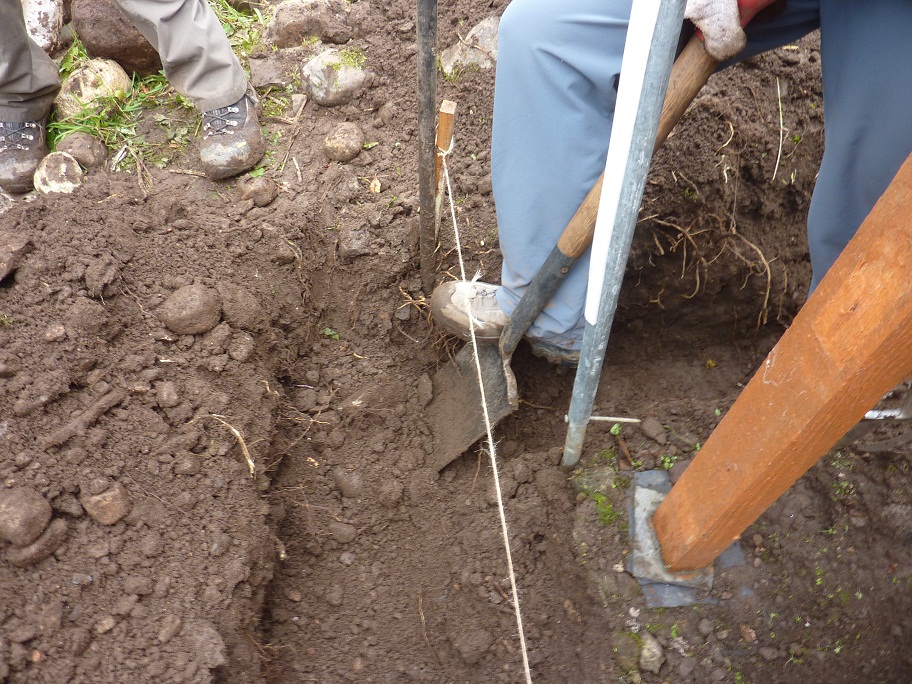
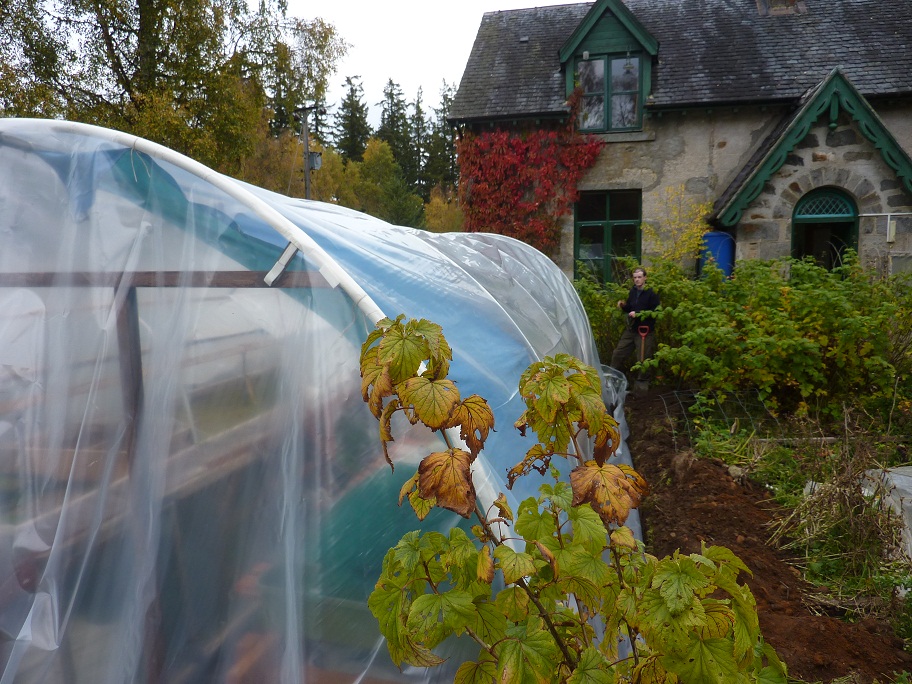
On Thursday we were lucky enough to spend a day in the nursery, with Jill and Abbie, putting a new cover on the first poly-tunnel. I can now proudly say that I’ve been involved in the digging of the trenches for both poly-tunnels. On this occasion it stayed dry, and Caroline managed to scrape some soup off the kitchen walls for a very successful lunch.
-
- Not bad for an introduction to the highlands
-
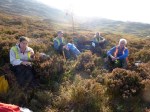
- Our first break and the signs of tension are already beginning to show

-
- Glen Cannich
-
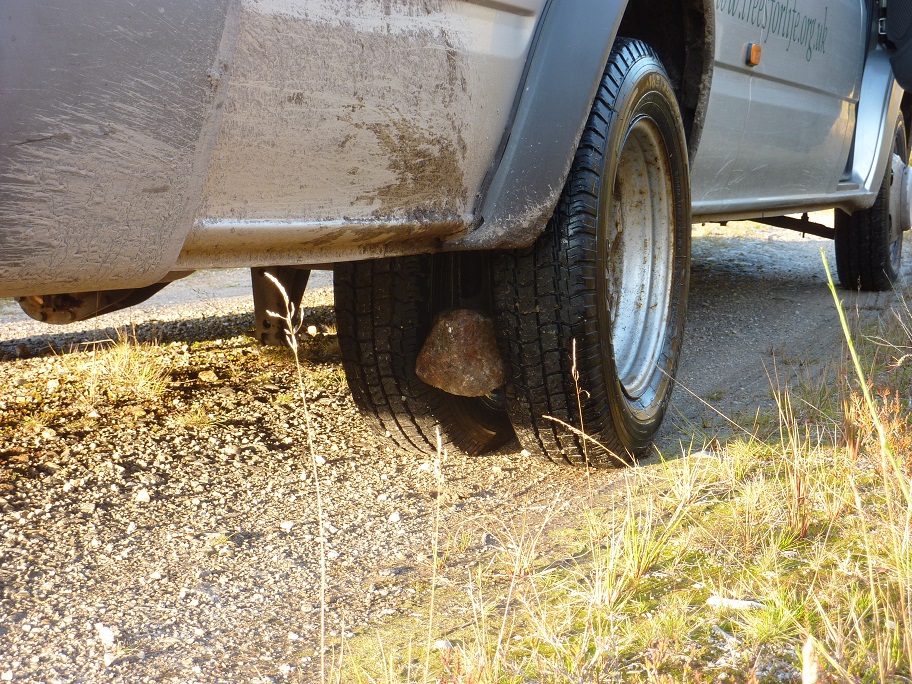
- Let’s off road!
-
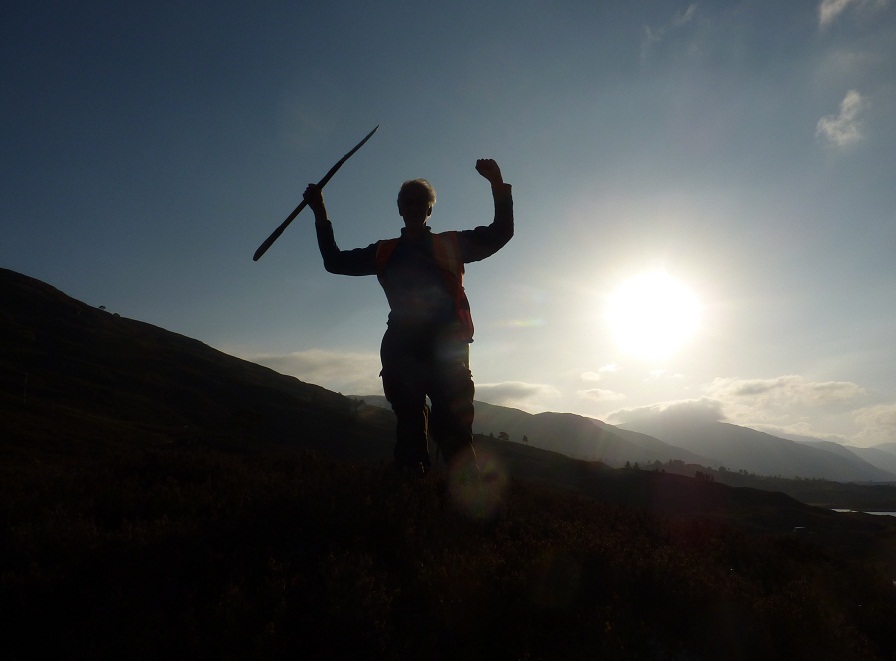
- One happy Focaliser

-
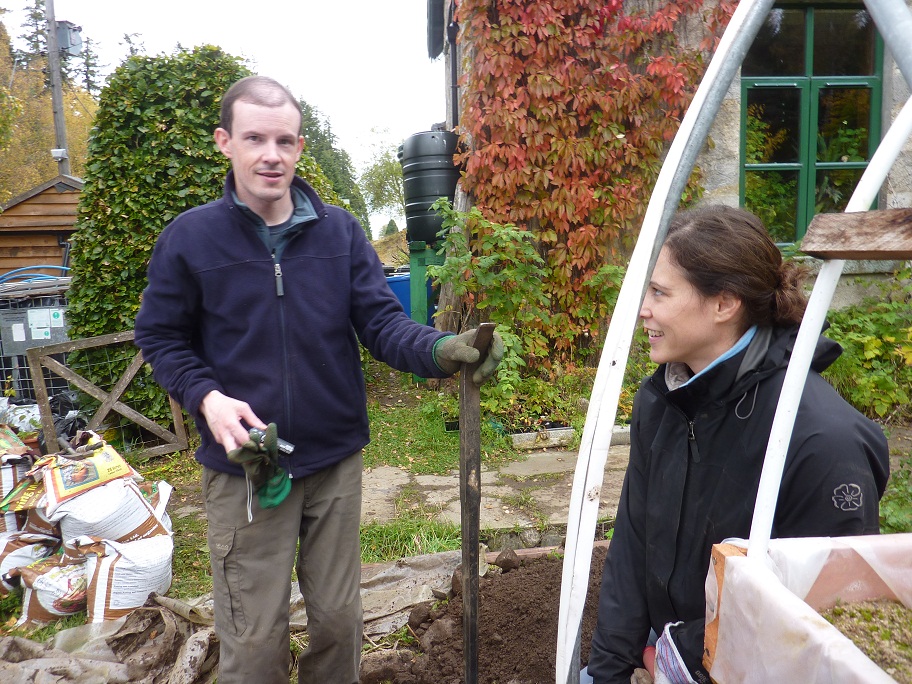
- Tom looking very much the part with a pinch bar…
-
- …while Jennifer does all the work
-
- The new poly-tunnel cover before tension is applied
-
- Looking towards Glen Affric from (our Friday work site) the South
-
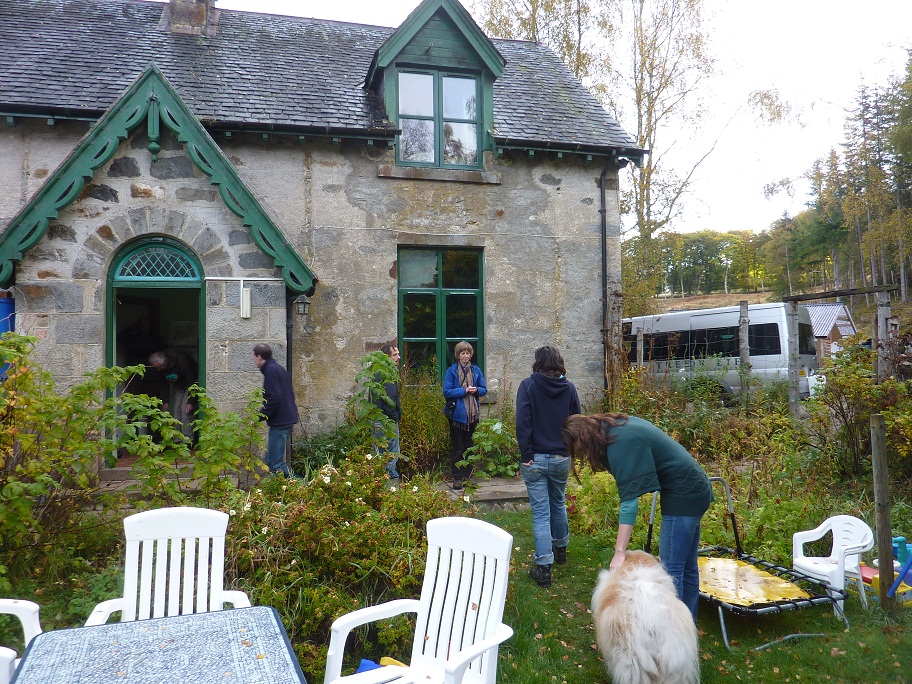
- Plodda Lodge – Our home for the week.
-
- Hmm, there seems to be a small addition to the team
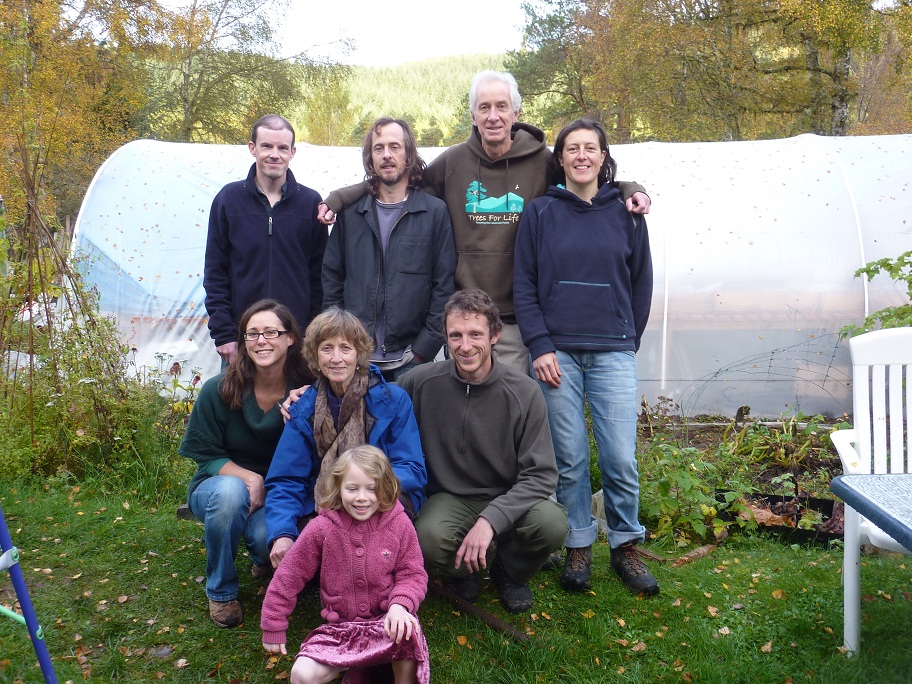
4th September, let the work week fun begin…
First week of the TFL season and my group is posted to Dundreggan, to carry out work on FCS land in Glen Moriston. My co-focaliser is the newly initiated Mr John Garrett. There have been a few last minute drop outs, but that doesn’t seem to bother the volunteers who have turned up, who plough through the work, and include one who has travelled over from Spain especially.
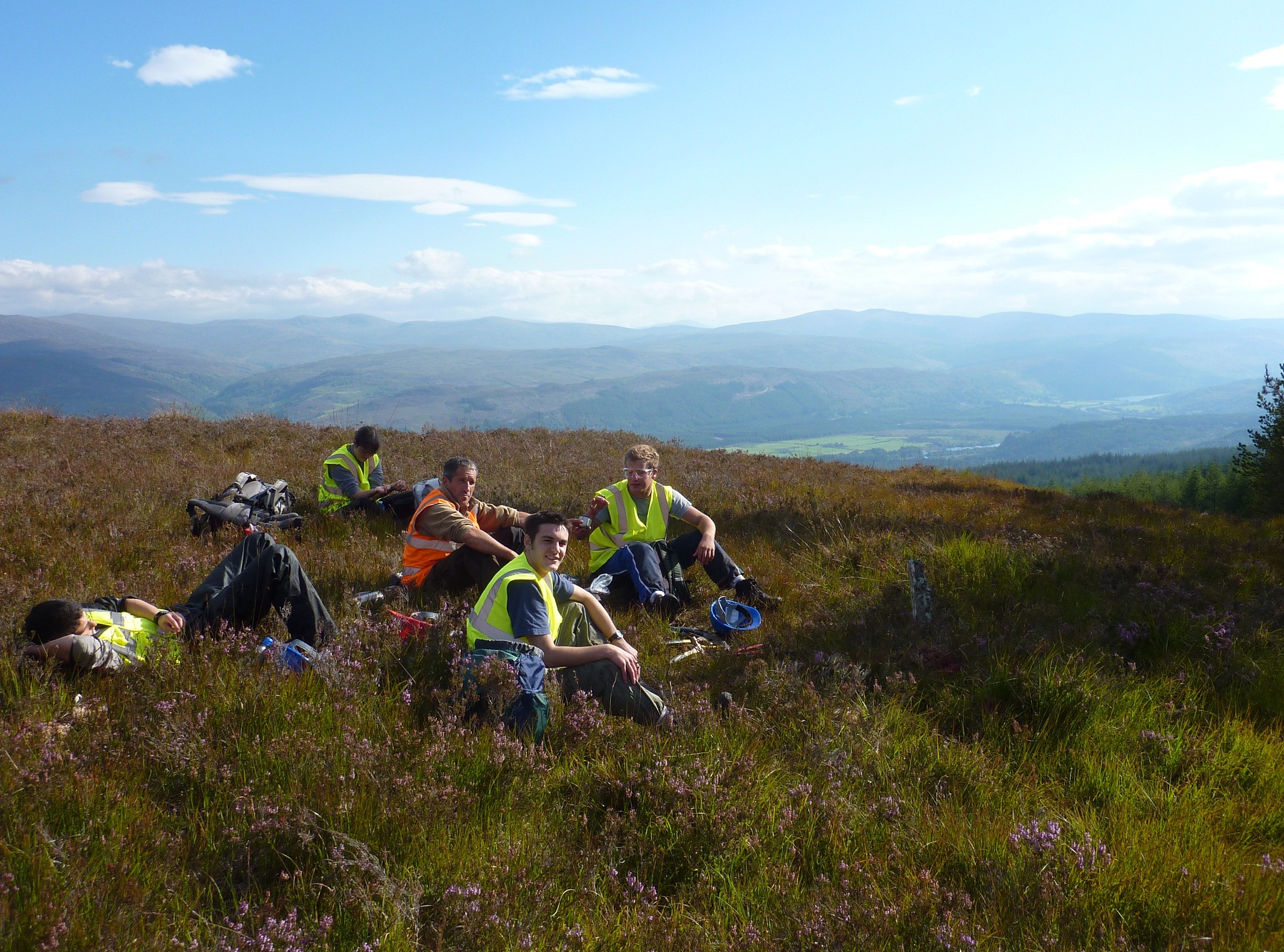
Roughly 1700m of fence removed in two days, a sizeable stand of spruce trees and an area of regeneration roughly 4 or 5 hectares, cleared of non-native tree species (Spruce, Douglas Fir, etc). This was accompanied by great food with some important experimentation with cakes.
-
- Removing the Port Clair fence
-
- Dan wins the nose-tape game

-
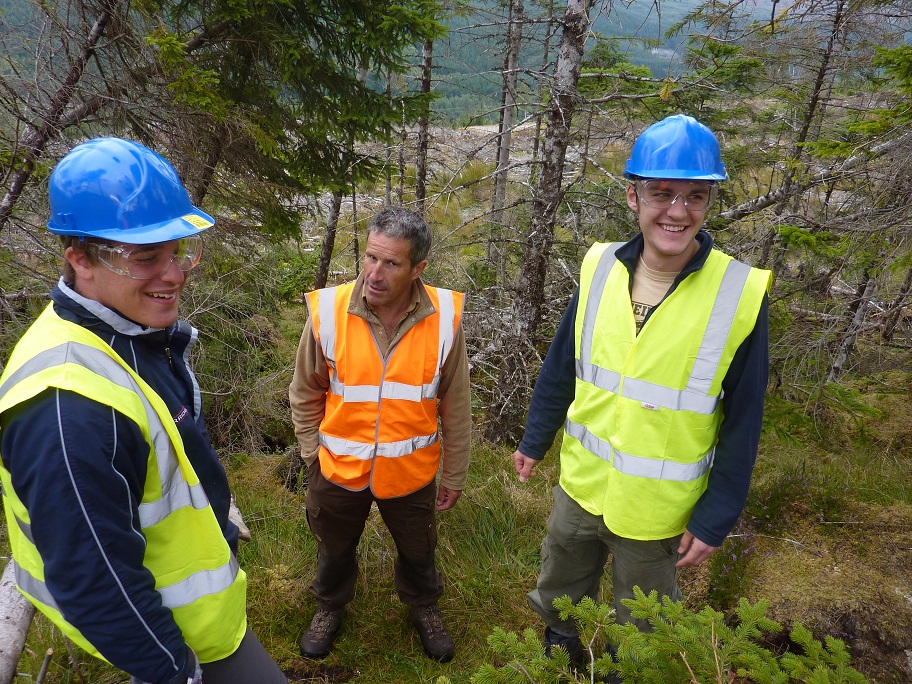
- Ben, John and Mike are laughing at…
-
- …another of Virginia’s tales

-
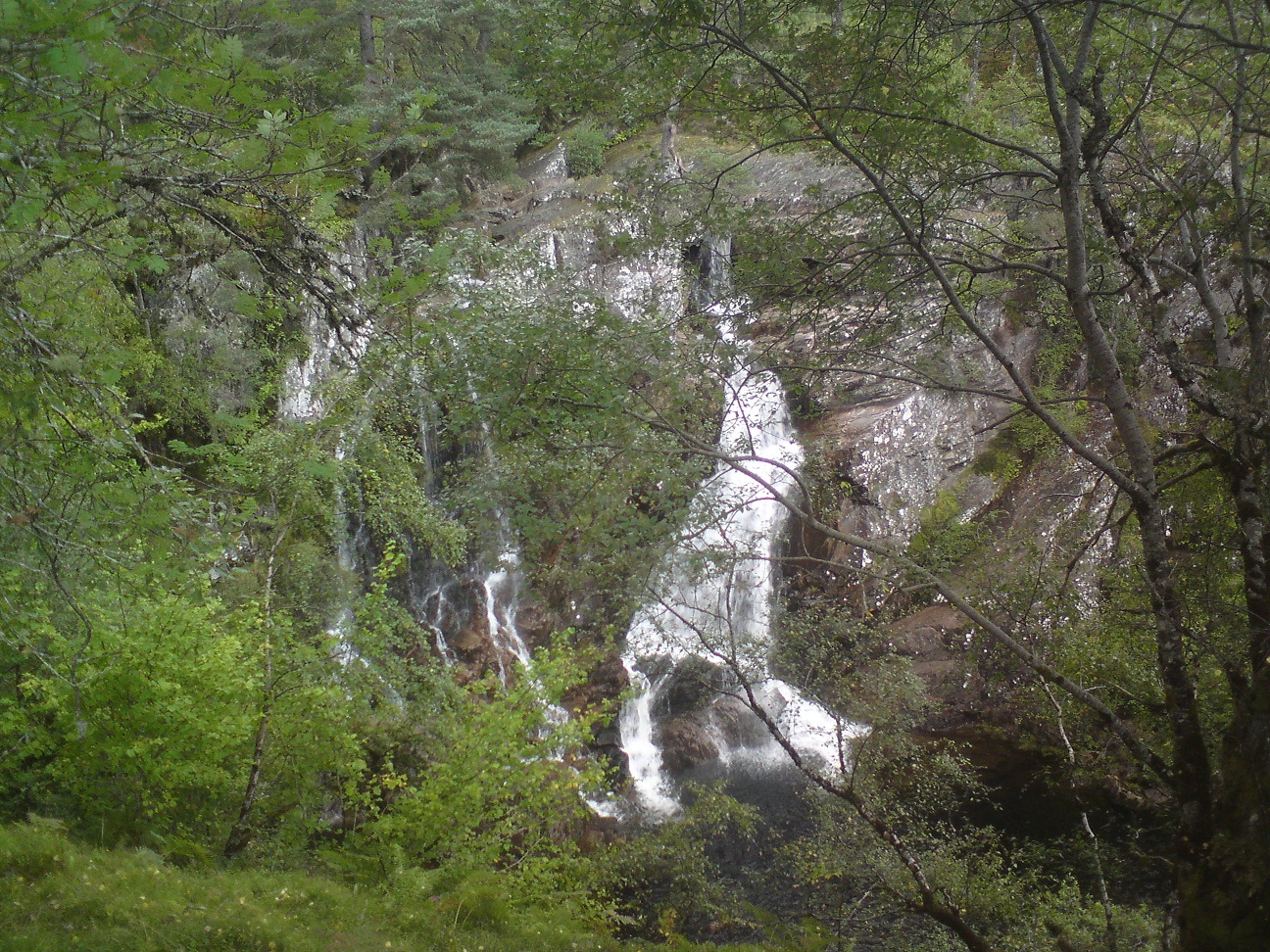
- While the others consider the merits of going highland dancing, I take a look at the Glen Moriston falls

-

- Glen Doe, Friday afternoon.
-
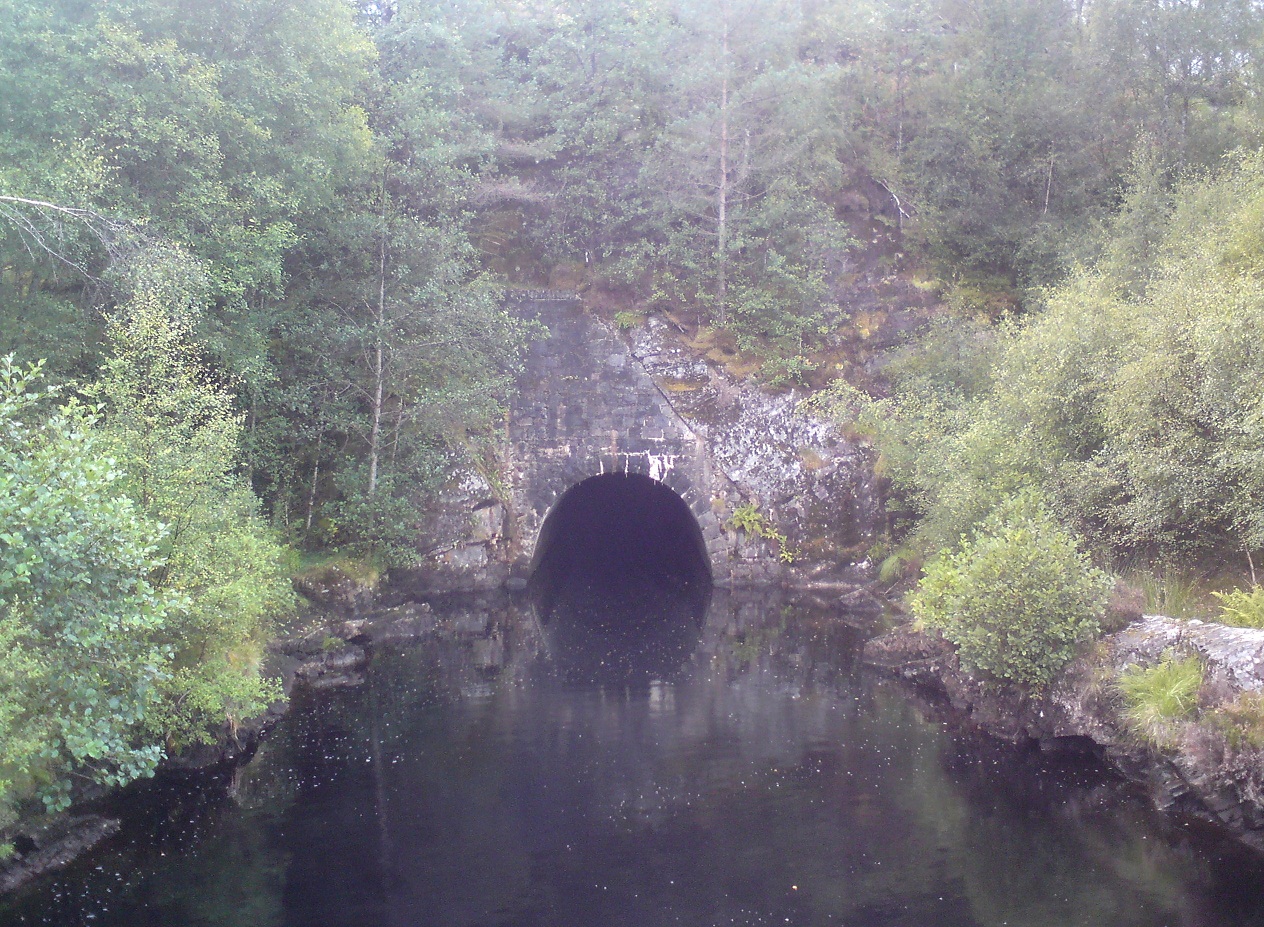
- This goes into/comes out of the side of a hill. What’s its point?
Planting at Achnashellach and some time in the TFL Findhorn office.
Following my two work weeks at Plodda I was fortunate enough to have the opportunity to hang around the Trees for Life Findhorn office for a week, under the guise of an IT professional. My work was mostly based around upgrading slower MACs, ensuring machines were being backup up and specifying and ordering any other required IT kit. This was the last chance to see the TFL staff at Findhorn for the spring season, and I was treated to a beautiful walk in the dunes, a large slice of carrot cake, and a bbq party round at Mick’s (thanks Mick).
However, (possibly) the best part of my season was yet to come. On the Friday (21st) I had to leave Mick’s bbq reasonably early to head over to Achnashellach. There were still some unplanted trees left over from the season’s work weeks, and I’d agreed, with Colin, to have a go at getting some of them in. Armed with a spade, a couple of planting bags, and an FCS key, I drove to Craig, crossed the railway crossing, and was into the wild.
My illusions (delusions) of being into the wild were shattered at 7.30 the next morning when the slow trickle of walkers started to make their way into the hills, up the track past my sleepy camper. So, I dropped the roof, picked up some trees and got on with the business of increasing the population of Scots Pine on the hillside.
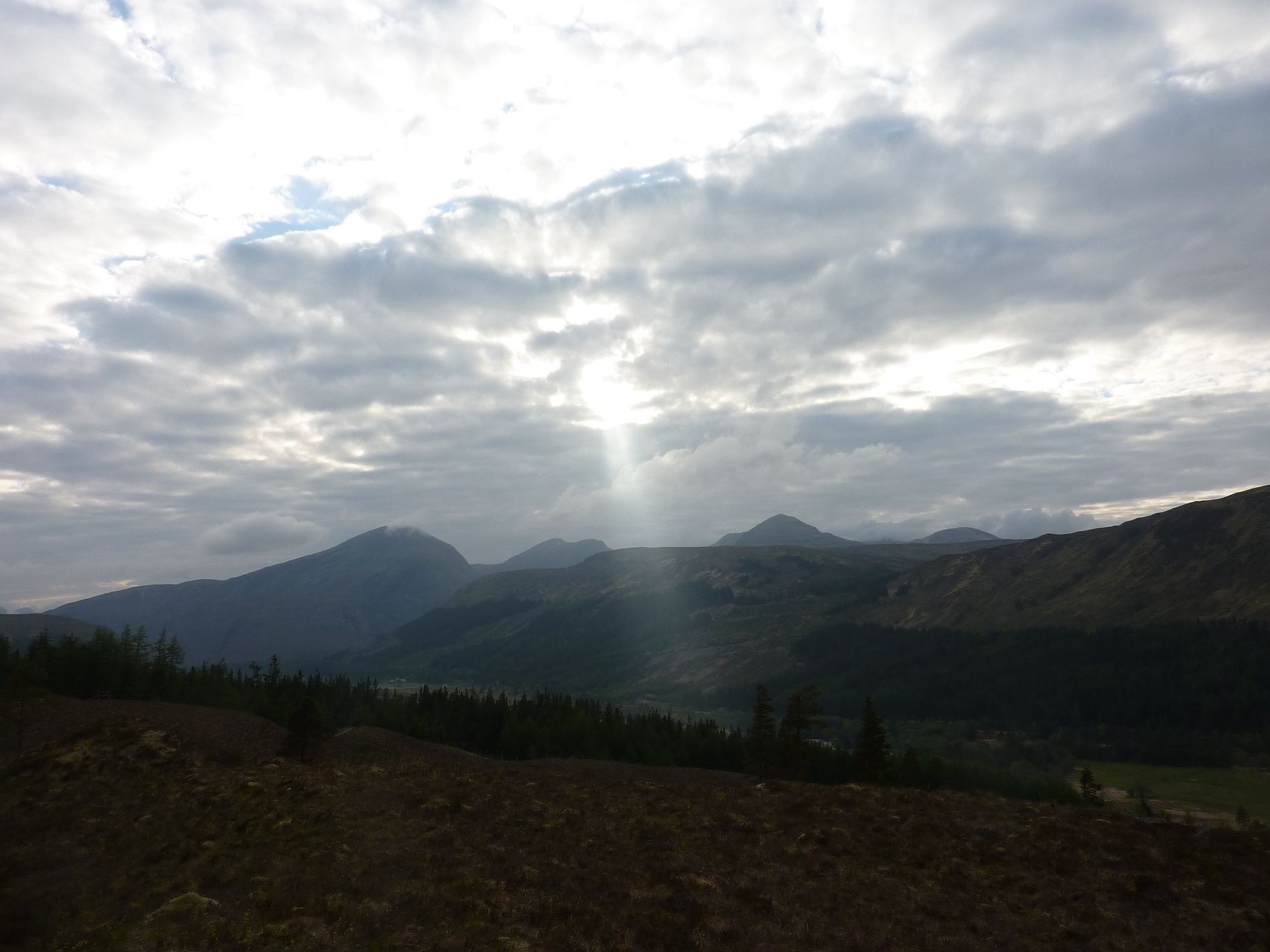
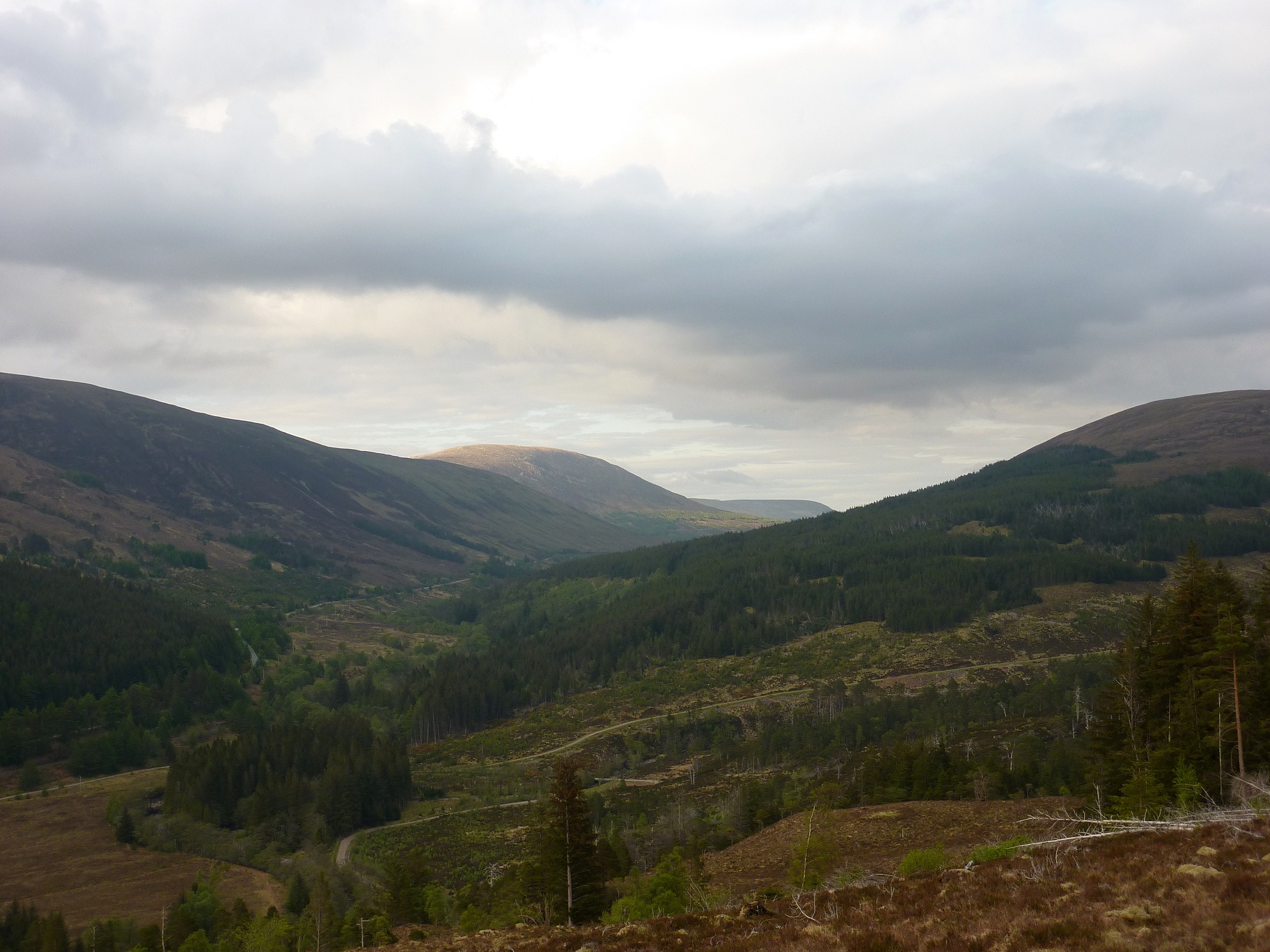
Amidst reports of some kind of heat wave across the rest of the UK, the weather gods were kind enough to leave Achnashellach overcast, with some fine rain at times, much to my relief, as carrying hundreds of trees up a hillside covered in 3ft high heather is warm work. At the end of each day the weather would brighten a little and I would stand at the top of my hill and survey the Glen. To the West were a series of majestic craggy mountains, to the East a large rolling Glen. Near me there was a burn running down the hill with a number of native trees alongside it; a sign of how large parts of the hill should look in just a few years time. In amongst the trees were Willow Warbler, Tree Pipit, Chaffinch, Great Tit, Blackbird, Thrush, etc…
-

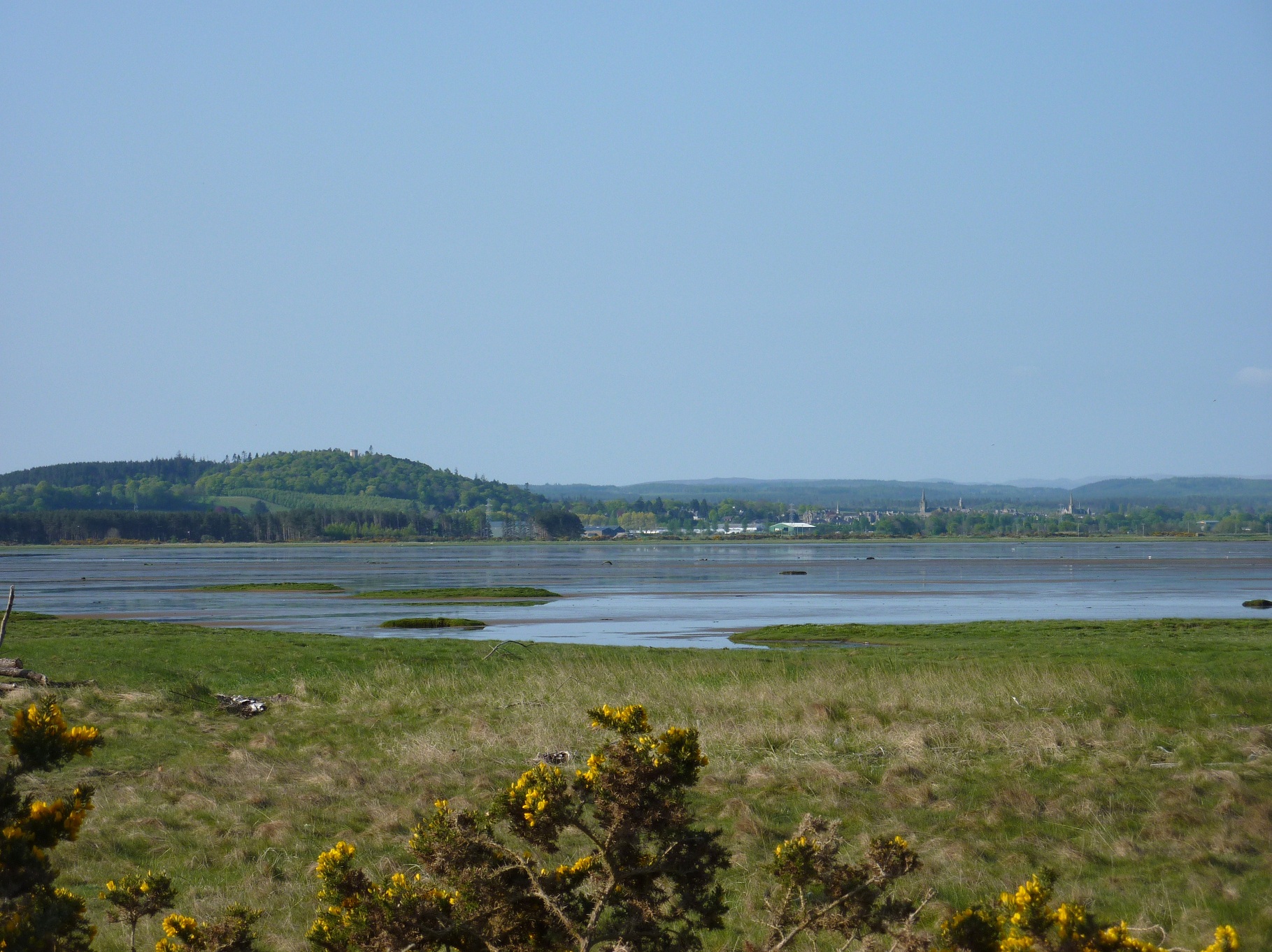
- On a number of mornings whilst staying in my van near The Park, I awoke to this view of the bay
-
- After my first day’s planting I thanked whoever might be listening, for the cooler weather, and…
-

- Looking East up the Glen. I was bringing the trees up from the track you see below
Cranes and surveys at Dawn
The last couple of days have been dominated by early morning breeding bird surveys. Although I’ve been getting up for 6 to 6.15 starts (not my forte), I’ve been rising with some enthusiasm, as the surveys have provided me with a great opportunity to improve my bird call identification skills.
The birds seem to have a greater enthusiasm for calling at the break of day. To my unknowing ear they appear to exude joy that another day is upon them. It’s a privilege to be able to hear the songs, of such a great variety of birds, at this time of day.
This morning myself and Hannah made a quick detour via the ploughed fields to the North of the reserve to catch up with some Cranes (Common/European) that had been seen the evening before. Luckily enough these rare visitors (from Europe?) were still there feeding and looking fantastically regal in the early morning mist.
-

- These trays are the same size, tray one shows Otter prints, tray two, seemingly Mink. Unfortunately for the Mink, they aren’t welcome in this country, so they must be trapped.
-
- This might be my favourite photo of all time. The Ospreys discuss their plan for the day as the sun rises.
-
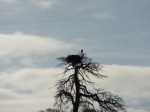
- Two similar photos in one post is a luxury, especially given my appalling internet connection, but I like this one too
-
- The Cranes
-

- Looking East over the reserve this morning
-

- Or maybe this is my favourite of all my photos. This Lapwing was flying and peewiting its little heart out to please the prospective Mrs Lapwing
-

- A pair of Gadwall, the male is in the foreground.
Sun, hide and frisky.
Just the one day in the hide this weekend as I have tomorrow off. But, what a day. It was great to see some of the faces from last weekend again, and meet some new faces. New to me anyway. Some of the visitors I’ve met have been coming to the reserve for a long time, and have great stories to tell. Such as… apparently the reserve used to have Black Necked Grebes nesting on it, and there was a time when there were so many Black Headed Gulls nesting on the loch that it was not possible to hear yourself speak when in the Gullery (hide).
The Sun came out and life on the reserve is getting a bit frisky – there’s a definite feeling of spring in the air. Mallards chase down each others’ girlfriends, male Shovellers swim tight circles to impress potential mates and, best of all, the Lapwings perform amazing aerobics whilst making the most mellifluous fluty noises in an attempt to hold onto to territory, and, of course, get jiggy with the local totty.
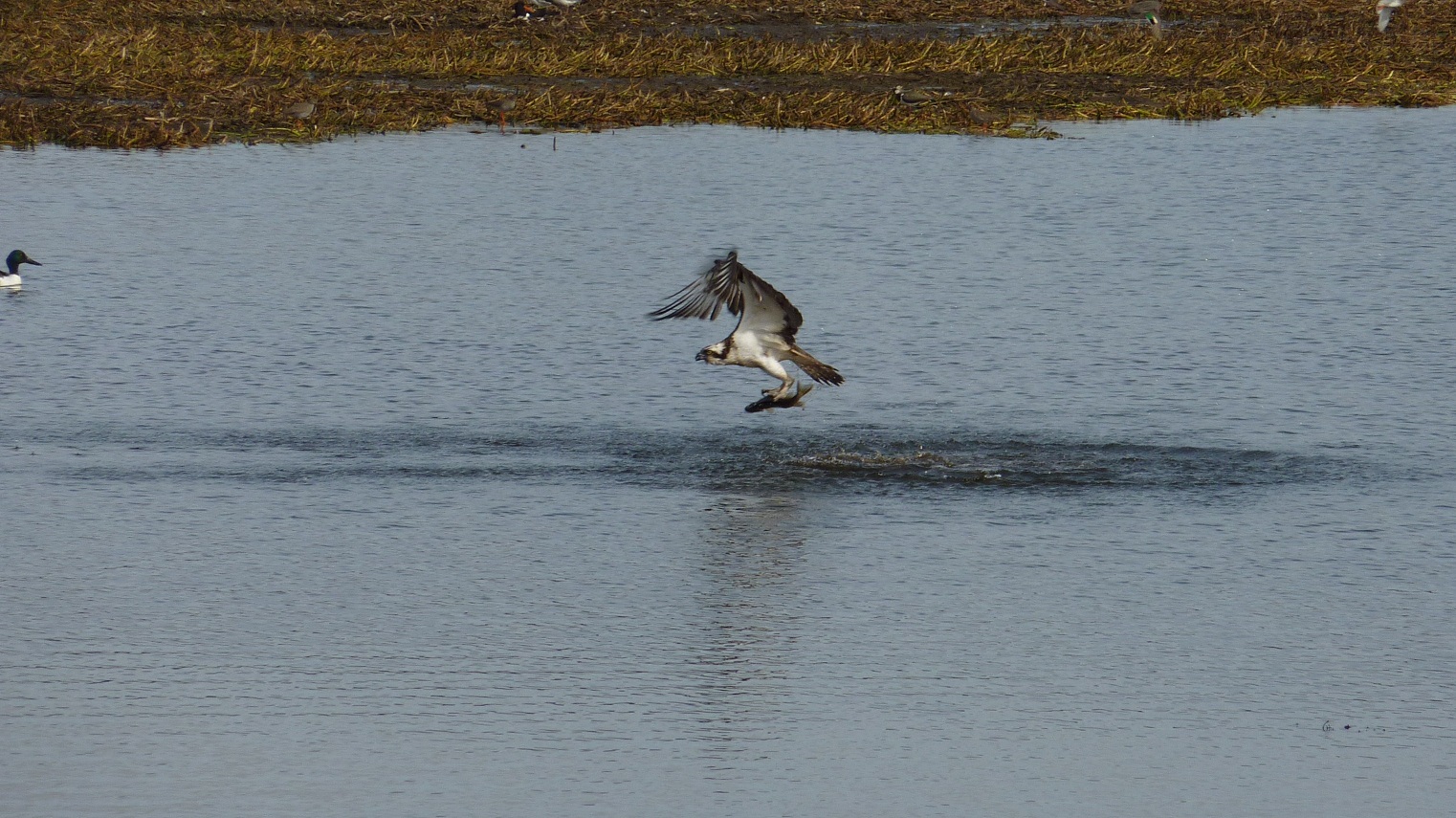
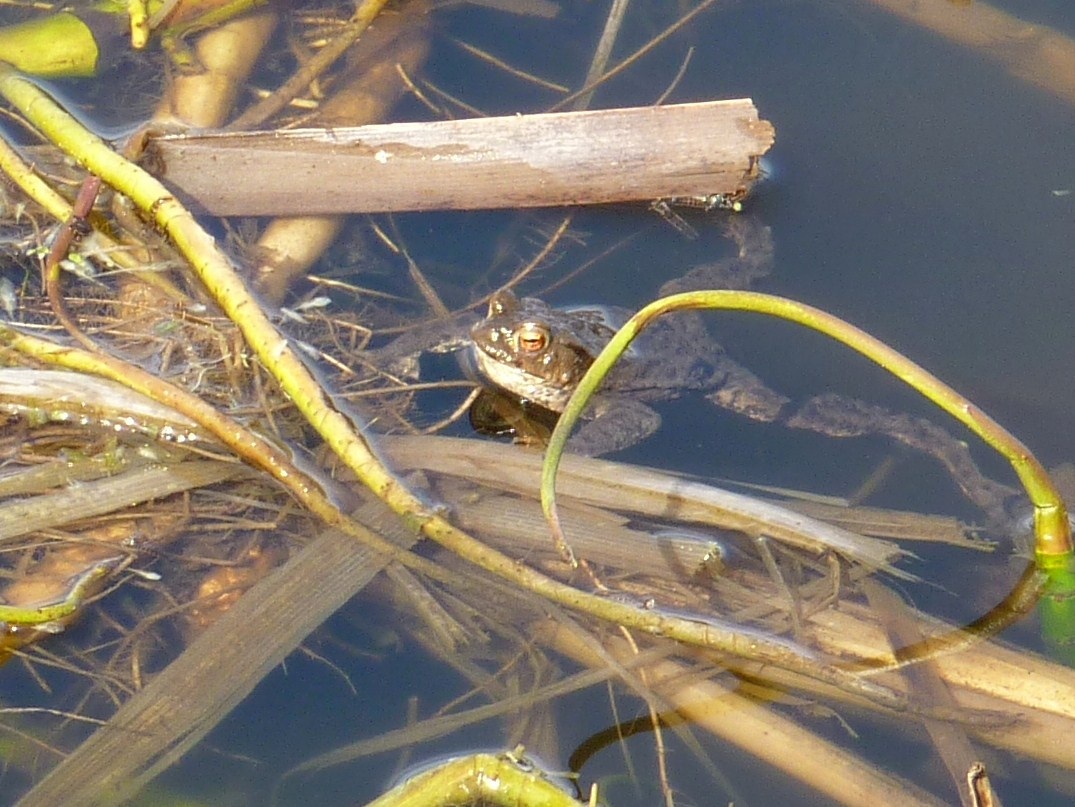
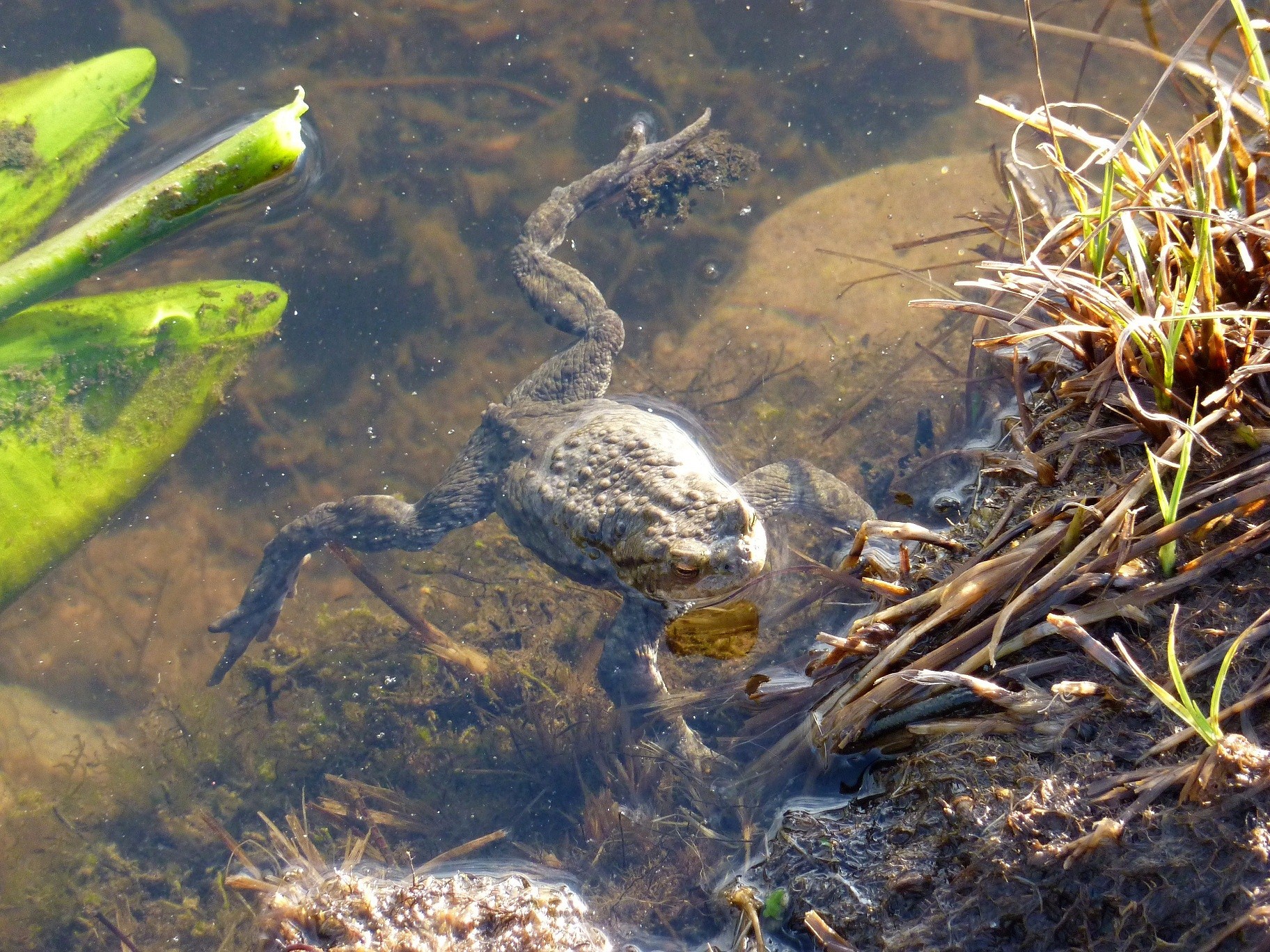
And, on top of all that, there were Ospreys. Anyway, more more about them shortly. Just to finish the day off nicely, after spotting a Toad swim up underneath the Gullery, and following the advice of Steve, a regular visitor, I decided to call by the Lily pond on my way back to the flat. At the pond there were hundreds of toads splashing and swimming about. Not all of them were in full voice, but there was a decent amount of croaking. The pair of Swans sleeping out in the middle had obviously seen it all before. I stood with the lowering sun warm on my face, listening to the action for a few minutes, before strolling back to the flat.
-

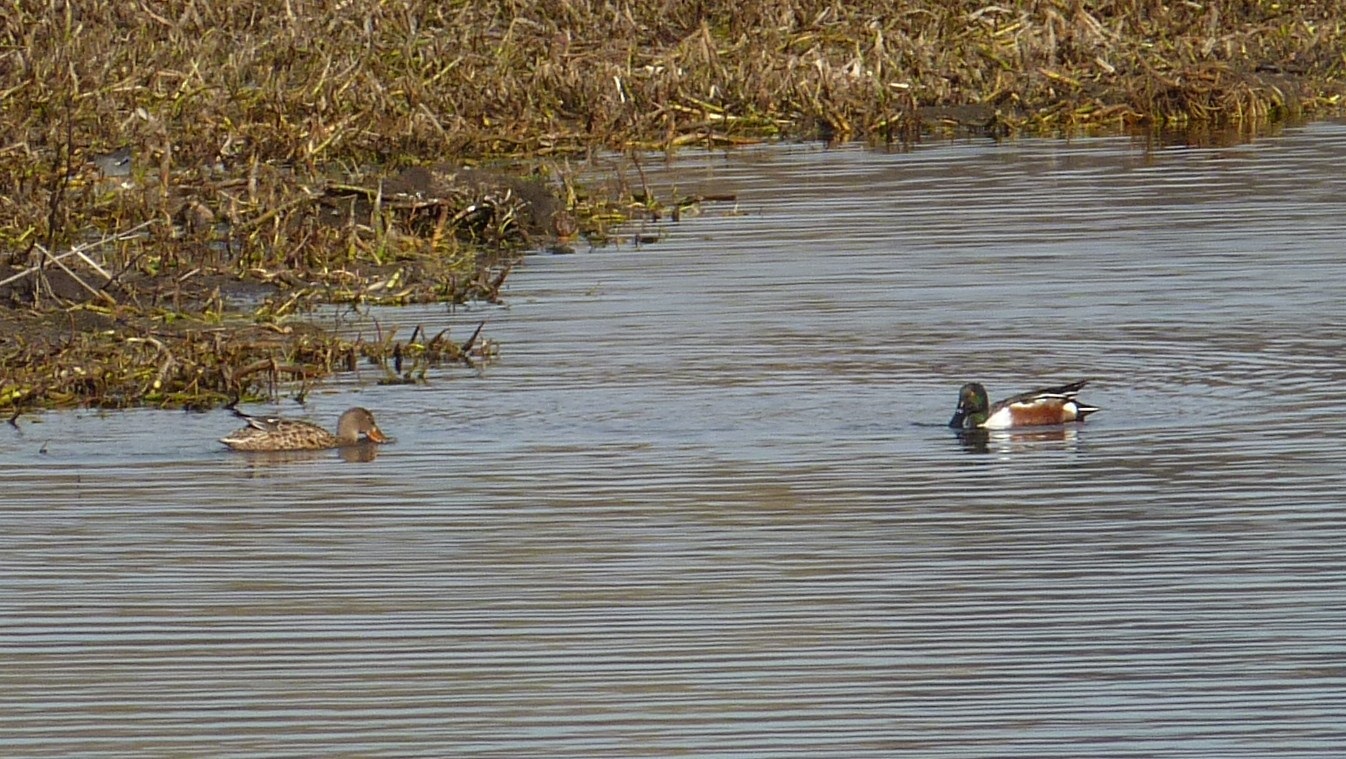
- It was hard to get a decent shot of this pair of Shoveller, as they spent most of the time with their heads under the water
-
- If you look very carefully you can see at least one pair of Redshank on the far bank
-
- This toad spent most of the day swimming up to the gullery
-
- This one was in the Lily pond
Fence removal, decent sized mugs and politics.
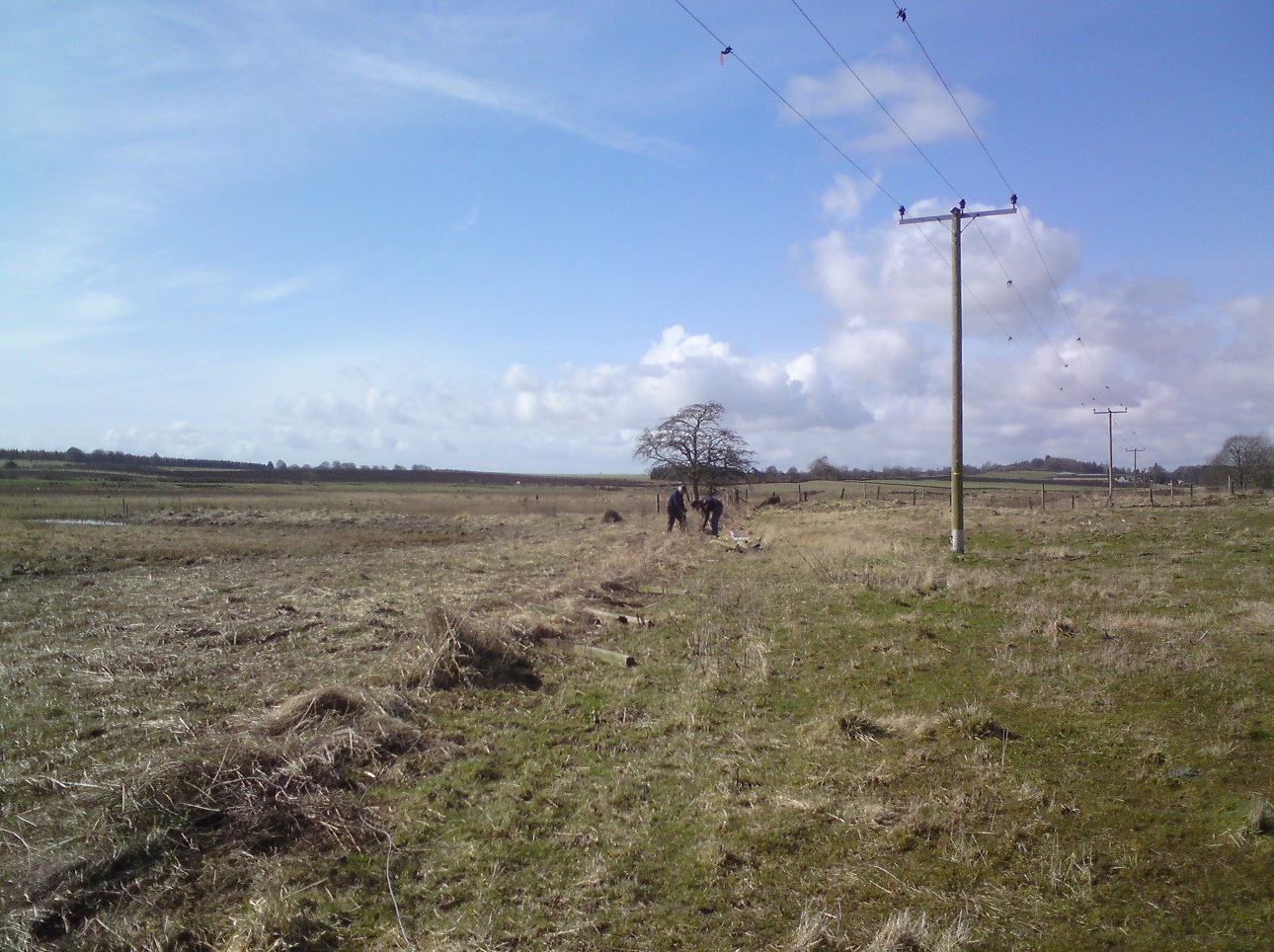
So, life is pretty good here at the moment. Although it rained all day on Tuesday. Myself, Tom and Graham were taking down a fence on the North West of the reserve, and getting pretty muddy – no pictures from Tuesday. On Wednesday, suddenly, the weather had improved. Same job, but somehow we managed to get a whole lot more done. At one point I heard some chirping above me, just as Tom and Graham were on their way over, and we all looked up to see three Ospreys circling above us. There are pictures from Wednesday, but not of Ospreys.
Yesterday there was some work to do down at the hides before Hannah showed me the way of wader surveying. Hannah promises me that there’ll be plenty of wader/other surveys to do, which is terrible news as sitting down with a scope looking for birds seems like such a chore. And the whole situation is made worse by the fact that the process is only really worthwhile on windless days with sun.
Other interesting news – I forgot to say that I’m especially happy with the size of the mugs in the kitchen. After filling them to the top, which is what you’re supposed to do, they hold enough tea for me to avoid having to get up to refill. The room I’m sleeping in is now almost warm enough for me to consider using just the one duvet on the bed. And, perhaps most importantly, the local Coop does not stock Hobnobs. How can a food emporium not stock Hobnobs? But they do stock milkchoc Hobnobs! I have, you won’t be surprised to hear, written to McVities to explain my chagrin.
Finally, an election was called this week. It’s disappointing that the environment doesn’t seem to feature highly in any of the election debates I’ve heard so far. Apparently, the public are more concerned with how many children each potential priministerial candidate has, or is going to have, or whether they are messy whilst at home. If you are one of the important few who think that the election should be about making big decisions on the way the country is run you might be interested in the RSPB’s “Letter to the future”. It’s not really a letter to the future, it’s a letter to politicians asking them to help preserve nature so that future generations can experience what we have. More information can be found here:
http://www.rspb.org.uk/applications/lettertothefuture/index.aspx
Also, it is possible to quiz your local prospective parliamentary candidates as to what their thoughts are on the environment, by email. Do it. Even if their response is not going to influence your vote, it will still get them to think that the environment is a serious issue. I find it hard to understand why the environment isn’t top of every political party’s agenda. Without an environment nothing else matters, life is impossible. This is already happening to thousands of species across the world, thanks to man’s activities. It seems logical to me that we should be tackling major environmental issues first.
Hmm, I promised myself that I wouldn’t rant on my blog. Never mind, on to some pictures…
-
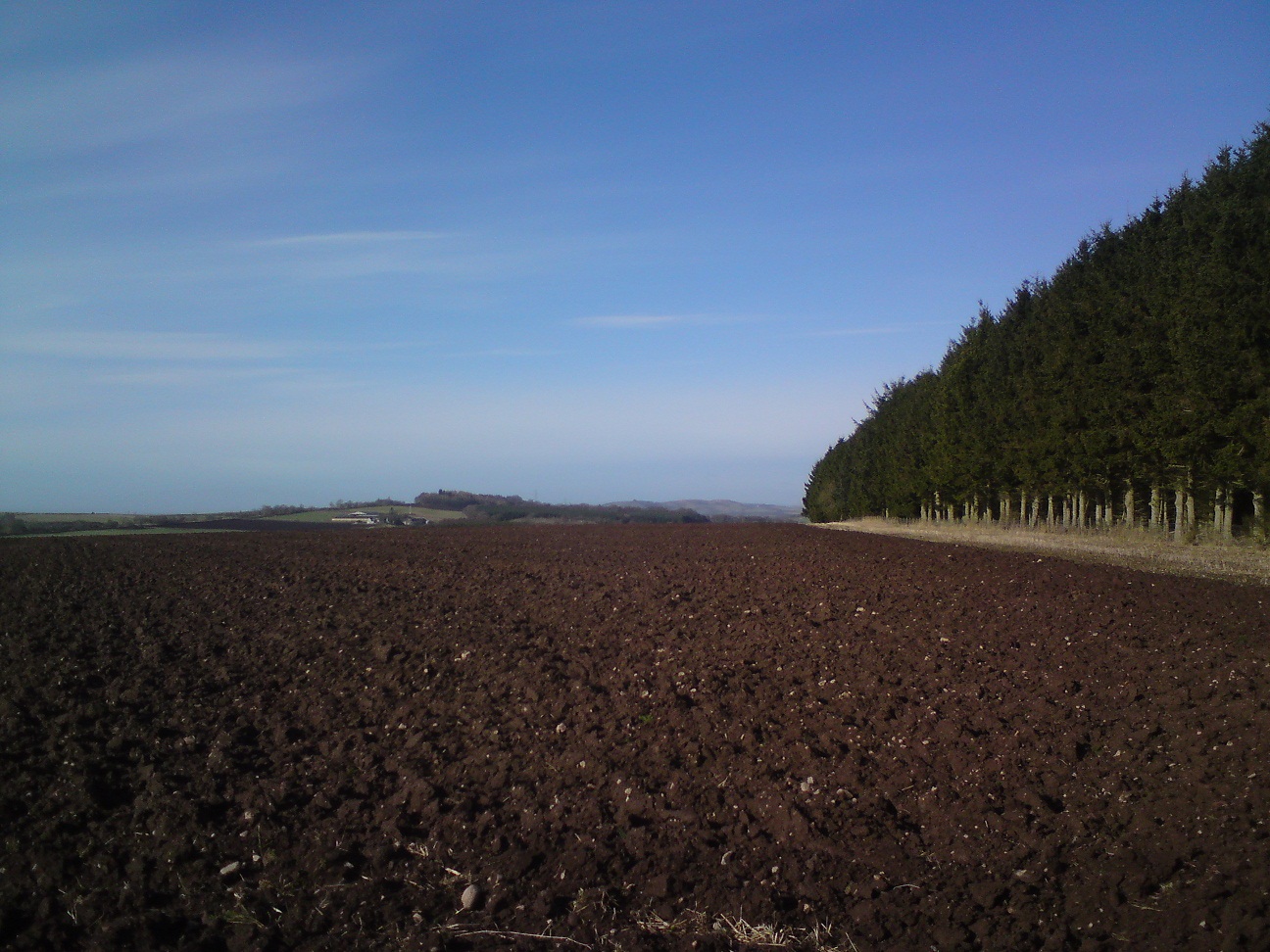
- Look at those colours – what a day!
-

- Graham and Tom removing a fence on the Western side of the reserve

-
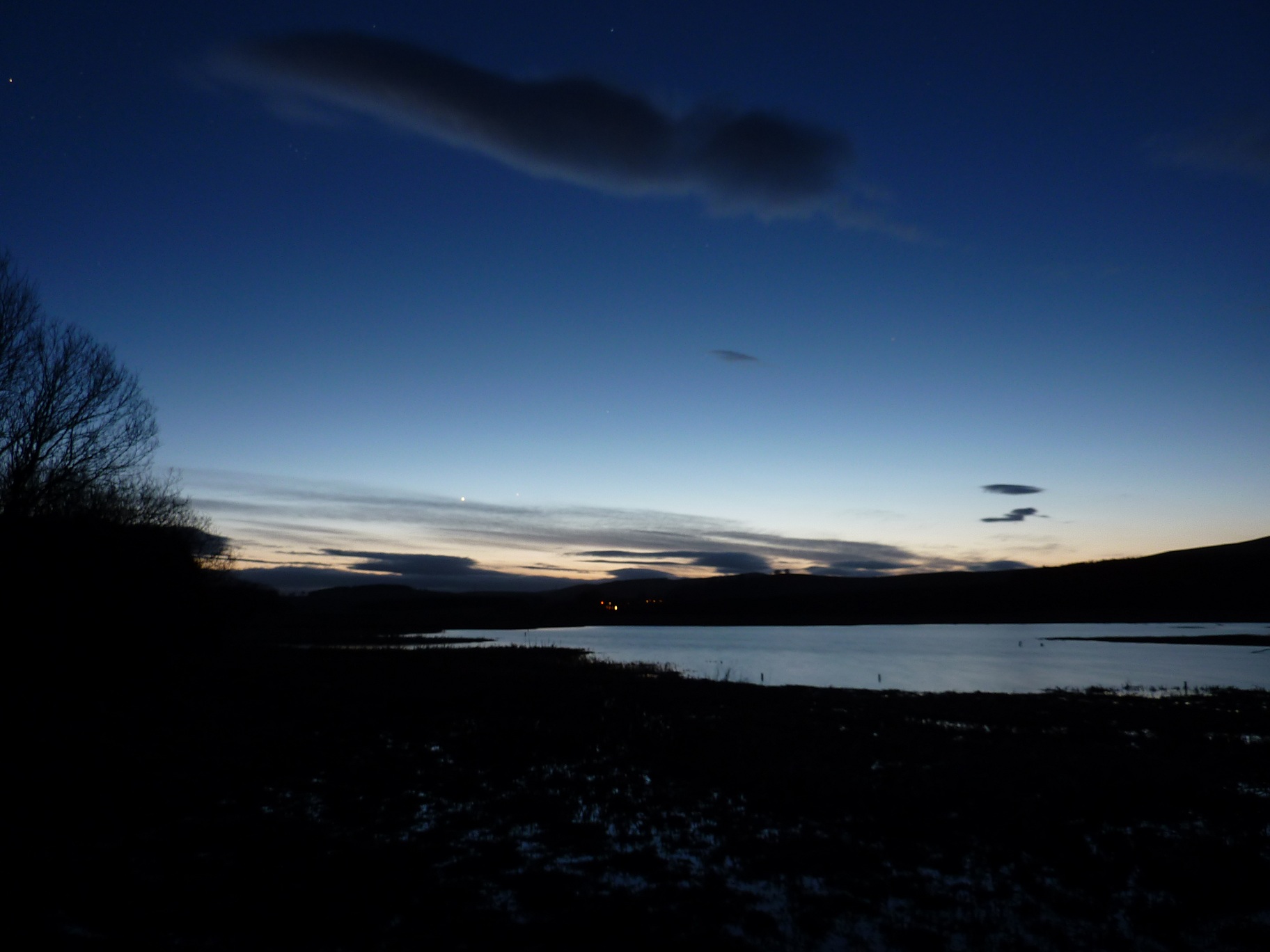
- Venus setting over the West of the reserve
-
- Not a fairy gathering in the woods – myself and Hannah set up a moth trap on Wednesday night
-
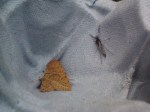
- A very cool looking fly with an equally cool Common Quaker (probably-where’s Jane Bowman when I need her?)

-
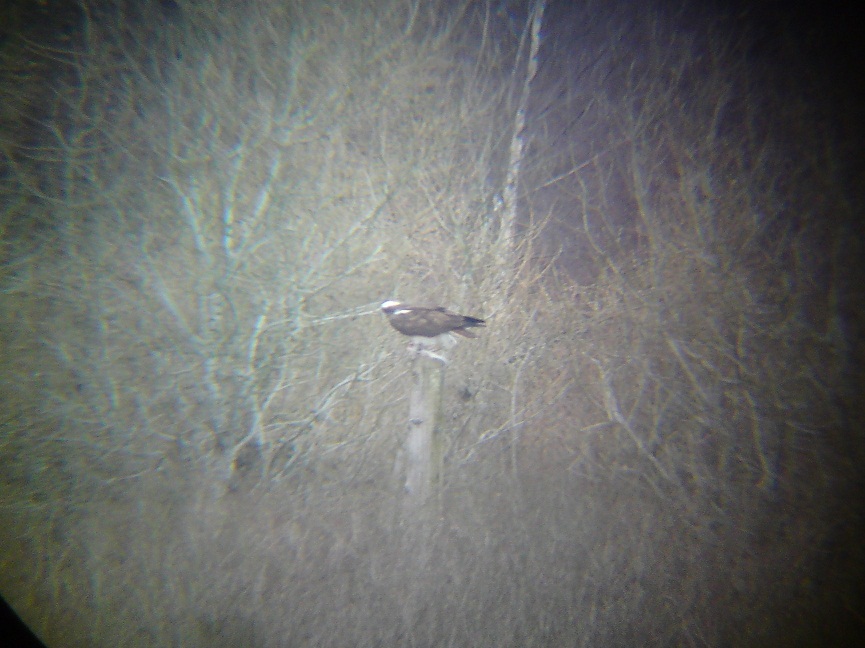
- Looking through the scope at one of the Kinnordy Ospreys, with fish
-

- Whilst cleaning the tools this morning I had some company…
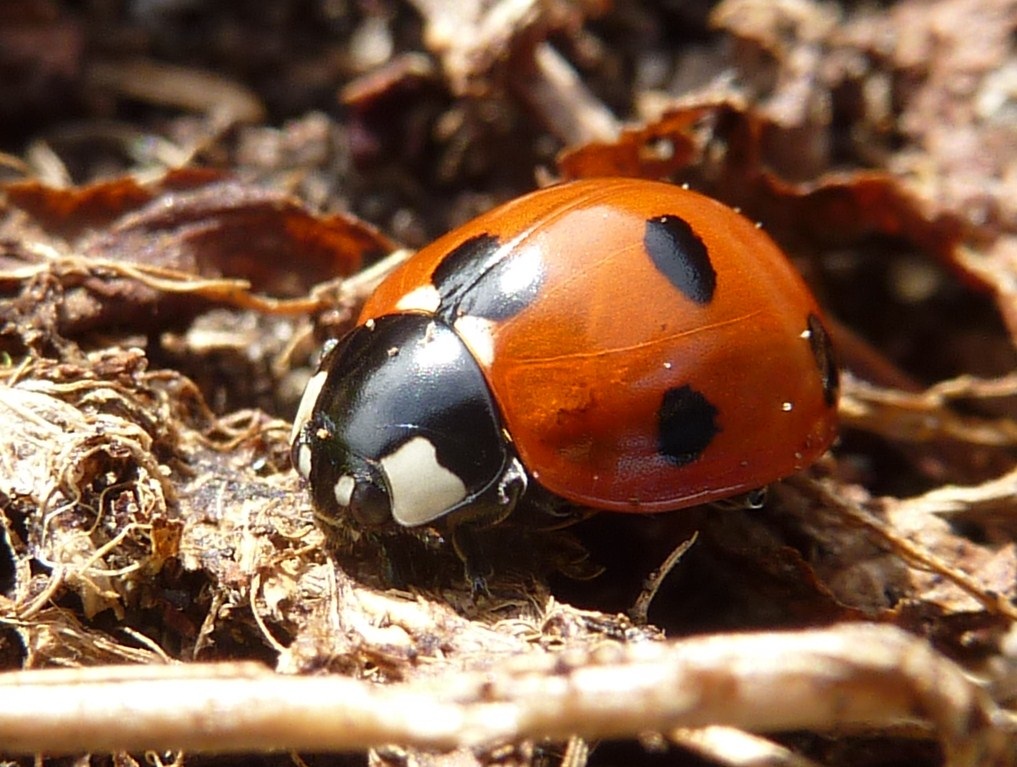
Two days in the hide.
Following my day off on Friday I was posted to hide duty over Easter weekend. This involved me spending time in one of the hides, with a telescope, talking to visitors about the birds we could see. I can remember thinking to myself a number of times over the two days, ‘hmm, is this really work?’.
The job was made even more gratifying when various people, often youngsters, exclaimed surprise at seeing a bird they’d maybe never seen before, up close through the scope. Nature is amazing, and doesn’t take much selling – hopefully a few more kids will now grow up knowing this, and one of them could end up in a position to make a serious difference to our future.
I was also regaled with stories from a number of local regulars, one of which showed me a picture that he’d taken at the reserve two weeks earlier, of a White Tailed Eagle. The Eagle had been released nearby last year, as part of a reintroduction programme, hence it had blue tags on its wings. In the picture the Eagle was flying low, maybe 2 or 3 feet over the water, wings outstretched to slow itself down, and a few feet in front of it were two Swans rearing up out of the water to face it, both also with wings outstretched.
The Eagle is huge. It’s wings almost span the width of both swans standing together. Unfortunately I can’t remember if I asked the question as to what happened next, because I was so fascinated by the picture.
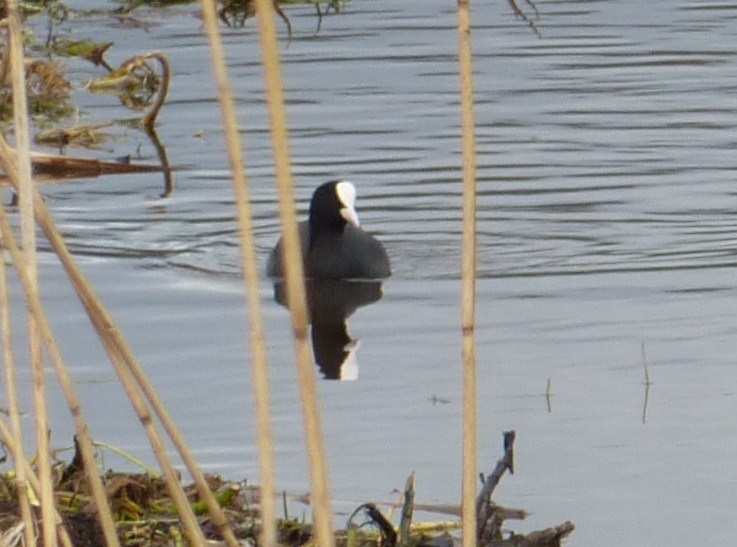
I was also lucky enough to see some birds I’ve never seen before, as well as get some great views of some amazing birds that I never tire of seeing (not that I ever tire of seeing any wild animal in its natural environment, but I must admit I have favourites), such as Widgeon, Teal and Ospreys. Of my firsts, I did just catch a glimpse of a Sand Martin, and the other is pictured below.
Today I had a day off – I get two a week, just not necessarily at the weekends – and the weather hasn’t been welcoming, so I’ve been catching up with (digital) paperwork.
-
- A coot.
-
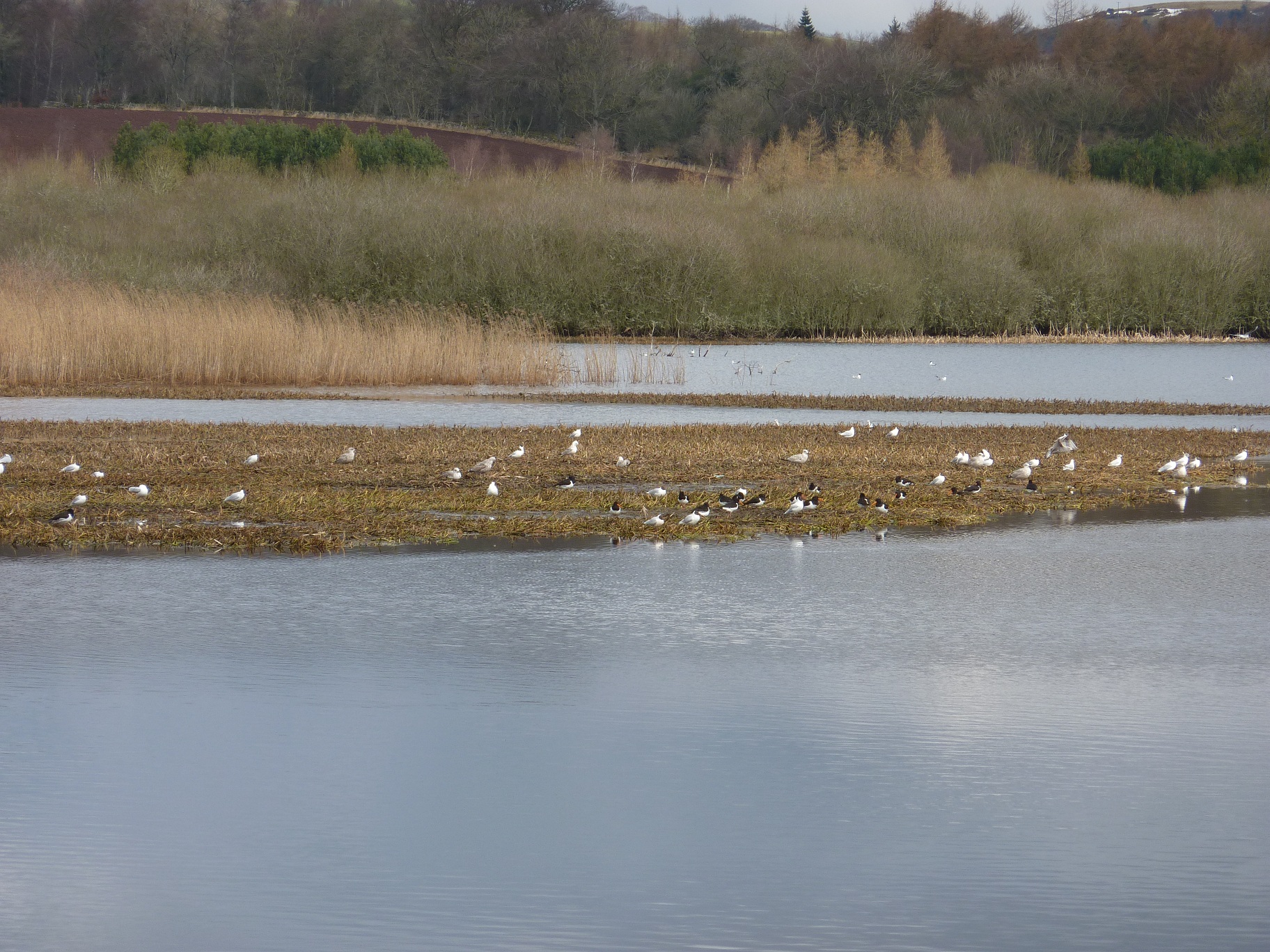
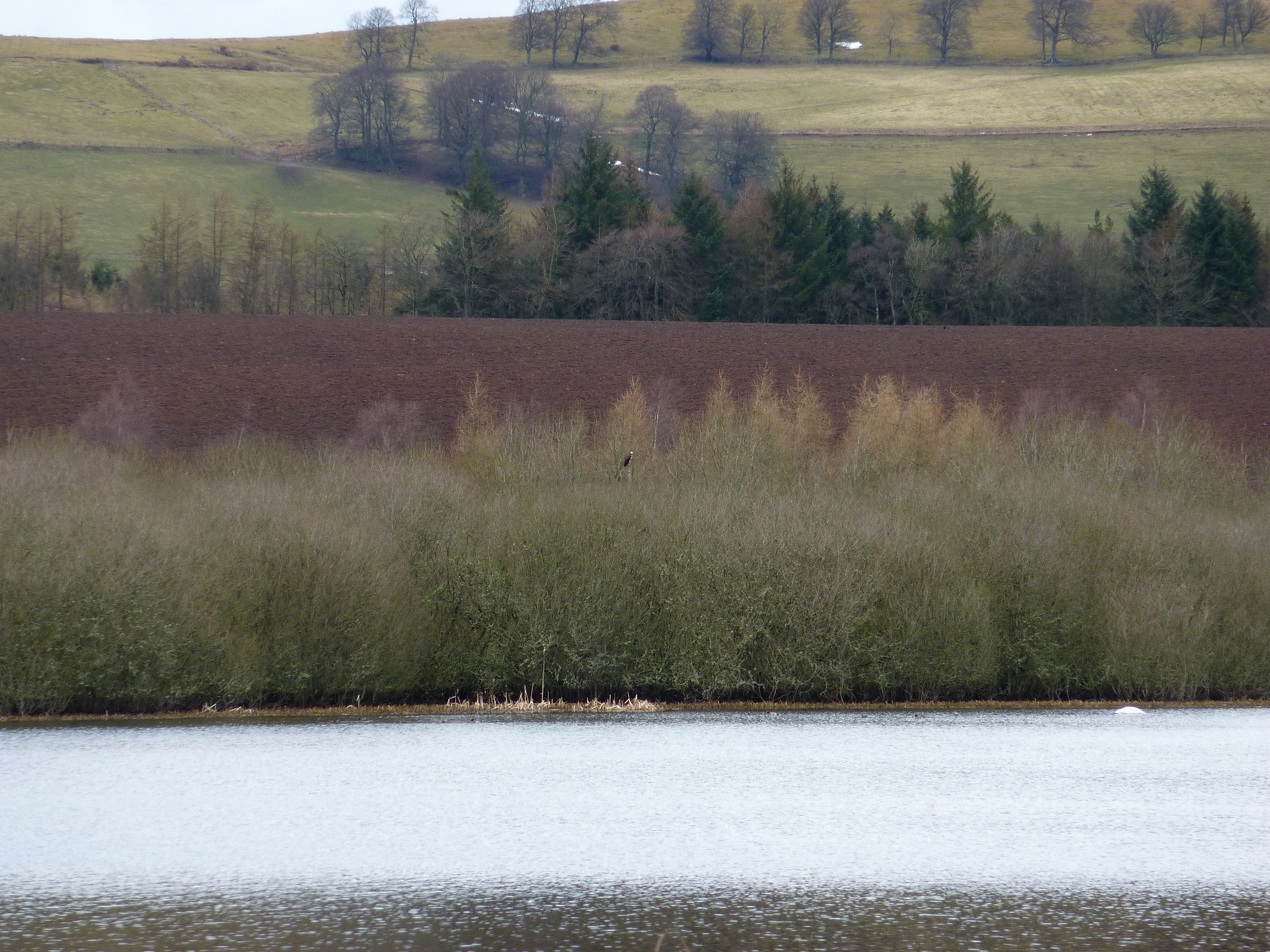
- The view North from the Gullery hide. A favoured Osprey perch is sticking out of the scrub over the water just right of centre.
-
- Mr Mallard looking a little ungainly, and then more dignified.

-

- A Reed Bunting in the reeds below the hide
-

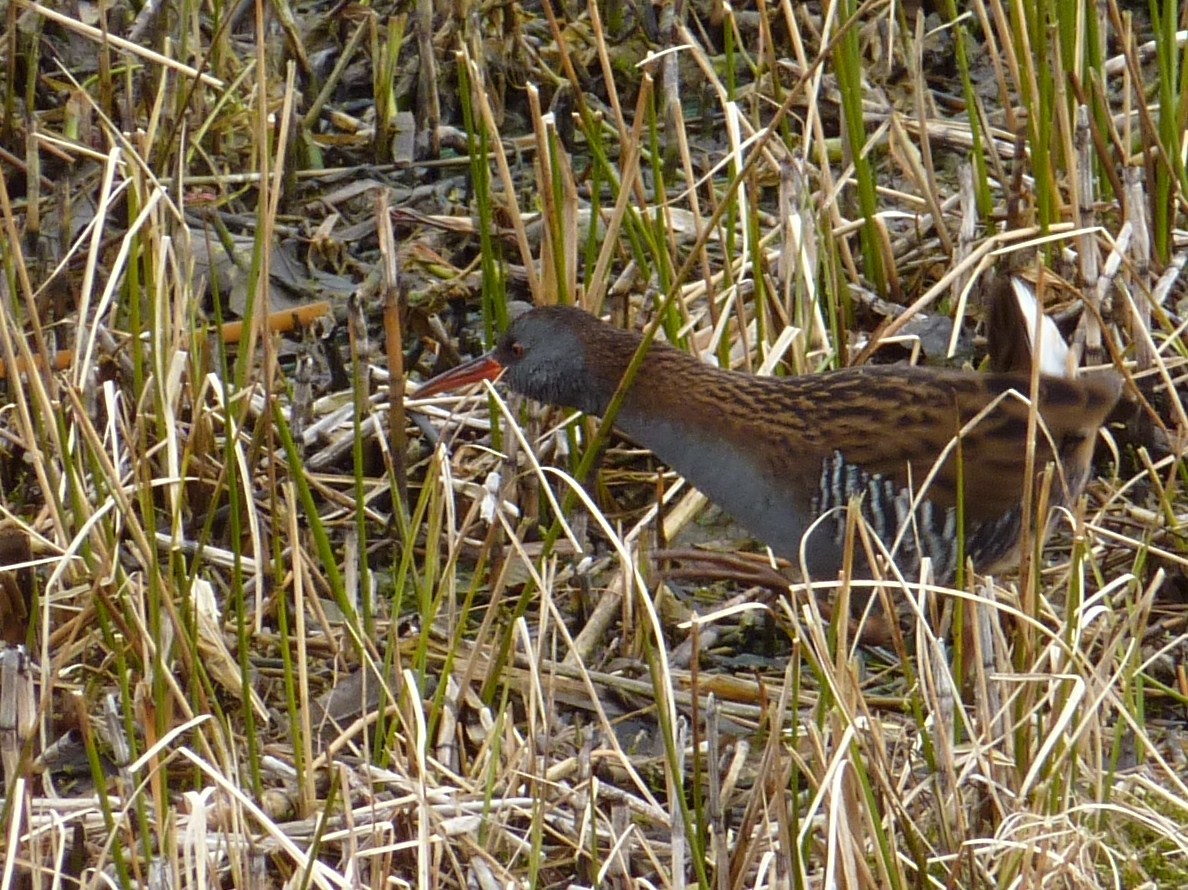
- So, Sunday, on my way I stop by East hide, and this wee bird is feeding just out front…
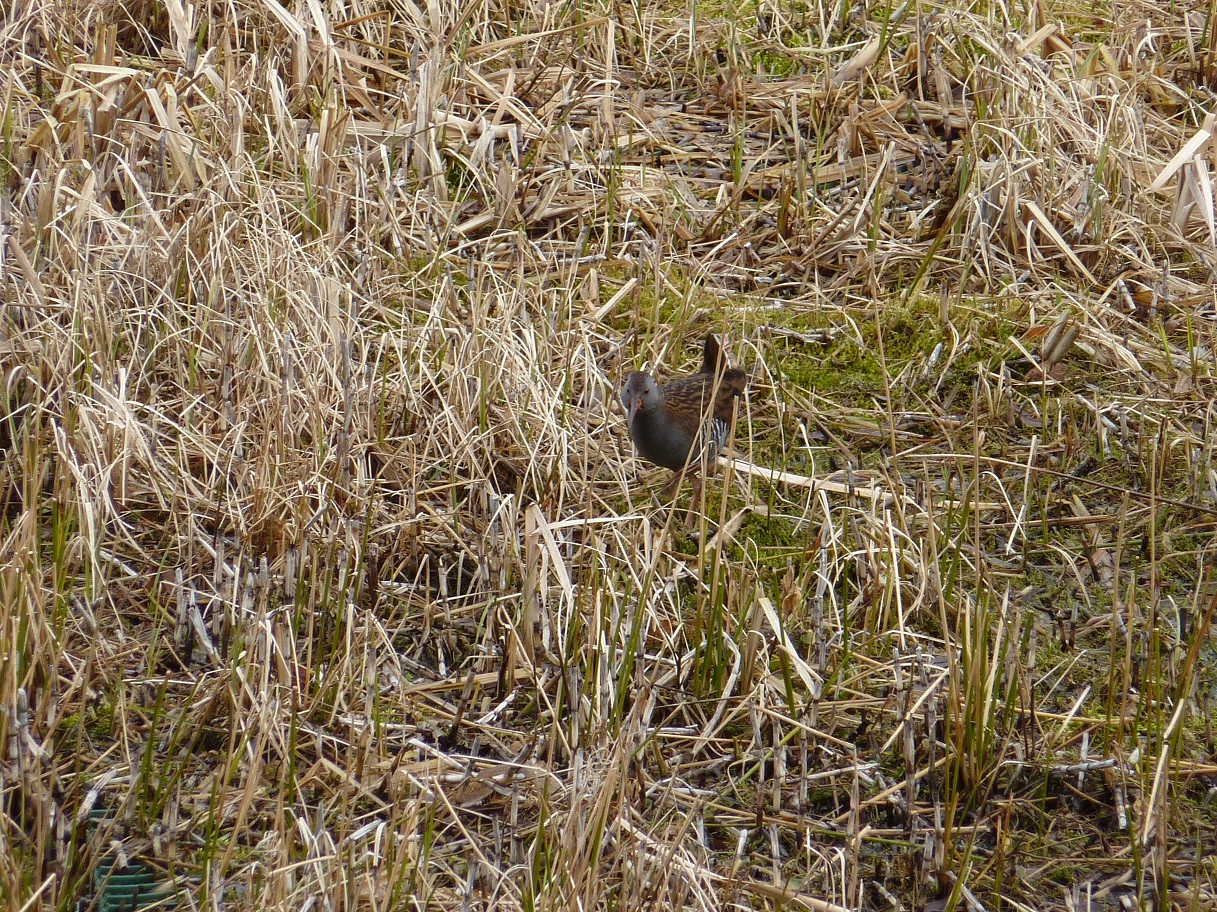
-
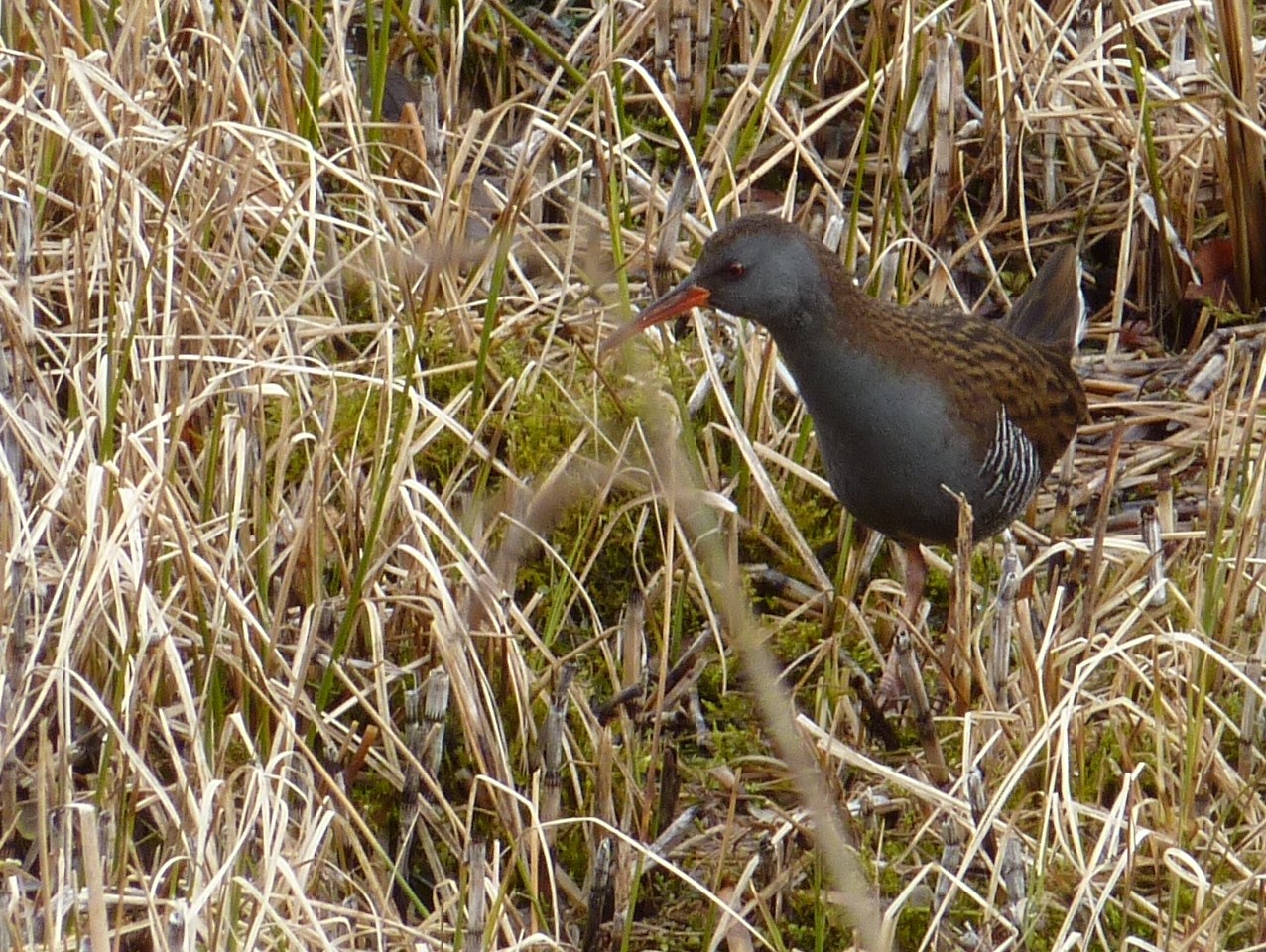
- Do you know what it is? This is my other first…
-
- It’s a Water Rail. Fantastic! I sat and watched it for a good 10 minutes when I probably should have been doing something else, sorry Hannah!
-
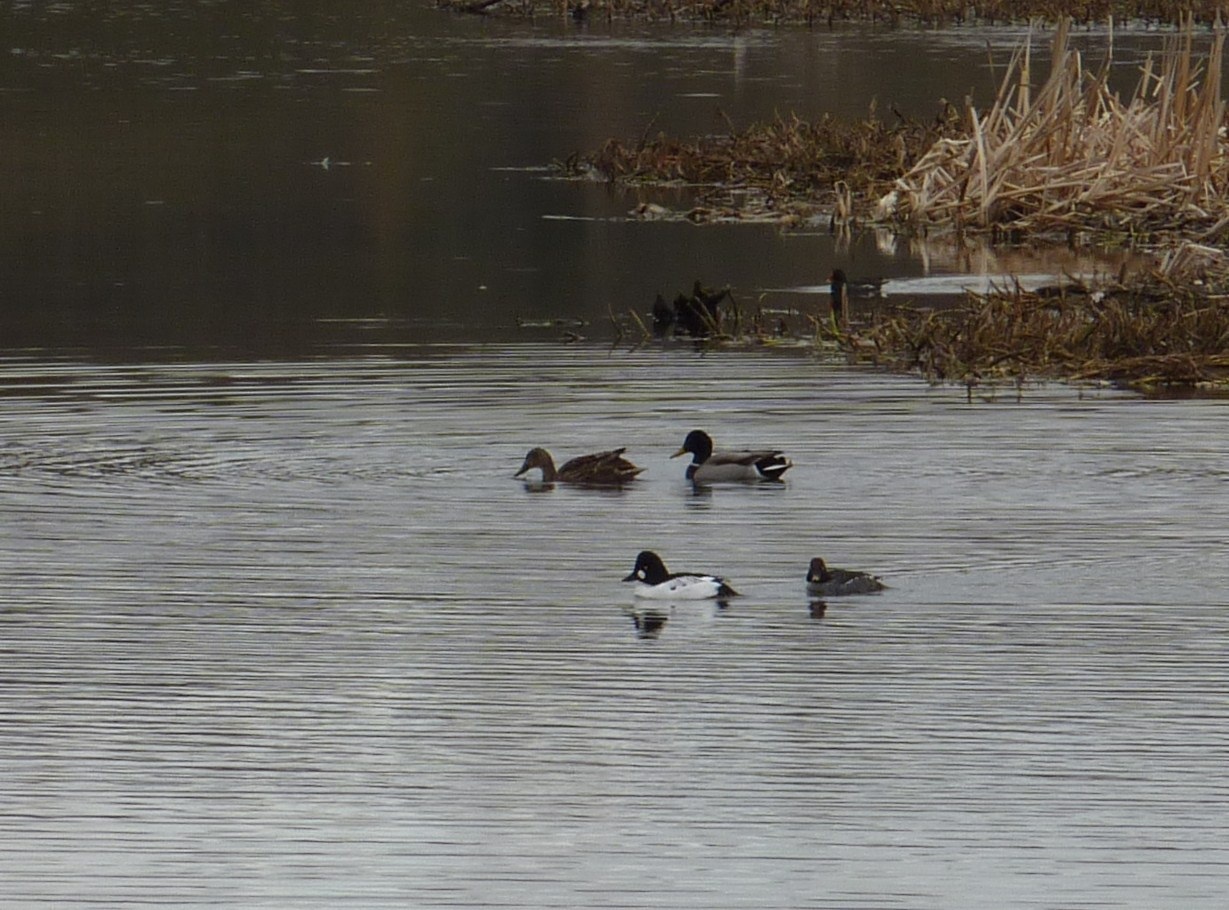
- Ooh, look at this! A pair of Goldeneye, and then a pair of Mallard behind them, and a Moorhen between the reeds behind them
-

- One of the local Ospreys makes use of the aforementioned favoured post
Loch of kinnordy RSPB reserve
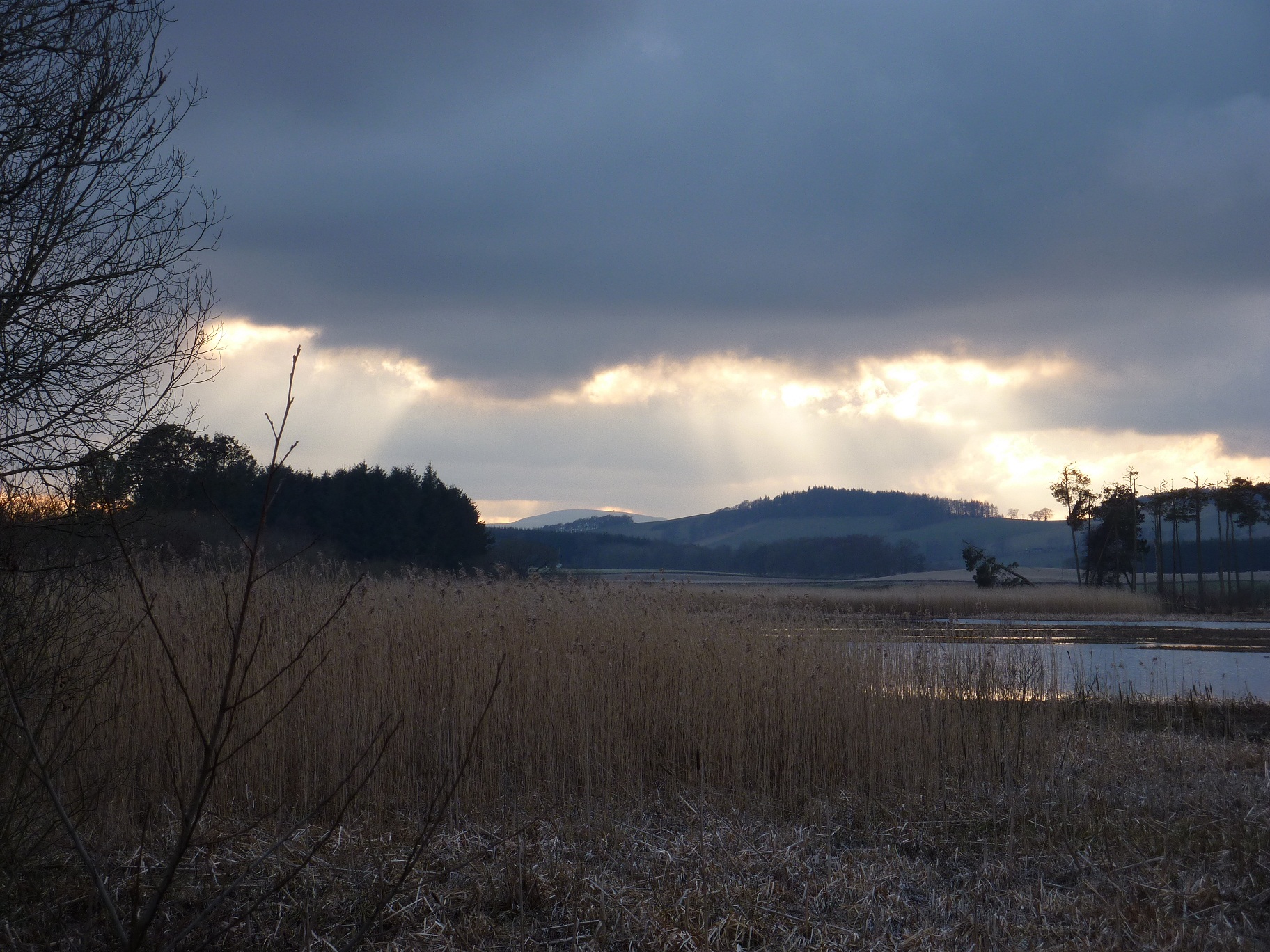
So, I’m doing some more volunteering with the RSPB, this time in East Scotland near a town called Kirriemuir. The reserve is about 90 hectares (almost 1 square kilometre) in size, and it’s possible to see it all in a day, which is what I did on my first working day here (Monday 29th March). Since then I’ve been ducking inside avoiding snow (more snow!), out in a canoe on the loch, taking down fencing, and trying to keep warm.
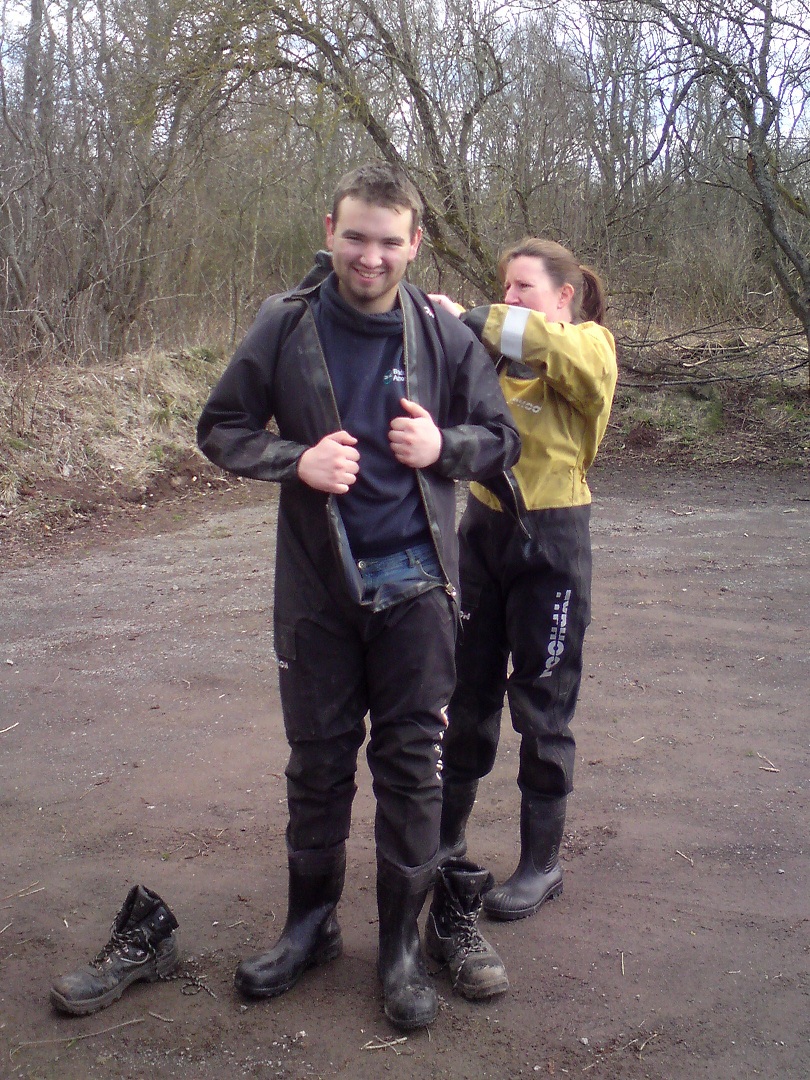
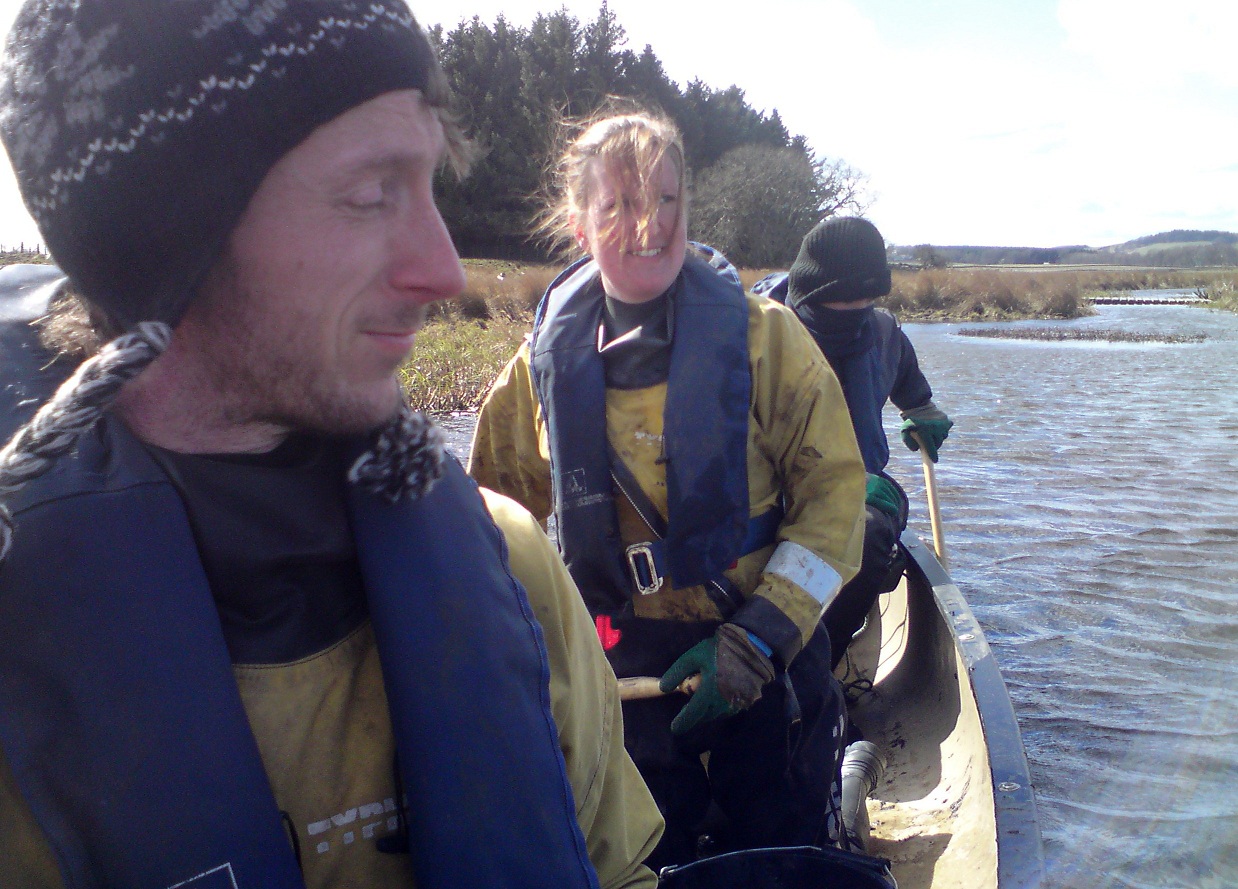
On Tuesday and Wednesday it was blowing a hoolie, so not much opportunity for pictures. By Thursday (yesterday) things had calmed down a little so Hannah, the warden, took myself and Tom, a local reed cutter contracted to the RSPB, out on the loch in the canoe. Hannah collected 10 samples from the loch, which will hopefully tell someone somewhere something useful about the silt content.
Today I’ve had a day off
More information about the reserve is here
Hannah, the warden writes a blog, which is here
Oh, it’s late – I’ll write more soon.
-

- Tuesday morning – the wagon parked out side the flat, my home for four weeks (not the bit without glass in the windows)

-

- Looking West from East hide this evening
-

- Hannah tries to fit Tom into his dry suit
-
- Making our way in the good ship… Canoe, with a Ninja at the helm.
A couple of days out at Dundreggan
Yesterday and today I was lucky enough to tag a ride along to Dundreggan with the TFL staff, who were all over there for a staff meeting. Yesterday I entertained myself by setting up shared printing, via a MAC, to a windows laptop, and with a few other IT bits and pieces, while the staff meeting took place. Today I gratefully gave a hand to Dan and Colin who were setting out plots in the new planting area, to be set aside for ‘experiments’.
The aim of the ‘experiments’ is to determine whether different planting conditions aid the growth of the newly planted trees. The plots that I’ll be most interested in are those using soil samples containing fungal mycelium. The more I read about fungi and their place within ecosystems, the more I discover that it seems trees (and other plants) derive huge benefit from them. Fly agaric (Amanita muscaria) is well known to form mycorrhizas (translates to ‘fungi root’, where a plant root becomes sheathed with mycelium to form a symbiotic relationship between the two) with Birch trees, one of the trees that will be planted in the planting area.
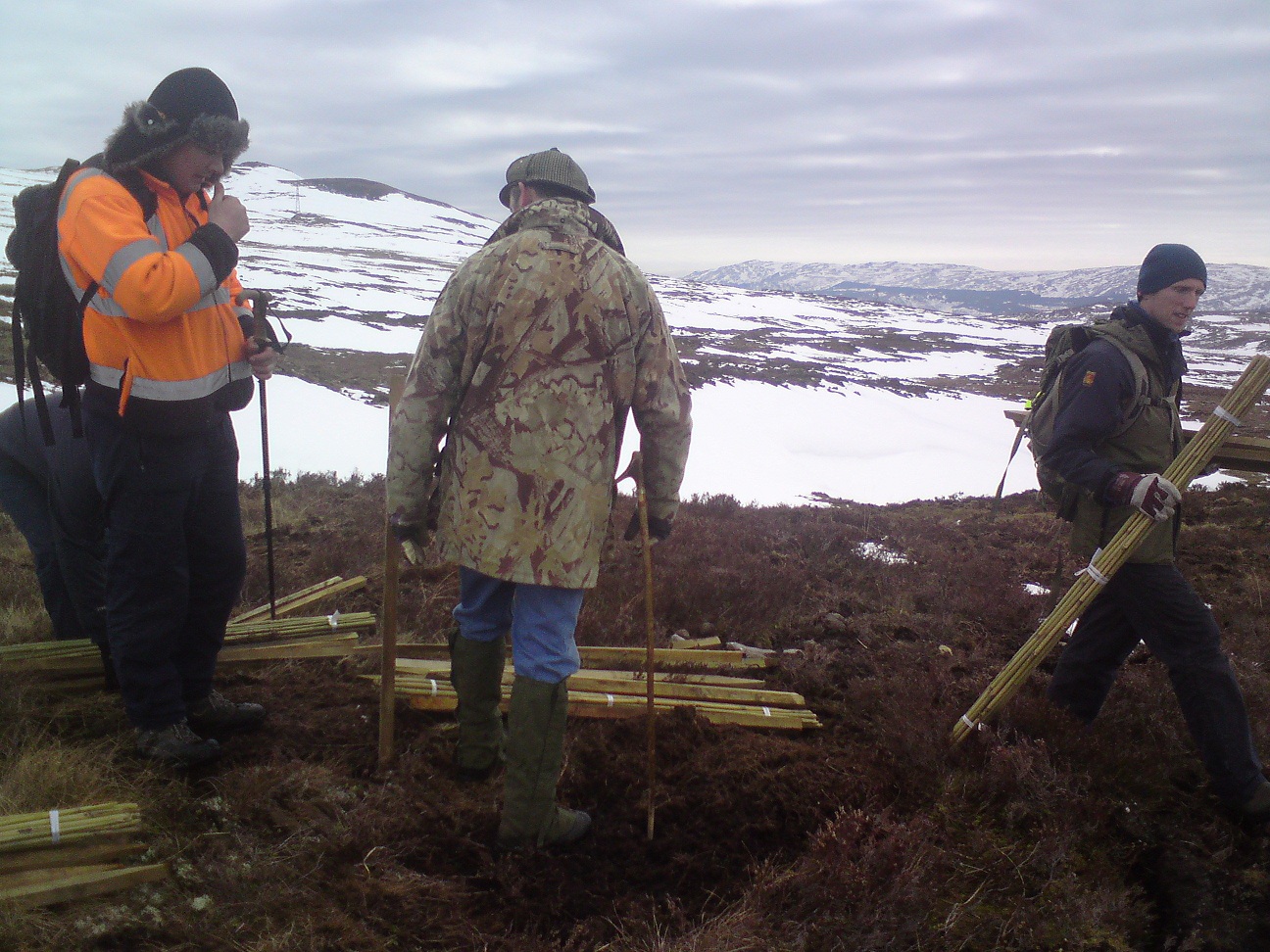
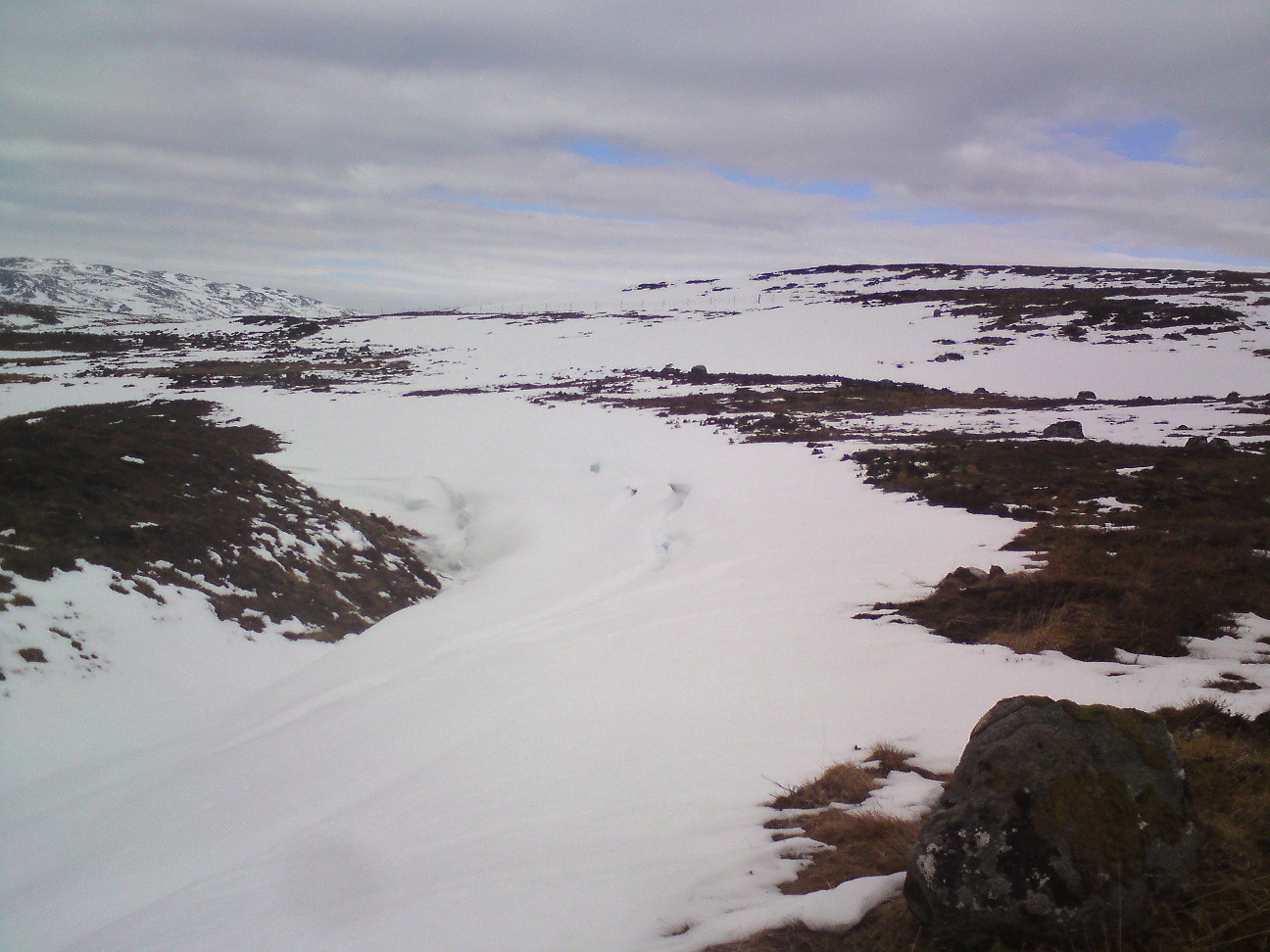
The planting site is at roughly 400m. Allan tried to take us up in the 4 wheel drive pickup, but that couldn’t find its way through the first increasingly large snow drifts on the track on the way up. So, after a rethink Allan and Steve picked us up in the Argo. Woaw, another big kid adventure. We all hung on whilst Allan negotiated enormous near vertical drifts, taking us teetering over the edges of huge snow formed chasms, eventually getting us to the gate of the planting site. From there we had to carry our stuff in because, due to the snow, we couldn’t get the gate open.
-
- Let’s find some vampires
-
- The Dundreggan Crevasse
-

- Allan and Steve take stock of the damage caused by the snow. This fence is two meters high, but here it’s slowly being pulled apart by the weight of the drift

Some snow in Findhorn
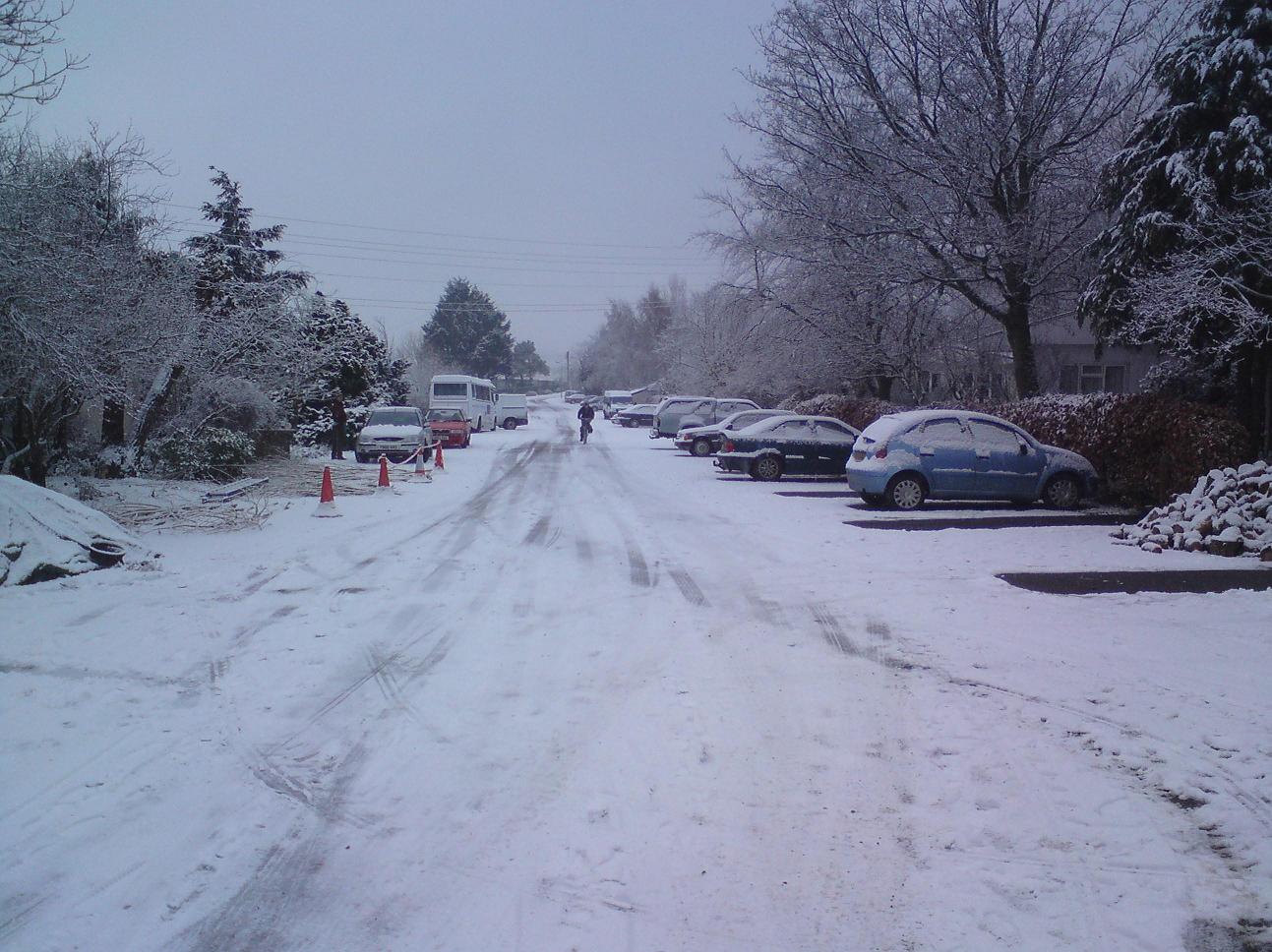
Today there was a sprinkling of snow on the ground when I walked to the TFL office. It’s not much, but it makes me happy.
The mood is cheery in the office. I’m finding the work on the web site interesting, and a good opportunity to brush up my html/php/css skills.
And last night myself and Jane went to see Sherlock Holmes. It’s really rather good. The best film I’ve seen since “In Bruges”. Entertaining from beginning to end. Definitely worth seeing.
-
- Kate boldly charging through the snow on her way in to the office
-
- Snow in The Park.

-
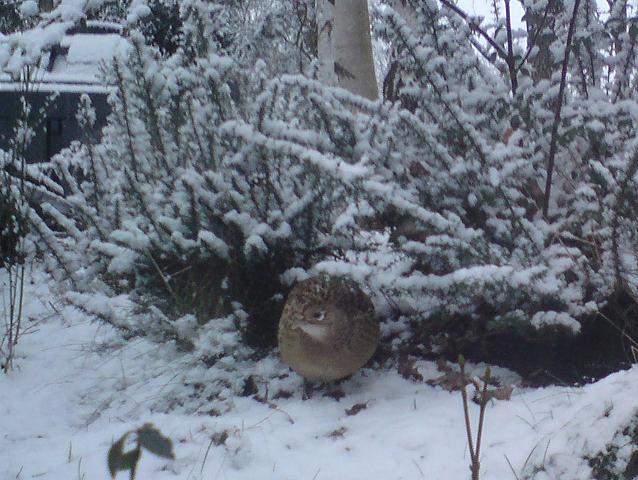
- A female pheasant outside the TFL office window
The good, the cold and the quite ridiculous.
Life in Findhorn is good. I walk to & from work, in the TFL office, every day. It’s cold but that’s good. I walk alongside the bay, from the village to the park. There is a telescope on the way, and on Friday morning I take a bit of time out to watch three pairs of Widgeons on the bay.
The web site work is going ok. Check it out. Please bear in mind that I didn’t design the new site. I, along with Sky, from the foundation IT team, just helped moved it from the old design to the new. A lot of content on the site relates to tree dedications bought through the site. The office is always upbeat, and it’s great to be involved in a project that has a positive impact on so many people’s lives.
Today, Saturday, I get up at 9am. I feel good about the day ahead. I go for a walk along the bay. Although it’s overcast, the air is clear and there is snow on the hills. The tide is high, but there are a few birds in the bay. Mallard, Widgeon, Redshank and Curlew.
On the way back to the house I pop into the Findhorn shop to pick up some cake, crisps and Hobnobs. I then break open some beer and watch the Wales Scotland match. The match is crazy, with Wales relying on a big come back again (their last one, against England, was disappointingly too little too late). I’m determined not to get wound up, but by the end of the game I’m exhausted. Wales have somehow won, even though they were second best for the majority of the match. However, it’s a while before I’m able to stop smiling, and this doesn’t seem to go down well with my Scottish housemate.
-
- The sleepy town of Findhorn, a jigsaw puzzle picture waiting to happen

-
- Findhorn bay, with the mountains of Easter Ross in the distance

-
- Looking South West, towards some mist.
Aspen and Avatar
Today I manage to tag along on a TFL trip to Dundreggan. Alan and Mick are going to a meeting with the FCS, Jane is along for a meeting with Steve, and Dan is going to take me Aspen root collecting.
Jane comes with us in the morning, and we set off to find GM47 (Glen Moriston stand no 47). Some quality map reading later and a long walk into the woods near Ceannacroc Lodge and we find the Aspen stand. Dan shows us how to take samples and then takes a GPS reading and some photos of the stand.
Aspen send out suckers to create new trees. It is rare that they flower and produce seeds, but they can send out large numbers of suckers. As a result, a group of Aspen trees, like those we’ve found today, are usually all part of the same “clone”.
After taking the GPS reading Dan realises that we are nearly 3 km away from where we’re meant to be. But this is good news! We’ve been taking samples (19 – a good haul) from a previously undiscovered stand of Glen Moriston Aspen. It’s time for lunch, so we walk back to the van, feeling somewhat fortunate.
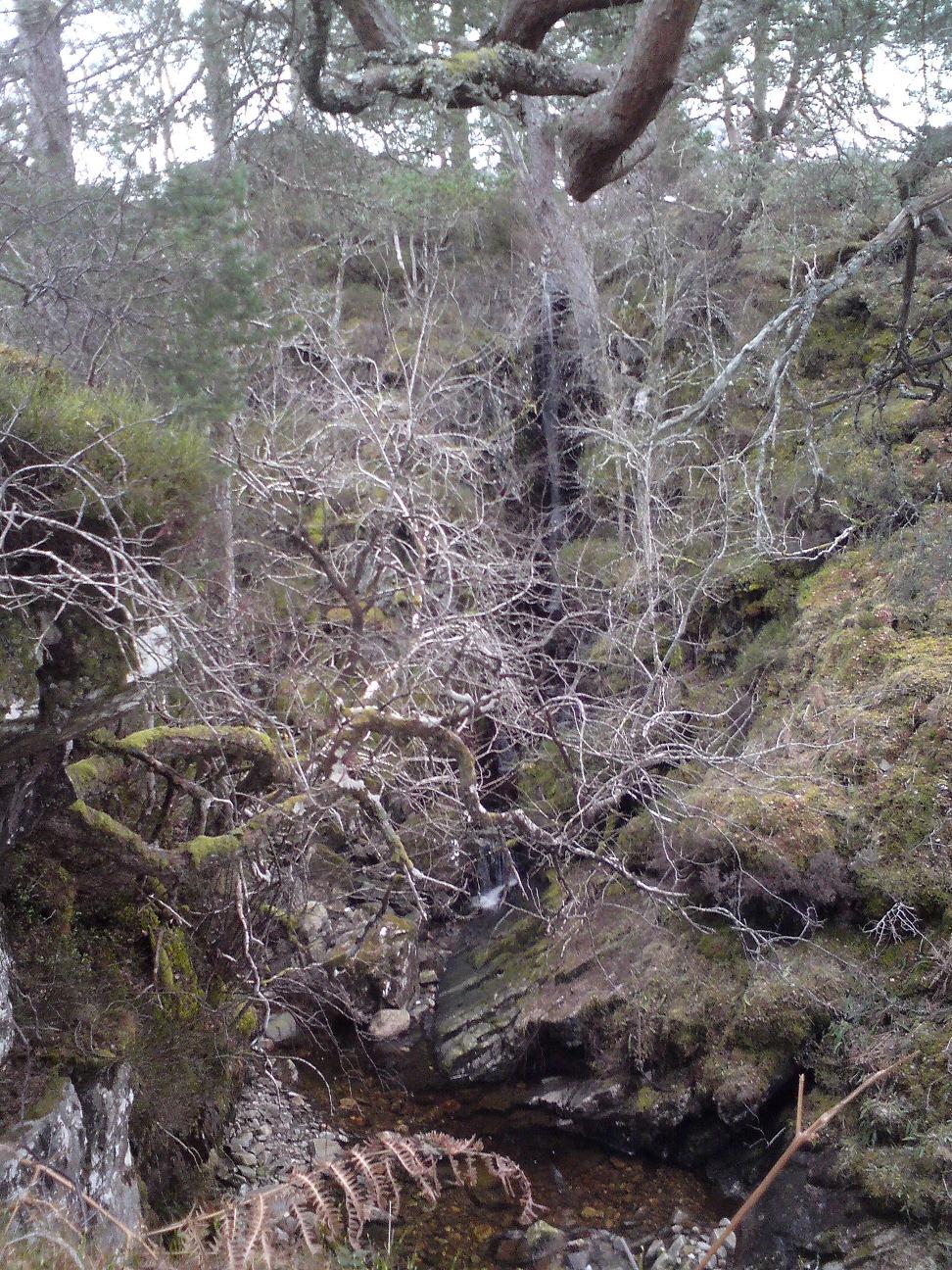
In the afternoon Mick joins us, whilst Jane has her meeting with Steve. The burn where GM47 is actually growing is spectacular, a narrow gorge headed by a waterfall. The Aspen stand seems to originate from two very old looking, twisted trees near the top of the gorge. It’s harder to get samples here, we have to guess where the suckers are and dig for them. But we collect a few samples and head back to Dundreggan to pick up the others following a successful day. On the way home all the passengers in the van sleep at one point or another.
Last night myself and Jane went to see Avatar, in 3D. During the adverts before the film, I felt slightly sick, especially when anything on screen was in the extreme foreground. However, thankfully, the makers of Avatar have not thrown in too many of these extreme close up moments, and after a couple of minutes of the film I forget these feelings.
I must admit, I loved Avatar. Life on Pandora is stunning, the 3D worked for me, although it’s maybe not as spectacular is it’s made out to be. But, more importantly, the story, which millions of people are apparently watching, has a very strong message. Hopefully, when the kids watching Avatar today, are making tomorrow’s big decisions, they’ll pay heed to what they felt during the film.
If you haven’t seen it, see it at the cinema, in 3D if possible. Leave your cynicism at the door, immerse yourself in the film and love it for what it is, a simple but well told story with superb visual effects.
-
- Dan and Jane discuss tactics next to our newly discovered Aspen stand

-
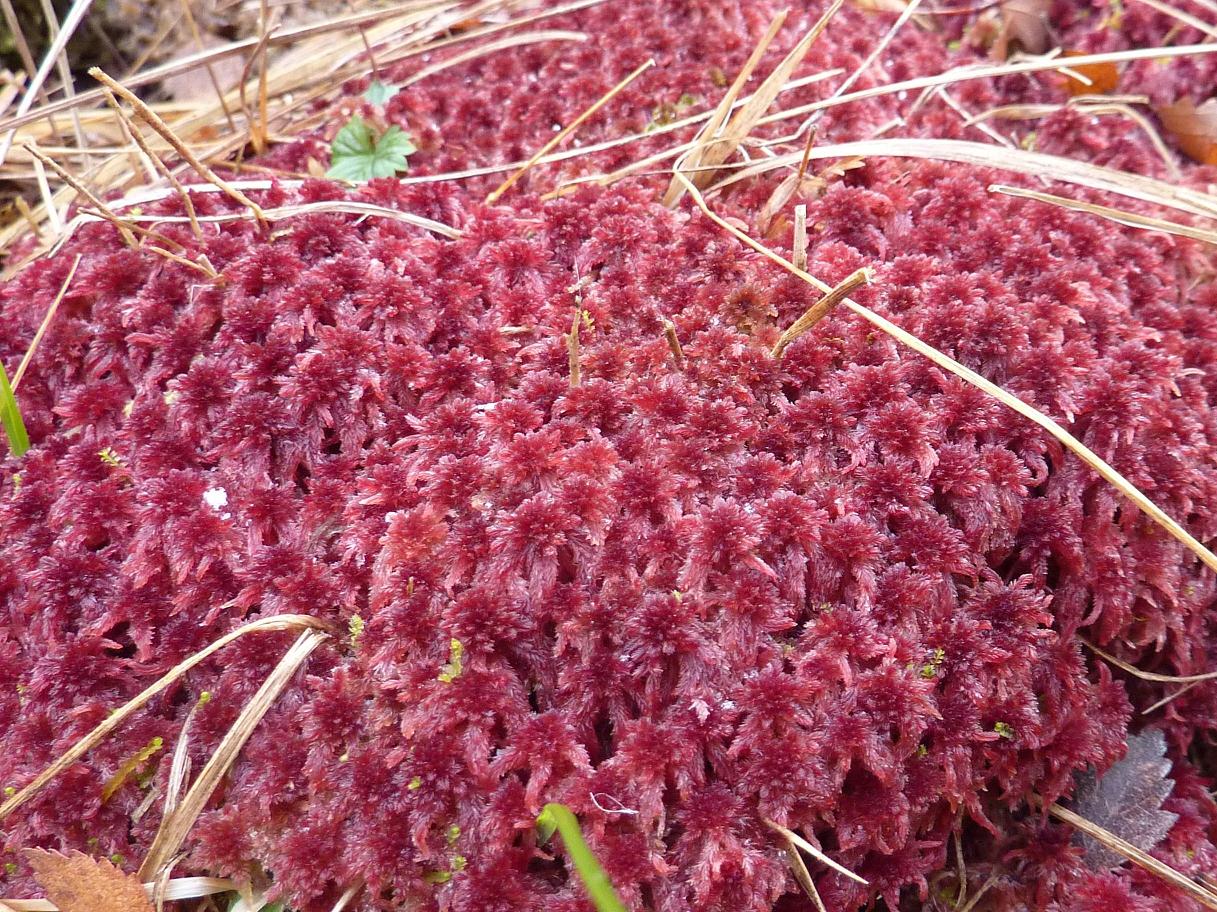
- Sphagnum capilifolium. Expect a post about the painting Jane is going to do of this in her art class.
-
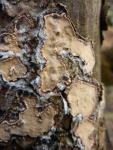
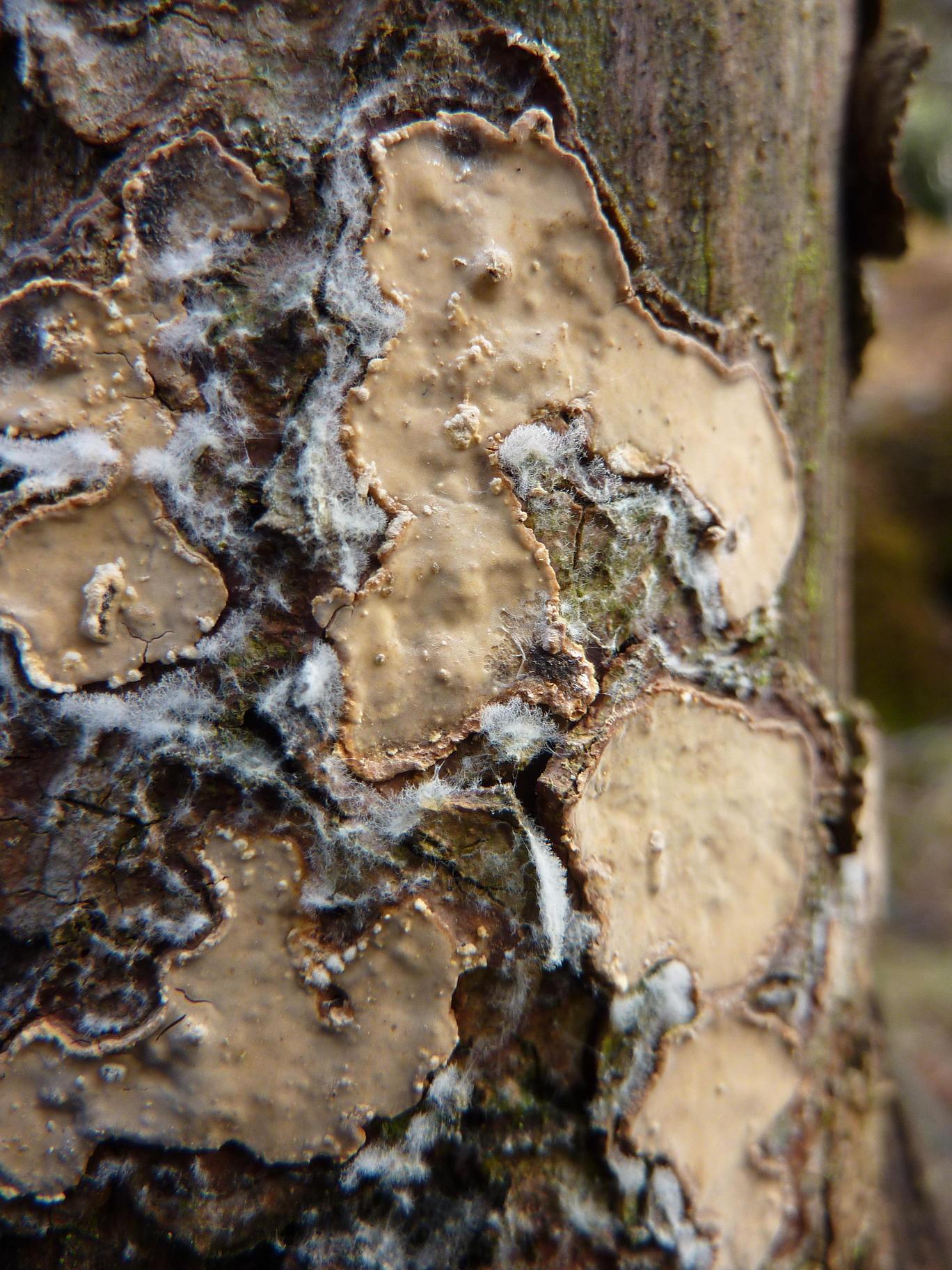
- Is it in my lichen book, or my fungi book, because I can’t find it…
-
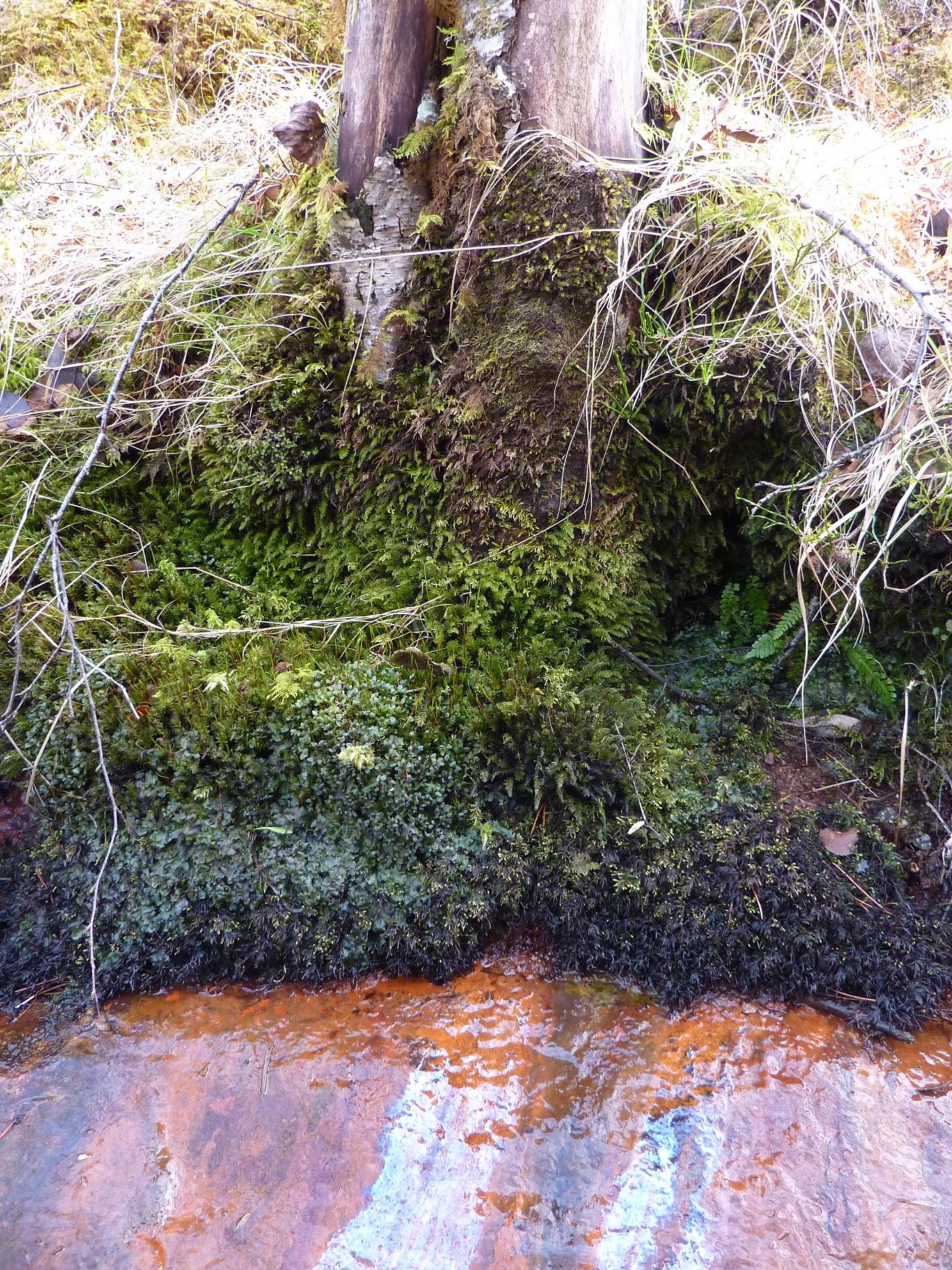
- The bottom of this dead tree appears to be an eco-geek’s paradise. Except, where’s all that oil coming from?
-
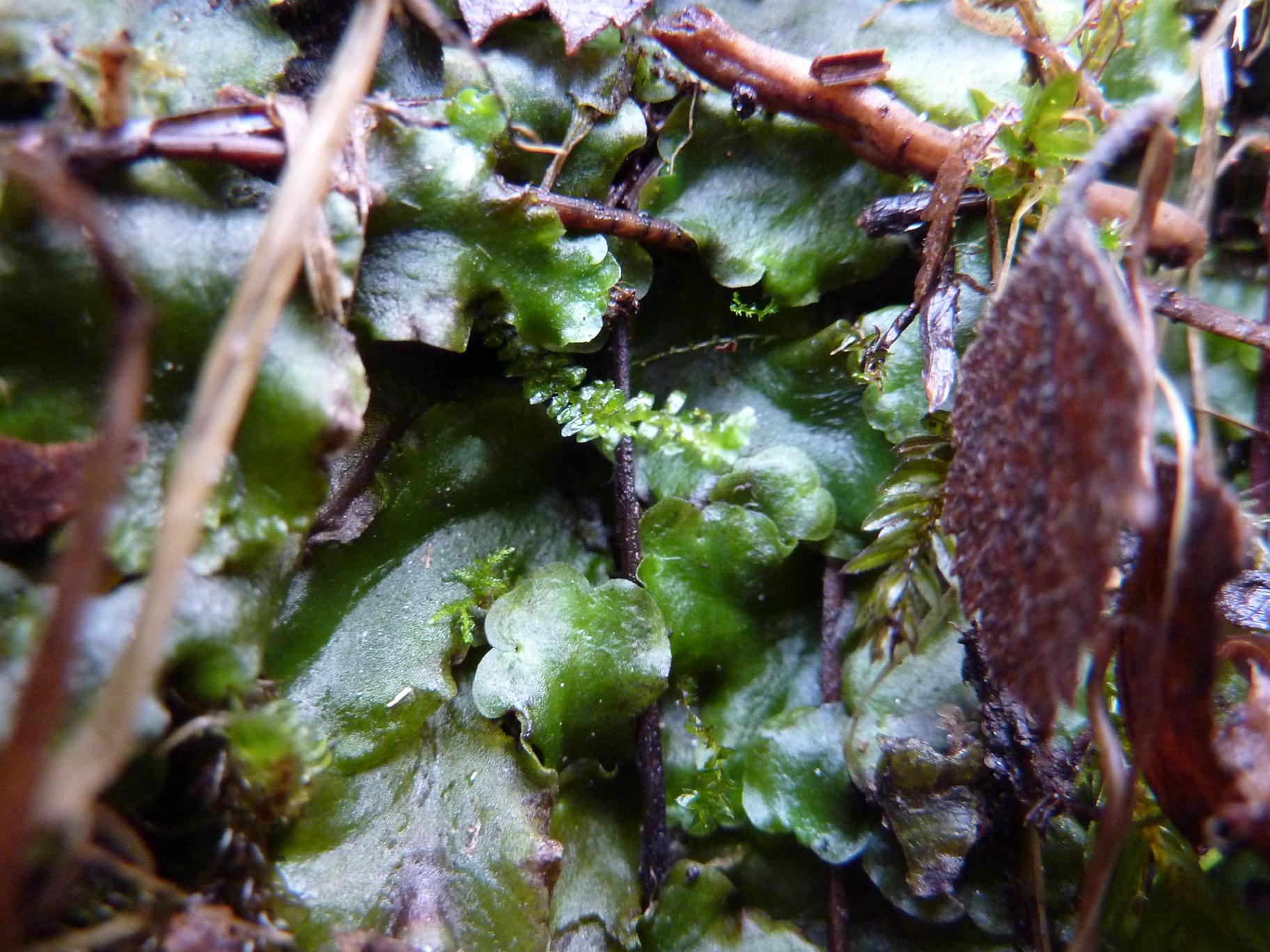
- Woaw, all this stuff near the ground is so amazing. I think this is maybe some green liverwort.
-
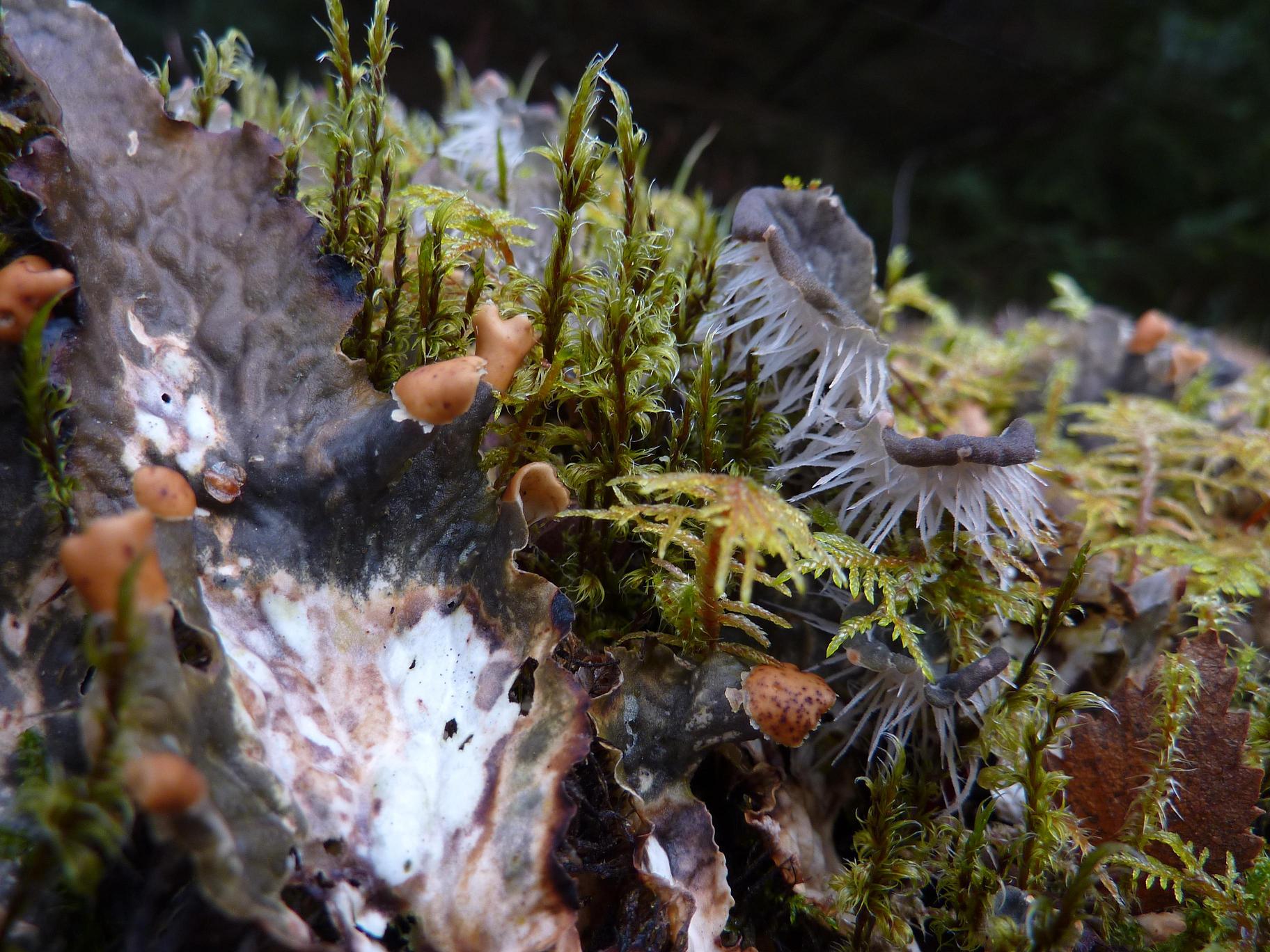
- Hmm, peltigera hymenina, and/or p. membranacea. Common UK dog lichens.
-
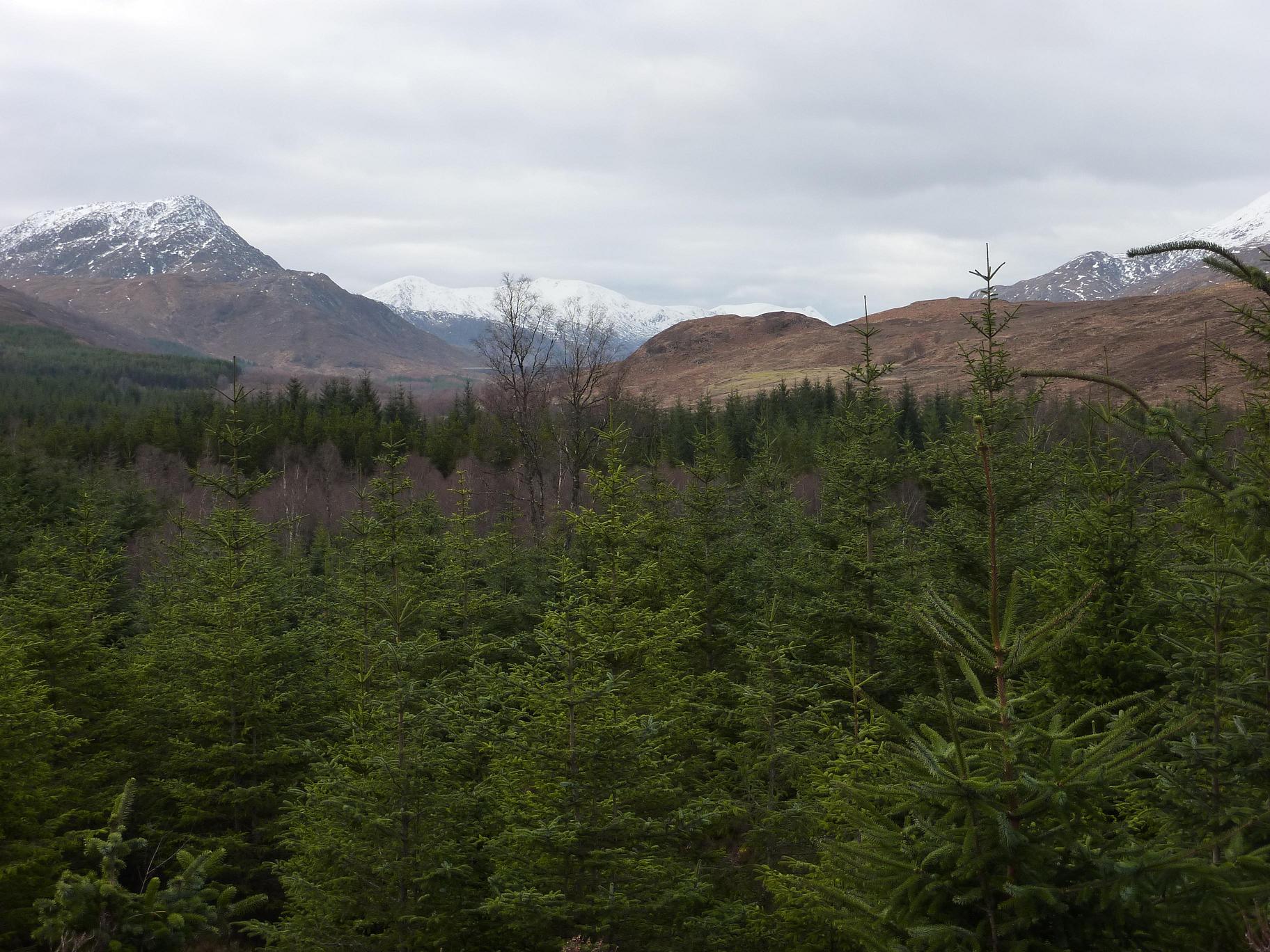
- The view looking North from our side of the Glen.
-
- The gorge harbouring GM47
More TFL web site work
On Wednesday Allan and Russell helped me pack all the Pine cones into my van and I drove over to the TFL office. It was a cold morning, but the roads were relatively clear and the journey was good. In the office I dropped the cones off and agreed to do some work on the new TFL web site over the forthcoming days.
I spend the rest of the week in the office by day, and staying in Jock’s spare room by night (Jock is the landlord of Jane, the TFL marketing manager – he’s rarely home and has very kindly agreed to me staying for a couple of weeks). Today, Saturday, I take the opportunity to walk the beach here, at Findhorn, and make use of my new(ish) camera.
-
- Jane and Steve, the living teddy bear
-
- Hmm, should I get the board out…?
-
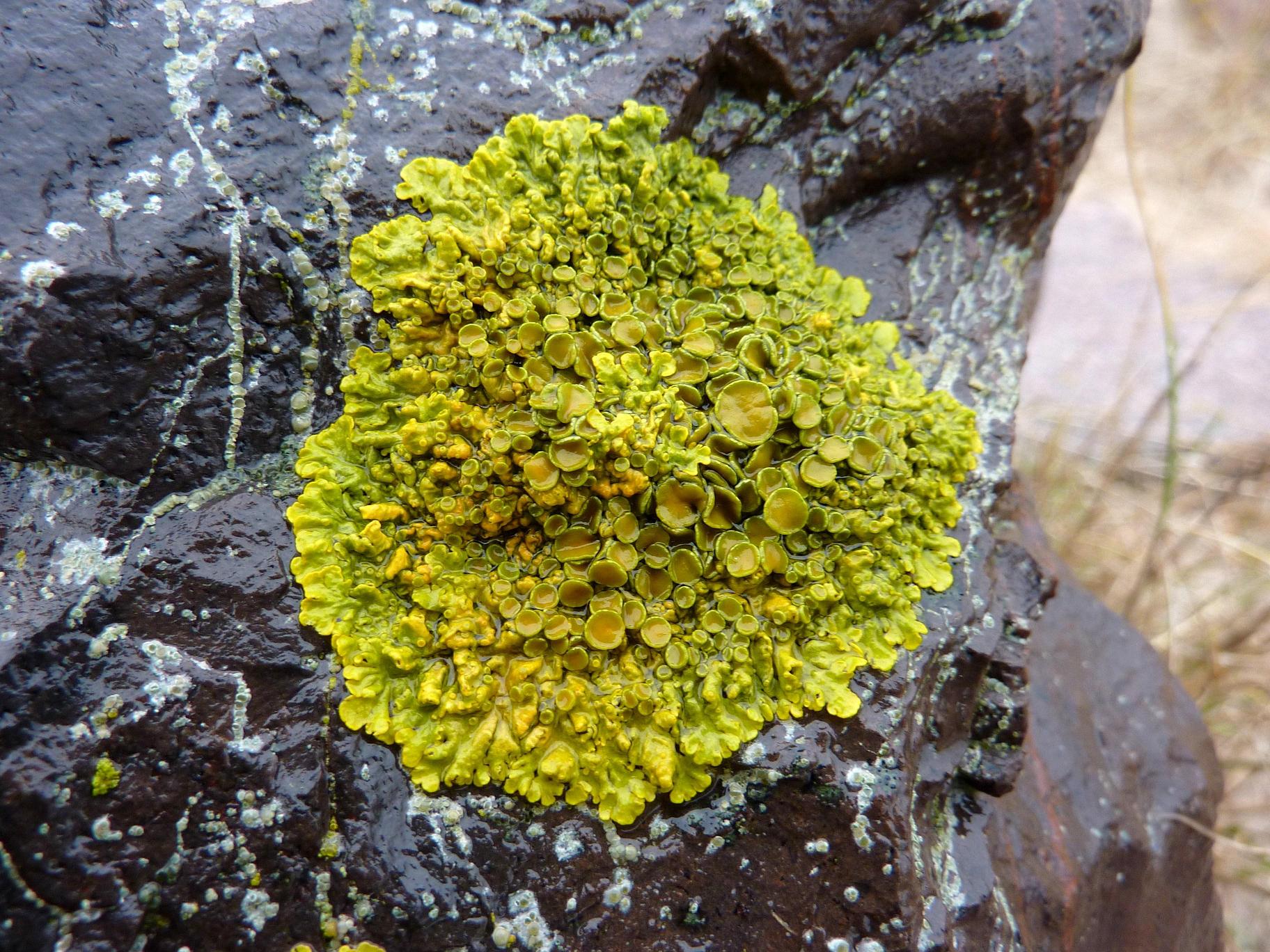
- Xanthoria parietina. Maybe.
-

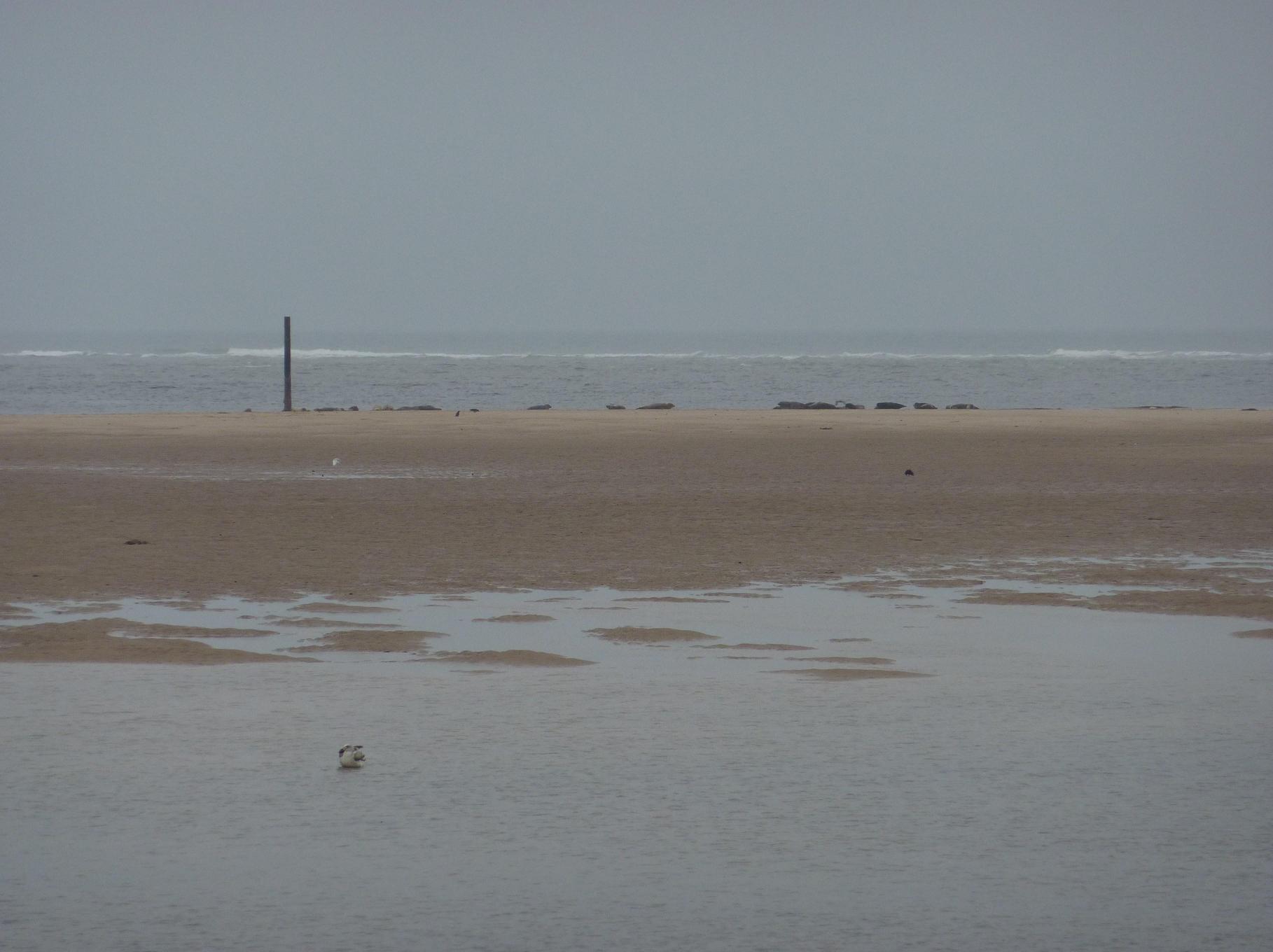
- Seals lounging about in the Scottish sunshine
-
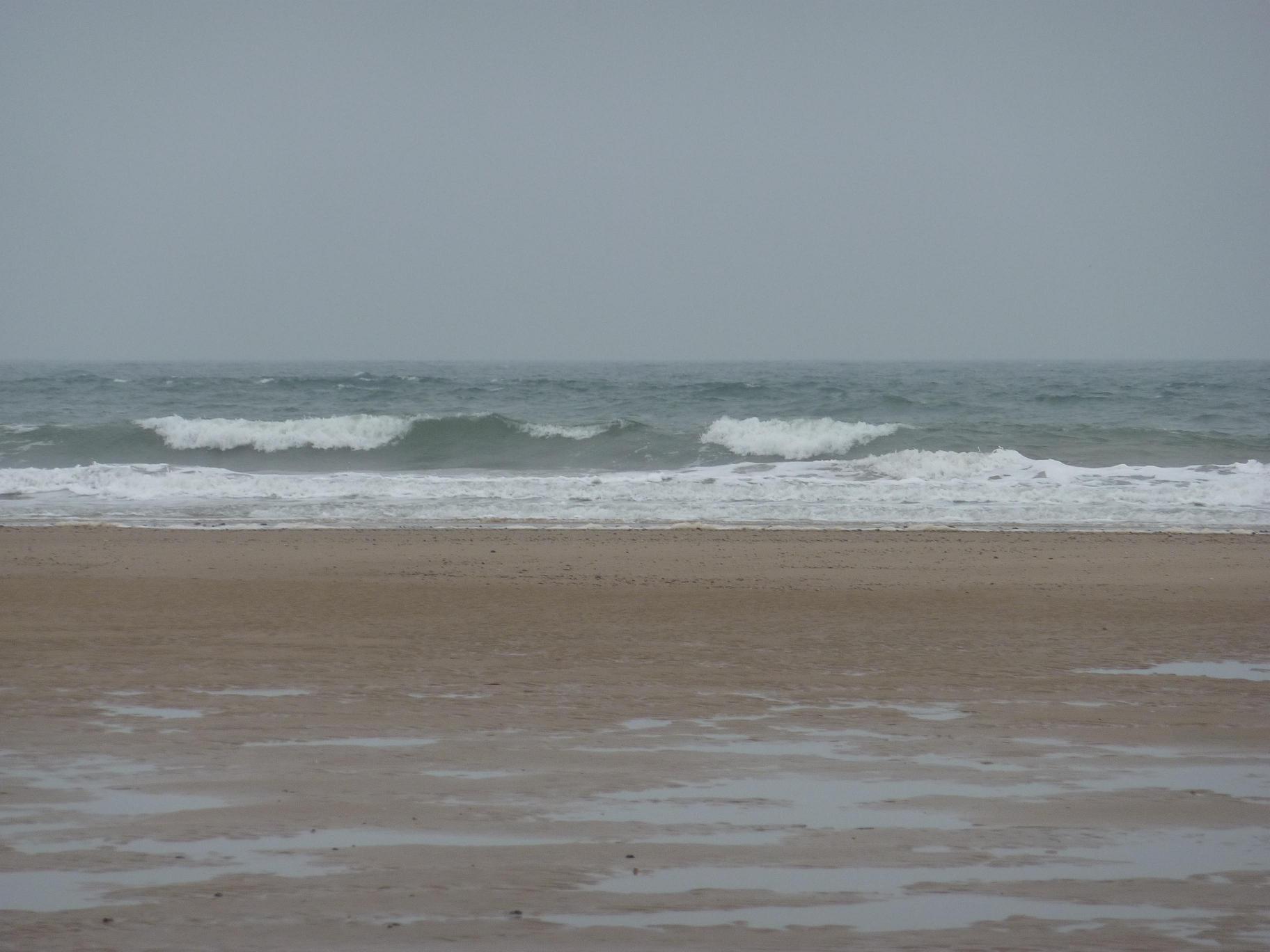
- Not North America
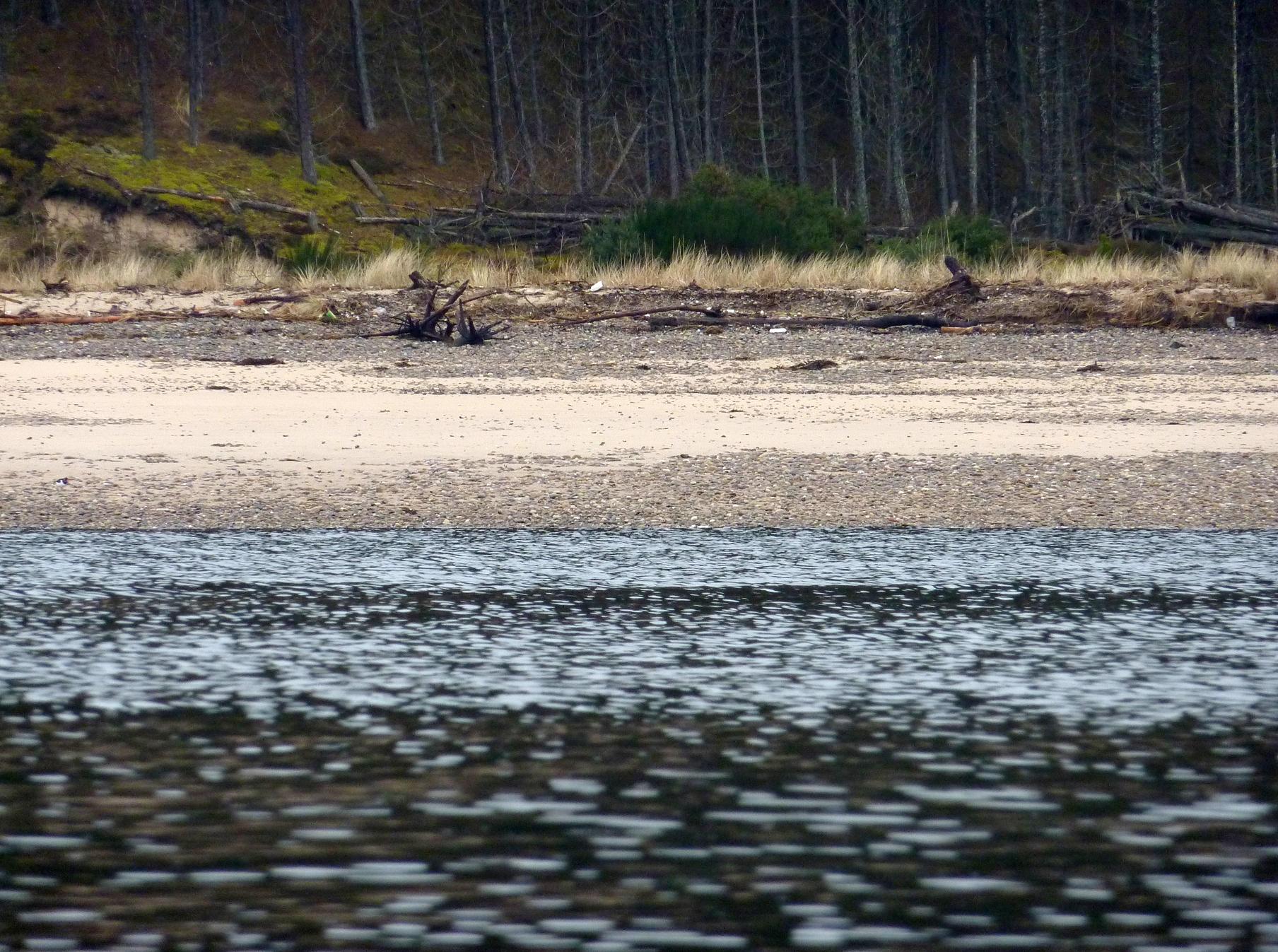
-
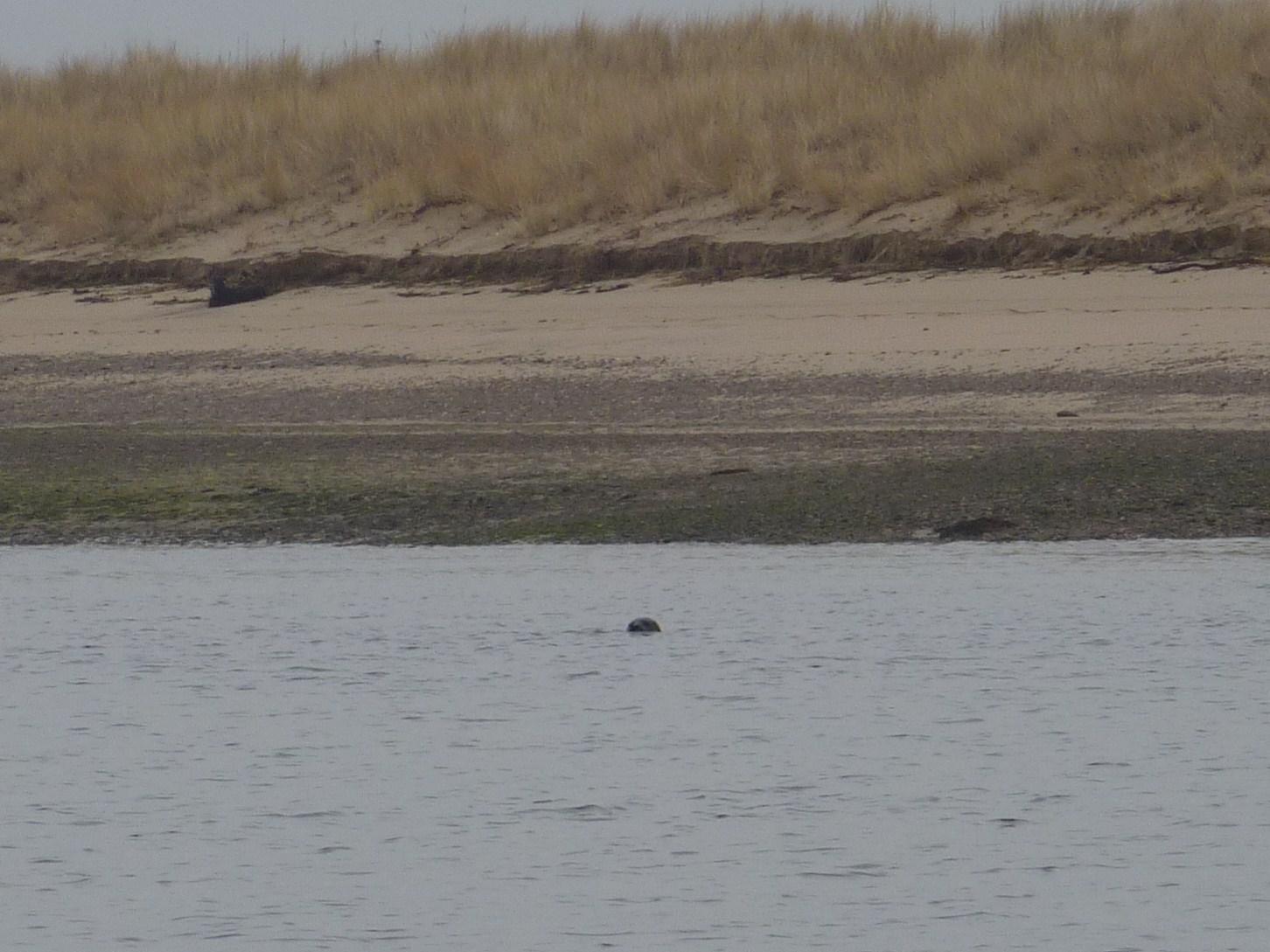
- The zoom on my digital compact captures a seal in the bath
-
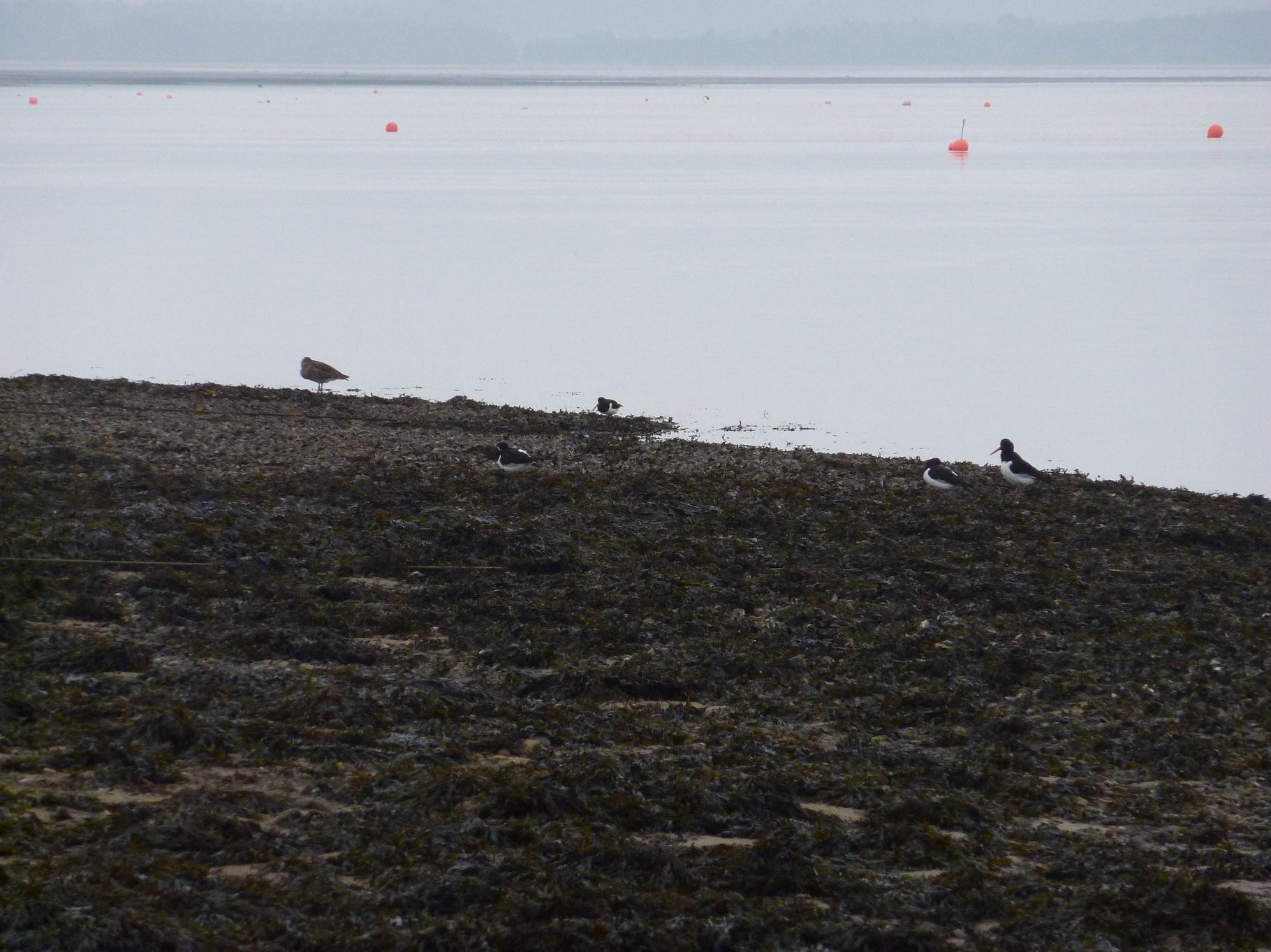
- Some Oystercatchers and a Curlew
-
- Findhorn bay by night

New year plans…
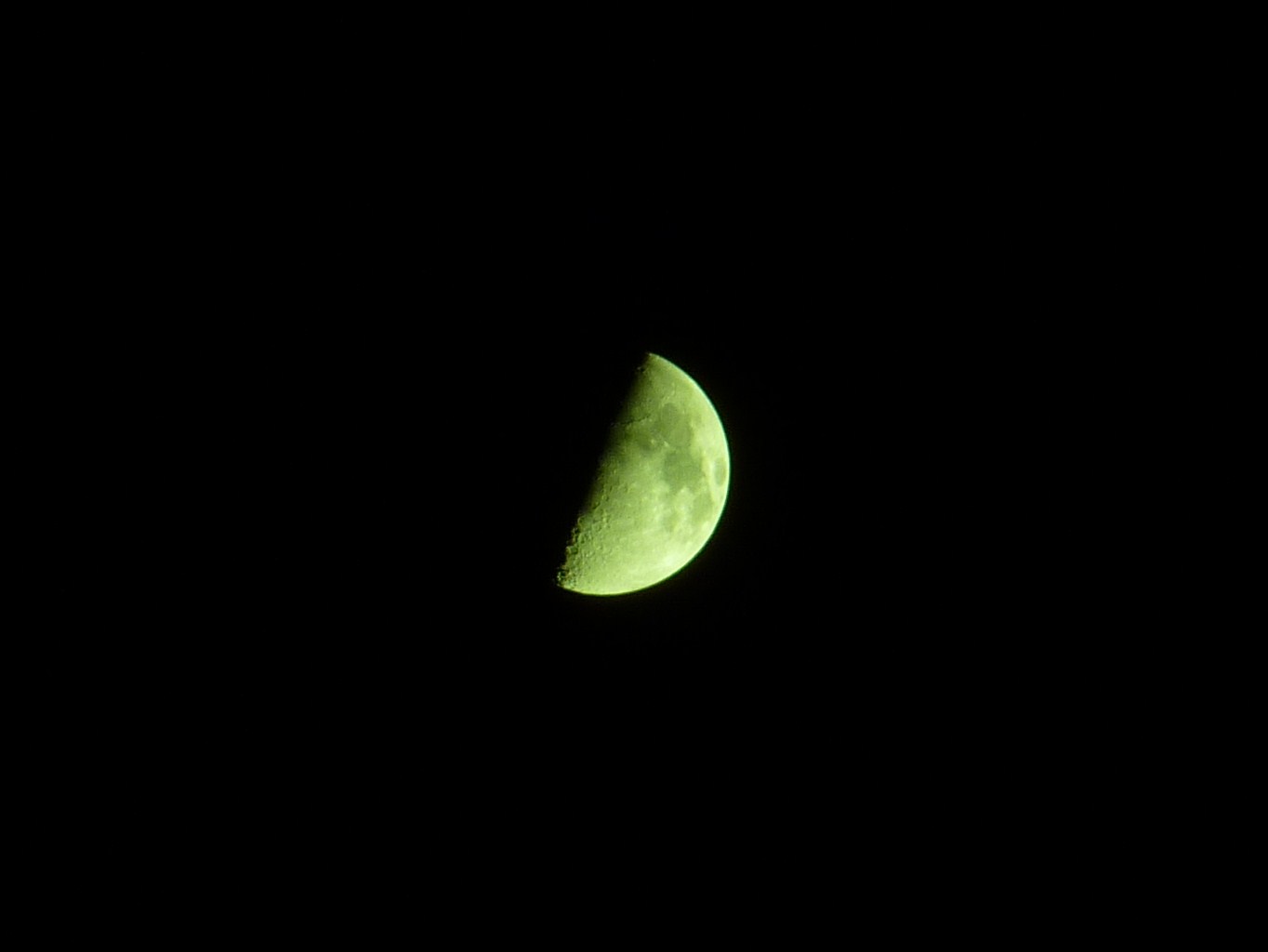
Exmouth's moon, tonight.
So, following recent discussions with the very accommodating Jane, from the RSPB office, and the people at TFL, I’ve a sort of schedule for the spring. It’s like this:
January – The Focaliser conference comes up at the end of this month, at Dundreggan. It’s my first one of these, but this year there are more people going, it’s on TFL grounds, and there’ll be a lot of first timers about. Including Colin, the new work week co-ordinator, and Steve from Dundreggan.
February – Hopefully, I’ll then get to spend a bit of time doing some TFL web site work, before I head off to the RSPB reserve at Abernethy for the 21st Feb. A week later and I’ll be getting ready for the first TFL work week of the season.
March – I have two work weeks booked for March, although there now appears to be some doubt that they will all happen when they were originally meant to, but anyway, after that I’m volunteering for the RSPB again, this time at Loch of Kinnordy. I’m there for 4 weeks during April, and then I have one more TFL work week, in early May.
Middle of May onwards – After that I’m looking for work (preferably paid), so if anyone has any ideas (IT, conservation, getting my hands dirty, etc, it’s all good) please let me know.
But hey, look at that for a schedule. It looks great doesn’t it? I’m chuffed.
I’ve been counting geese…and an otter
For two days now, all I’ve been doing is counting geese. Geese, geese and more geese. 25 White Fronts here, 3040 Barnies there. I turn around and more geese are flying over. Some land, some don’t, they’ve all got to be counted as being somewhere. Every goose counts, for the International Goose Count.
It’s great! On the first day we count over 10,000 barnies, and hundreds of White Fronts, and on day two we count more. On day two my co-counter, Fiona, is some kind of counting master. My “Oooh, look, there’s some there, hiding in the rushes!”s are invariably met with a “yeh, I’ve already done them”.
Yesterday, which was a beautiful weather day, with almost no haze, I was able to watch a male Hen Harrier fly fairly close by for some time. Hen Harriers have a distinctive white bar across the top of their tail, and this fella was a striking pale grey with dark wing tips. He was also extraordinarily agile in the air, twisting and turning a few feet above the heather with barely a wing flap.
Then, whilst down by the other side of the Loch (from the farm), Louise points out an otter. It’s swimming about in the water less than 50m away. It comes up and then climbs out onto a rock to eat something. Even though the dogs are running about nearby, and we’re not exactly quiet, it seems unperterbed, and I get a chance to watch, rather than see, an otter. Fantastic.
Today, Fiona and I spotted three Golden Eagles together, up in the fields behind the farm. Two adults and a youngster, the same youngster that myself and David saw last week, I assume. Later a pair fly right over us while we are driving around Ardnave looking for geese.
And then I get a chance to watch a female Hen Harrier down by the sea while Fiona nails a gaggle of around 3000 geese. Unfortunately, this log does not do these sightings justice. My time in Islay has made me realise that I can’t keep using my phone as my only camera. Unless they’ve created a (decent) camera that can act as a phone? Have they? Anybody?
-
- Louise, counting geese across the Loch
-

- Can you see them? The otter came out of the water on the rocks just in front of us
-
- Looking West across part of the reserve. The farm is in the middle of the picture (roughly). The next building to the right (white) is the RSPB offices.

-
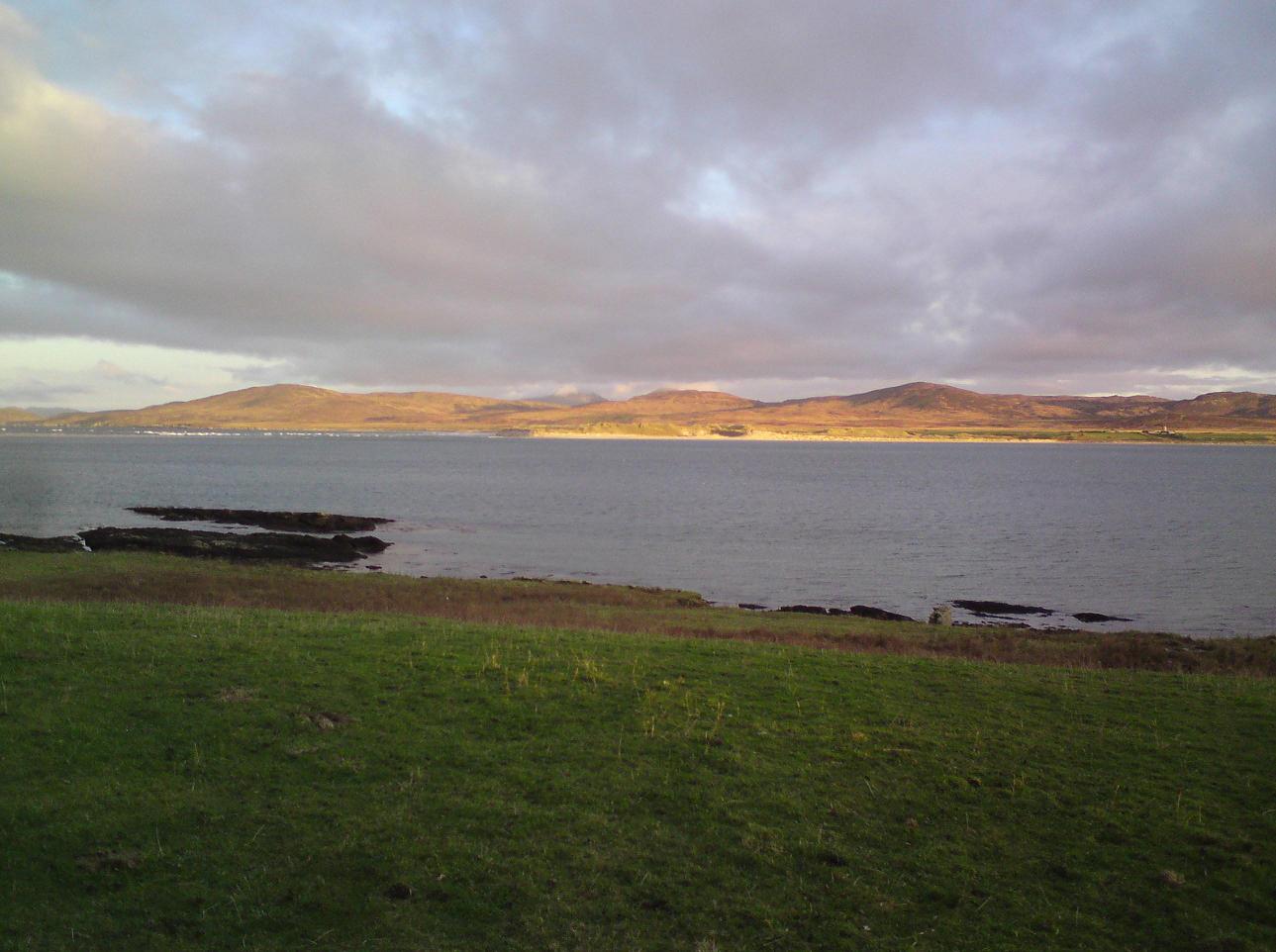
- This pic is a great demonstration of the failings of my camera. The light on the opposite hillside was amazing, late in the day. The Hen Harrier was flying down near the sea.
-
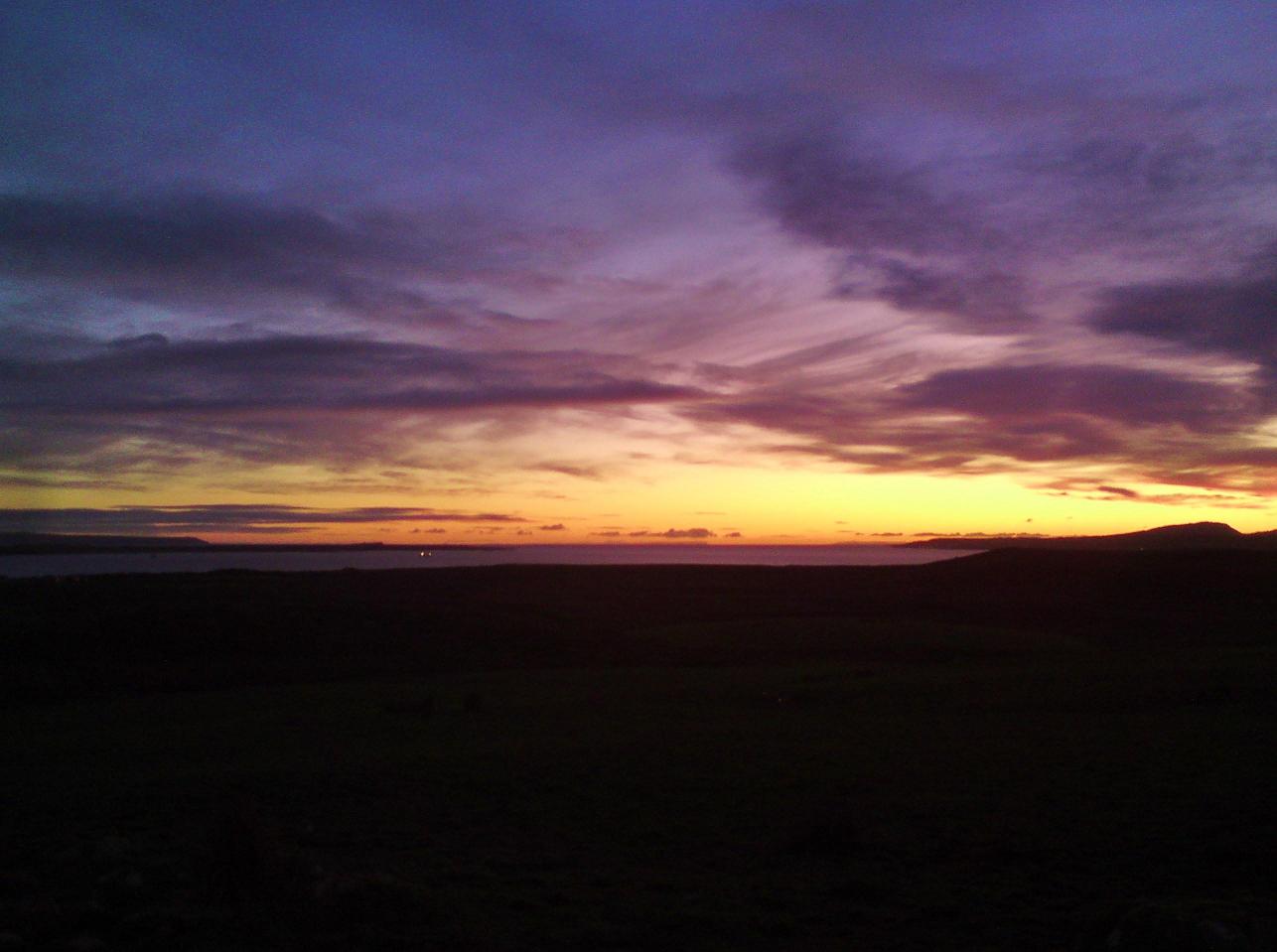
- Sunset of Loch Indaal. Ireland can just be seen in the distance to the right of the open sea

-
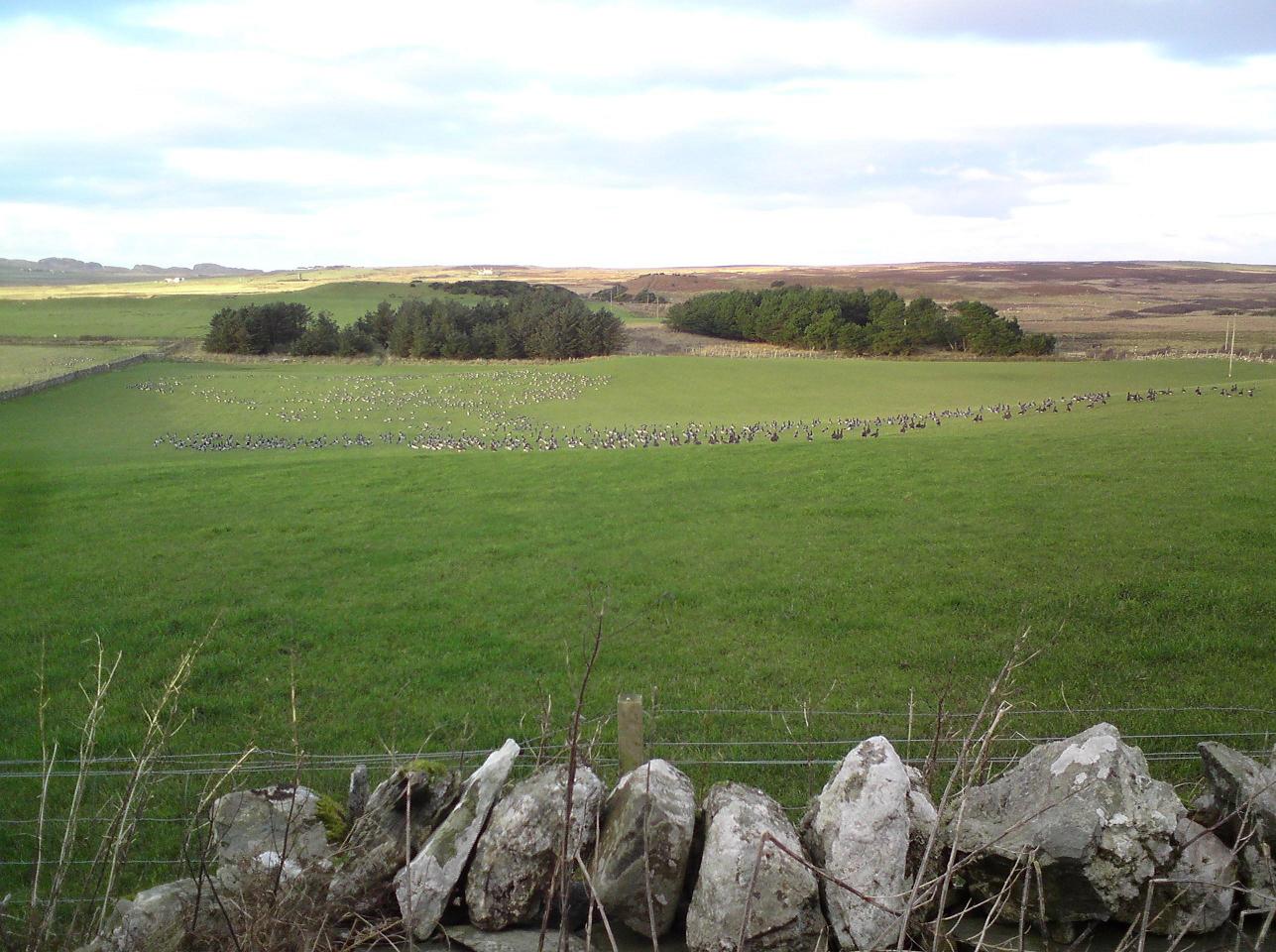
- A field containing a mix of White Fronts and Barnacles. This wasn’t a field included in the count, but it’s the best geese pic I have
The Loch Gruinart Christmas party (and the Paps of Jura)
The last couple of days work include removing a fence, repairing a gravel woodland path with disabled access, painting signs, checking a deer fence and repairing a dry stone wall. Pretty much all with great views, and in cold but clear weather, around Loch Gruinart.
In between jobs we’ve managed some time to check out the flooded fields by the hide, and the mud flats on the loch. Plenty of Pintail and Shelduck about, in addition to the regulars. And loads of waders, such as Bar Tailed Godwit, Dunlin, Curlew, Redshank, Sanderling, Oysterchatcher, Turnstone, Heron and Ringed Plovers. And maybe some other stuff that we couldn’t pick out. Apparently there have been some Black Tailed Godwits about, for example, but we didn’t knowingly see any.
This afternoon we receive a call, from Louise, a local warden, to say that a Sea Eagle is hanging around Loch Gorm. So we (myself and David) jump into the Landrover and Twitch our way over there at high speed. Even though it had apparently been there for an hour, and we pass by a couple of cars containing local bird spotters, we do not see it while we are there. We curse Louise and head home to cook roast potatoes.
Things are still rather messy on the house sale front. I was expecting exchange today, but the buyers solicitor has gone on holiday without exchanging. If you are the buyers solicitor, I hope you have a very pleasant holiday.
With that in mind I have a Christmas party to go to tonight. Myself and David have been tasked with taking along Roast Potatoes. Not much that can go wrong there, you might think. And with some justification. We mix it up, pretty much half peeled, and half unpeeled, and they all seem to go down well. Other people have brought along soup, vegetables, turkey, lots of great cakes, and cheese and biscuits. I have a few drinks, eat well, and talk to the nice people working for the RSPB, and their partners. When I leave, at just gone midnight, there are a select few making their way through a bottle of Tobermory Malt. Apparently it’s rough, but getting better…
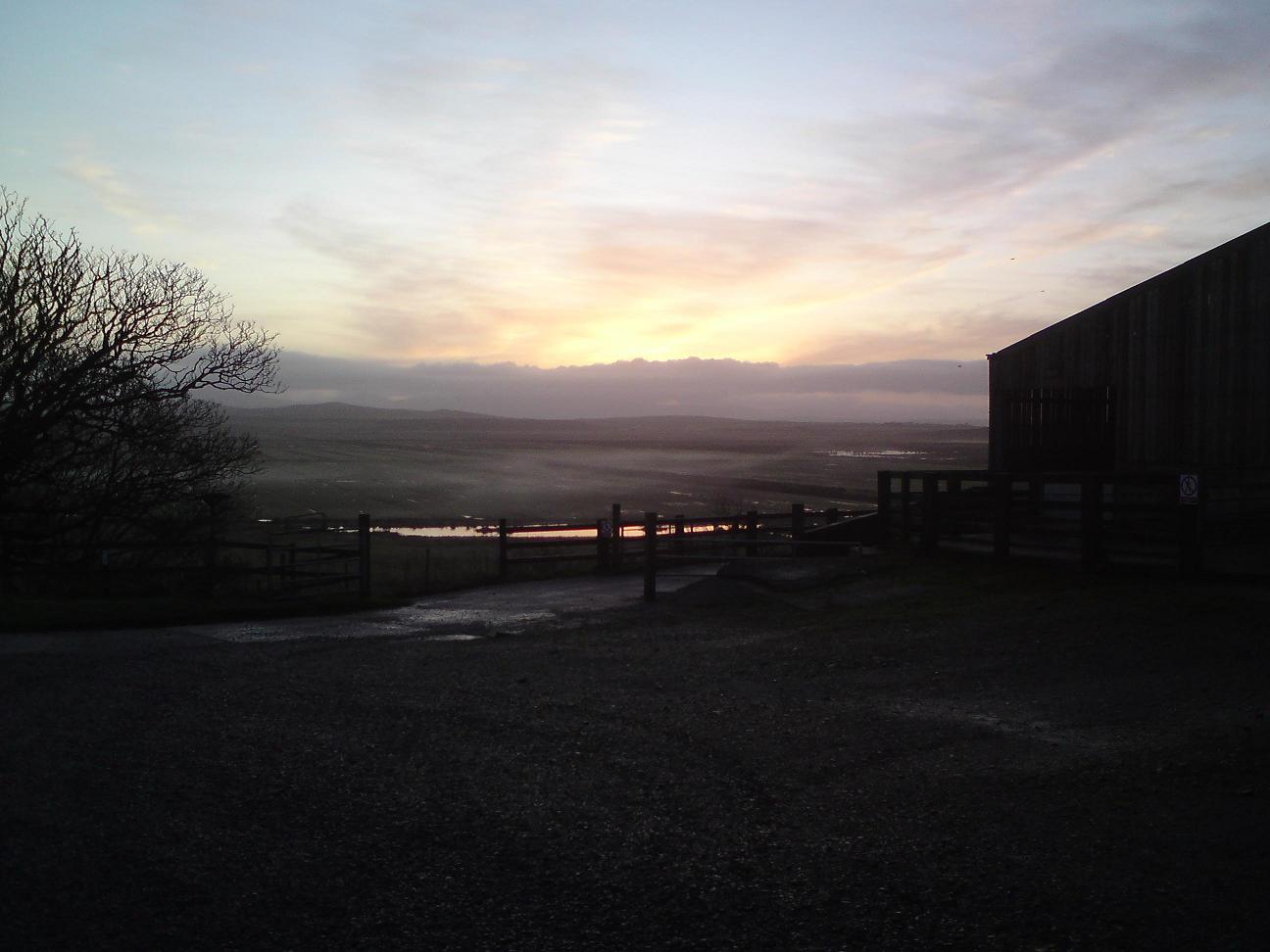
-

- A little bit of mist hangs over the fields by the farm as the sun rises
-
- This is typical of the landscape on this part of the island. Looking South East towards Loch Indaal

-
- Especially for Mike Baker – a picture of the Paps of Jura (seen here from near the deer fence, looking East towards Gruinart), so named because they resemble, um, paps. Really, look it up!

-
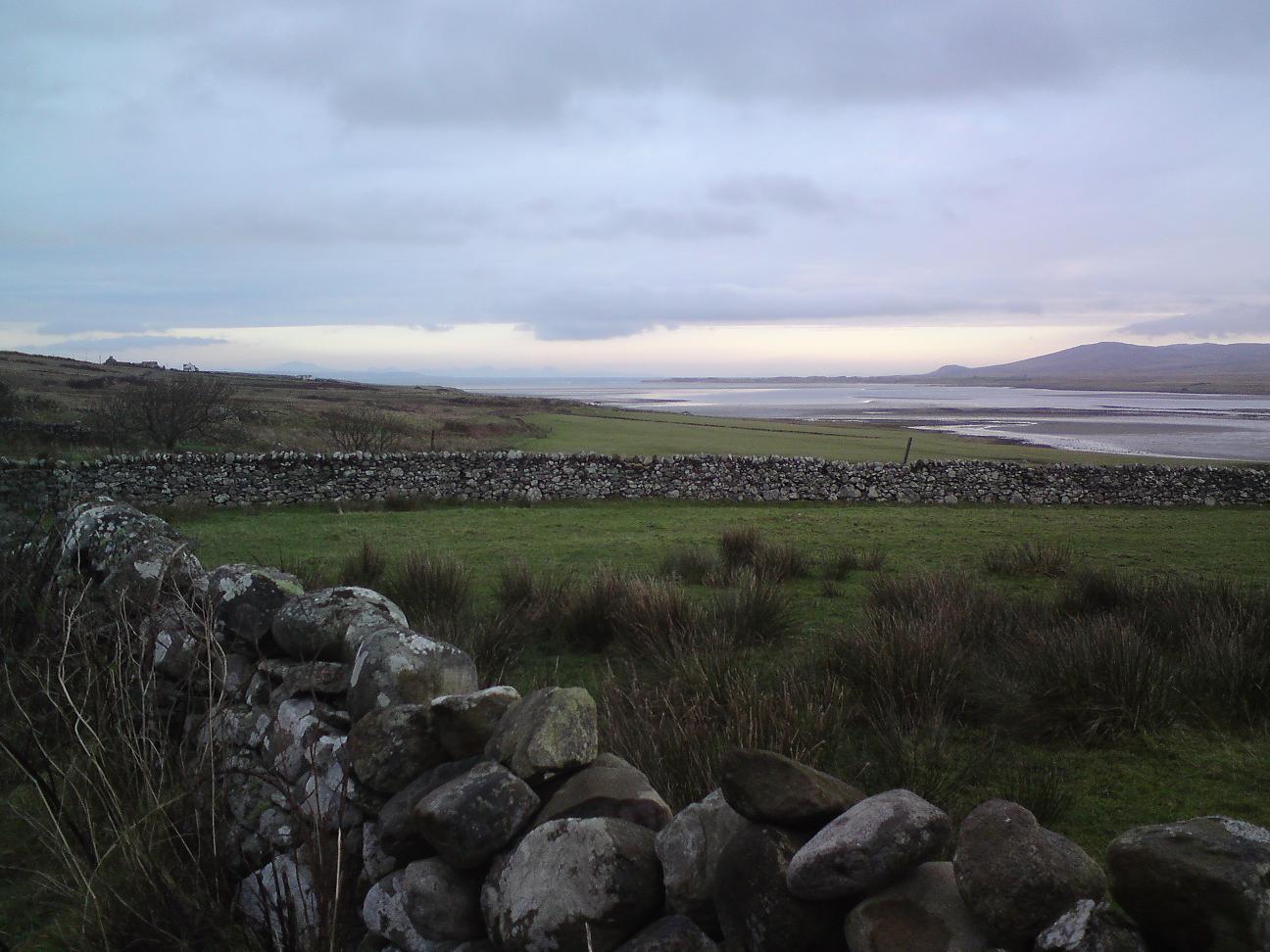
- Our wall. In the distance (to the left) it is just about possible to make out Colonsay and, further still, the taller hills of Mull.
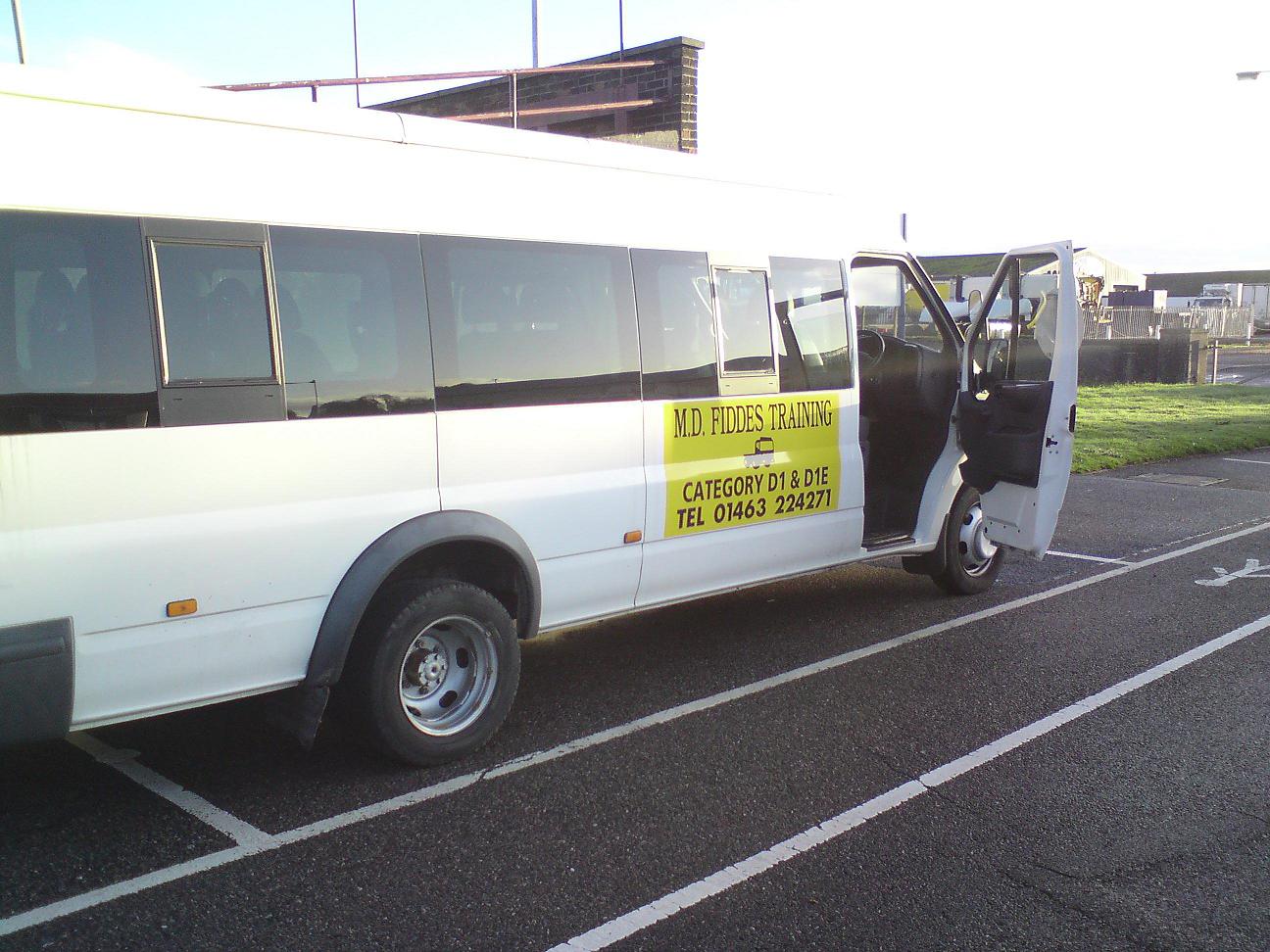
Taking my PCV practical test
It’s a gorgeous sunny day when I get up. I stayed the night in the car park at Anam Cara. Check it out, it’s beautiful. I meet Margaret and Alistair, who’ve very kindly let me stay, and use their facilities, simply because Craig (from TFL) asked them if I could.
I go to the VOSA test centre (in Inverness) slowly. I can’t remember being so nervous, although I probably was for my first driving test, but then that was nearly 20 years ago. My instructor for the day, Cameron, tries his best to calm my nerves, and it nearly works until I mess up stopping at a bus stop.
Things get worse when my examiner, Ewen, asks me where the fuel cut off switch is. No one has ever shown me the fuel cut off switch. I explain this to Ewen and tell him, hopefully, that I assume that turning off the ignition is sufficient. Is there a fuel cut off switch on the van?
Then I pull up opposite a junction, do 30 in a 40, drive over a mini roundabout, plough down a man in a teddy bear costume, and swear at a lollipop lady. I’m shocked when Ewen tells me I’ve passed. We debate indicating when pulling away (you shouldn’t do it unless there is no break in the traffic), then I go and tell the TFL office that “I can drive buses!” Woohoo! C’mon! Have that! Get in! BACK!! OF!! THE!!! NET!!!!
-

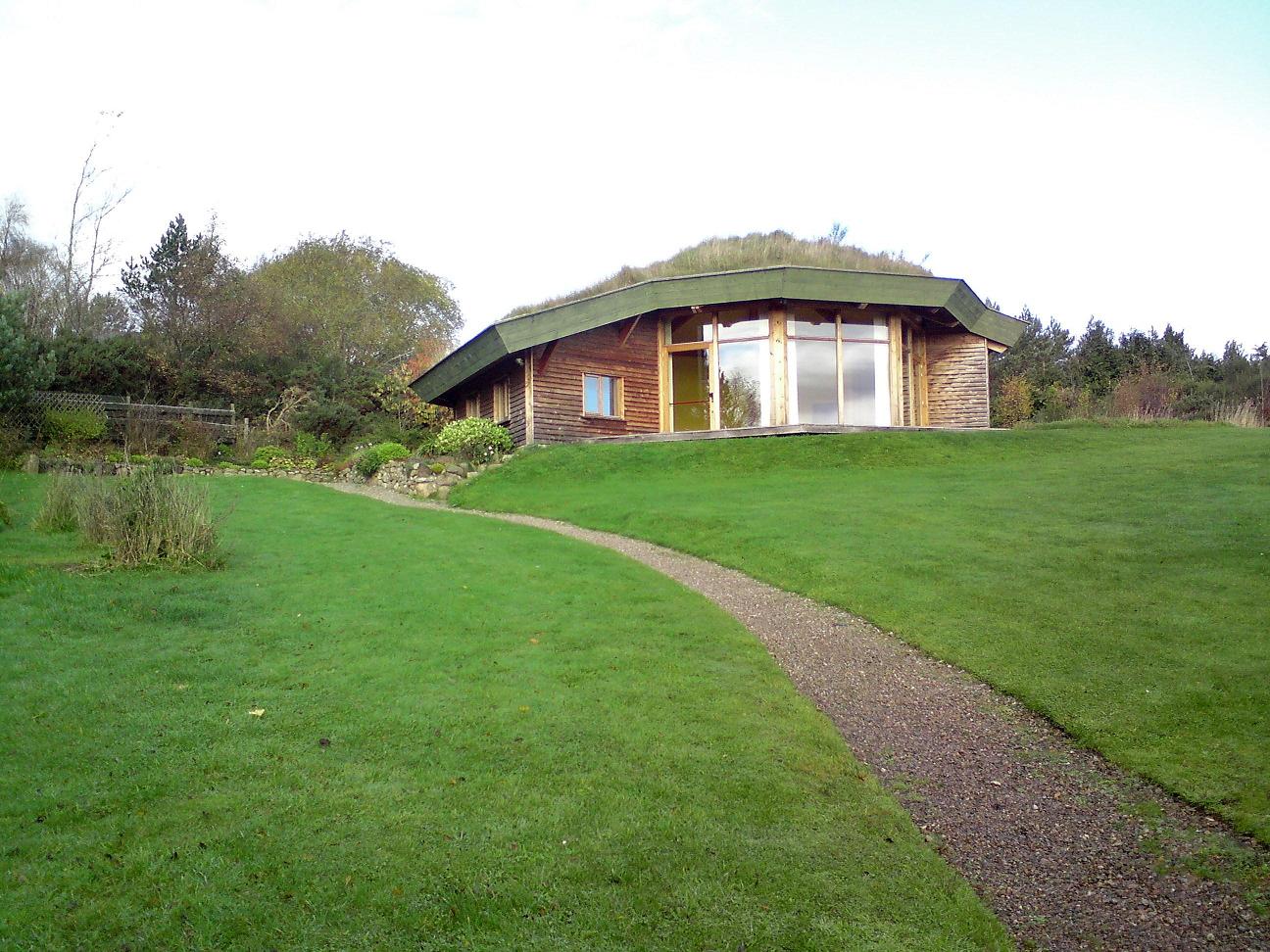
- This building is fantastic, even down to the big wooden door handles.
-

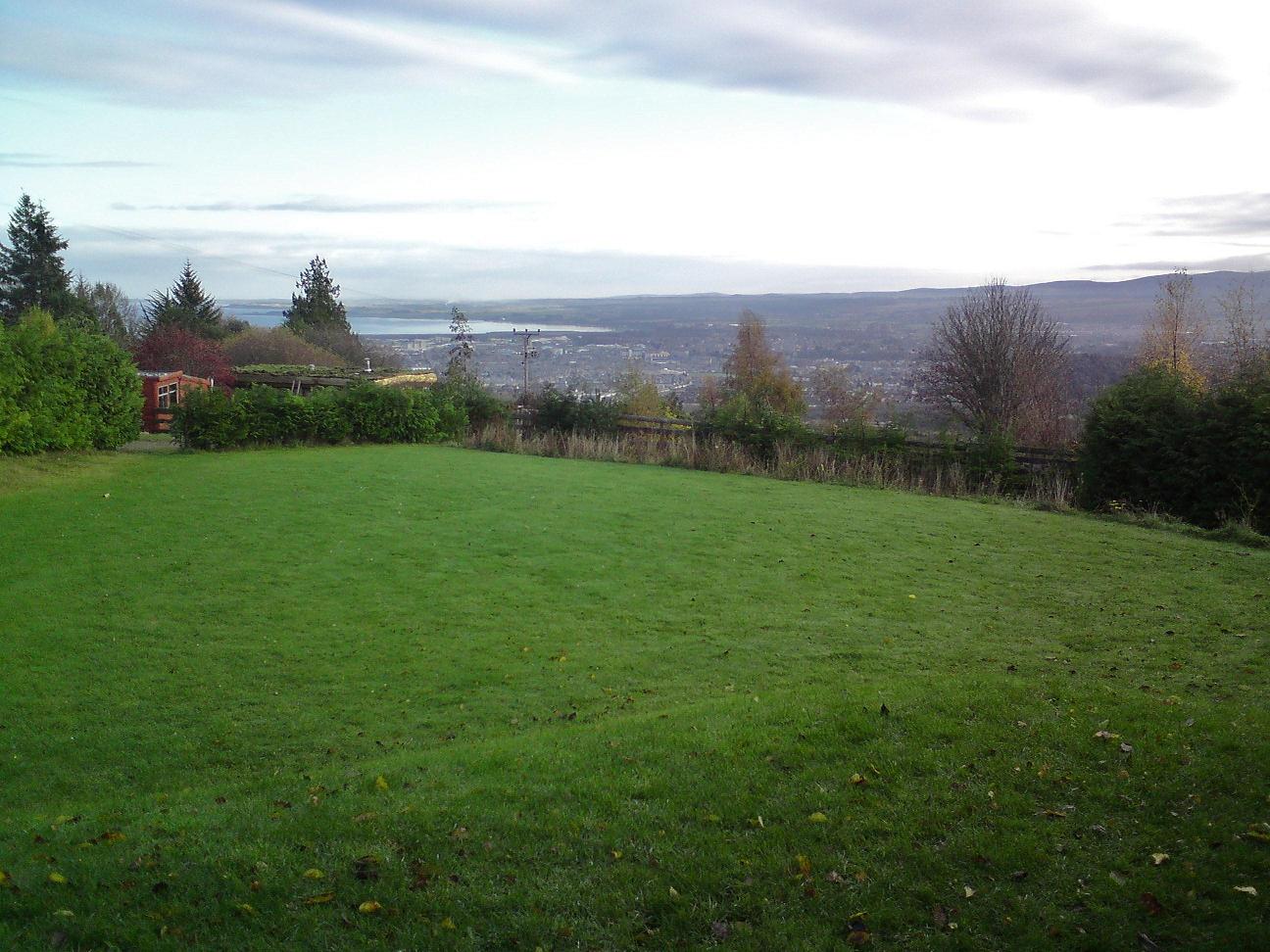
- Anam Cara sits on a hill to the South West of Inverness.
-
- Thanks to Dave and Cameron and lady luck for getting me through this one…
-
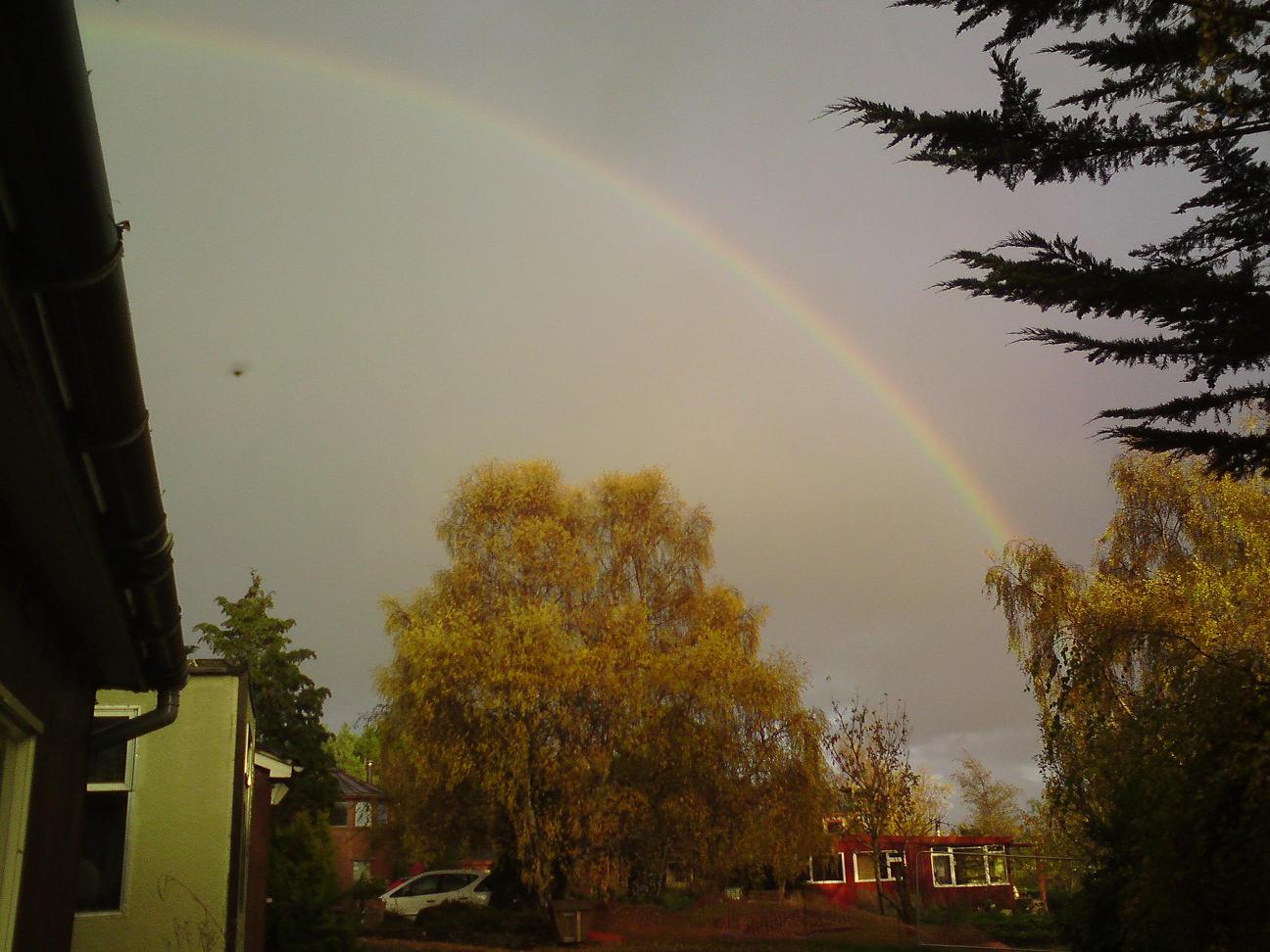
- I’m sat, hyper, in the TFL office, following my test, when Alan comes in to tell us there’s a rainbow outside

 Life since the office
Major endorsements