
Stockland Turbaries
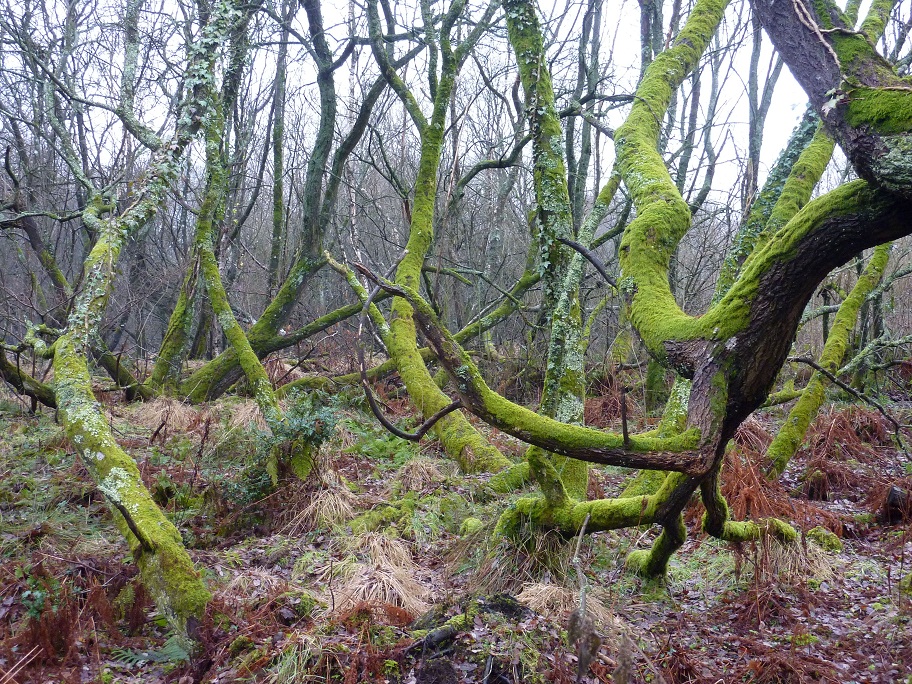
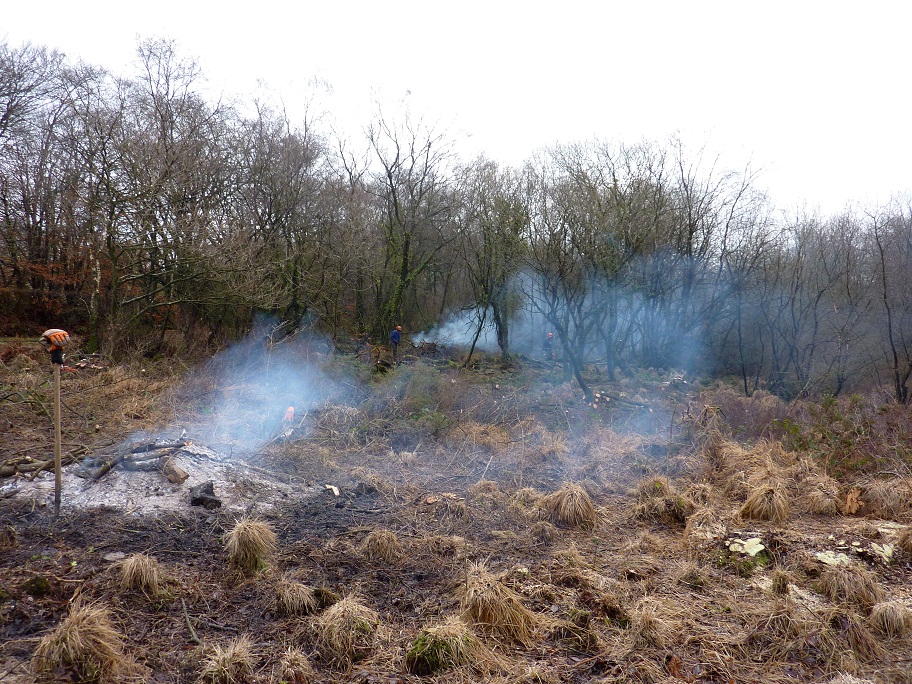
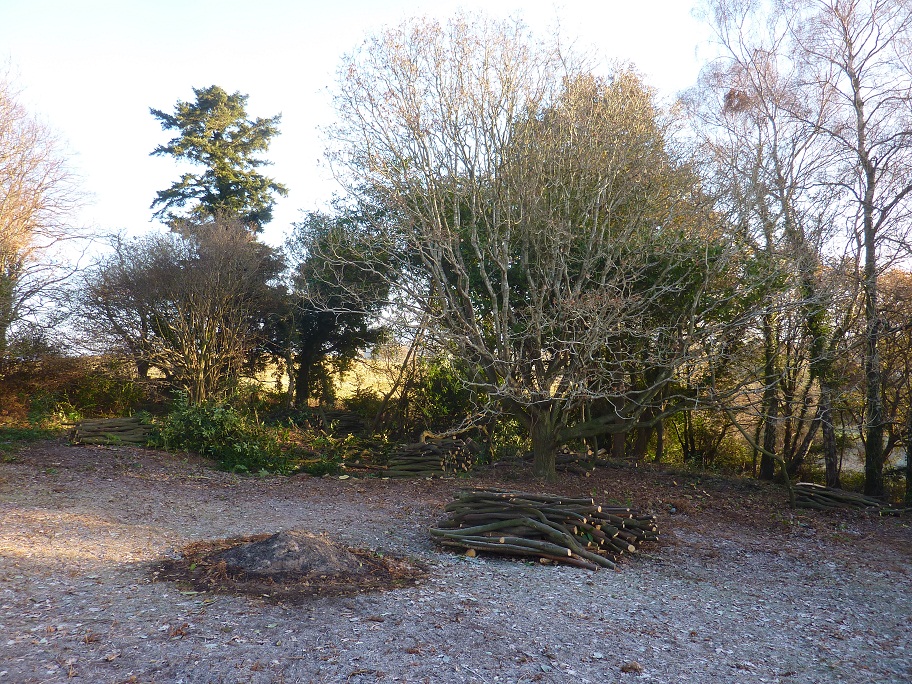
The big project at RSPB Aylesbeare at the moment is to ‘restore’ habitat in an area called the Stockland turbaries. Historically, the Stockland turbaries were areas of bog or lowland heath where peat was dug and used for fuel. Typically these areas are dominated by heather and gorse (gorse was also used for fodder). But the area that we’re working in is also a stronghold for bog myrtle in Devon. The decline of traditional heathland practices has resulted in a reduction of the wildlife associated with heathland.
This is a contentious issue. I don’t want to use this blog as a tool to promote or knock heathland, but I can see that there are good reasons for protecting heathland where it exists, and hence preventing species loss if those species have evolved to live in such a habitat. I have found it a little more difficult to come to terms with the removal of semi-mature woodland in the name of habitat restoration. Whilst carrying out the work Dr David Allen has been out to view our progress on numerous occasions, and his enthusiasm is persuasive. But I’ve still a lot to learn about these habitats, and I hope to better understand both sides of the argument before I move on to pastures new in a couple of months.
In the mean time, the work itself is a lot of fun. I’m spending a lot of time on the chainsaw, working out cuts, wind direction, safety, etc, and then hauling about big lumps of wood. I’m tired at the end of each day (most of us fall asleep in the LR on the way back to base), but it’s a good tired, and I’m sure my general strength levels have improved enormously.
-
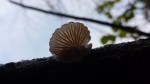
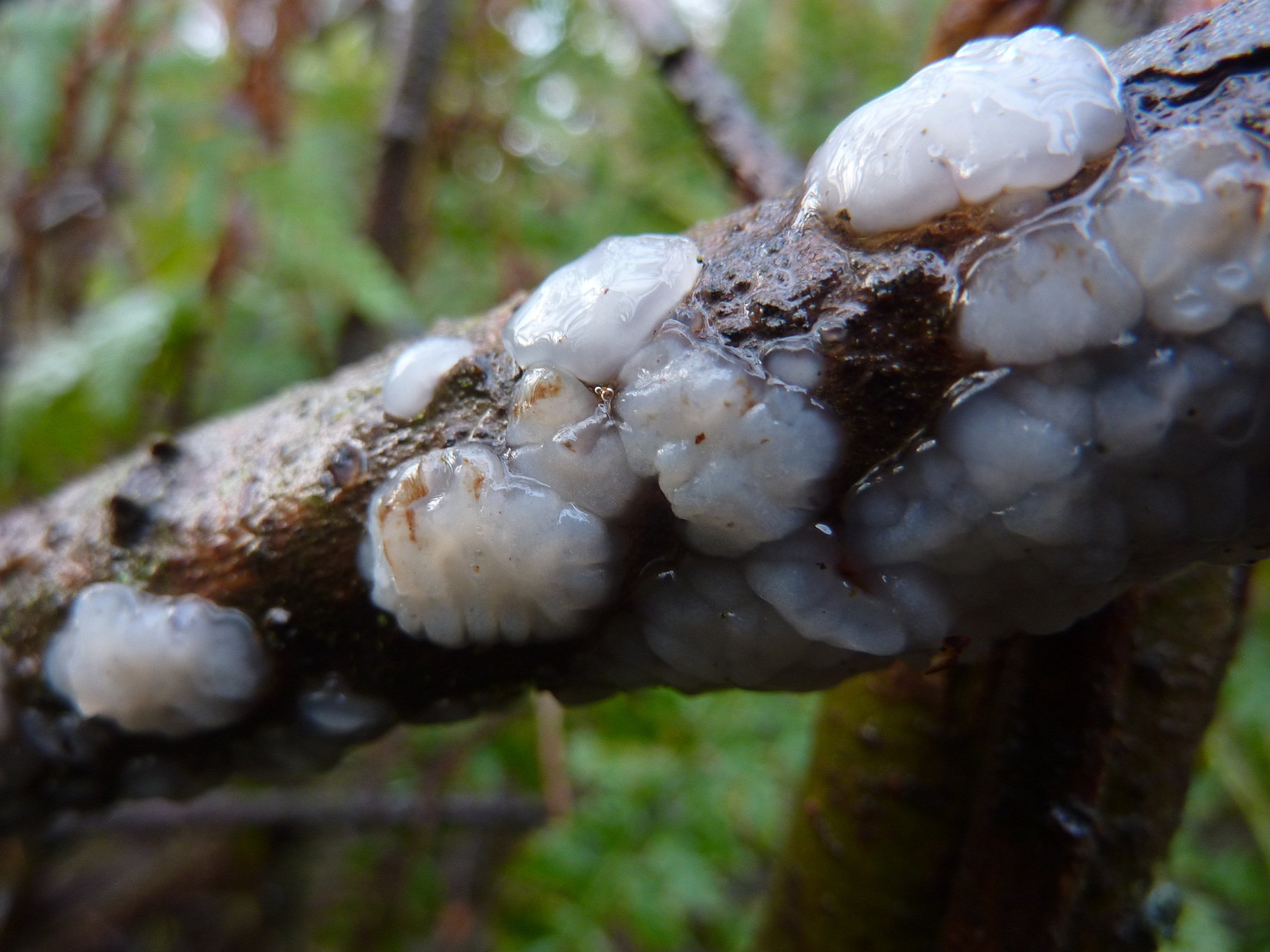
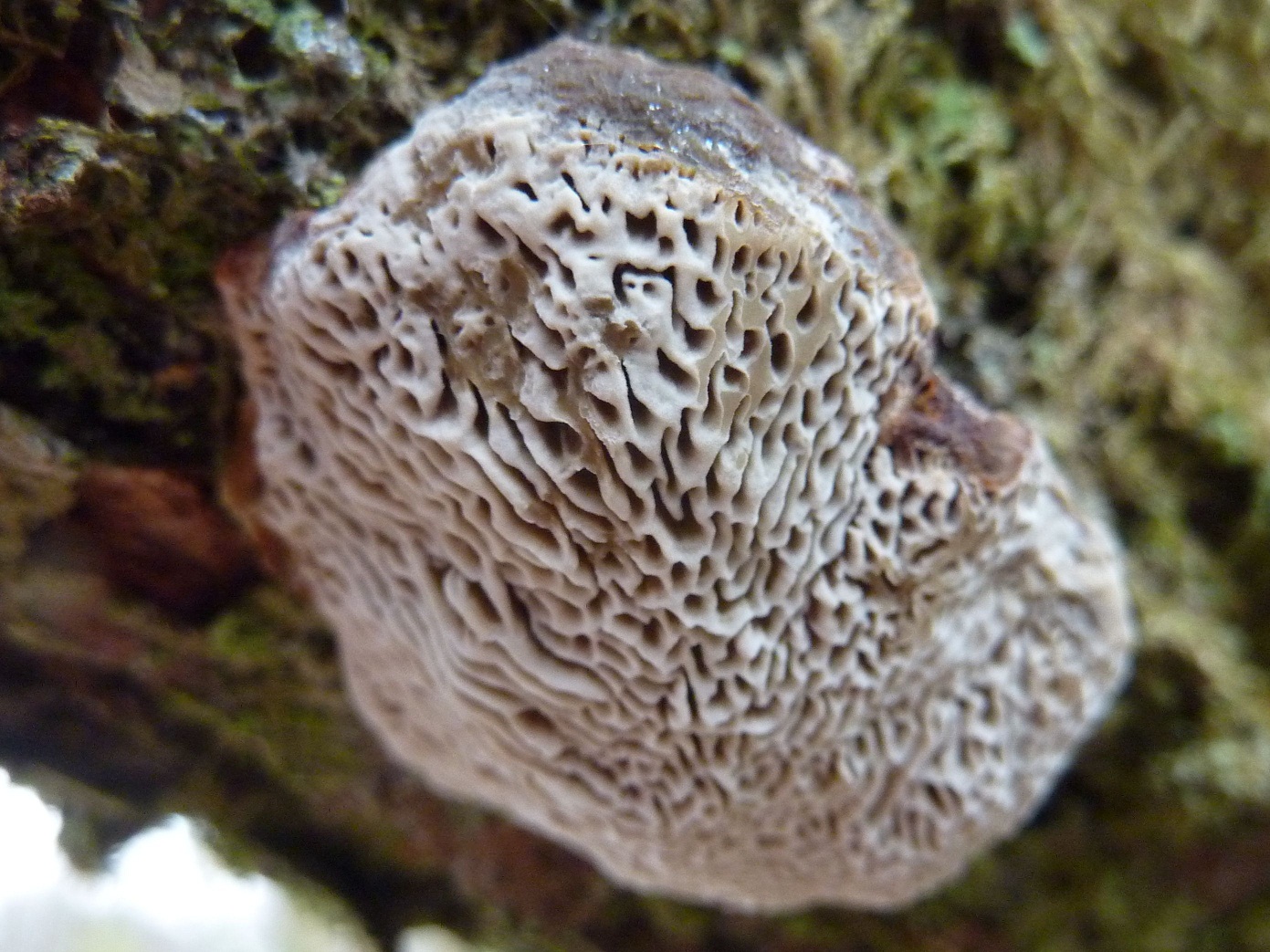
- Hmm, I know this isn’t porcelain mushroom, but…



Let it snow, let it snow, let it snow…
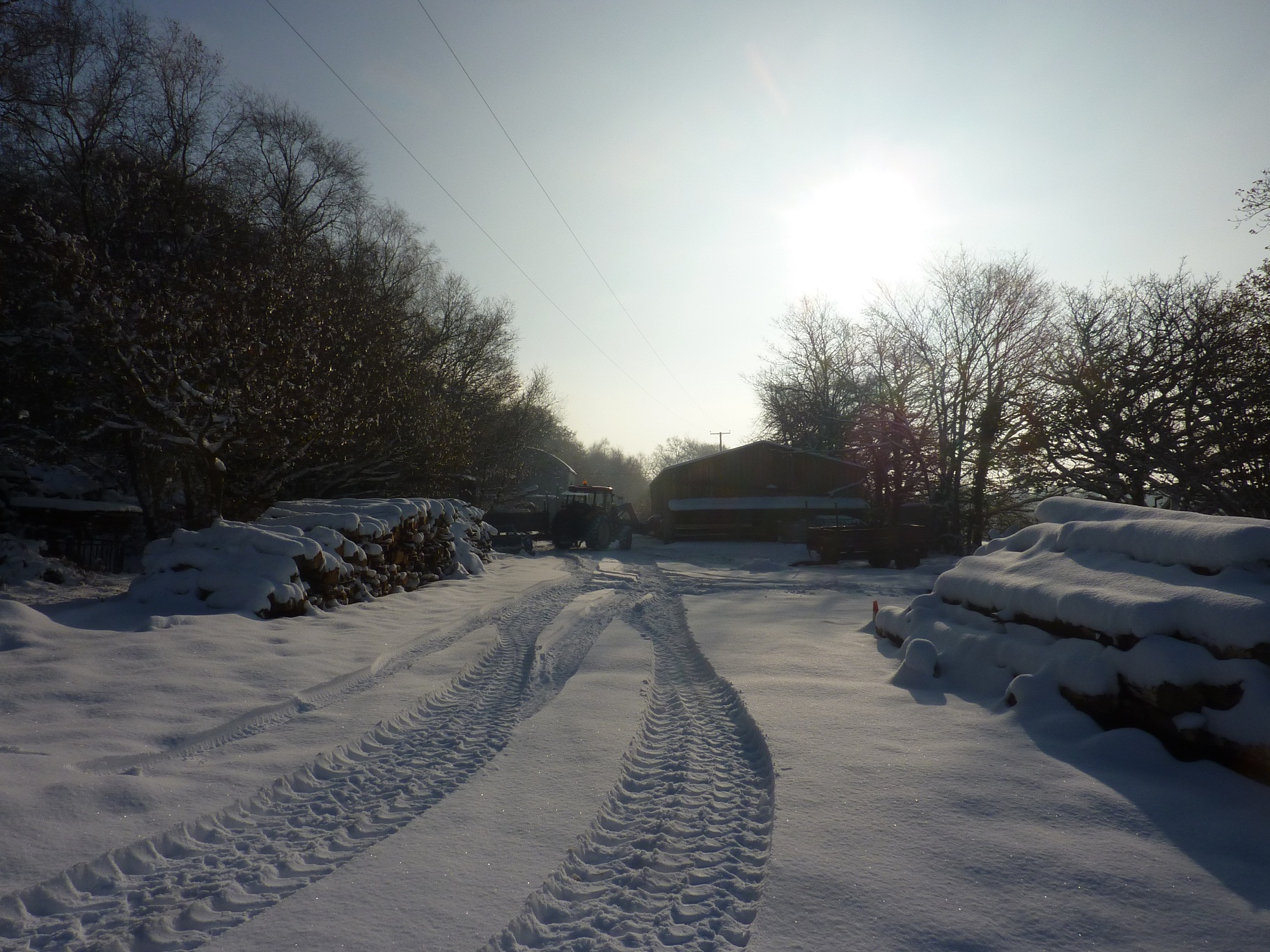
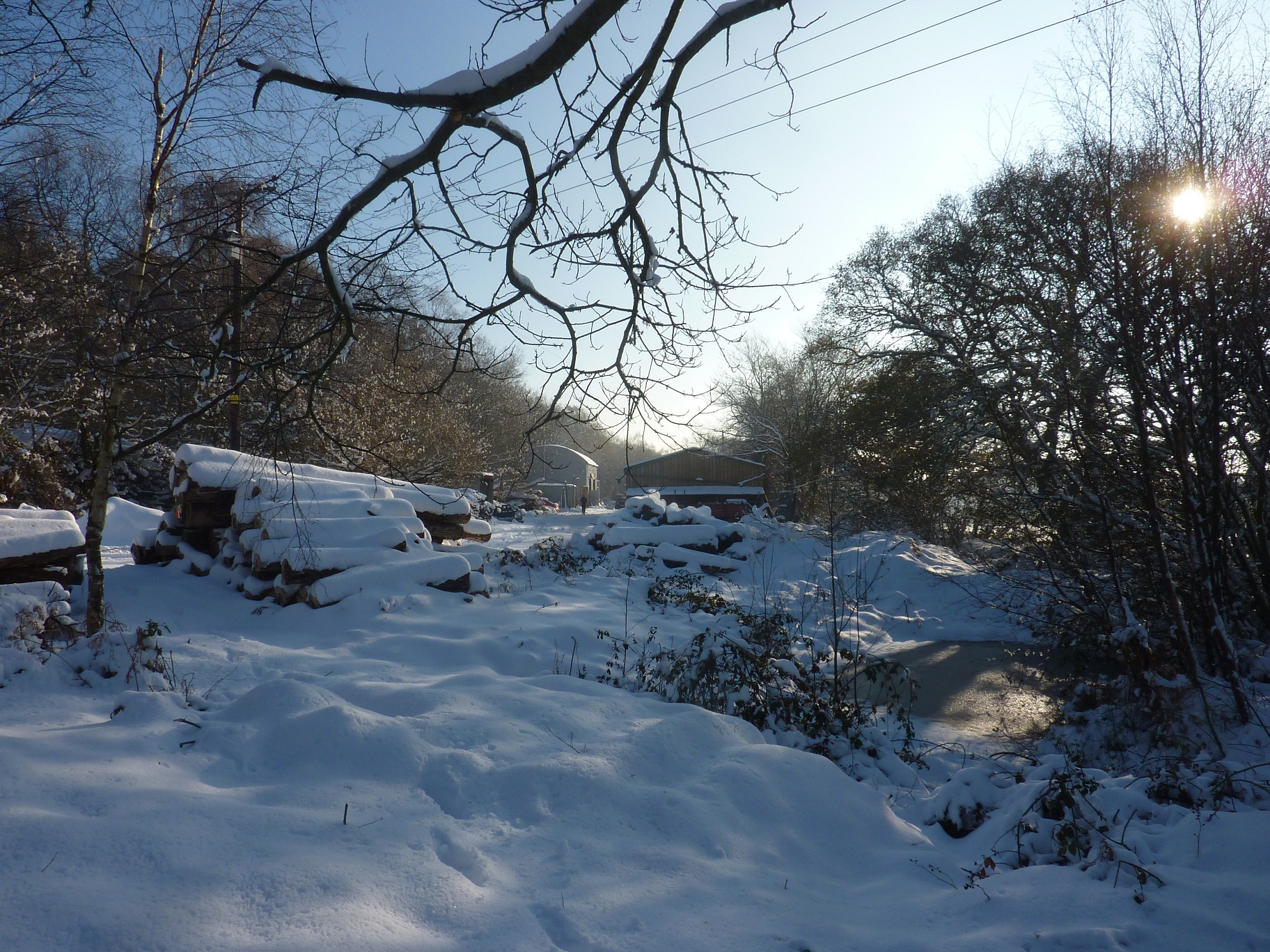
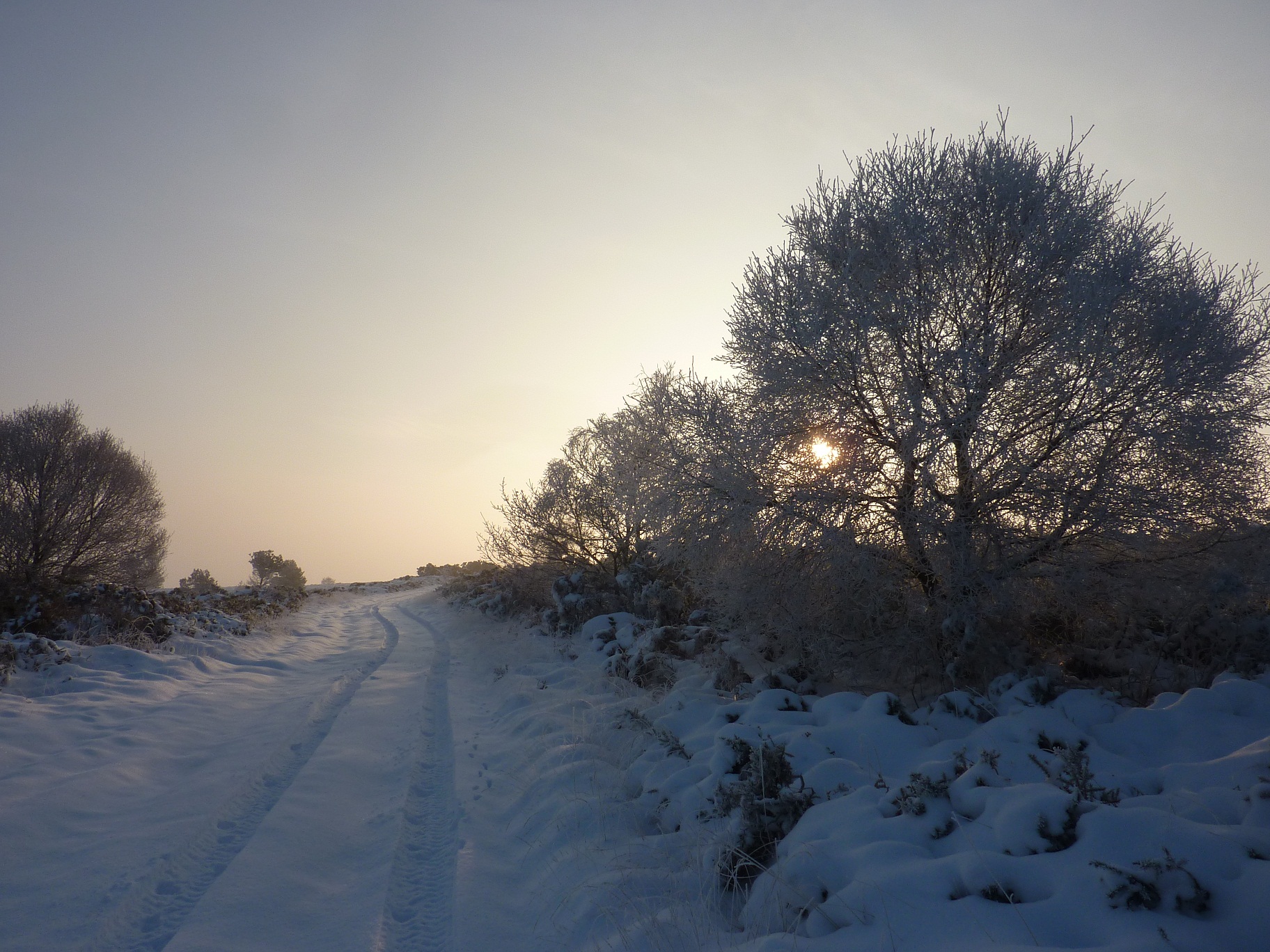
Woohoo! It snowed! Then it snowed some more, and then a little bit more. It’s fantastic.
Since the last entry it’s been pretty much processing and delivering logs on the reserve. The heathland is maintained by removing the majority of trees that grow on it, and the wood produced from this process is then distributed amongst local people in the know. Just now there are a lot of people who want a log delivery before Christmas.
At the weekend I drove to Lewknor in Oxfordshire, to see my Dad and the other Golders, and back. The passion wagon, being 4 wheel drive (but not an SUV/Chelsea tractor, I hasten to add, for anyone reading this for the first time), coped admirably with the conditions. On my way there I was listening to reports of the M40 being gridlocked, Southbound, from Banbury all the way in to London. I was able to manhandle the wagon down the back roads to avoid the issue. Top stuff.
-

- Our first snow fell on the 17th

-
- Snowball fights. Eh? This is what winter should be all about.


-
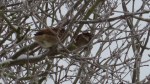
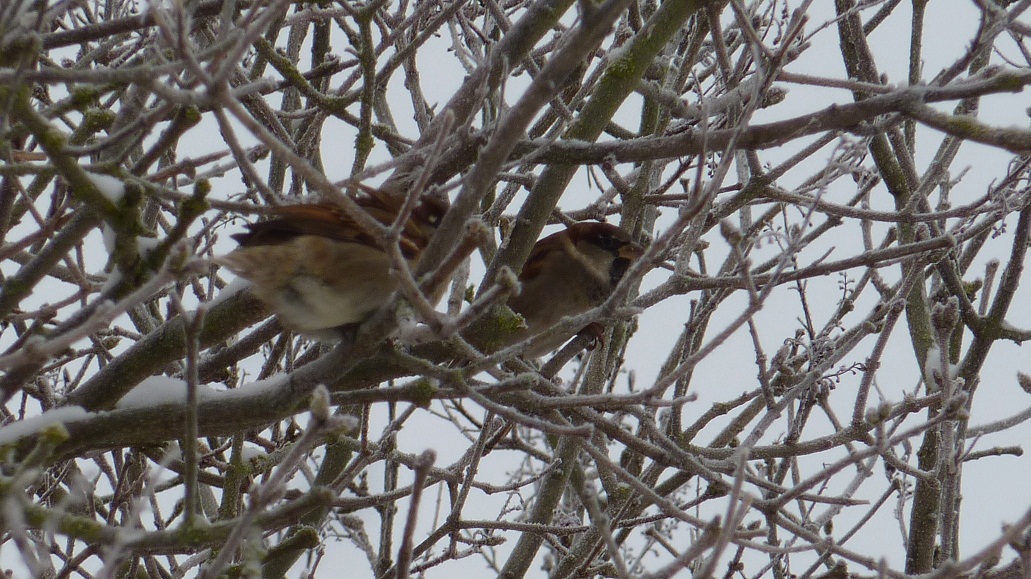
- Some Sparrows in Dad’s back garden
-
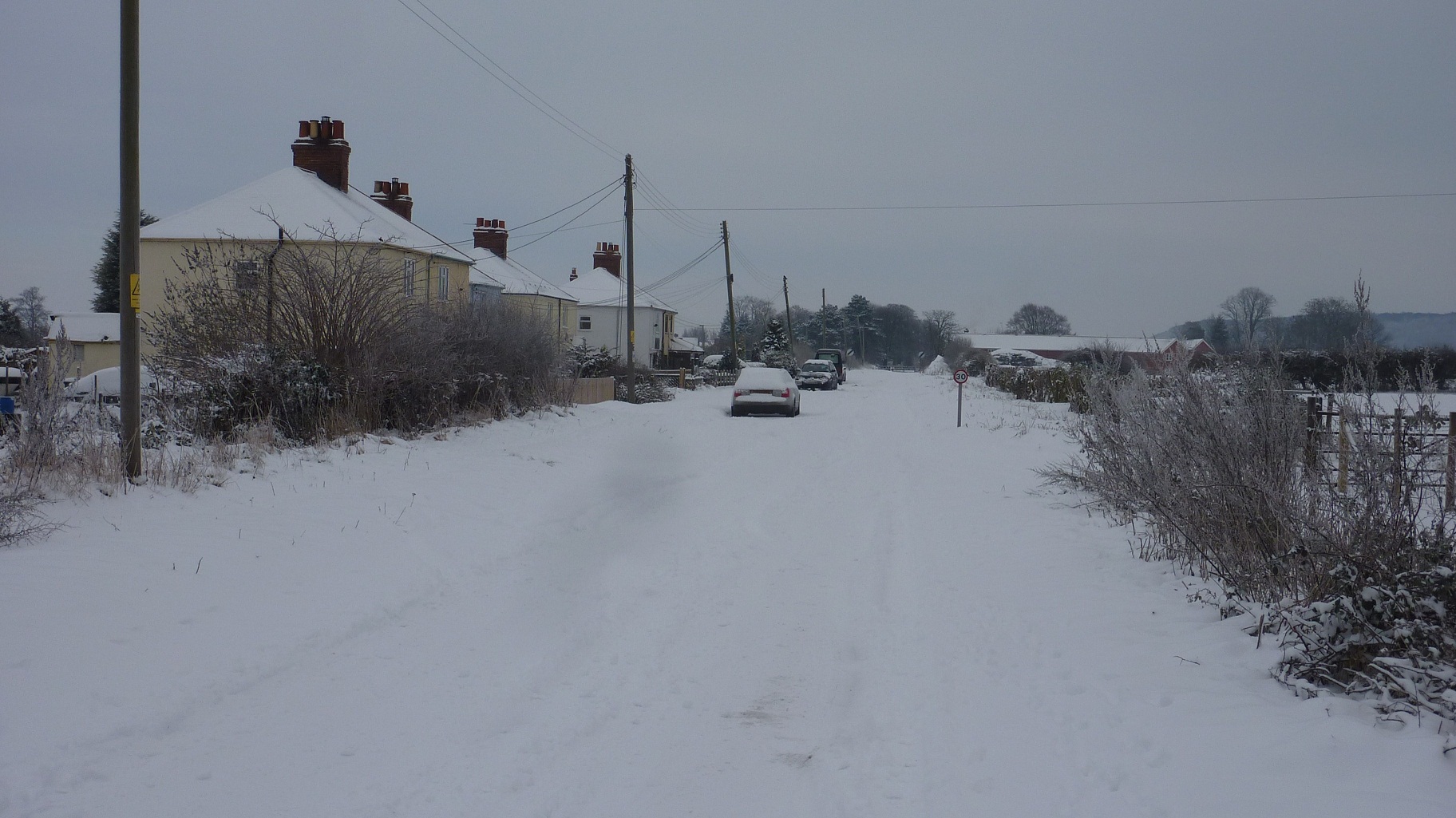
- Dad’s road (ok, he doesn’t actually own it)
-
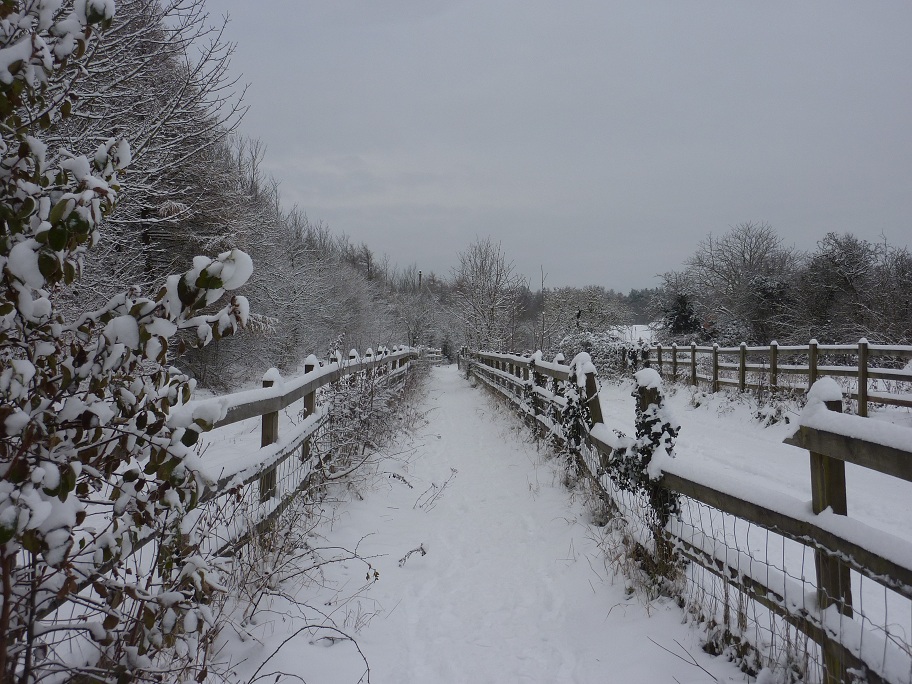
- A path near Lewknor
-
- Exmouth
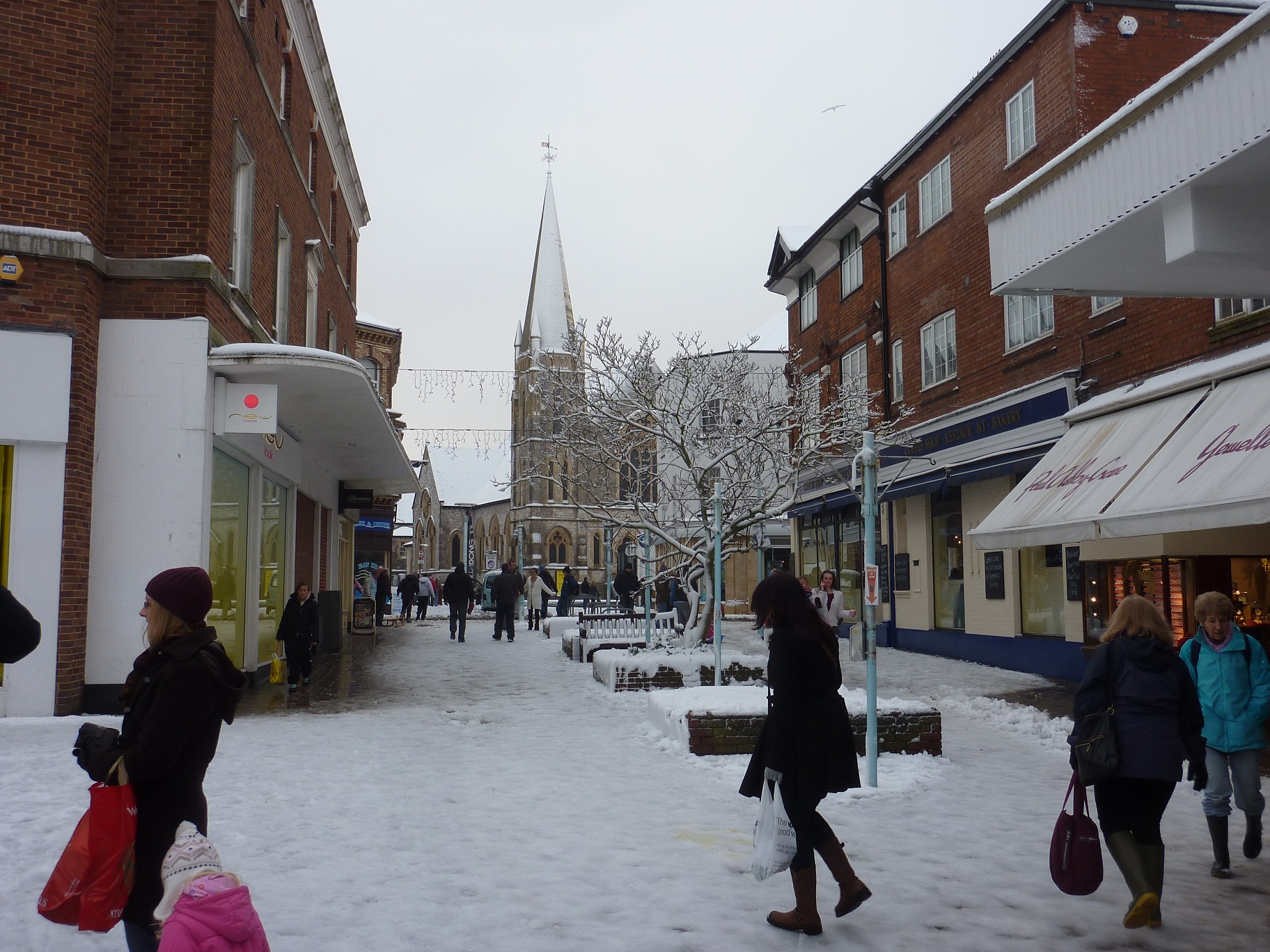
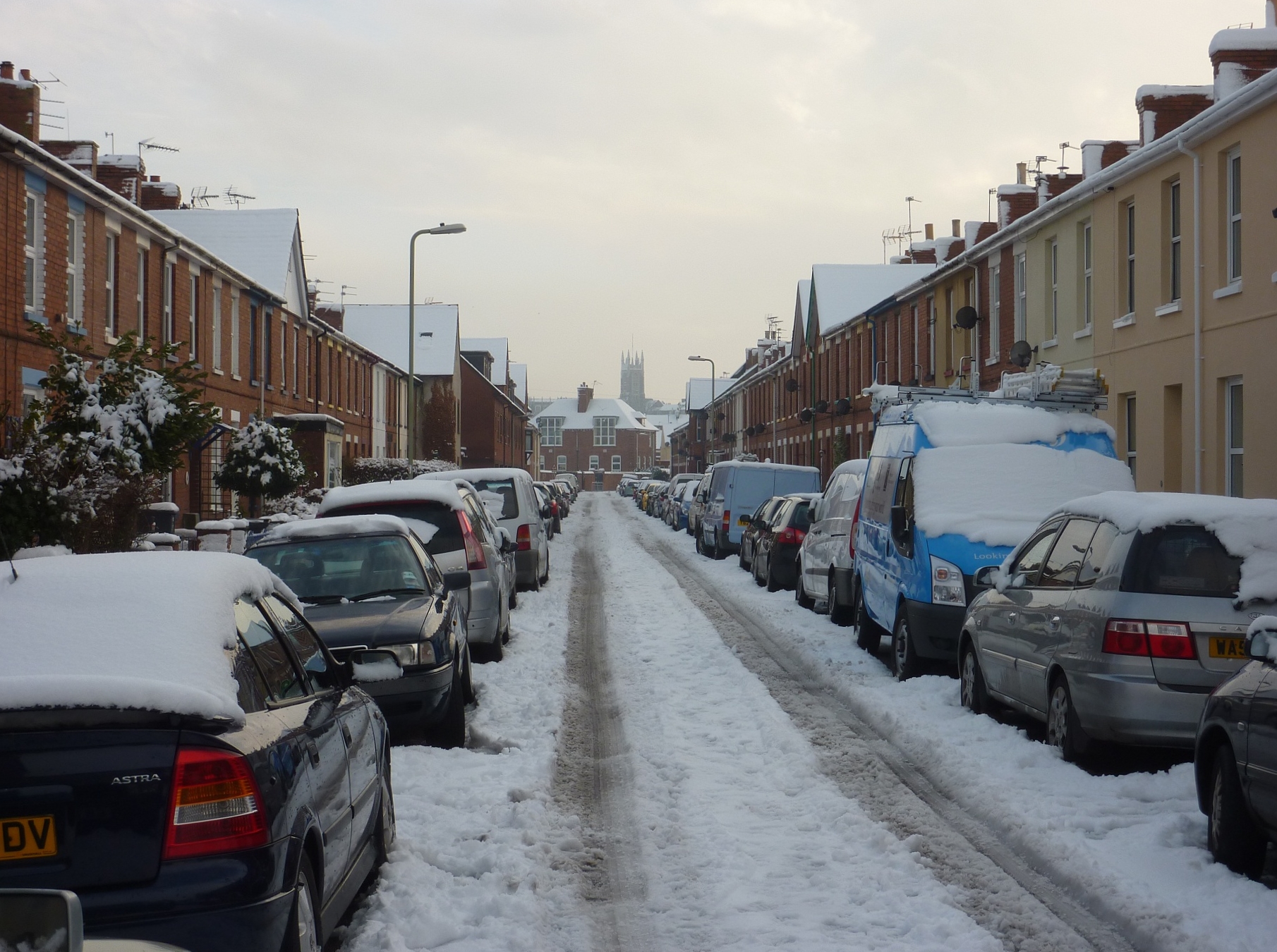
-

- Snow people at the reserve workshop (Sam and Tia?)
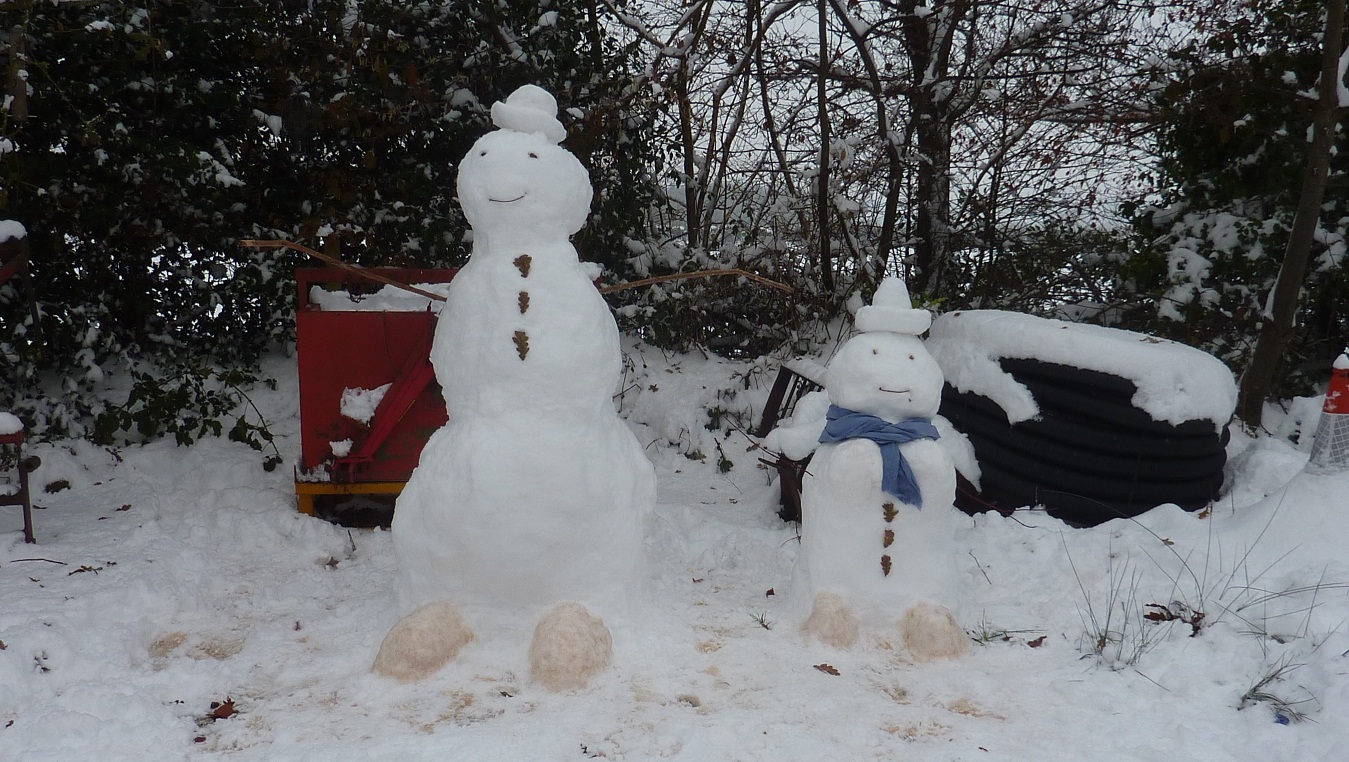
-
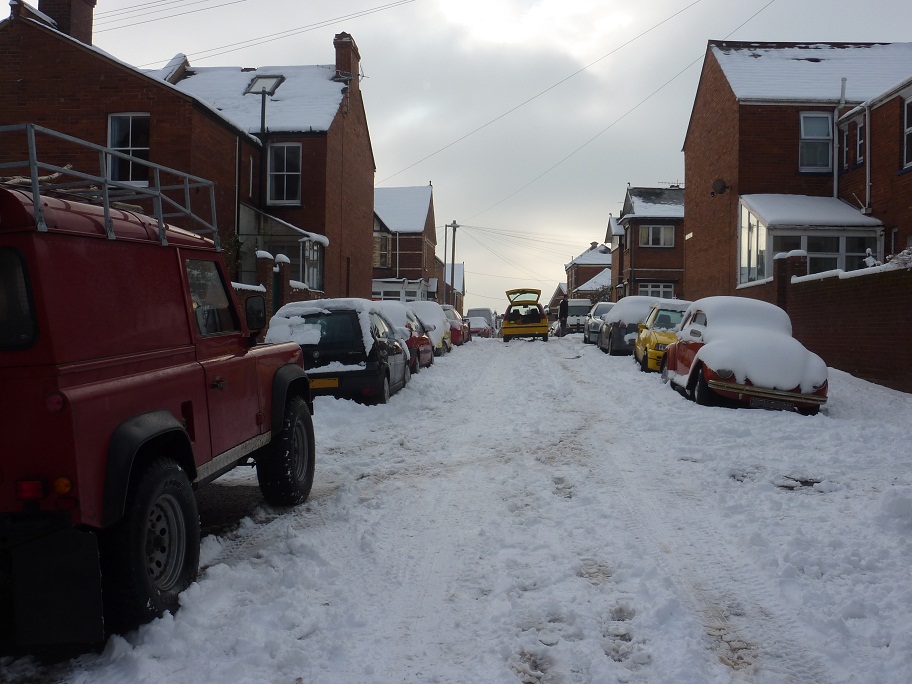
- Mayday, mayday, Richard is stuck in Exeter. Thankfully we get him out and he’s able to drive home for Christmas. Or at least he would have been able to if his car hadn’t suffered a terminal engine failure on the way. The last we hear he’s on a train, having sold his car to a scrappie…
-
- In this picture of Ed, you can quite clearly see him walking.
-
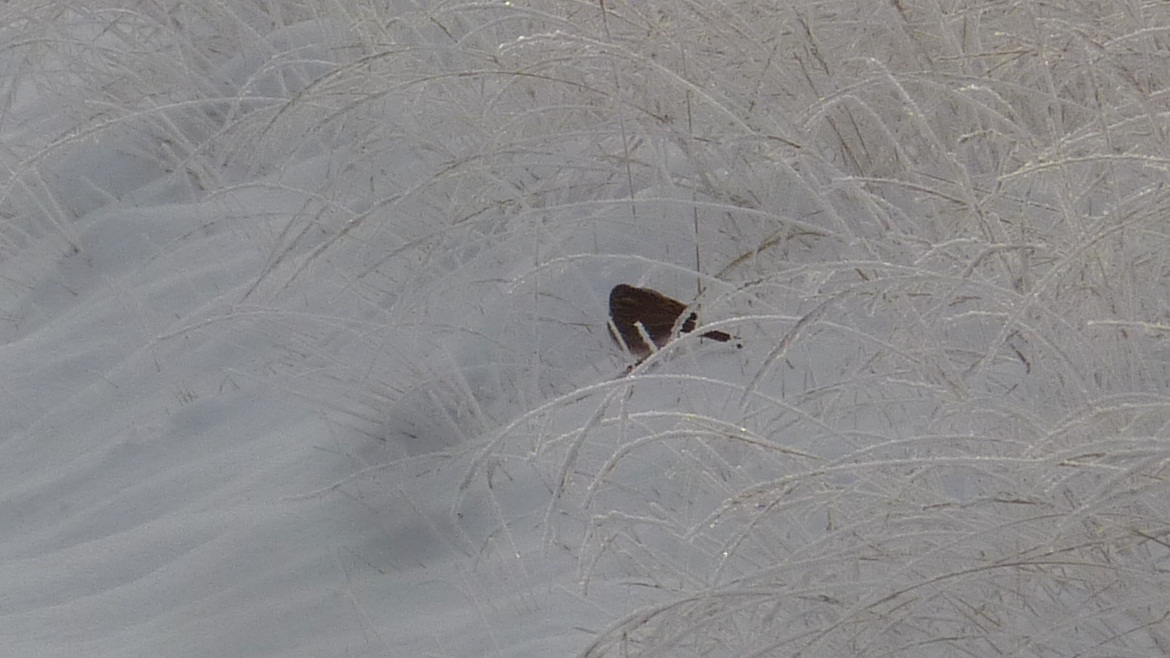
- A Reed Bunting (don’t get excited, it’s not a great pic) feeds in the frozen grass on the reserve
Dinan Way reclaimed woodland
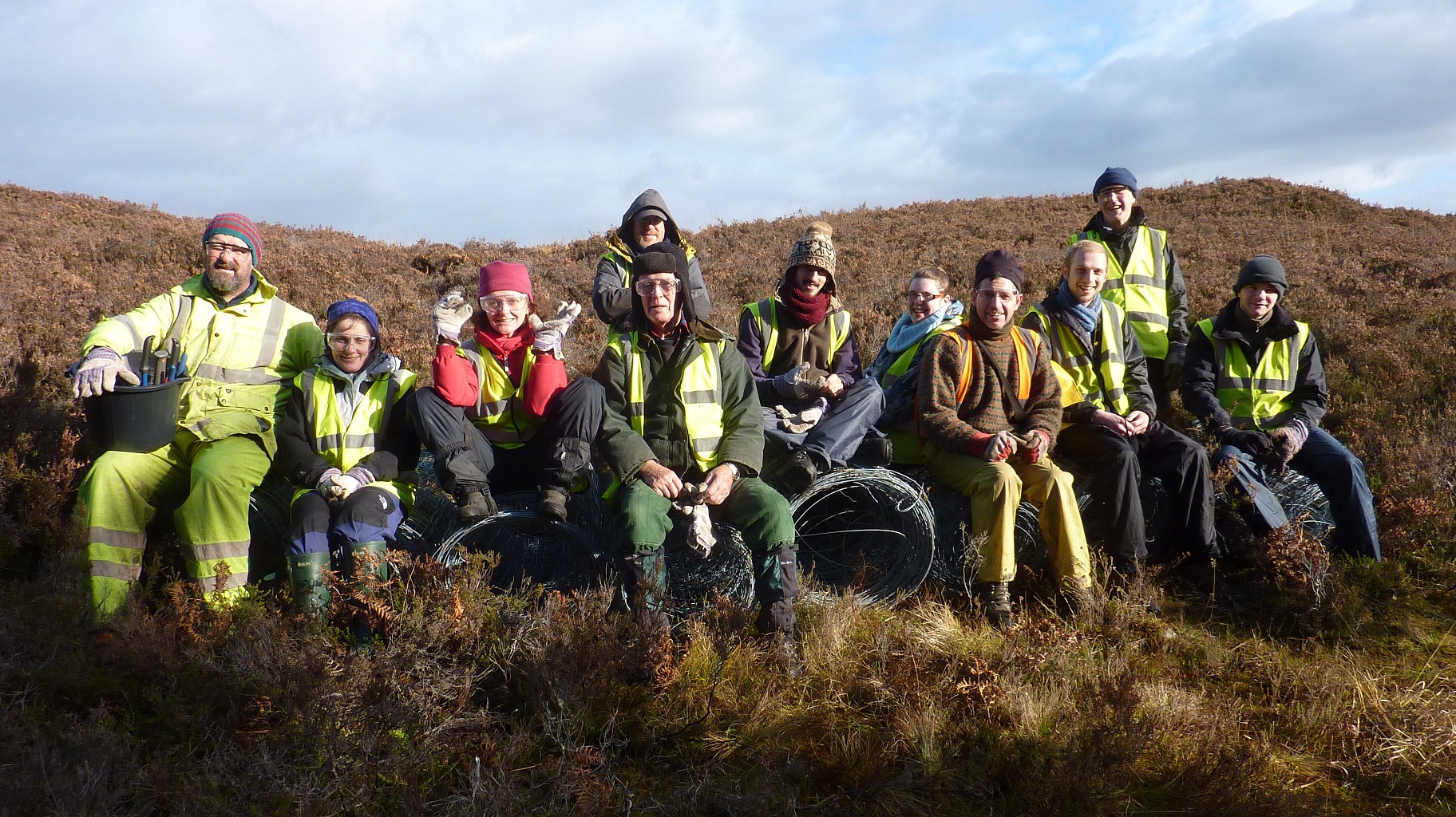
The site where we worked today used to be an old rubbish tip, in Exmouth. The story goes that Brenda Taylor, whilst Mayor proposed that the site be set up as a woodland, and Toby, RSPB Aylesbeare warden, suggested that the RSPB could get involved by supplying work parties. That was 10 years ago and a great variety of trees have been planted on the site since. The RSPB still make time to visit the site at least once a year to check that things are ok.
Today, being Wednesday, was also the Wednesday-vols day. Every Wednesday our numbers are boosted with a group of local volunteers. Some come along to gain experience for a course they are studying, and others have been involved with the RSPB for years. As the work today was not the usual slash and burn, and with it being so close to Christmas, there was a festive spirit in the air, helped with servings of mulled wine, and Christmassy cakes.
The woodland has great views of Exmouth, but is currently closed to the public while the methane is vented from the site. It will be interesting to keep an eye on it over the coming years, and should be a beautiful and worthwhile place for the people of Exmouth to visit in years to come.

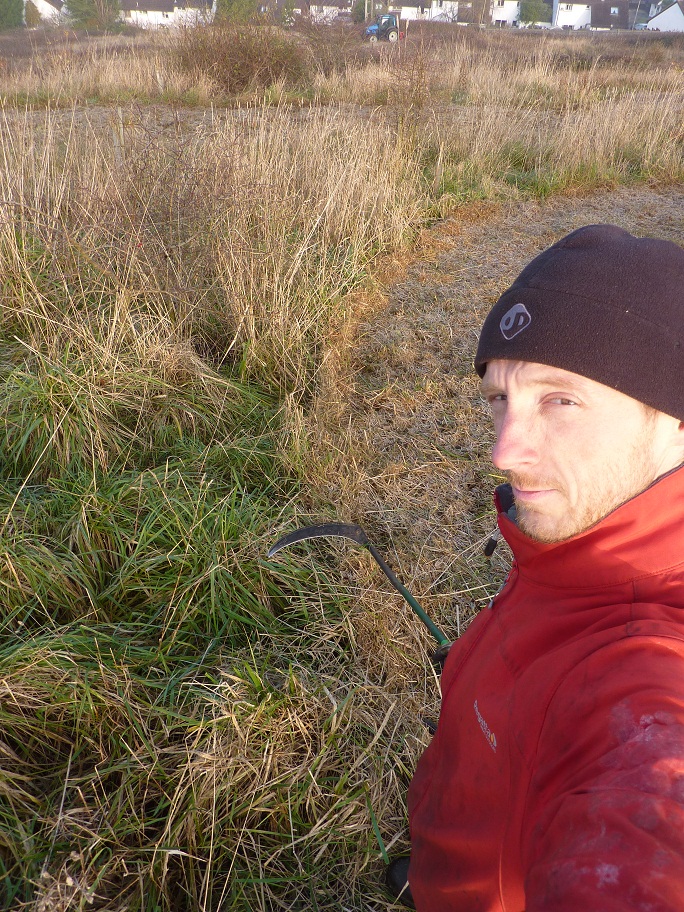
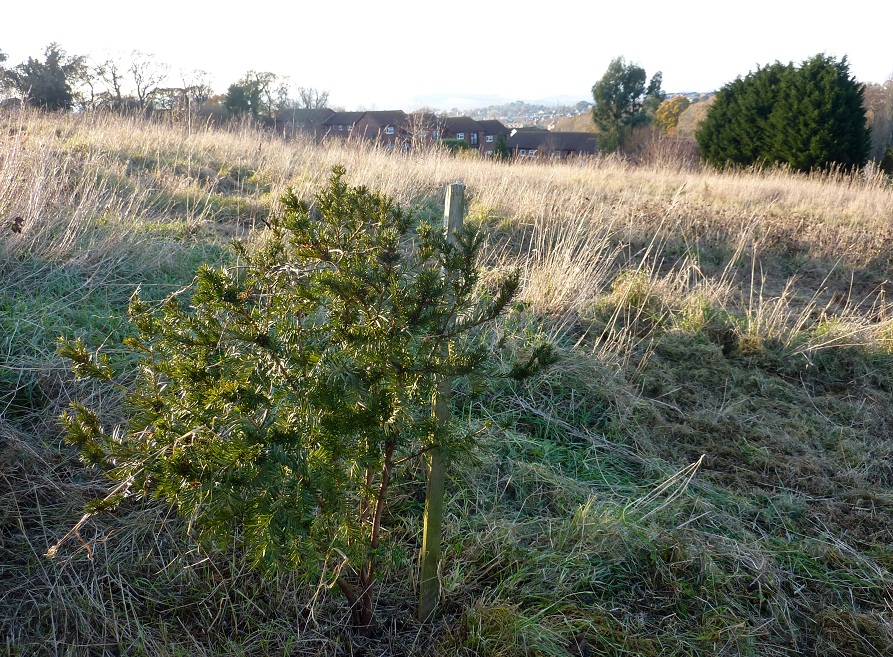

Us vs the Laurel
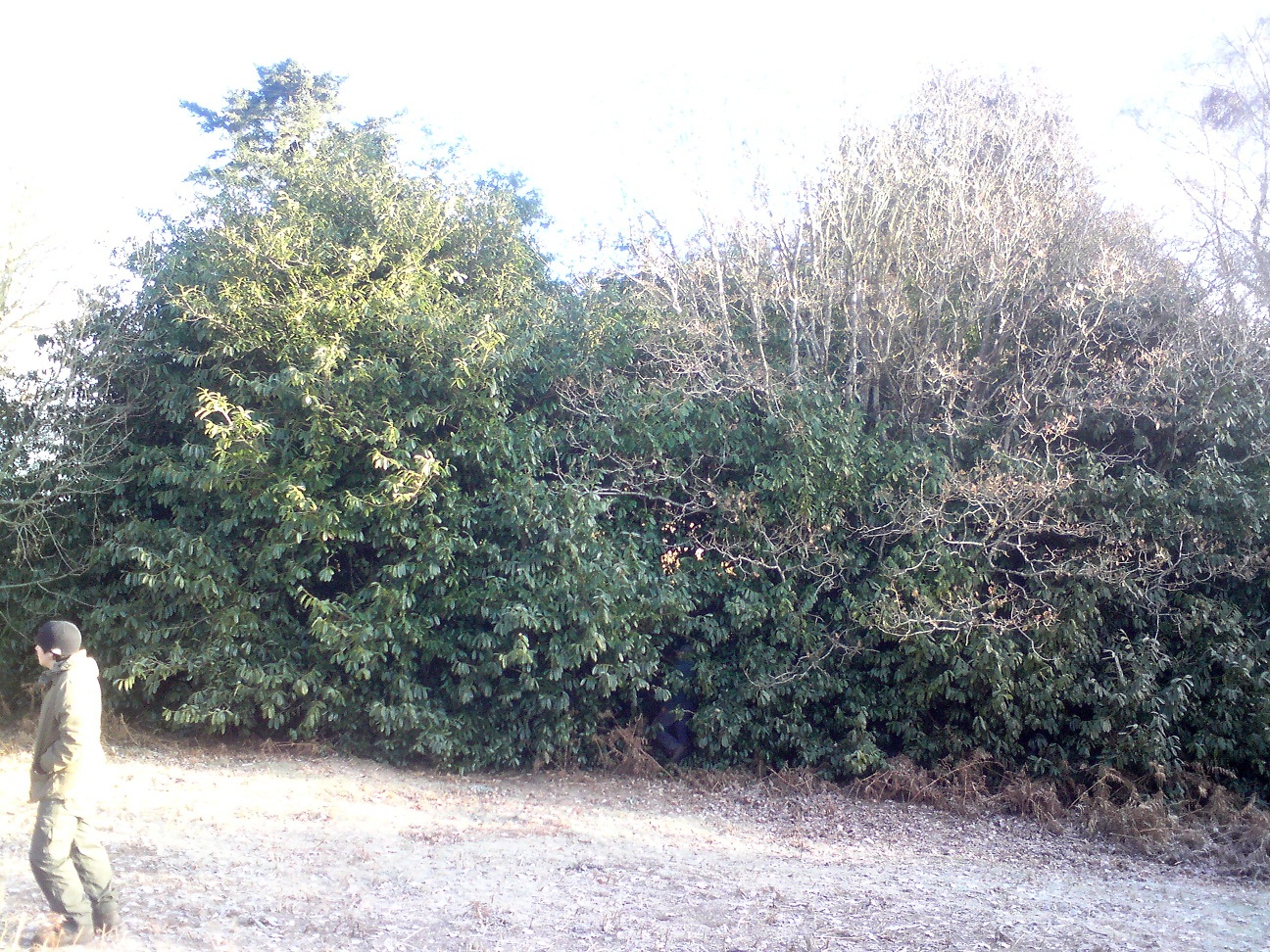
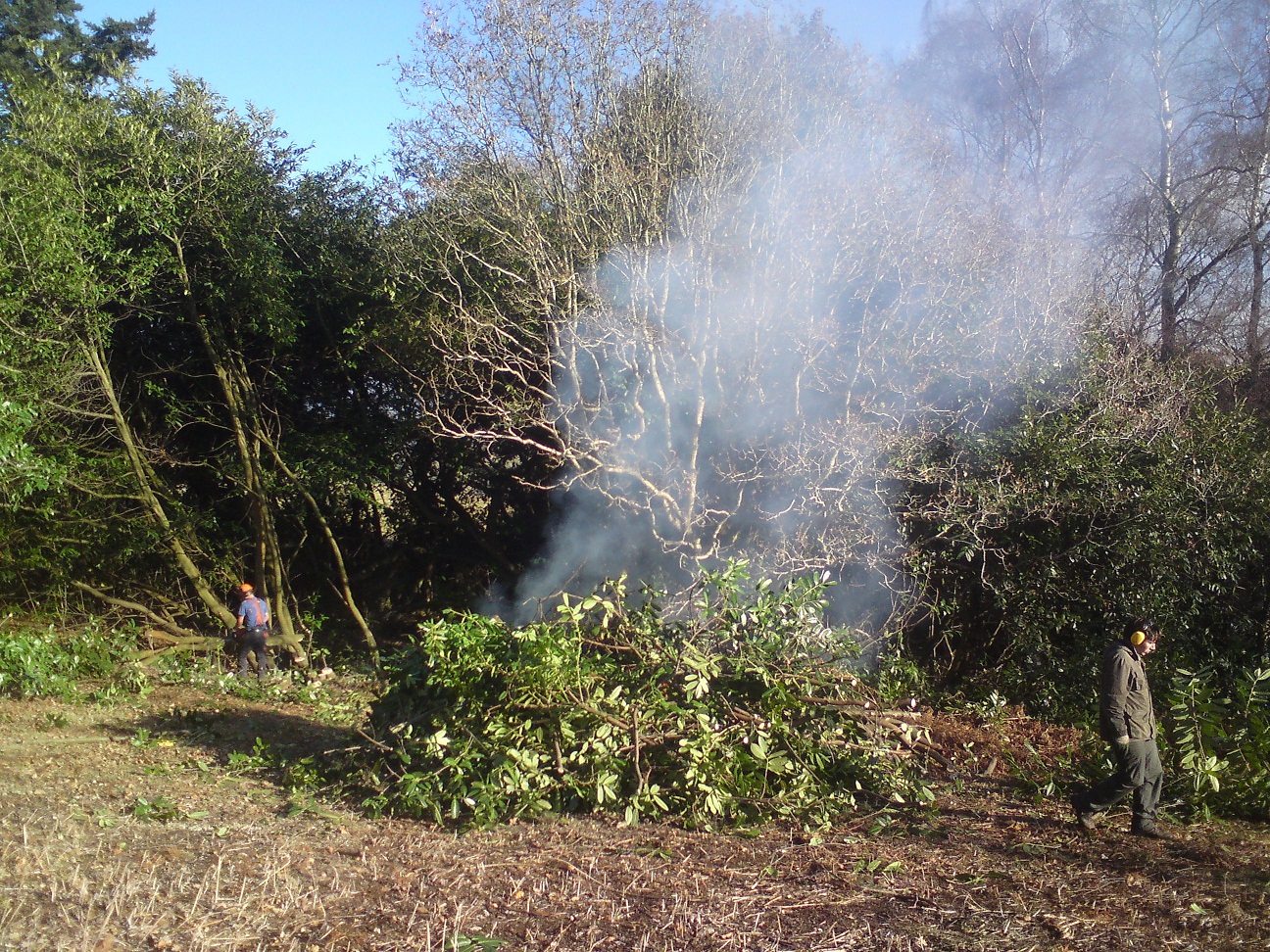
For the last few days we’ve been trying to reduce the powers of some mighty runaway Laurel on one corner of the reserve. This tree system seems to have been growing away unchecked for about 40 years, and has now swamped all the ground vegetation in the area, as well as some smaller trees. It even seems to be contributing to the shape of a couple of Oak trees in it’s midst.
This job is an ideal role for me to practice my chainsaw skills on. Plenty of leaning or lying compression/tension tests, as well as boring and dog tooth cuts. Also, the Laurel is incredibly dense, and seems to be very weighty stuff, so misjudging a cut can lead to a stuck saw, or very dangerous kick back. Thankfully, the biggest issue we experienced was trying to remove a number of branches tangled up in the Oak. I’m sure the Oak was very relieved to see it go.
On Friday, I carried out the reserve’s winter bird transect, with Richard. No Shrike this time, but we did get a little too excited when we thought we’d come across a Cirl Bunting. Further research showed it to be a Reed Bunting with a rather more yellow than usual bib. Still, that’s cool, we love Reed Buntings too.
-
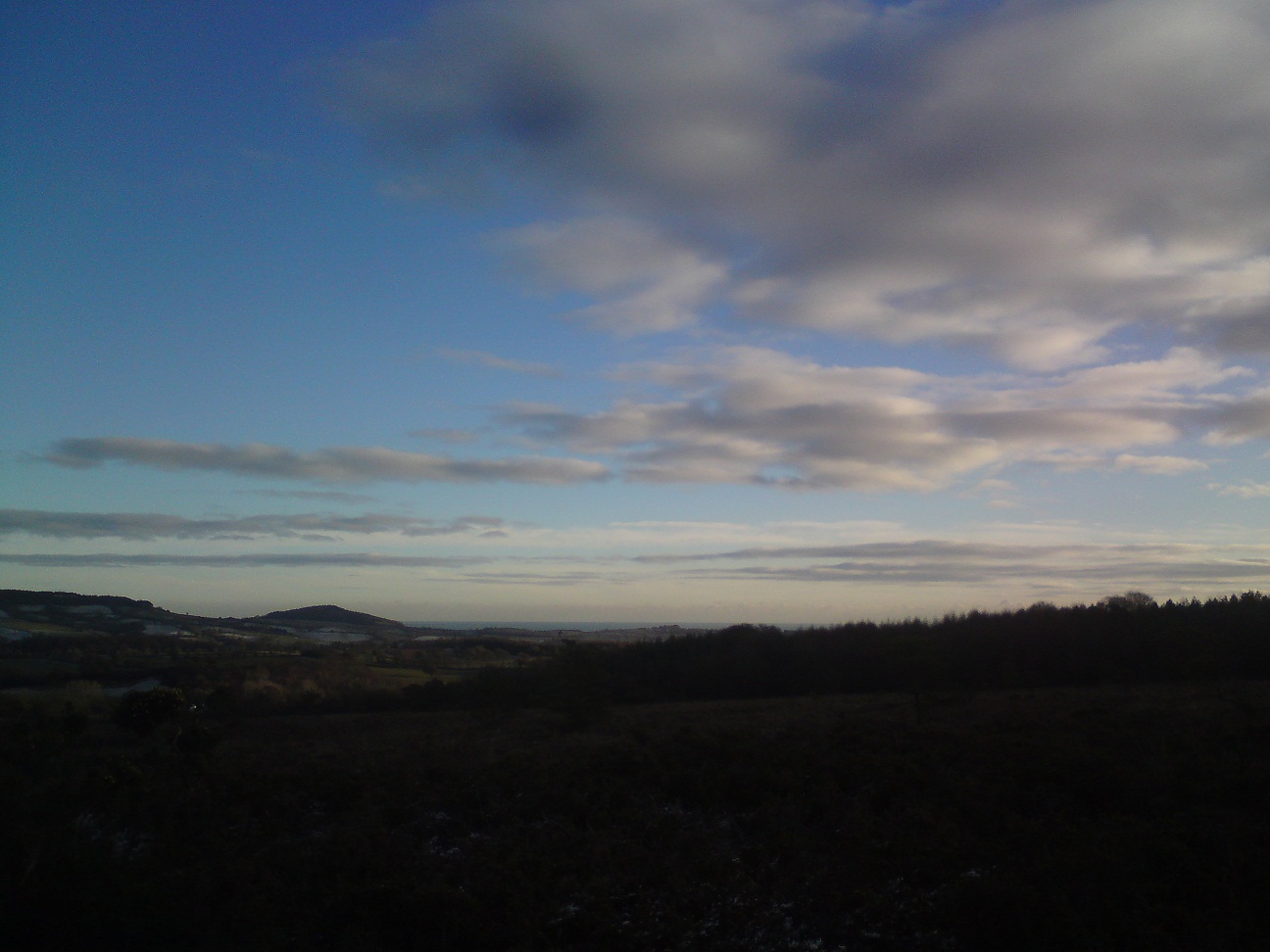
- It is possible to see the sea, just below Sidmouth, from the reserve
-

- Rob, one of the Exe vols, surveys the scene, while Ed goes in…
-
- After 3 day’s work, the Oak is free
-
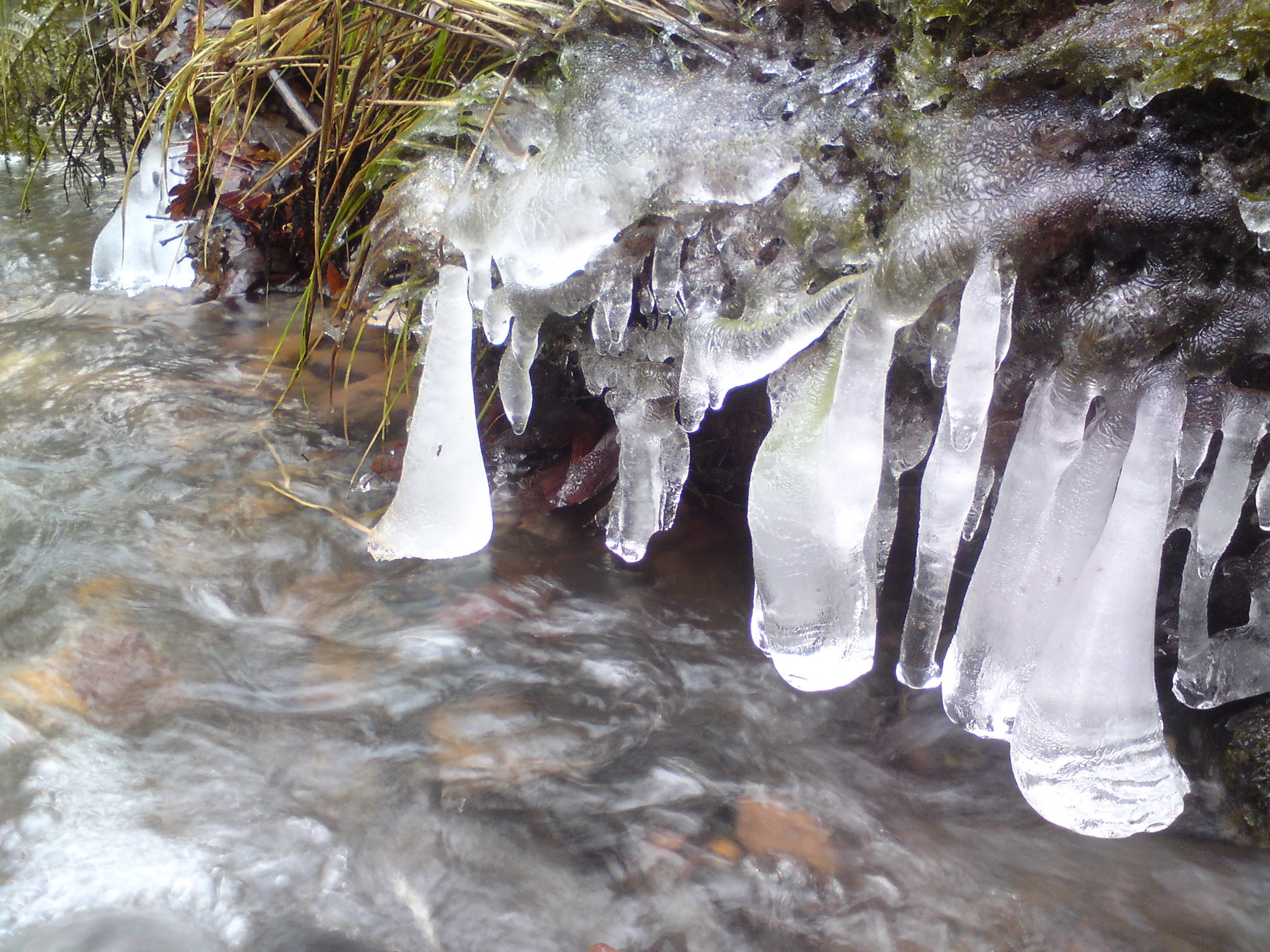
- Although a little warmer of late, there’s still some beautiful winter features on the reserve
Cold, ponies and electric fences
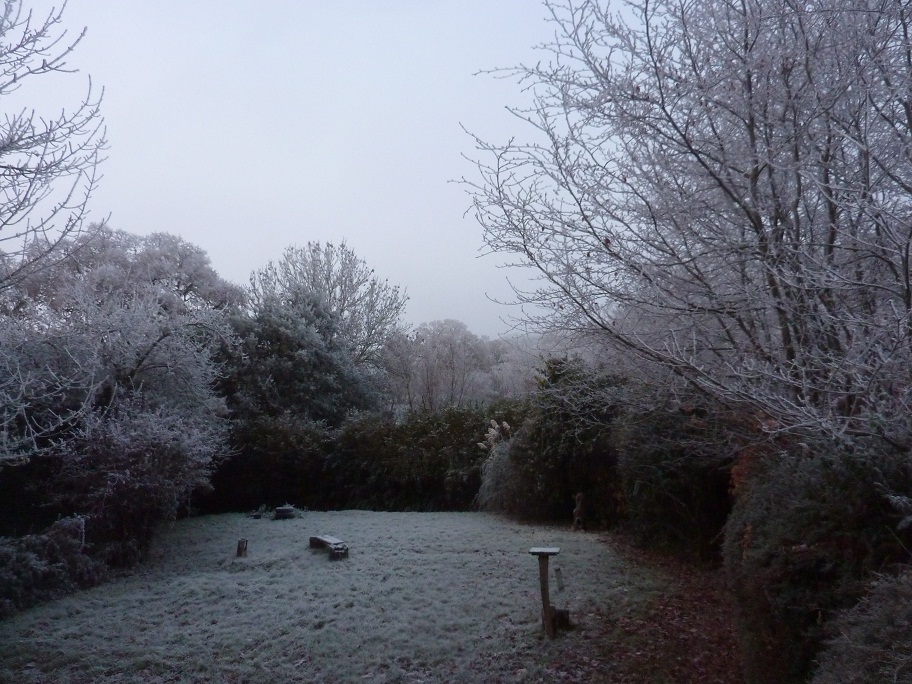
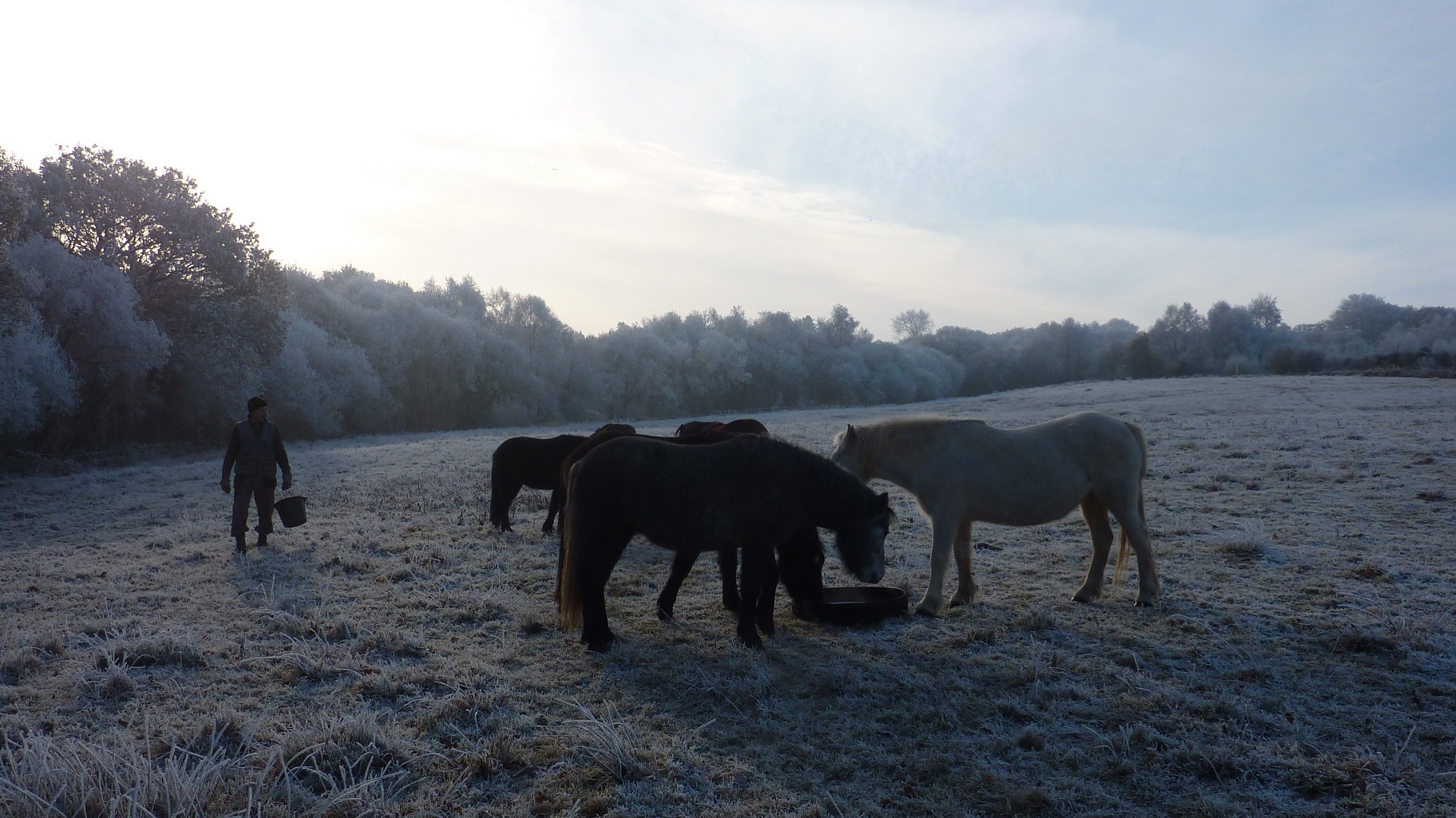
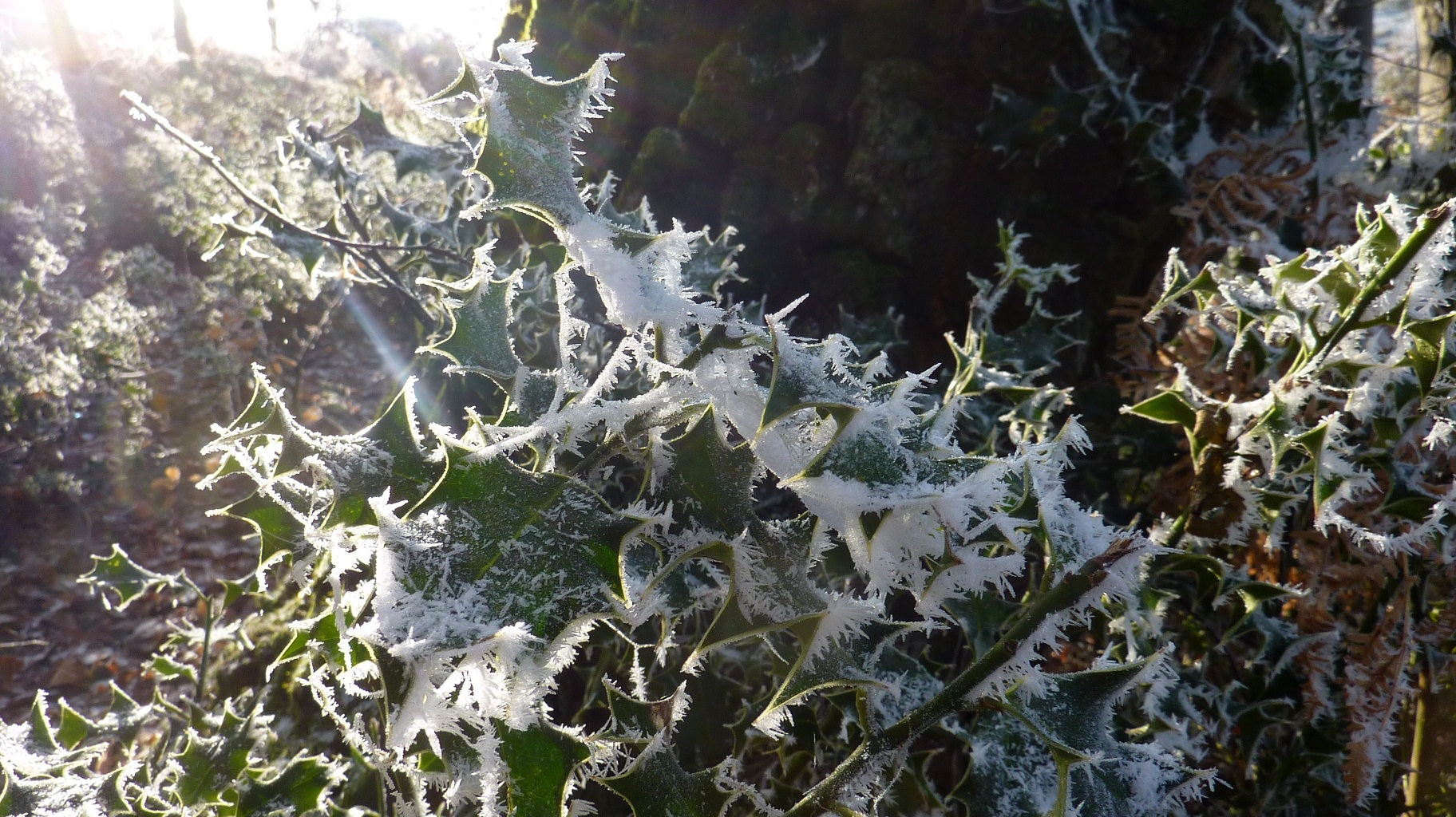
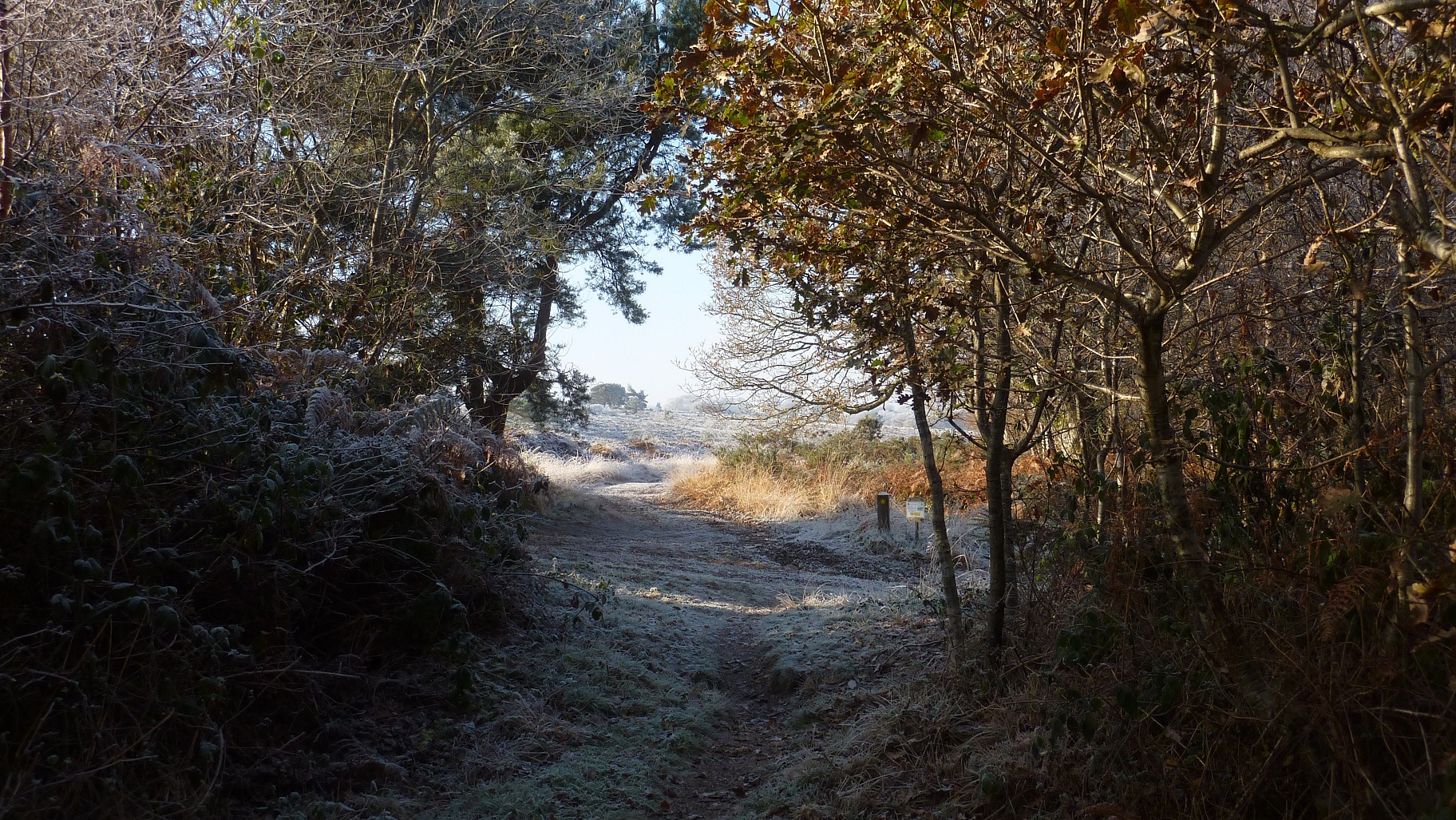
So, it’s pretty cold on the reserve at the moment, and last night we had a proper hoar frost, making everything look very spectacular today. The temperature was -6C last night and doesn’t get above freezing during the day.
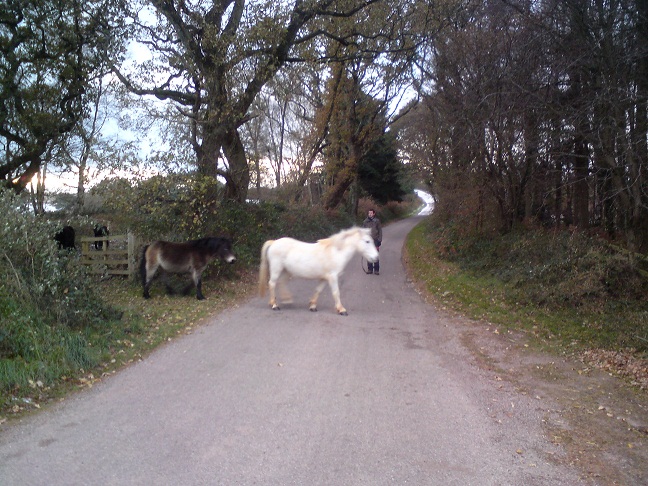
In the last couple of days I’ve been working with Vlad, who is Polish and has some great stories to tell about his trips away from communist Poland. Yesterday we were clearing up stumps, and felling a few trees at a place called Outer Hanger, where the Sunday volunteers had been working. Today we checked on all the groups of ponies that we currently manage, and rerouted an electric fence to allow easier winter access to a bridleway.
-
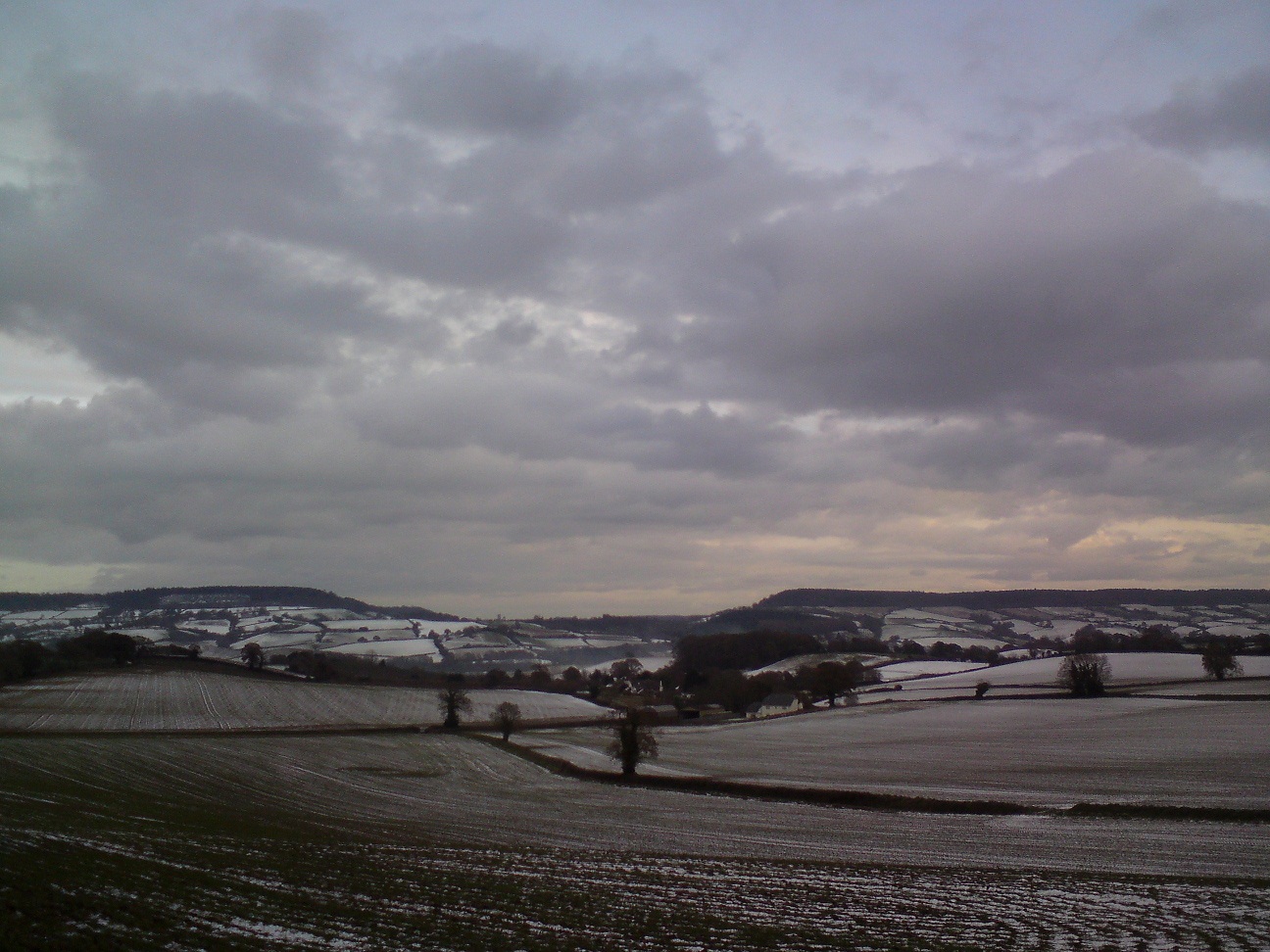
- The Ottery (East) hills
-

- Myself and Sam help Vlad move some ponies

-

- Hmm, I quite like this one
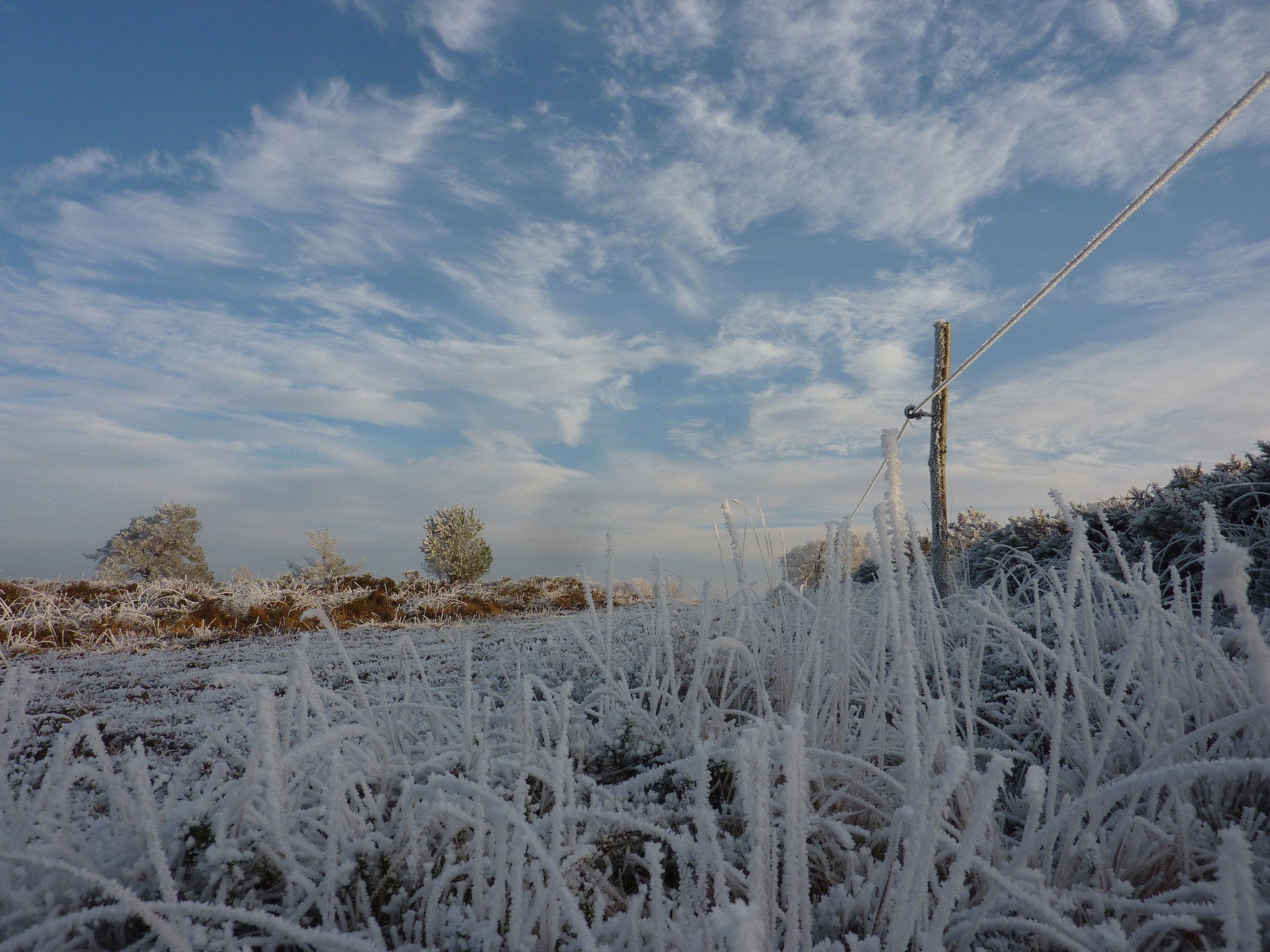
Some early winter snow, nice.
This year I have spent a great deal of time wishing for the kind of snow I was lucky enough to experience in February. Of course, I’m not going to be working in Scotland this winter, so I’ve had to wish extra hard. But, it might just pay off. This morning, we volunteers, in the RSPB Aylesbeare accommodation, woke to a smattering of snow. It wasn’t much, but is there more to come?
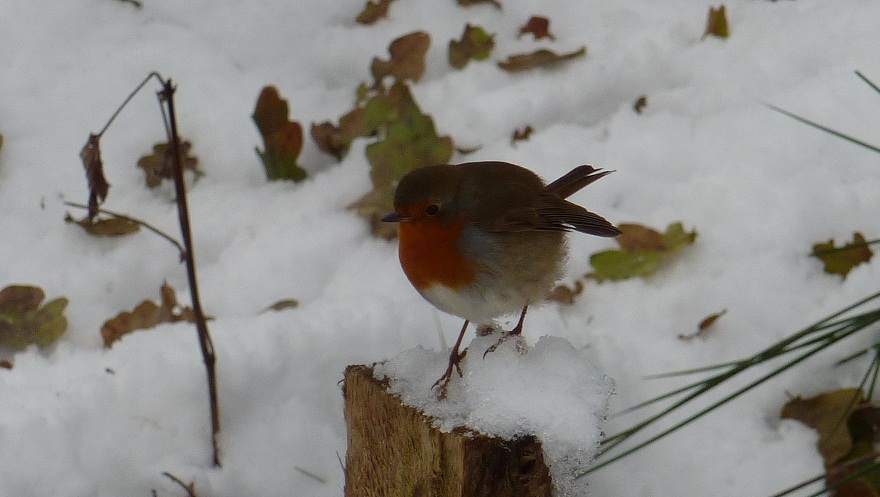
Other highlights this week have been the fact that it’s been freezing all week (although this includes the inside of our cottage, so I’ve had to bring in a sleeping bag to lay over my bed), and seeing Redwing, and learning their call. We’ve also seen a few Snipe, and plenty of Robins and Great/Blue/Coal/Long Tailed Tits in the trees where we’ve been working on the edge of the heathland. As these birds tend to appreciate the tree cover, it seems a shame to be cutting some of them down. However, the reserve is trying to encourage more heathland species by doing this work. Birds, such as the Dartford Warbler, and especially invertebrates, such as the 37 species of butterfly recorded on the reserve, more than any other RSPB reserve.
-
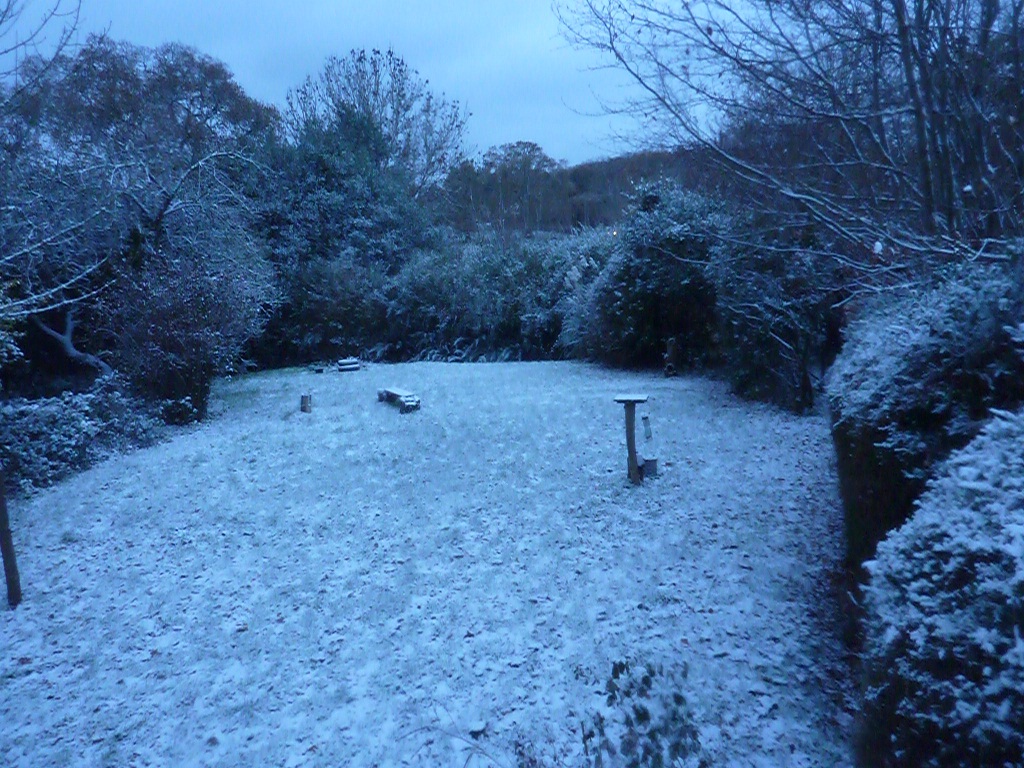
- The view from my window this morning. C’mon, let’s have more of that.
-
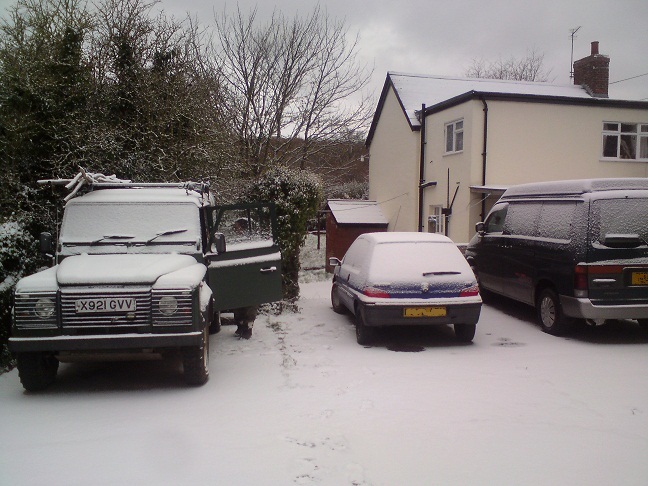
- The vols accommodation here at Aylesbeare
-
- Snow in the RSPB yard


-
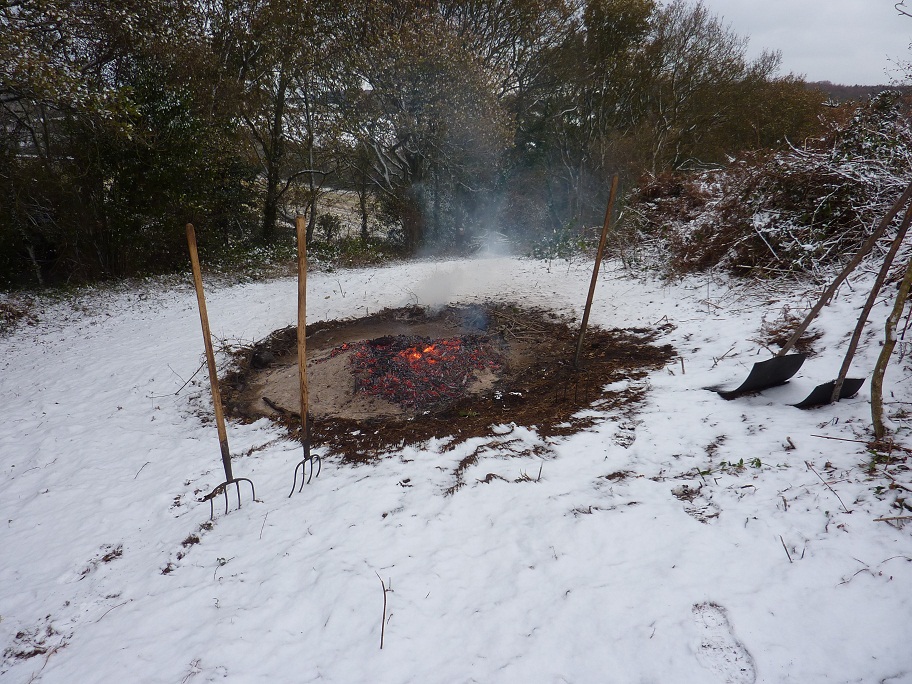
- Fire’s are one of the tools we use to remove nutrients from the heathland.
Paul Temps’ ‘not a stag do’
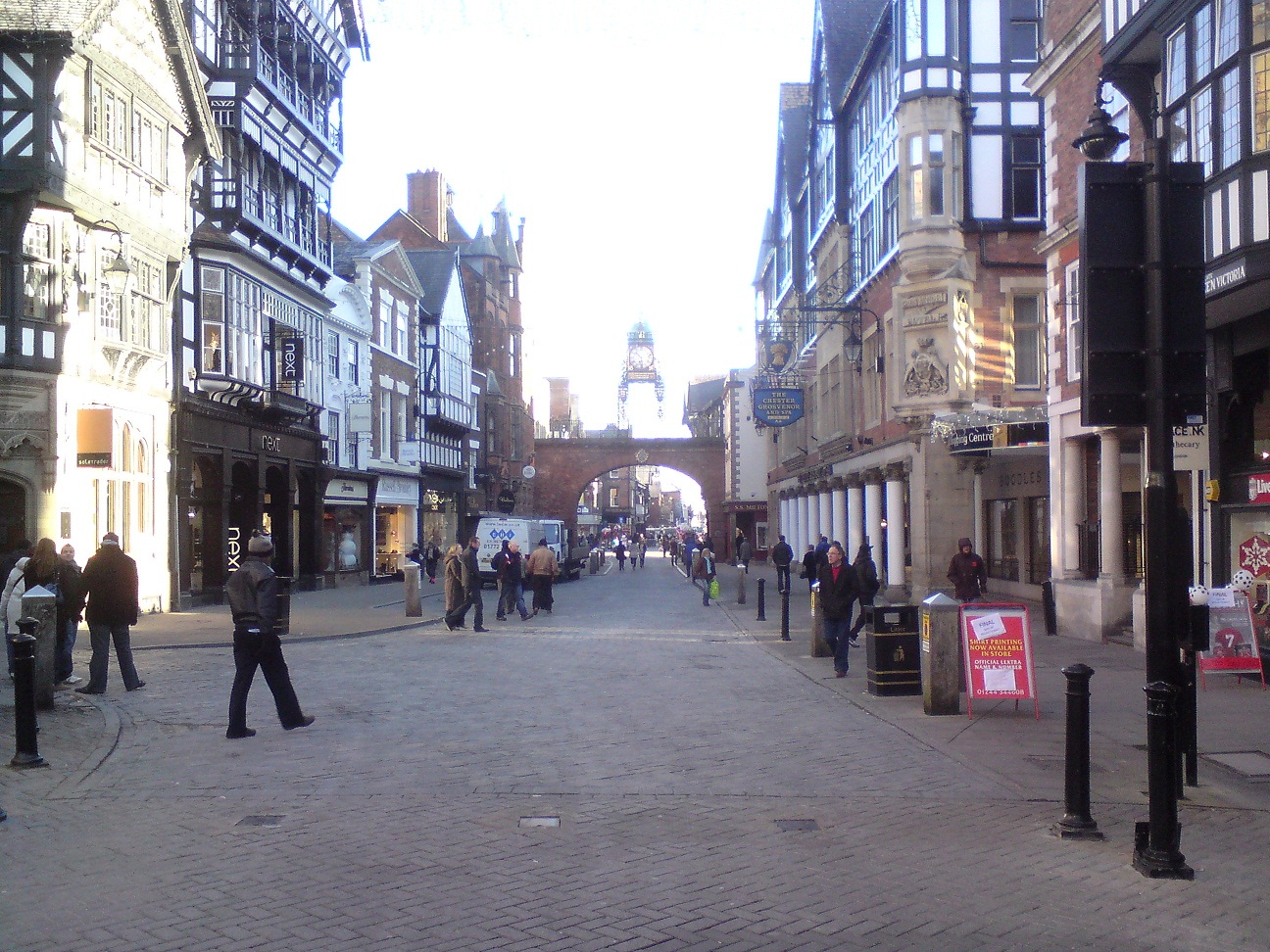
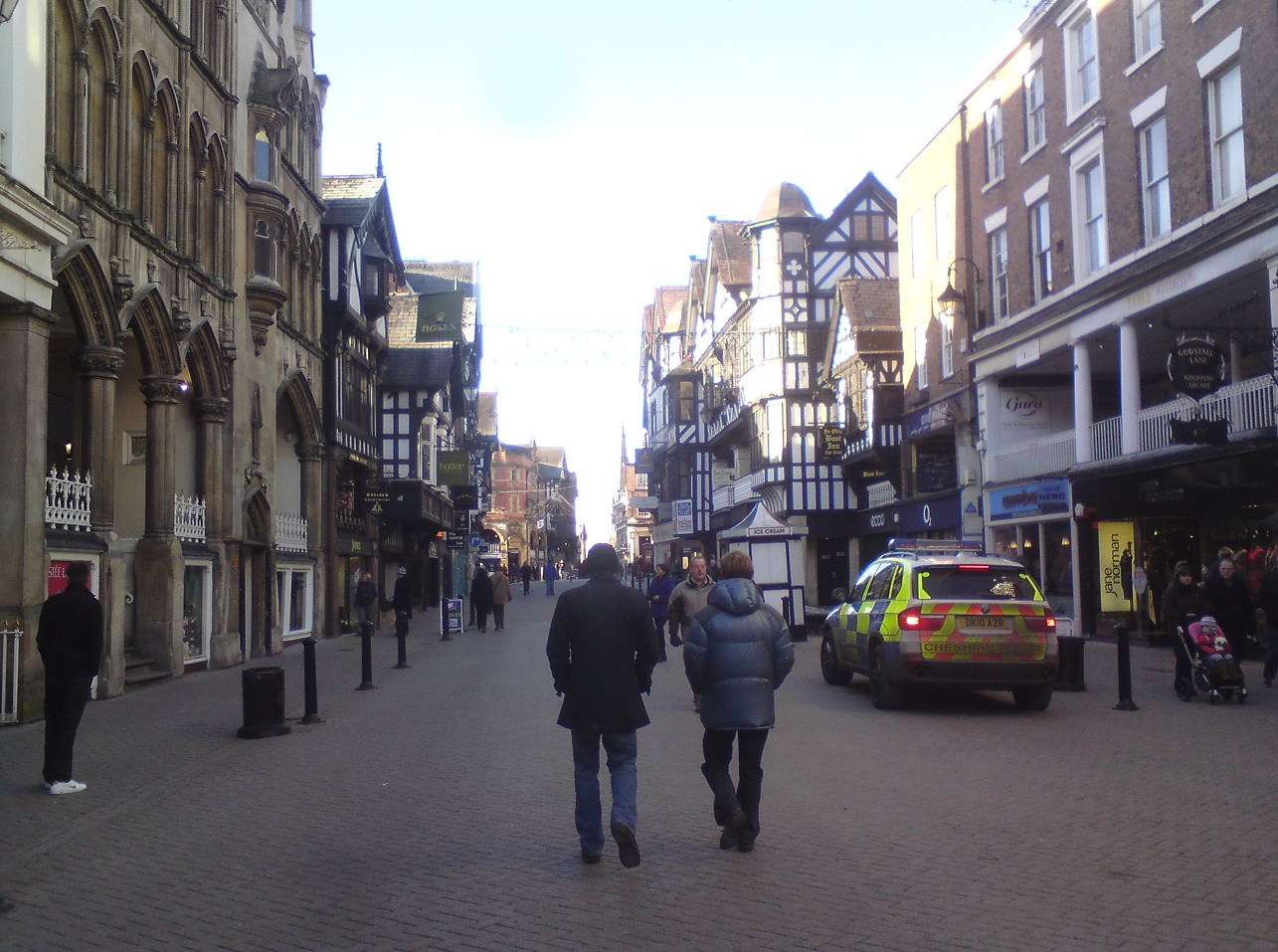
This weekend myself and the other activity boys made our way up North to meet up with Paul before he heads out to Japan to get married. His ‘not a stag do’ was in Chester, somewhere I’ve not been to for a night out for maybe 9 or 10 years. But I remembered having been in the first pub we visited, the “Old Harkers Arms”.
This was my first experience of a big night out without drinking alcohol since, possibly, my university days. I’m currently enjoying a life of sobriety which extends back to February. Not for any particular reason other than being sober feels so good that I don’t want to spoil it. I’ve also grown tired of hangovers, and am lucky enough to enjoy the taste of some non-alcoholic lagers.
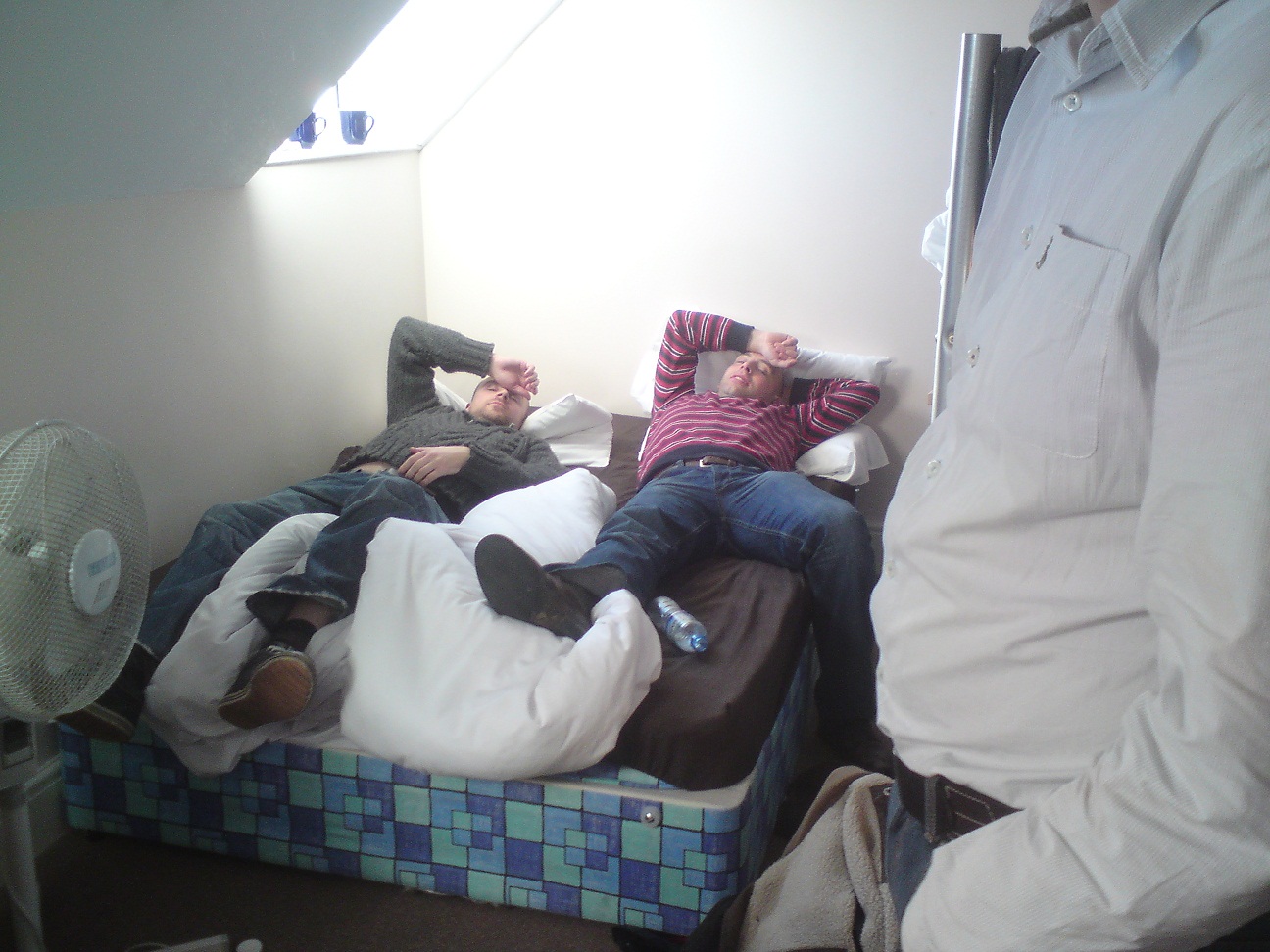
However, it was interesting to observe how the nature of the conversation changed as the evening progressed. All of Paul’s mates appear to be good natured drunks, and so there was a great atmosphere amongst the group. Inevitably, as the night progressed the group split into those wanting to drink more, those wanting to dance, and those wanting to drink more, and possibly dance, but were clearly incapable of either. As these groups made their own separate ways, I headed back to the 7 bed hotel room, with a relatively sober T, for a sleep punctured by returnees from the club/curry house/other establishments(?).
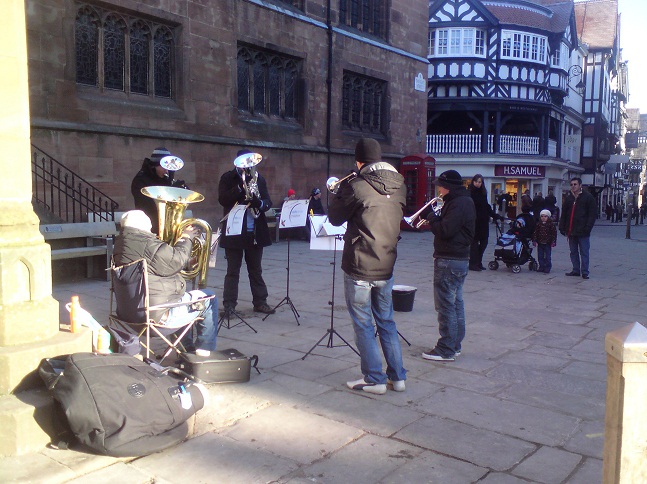
In the morning we had breakfast, then myself, Dave, John and Manoj took a quick look round Chester before heading home. Nice one John for making it out for the first time with us (well me anyway), since the arrival of baby Pearl.
-
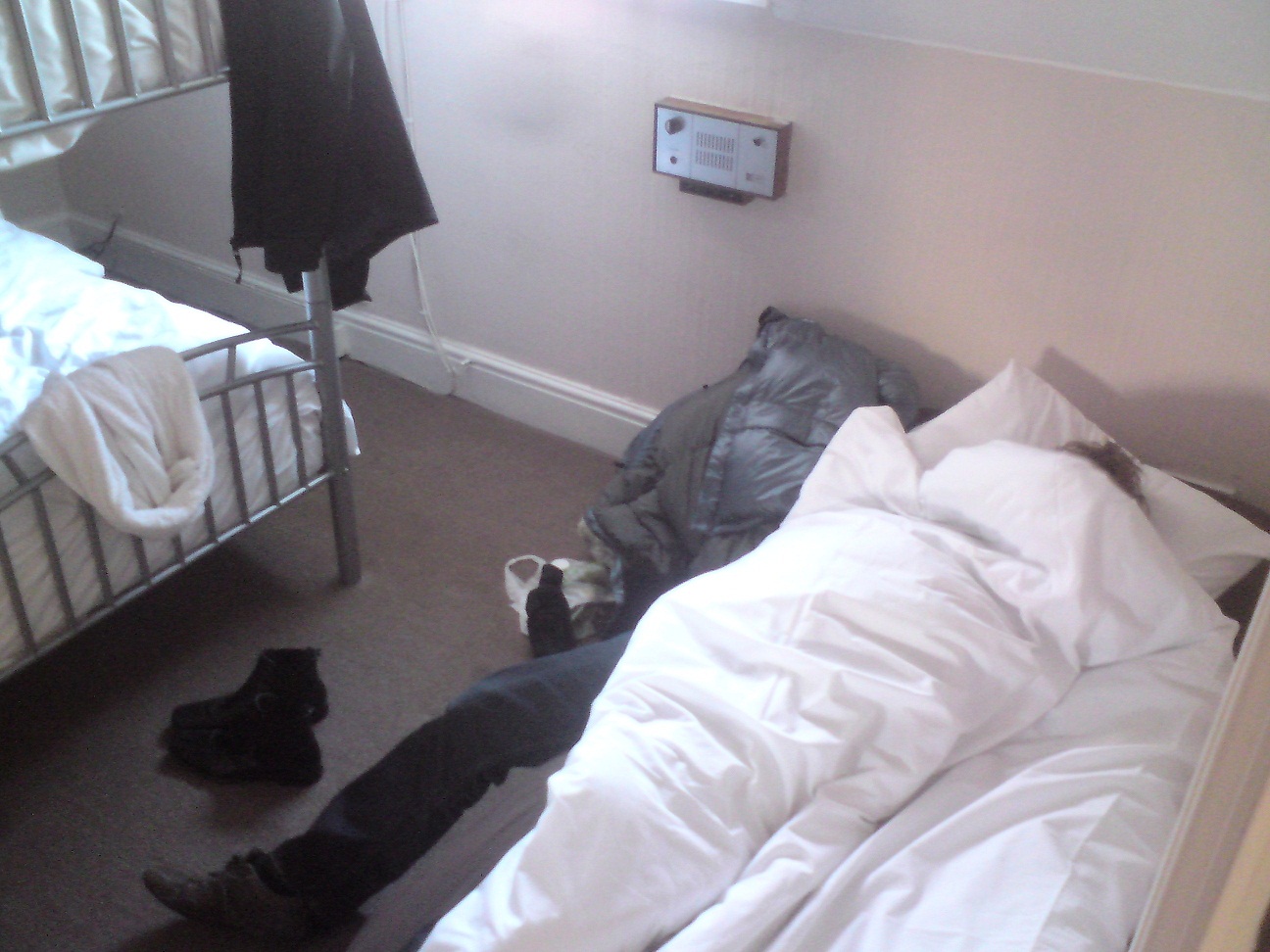
- John’s typical night out sleeping position
-

- Everyone is up bright and early
My first week at RSPB Aylesbeare
My first week with the RSPB crew at Aylesbeare has brought on some mixed feelings. On the one hand I’ve met a fine bunch of people, including numerous staff and volunteers from the South West region at the winter regional meeting on Thursday; seen a bird I’ve never seen before; and spent the week working outside. And on the other hand I’ve been introduced to the details of the heathland management process.
Heathland has been around for a long time. Maybe even thousands of years in this part of Devon. So there are a number of flora and fauna species that are well adapted to live in it. However, the environment is man made. Nature is always trying to reclaim those areas that are suitable as woodland or scrubland. In order to prevent this from happening trees and mature gorse are removed from the encroaching areas along with all leaf litter and other unwanted nutrients. Wood is taken away to be sold, and the rest is burnt. In many cases the most abundant trees in these areas are the silver/downy birch. I’ve cut down plenty of non-native trees on TFL weeks, but this is, I think, the first time I’m having to remove native species.
Today I was lucky enough to carry out the regular bird survey with Johnny, the current assistant warden. We saw plenty of tits, yellowhammers, dunnocks, etc, but the highlight was watching a great grey shrike chase what looked like a dartford warbler over some gorse bushes. This bird is a predator to smaller birds and often creates a “larder” of it’s catches by storing them on spikes on fencing or spiky trees/bushes. I’d already seen the bird on Tuesday, in flight and sat in the top of a tree, but watching it chasing a very agile small bird was a brilliant site to see. Unfortunately, I was rather under-prepared, without camera in hand.
-
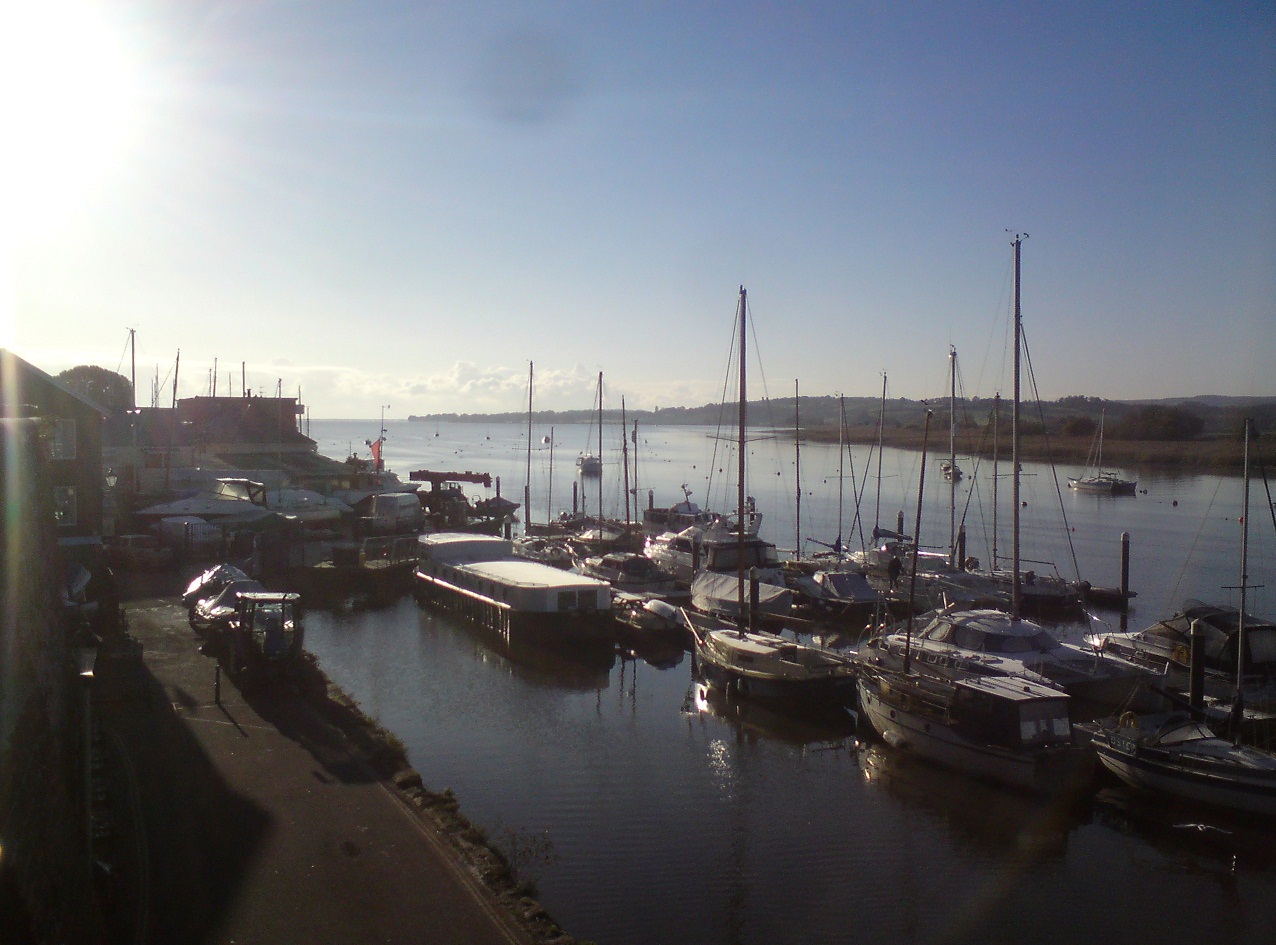
- The view down the Exe from Topsham
-

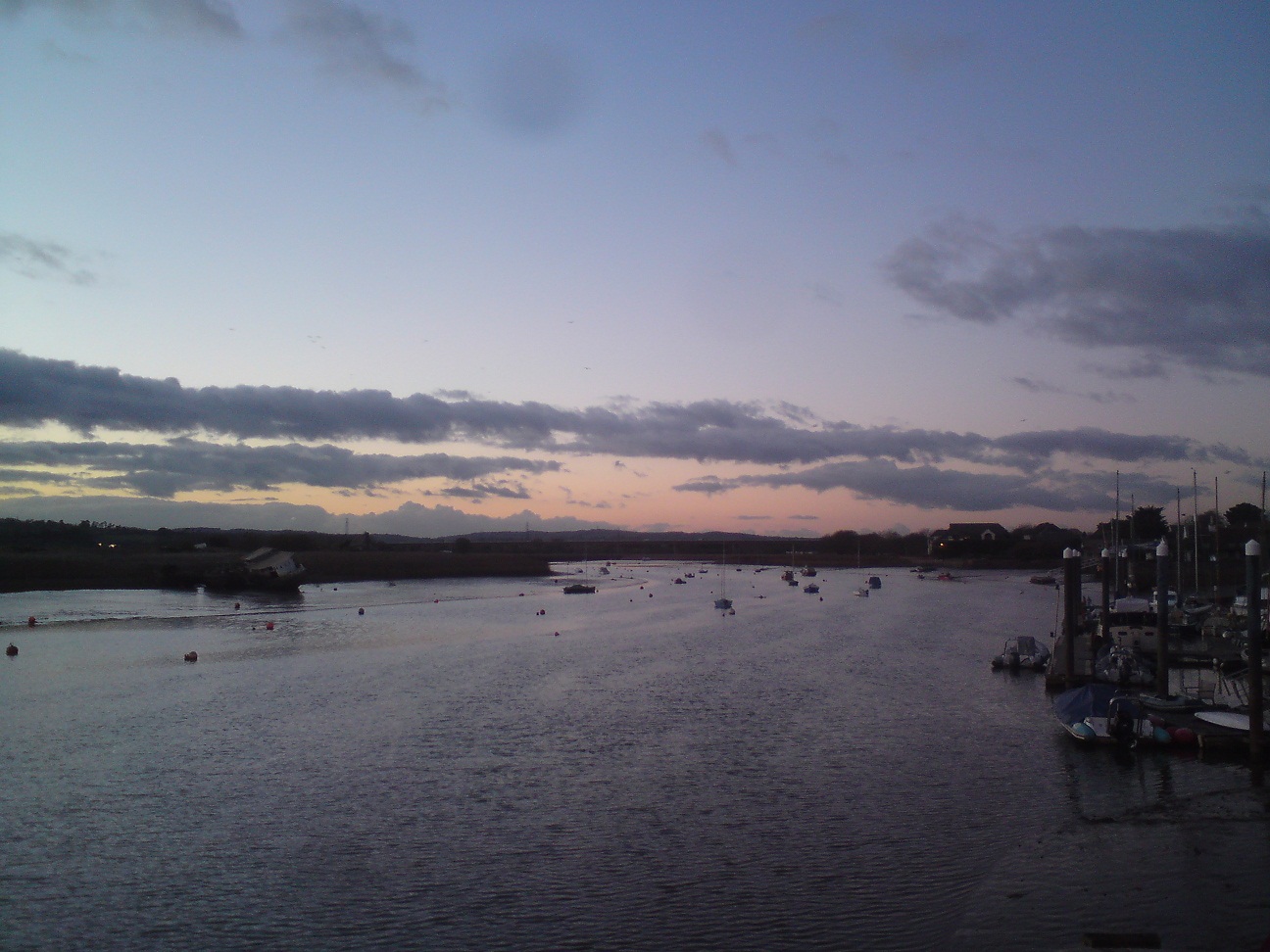
- …And up the Exe
-

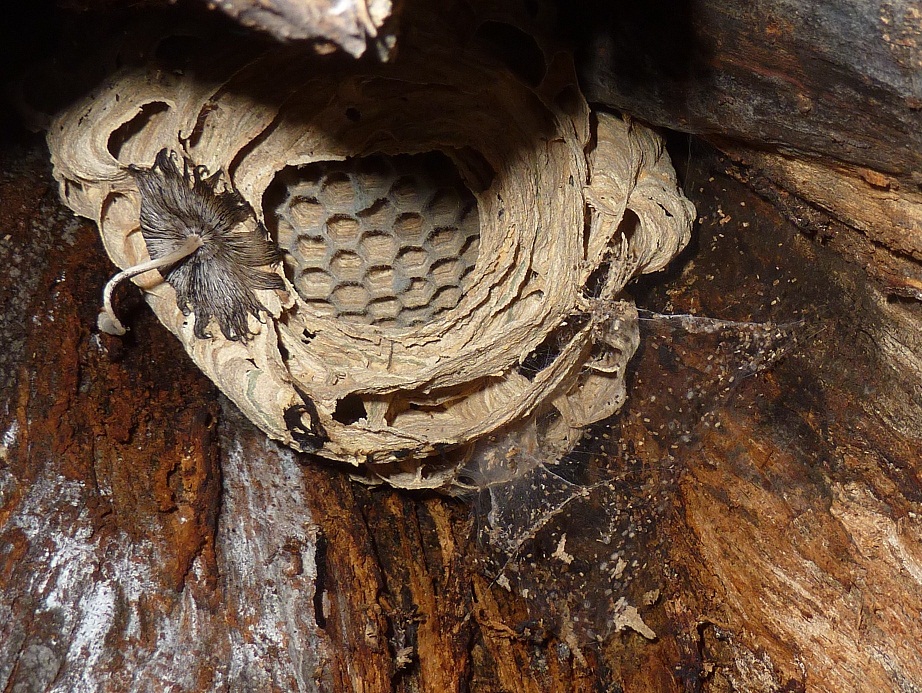
- Apparently an abandoned hornet’s nest
-
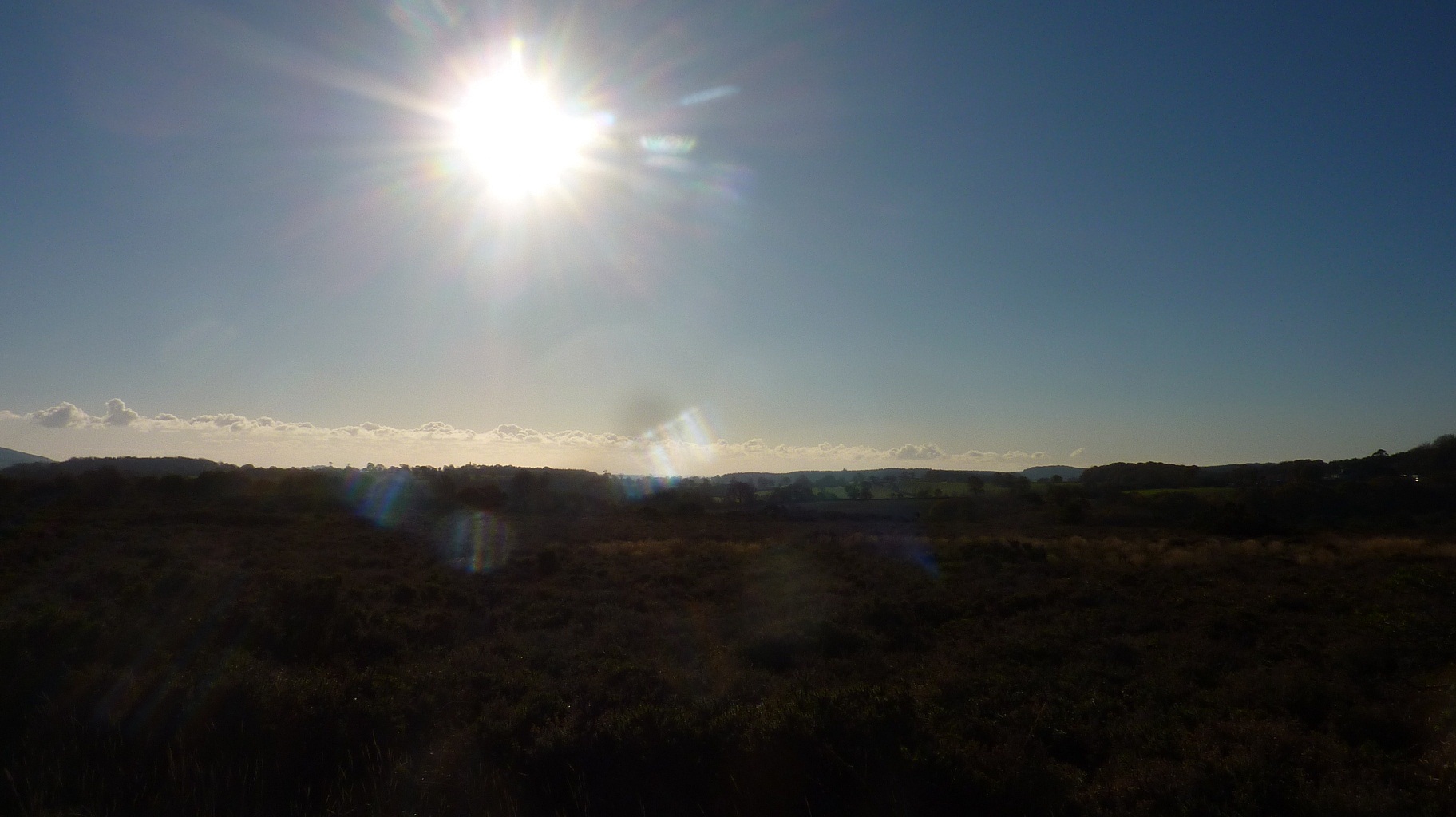
- Aylesbeare common.
Using a chainsaw
Up to now the only weapon that I consider myself trained to use is a car (apart from the occasional axe throwing session with John Garrett). This week I’ve been learning how to use a chainsaw. It seems that a lot of practical roles in environmental work require chainsaw experience. And I know that knowing how to use one could be of great benefit if I want to get involved in habitat management. As part of my RSPB placement, which begins next week, the RSPB have kindly agreed to train me up, in the use of a chainsaw, this week.
The training took place at RSPB Arne, where I was based for two weeks in the summer. Last time I was there, in early August, there were Nightjars and other summer breeding birds mixing with the first of the autumn migrants. Now the summer visitors have left, and the estuaries and mud flats are fillng with wintering waders and wildfowl. Unfortunately I didn’t get an opportunity to take much of a look around during daylight hours, having arrived late on Sunday, and then heading off after finishing the course on Friday evening. But, with the help of Will, the volunteer from Radipole (Weymouth), who was also on the course, I did manage to ID a flock of Avocet from where we were training.
-
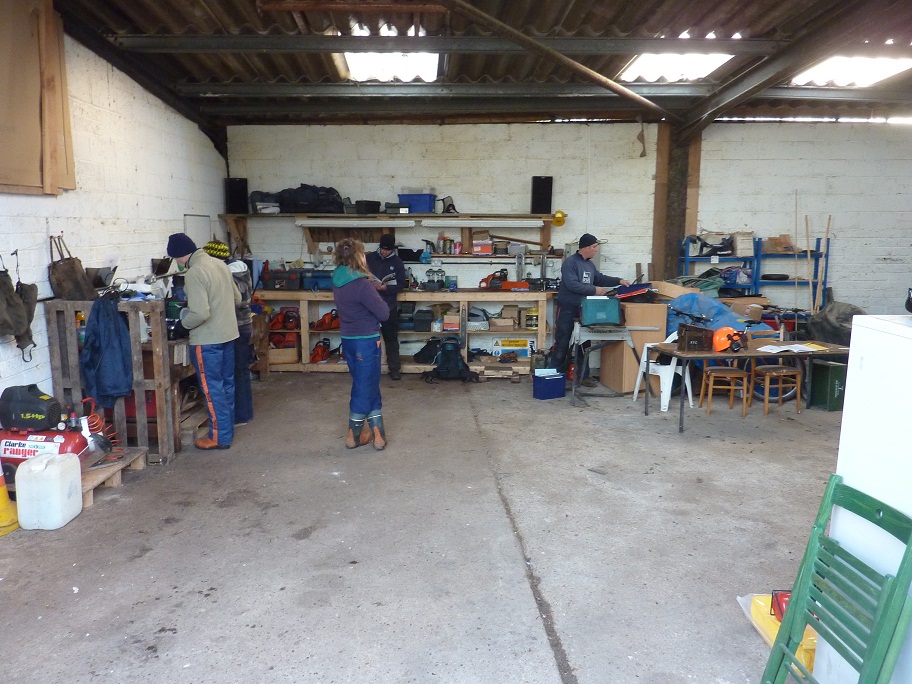
- A lot of chainsaw work seems to be about maintenance and tea
-
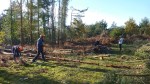
- Here we are practising our crosscuts. Oooh, where’s the compression?

-
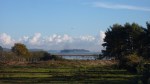
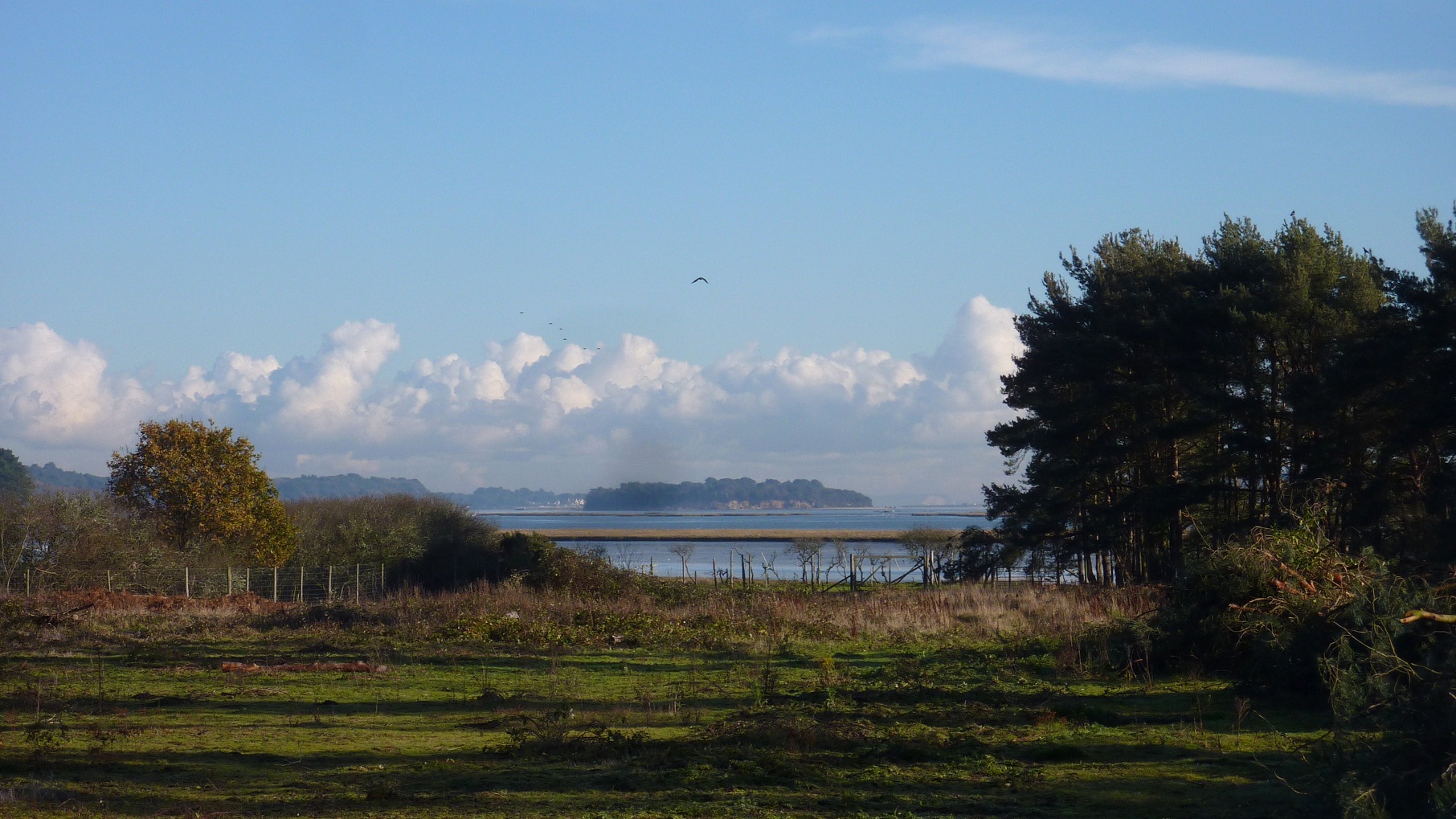
- Mostly the weather was kind to us
Driving away from the blizzards
Come the end of the work week, dropping off the vols and driving the TFL minibus back to Findhorn, and I had to be in Dorset by the next evening. Frankly, I’d wanted to spend the winter in Scotland, experiencing proper cold weather. Spending time in the snow at Abernethy last winter may well have been the most memorable time of my recent life. However, during my time at Arne, an opportunity arose to get some habitat management experience with the RSPB in North Devon. So, the snow (there’s never Snow in North Devon, just dustings) will have to wait until next year.
Now I’m back at Arne, to learn how to use a chainsaw, before starting my RSPB placement next week.
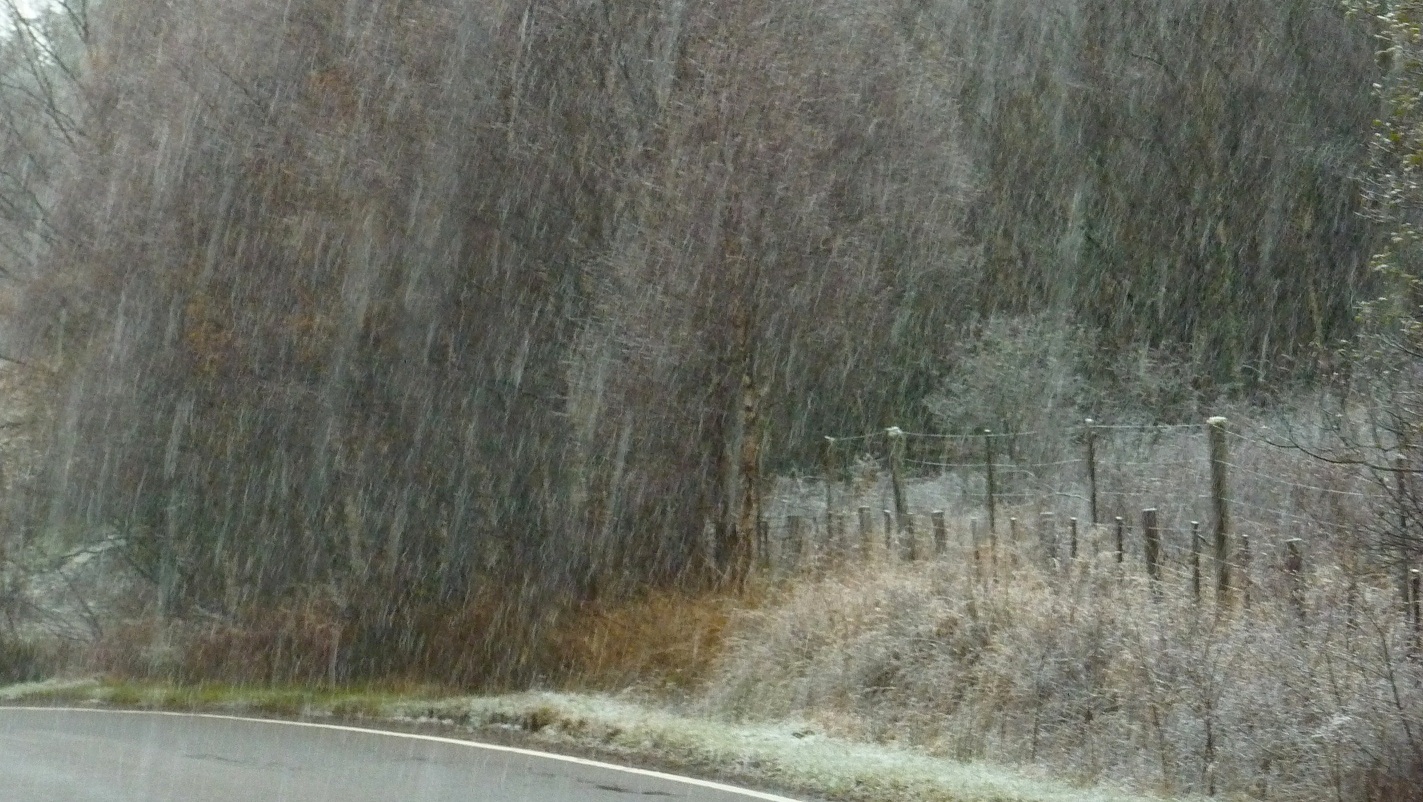
Just to remind me of what I’m likely to be missing though, as I was driving through Glen Spean, it started to snow. Although it wasn’t settling on the road, it looked fantastic.
-

- Pretty lame photos, I agree. I was in a hurry…
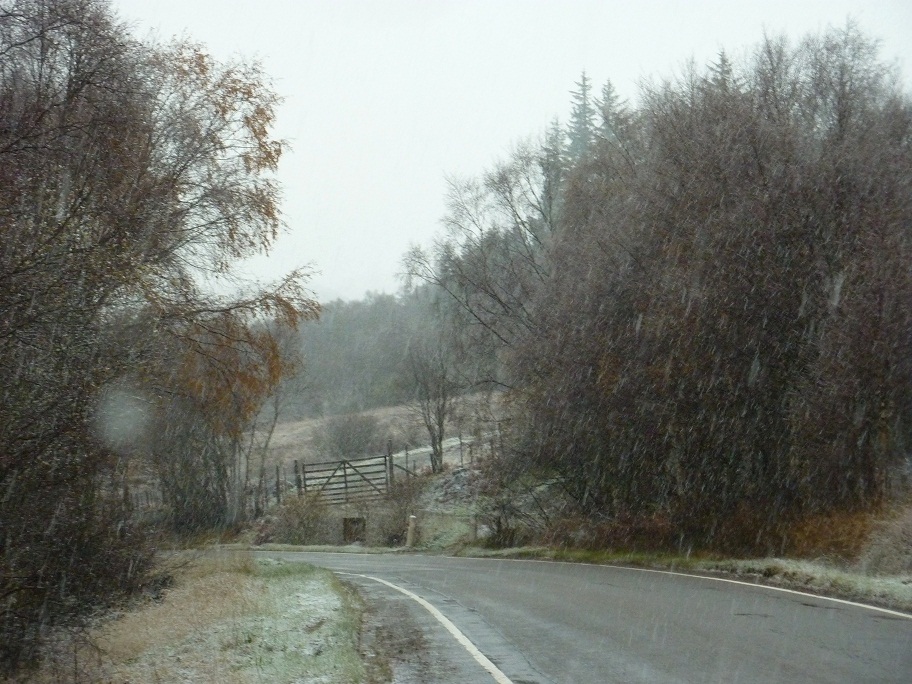
-
- Despite the subject quality it is still possible to make out the snow falling
Photos from my Dundreggan day off
On Wednesday (10th), during the work week, we had a day off, as usual. I took the opportunity to walk West across the estate, from the lodge, to some land adjacent to the estate (above Dalchreichart), that has been planted with Scots Pine in the last 10 years. The land owner has erected a deer fence all around the land, but there are two gates into the area from Dundreggan.
It was a beautiful cold, crisp, sunny day, with frost in the dips and cracks in the hills. In some places the Scots Pine, which I estimate at about 8 years old, is above my head height. There is also a good thicket of Birch regeneration, just downhill from the Dundreggan plantation, but the few planted Birch that I found were either dead or in poor health. There were signs of deer damage, and I found two hinds in the exclosure (exclosure because it is designed to keep deer out).
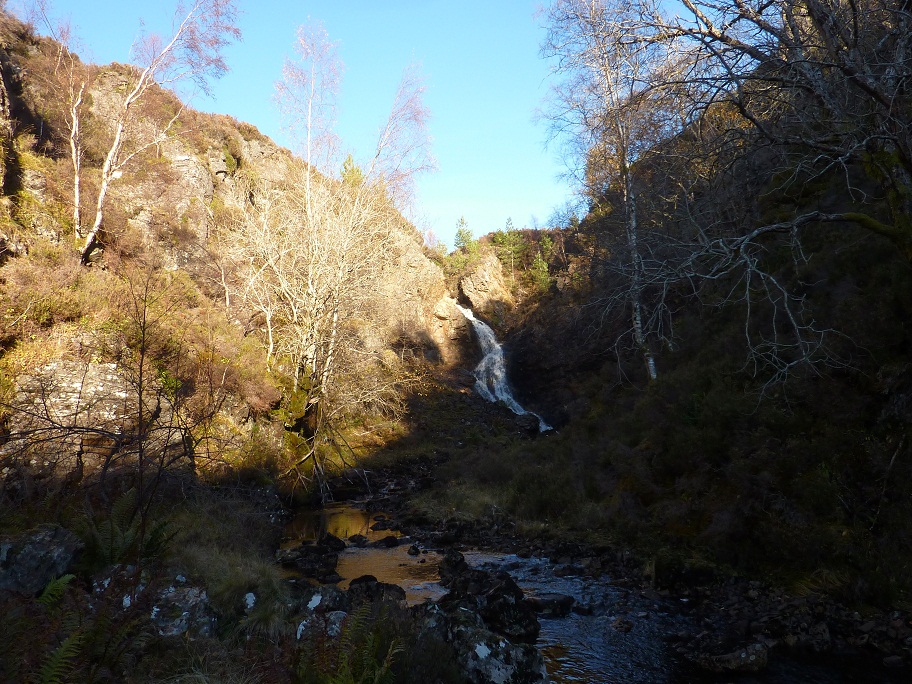
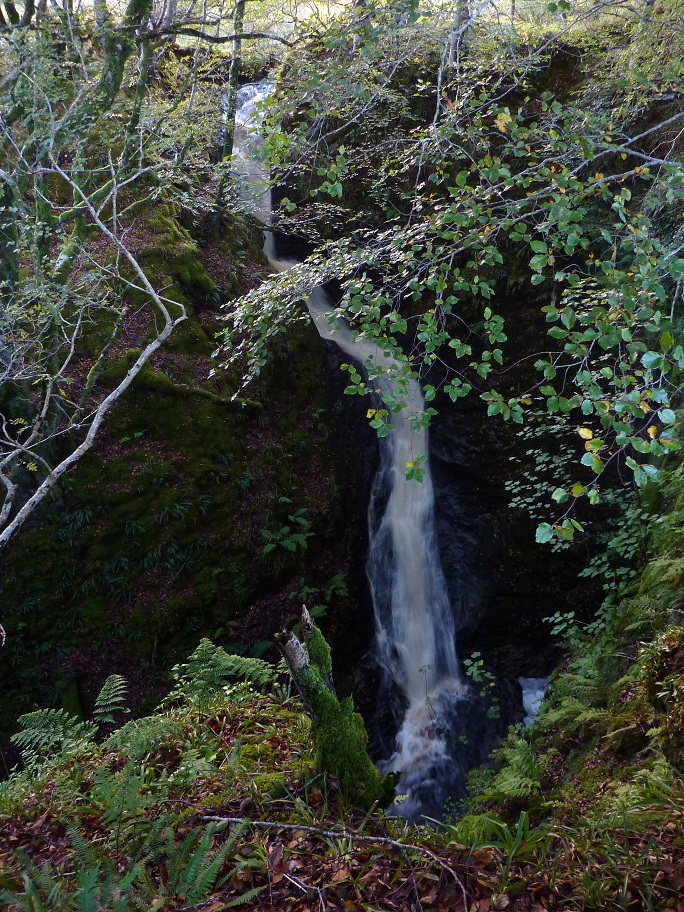
In the western part of the exclosure there is a deep gorge with a waterfall at one end. Walking up it was easily the highlight of my day. Above the waterfall a stand of Aspen hang on to the cliff top, and suckers are having some success in getting further away. But it’s a precarious situation and I hope the deer are removed before they cause them too much damage.
-
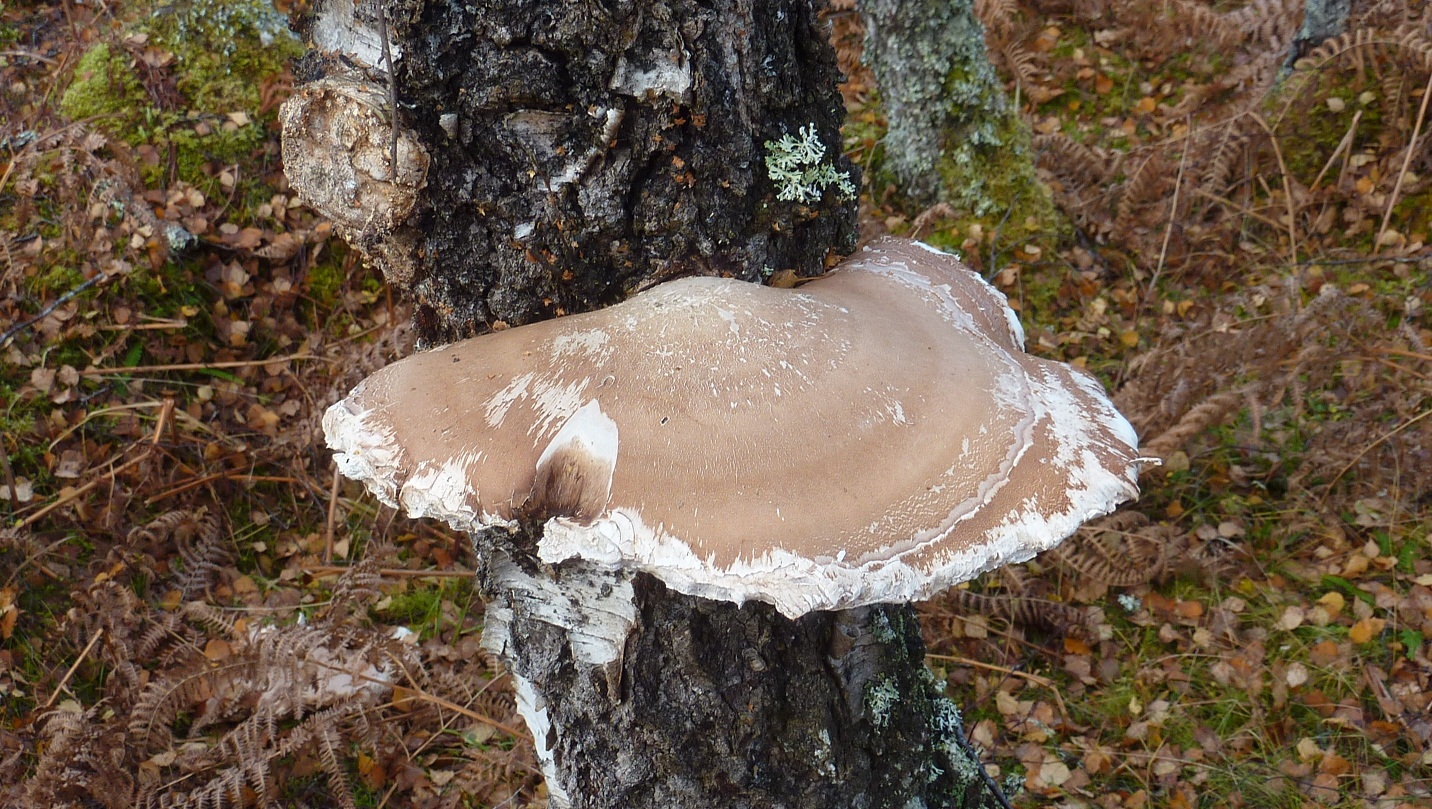
- A massive Birch polypore, the size of four small towns
-
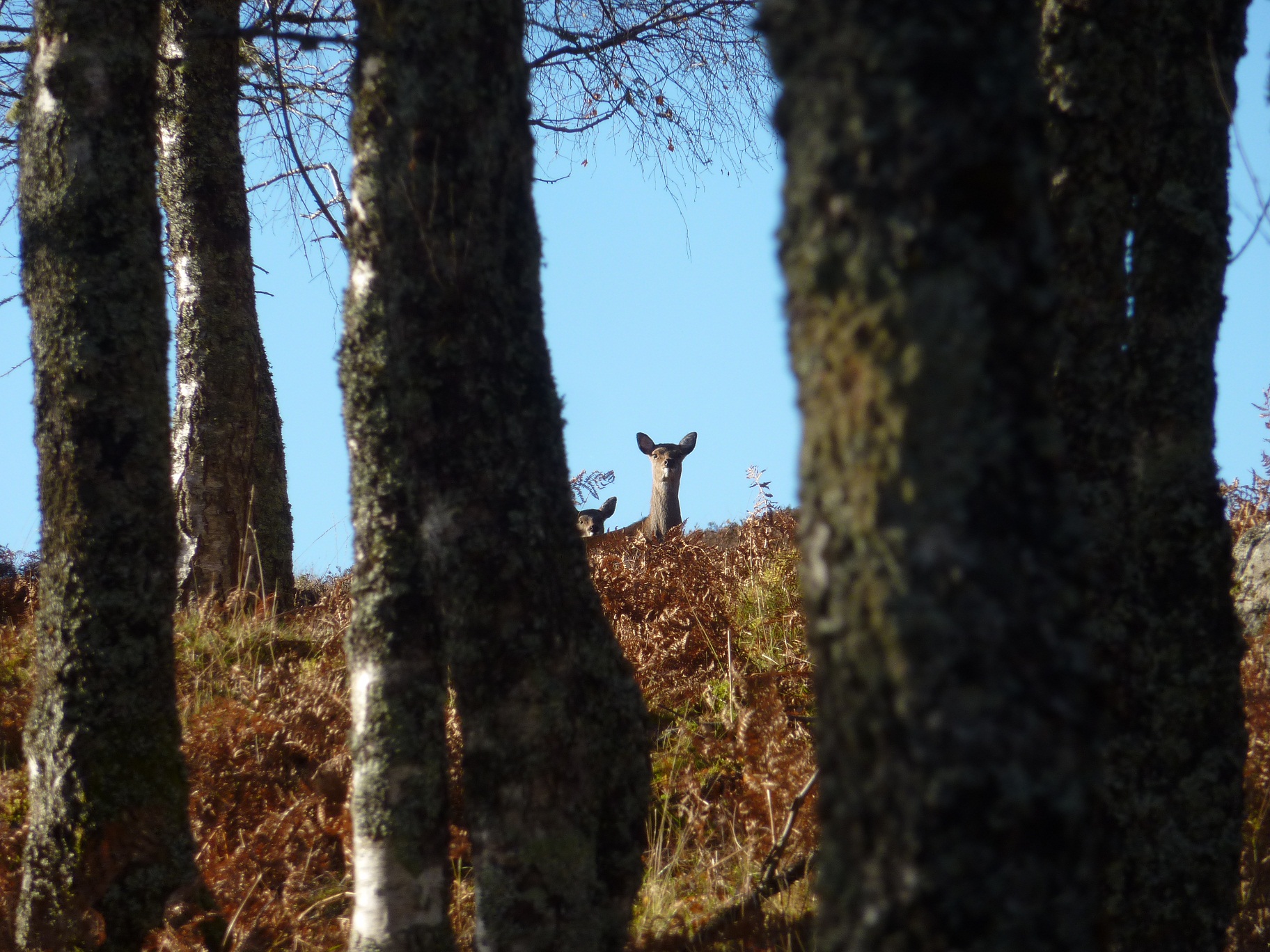
- The word ‘Sika’ is derived from Shika, which is the Japanese word for deer, apparently.
-
- These are Red deer. It is possible for them to hybridise with Sika.


-

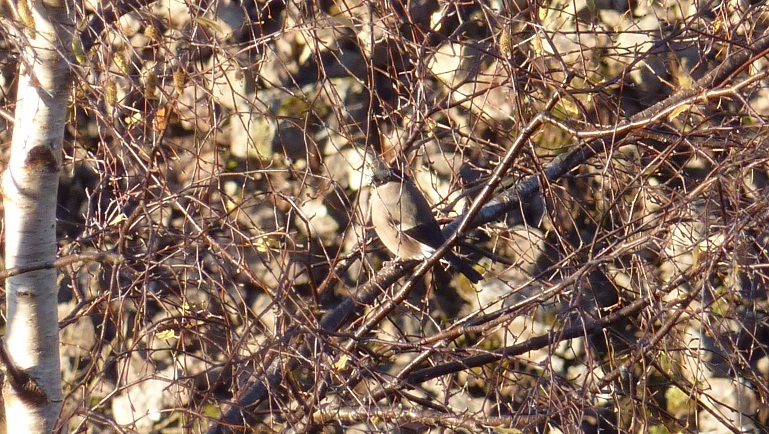
- This is a female Bullfinch. I wouldn’t think that this could hybridise with Sika.
-
- The Eas an Tairbh waterfall
-
- The smallest bird species in Europe? Anybody?

-

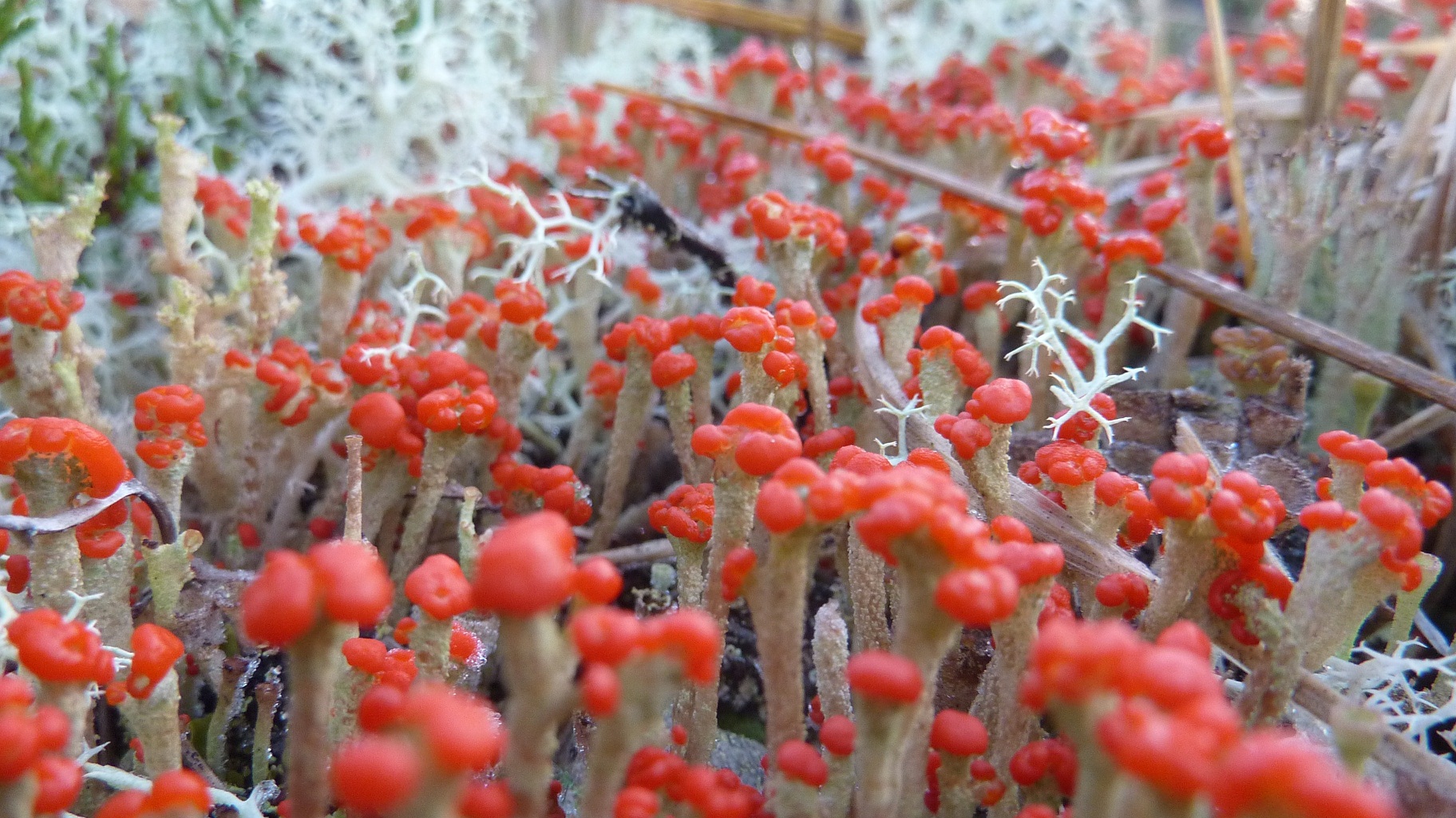
- A Cladonian forest.
-
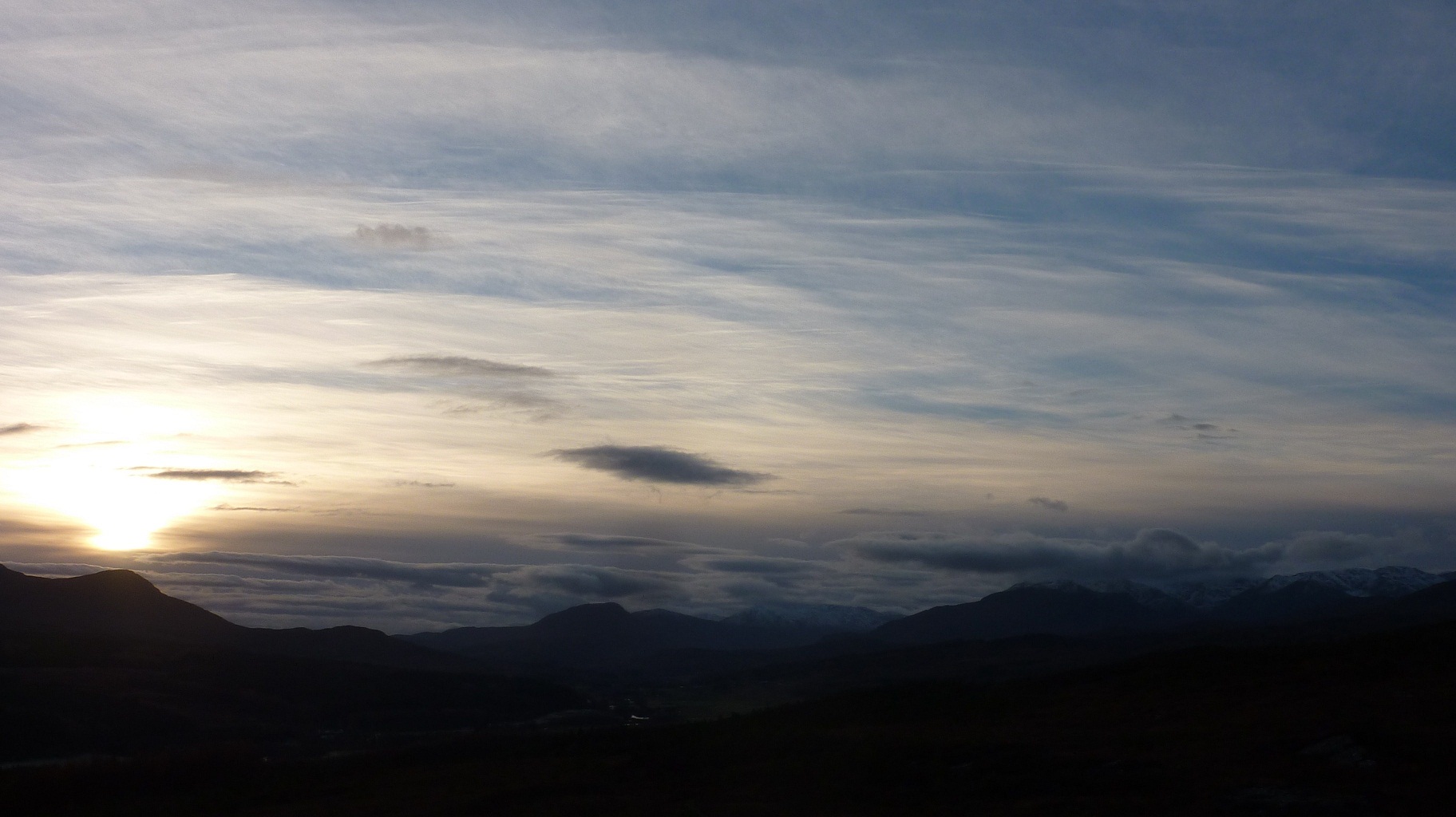
- The Glen of the Moriston
Last TFL ww 2010, 6th Nov, Dundreggan
Sooo, the very last Trees for Life work week of 2010 (that they told me about anyway), and it is myself and Gordon picking up the vols from Inverness station again, as per this week last year. This year I have to endure chick pea chocolate cake, chick pea curry, humus and other foodstuffs that allegedly have chick peas in. Chick peas, as I’m sure you are aware, are a strong contender for the most boring food in the world. However, as I’ve learnt through years of work week experience (especially this one), this rule does not seem to apply when the chick peas are not visible in the final dish. Hats off Johnny, on this week, for providing another exception with his chick pea curry. And yes, Freddie, I have now eaten a whole sock. It would have been much more palatable as part of one of your cakes.
We sang (thanks Bill), we played, some drank, all ate. We brashed (removed the lower branches from standing trees) maybe 3-5 hectares within the plantation on the Western side of the Dundreggan estate. We removed the top layer from over a 1.3km of fence. This work will provide improved access to the plantation for future work as well as reducing the chance of Black Grouse strikes against the fence, and allowing more light through to flora, etc on the woodland floor.
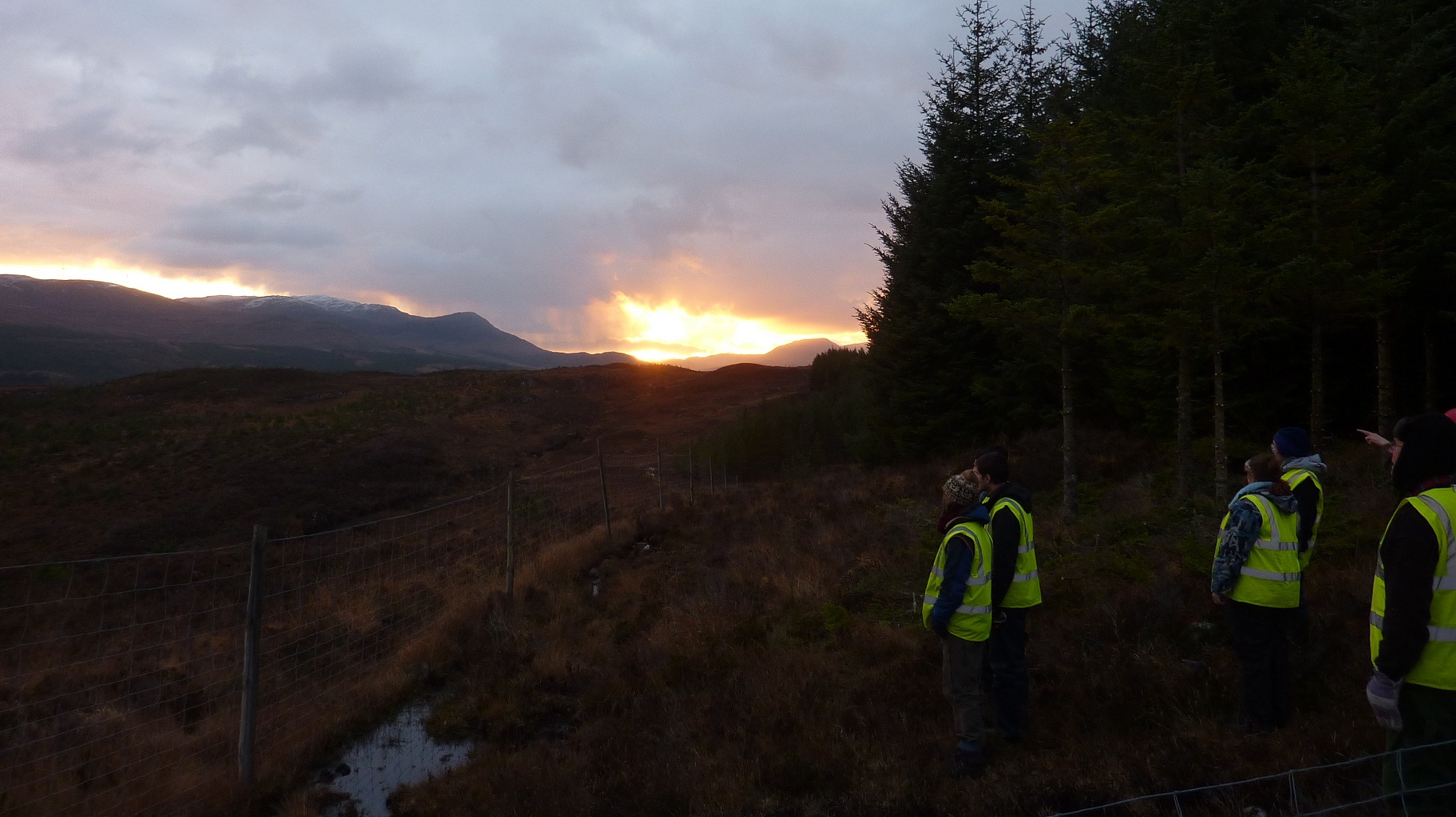
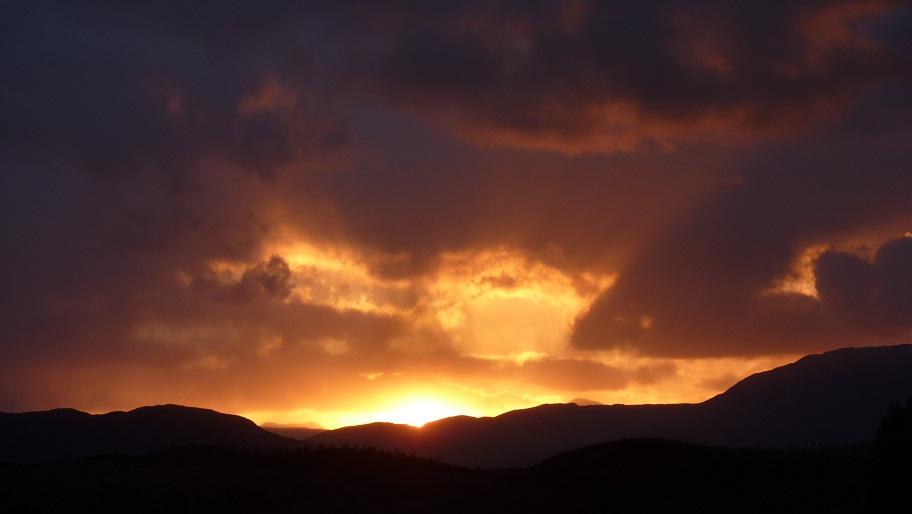
I’ll create a new entry for the pictures from my day off. As you can see, we had a couple of fantastic sunsets, and some rain. It was even cold at times, hopefully a sign of another freezing winter. Proper Scottish weather.
-
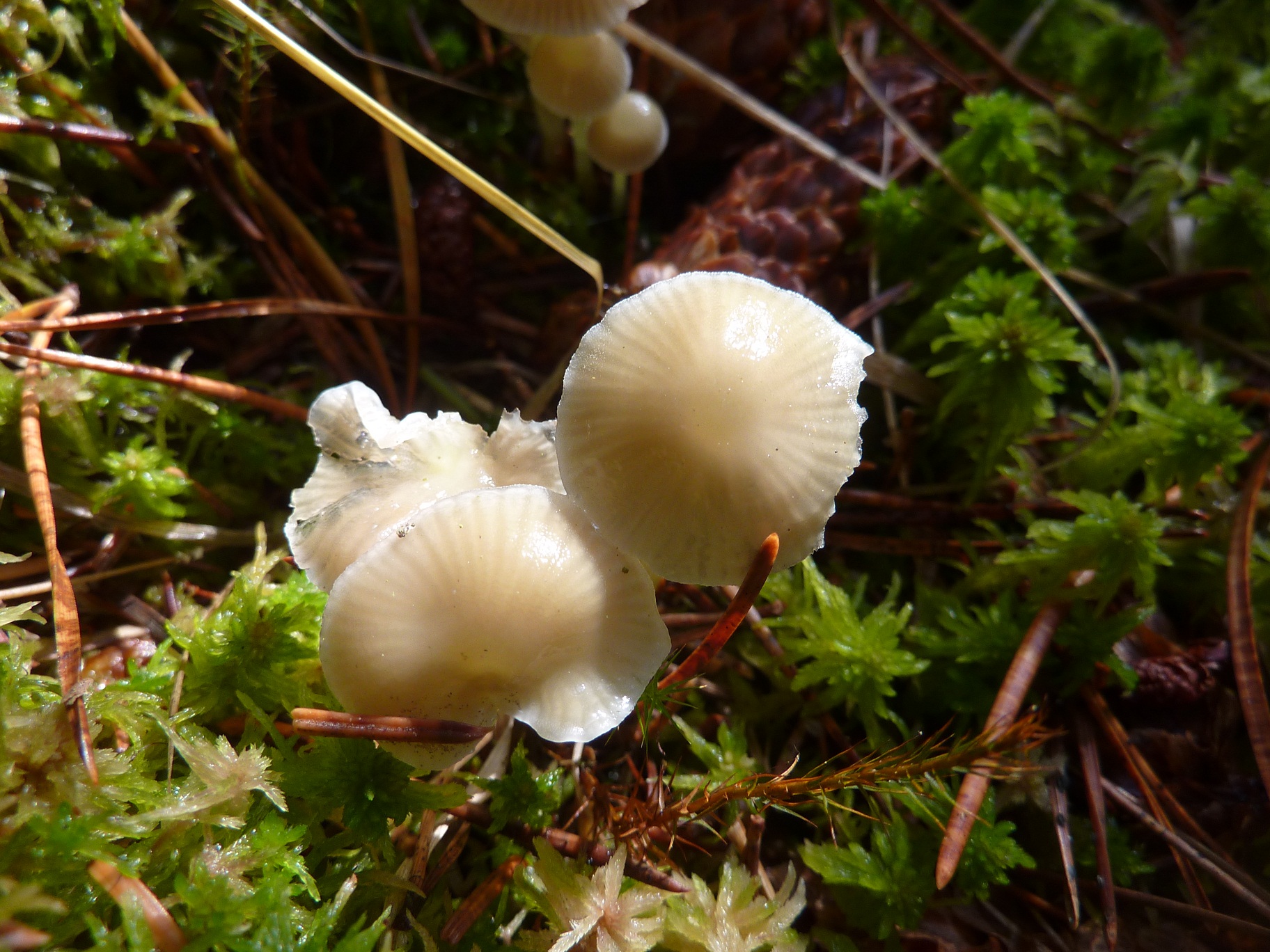
- I think these may be Mycena clavicularis, but I wait to be corrected
-

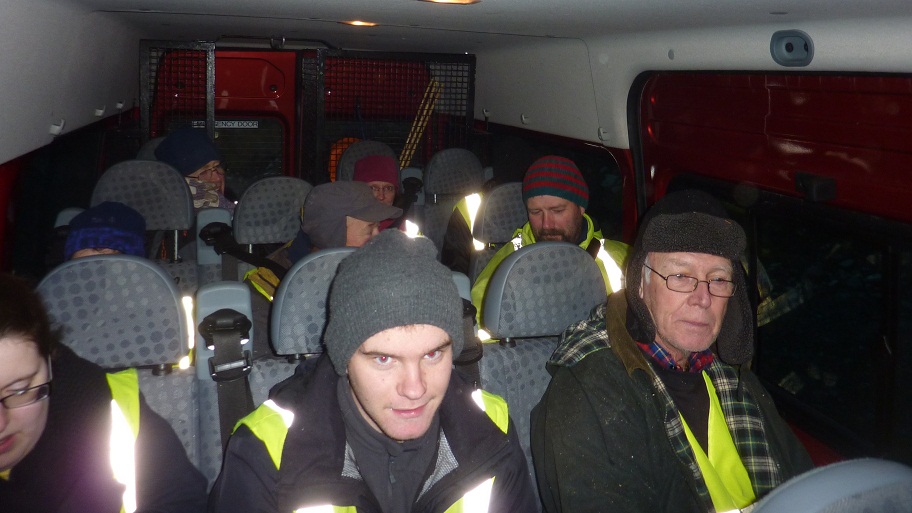
- I think this may be a bus full of TFL volunteers, but…
-

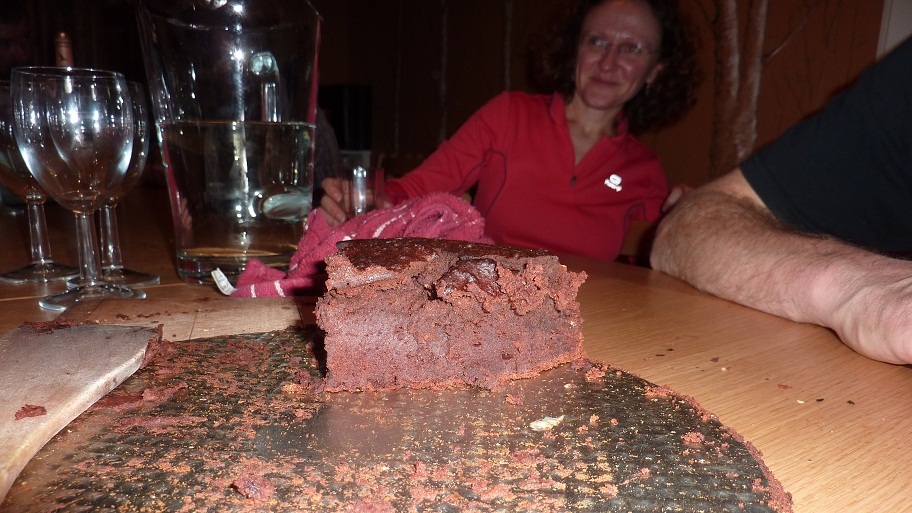
- Ha, this is clearly nothing to do with chick peas
-
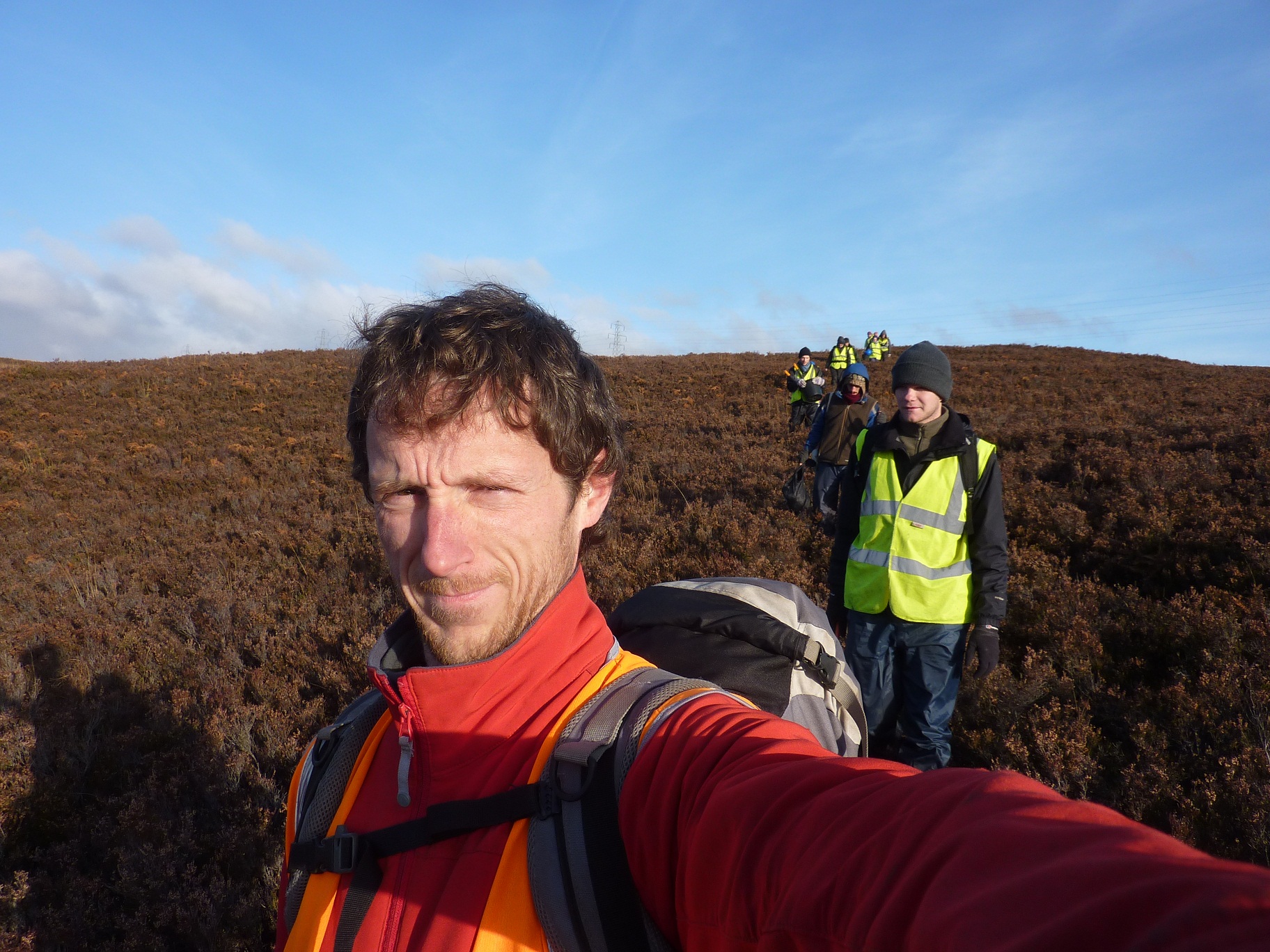
- Not your average stroll into work
-

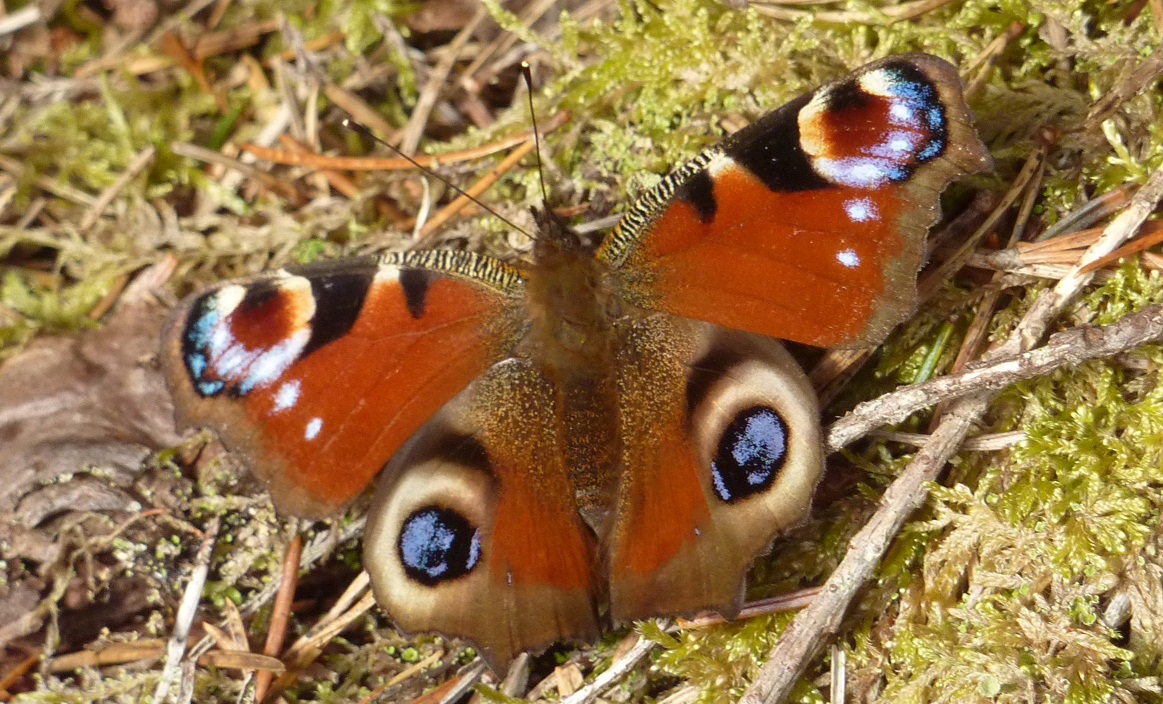
- Mid Nov, and a Peacock butterfly, but, if you remember, I saw a Red Admiral even later last year
-
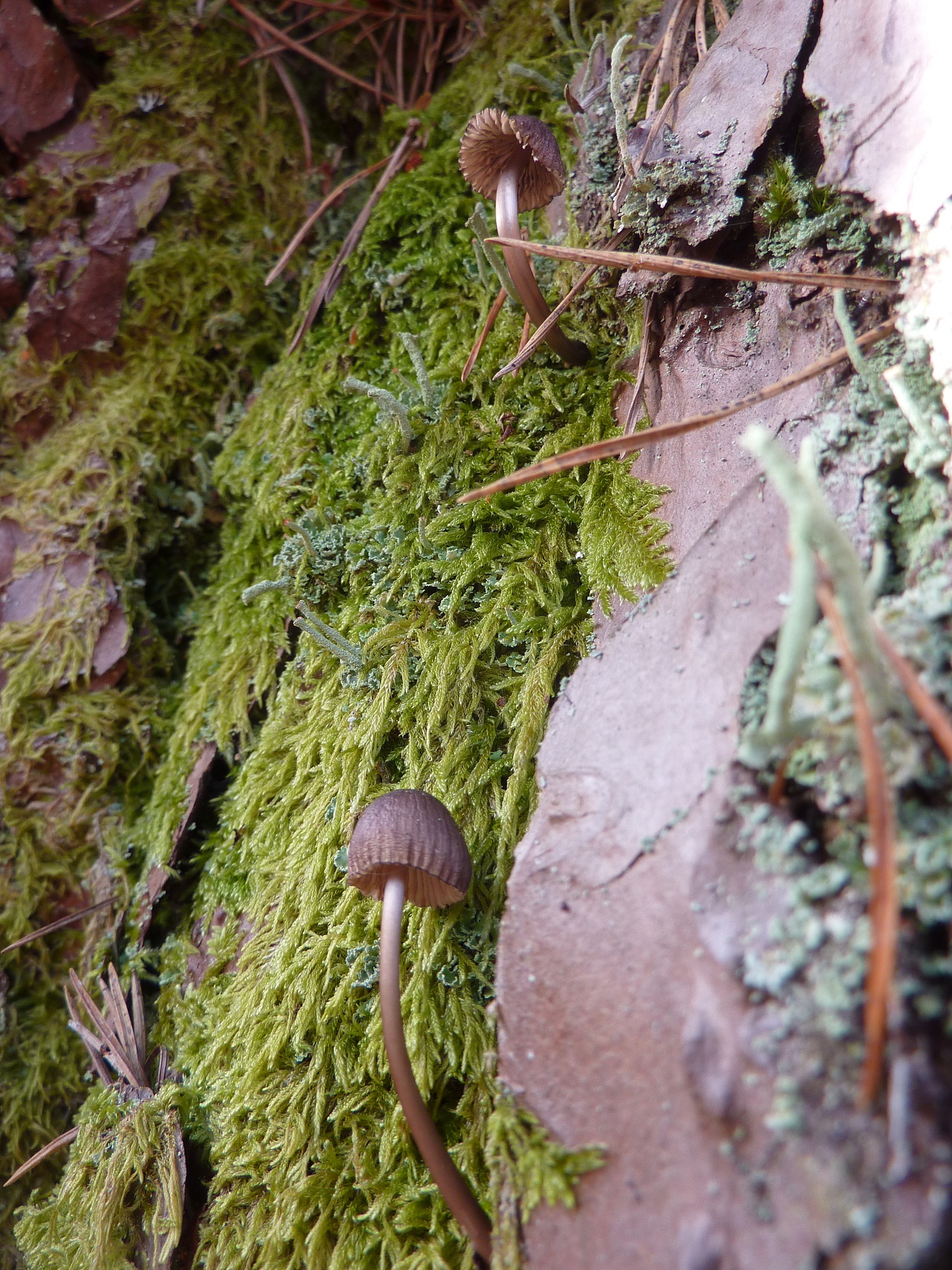
- Some of the life growing on this Scots Pine bark
-

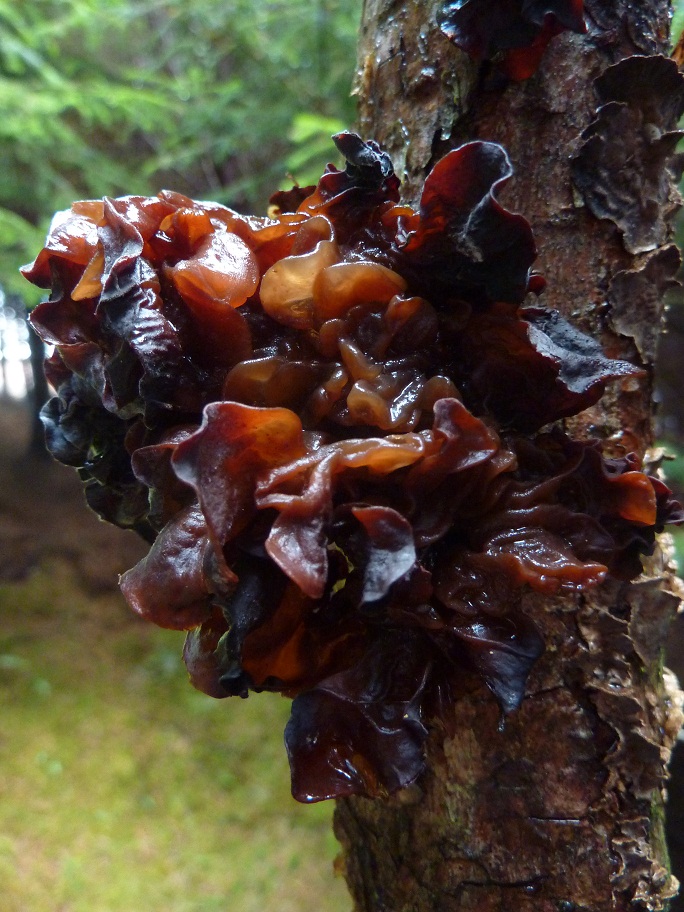
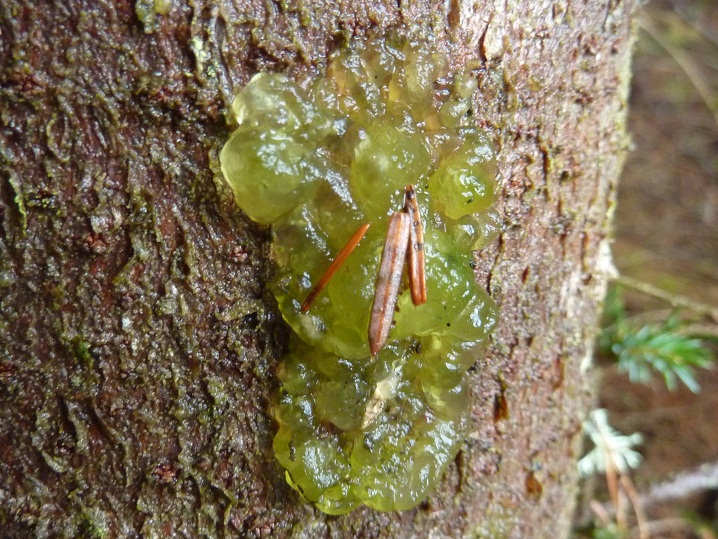
- Witches Butter? on a dead S Pine trunk
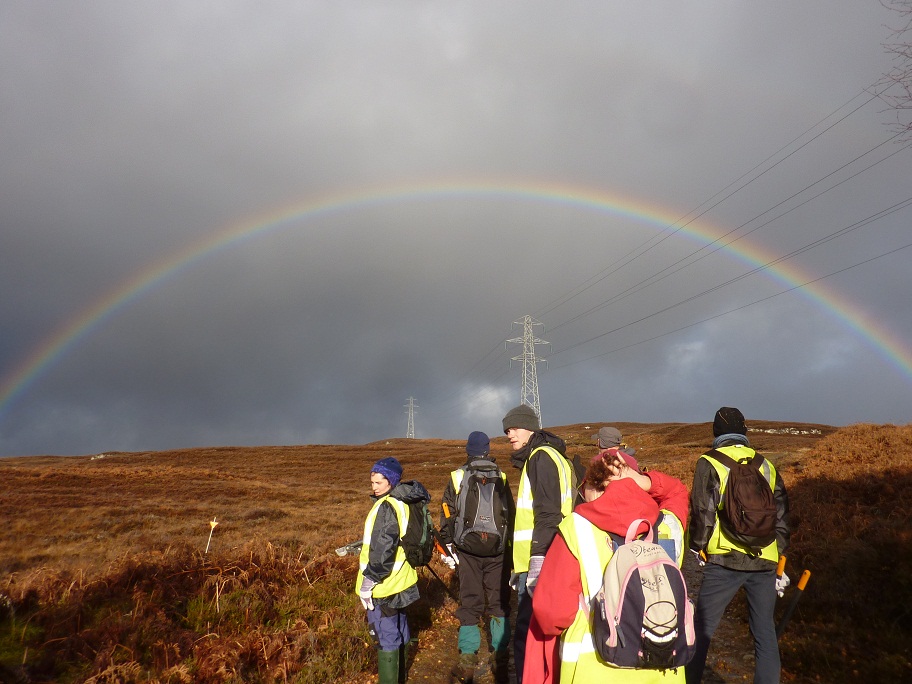
-
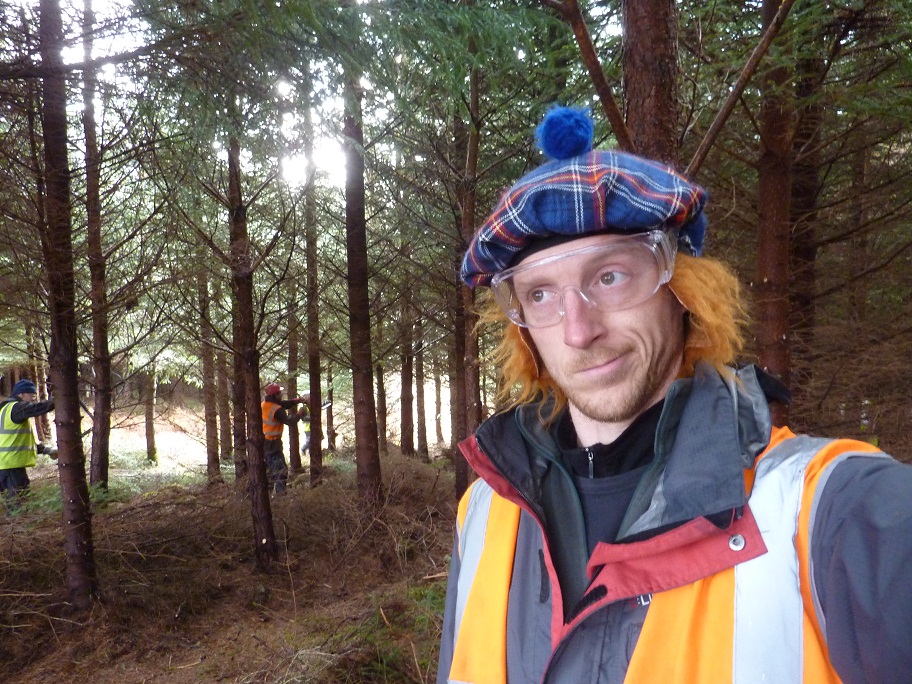
- Vince called me over to see this…
-
- …then pointed out this
-
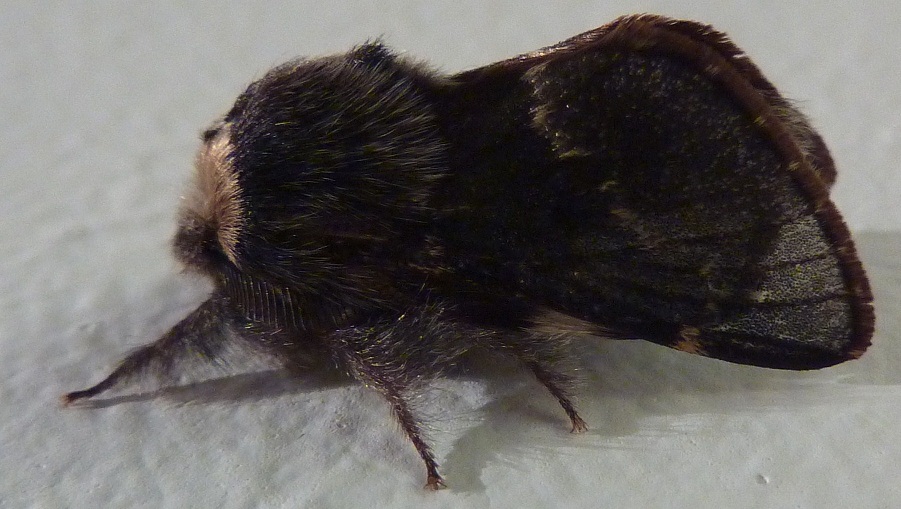
- Oooh, this appears to be a very early December moth
A trip East to Balmedie
I have a little time to spare before my next TFL work week, so myself and the Passion Wagon head off for a mini tour. I opt to head South and then East, stopping over near Grantown, then in some woods near Glenbuchat Castle before a night at Balmedie.
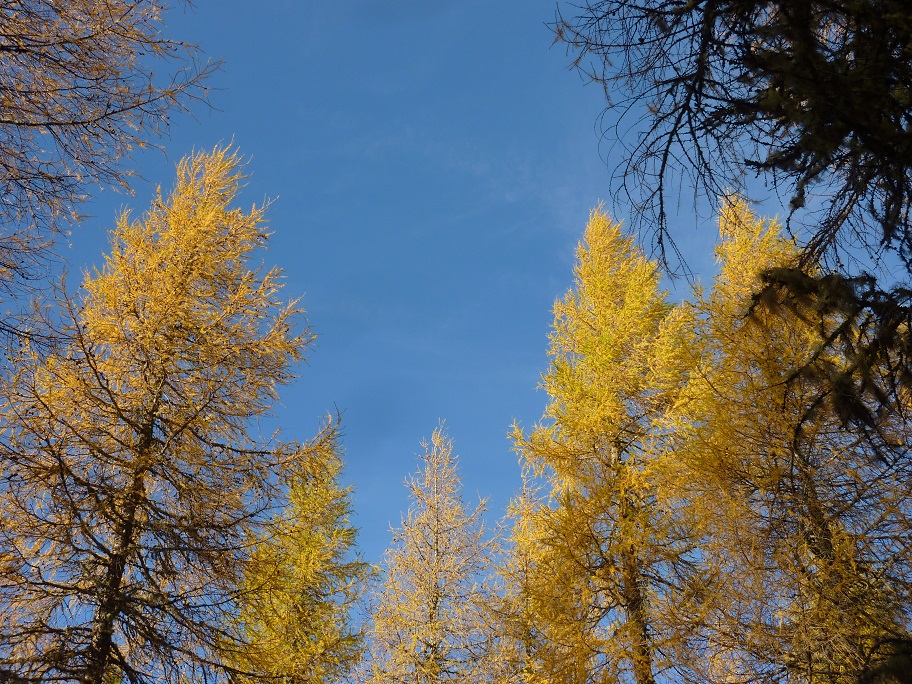
I spend some time walking through various plantations and noting the difference in ground flora in Larch, Spruce and mixed plantations. Maybe it’s just the time of year, and because the Larch are shedding their needles, but the Larch plantations seem to have very little ground flora variety. In the woods near Glenbuchat Castle, where there are a mix up of Larch, Scots Pine and occasional Spruce, there appears to be a greater variety of plants on the woodland floor. I’m sure there must be forests with this mix naturally in other parts of Europe, and would be fascinated to study the ecology in such places.
I end up on the East coast at Collieston, where I walk some of the Forvie nature reserve (the light was too poor to get any decent shots), before spending the night at Balmedie, both places I visited last year. There is now a sizeable campaign dedicated to stopping Donald Trump from building his golfing town on the Menie dunes SSSI. This is a development that we should all take an interest in. The erosion of our country’s wild and natural areas in the name of economic gain (to the few) is unethical, environmentally and socially destructive and unsustainable.
This program is worth watching, if you’re interested
http://www.bbc.co.uk/iplayer/episode/b00w029w/Donald_Trumps_Golf_War/
or, this web site gives further information
http://www.eco-essentials.co.uk/trump.php
And this group is working against the development in a similar way to the way Greenpeace/Airplot fought against the third runway at Heathrow.
http://www.trippinguptrump.com/
Here are some photos from the trip. I’m afraid that I’ve just been won over by the lighting on some of them so they may not be as interesting as you might have hoped.
-

- Thankfully this bridge held up for long enough for me and the wagon to cross

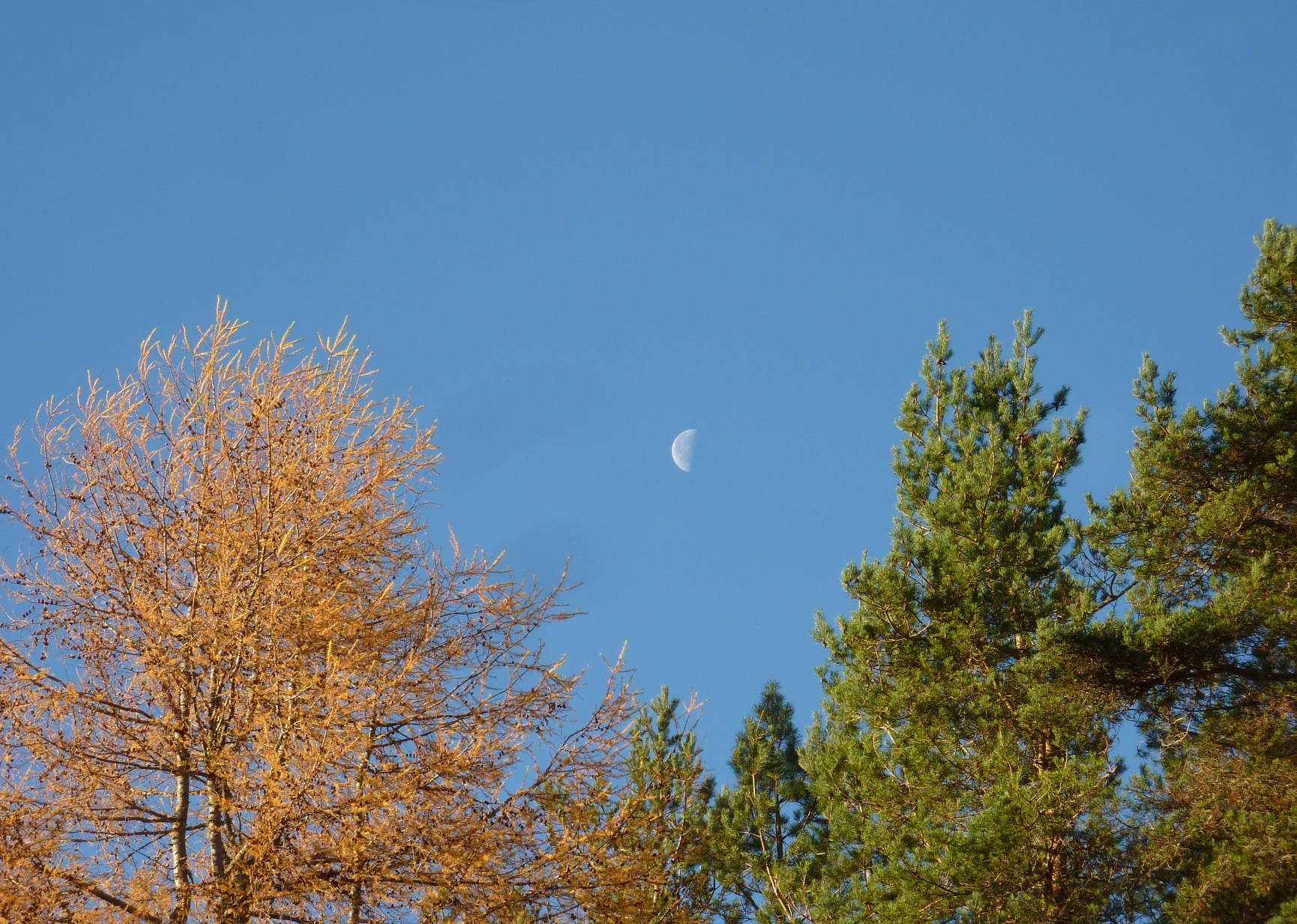
-
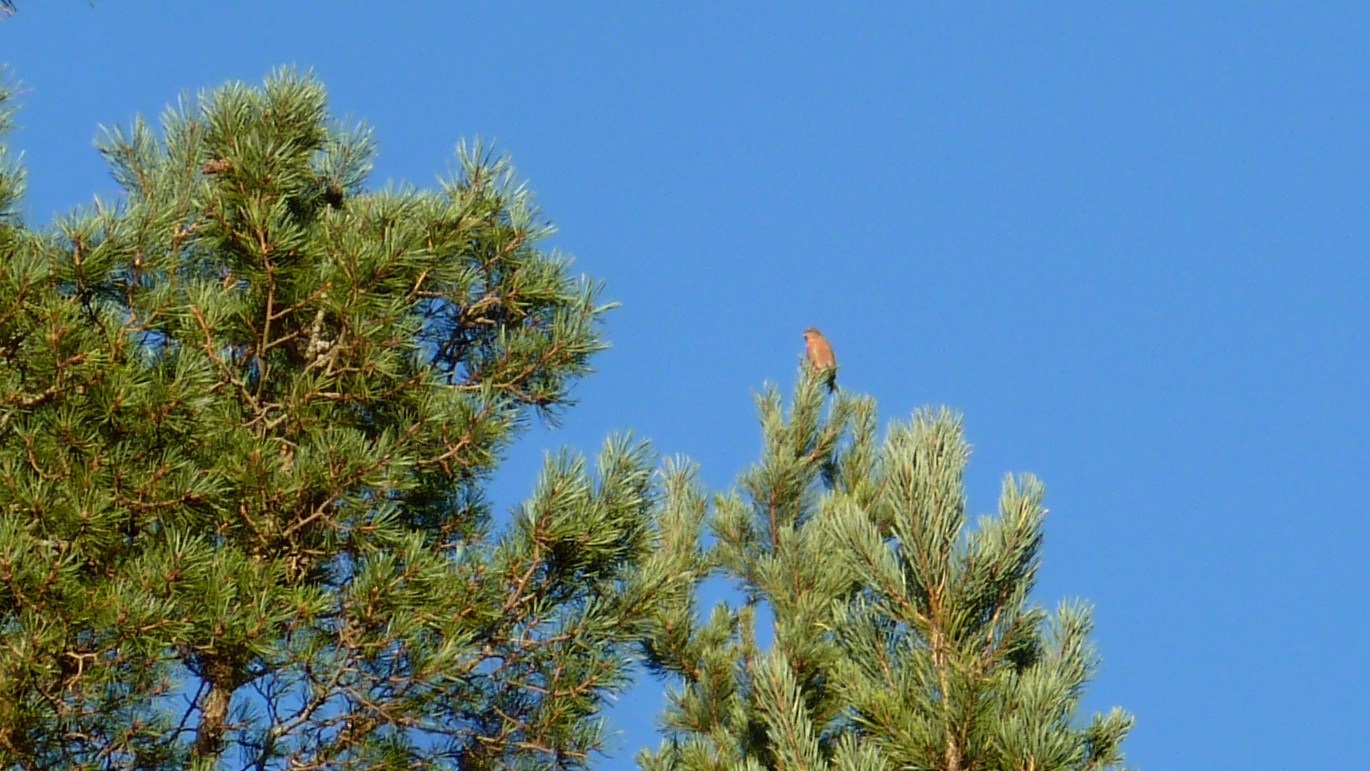
- A loud male Crossbill
-
- Collieston
-
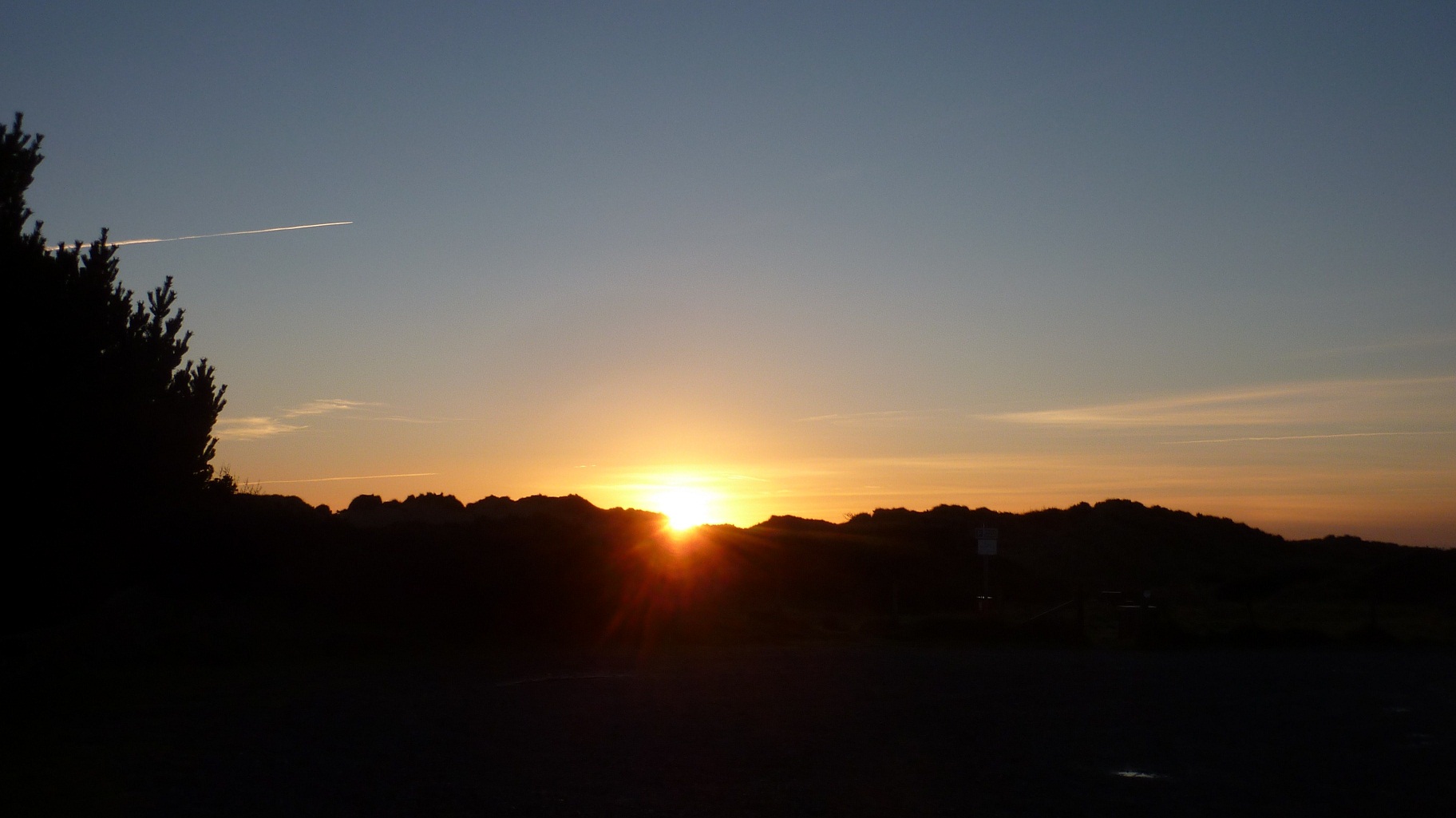
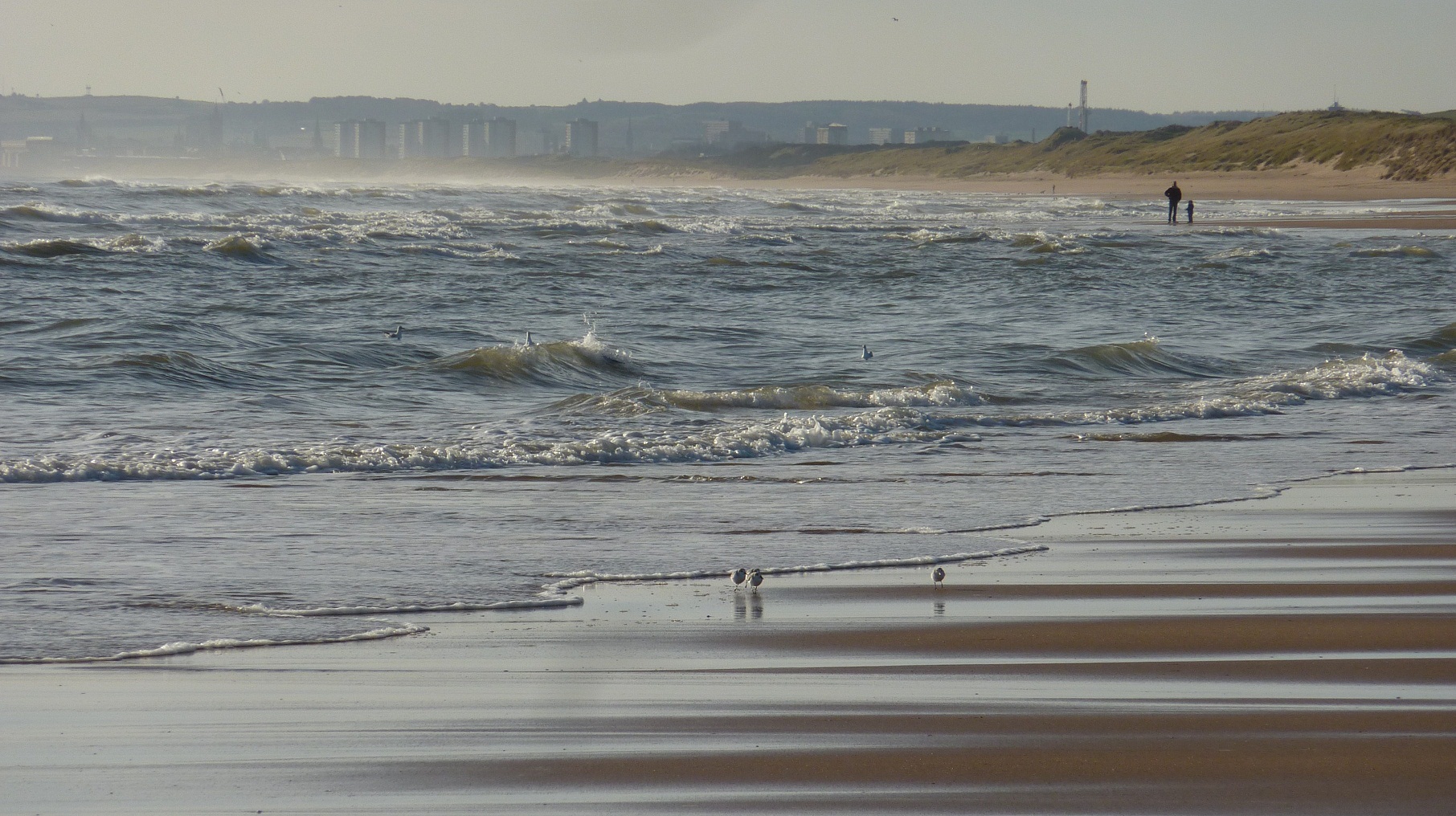
- The clocks go back and the sun reveals a glorious day at Balmedie
-
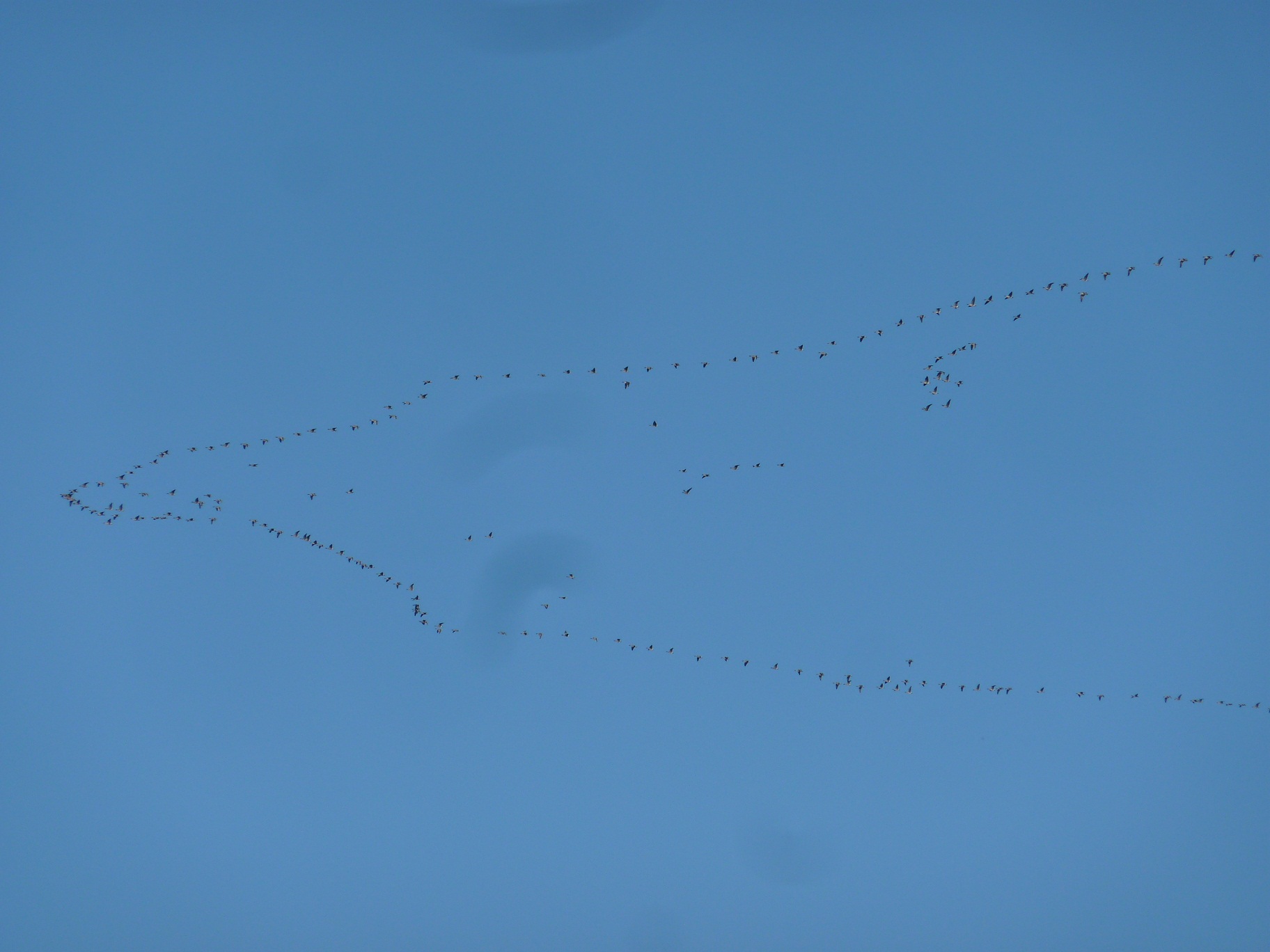
- Geese are so amazing. And, yes, my camera needs a clean.
-
- A distant Aberdeen
-
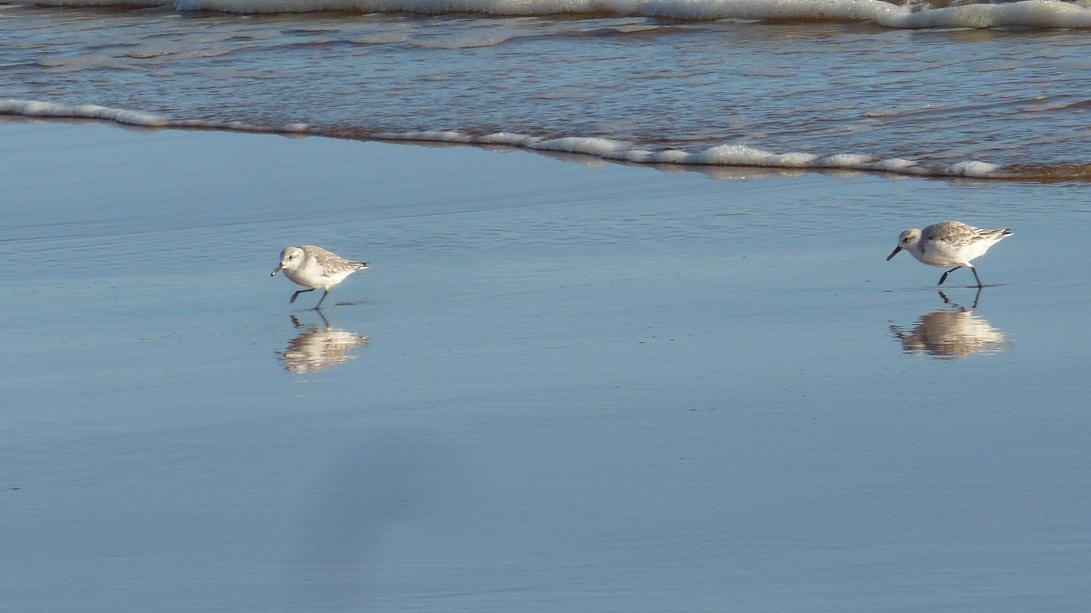
- Sanderlings
A day out to Migdale with Trees for Life
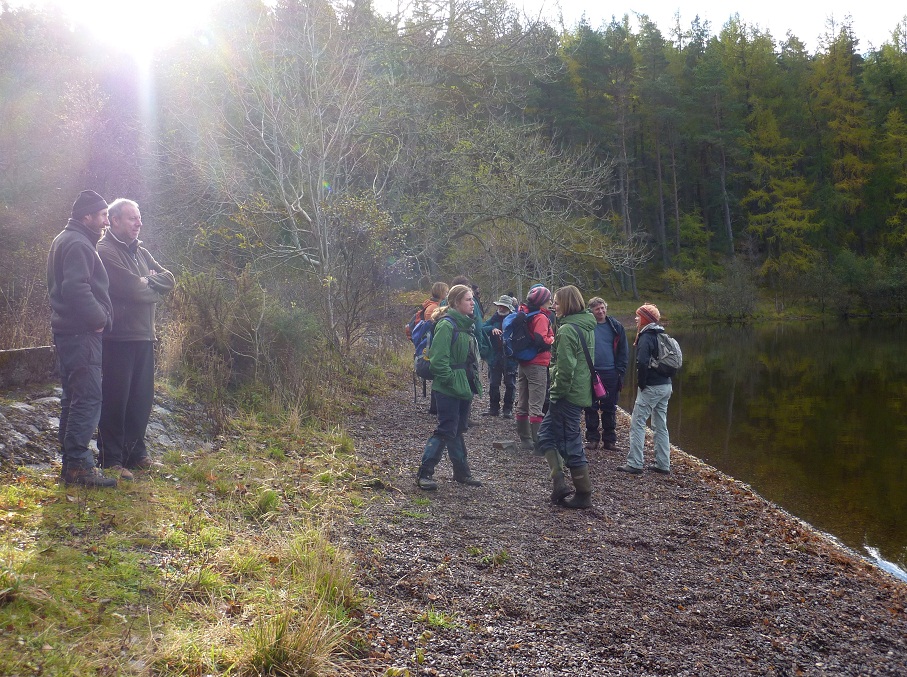
Today I was lucky enough to tag along on the Trees for Life staff day out to Ledmore and Migdale woods, somewhere I went to earlier in the year.
This time it was a relatively warm day, and the loch, Loch Migdale, wasn’t frozen. It was good to meet up with Chris, from the Woodland Trust, again, and share some thoughts with him regarding his recent week Focalising. And it was a good opportunity for me to spend some time with the TFL staff on a more informal basis.
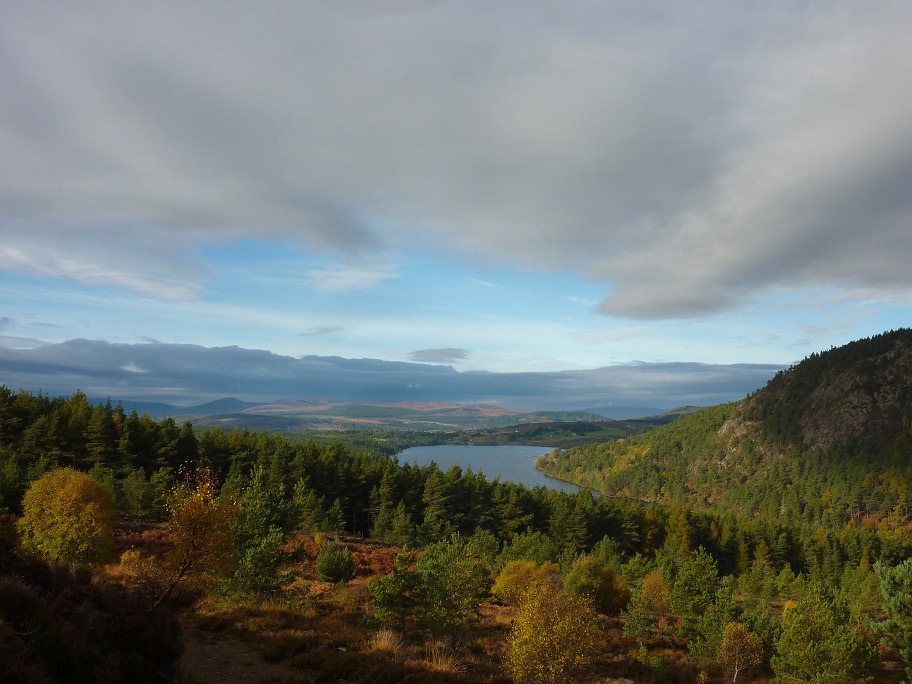
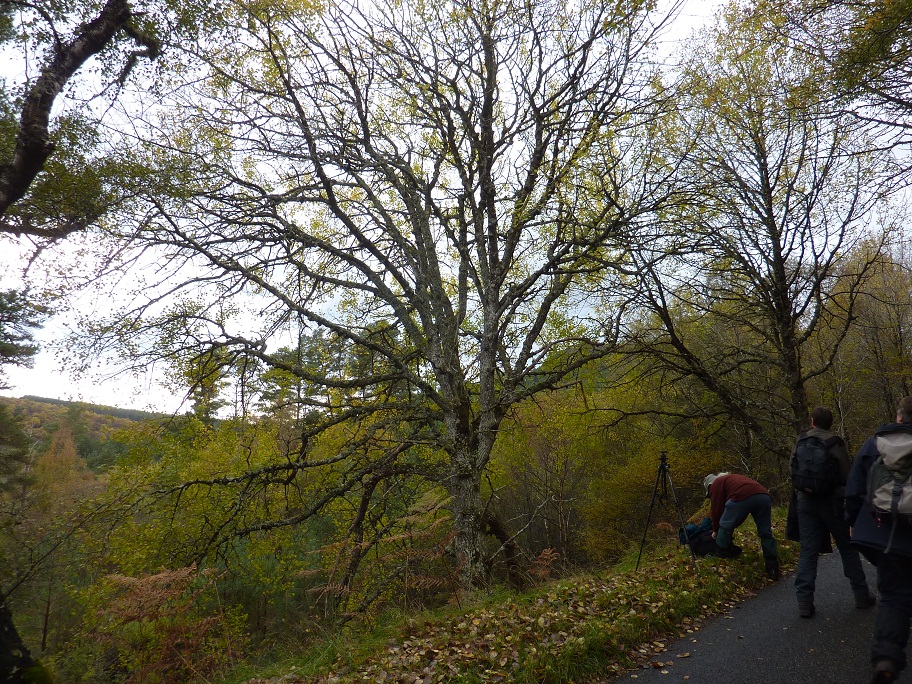
Chris really does have the ideal job (from my perspective). On the one hand he has a relatively free reign to manage the woodland habitat, and on the other he is tasked with encouraging people of all ages to visit and appreciate the woods, something he seems to do very well. The woods are a mix of mostly middle aged to young trees, with some fabulous regeneration in some areas and very little non-native intrusion. There are also some very fine old Aspen trees, see photos below.
More information on the woods can be found here
-
- I admit, I’m a ‘regen geek’ (credit to Andrew for coining that phrase)
-
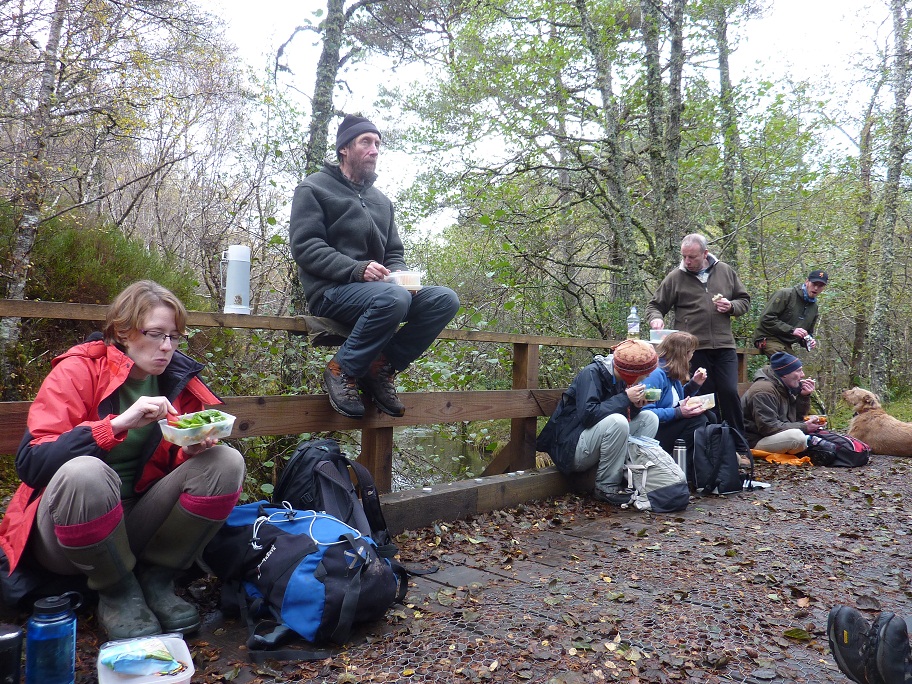
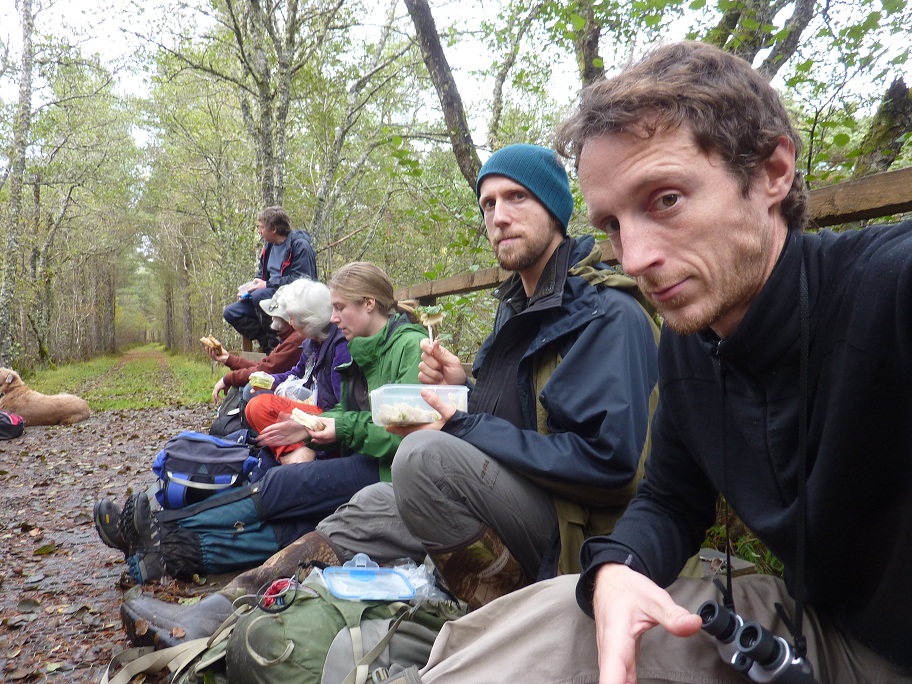
- Trees for Life = healthy looking lunch box contents
-
- Dan getting angry with his food
-
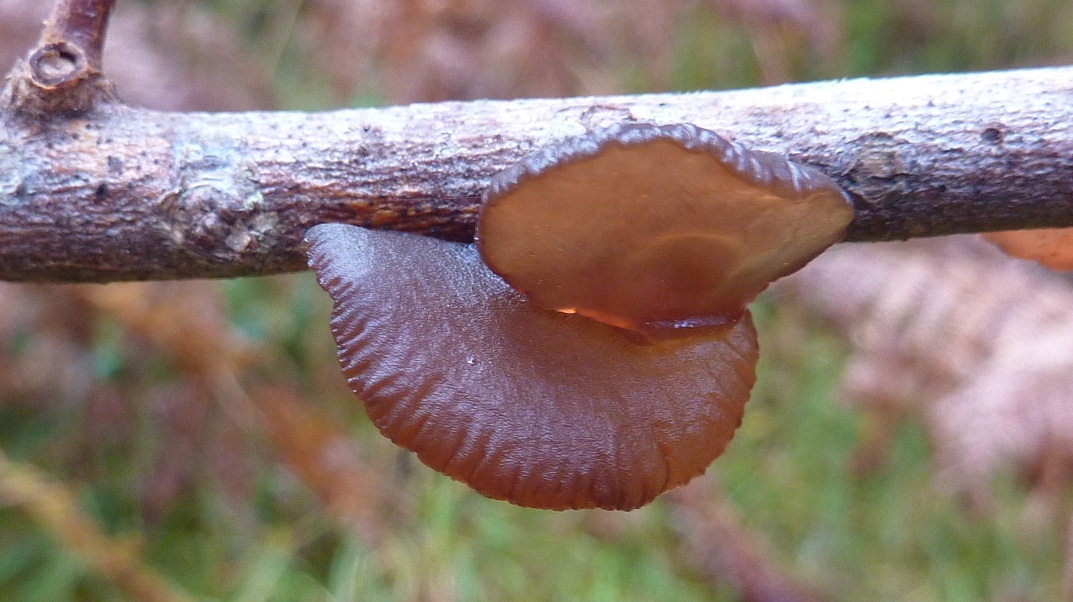
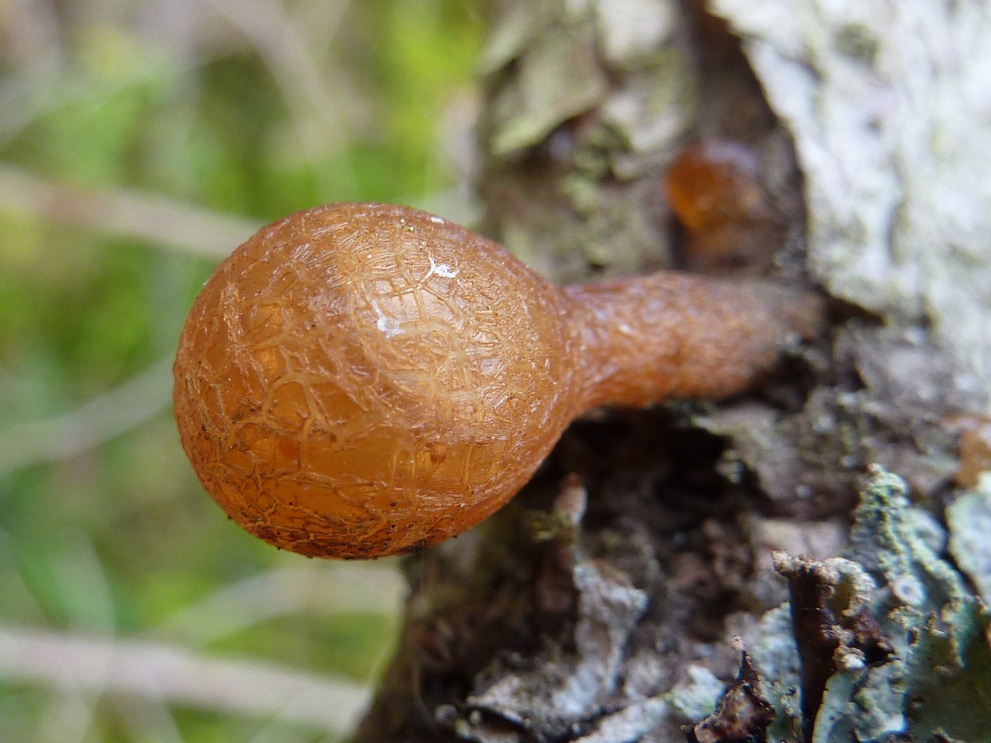
- Help, I can’t find this in Roger Phillips! It must have the word jelly in it somewhere
-

- Alan sets up to shoot these impressive Aspen trees
Snow – woohoo!
Here it is, the first snow of my winter, taken on a mini tour of the East, near Inverurie…
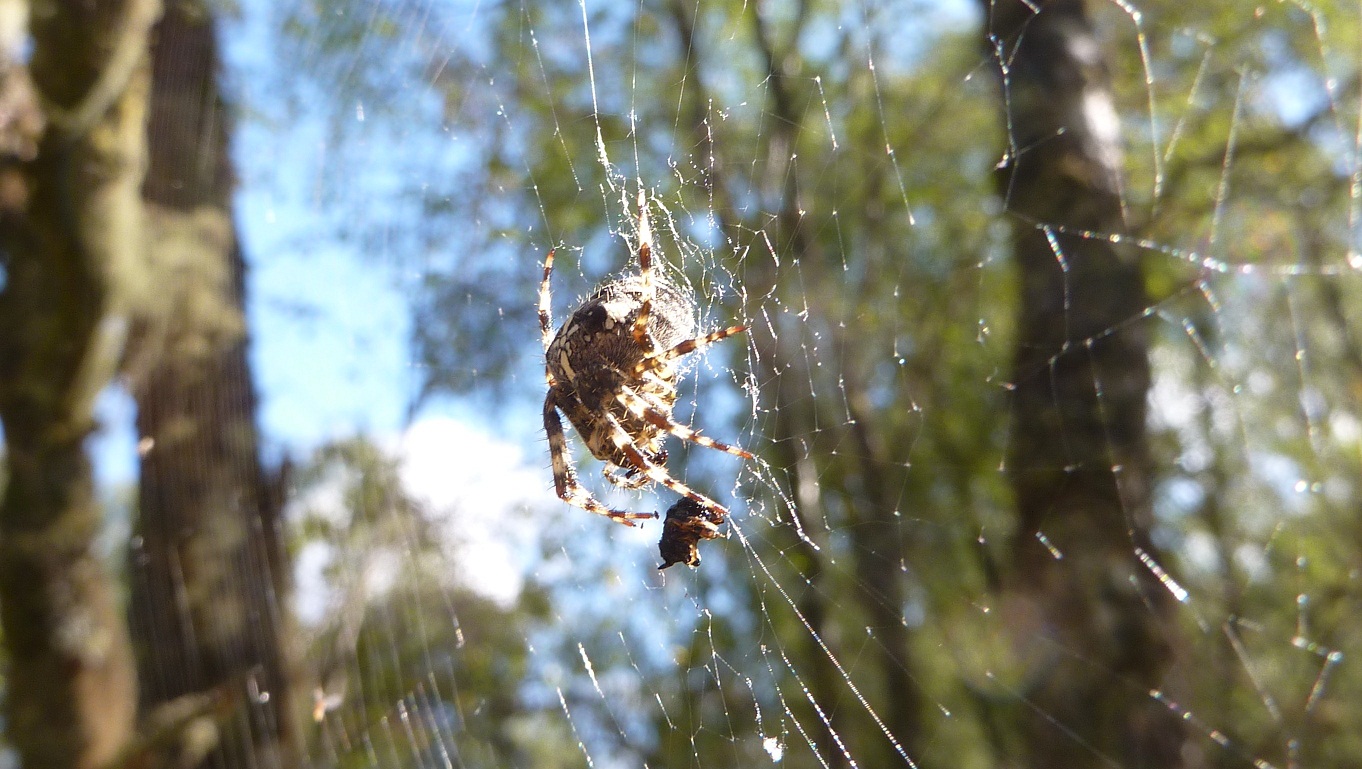
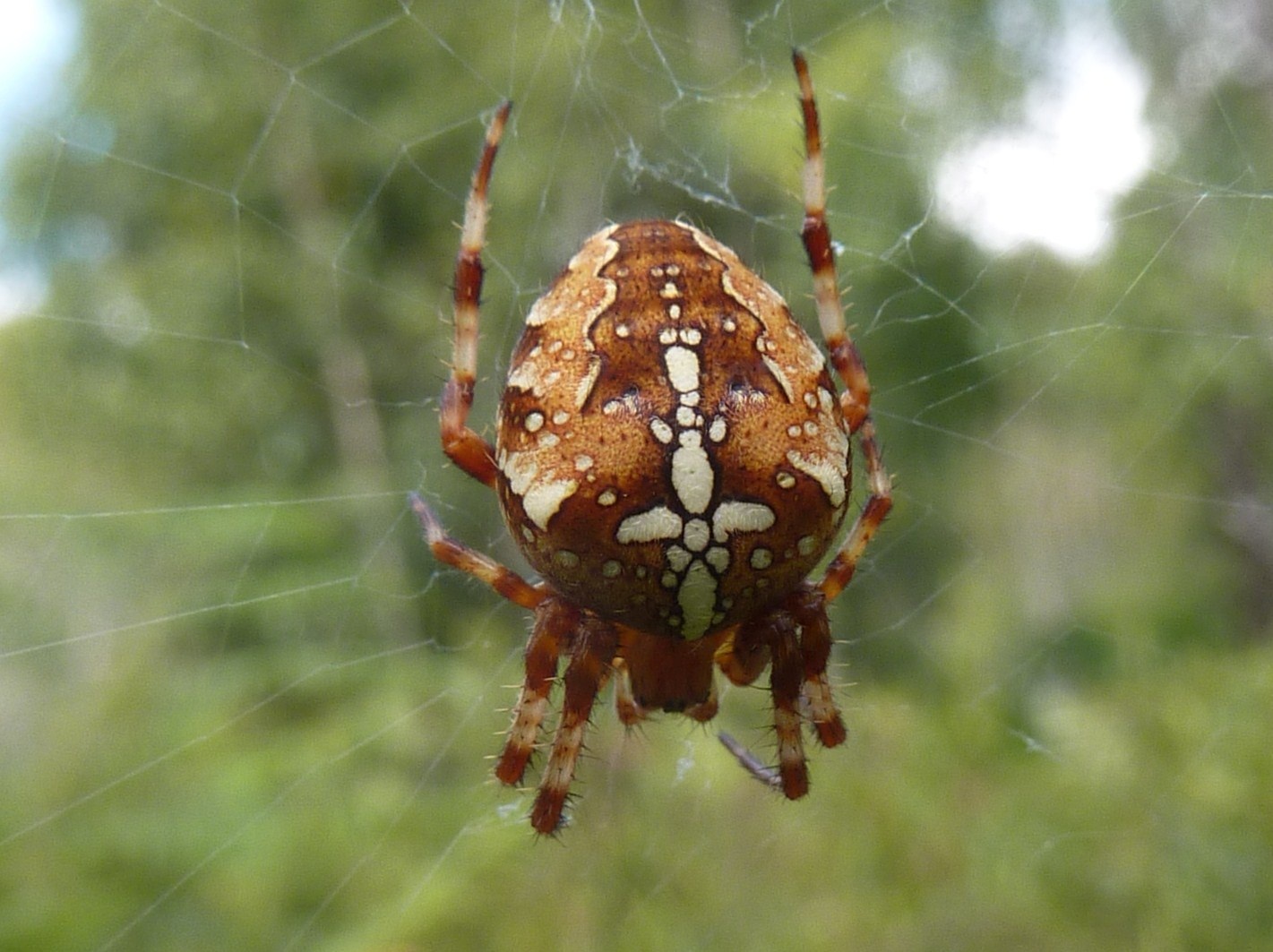
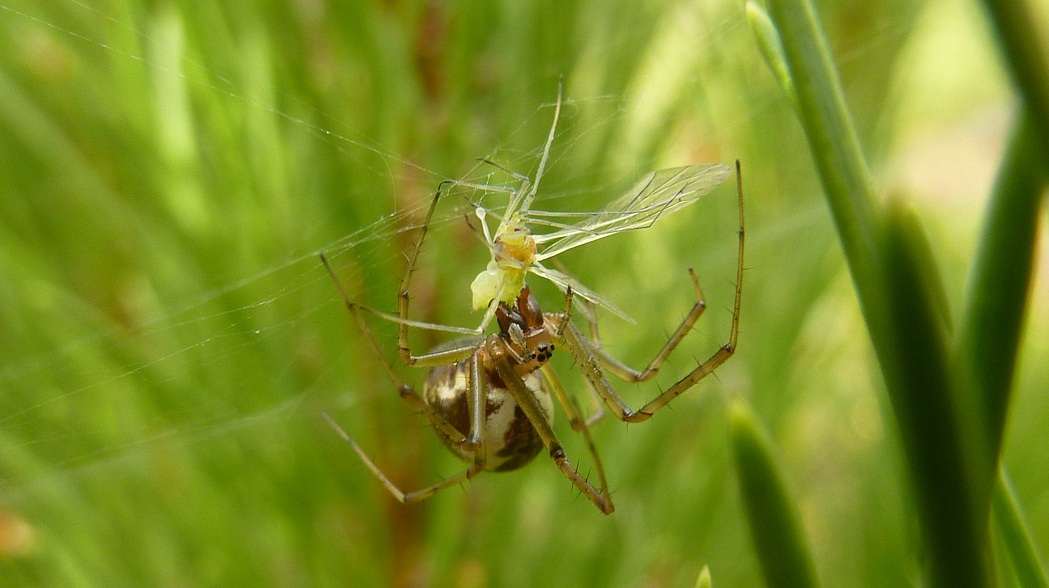
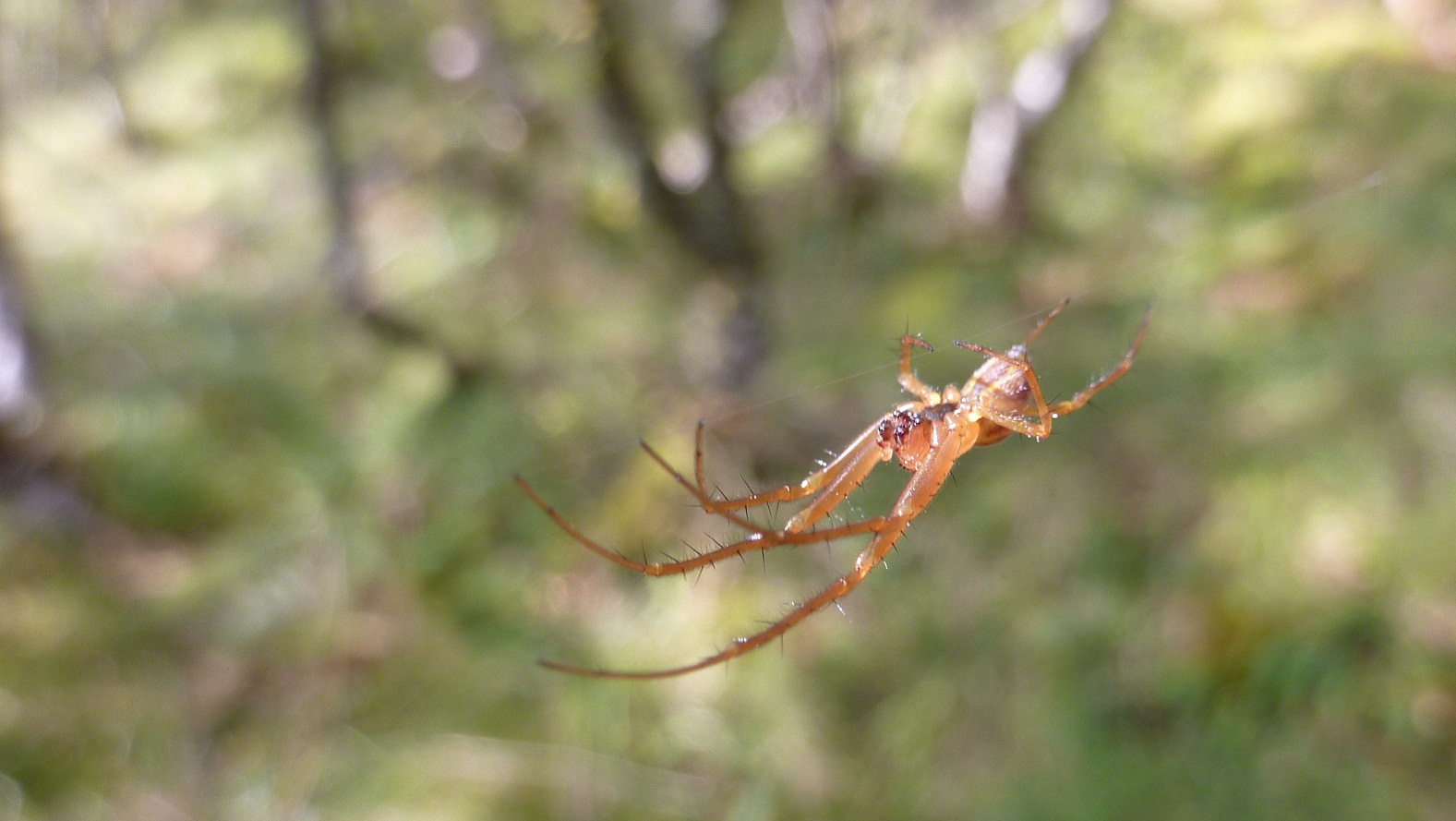
Spiders are amazing.
Having heard about their photographic competition, I recently checked out the countryfile magazine web site. I was extremely disappointed by the comments concerning one of the winning entries, a fantastic looking (jumping?) spider. More than one person commenting suggest that they would be reluctant to buy a calendar with a spider in it. And some of those even go as far as to say that children will have nightmares on seeing the spider photo. This mindset displays alarming ignorance.
Firstly, it suggests that the best way to overcome people’s fear of spiders is to remove all spiders from sight. This response is an example of why humans, as a species, are destroying the world that we live in. Rather than worry about how we make thousands of spiders homeless every day, assuming they survive us moving into their lives, we can only think of ways in which we can remove them from our homes/crops/outbuildings/vehicles/etc (we don’t just do this with spiders, we do it with every other species on the planet that we don’t call ‘domestic’ or a ‘crop’).
Secondly, it suggests that children are born scared of spiders. This is generally not the case. A large number of people grow up being scared of spiders because they see adults reacting to them when they are young. In some countries spiders can kill you, but in this country, reacting like someone has passed an electric current through the floor when one appears, seems a little extreme (Dad). If children are taught to appreciate spiders, then they invariably do. Exposure, not avoidance, is the way to overcome an irrational fear.
If there was a Royal Society for the Protection of Spiders their strapline would be “Spiders are amazing, let’s keep them that way”. Spiders ARE amazing, I hope these pictures, taken during my last three work weeks (Dundreggan, Balmacara and Glen Affric, see previous entries) will help you to agree.

Some Glen Affric nature pics
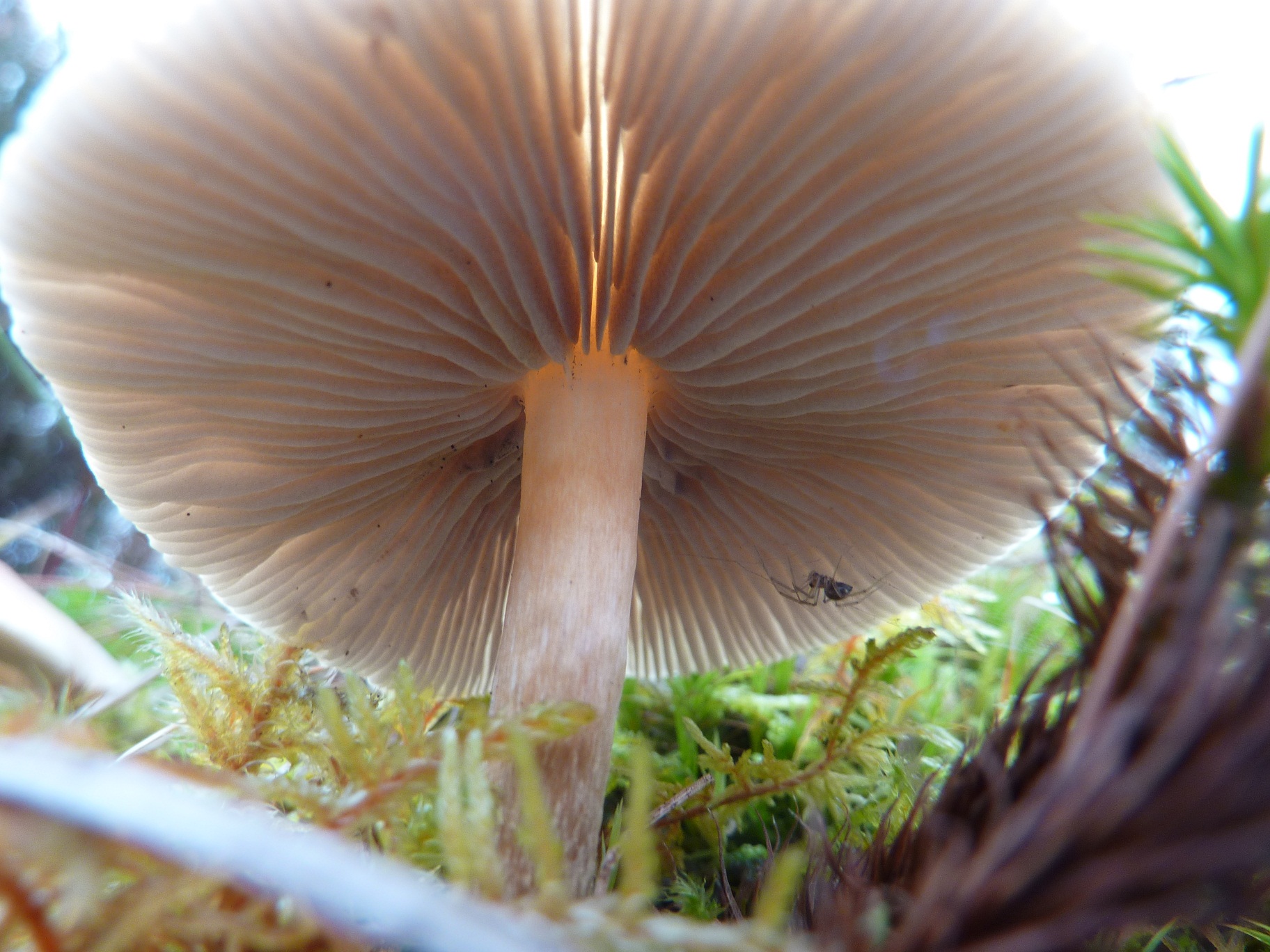
Here are some additional photos from the work week in the Glen Affric nature reserve, that concentrate a bit more on what nature was up to while we were there…
-
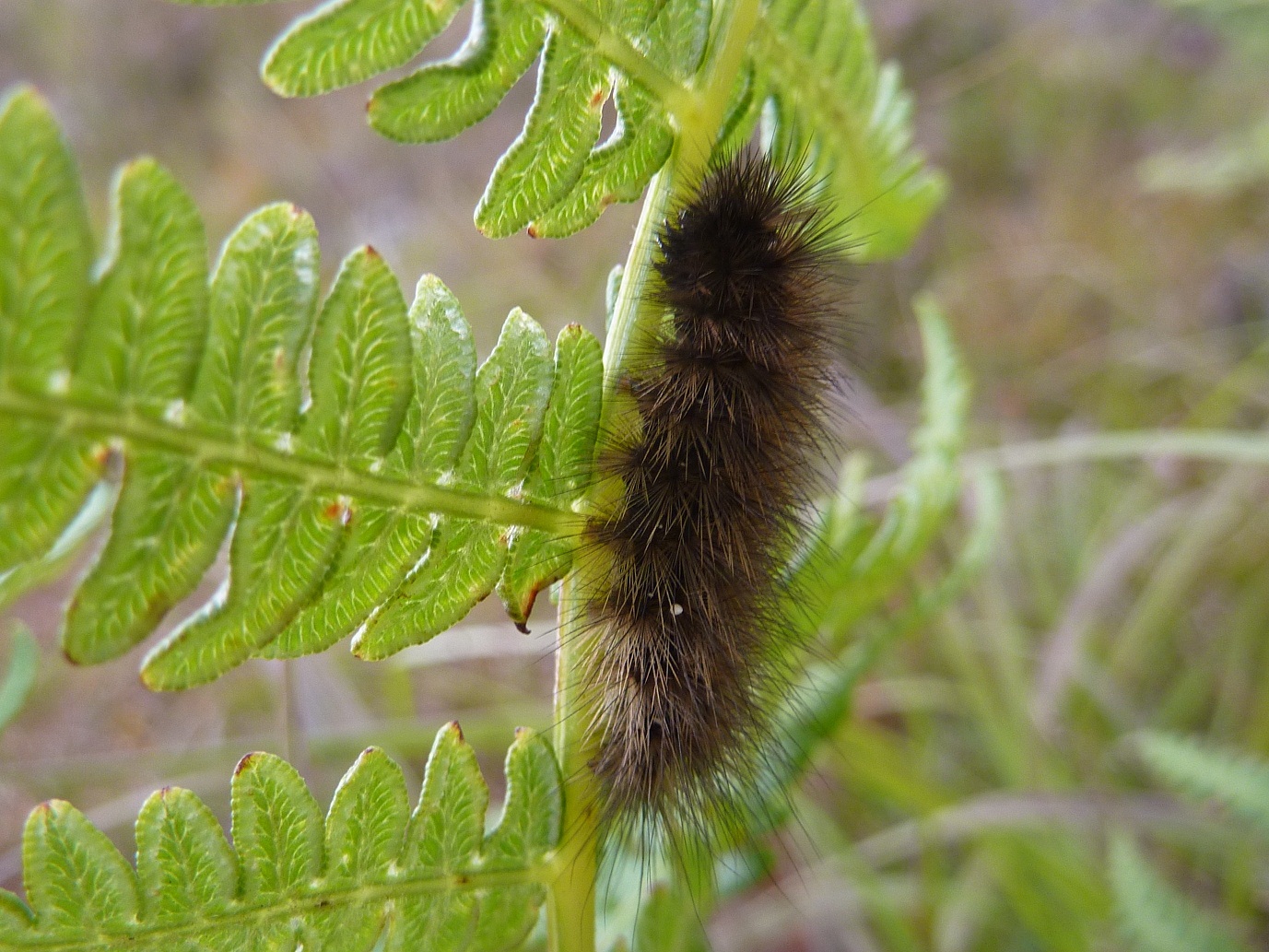
- A fox moth caterpillar

-
- I’m reasonably confident that this is a pine weevil

-
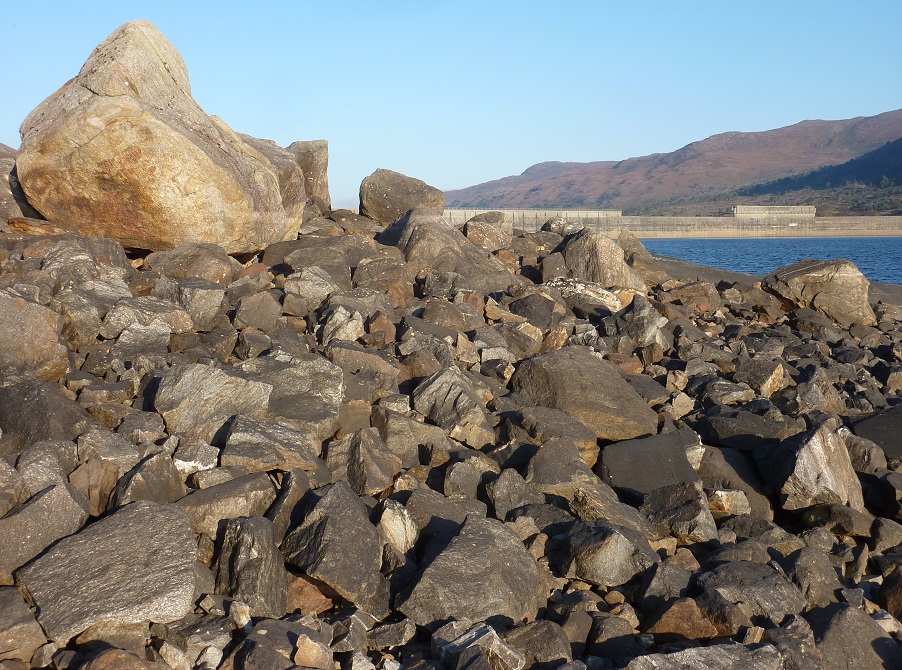
- This is what the Scottish highlands would have looked like a few hundred million years ago. Apart from the dam of course
-
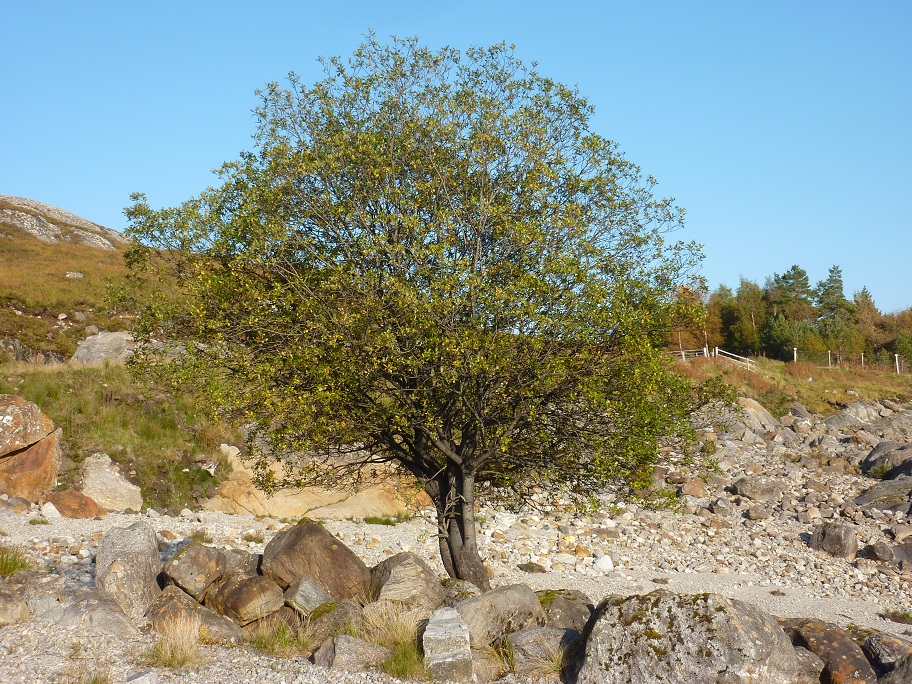
- This old grey willow has been here for almost that long, giving advice to anyone who’ll listen
-
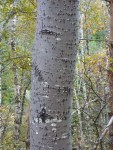
- The trunk of an Aspen (Populus Tremula). Note the diamond shaped markings/lenticels

-
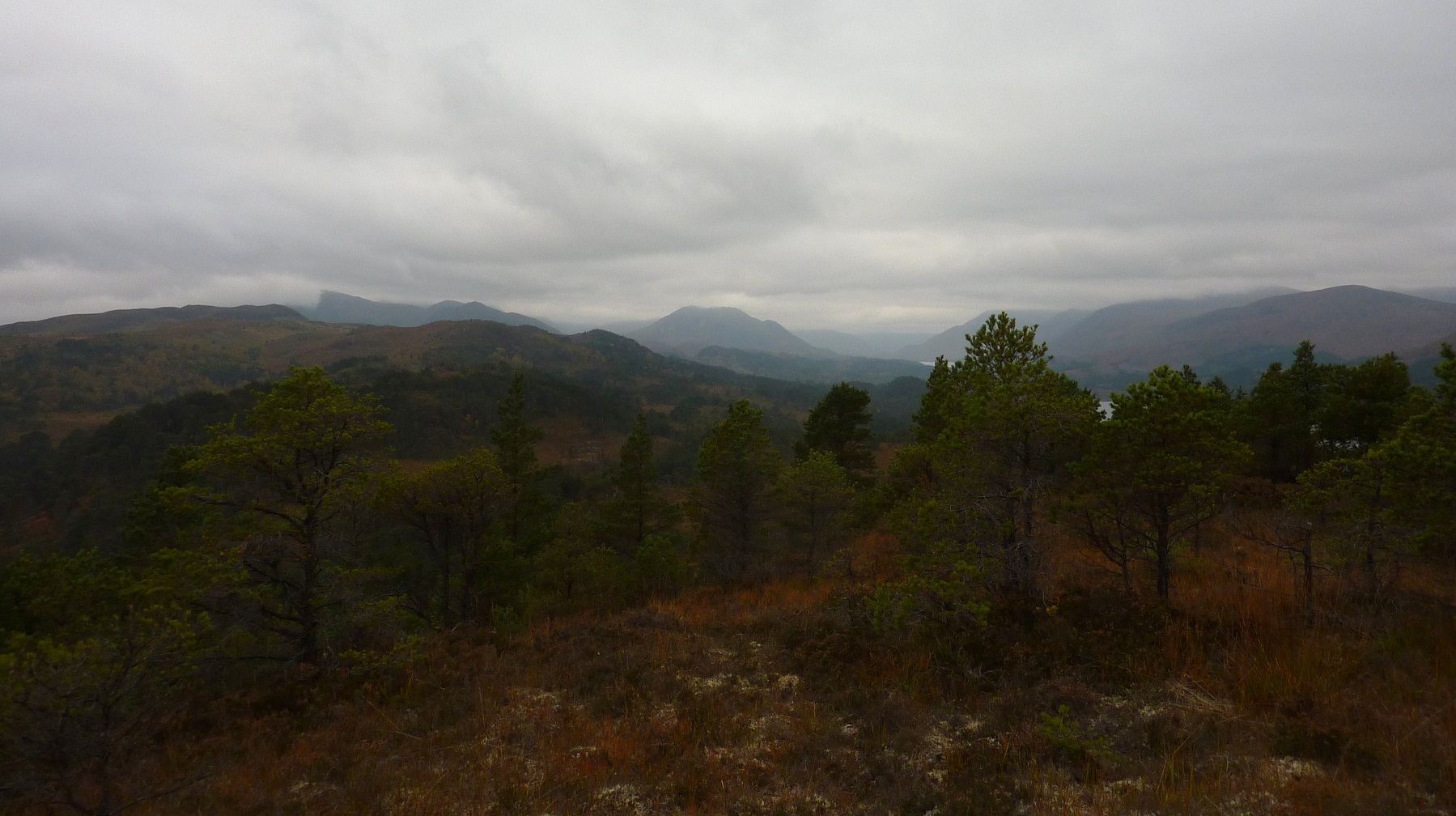
- After years of over-grazing and inappropriate plantations the reserve is bursting back into life
-
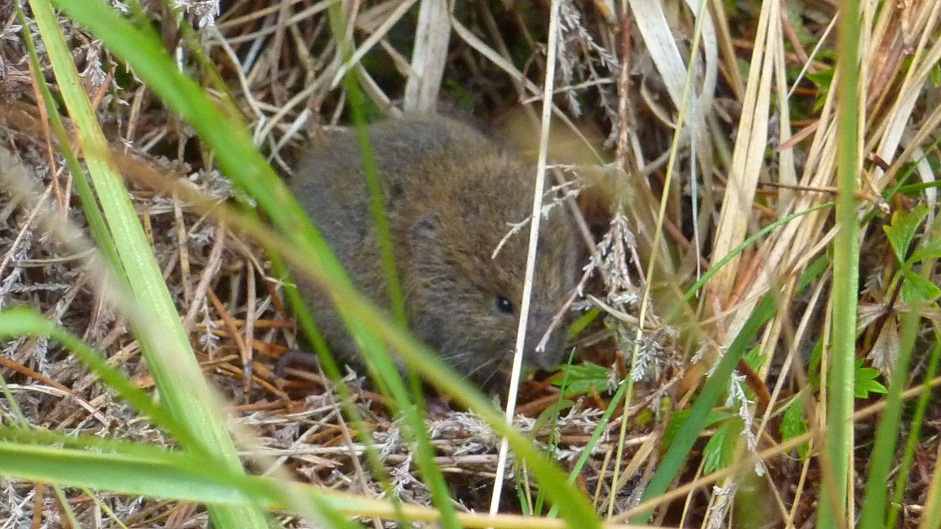
- I was very lucky to spend a few minutes talking with this little vole
-
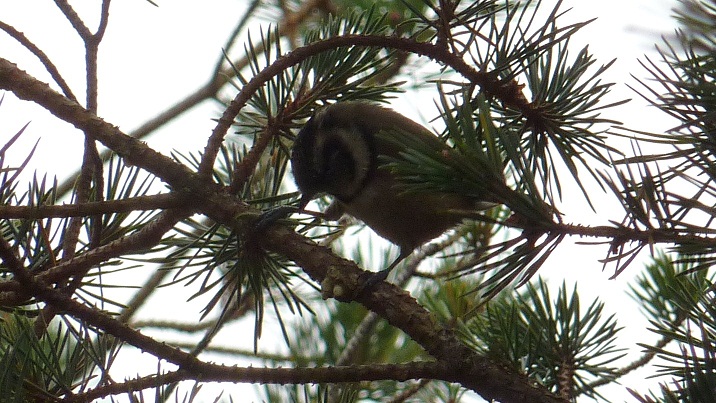
- This was taken while I’d stopped for lunch on my day off walk. Parus cristatus, fantastic!
-
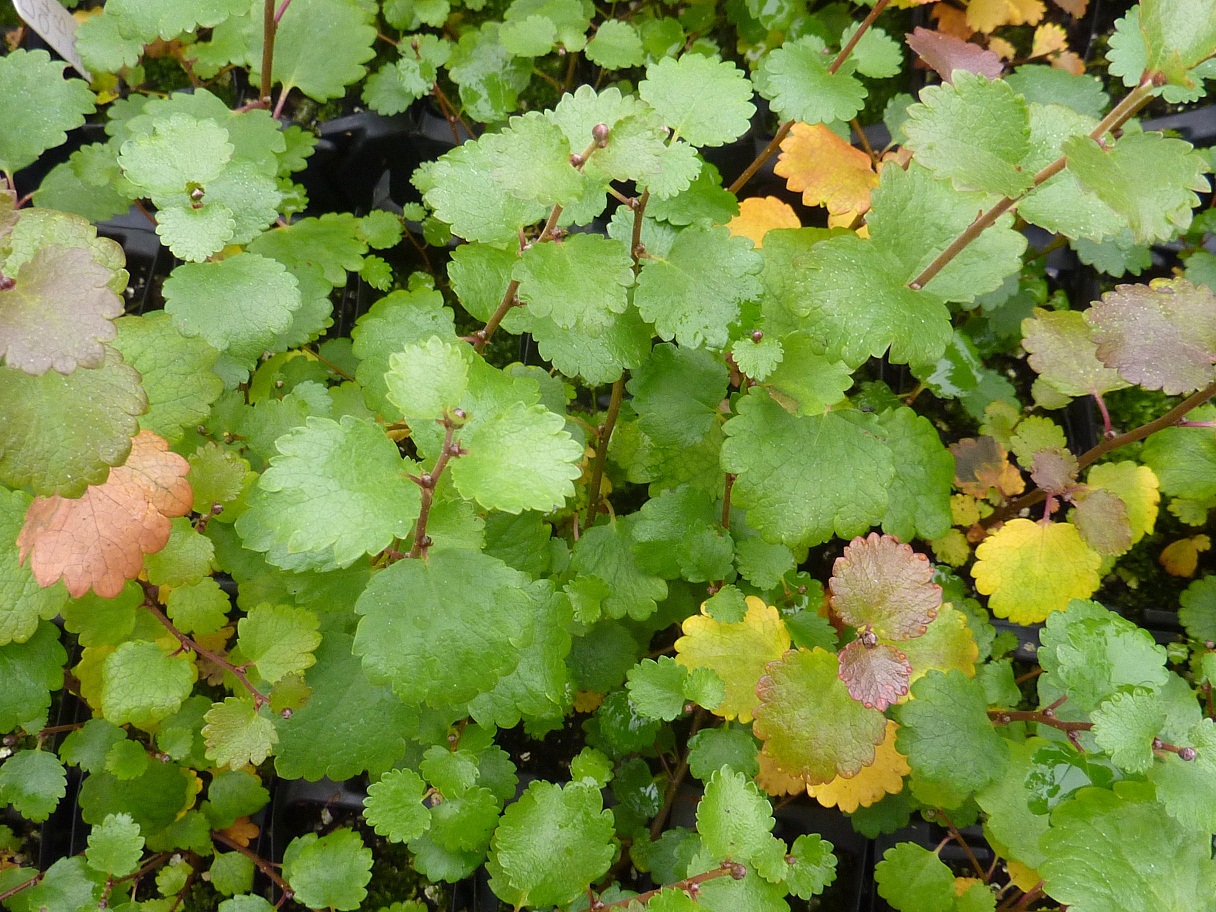
- Some dwarf birch (betula nana) in the TFL nursery
-

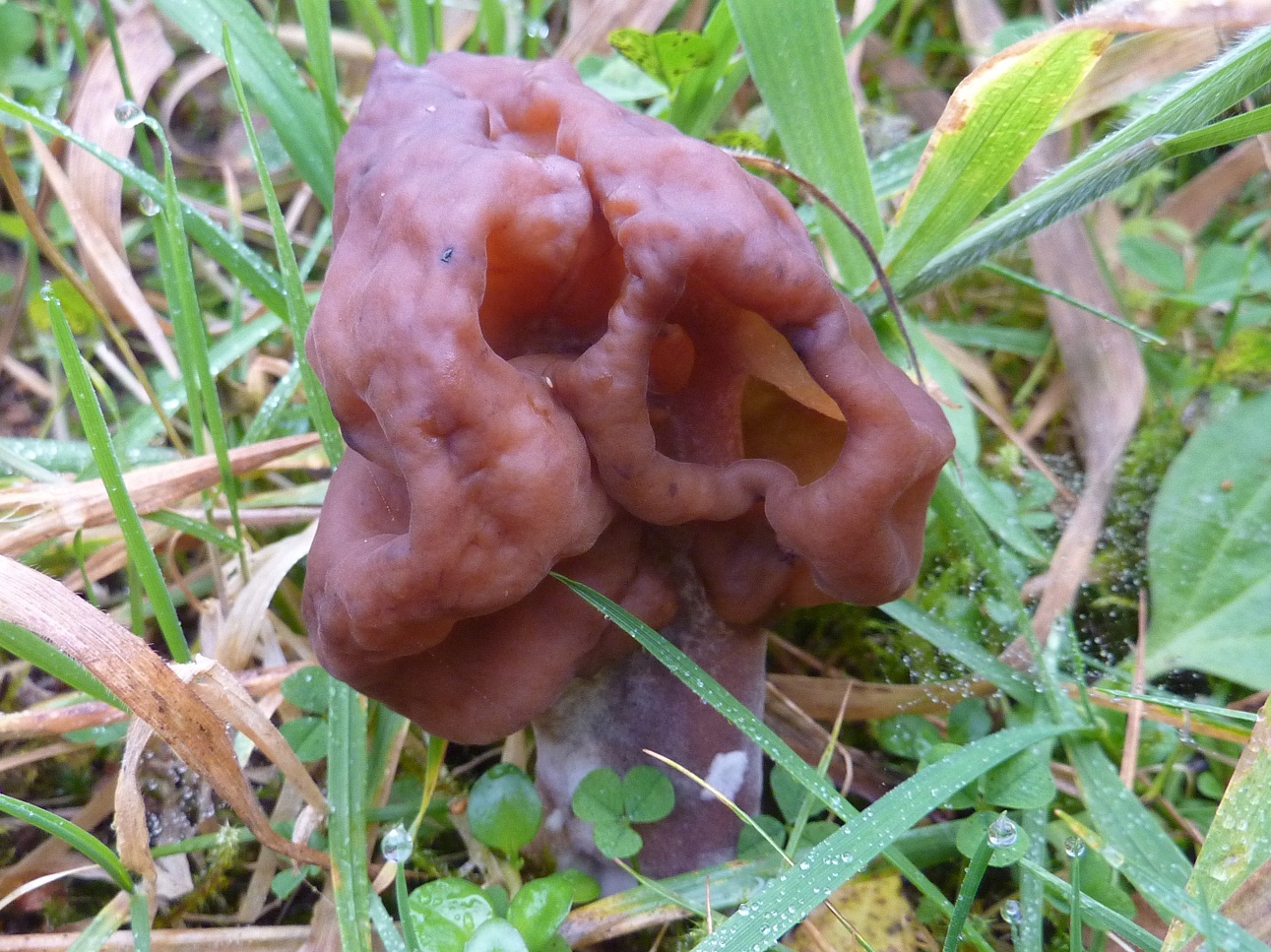
- Also lurking in the TFL nursery, a Gyromitra of some sort. Given its habitat I’d go for Gyromitra infula, Pouched False Morel.
-
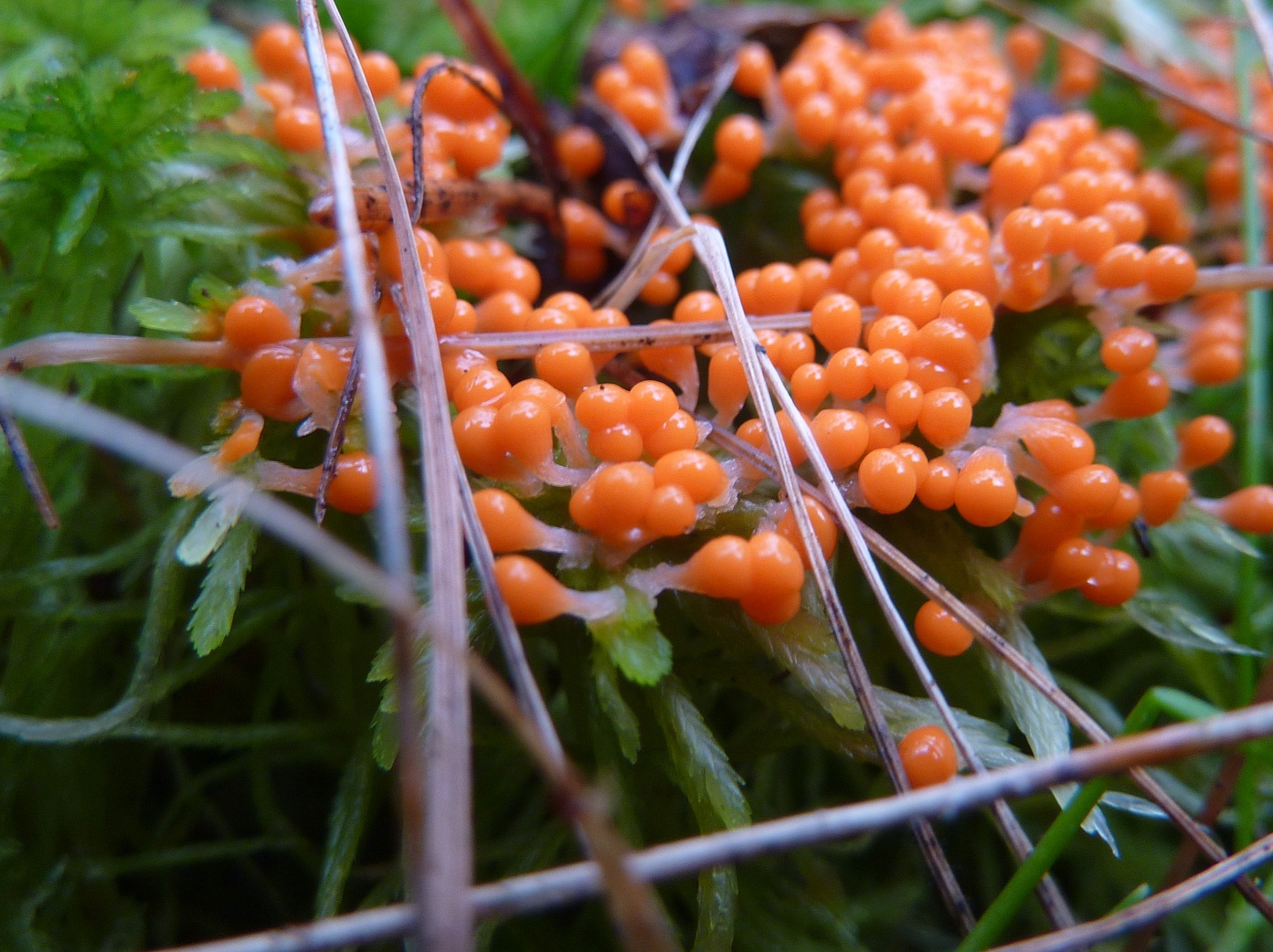
- This appears to be egg shell slime mold (Leocarpus fragilis)
-

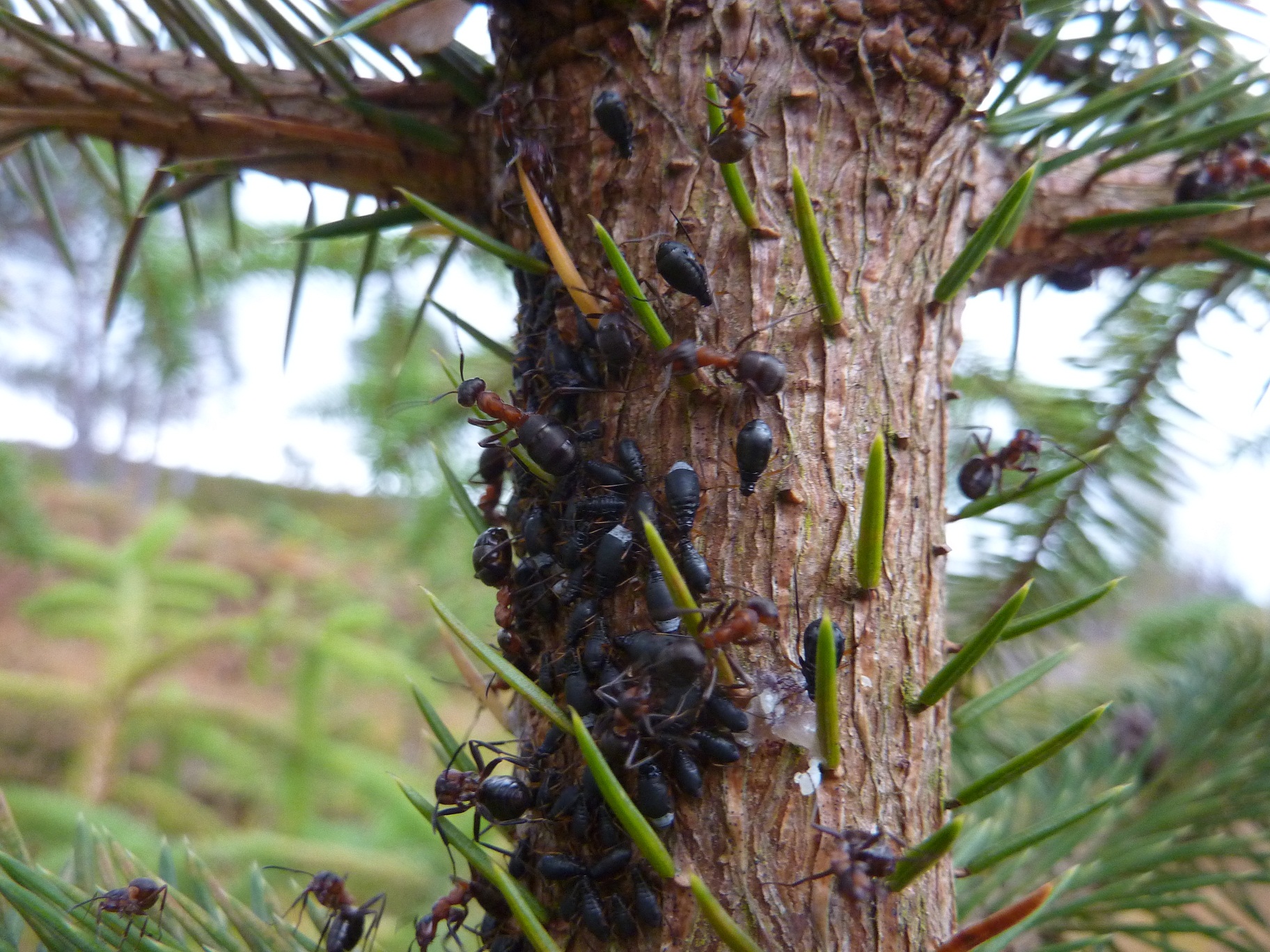
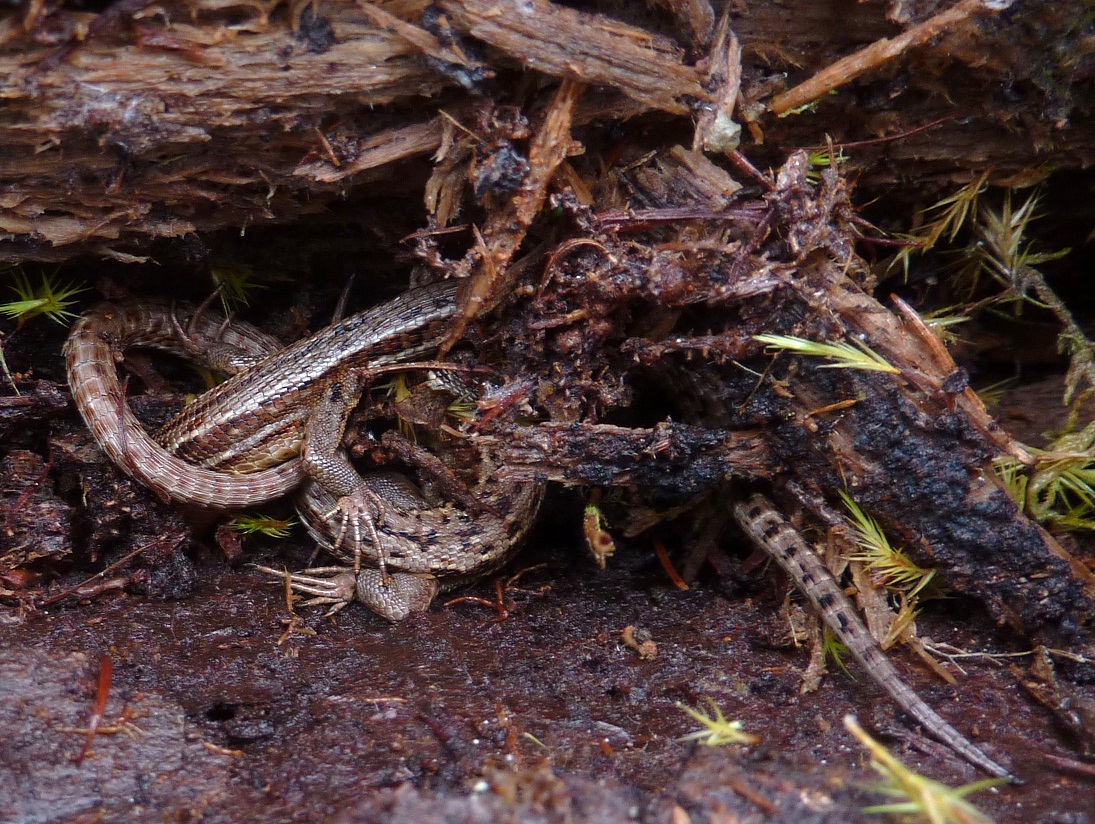
- Oops, I didn’t mean to disturb these guys as I was pulling out a spruce, so I covered them back up again and hoped they’d not be too annoyed with me
A holiday in the Glen Affric Nature Reserve, 9th Oct to 16th
At the third time of trying, since my first Focaliser (work week leader) week, I was once again foiled in my efforts to partake in a TFL week as a volunteer. The previous two occasions had been firstly due to a Focaliser becoming otherwise engaged, and then a college block-booking taking priority. This time, with a lot less notice, one of the Focalisers was unable to make it following a trip to the hospital during the night before the week started. As luck would have it, this gave me the opportunity to spend the week Focalising with Andrew.
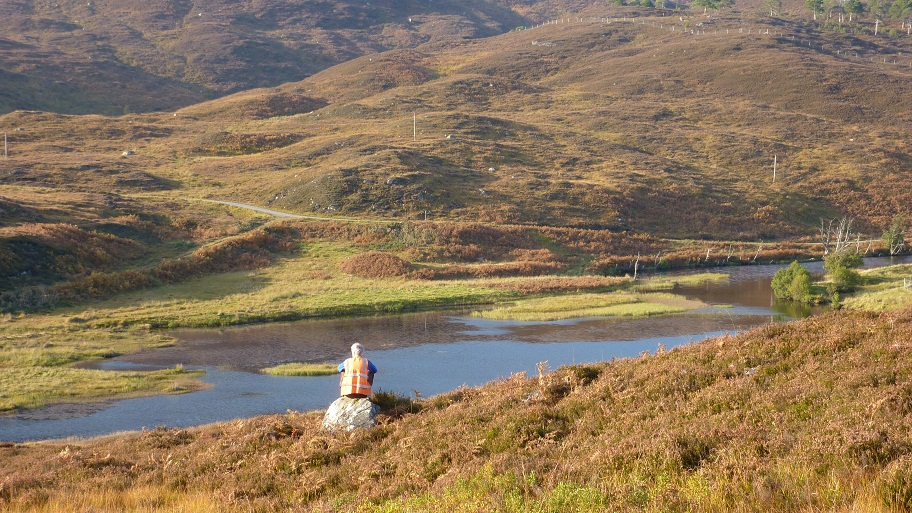
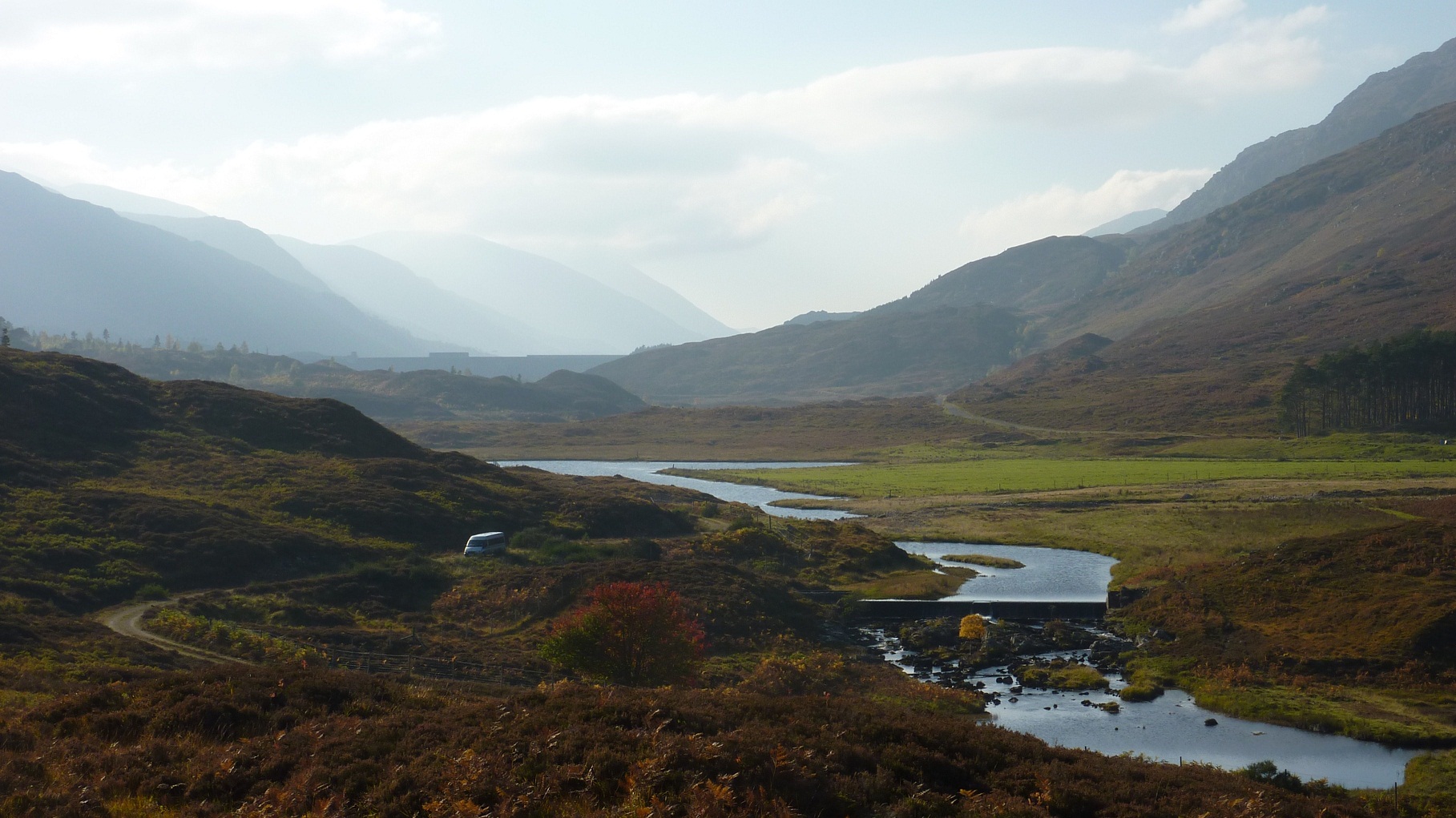
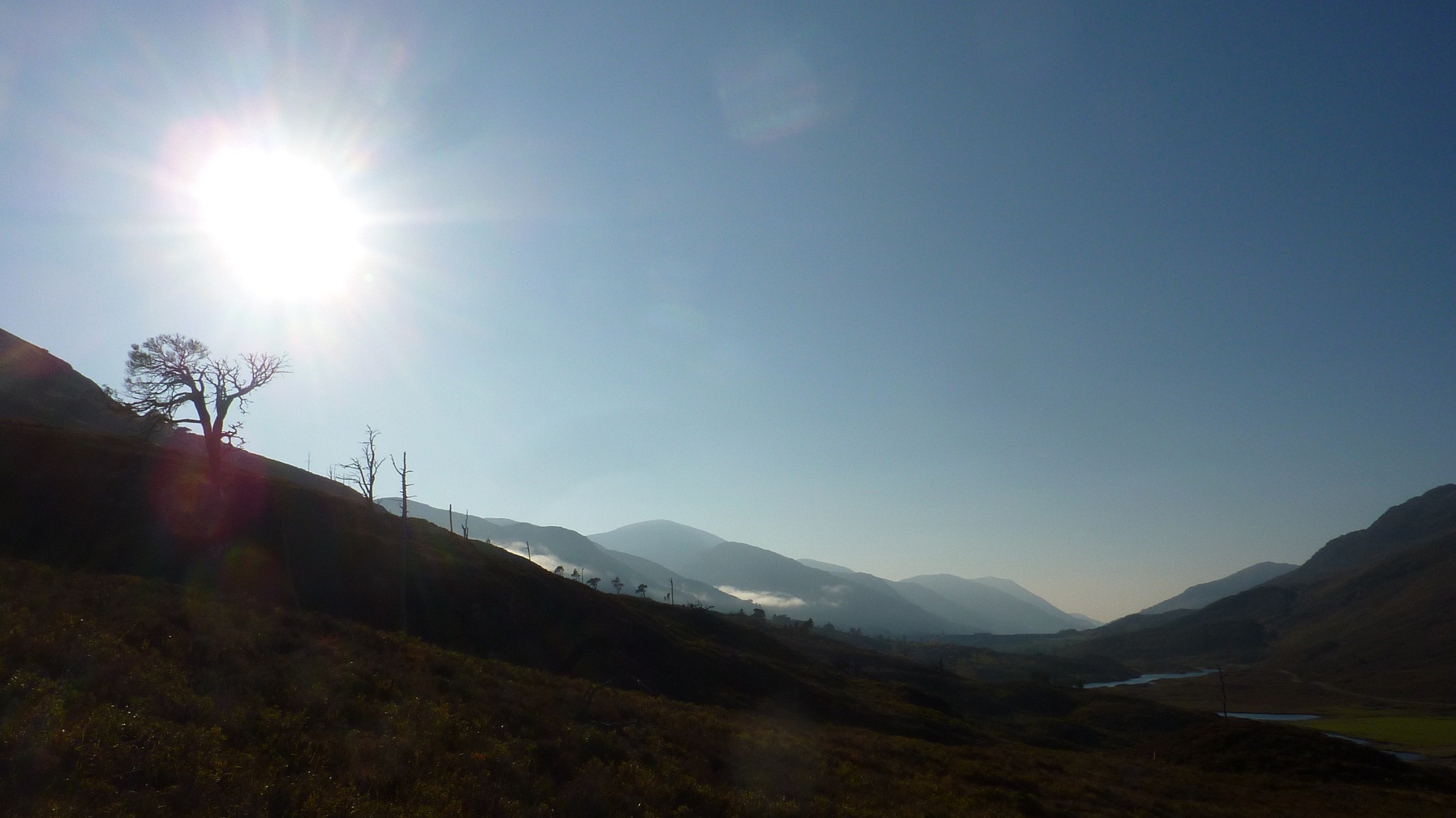
During the week we planted 1435 trees, mostly Birch with some Alder, Rowan and Goat Willow, in Glen Cannich. We had sunshiny days for the most part, but even so, the views up and down the Glen are spectacular, and the atmosphere was improved further by the almost constant sound of rutting stags in the distance.
We also spent some time removing non-native Spruce, Larch and Hemlock (and one Lodgepole Pine) from an area above Plodda called Farmer’s Wood. Here we were treated to noisy flying displays by a local family of Ravens, whilst flocks of Tits came and went and a Great Spotted Woodpecker made various announcements from the nearby trees.
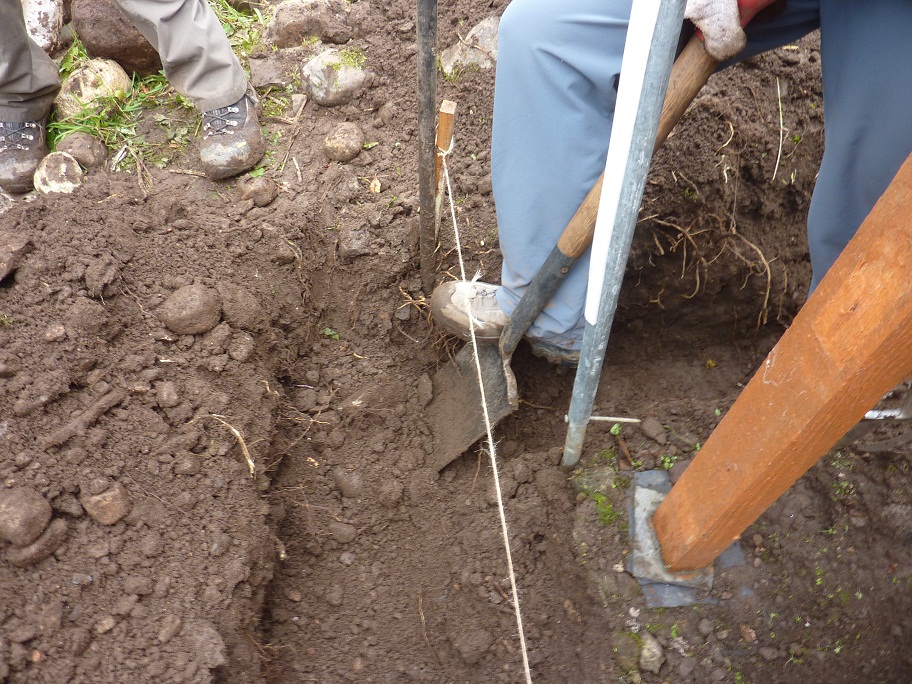
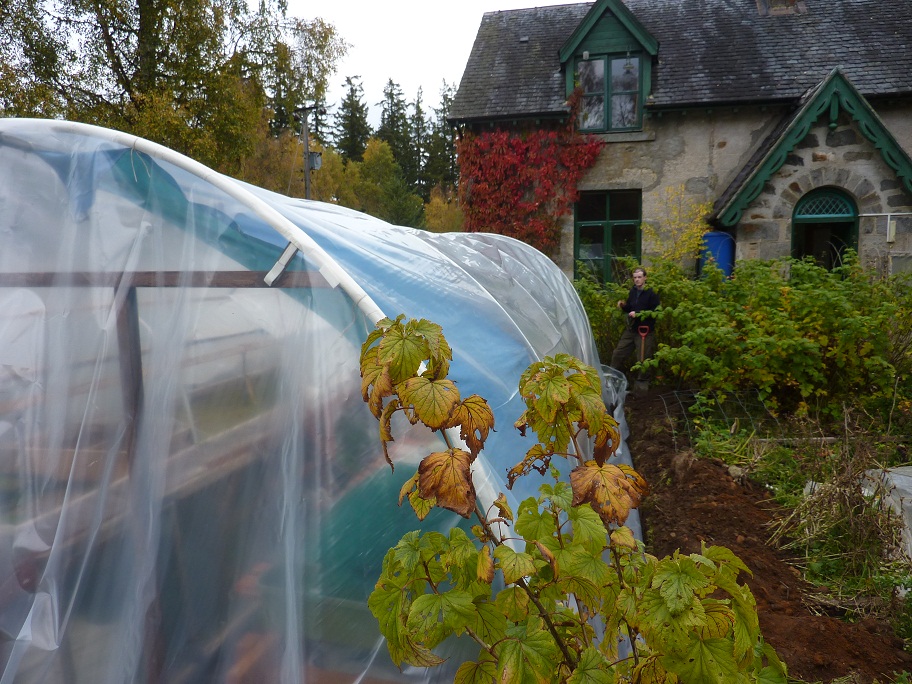
On Thursday we were lucky enough to spend a day in the nursery, with Jill and Abbie, putting a new cover on the first poly-tunnel. I can now proudly say that I’ve been involved in the digging of the trenches for both poly-tunnels. On this occasion it stayed dry, and Caroline managed to scrape some soup off the kitchen walls for a very successful lunch.
-
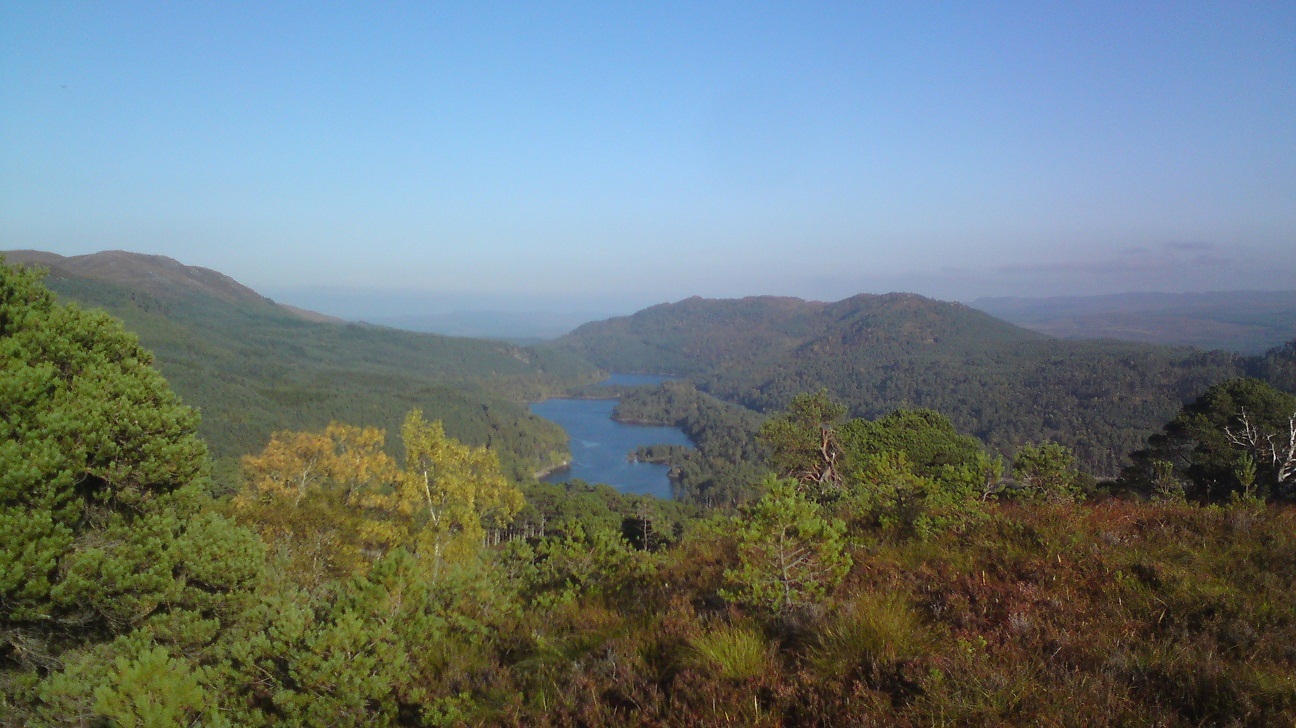
- Not bad for an introduction to the highlands
-
- Our first break and the signs of tension are already beginning to show

-
- Glen Cannich
-
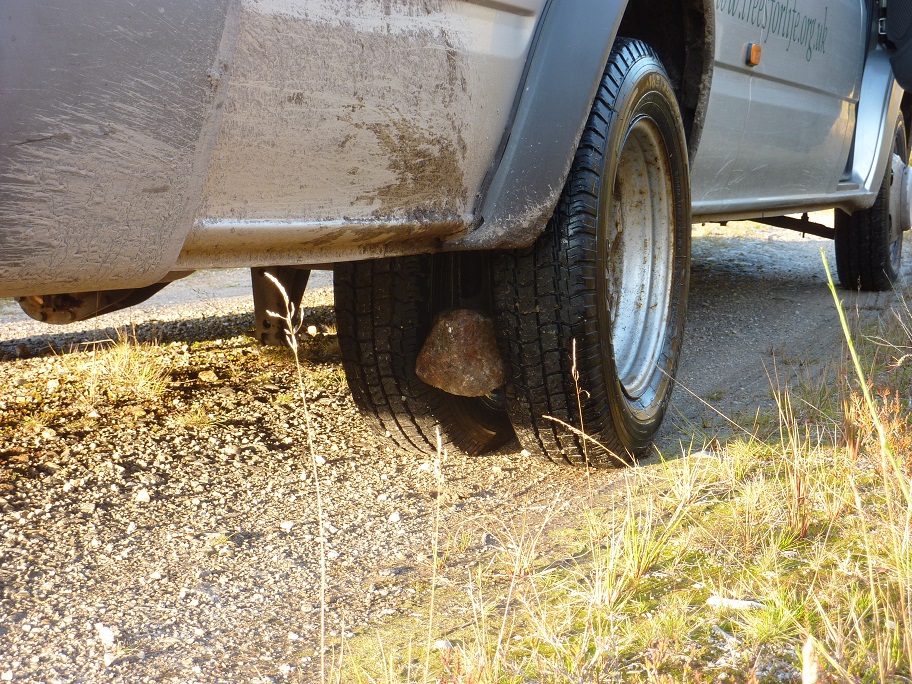
- Let’s off road!
-
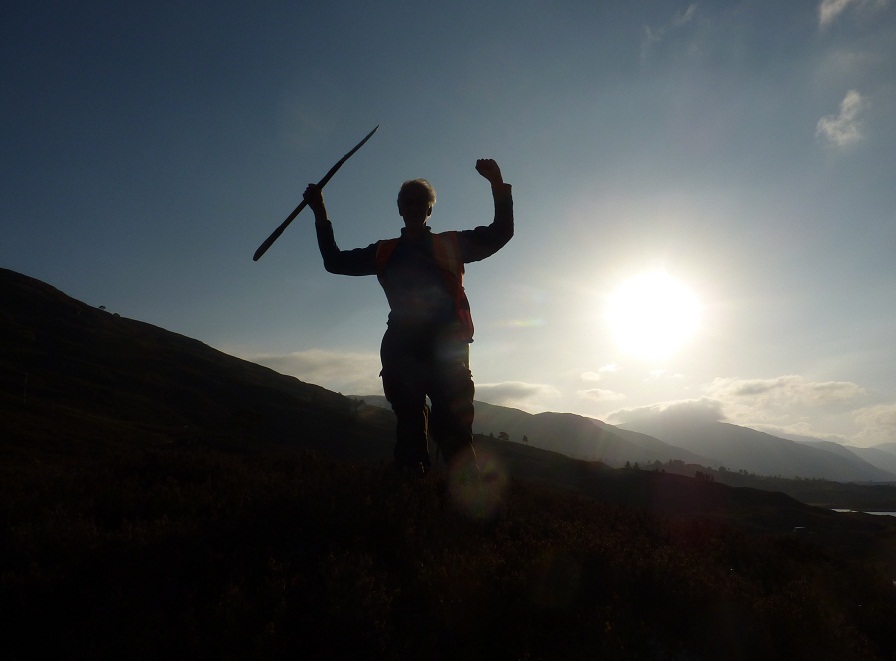
- One happy Focaliser

-
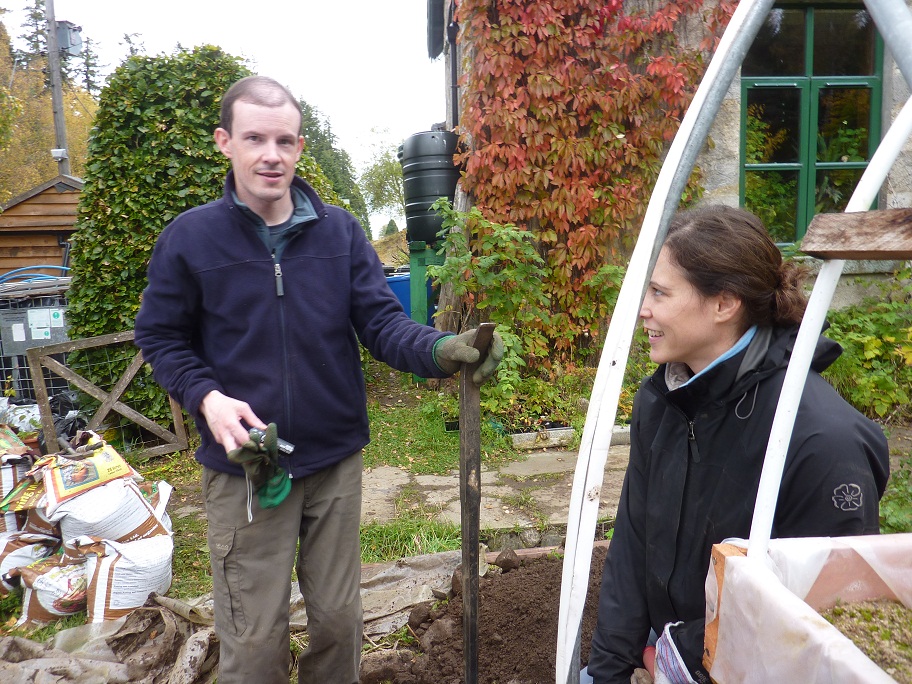
- Tom looking very much the part with a pinch bar…
-
- …while Jennifer does all the work
-
- The new poly-tunnel cover before tension is applied
-
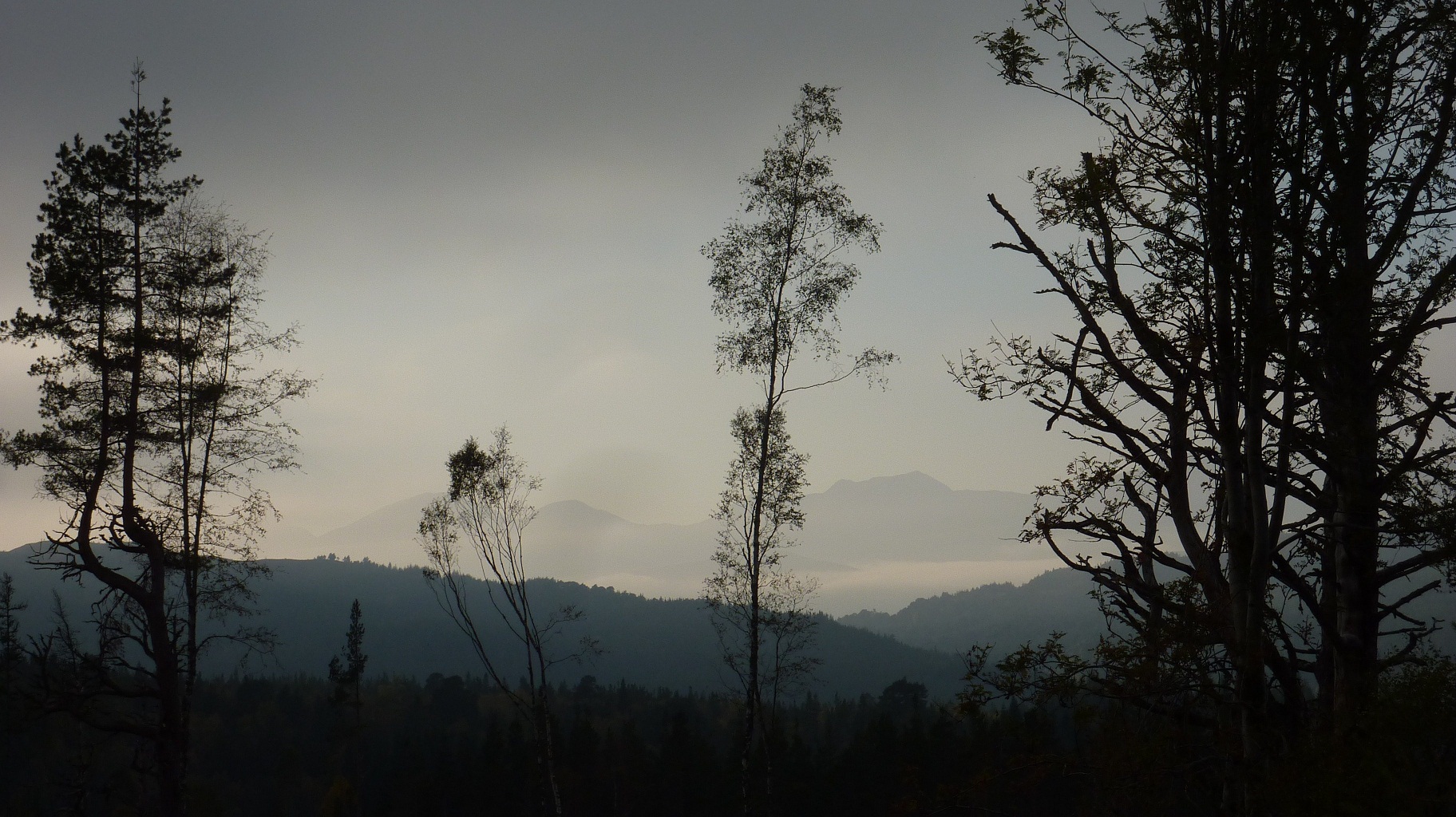
- Looking towards Glen Affric from (our Friday work site) the South
-
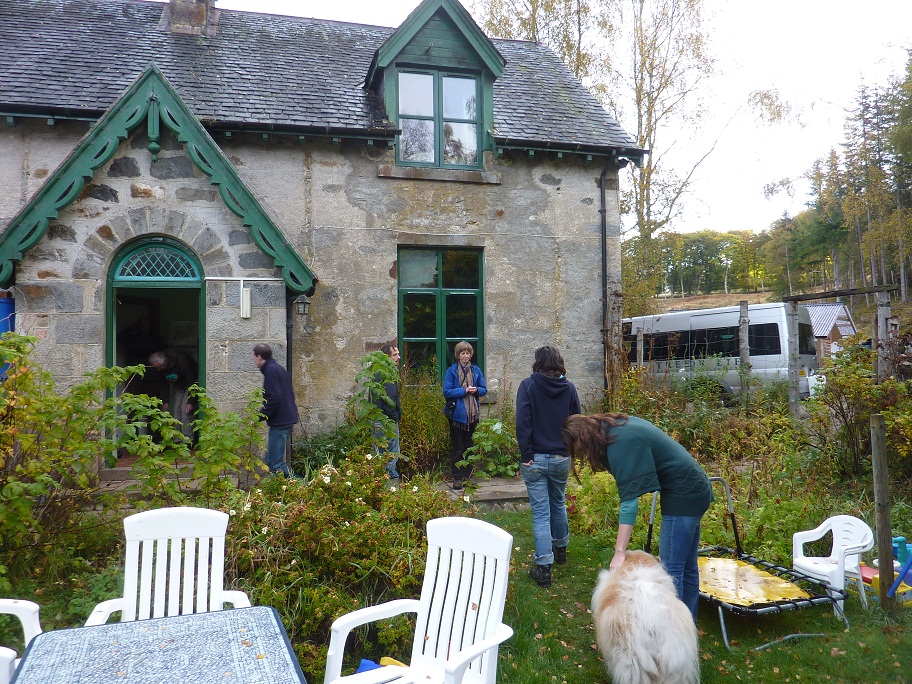
- Plodda Lodge – Our home for the week.
-
- Hmm, there seems to be a small addition to the team
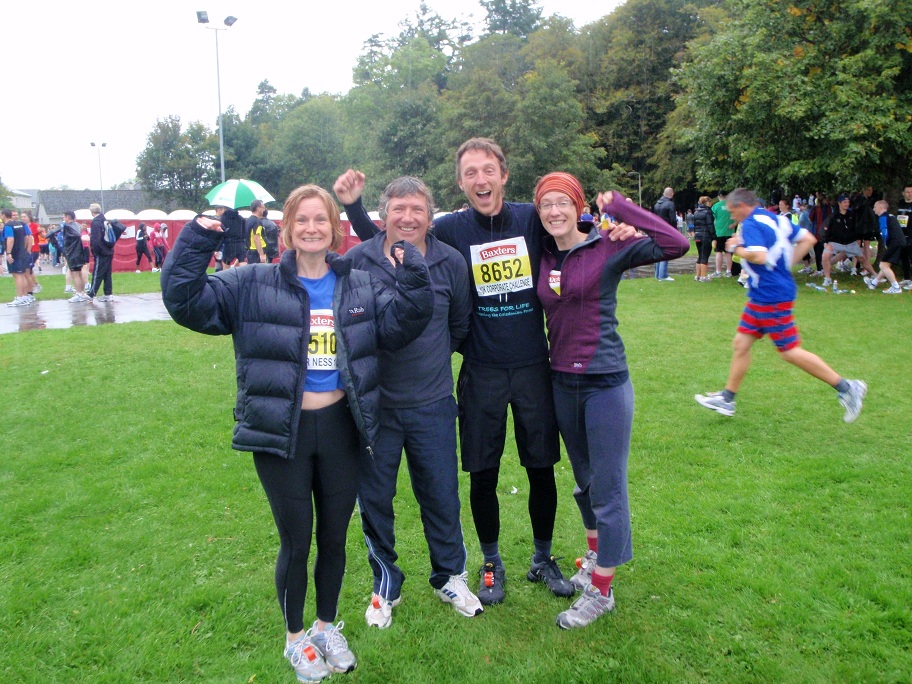
Baxters Loch Ness 10k run…
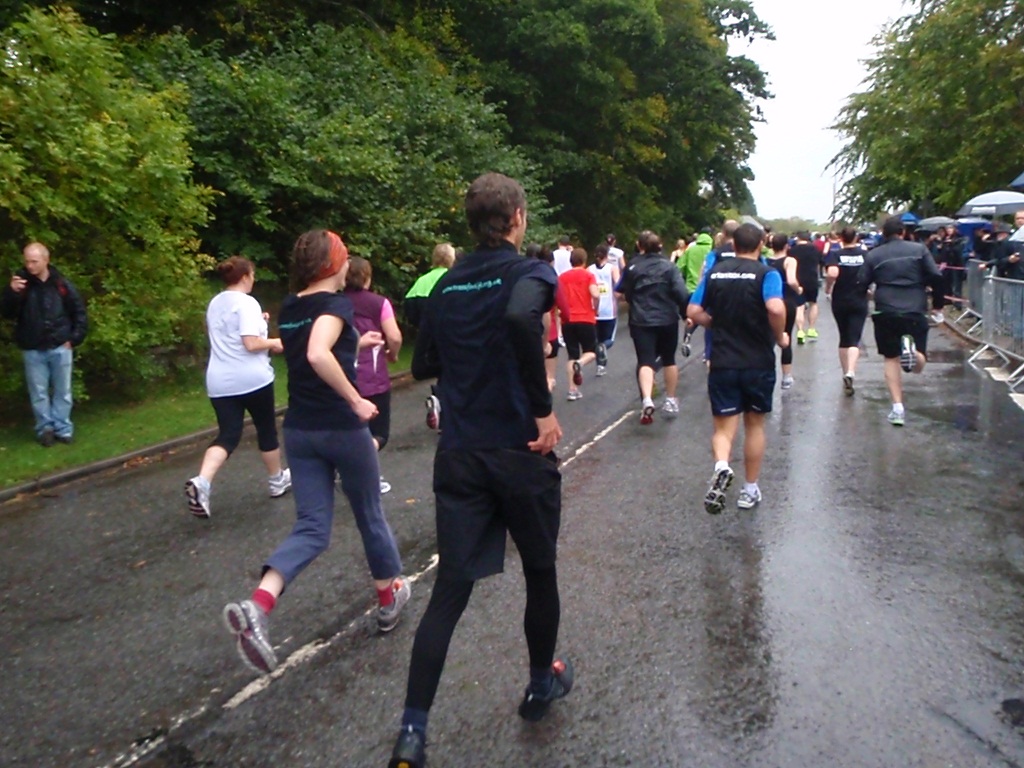
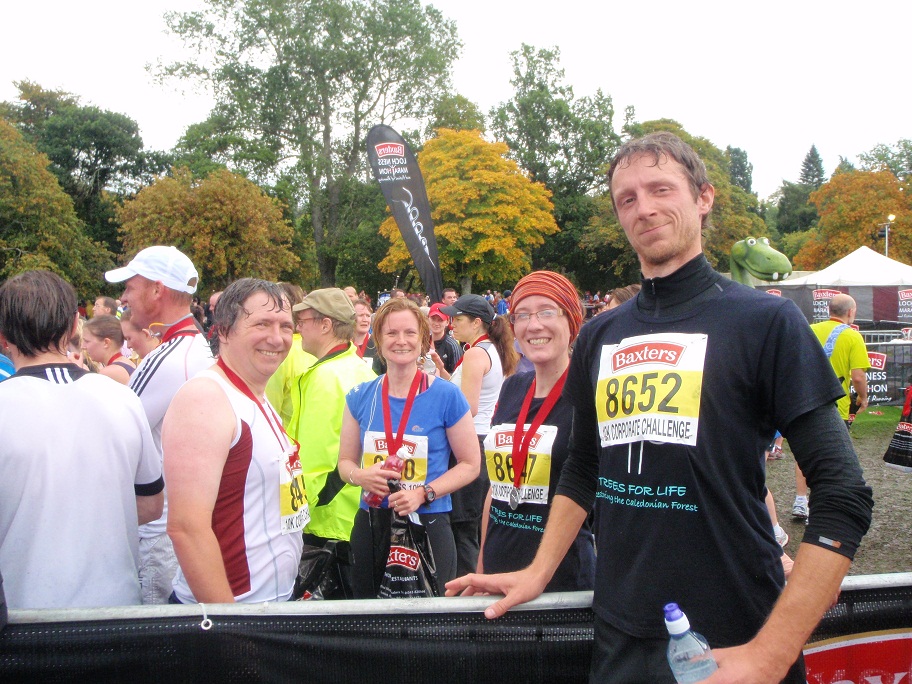
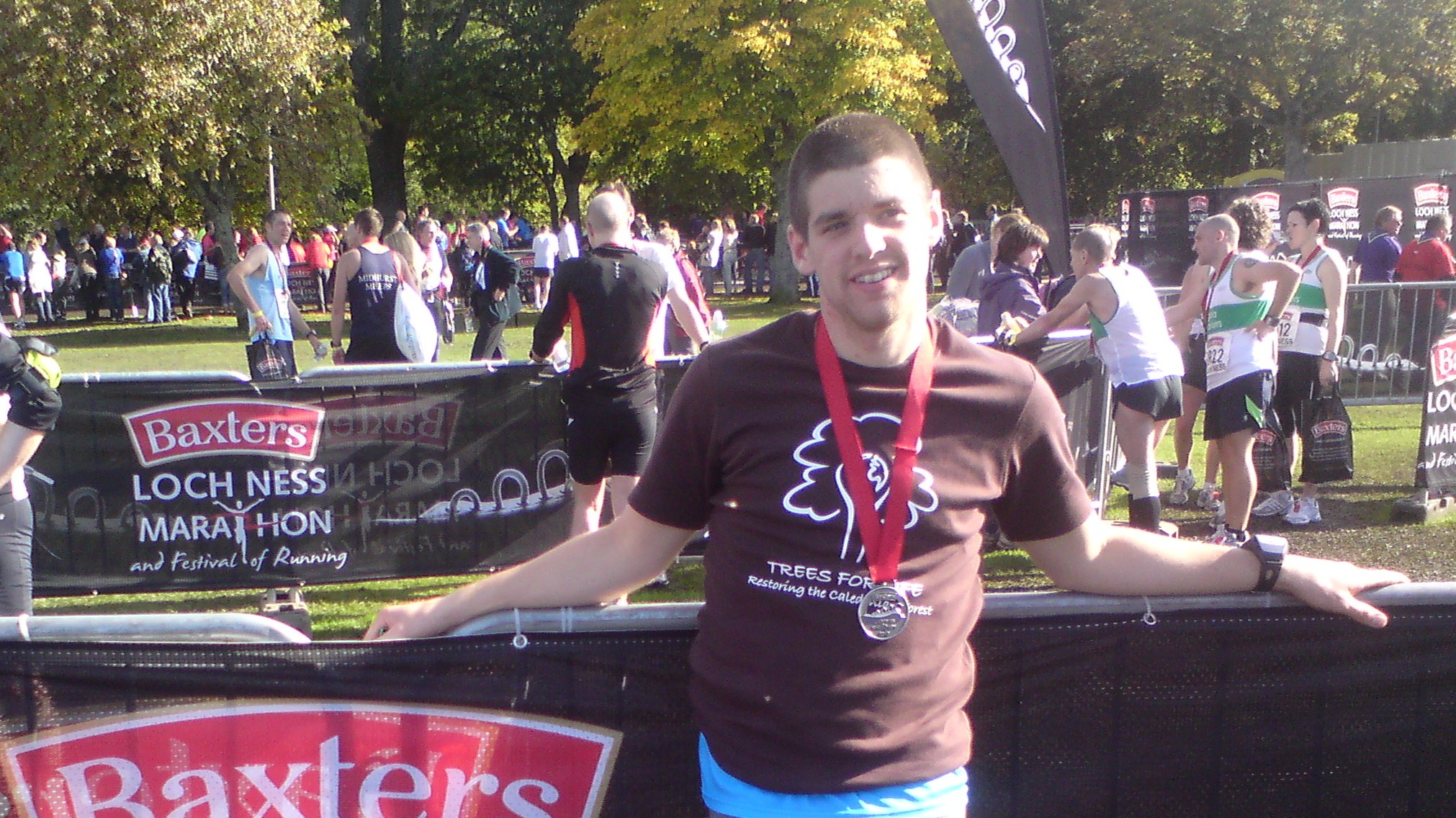
Today I ran my first (and probably last) competitve 10k. I finished 791st out of 2600, with a time of 51.52
http://www.lochnessmarathon.com/results/10k.php?offset=750&order=finish_time&cat=
I don’t know whether to be pleased or disappointed with this time. On the one hand I’ve been walking with a pain in my left knee since I did my last training run, almost a week ago on Skye, something which has been becoming more and more of a problem since the end of August; and on the other hand I was fairly sure I could do better after my first two weeks of training, back in the beginning of August.
Anyway, the day out was great, and I’d love to do it again. It was a great experience running with thousands of other people, even if a large number of them seemed to get in my way on the narrower parts of the course. And it was the first time I’ve been applauded for running since I was in school. I thought that was pretty cool, just as I did when I was younger.
I was running as part of a Trees for Life team (TeamTFL). Many thanks to Rosie for organising our participation. She and Colin, Jane and Steve made up the rest of the team, the four fastest of which are listed against our team result of 18th out of 40.
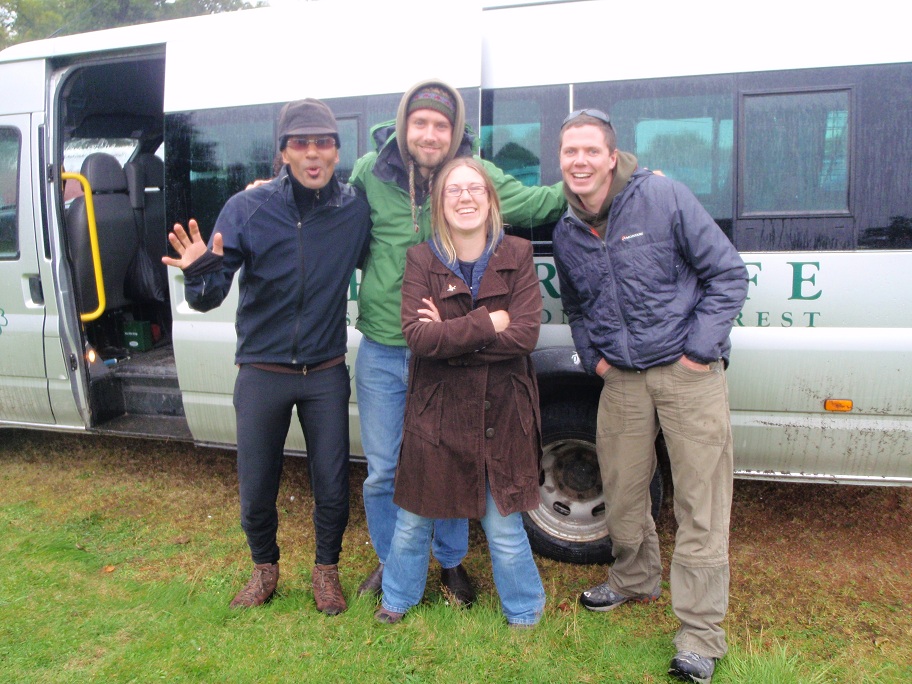
Other special thanks should go out to the people who manufacture Ibuprofen for making the run relatively painless. And to Ross, Kate, James and Sean, who came along to give support. Sean also picked up a medal for me – as I was running over the finish line I didn’t even notice that they were giving medals out, or that there was a big clock there telling me what time I’d run (I didn’t find out my time until it came up on the web site), or that different people were giving out different sized t-shirts. My XL will be going to a good home as soon as I find someone who is XL.
Well done to Adam Druett (who recently rode from Land’s End to John O Groats to raise money for TFL) for completing the Loch Ness marathon in 3hrs 35mins. A pretty good time and his first marathon. Adam was on the Skye work week we finished yesterday and accompanied me on my training run on Skye last Monday.
You may wonder why I didn’t ask for sponsorship for doing the event. I’m not comfortable with asking for sponsorship, I prefer it if people give money based on how worthy the cause is rather than the often unrelated actions of the individual, or group, requesting the sponsorship. I believe that the causes I support are worthy, they are listed on the right hand side of this blog. Any support for them, from you, is greatly appreciated.
Many thanks to Rosie and Ross for most of the following photos. More photos can be found of me here
-

- Not even the rain can deter us
-
- The Support
-
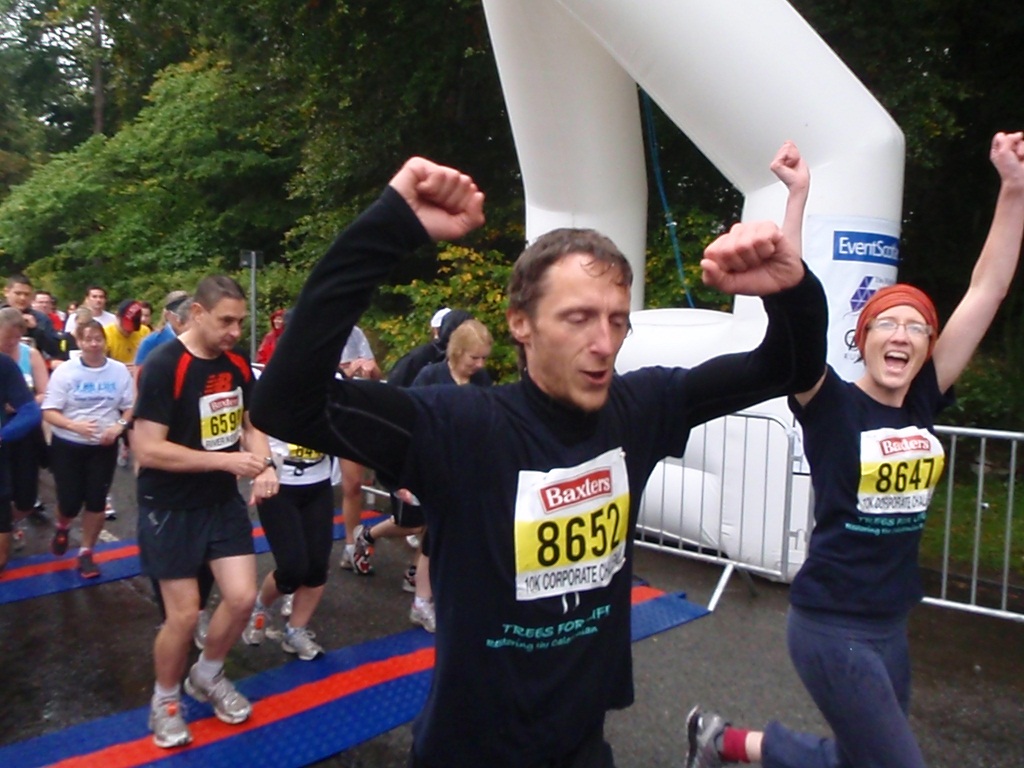
- Yeay, we’re over the start line
-
- Not looking too shabby, at the finish

-
- Mr Druett after being presented with his medal and TFL t-shirt
Work week on Skye, 25th Sept – 2nd Oct.
With Focalisers falling all around, many thanks to Russell for gallantly stepping in at the last minute to work this week with me. Thankfully he managed to pass his cold on to just a few of the volunteers. On Monday I staggered my way through a training run for the forthcoming 10k. However, the after effects of my run from the hostel to Armadale and back, with Adam, who’s going to run the Loch Ness marathon, left me unable to run again for the rest of the week. Not the best preparation, but hey, by now I’m treating the race as the last time I’ll ever run.
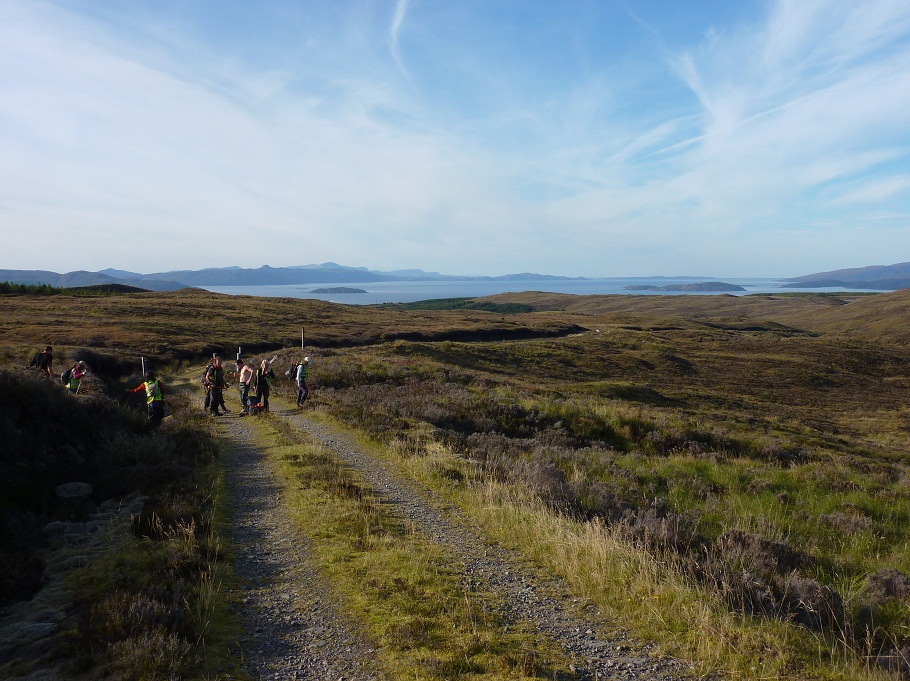
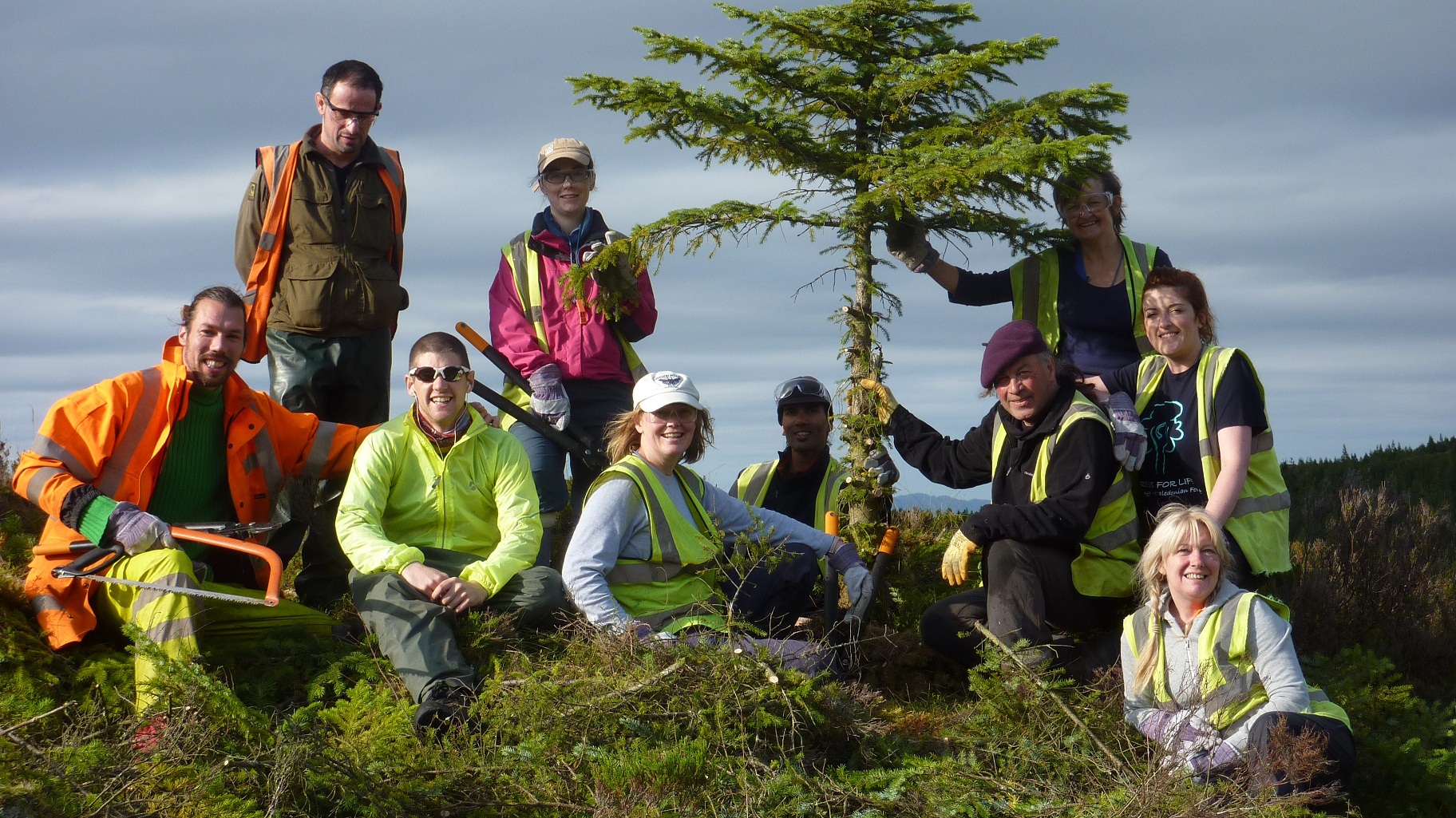
Back to the work week, I knew Adam and Lizzie already, so it was great to see them again, and the rest of the group were a mix of city dwellers, a wood dweller and a tall dutchman. We removed sizeable areas of non-native scrub from Balmacara and Glen Arroch. The area at Balmacara will be planted up with young Oak in the spring, although we found some regeneration already there. This has spread from the existing Oak wood remnant, which is well worth a visit as it has the feel of a beautiful old Oak wood.
Click on the images to enlarge…
-
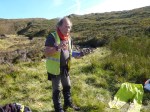
- John entertains us with tales and chocolate

-
- I’ve seen a lot of these with wings – this is the first I’ve seen without

-
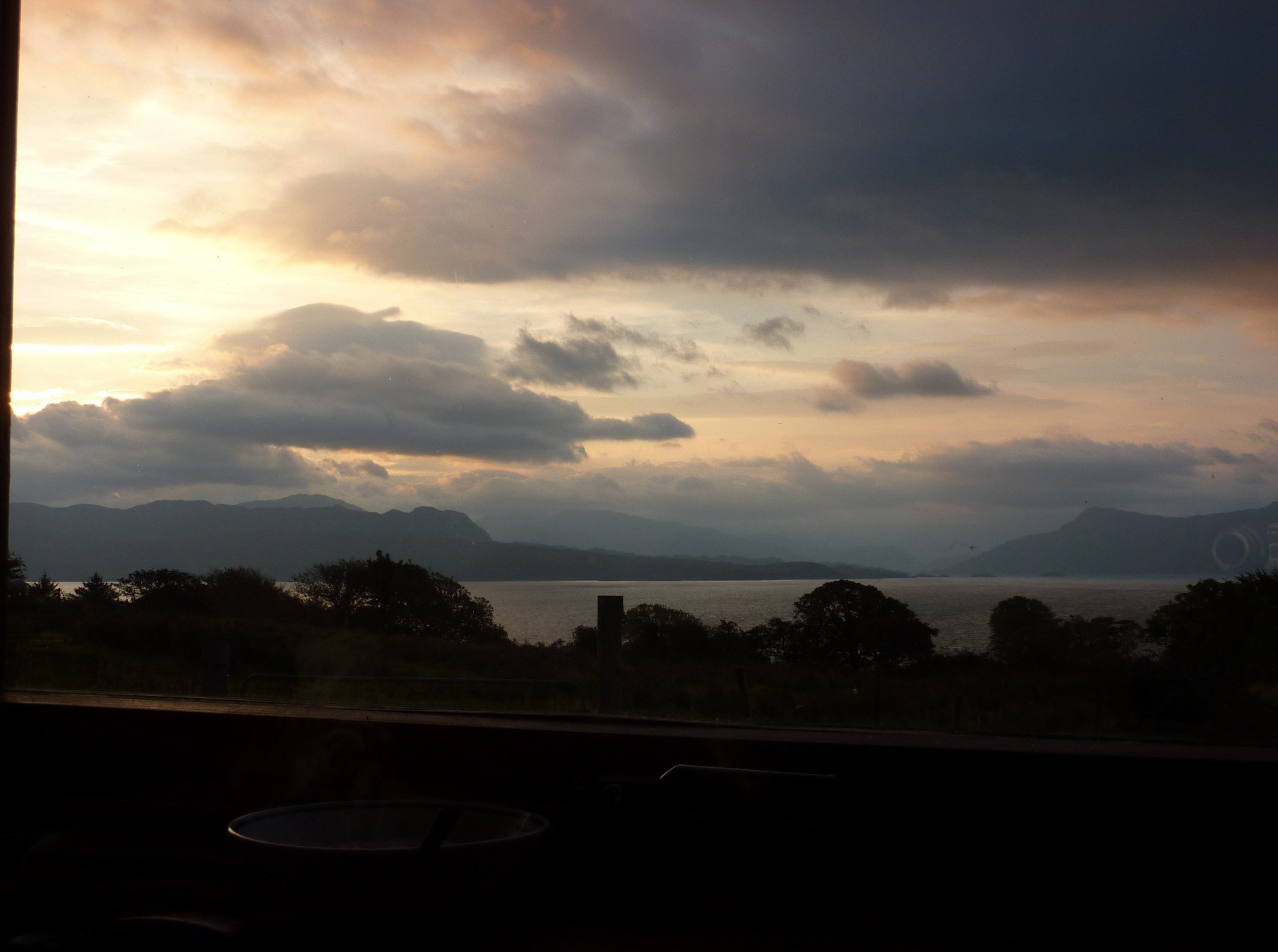
- A view from the Flora Macdonald hostel window

-

- The Gaelic college

-

- Sean on his borrowed Brompton

-

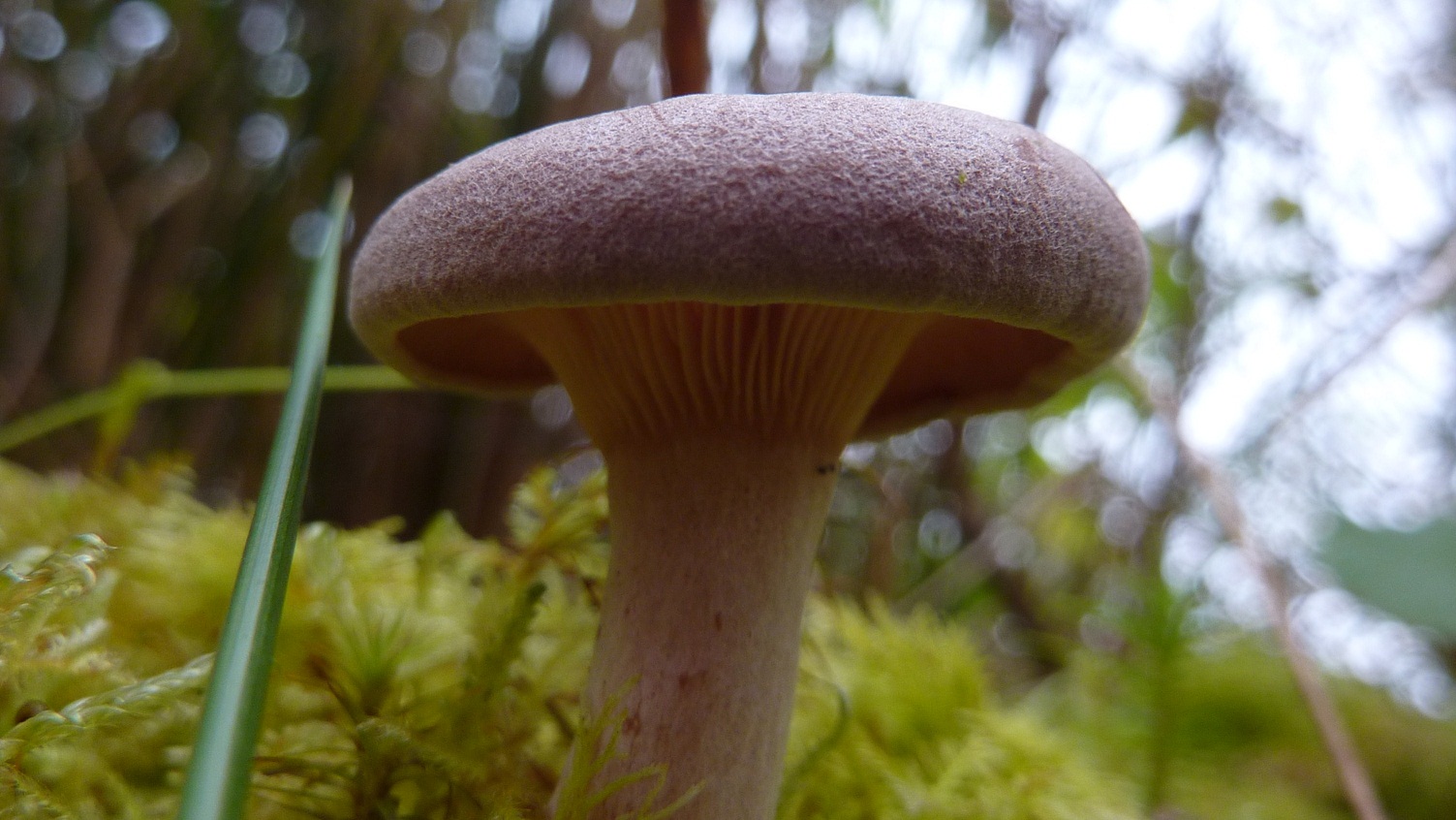
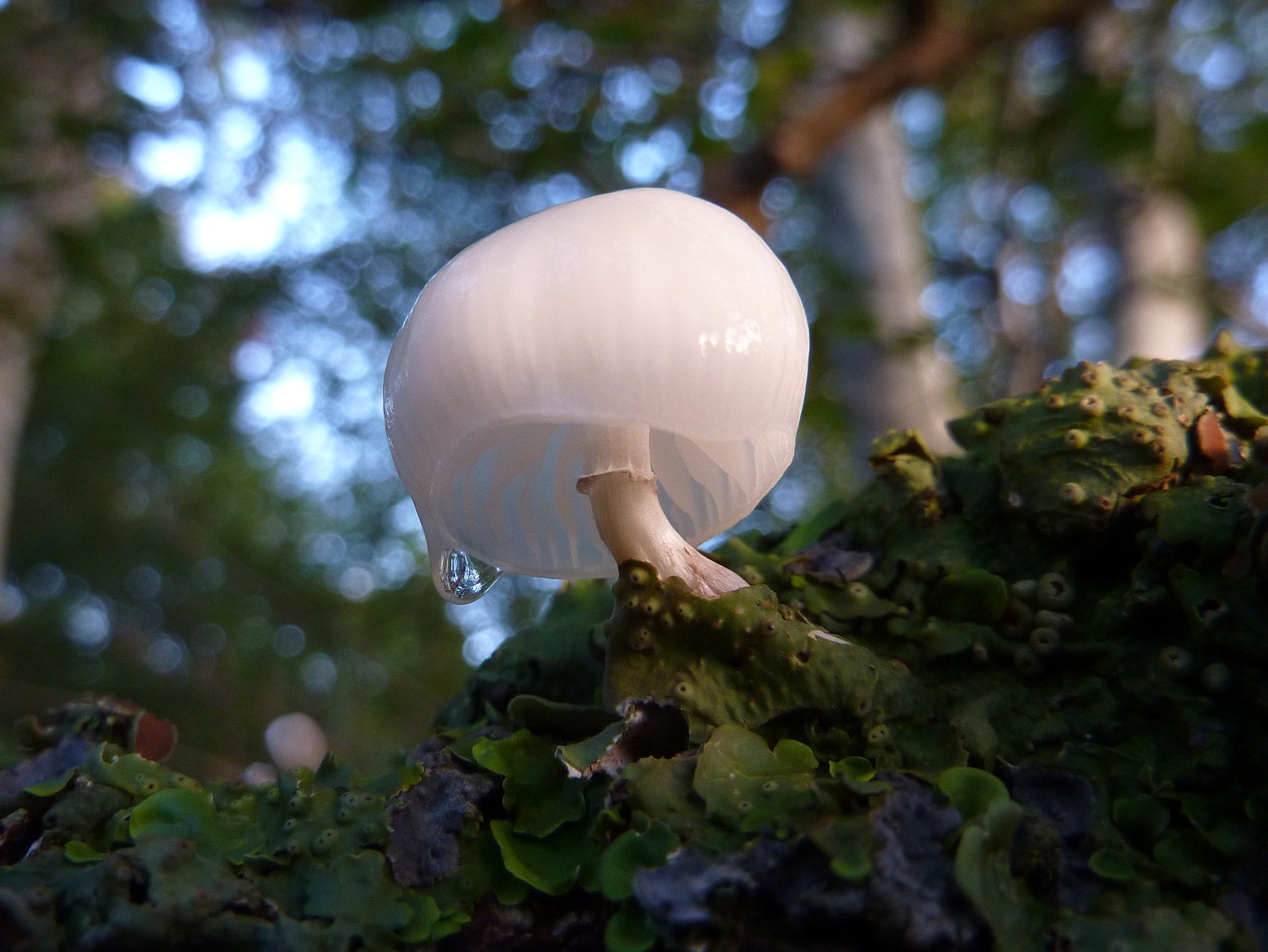
- Porcelain mushroom (Oudemansiella mucida). Probably.
-
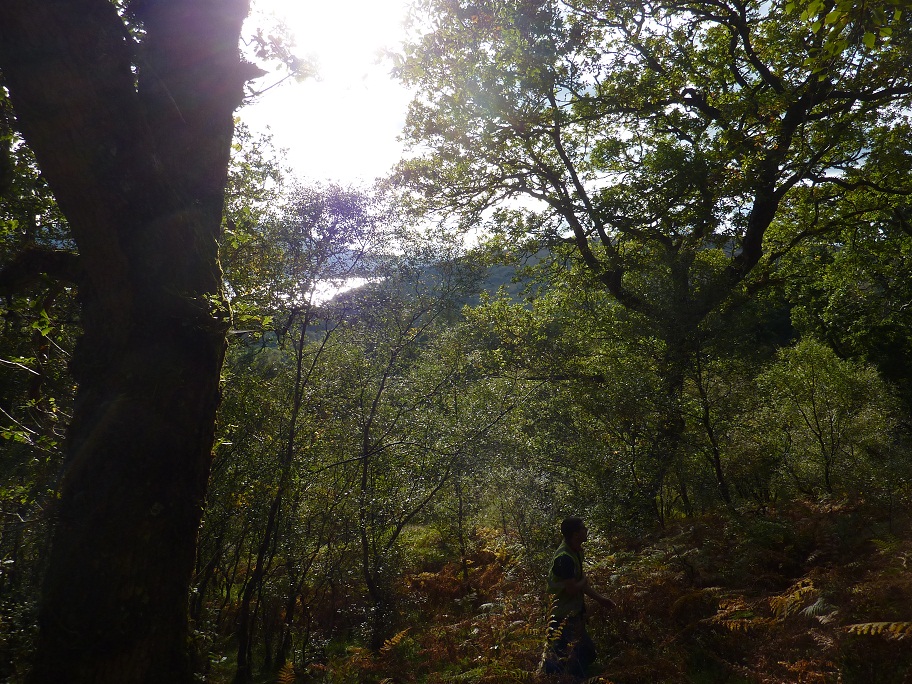
- Adam in the Balmacara Oak wood
-
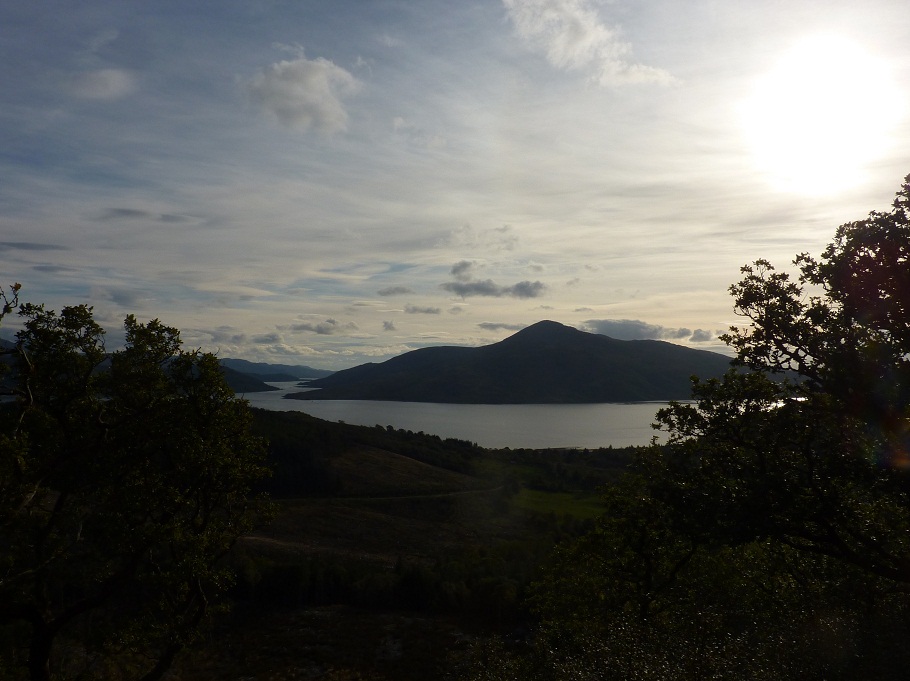
- The view from Balmacara Oak wood
Lossiemouth and Kingston
Yesterday I made a small trip out to Lossiemouth and then the wildlife reserve at Kingston. The reserve at Kingston is at the mouth of the Spey river. A large part of the reserve used to (apparently) be quarried, but has been left to regenerate over the last 40 years or so, with some exciting results. There is a lot of regeneration of many native species of tree, including Aspen. Some information can be found on the SWTs website, here
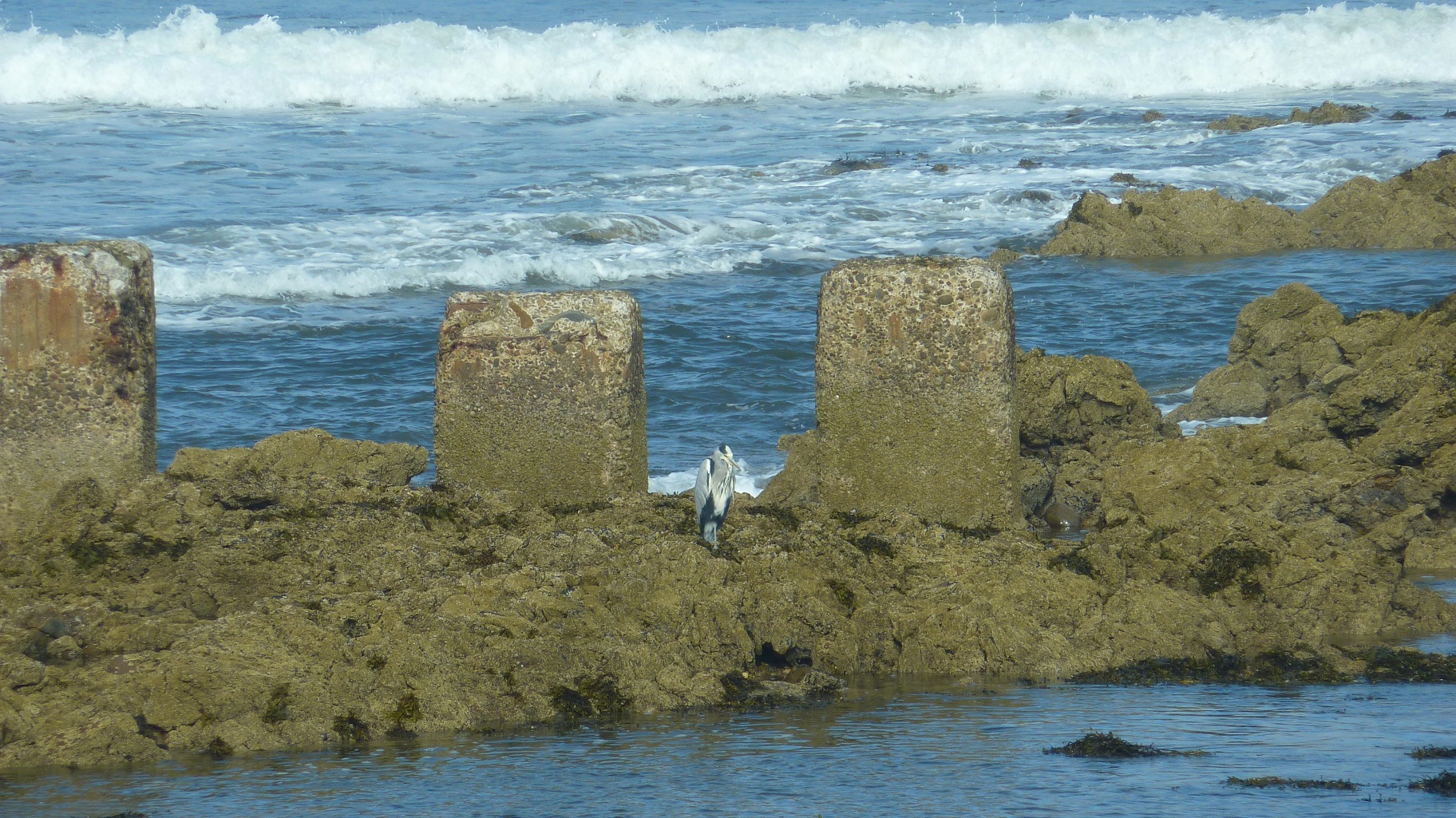
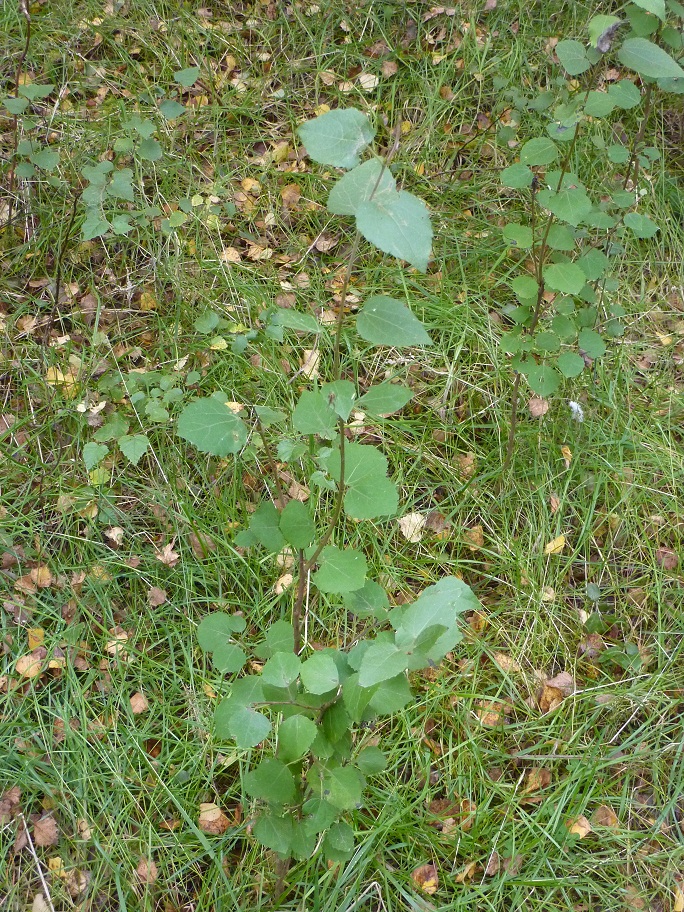
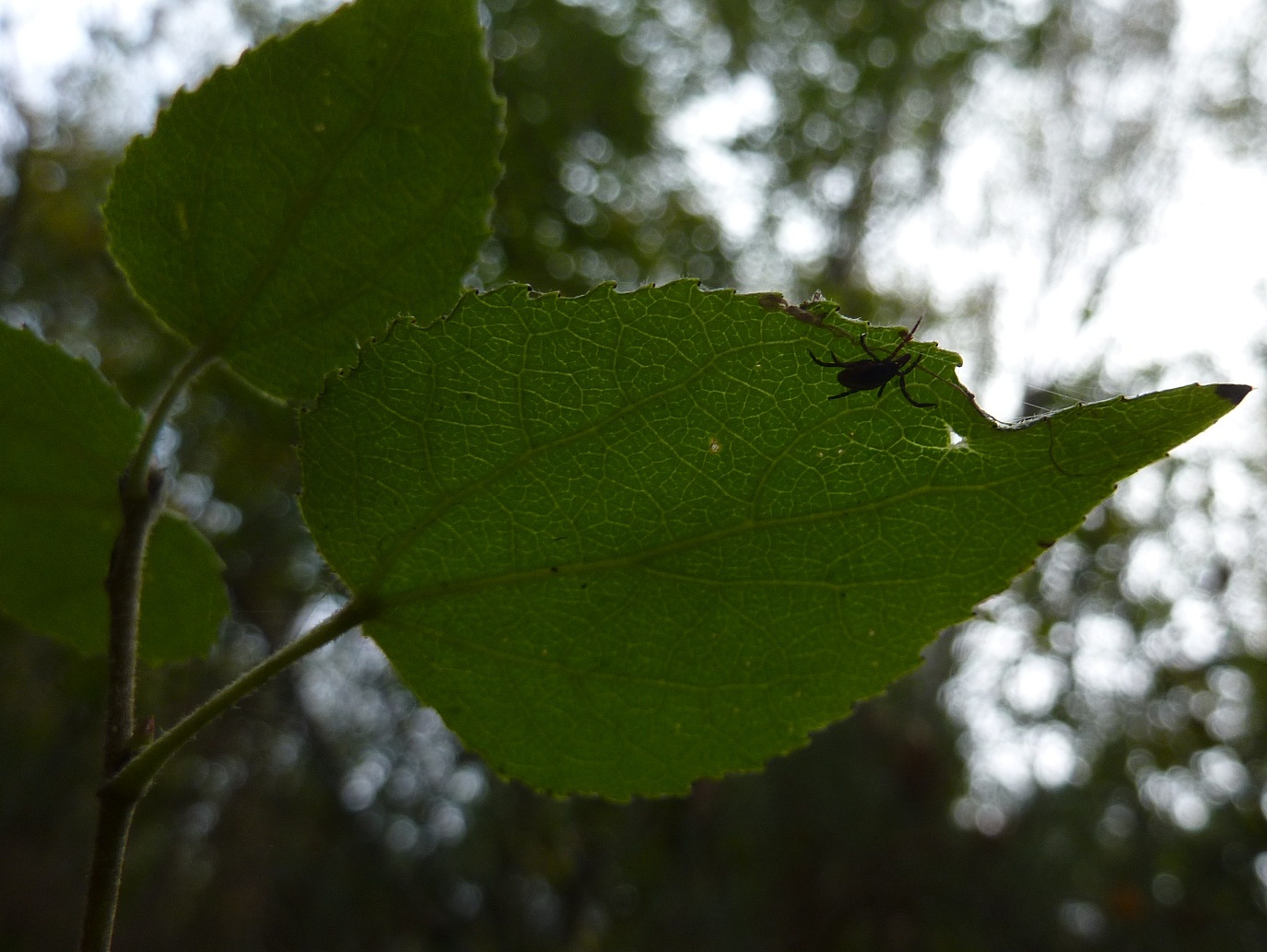
Findhorn Bay.
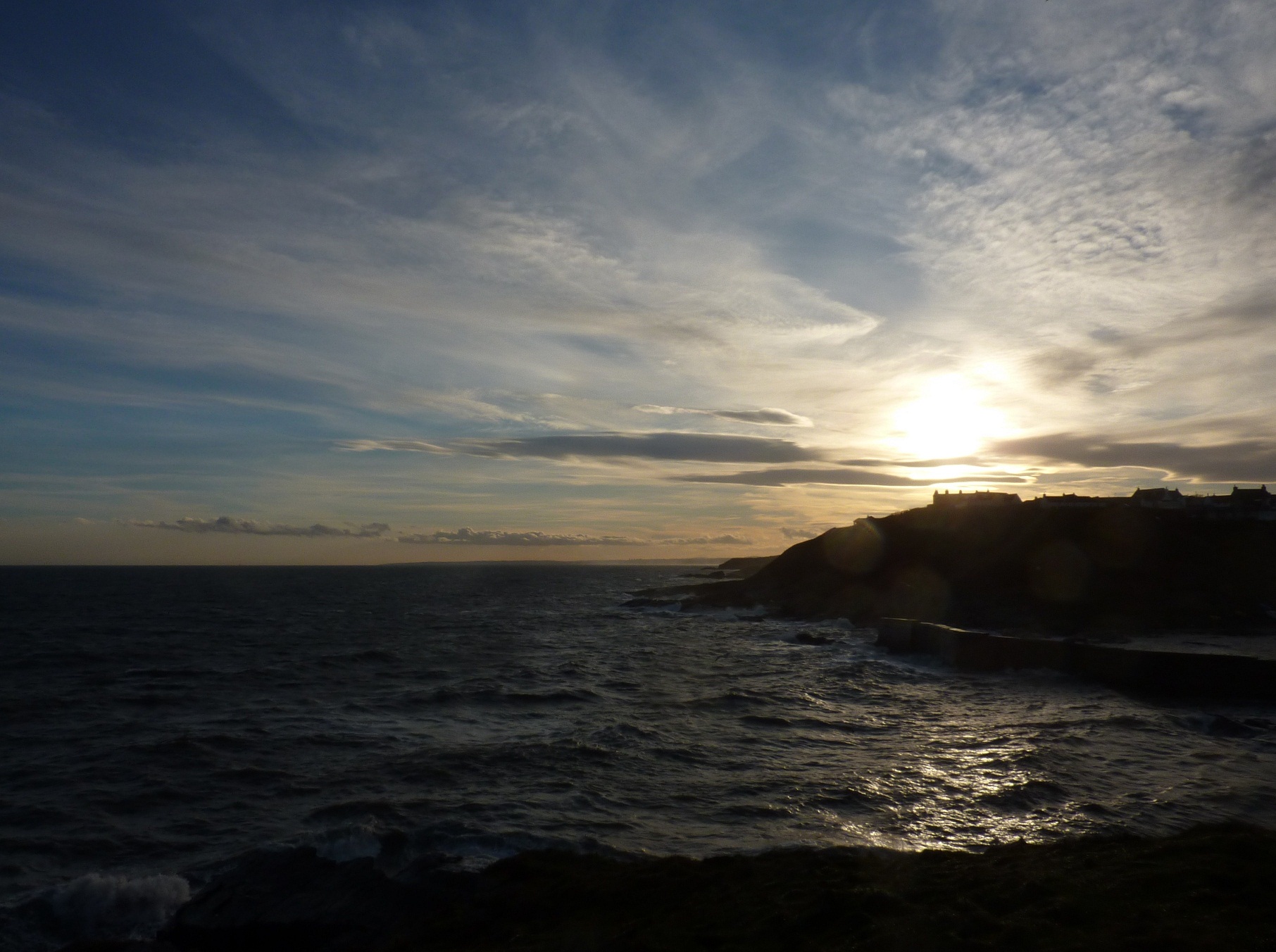
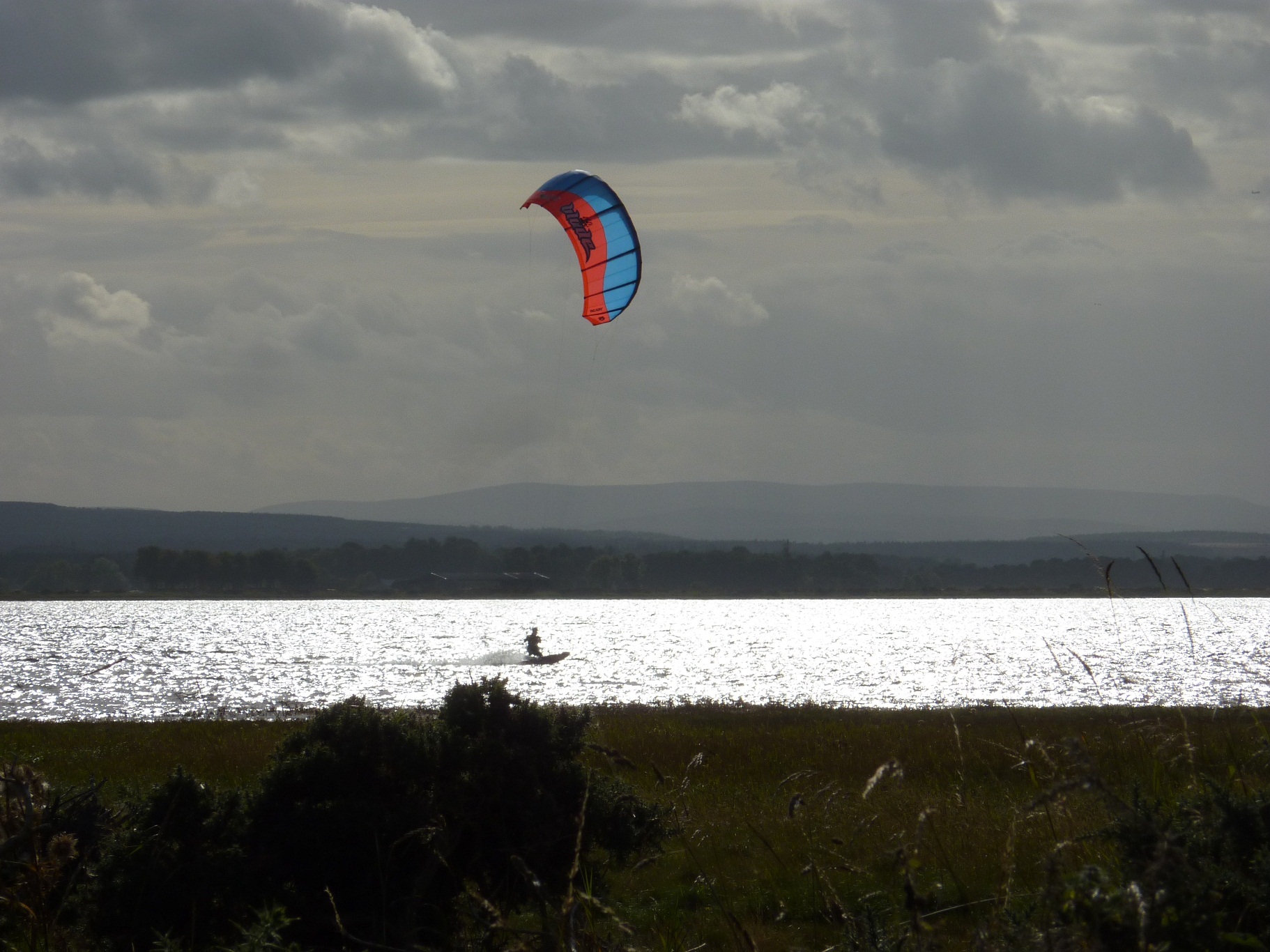
Here are a couple of shots of the bay taken over the last two weeks. There are often kite and wind surfers on the water, as the wind rarely seems to let up, and the sunsets up here tend to be pretty spectacular.
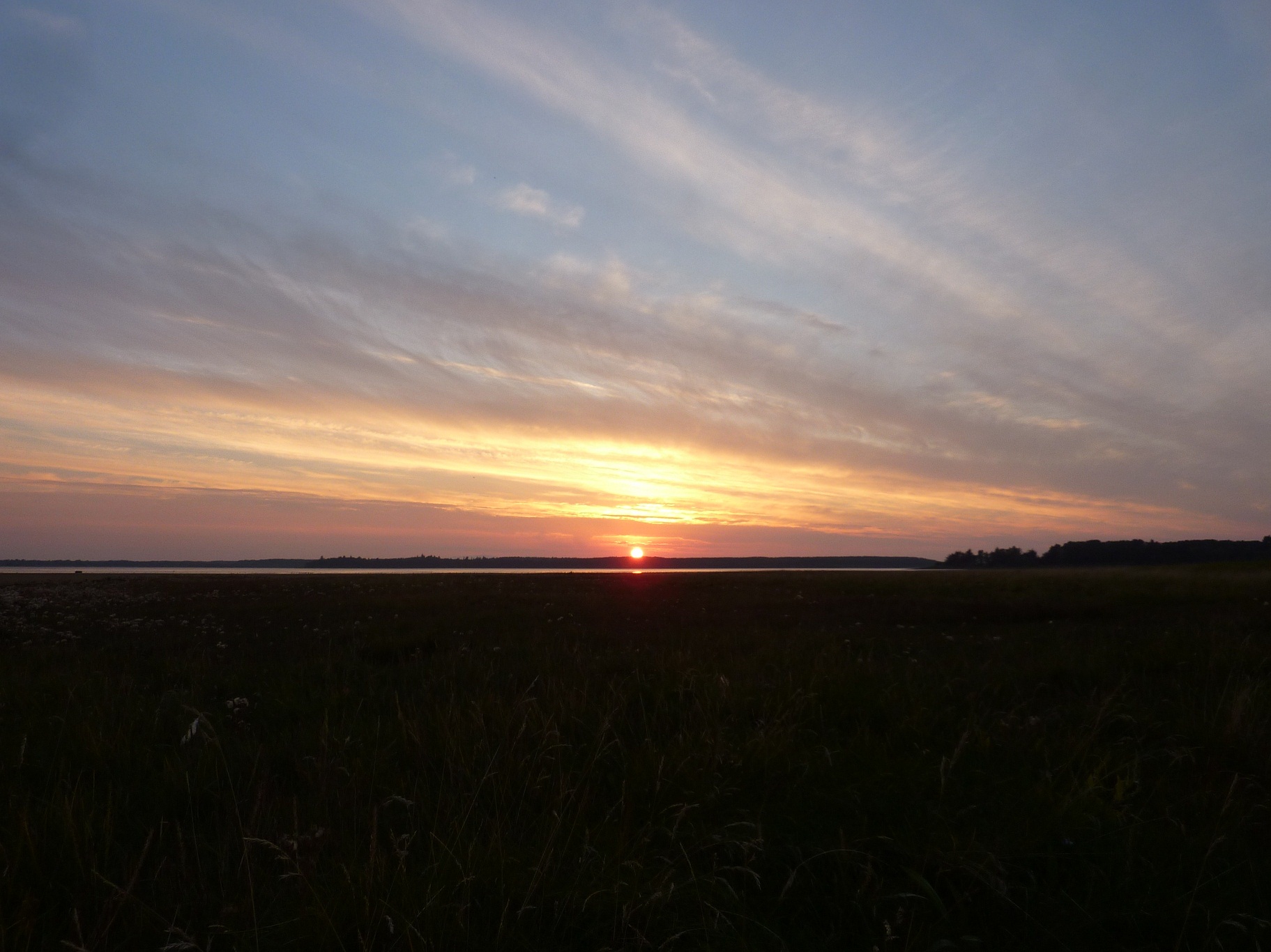
Photos from my day off…
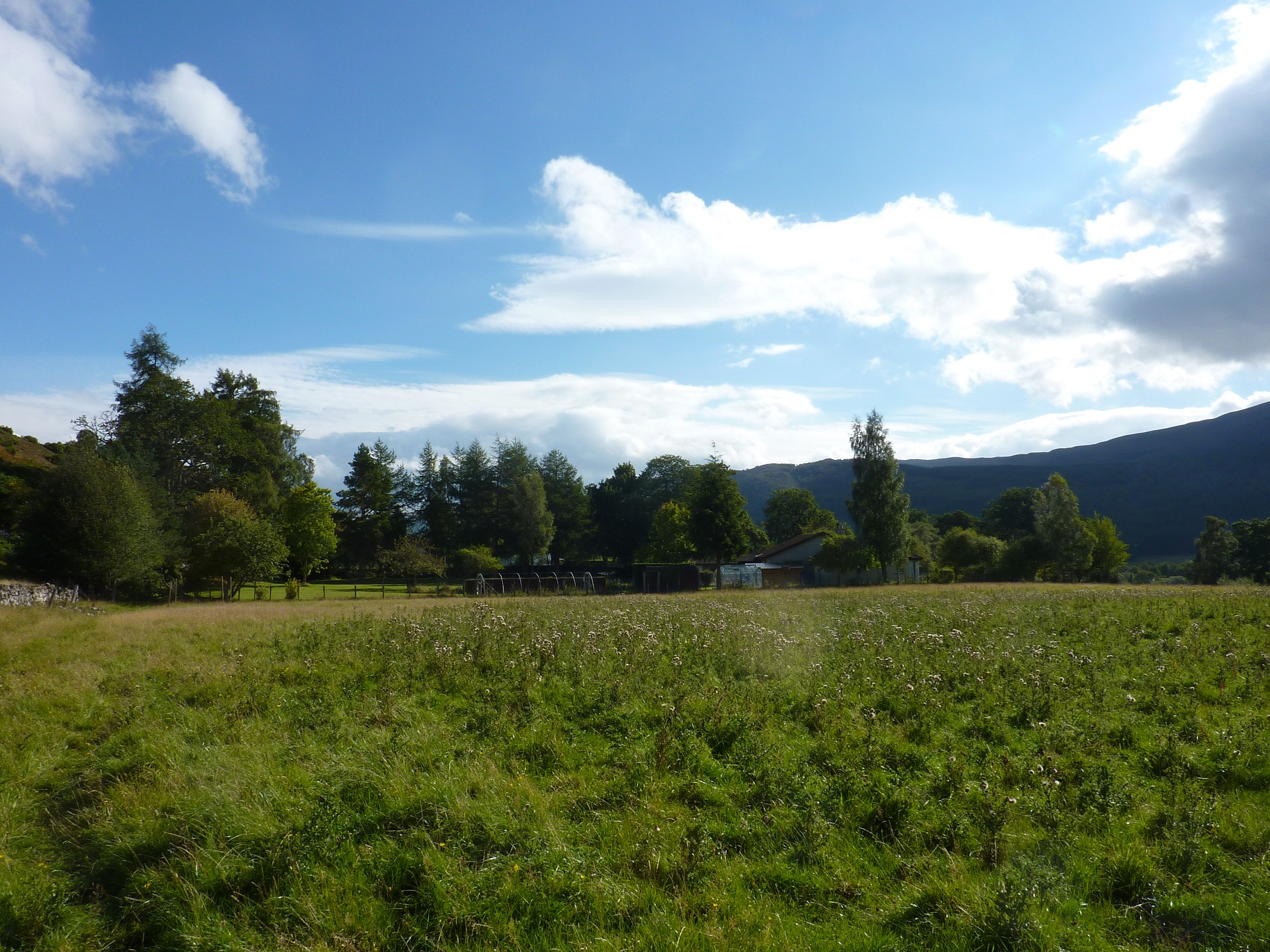
During the work week we, as usual, took a day off. So, on Wednesday I took a walk up the Red Burn on Dundreggan. I then met Dundreggan project manager Steve near the Spring planting site (not far from the source of the Red Burn, where I saw plenty of fish and Dragonfly) for a walk about the site. It was fantastic, I could already see the trees I’d planted (over 2000 in amongst the 20000 plus) before entering the site, which is fenced off to keep deer out.
It was, and will be, interesting to note how the trees in the monitoring plots perform. In each group of plots there are 4 plots containing Birch, Birch and Alder, Birch with soil taken from the Birch woodland on Dundreggan, and Birch with fertiliser. My initial impression was that the Alder is doing exceptionally well in these plots. Alder is known to be a good Nitrogen fixer, so this could prove to be beneficial to the Birch.
-

- A fine day for a day walk about the TFL manor
-
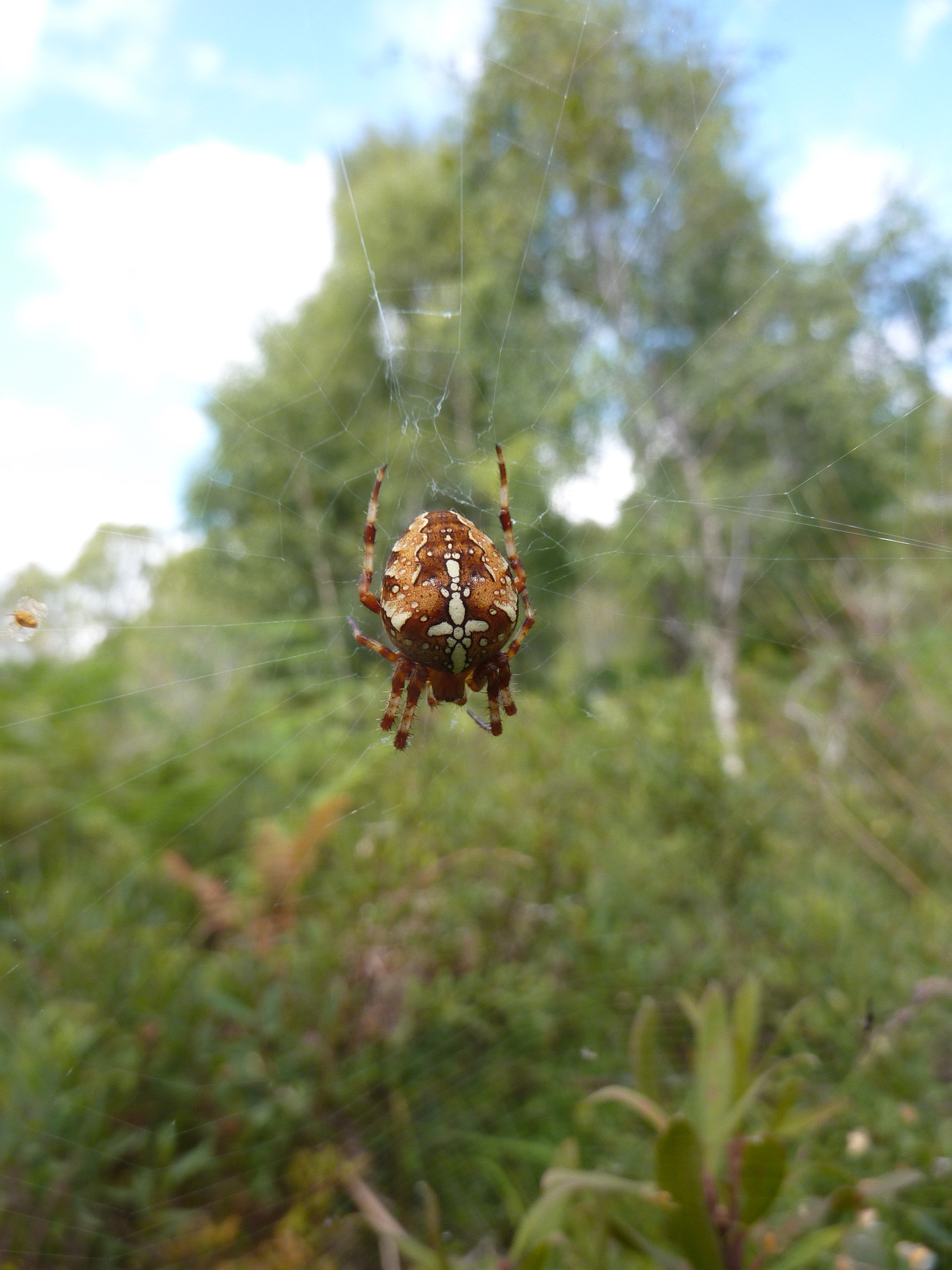
- Have I said that I love spiders?
-
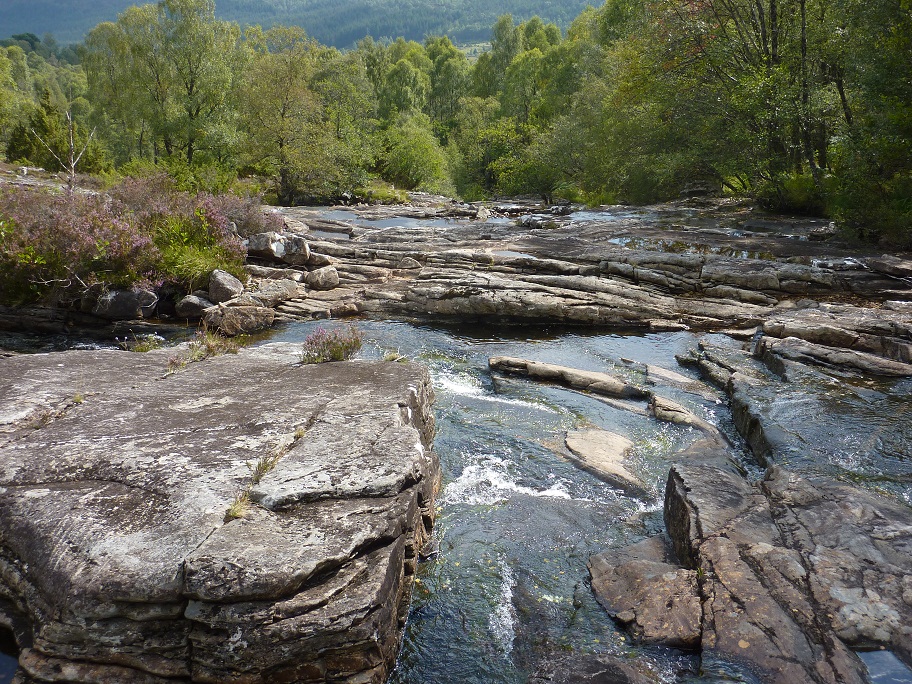
- Allt Ruahd – the Red Burn
-

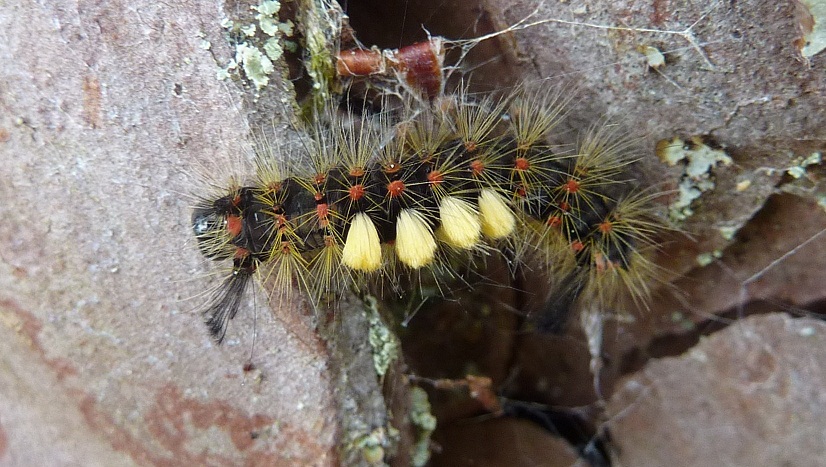
- The Vapourer. An awesome name for an awesome caterpillar

-
- Steve walking amongst ‘my’ trees. They’re gorgeous.
-
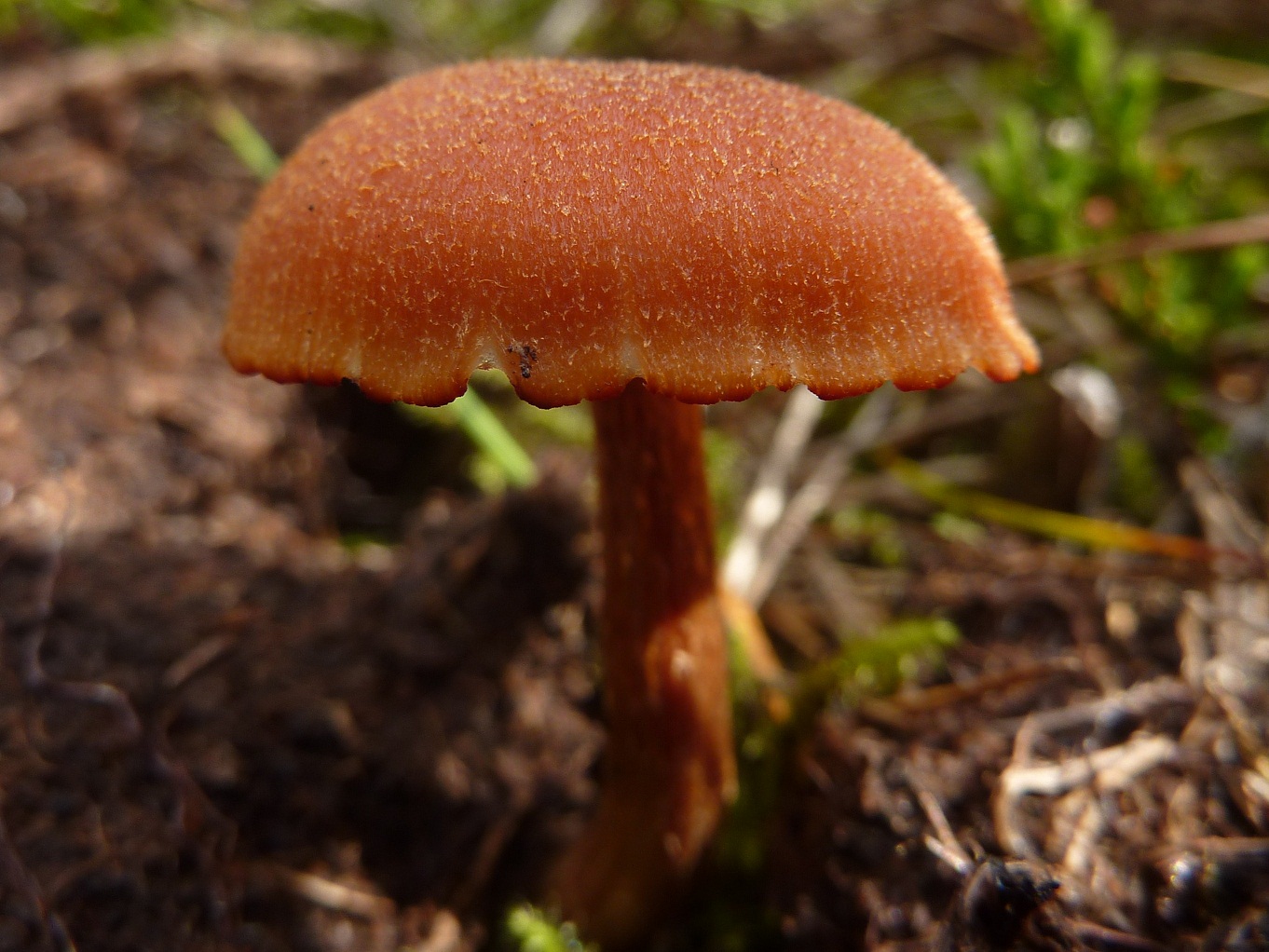
- In amongst some of the young trees, is this mycorrhizal?

4th September, let the work week fun begin…
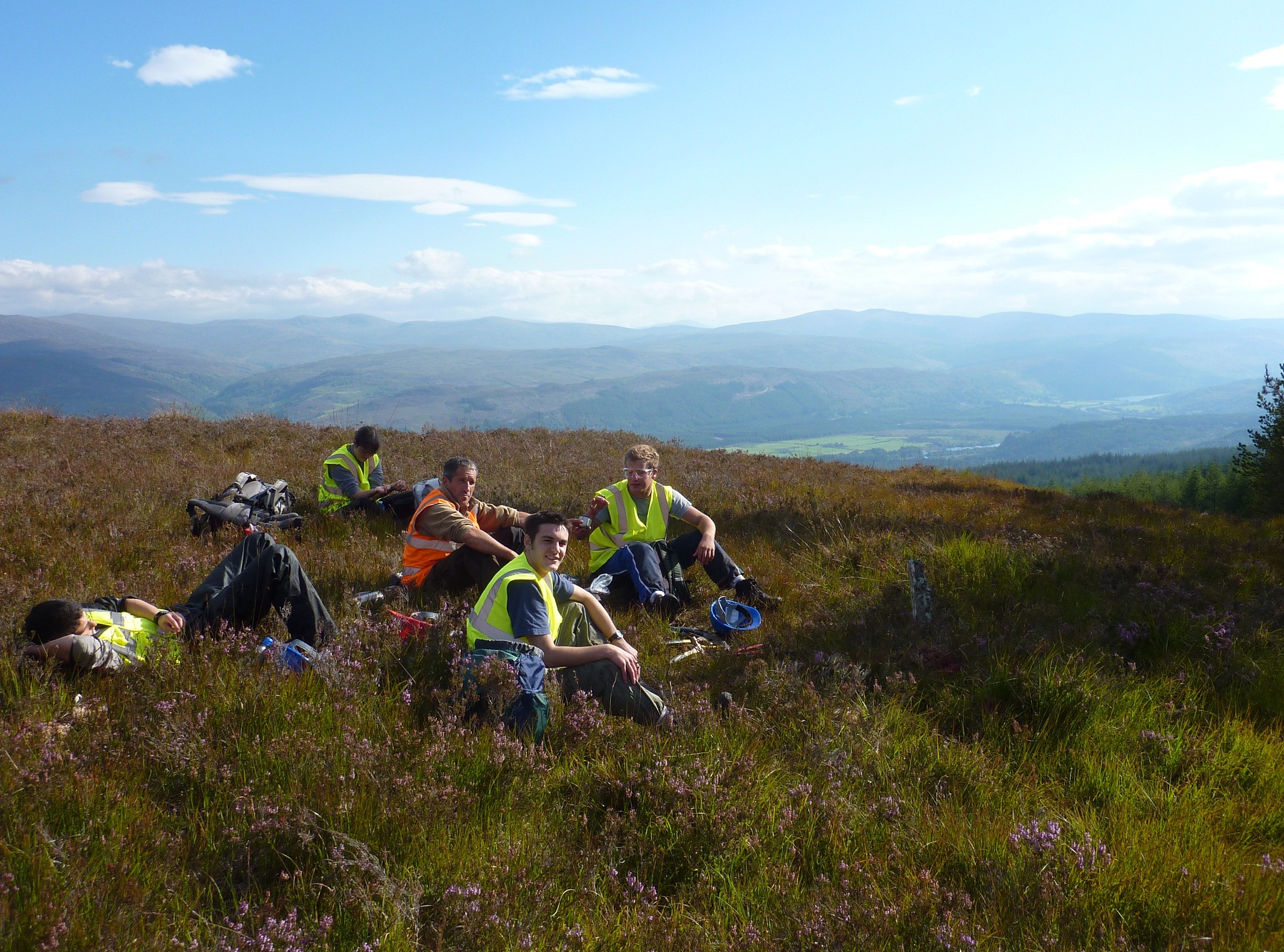
First week of the TFL season and my group is posted to Dundreggan, to carry out work on FCS land in Glen Moriston. My co-focaliser is the newly initiated Mr John Garrett. There have been a few last minute drop outs, but that doesn’t seem to bother the volunteers who have turned up, who plough through the work, and include one who has travelled over from Spain especially.
Roughly 1700m of fence removed in two days, a sizeable stand of spruce trees and an area of regeneration roughly 4 or 5 hectares, cleared of non-native tree species (Spruce, Douglas Fir, etc). This was accompanied by great food with some important experimentation with cakes.
-
- Removing the Port Clair fence
-
- Dan wins the nose-tape game

-
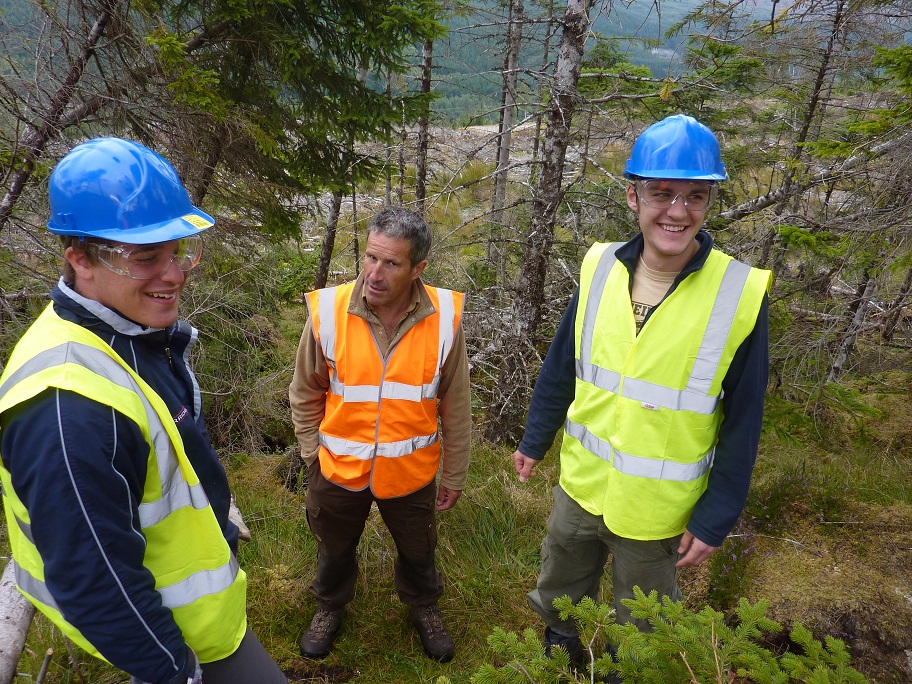
- Ben, John and Mike are laughing at…
-
- …another of Virginia’s tales

-
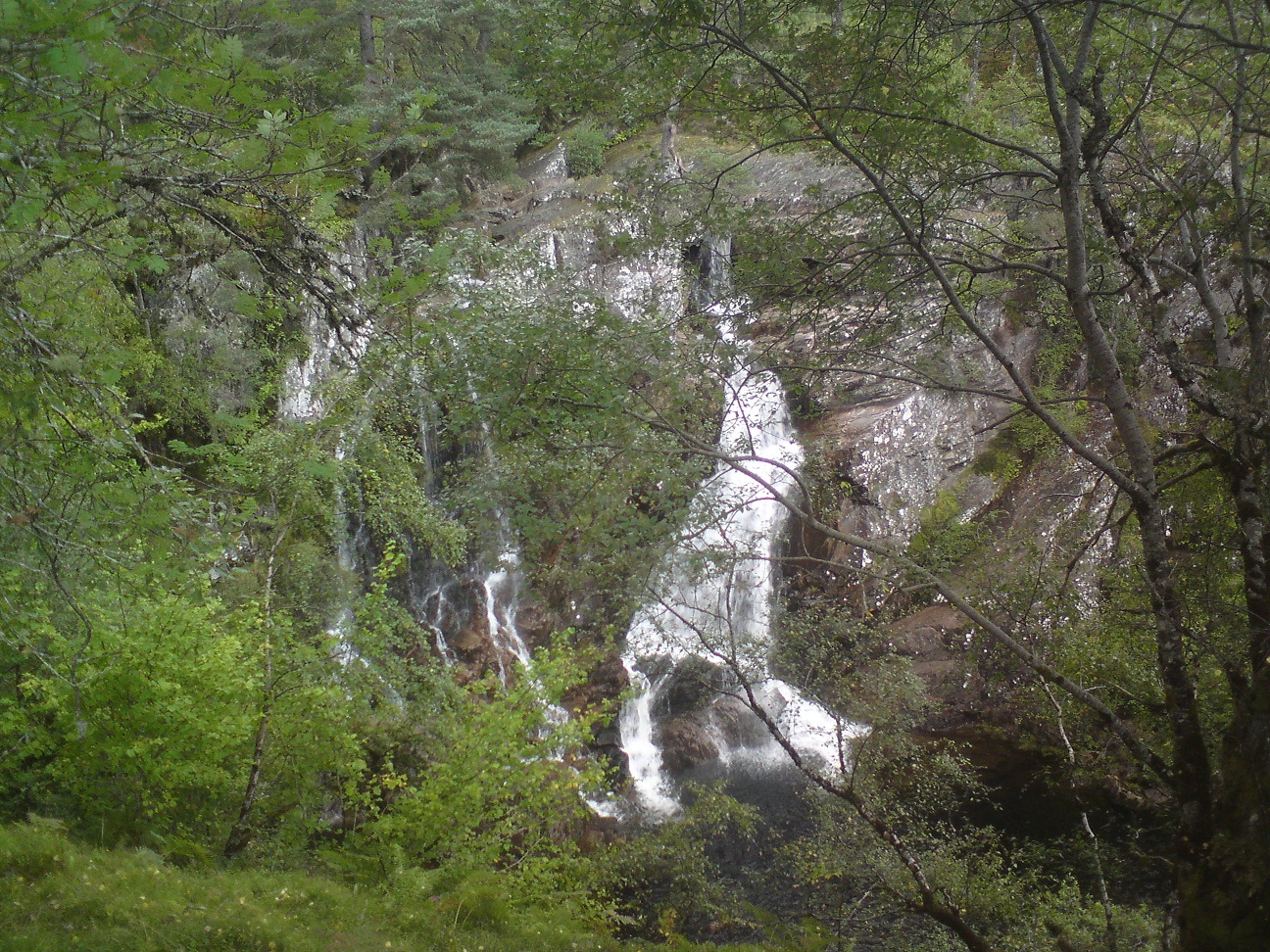
- While the others consider the merits of going highland dancing, I take a look at the Glen Moriston falls

-

- Glen Doe, Friday afternoon.
-
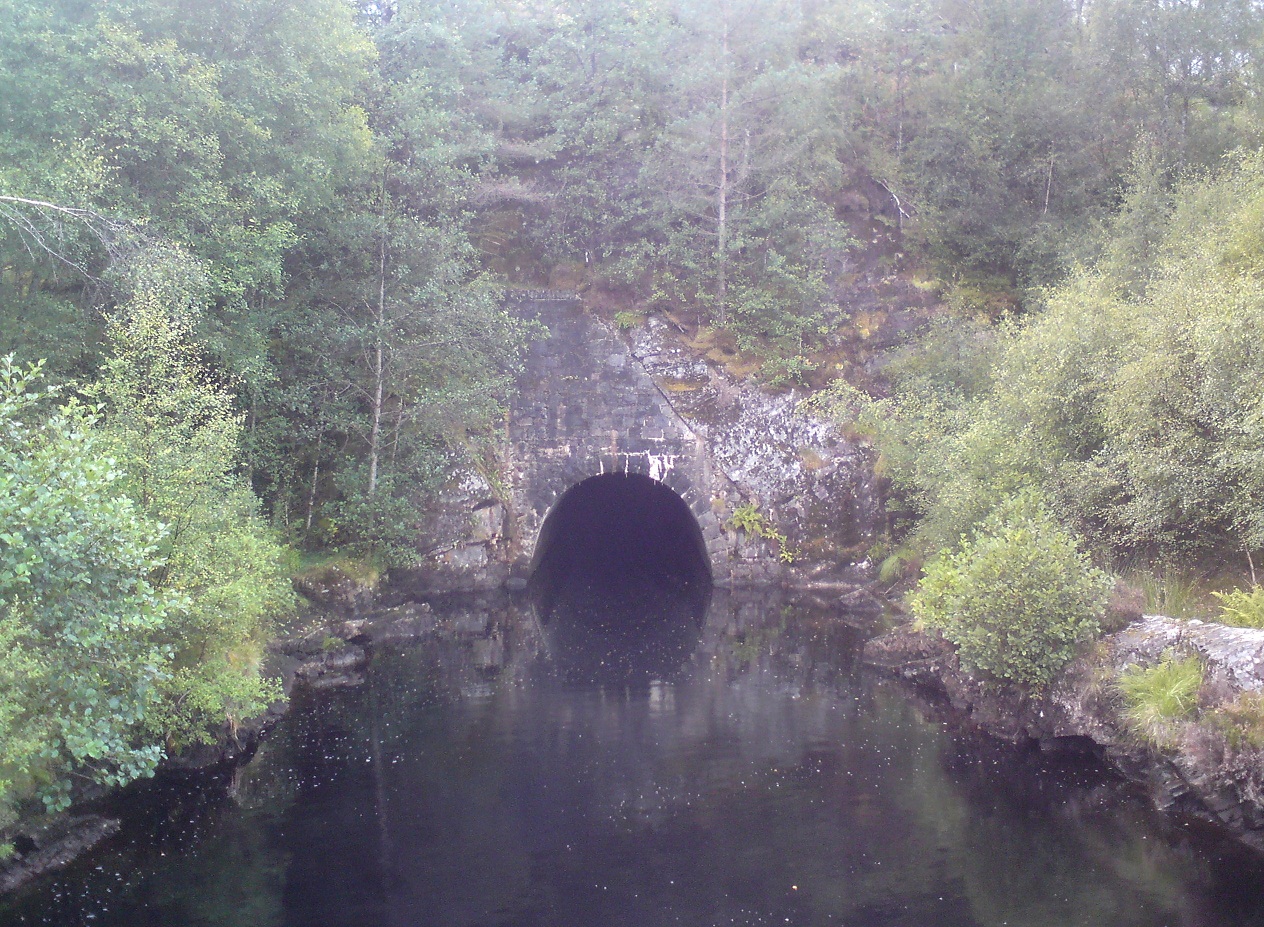
- This goes into/comes out of the side of a hill. What’s its point?

 Life since the office
Major endorsements