
Old news…
So, February ended up being my last month at RSPB Abernethy. I was offered a contract as a surveyor on the Native Woodland Survey of Scotland (NWSS), and I started training on the 28th. I trained for 4 weeks, then had an assessment with the Forestry Commission Scotland during the last week of March. Thankfully, that went well and I then spent 3 months walking some of Scotland’s woods. Quite a nice way to make a living, I thought. However, would you believe it, things then got even better as I was offered the opportunity to survey raptors, divers and waders off the North coast of Scotland. Days spent watching hen harriers, red throated divers, greenshanks, etc – my dream job as a 12 year old, my dream job now…
For my last full weekend at Abernethy I finally got round to walking up Bynack More, and then on to Loch A’an. I’ve already posted pictures of ptarmigan from the day – here’s another shot or two.
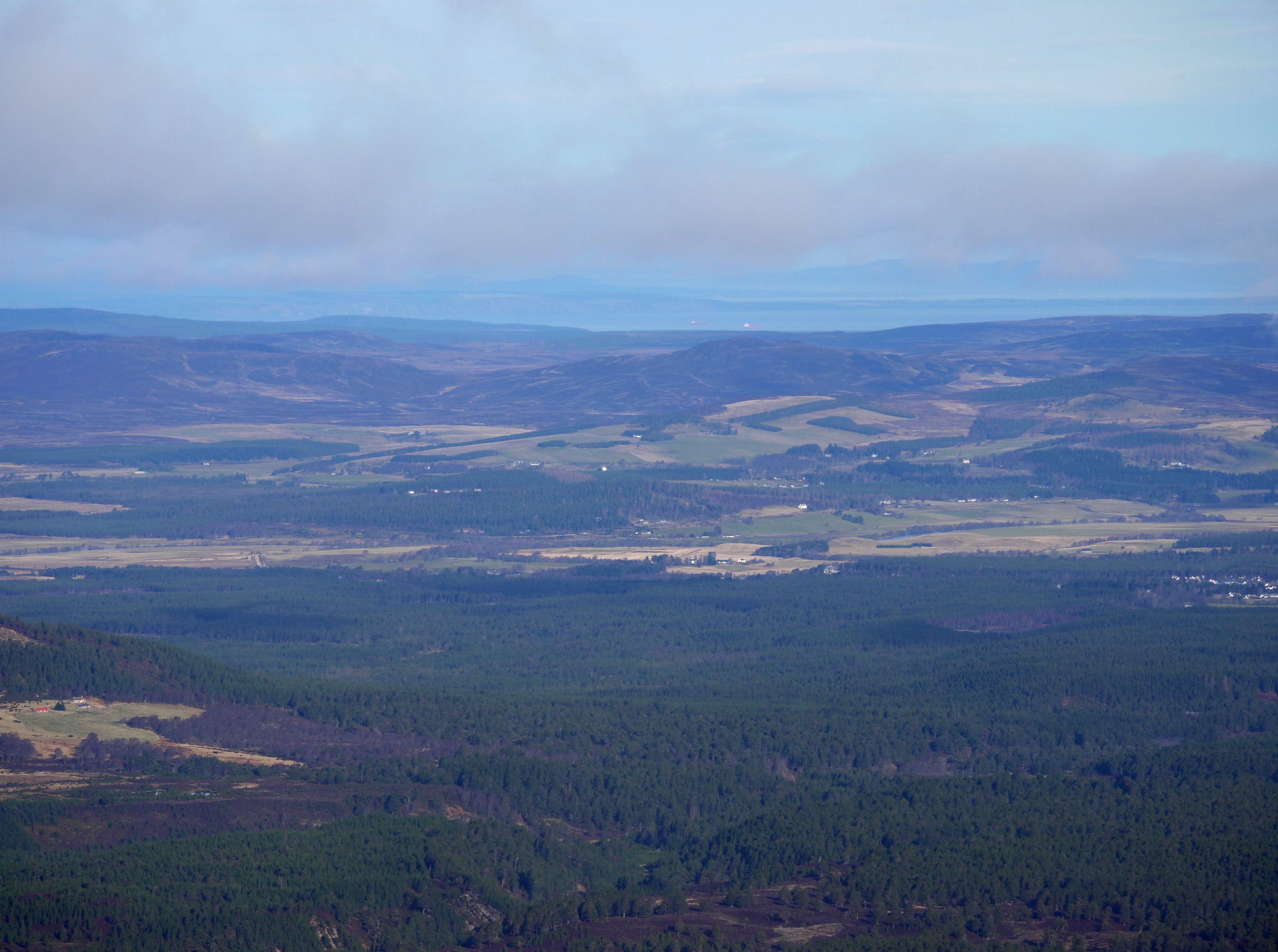
Almost at the top of Bynack More, Abernethy forest in the foreground, Moray firth in the background
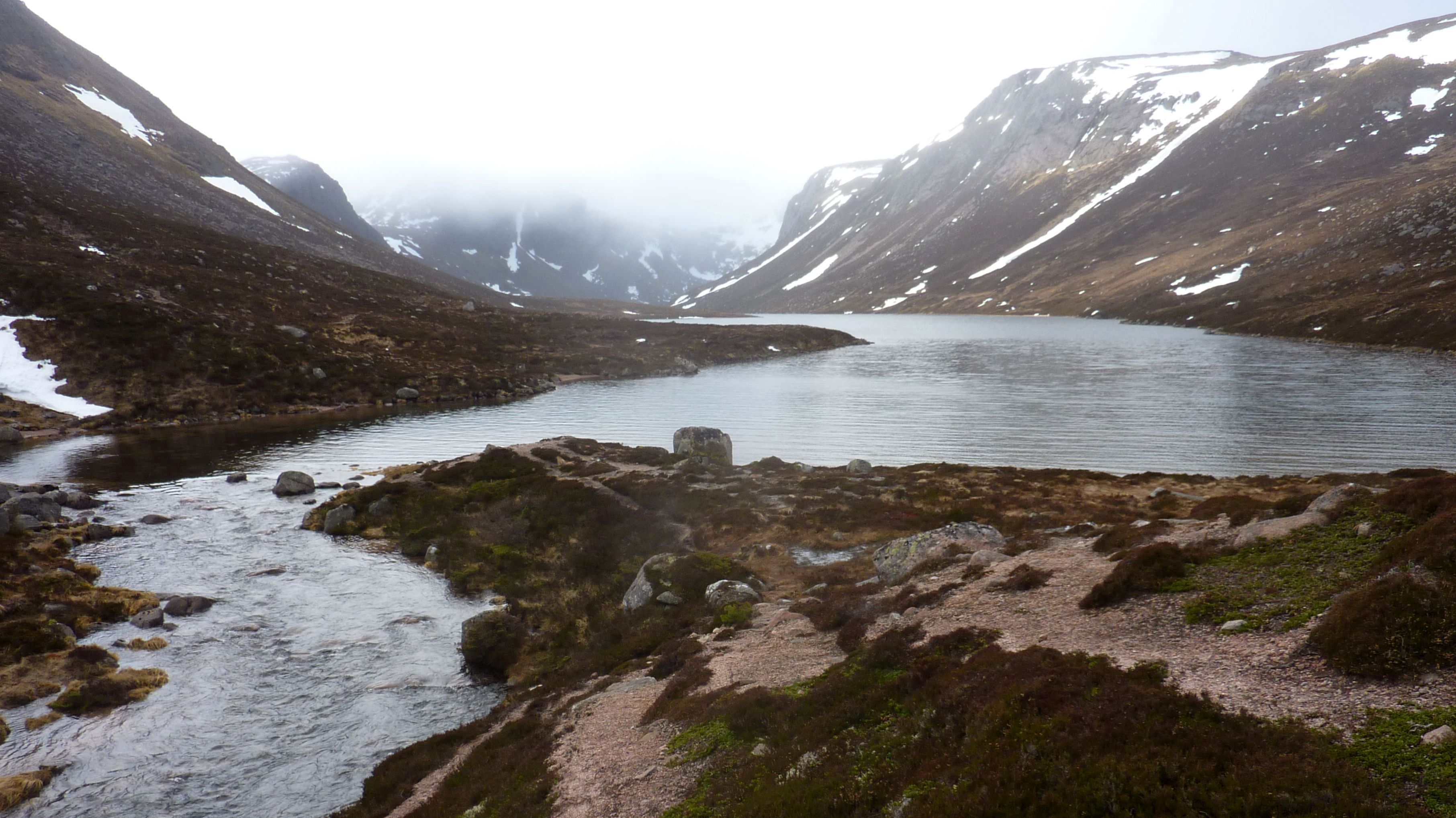
Loch A’an (Avon)
During my last two weeks at Abernethy, I was lucky enough to be offered a contract measuring the progress of the restructuring work that has taken place in the plantations. This involved me walking through all the plantations on a grid pattern and measuring tree density, height and canopy cover. The data collected from this survey will be used to determine where more light could be let in to promote the ground flora favoured by the Caledonian forest’s species. It was a great opportunity to see some of the parts of the reserve that I might not have otherwise seen during my stay.
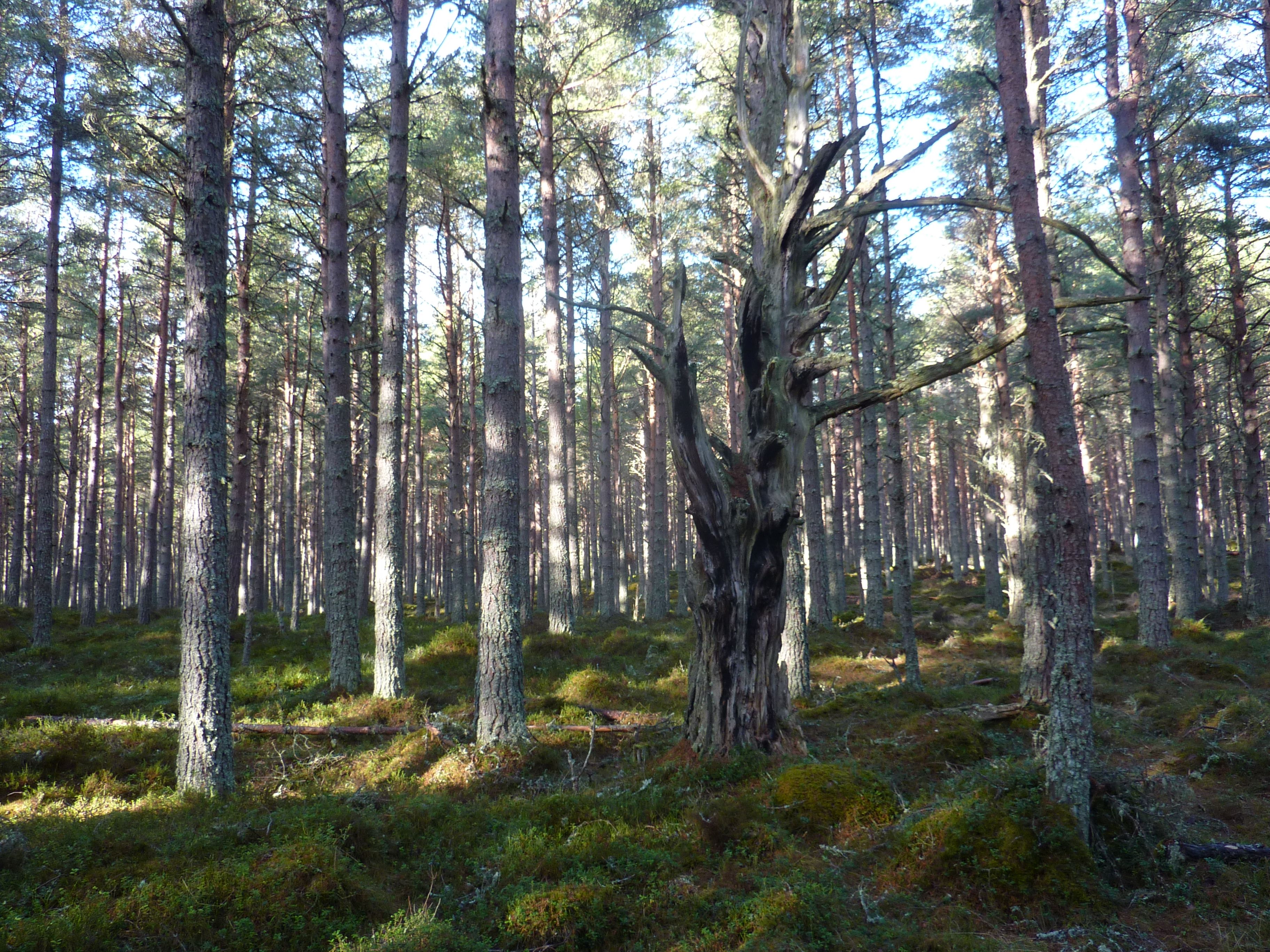
Mondhuie woods – plantation turned good
During this time I’ve also been studying (OU degree) and having to improve my id skills. This doesn’t leave much time for blogging. I’ll keep adding entries when I can, but that won’t be often.
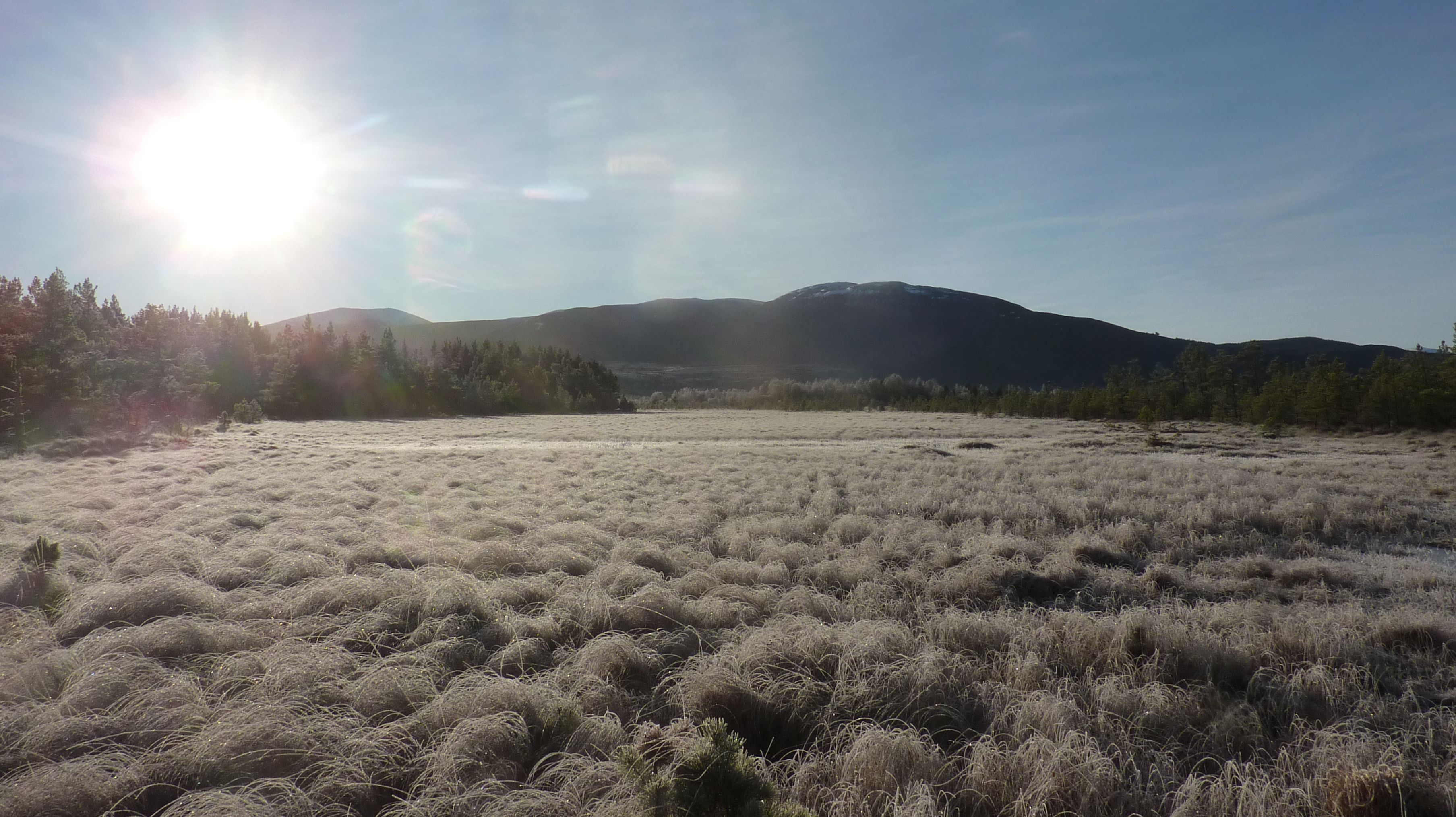
A frozen morning near Loch Mallachie
Here are some final shots from my stay at Abernethy – hopefully I’ll get round to posting some pictures from my time surveying at some point.

Ian showing off his legendary argo skills up the ‘hill track’. We had planned to get some burning in, but the bitterly cold wind sent us back down the hill
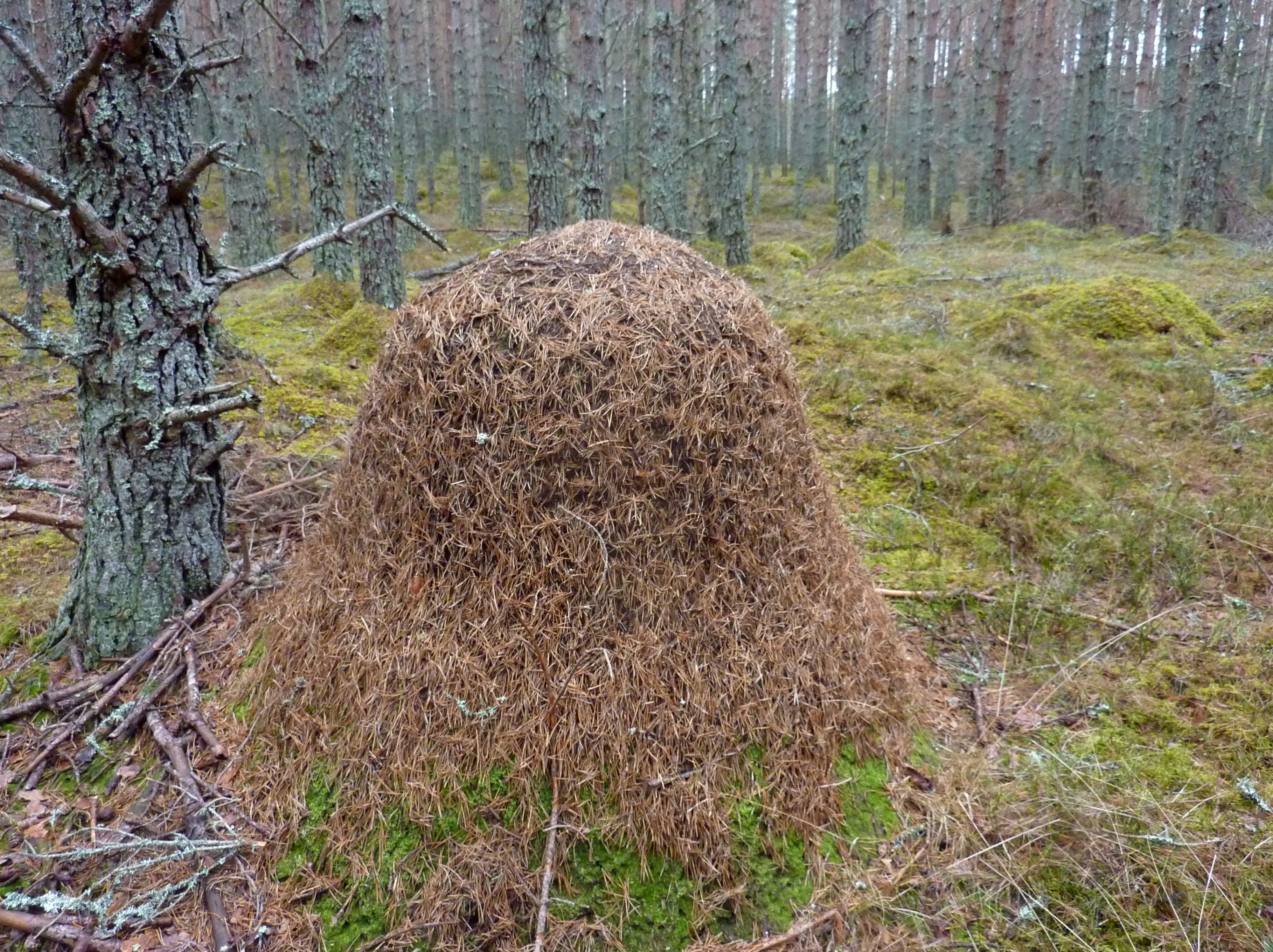
If ant hills are like the tip of the iceberg then I want to see what’s going on under this one…
Aren’t Ptarmigan brilliant!?
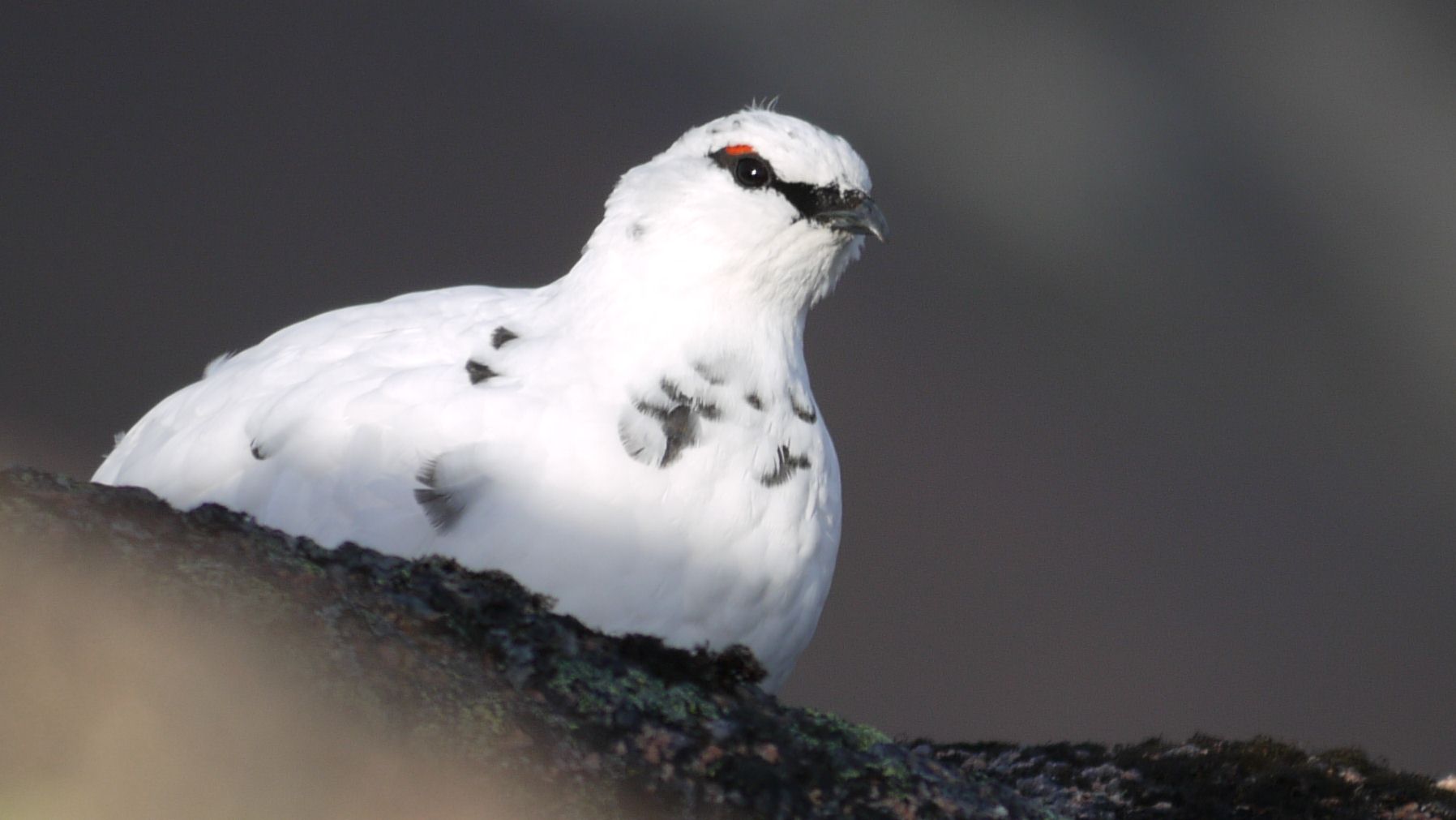
So, a more complete round-up of February’s events so far will feature in a future post, but for now I wanted to show off some photos that I managed to get today. I’d planned an early start for a walk up into the Cairngorms and down to Loch A’an, and this meant that I caught the best of the clear morning as I climbed beyond 1000m. At this point I spotted Mr Ptarmigan tucked into the rocks. He called a couple of times while I sat watching him, and minutes later, as I headed further along the top, I realised that the reply must have come from a female that was sitting on top of a large boulder, in the sun.
As I say, I’ll post more information and news from this month when I get the time (hopefully later in the week)
-
- Those of you who have never heard a Ptarmigan call before look it up, it’s a fantastic noise

-

- Lagopus Muta – meaning hare(like)-foot mute. But they’re not mute, they croak! Who gives out these names?
-

- When I loaded this onto my computer, I realised you can see him blinking

-

- She was clearly not bothered as I walked within a few metres of her

-
- A shot from the sunny side – demonstrating how unfortunate their ‘camouflage’ can be without snow.

January at RSPB Abernethy
The three of you that follow this blog will have noticed a minor slow down in posts recently. I’m afraid this situation might not get better any time soon. During my delve into nature this blog has been a great way to express my excitement over all the things that I see. However, as I’m keen to learn more and more about nature, habitats, species, the people who I meet and work with, and the work that we do, etc, the blog has fallen down the list of priorities. I finished my latest OU assignment yesterday, and so have an evening to write this up.
To bring things reasonably up to date I’m afraid I’m going to have to cram a whole month into one entry. I’ve seen some great things this month, as usual but, due to an ongoing lack of zoom functionality on my cameras, I’m unable to bring you pictures of a female hen harrier, male and female capercaillie, crested tit, pine marten, and widgeon and mallard on Loch Garton.
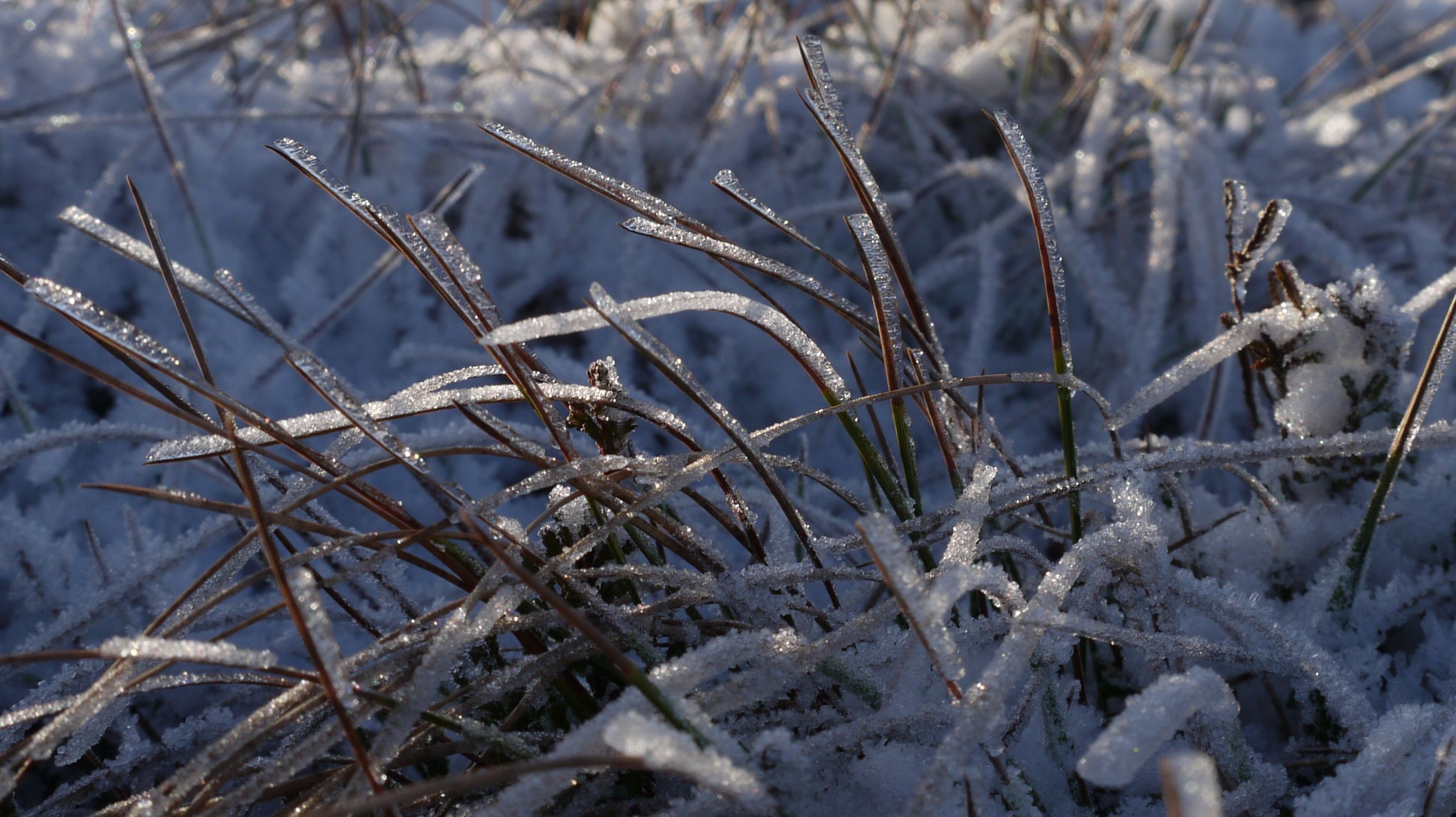
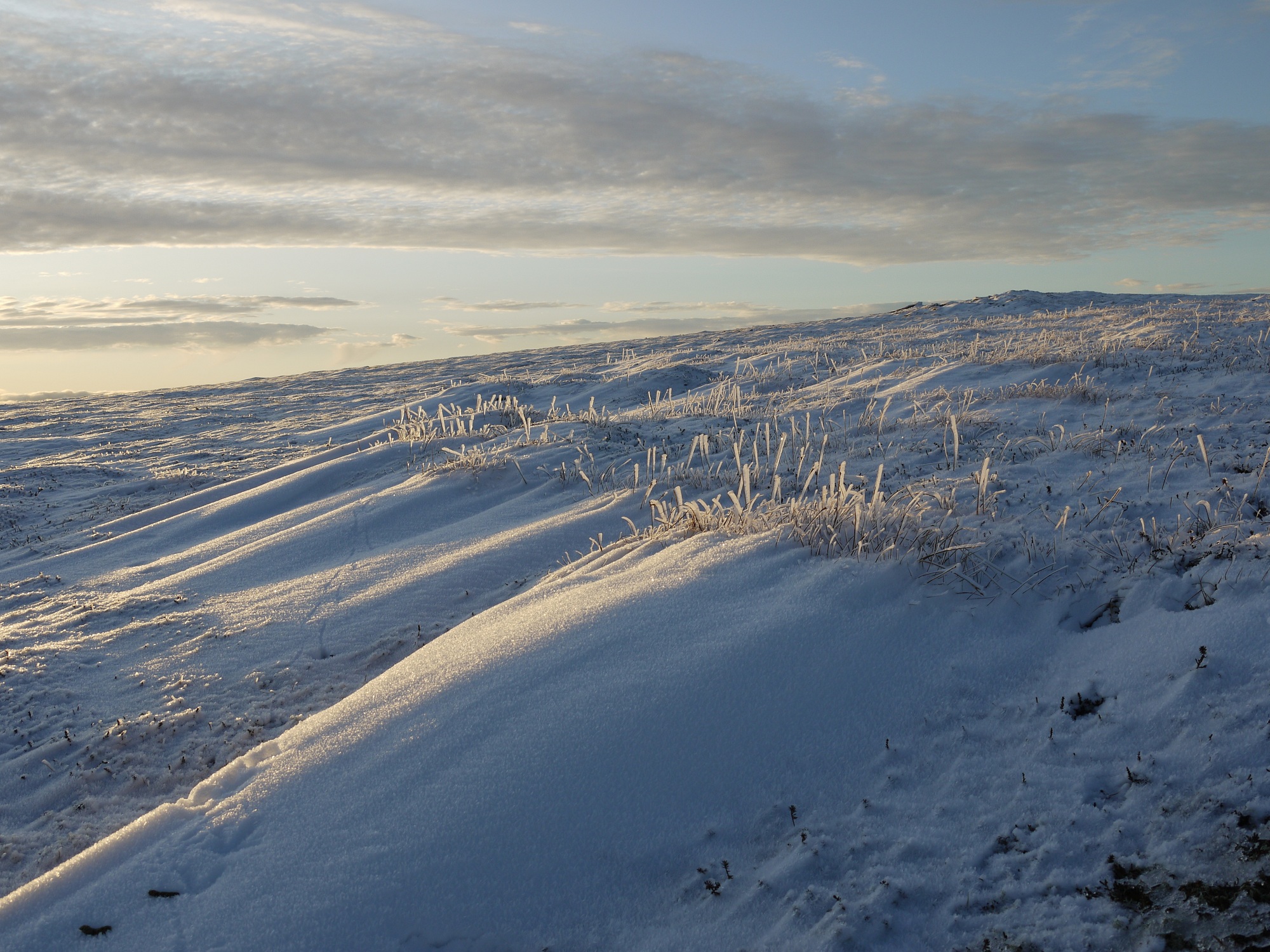
A major walk this month, was to the Water of Caiplich, and the amazing tundra like high altitude (for this country) landscape that I walked through to get there and back. Most of the rest of the photos are from a walk up the Nethy, at the point where it enters the forest from the Savannah. The waterway becomes a large gorge with sand banks on either side. It’s vaguely reminiscent of North West America, and it wouldn’t look out of place if there was a bear pulling salmon out of the river at the bottom of the gorge.
The rest of the month’s story will be explained through the medium of photographs:
-
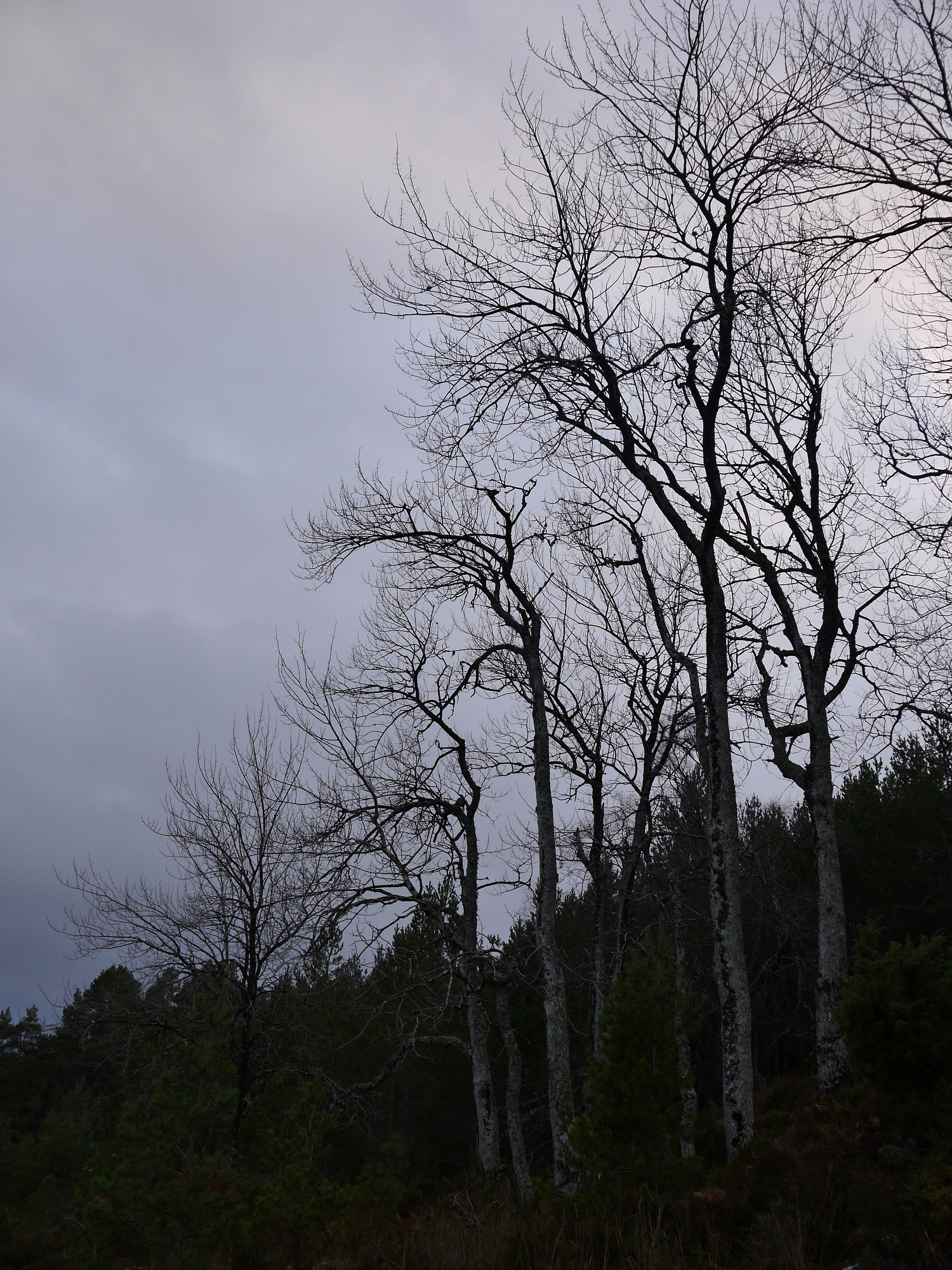
- A rare stand of aspen
-
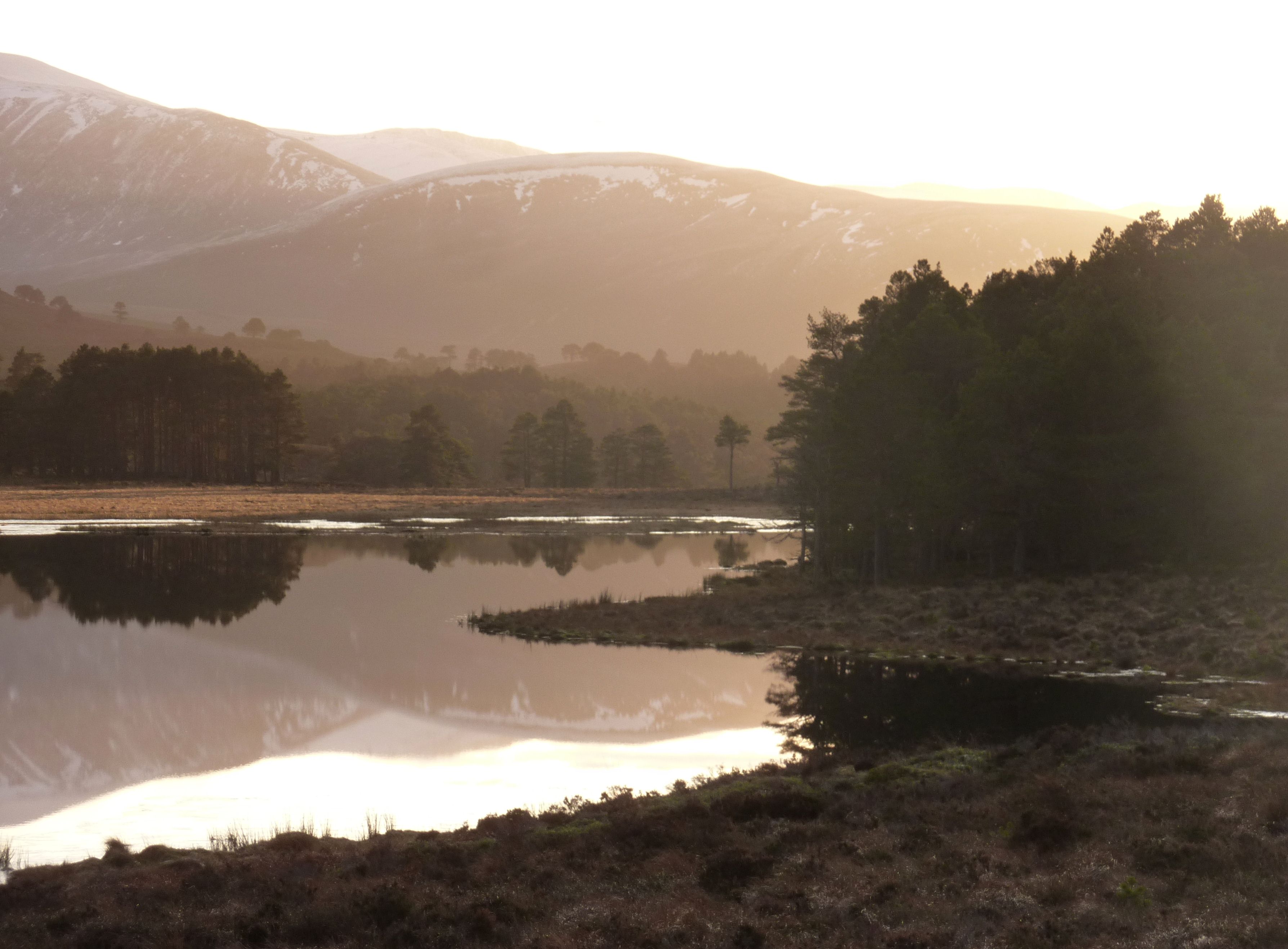
- Loch a’ Chnuic
-
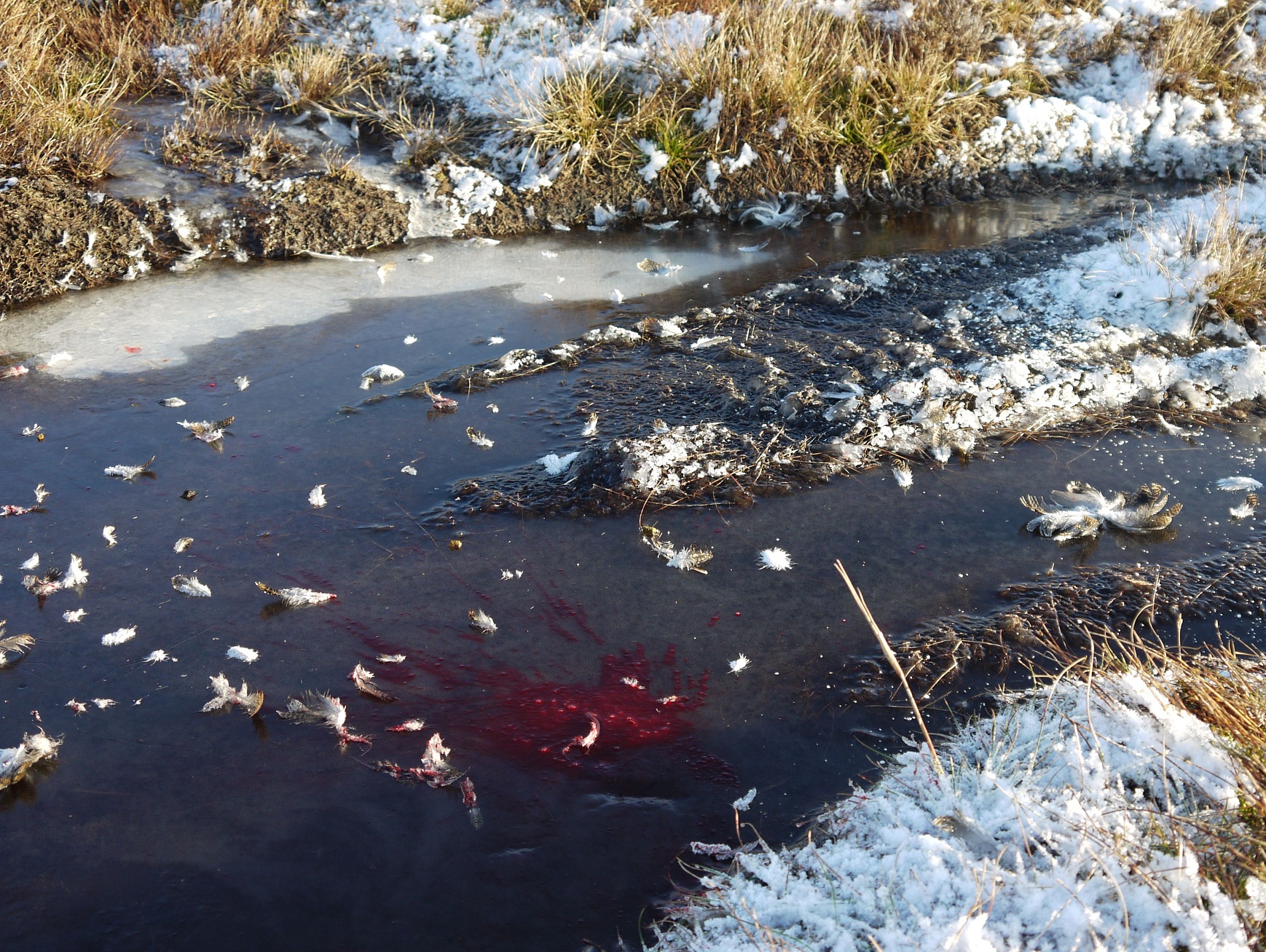
- A red grouse has been smashed into the ice, probably by an eagle
-

- The Water of Caiplich

-

- Signs of grouse action near the top of Geal Charn
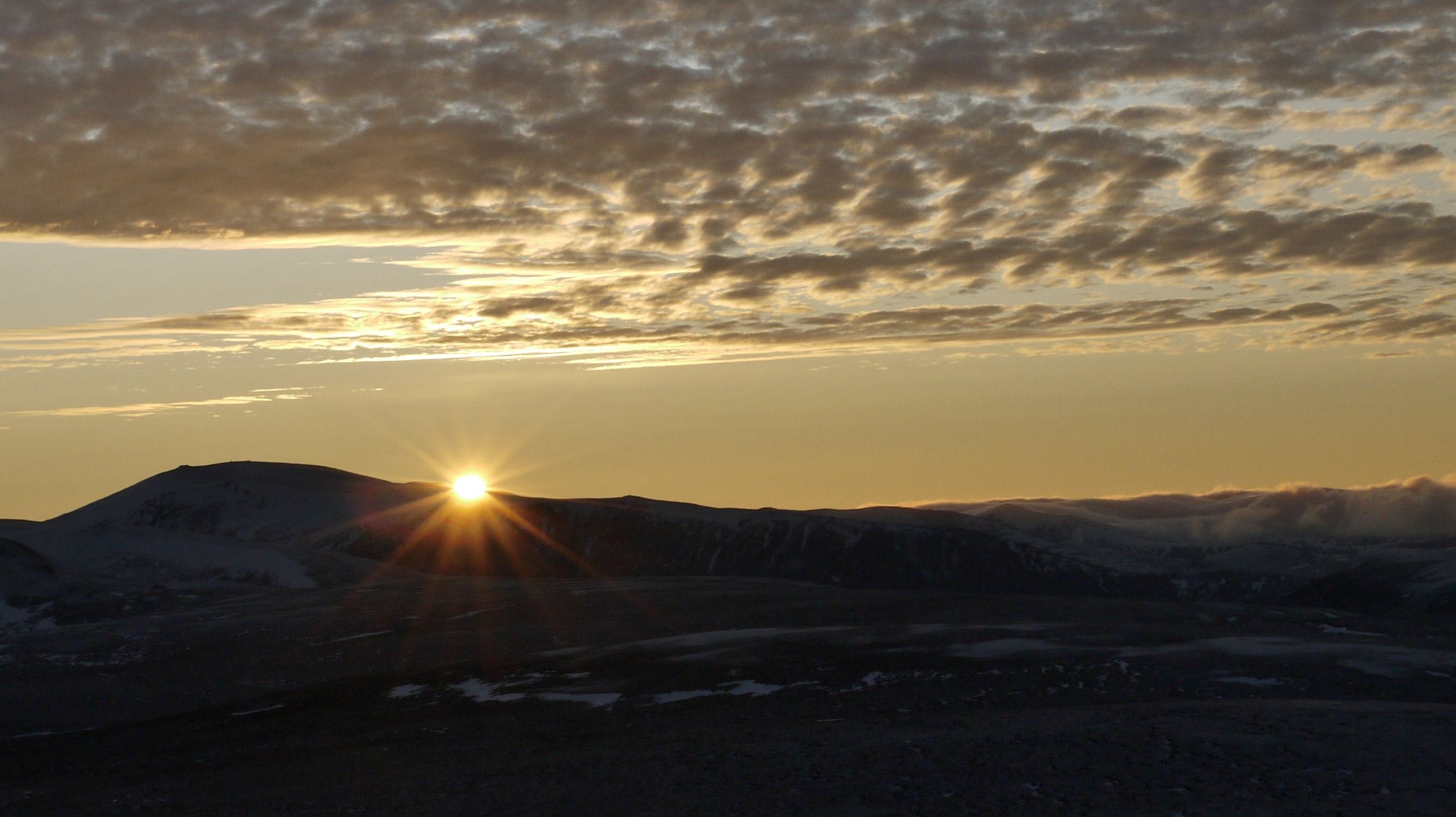
-

- When I talk about living in a big old lodge in the middle of the woods, this is what I mean

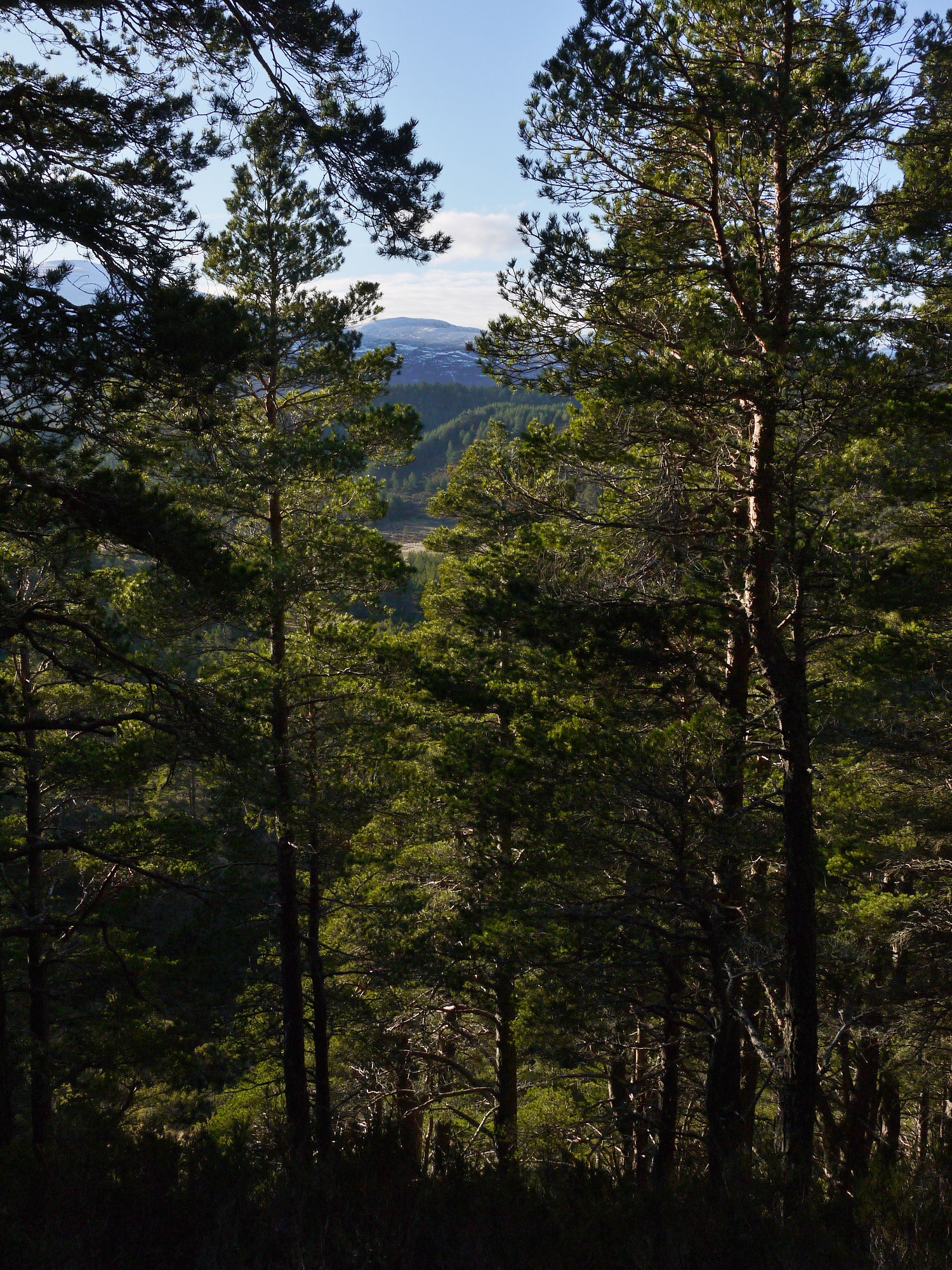
-
- Some fine examples of scots pine and juniper


-
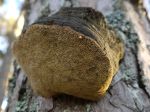
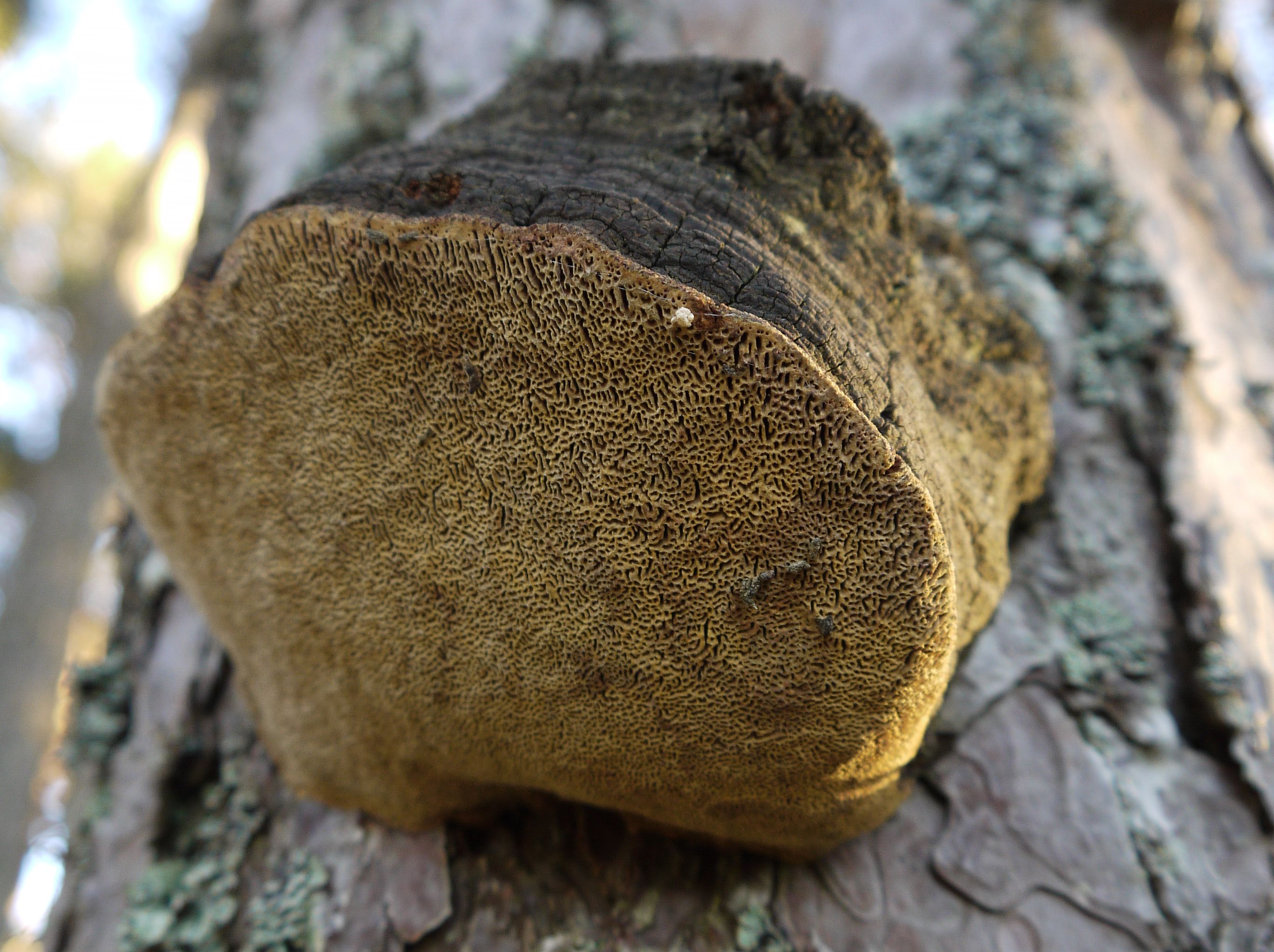
- A bracket fungus on a scots pine
Wrapping up 2011 with the family…
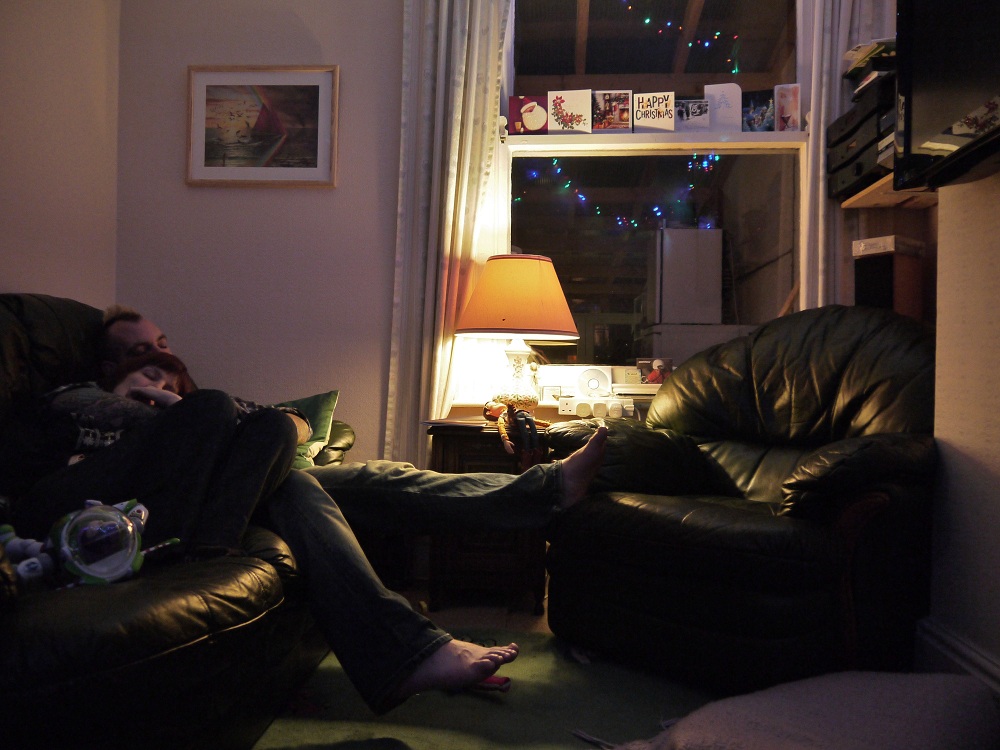
For the festive season the RSPB kindly asked me to leave Forest Lodge. So, I spent a couple of weeks in Exmouth with the family, including the first few days of 2012. Despite this being a year of significant changes (if you follow the Mayan calendar), I think it’s going to be a good one.
-
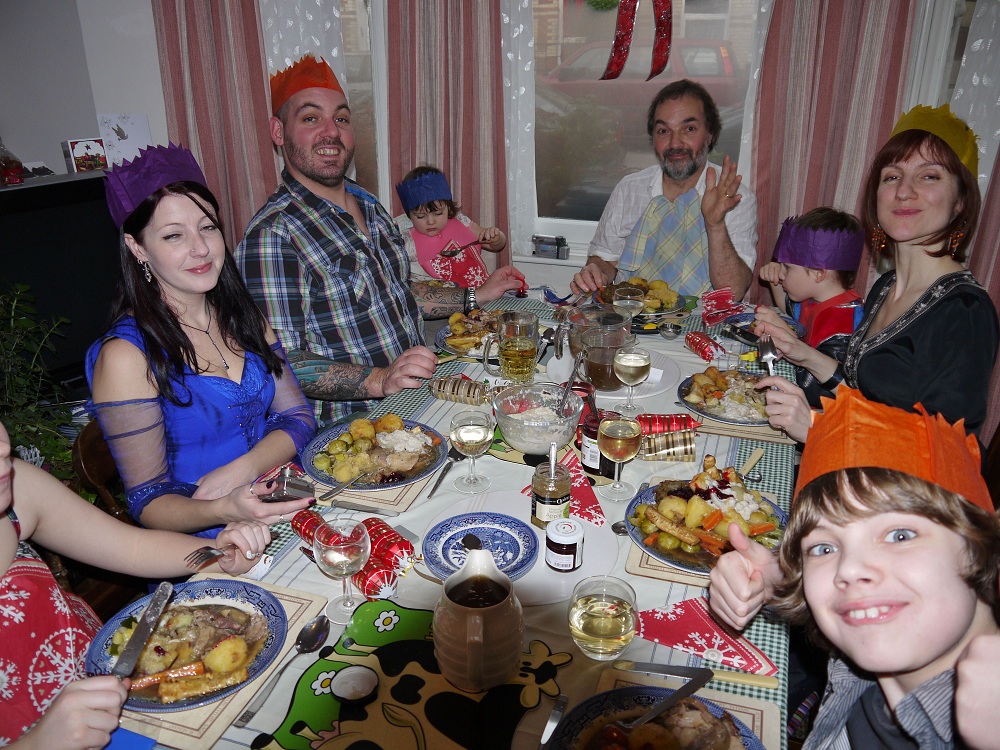
- Nice meal Mum


-

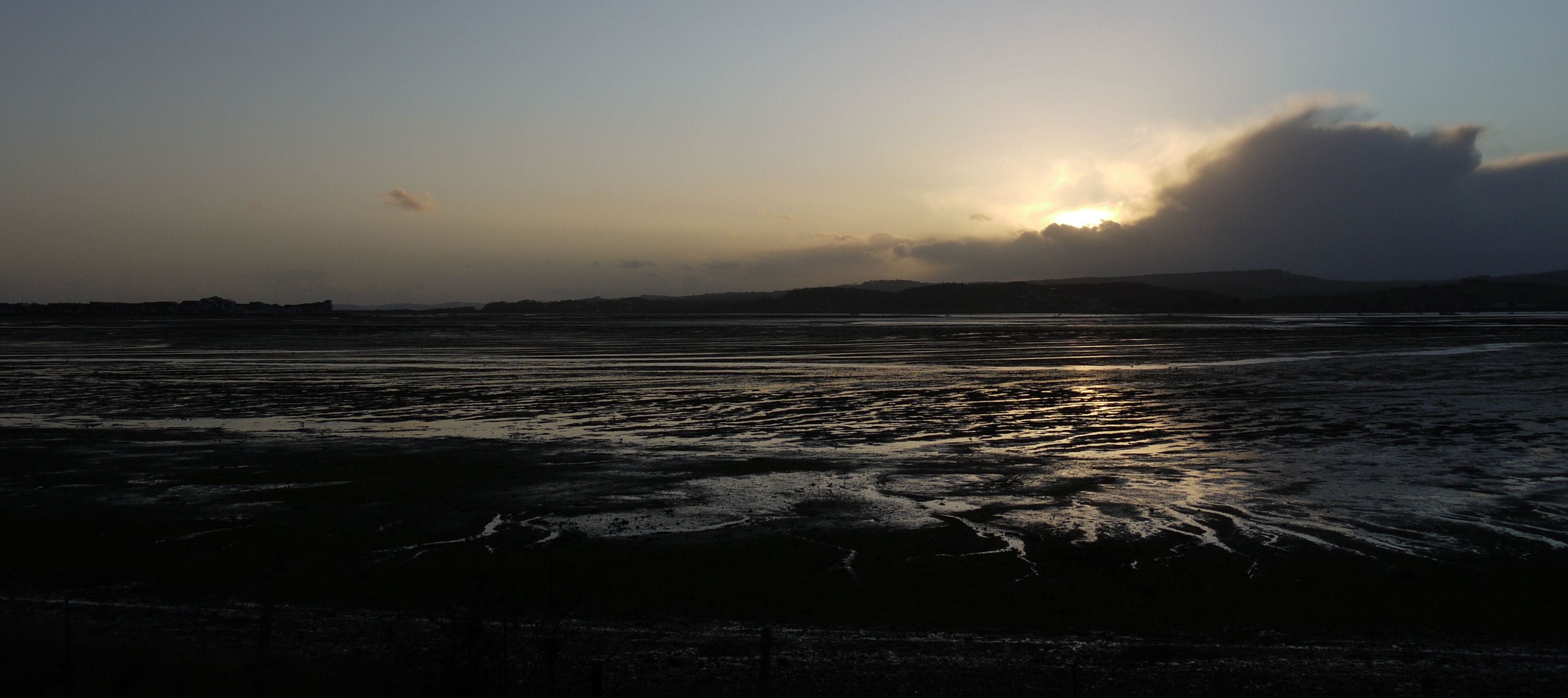
- Exmouth estuary
-
- New Year’s day elevenses

Tracks in the snow
The snow is a great opportunity to see what animals are running about while we’re not looking…
-
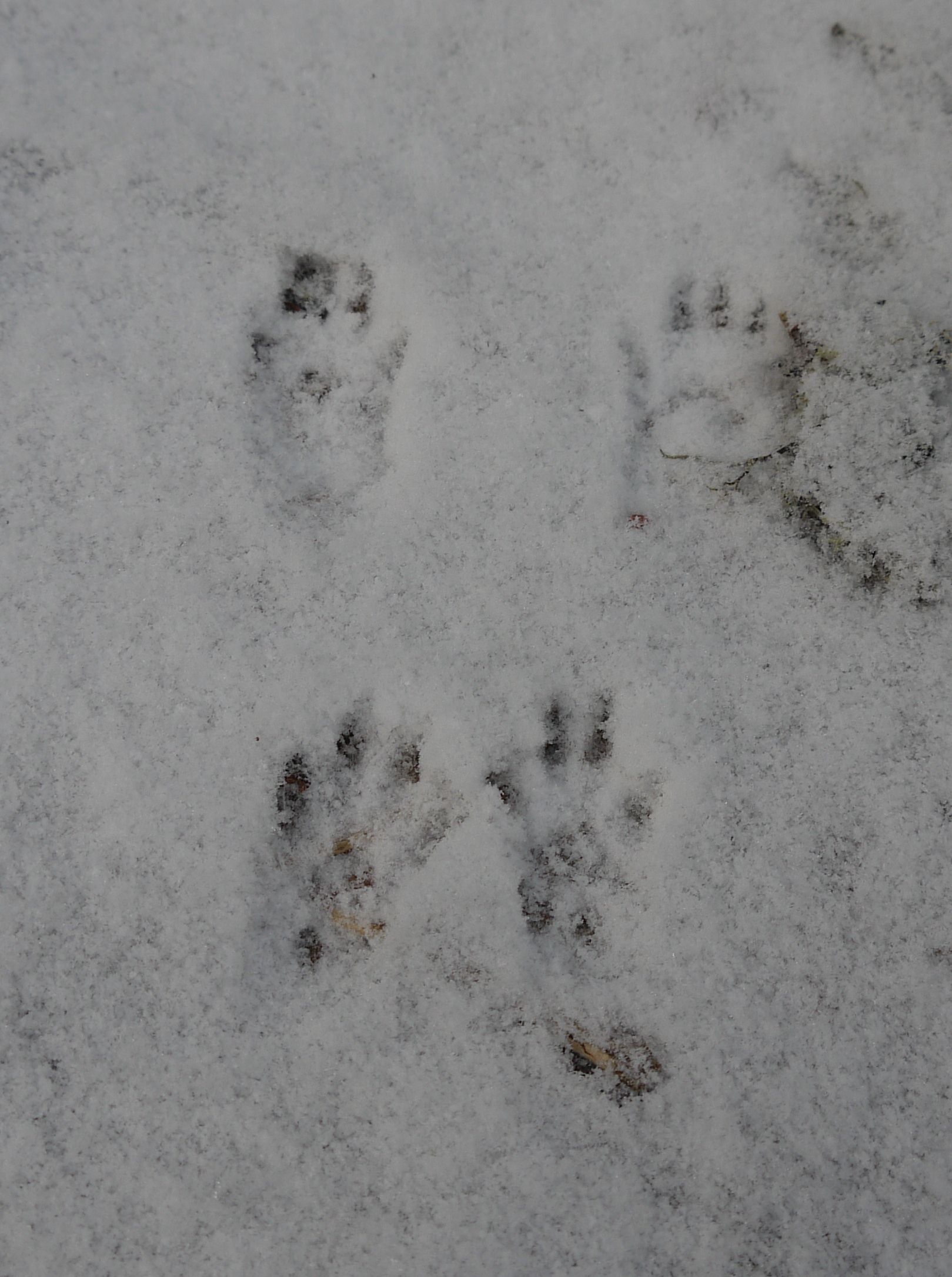
- Red squirrel
-

- Fox prints
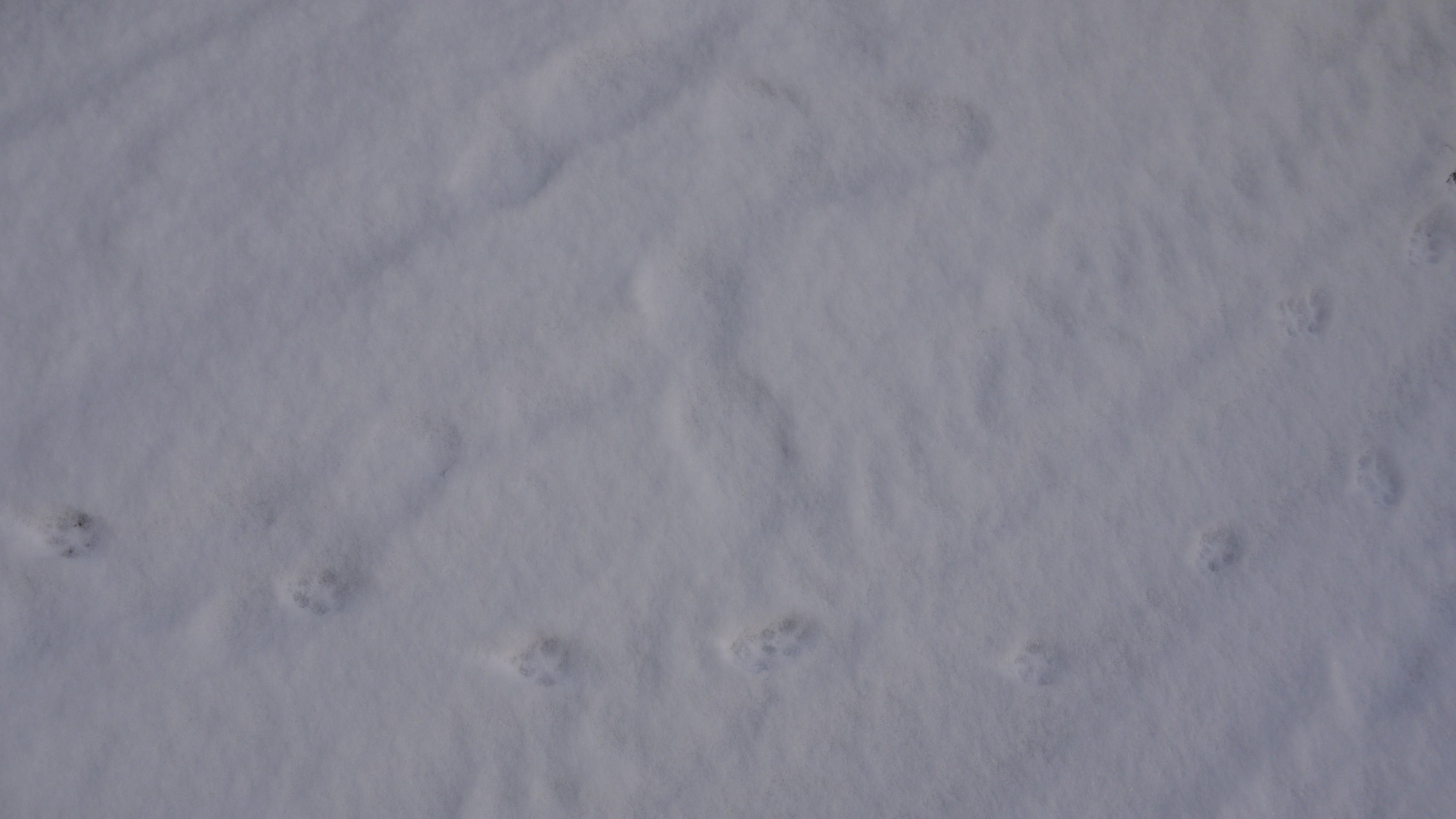
-
- I’m fairly sure this small track has been made by a vole

-

- Red deer tend to come off the hill and spend more time in the woods in the cold

-

- Roe deer

-
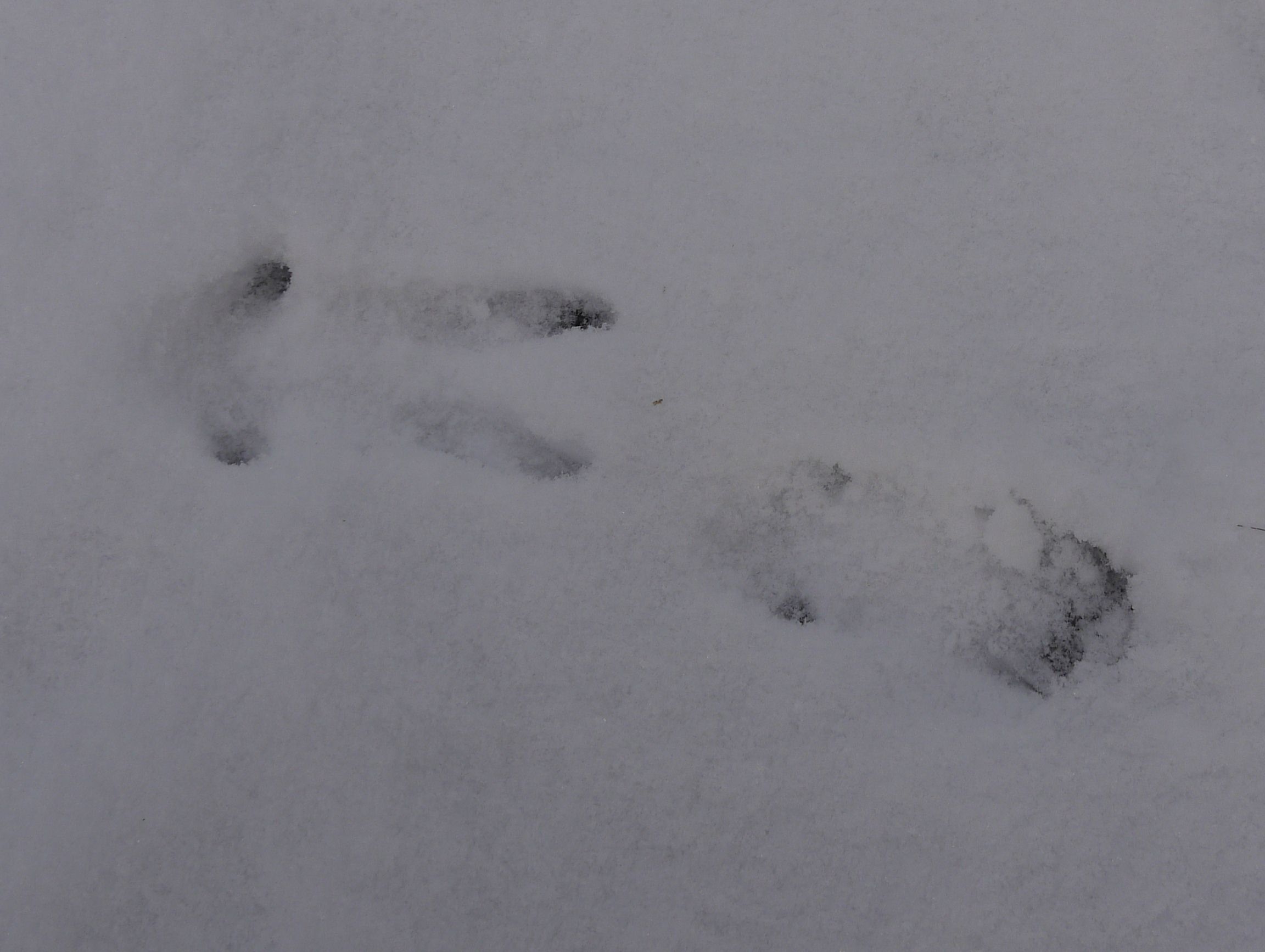
- In this one the dew claws are visible in the print because the roe deer has just landed after a leap
-
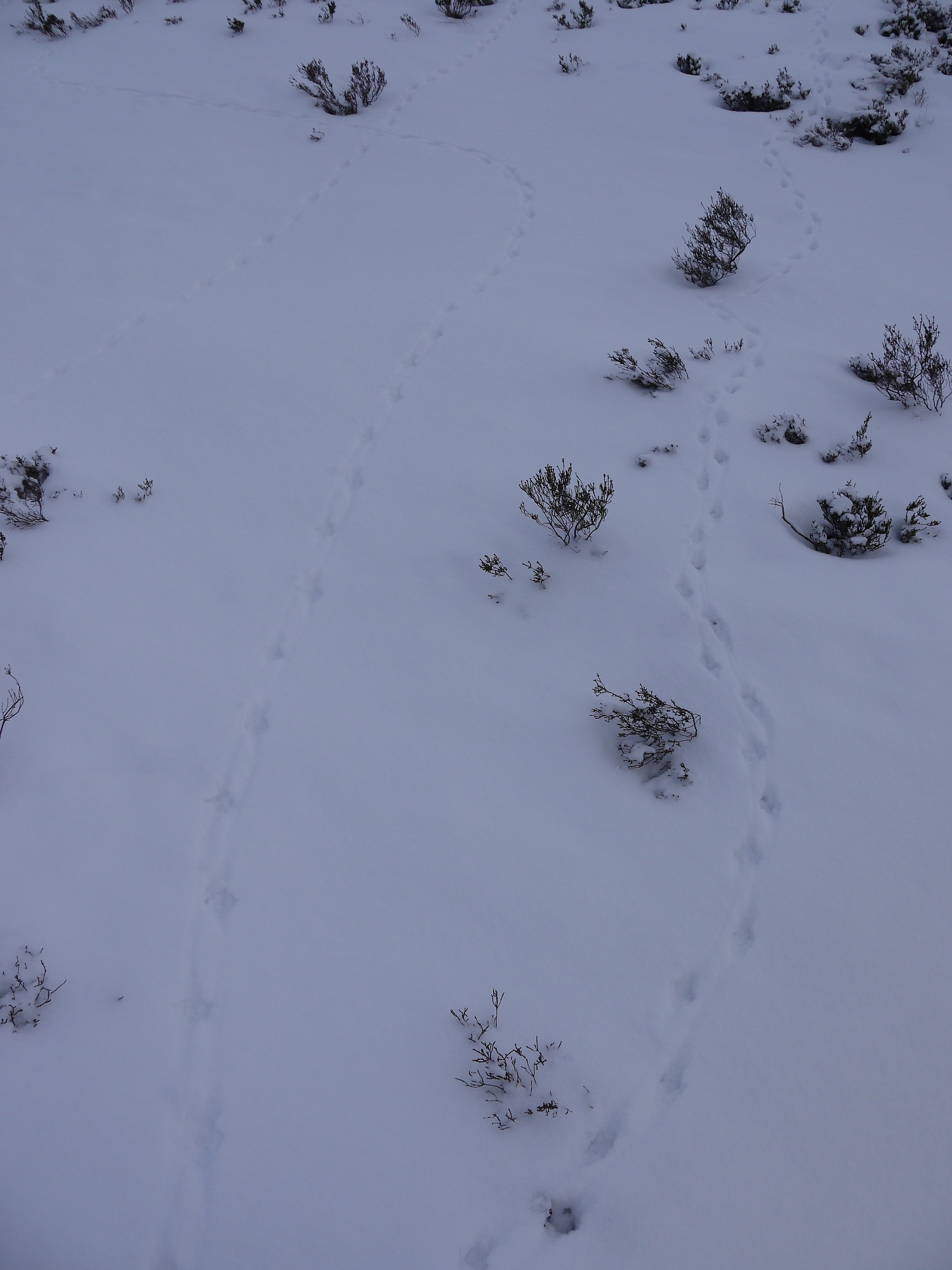
- These are grouse prints – I’m going for red (Lagopus lagopus), as opposed to black, because I found them high in the hills, away from the woodland edge.
-
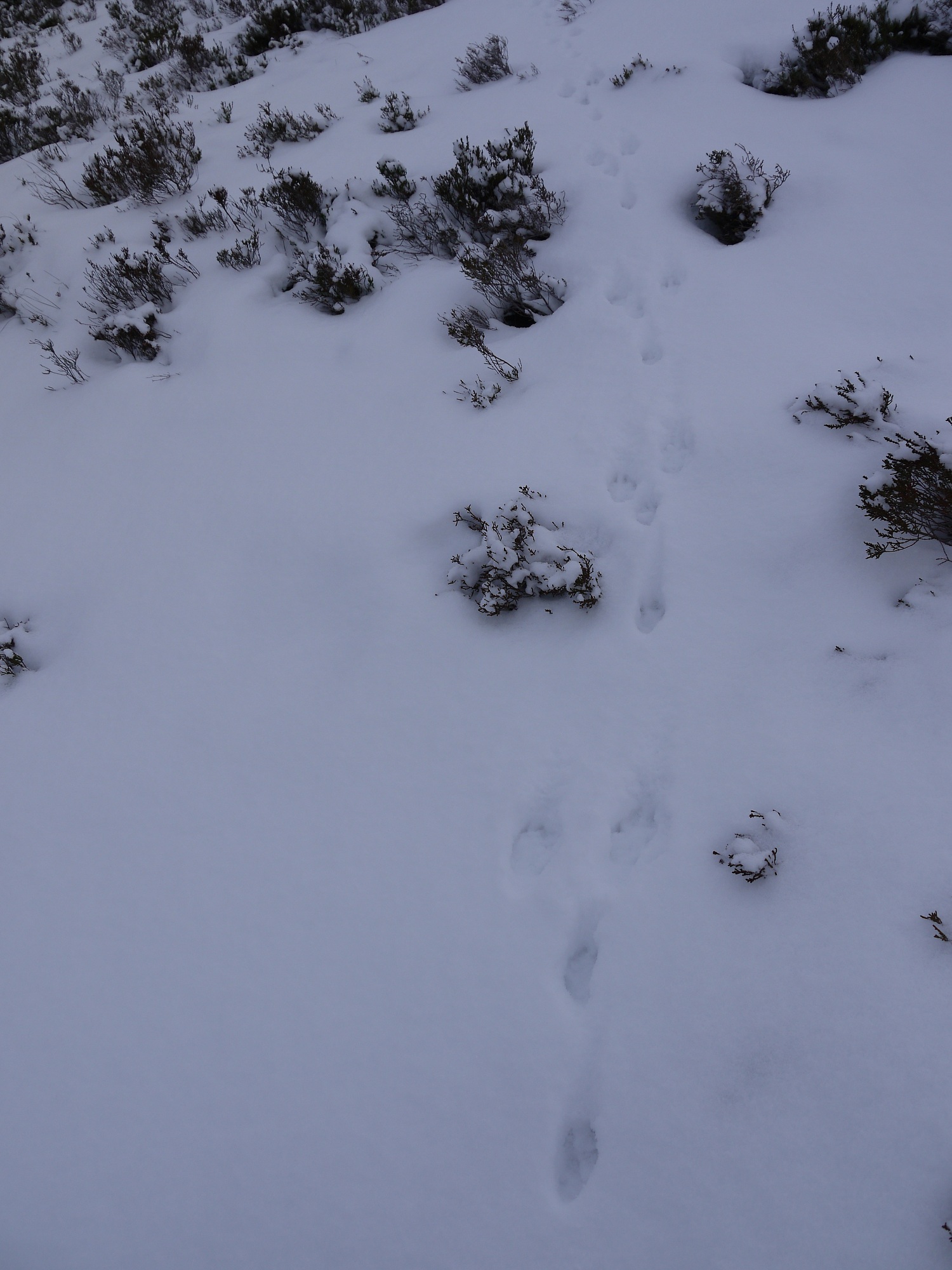
- High up on the hills, so probably mountain hare
-

- Back in the woods, something from the thrush family, probably blackbird

Stirling and storms
In the last couple of weeks the weather has been a bit changeable. At one point a wind speed of 165mph was recorded on the top of Cairngorm, and we have lost contact with the local radio mast a couple of times in strong winds. On occasions myself and Ross have been out doing late night and early morning tours of the local roads to clear fallen trees.
On the 10th/11th I spent the weekend in Stirling. Since then I’ve spent most of every day out on the reserve. I’ve been lucky enough to get good sightings of golden eagles, and to get reasonably close to a pine marten. There were a few days when we saw a grey heron nearly every day. With the lochs freezing over it’s got to be a tough time of year for a bird looking to find food in water. This might apply to the 14 mallard I saw on Loch a’ Chnuic a couple of days before it froze over, but not the dippers I’ve seen around, who will feed in fast flowing waters that are unlikely to freeze at current temperatures.
There seem to have been an influx of woodcock since the beginning of the month, perhaps late arrivals from Russia and Scandinavia. I’ve also seen one or two black-billed (adult) blackbirds, which are also likely to be of Scandinavian origin.
-
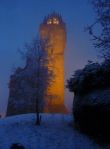
- The Wallace monument and a particularly attractive birch tree.

-

- Stirling, seen from the hills at Blairlogie
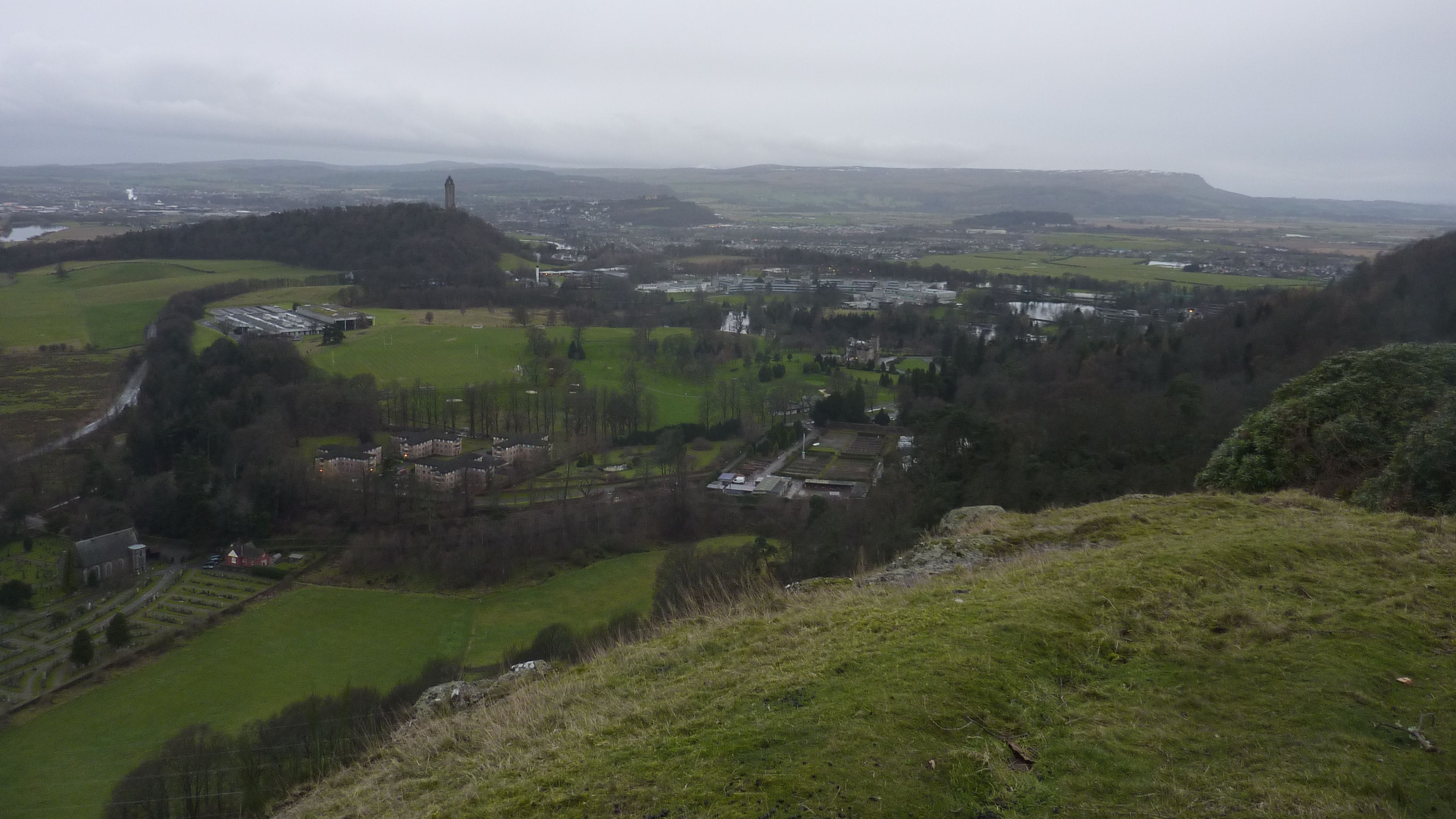
-
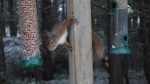
- Meanwhile, back at Abernethy, the colder weather sees more activity on the bird table

-
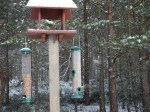
- I can count 143 birds in the picture, how many can you see?


-
- Looking South from Carn a’ Chnuic

-

- There are plenty of red deer on the reserve at the moment

-

- Looking West from the lower slopes of Carn Bheadhair
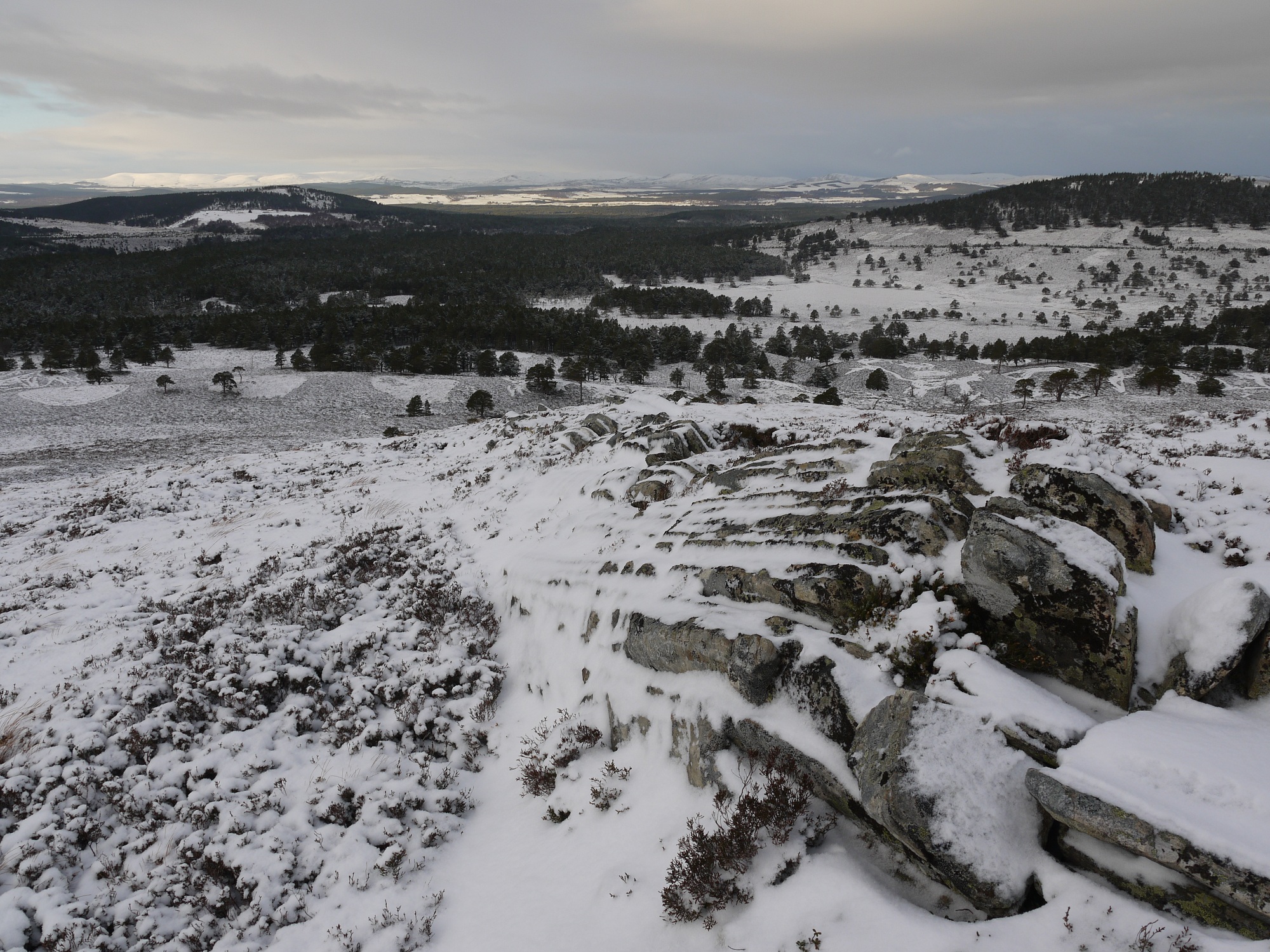
-
- The Hidden Loch

Winter finally shows up
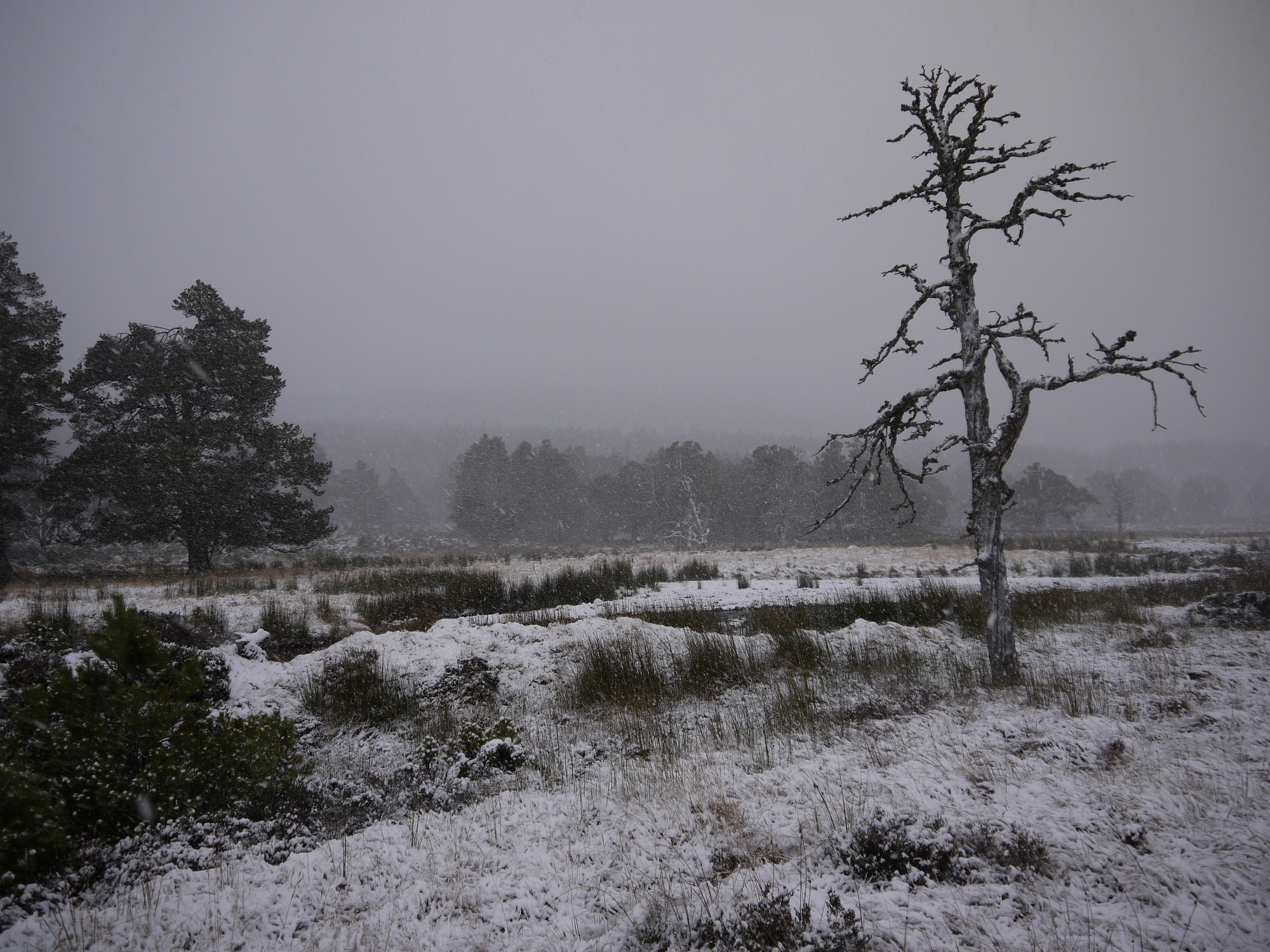
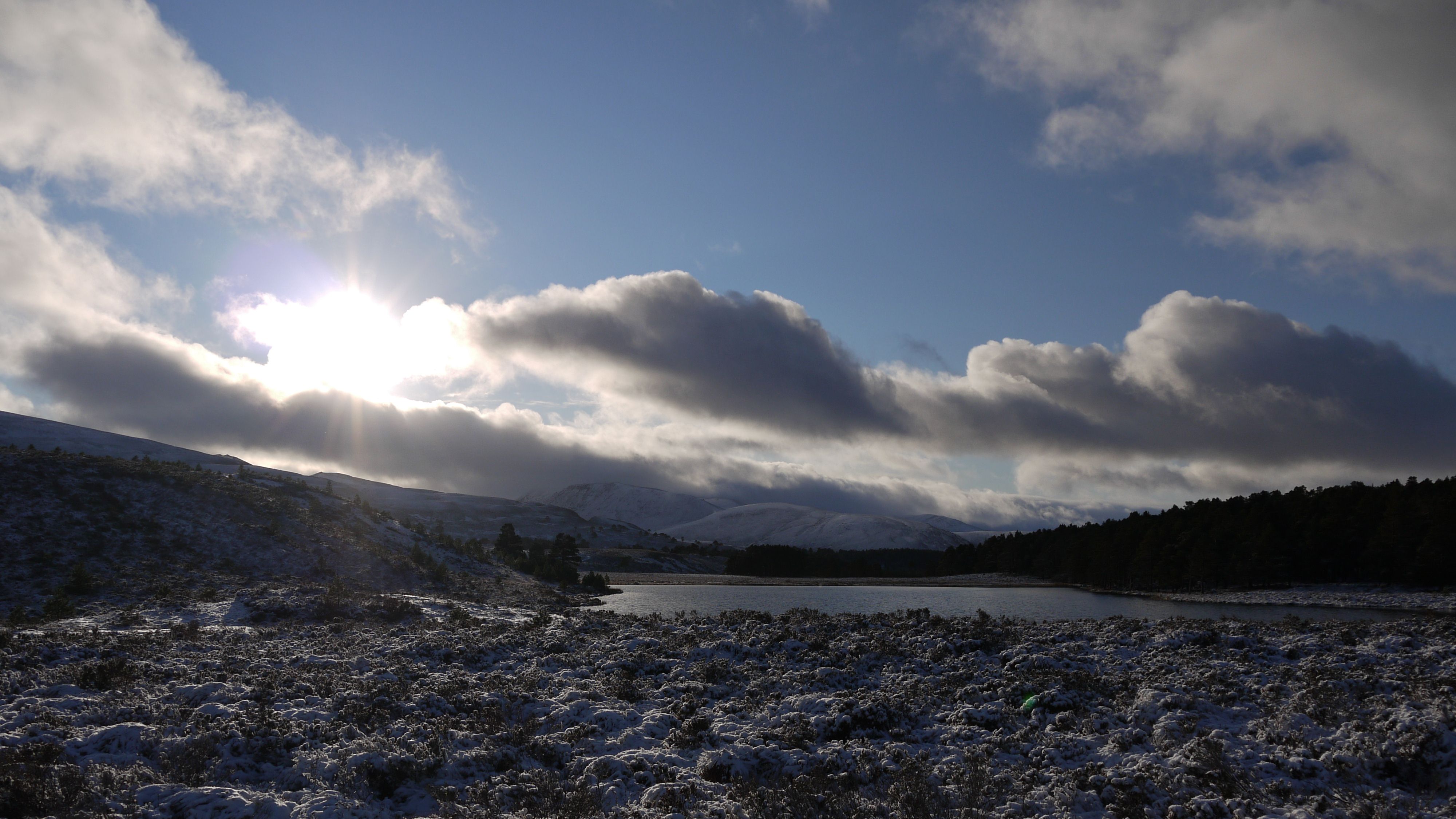
So, finally, we’ve had a sprinkling of snow at Abernethy. It’s not much, yet, but enough to make the place look even more fantastic. I was lucky enough to get caught in a snow storm while out walking on Sunday. In fact, whilst I’ve seen lots of great things while I’ve been here, it was probably the highlight of my stay so far.
Although the time for heather burning has passed, work has been fairly typical of previous entries, with some additional Christmas parties, deer management and fence repairs.
Anyway, these pictures are hopefully a lot more eloquent than I, in describing the snowy scenes, mostly from my walk on Sunday…
-
- Snow is a wonderful gift of nature. It’s disappointing to think that with a warmer climate we are likely to see less of it.

-

- Loch a’ Chnuic
-

- The reserve, looking South towards the Cairngorms from Carn a’ Chnuic

-
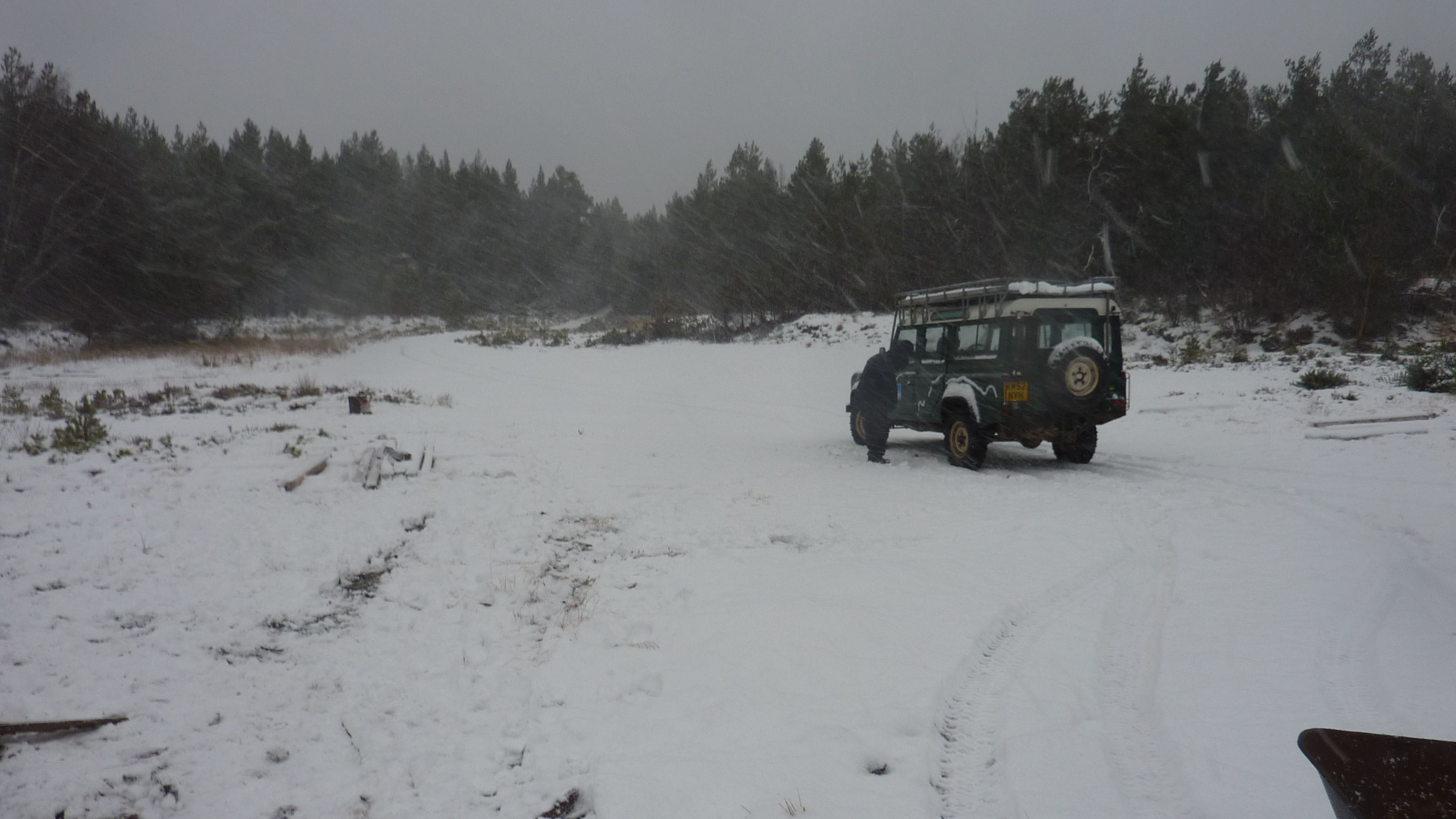
- Working in a snow storm, better than working in an office.
-
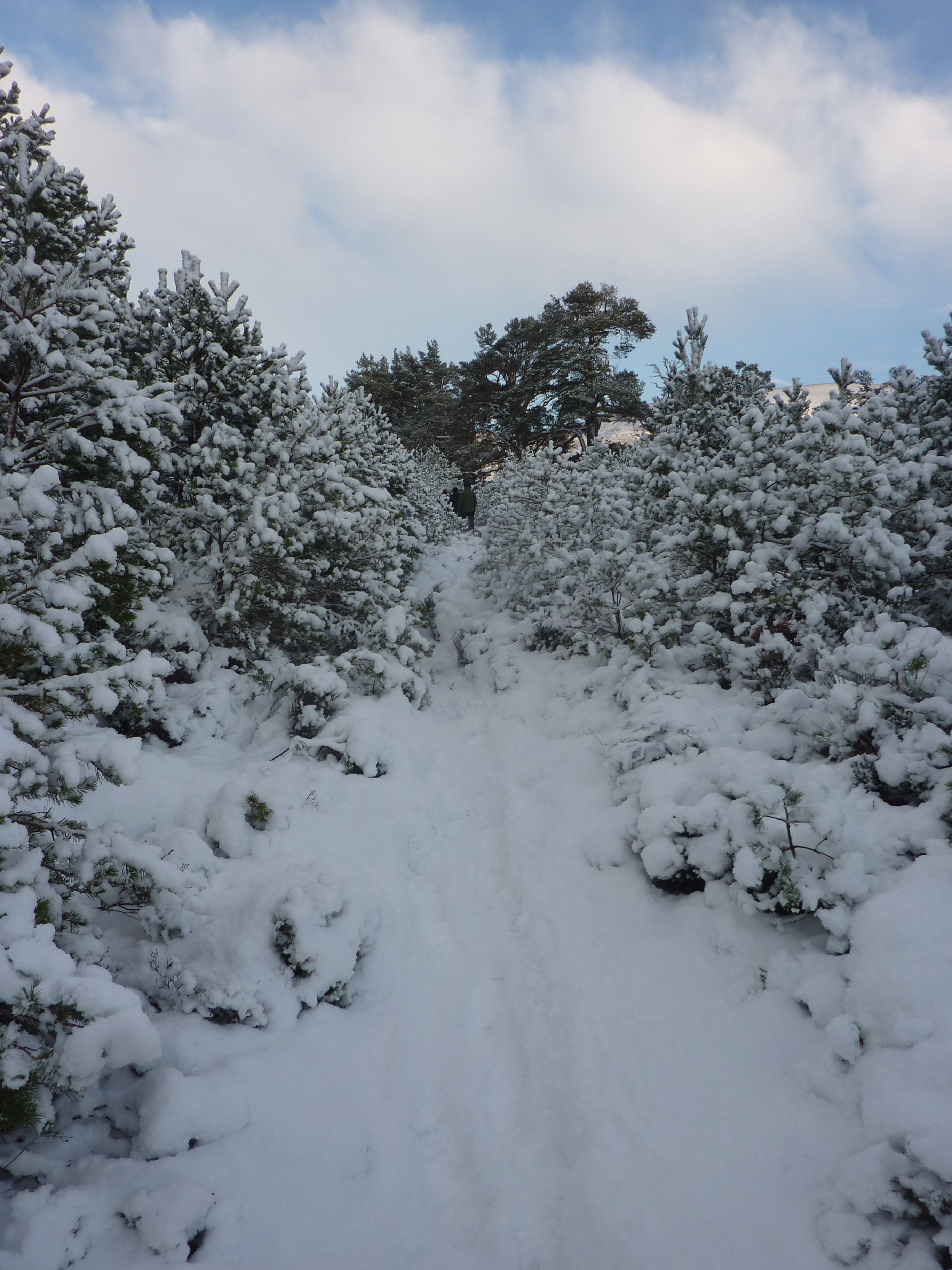
- Walking in a winter wonderland.
November at Abernethy, in photos
I was hoping for snow and a cold and crispy winter, and this has been the warmest November in my lifetime. I can’t be disappointed though, I’m living in the middle of a wood and I get to walk some of the best landscape our country has to offer, on a daily basis.
I got lucky and picked up a digital SLR off Ebay, so have been able to start taking nature shots again (it’s been pretty hard to get anything other than landscape shots recently as the lcd is not working on my old camera – see earlier entry). Laura (who appeared on The One Show this month) came to stay and, with her bags of SLR experience, has given me some tips, so she is to blame for the quality of my photographic efforts with the SLR to date.
We also tried to walk to Loch A’an (on the 20th) while she was here, but hey, it’s a long way when the days are so short. We turned back with a couple of km to go, and still walked the last 3 or 4 km back to the lodge in the dark. So that leaves me that challenge for another day.
-

- This is likely to be pine marten scat

-

- This is likely to be grass (nice though, isn’t it?)
-

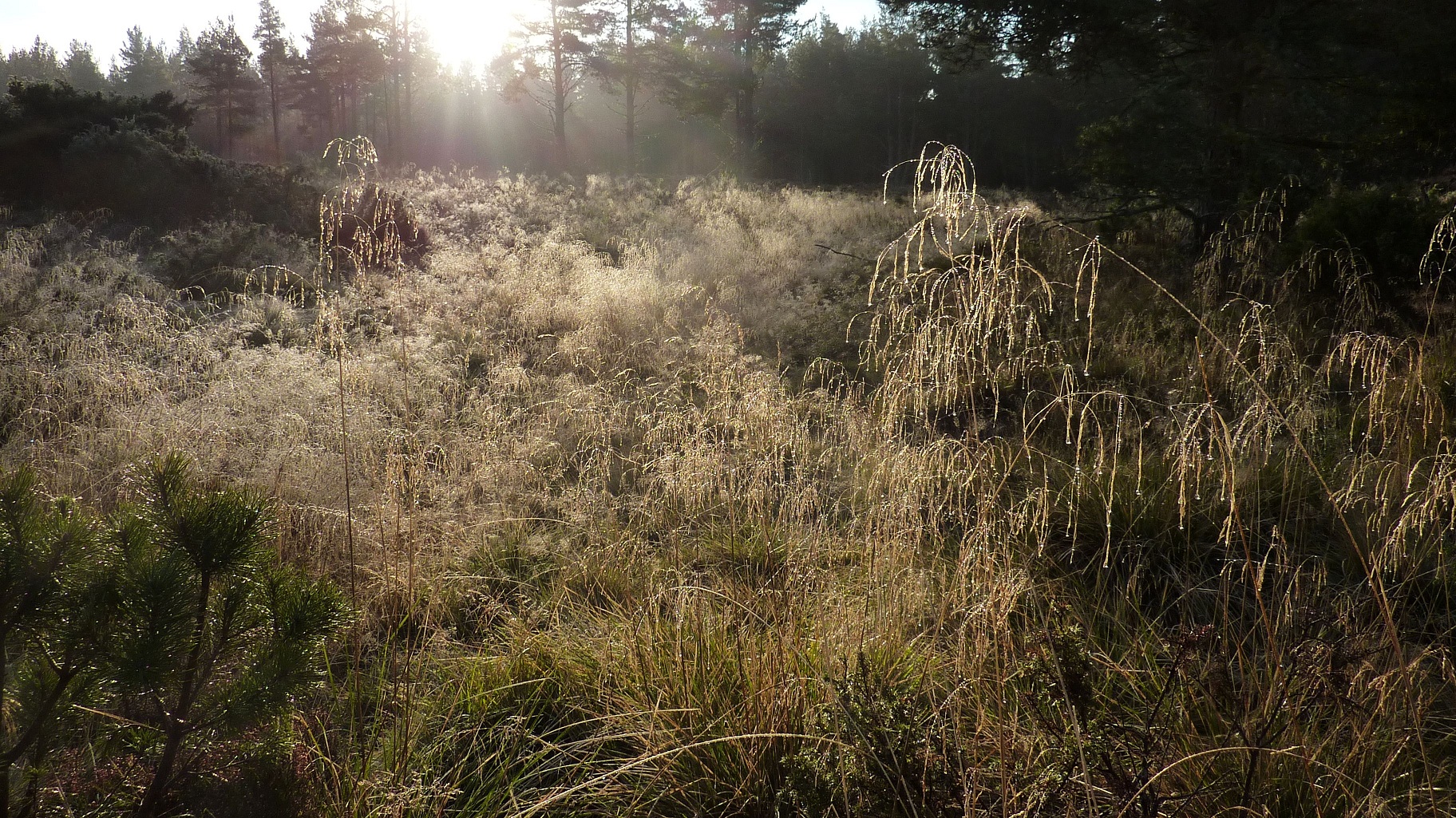
- Keeping warm on the hill
-

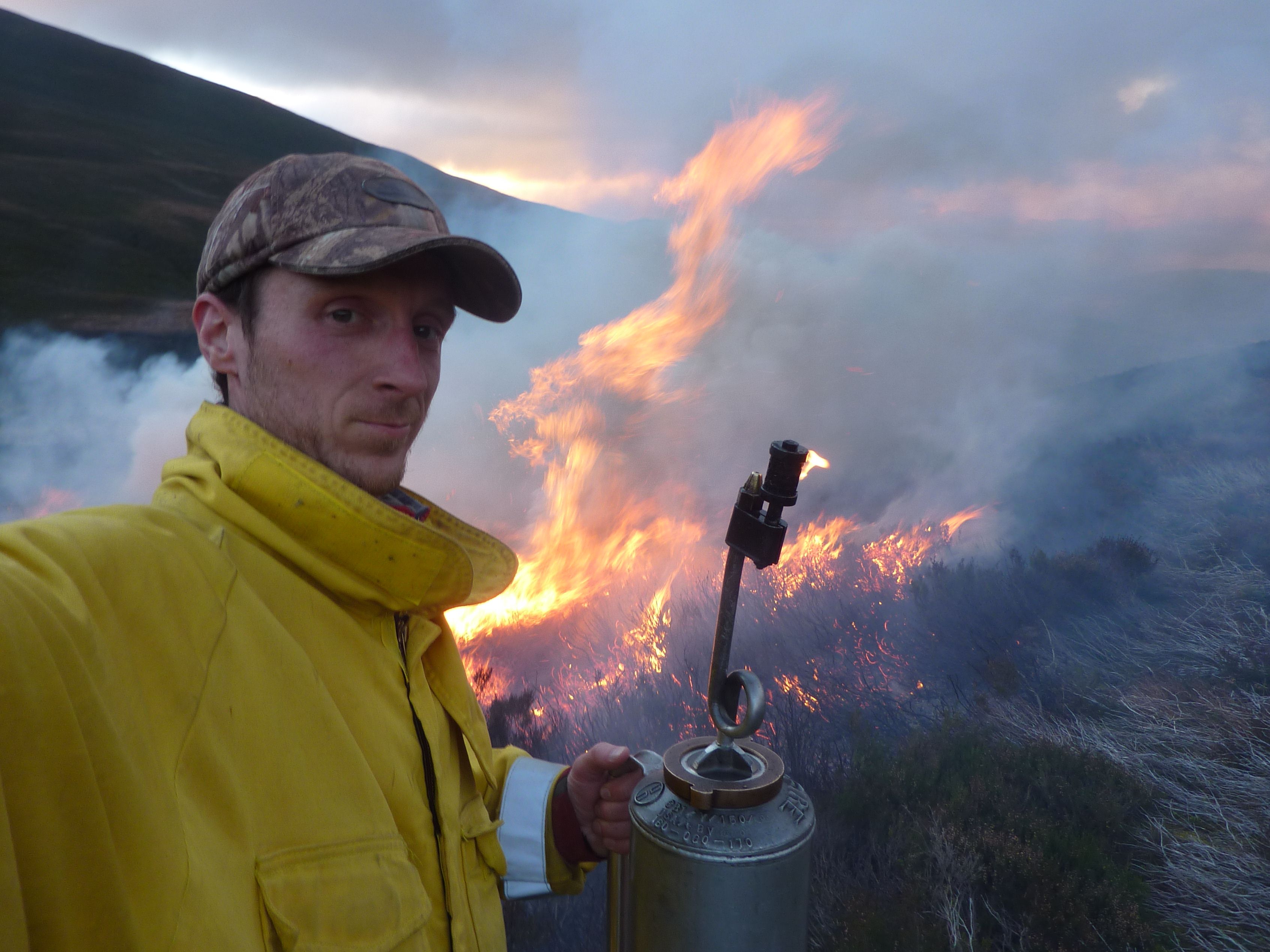
- Gregg, a fire and the view we have whilst working

-

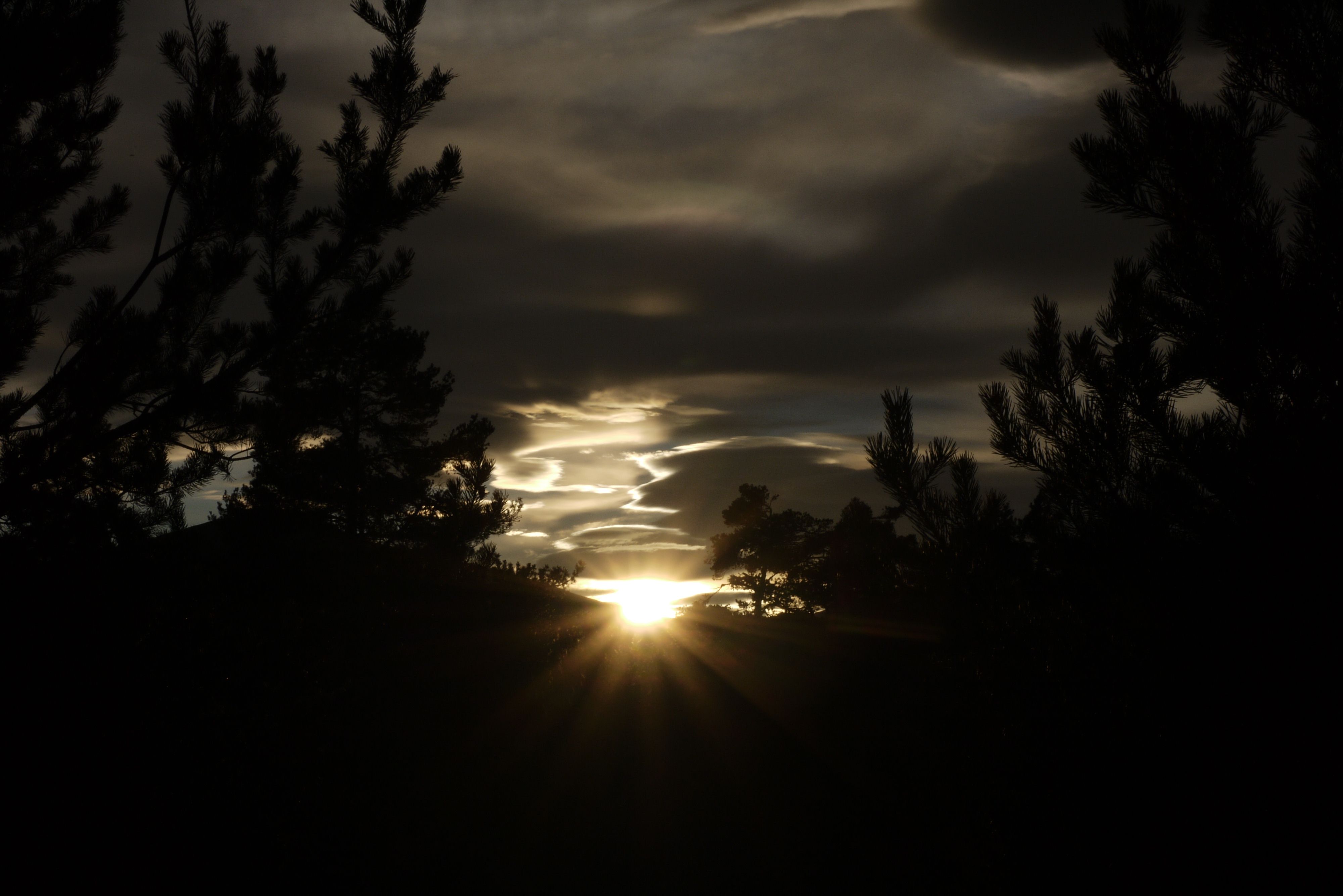
- There have been no trees this far up the Strath Nethy for many hundreds of years, so how old is this root system?

-
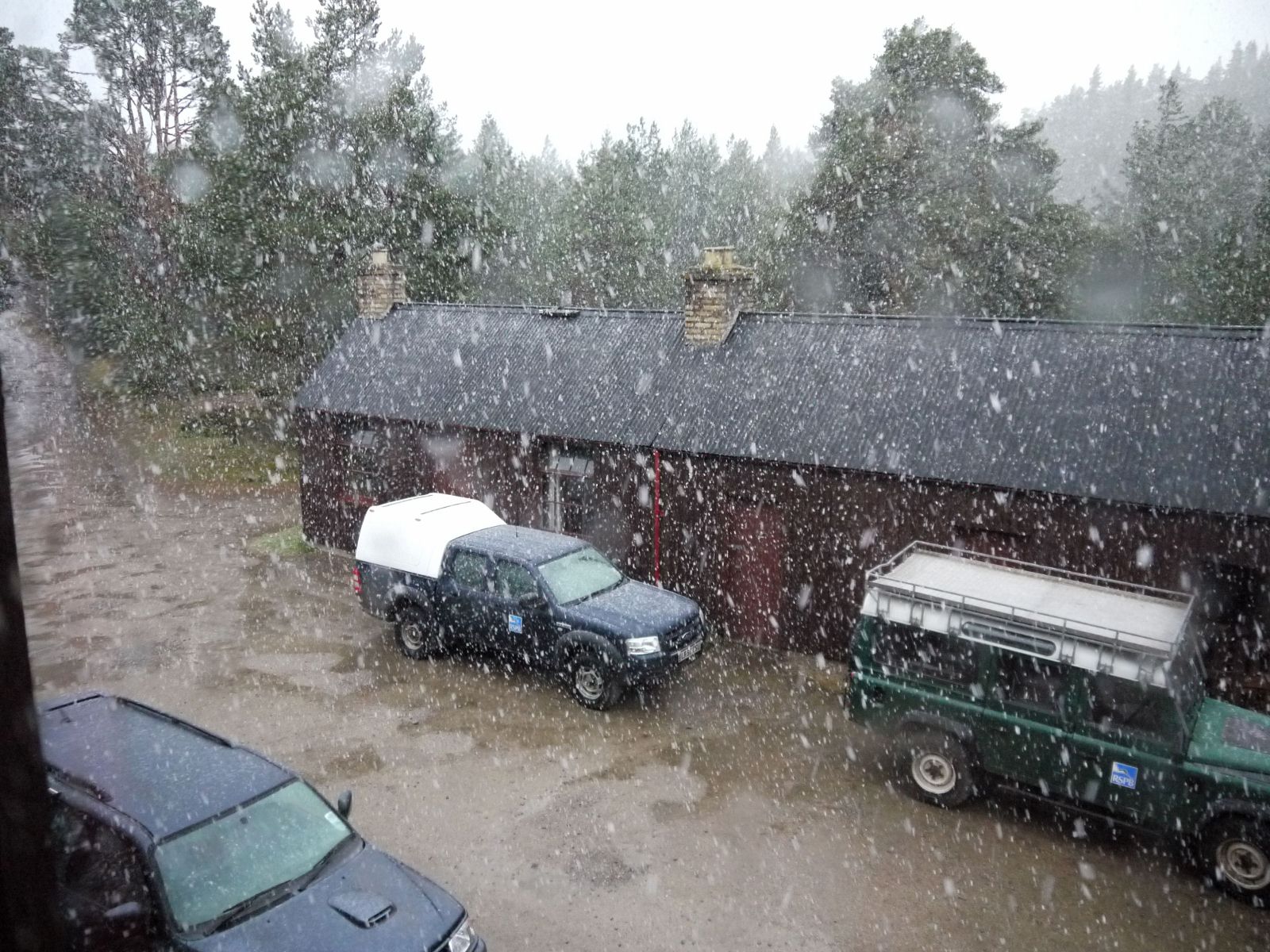
- First snow on 25th November. It’s too warm to settle though
-
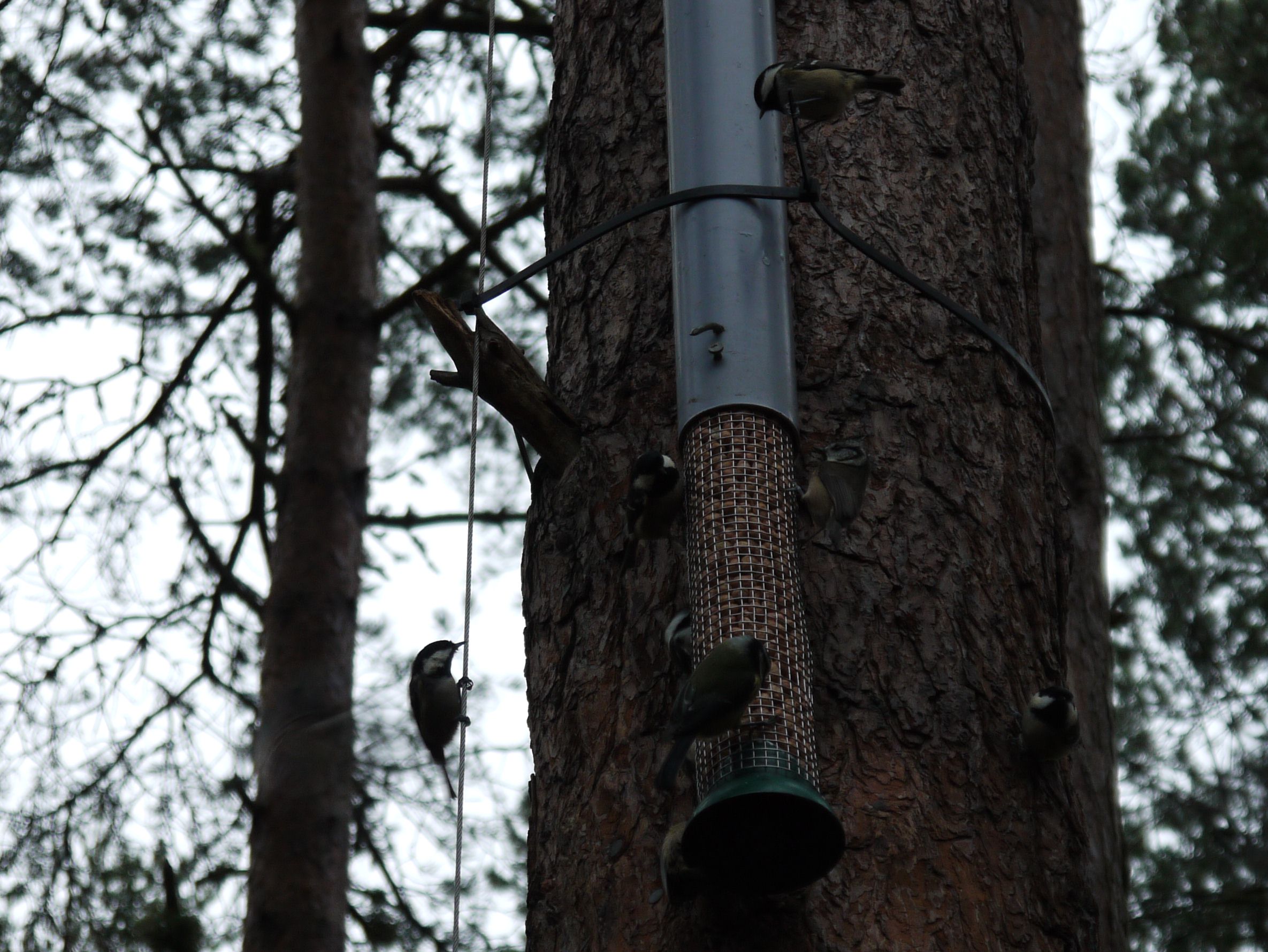
- A crestie on the Loch Garten feeder
-
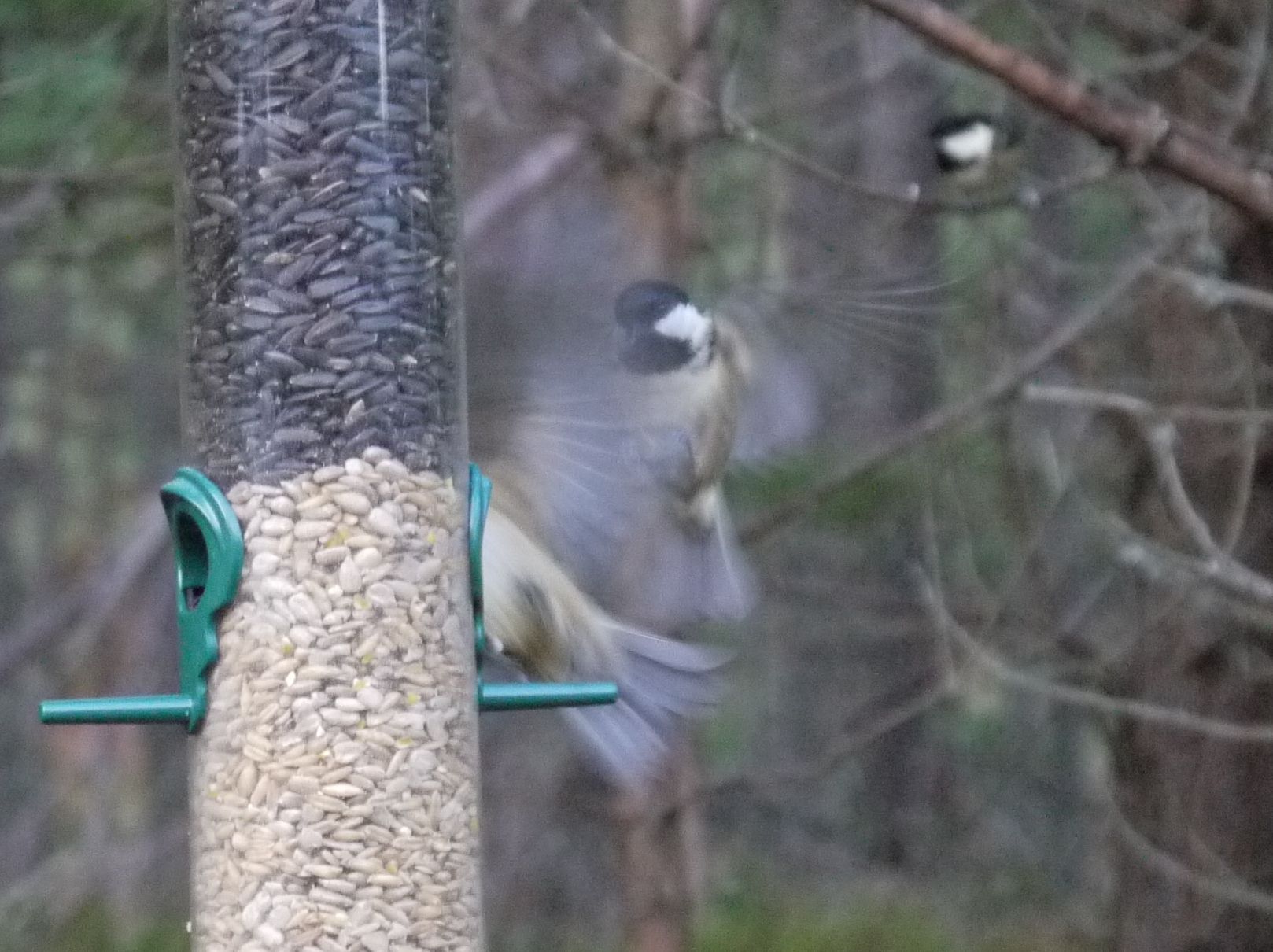
- The coal tits queue up at Forest Lodge feeder
-

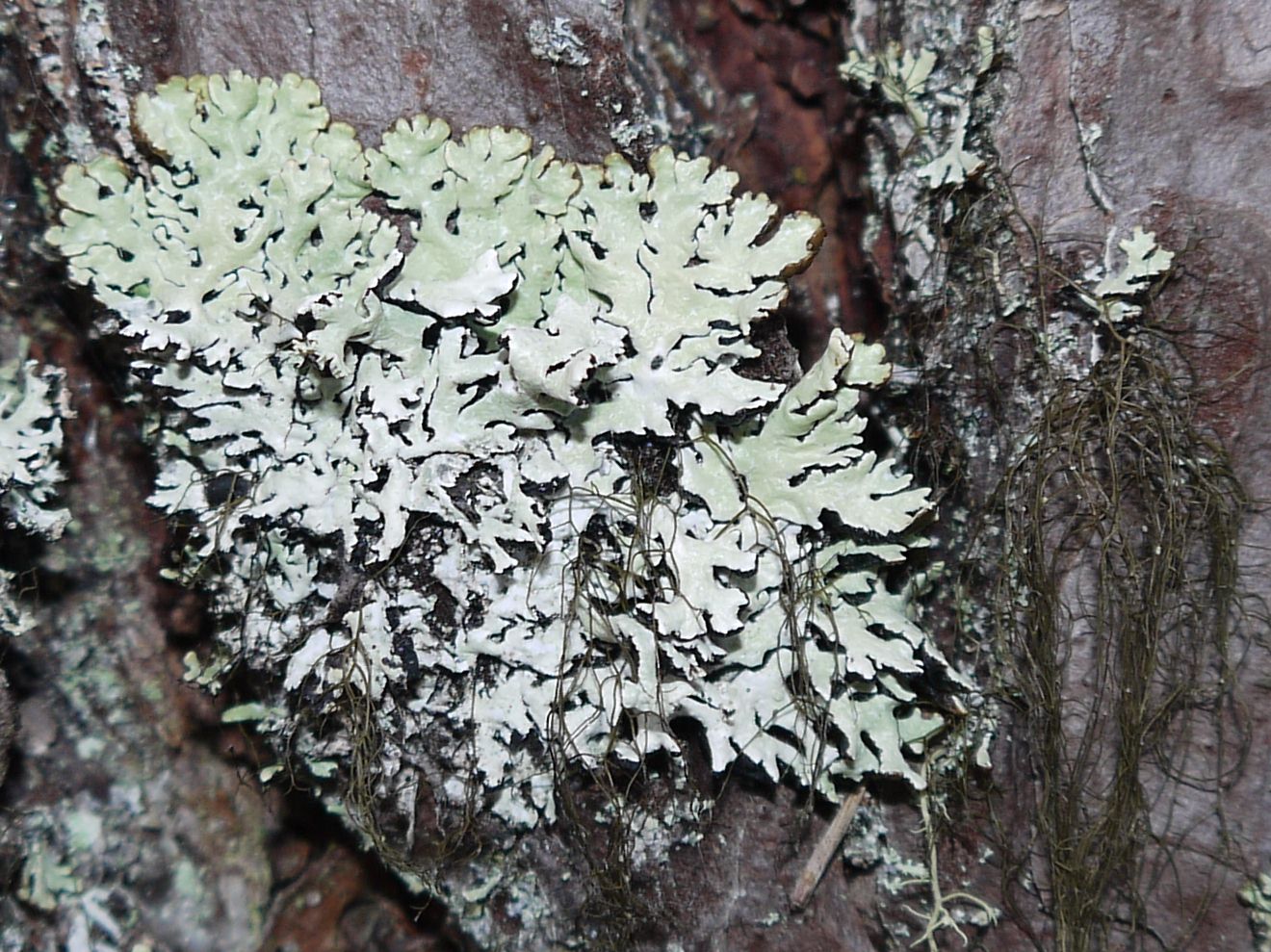
- Hypogymnia physodes, light coloured, and possibly Bryoria fuscescens, on Scots pine bark
-

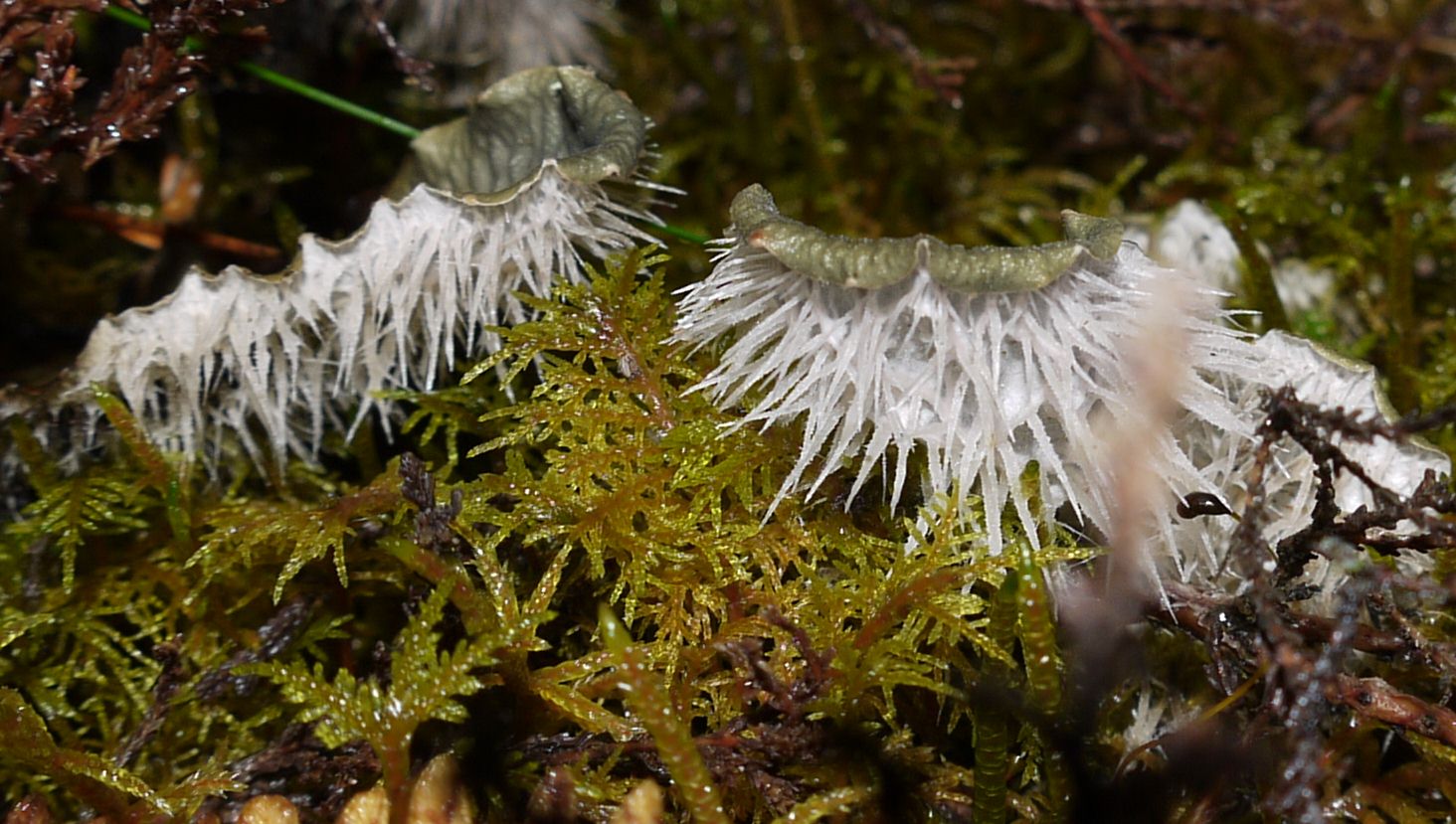
- Dog lichen, so called because of the resemblance to dog’s teeth, apparently. Who’d want a dog with teeth like that?
-

- Looking South at Meall a bhuachaille

Last TFL week of the year, Dundreggan 5th to 12th November
Myself and Gordon were, once again, on duty for the last TFL week of 2011. It’s always great to get back to Dundreggan at some point of the year to catch up with Steve (Morris, Dundreggan project manager) and the trees that I’ve been involved in planting.
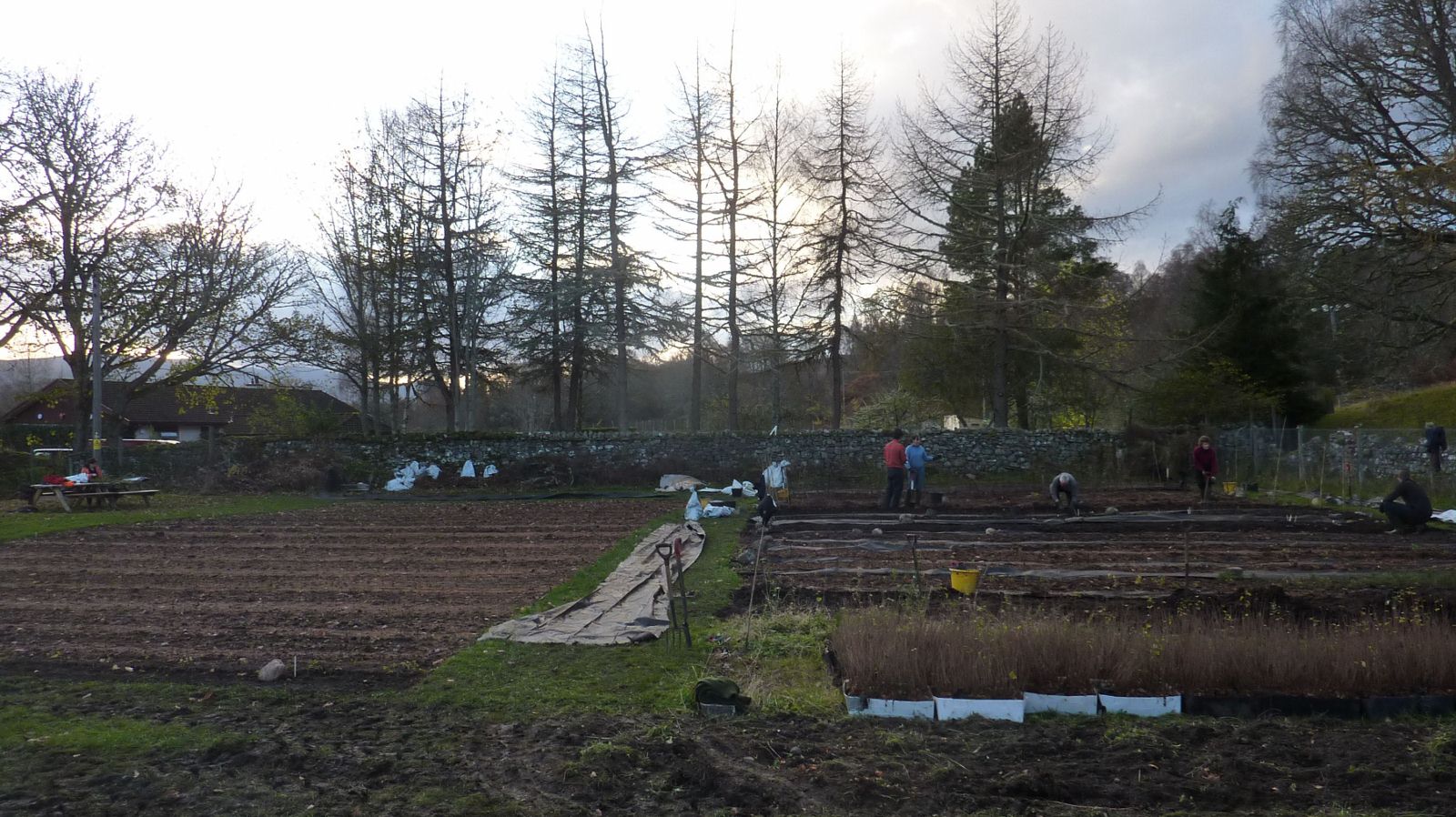
This year, due to the nursery move from Plodda to Dundreggan, there were a lot of TFL grown trees to be planted, both in the nursery, and in two of the planting sites. In total we planted over 2100 trees in the two planting sites, and numerous trees were transposed successfully to their new nursery setting.
From a personal perspective I was extremely pleased to see that some of the aspen and birch had almost reached my head height in the riparian planting area, where we added some hazel, elm, rose and the occasional Scots pine.
We spent three days working in the planting area on the North West of the estate. From here we had a great view of the mountains of Glen Moriston, and were witness to colourful sunsets each evening. Here too, some of the birch trees have already reached five foot and it will be interesting to see how the site looks in spring, when the trees start getting their leaves back.
Many thanks to Jill for guiding us through a number of the planting jobs, and for Abby’s help during the nursery day. It was good to catch up with Bill and Donnie and to spend the week with a great bunch of creative volunteers. I’m still amazed at how good Grieg’s pizza was.
-
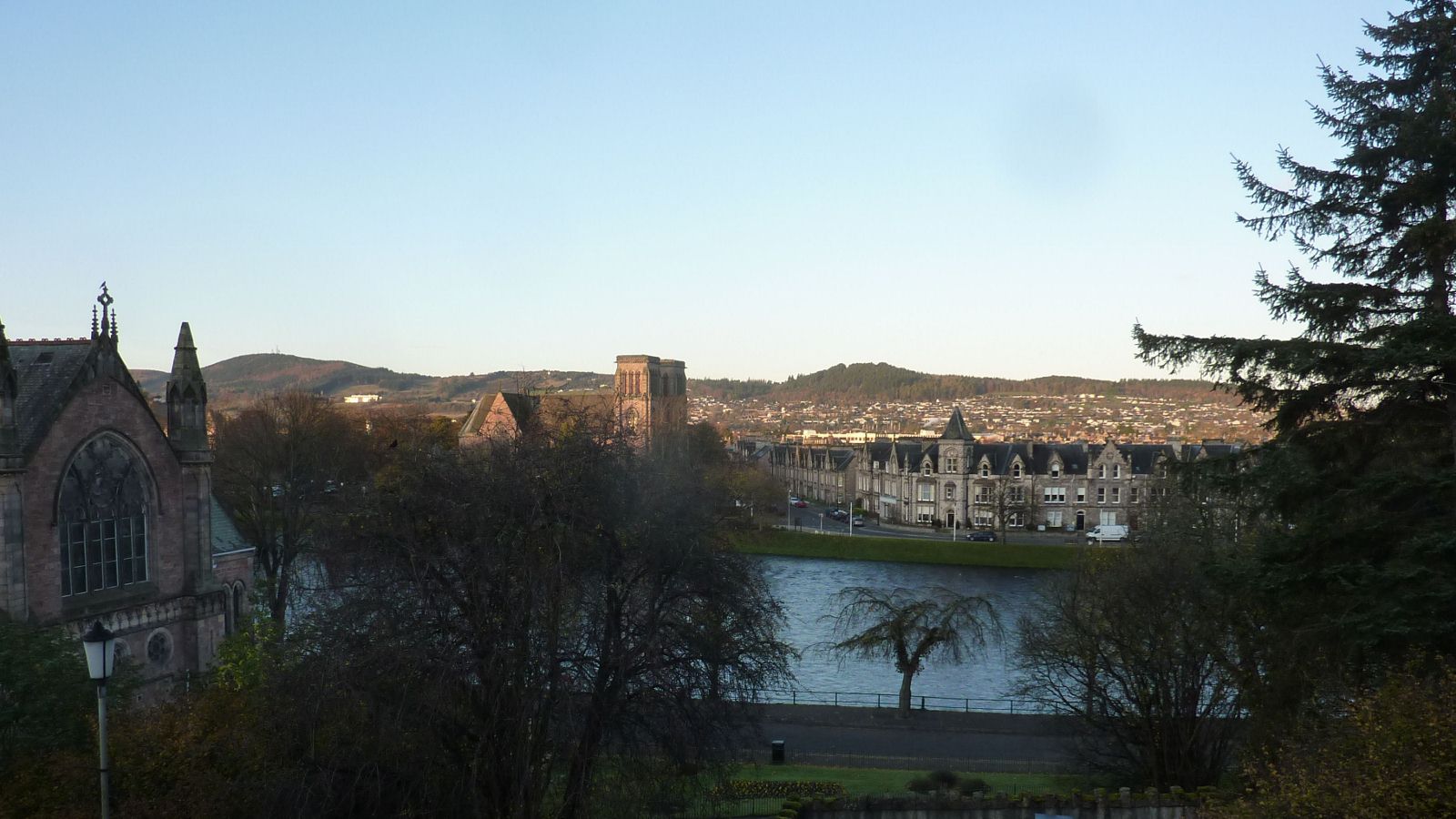
- The view from (my first time in) the Bazpacker’s hostel in Inverness
-

- Smiley faces, great colours, a good start to the week
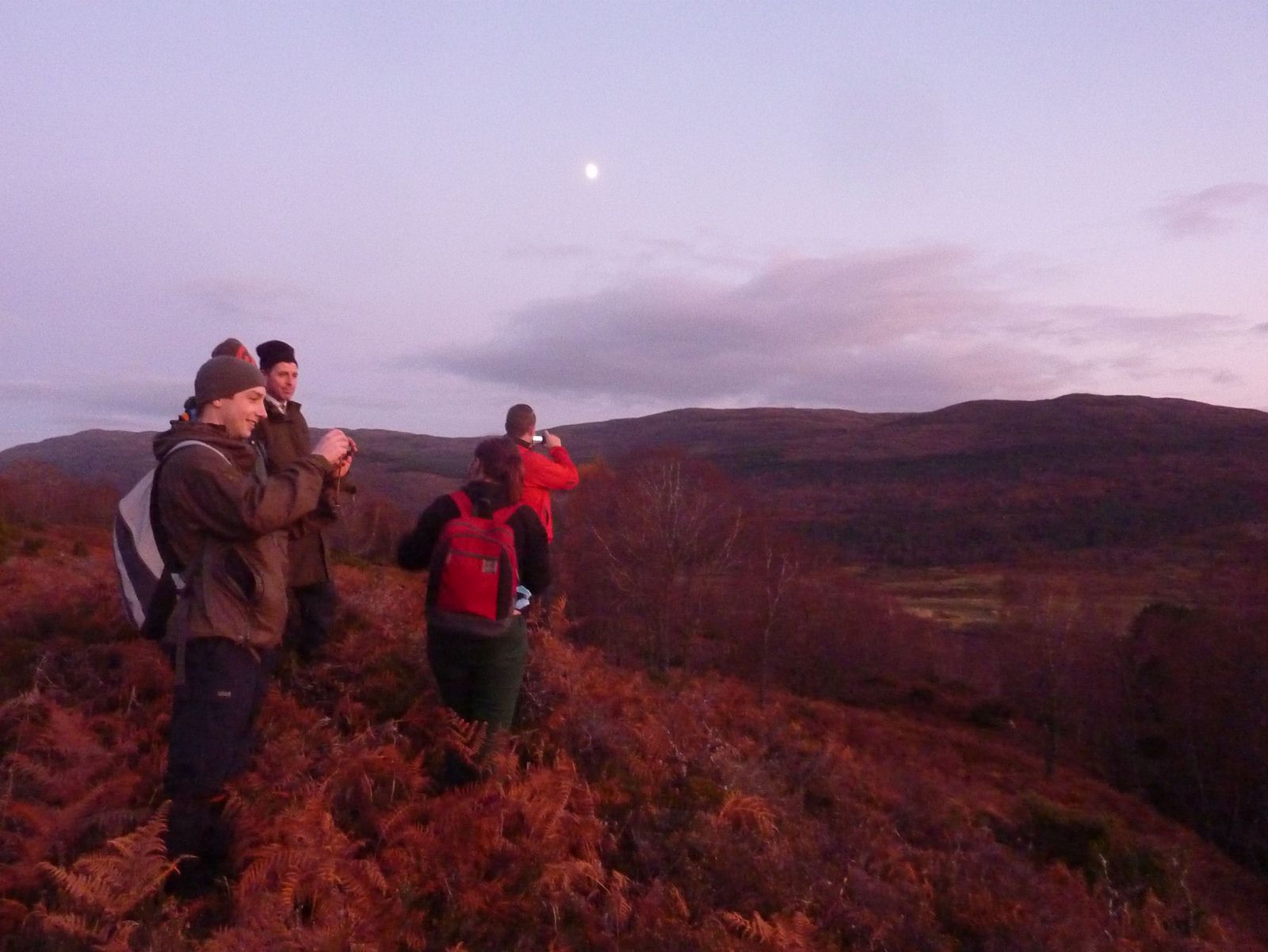
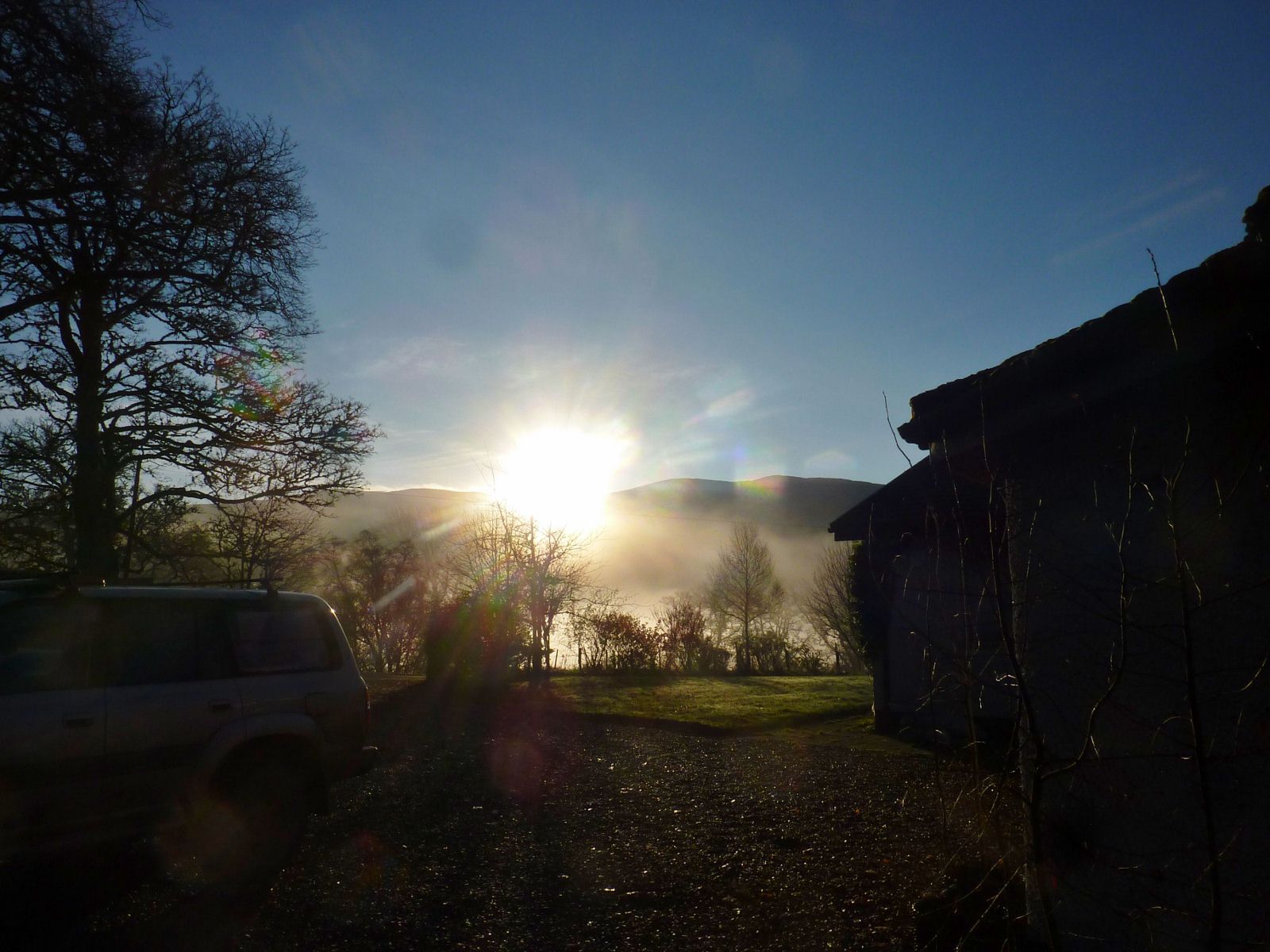
-
- Gordon demonstrates how to plant a dead mouse. Ok, it’s a tree.
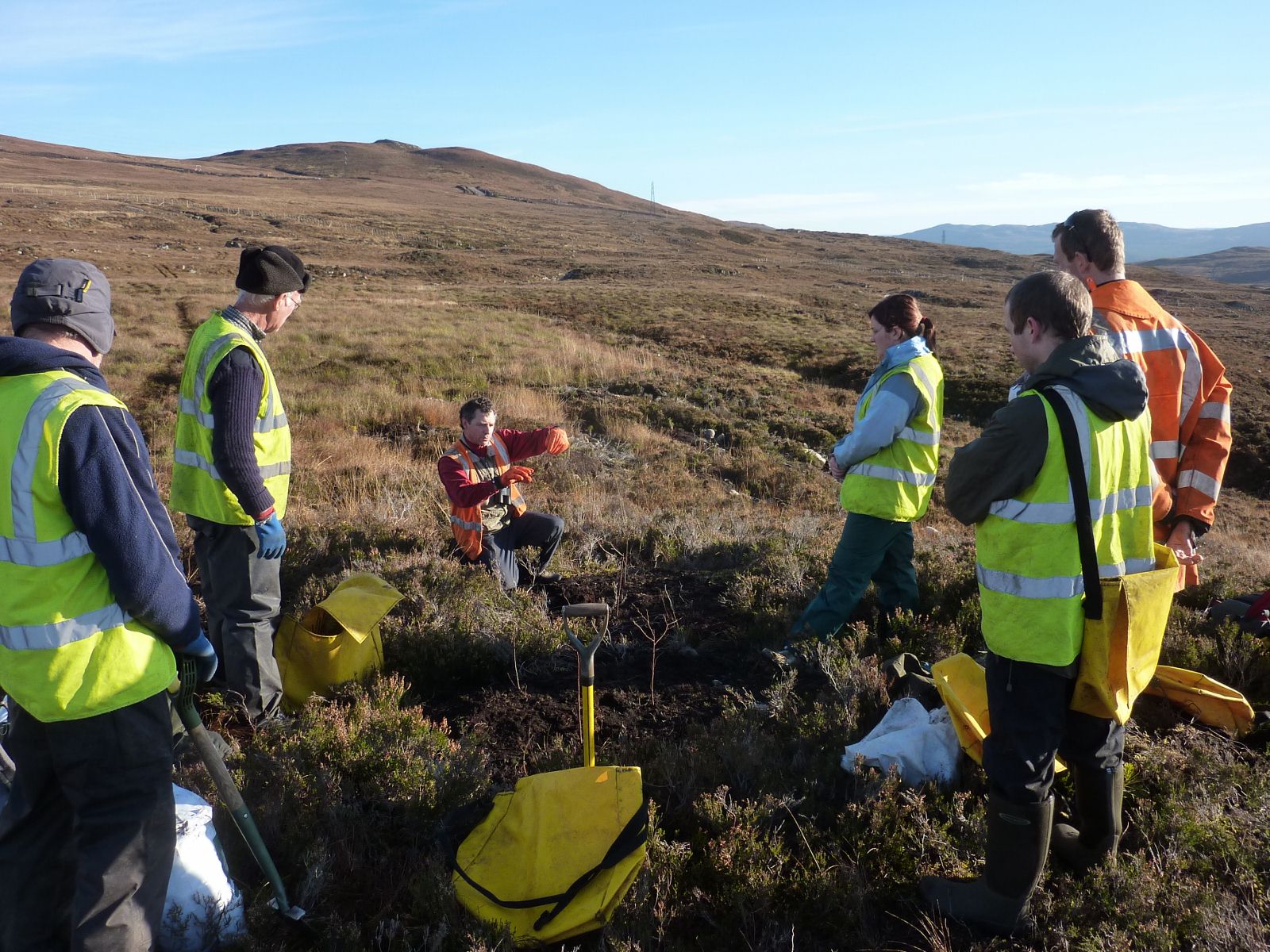
-
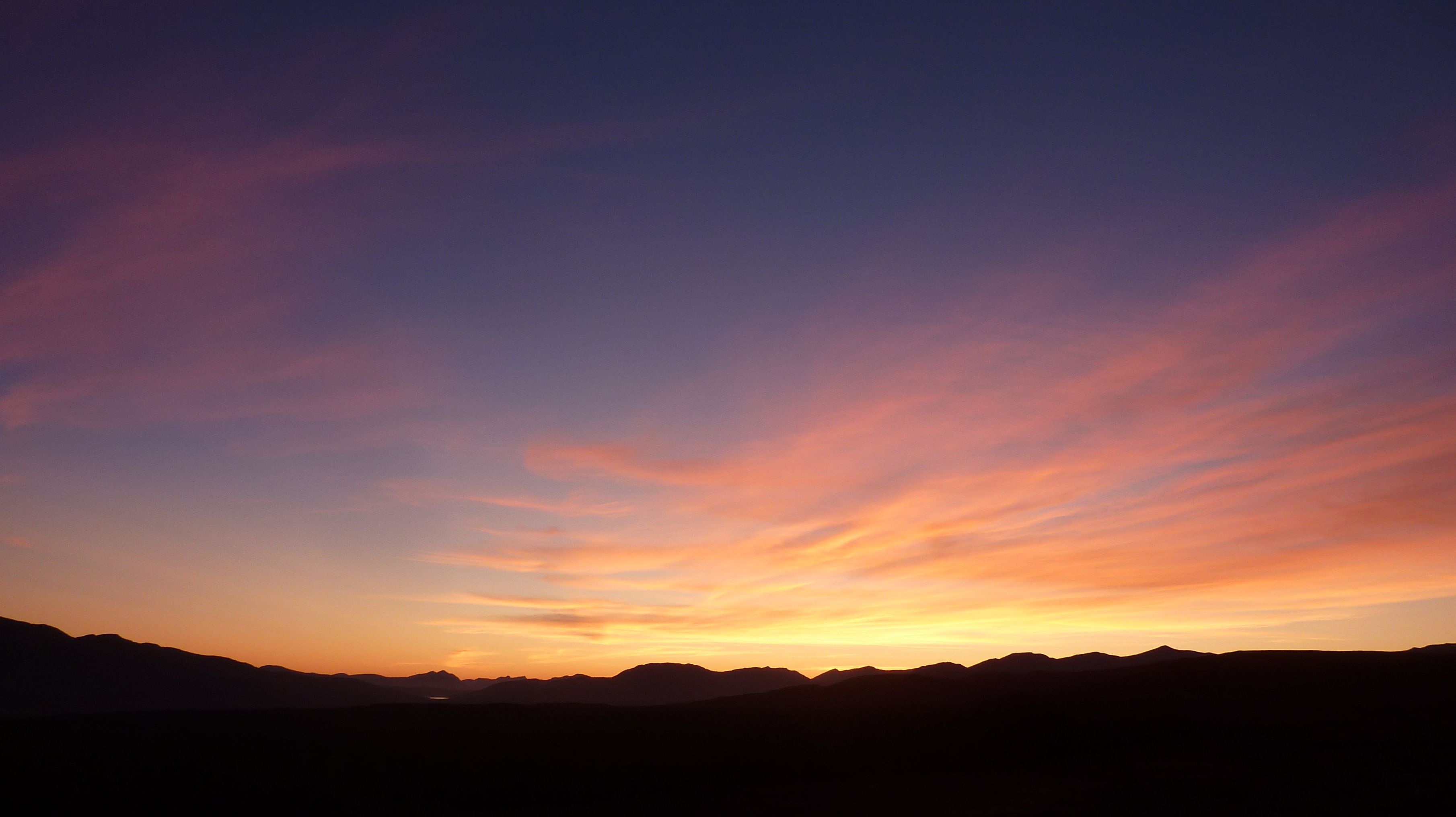
- The sky
-
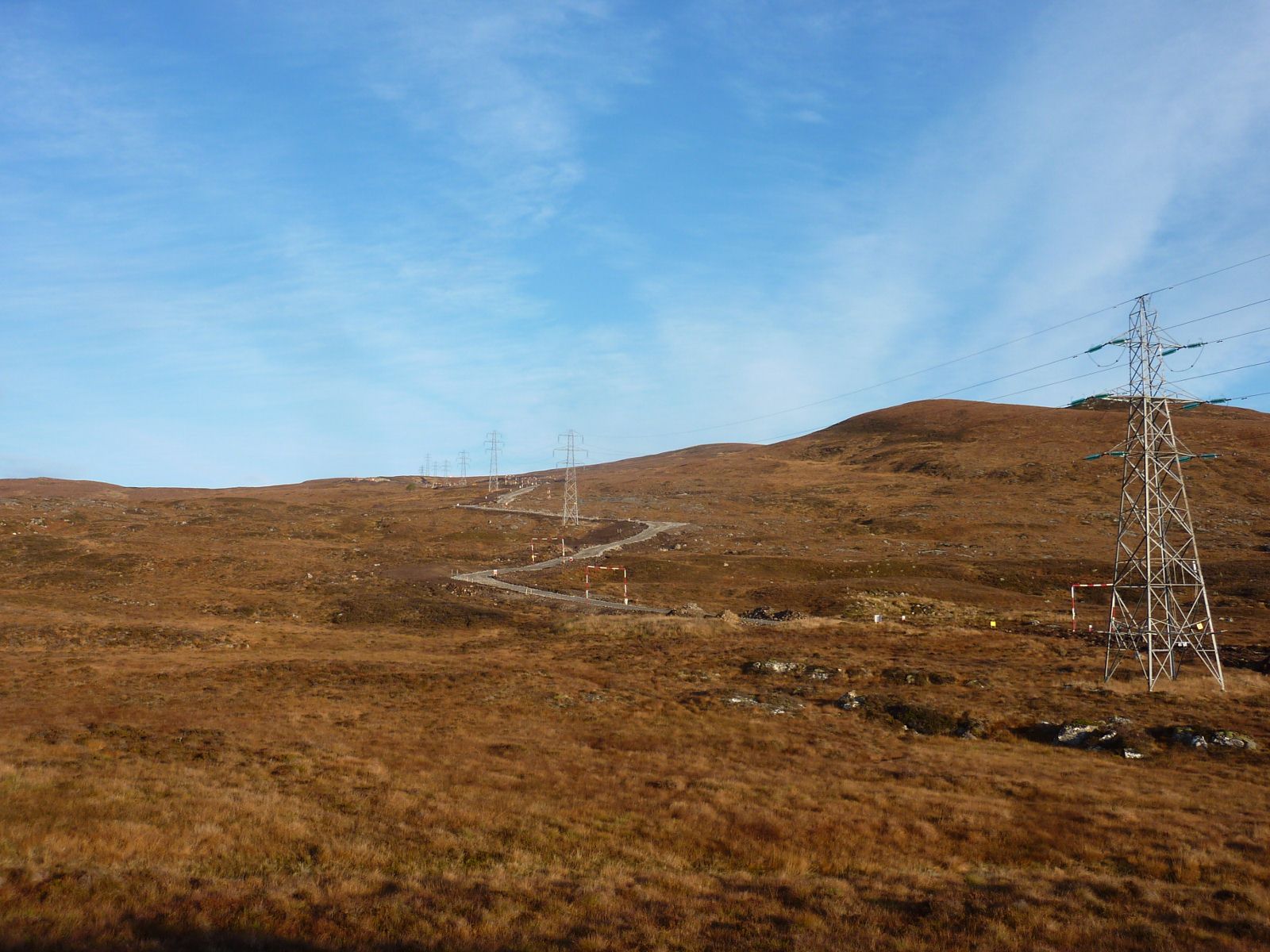
- Work to upgrade the Beauly Denny power line has begun. Some people will get richer as a result, but the land will not.
-

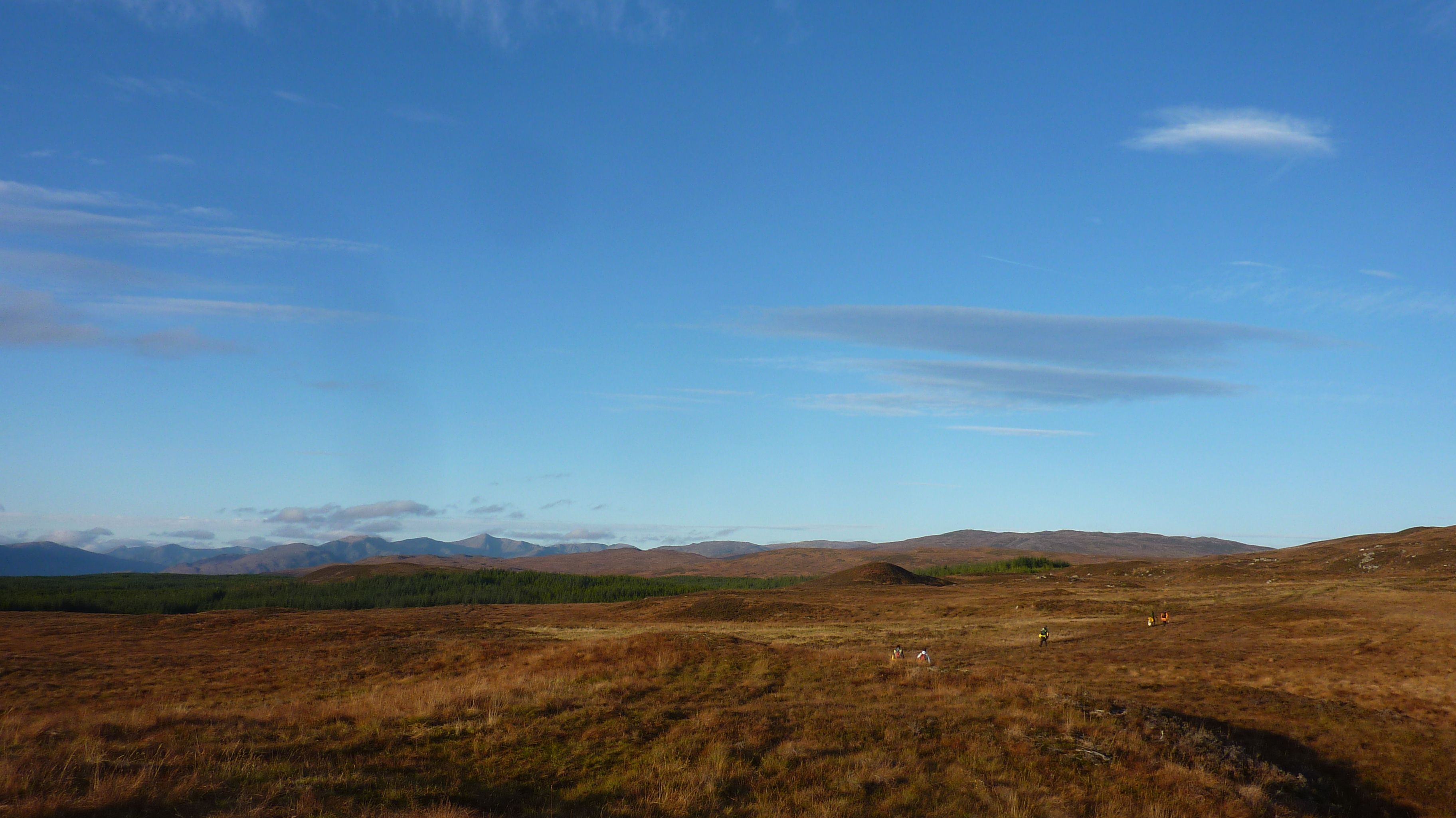
- The walk to work
-
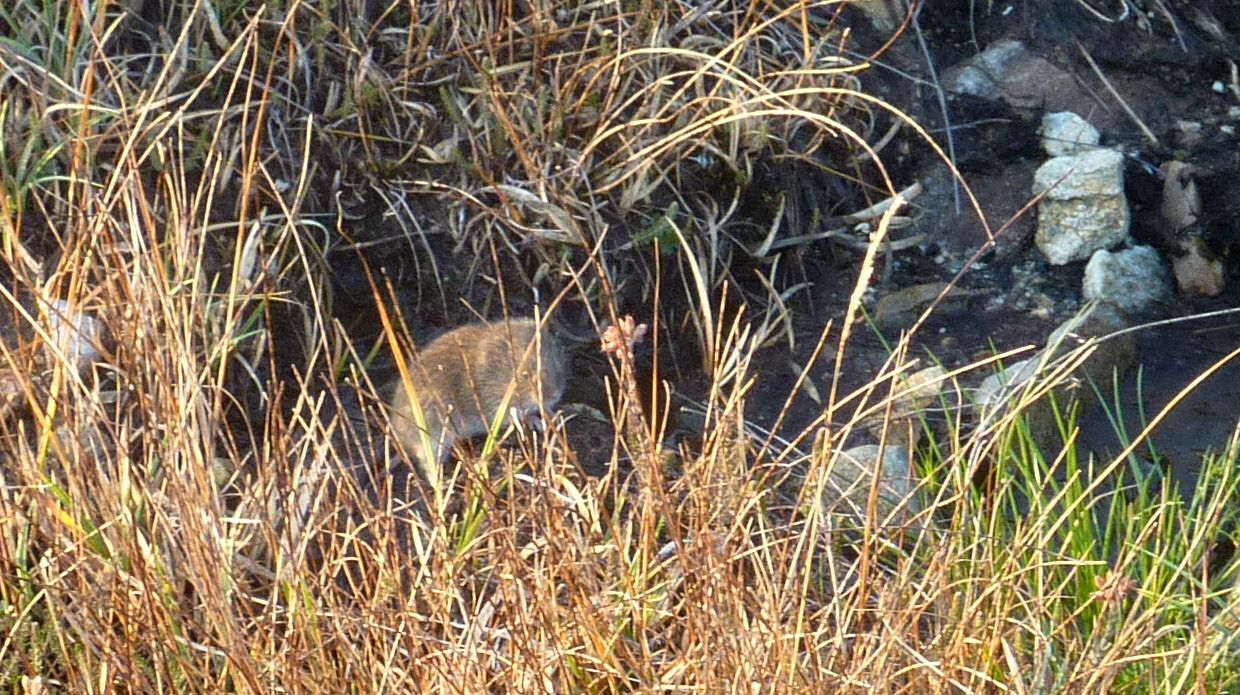
- A field vole (Microtus agrestis)
-
- The group is told off by Jill (ha, not really, but look at them!)

-
- The all new TFL nursery
-
- Part of one of the world’s biggest and best cakes. Thank you Jenny.

-

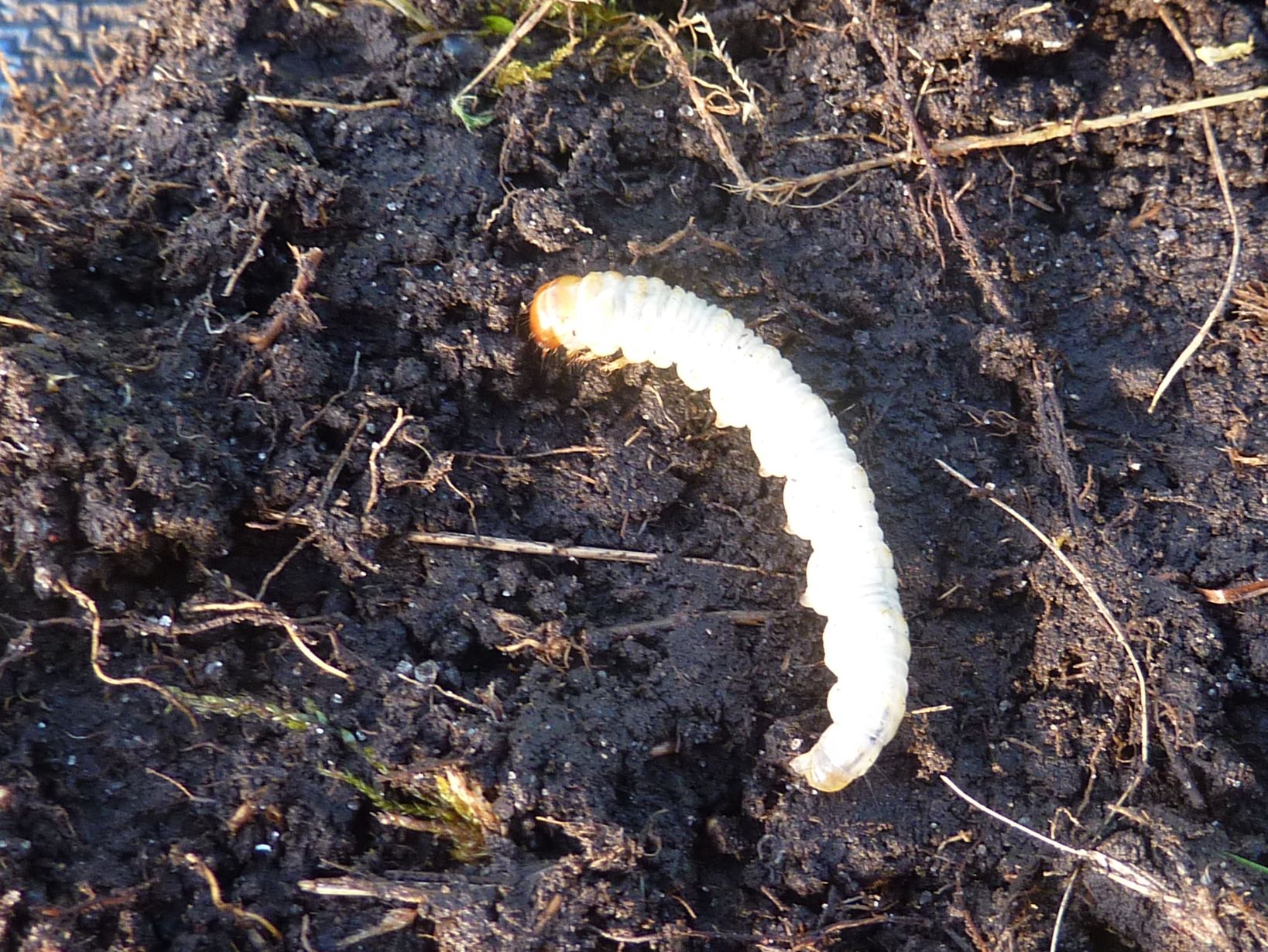
- Beetle larvae, maybe stag?
I’m also blogging elsewhere… sort of
Recent Abernethy activities include entering data to track the young ospreys from Loch Garten, and writing some blog text to go onto the osprey blog, which can be found here
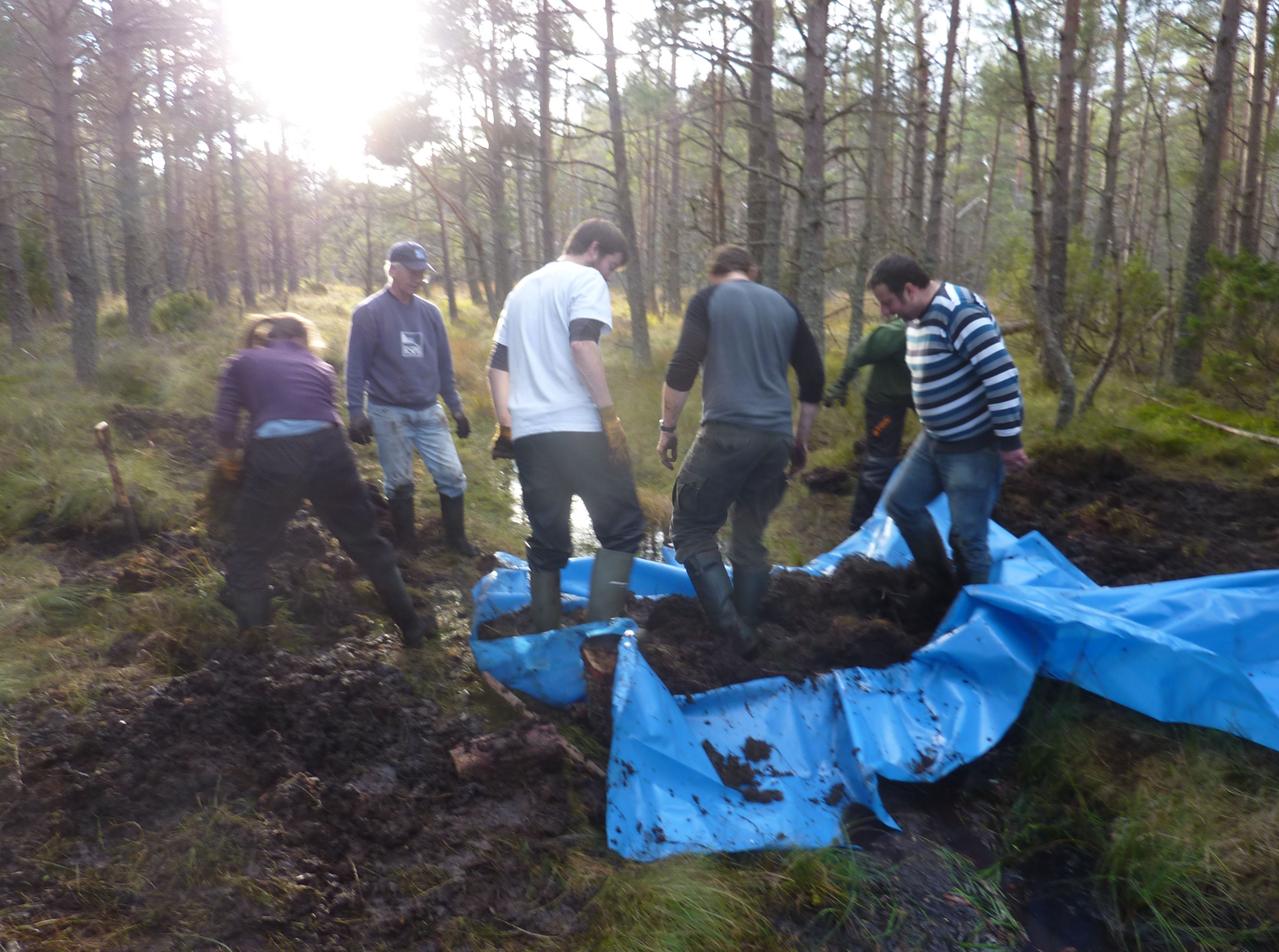
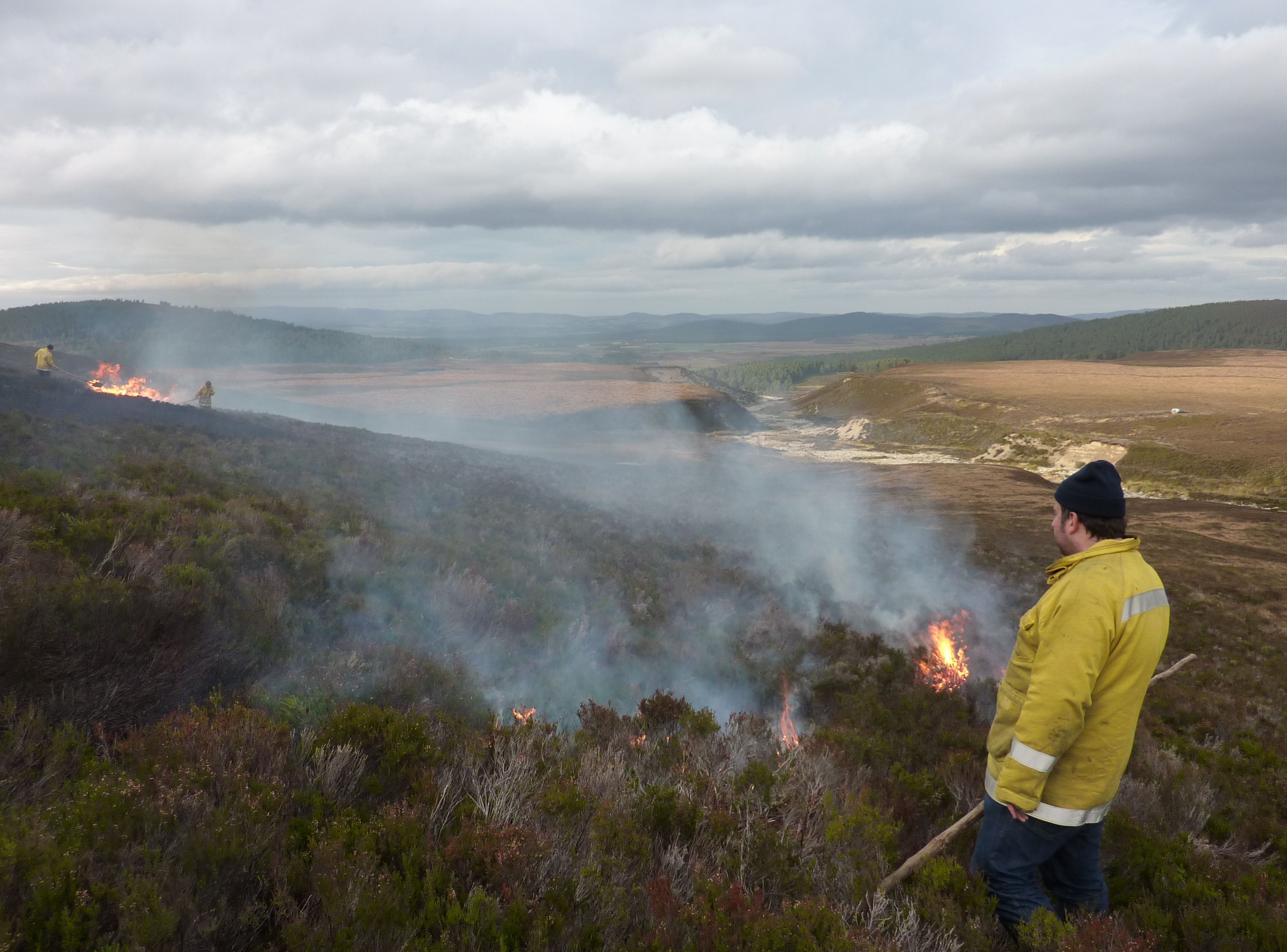
In the last couple of weeks we’ve started heather burning, up on the moors, to create patches of flora regeneration. We’ve also been doing the usual deadwood creation, dam building and removing some roadside regeneration (pine trees, especially, grow in thick patches alongside tracks because of the ground disturbance).
Last weekend (29th), I accompanied team pine marten (Laura and Dave) on their last visit to Mar Lodge, to pick up the hair tubes that Laura had set up there. Here are some photos from that trip, one from one of last week’s damming days, and one from this week’s burning…
-
- Dougie watches on as Gregg and the Andys pack the dam full of sheet
-
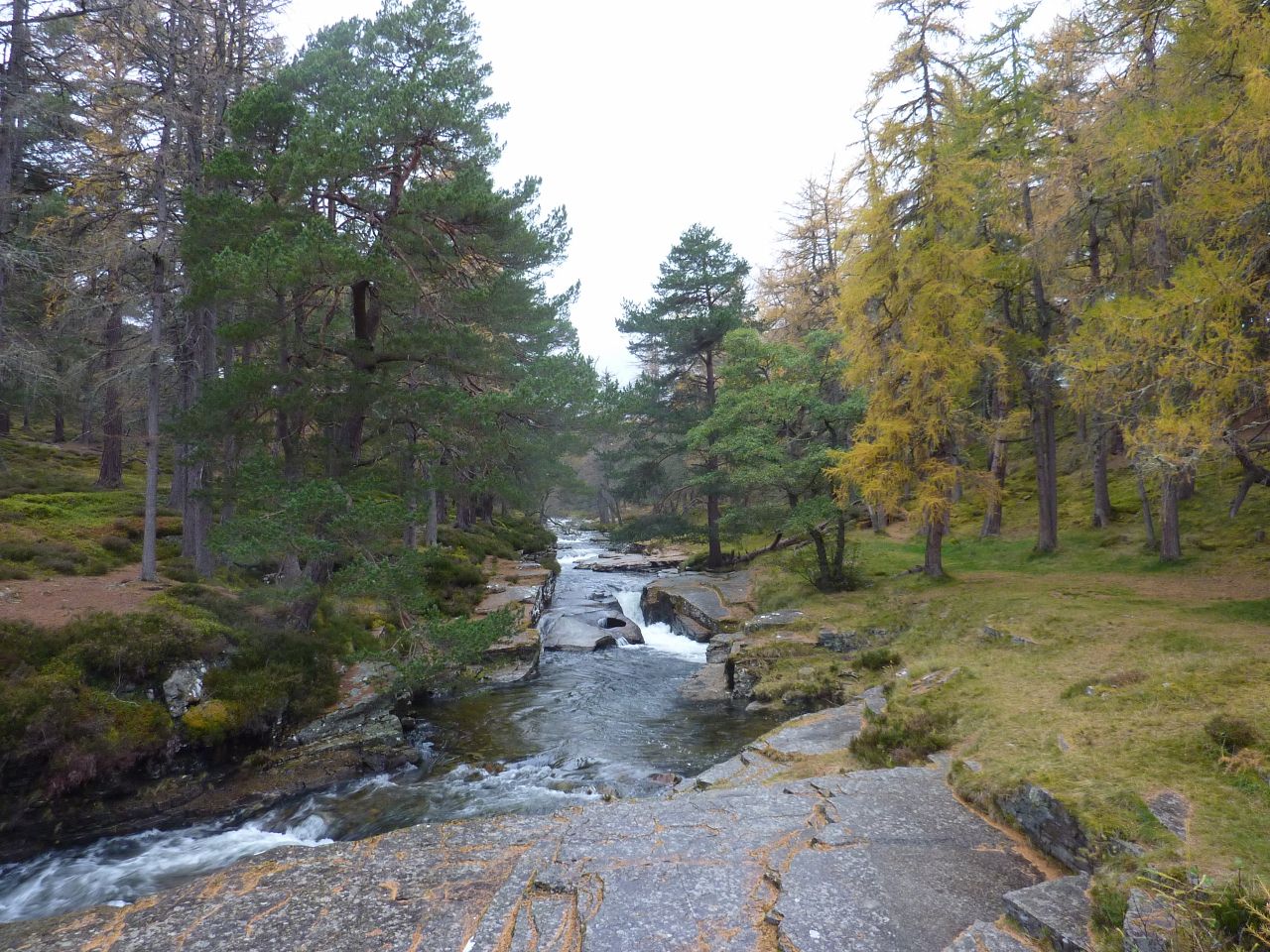
- Quoich water, which is a bit of a crap name for a Scottish river if you ask me
-
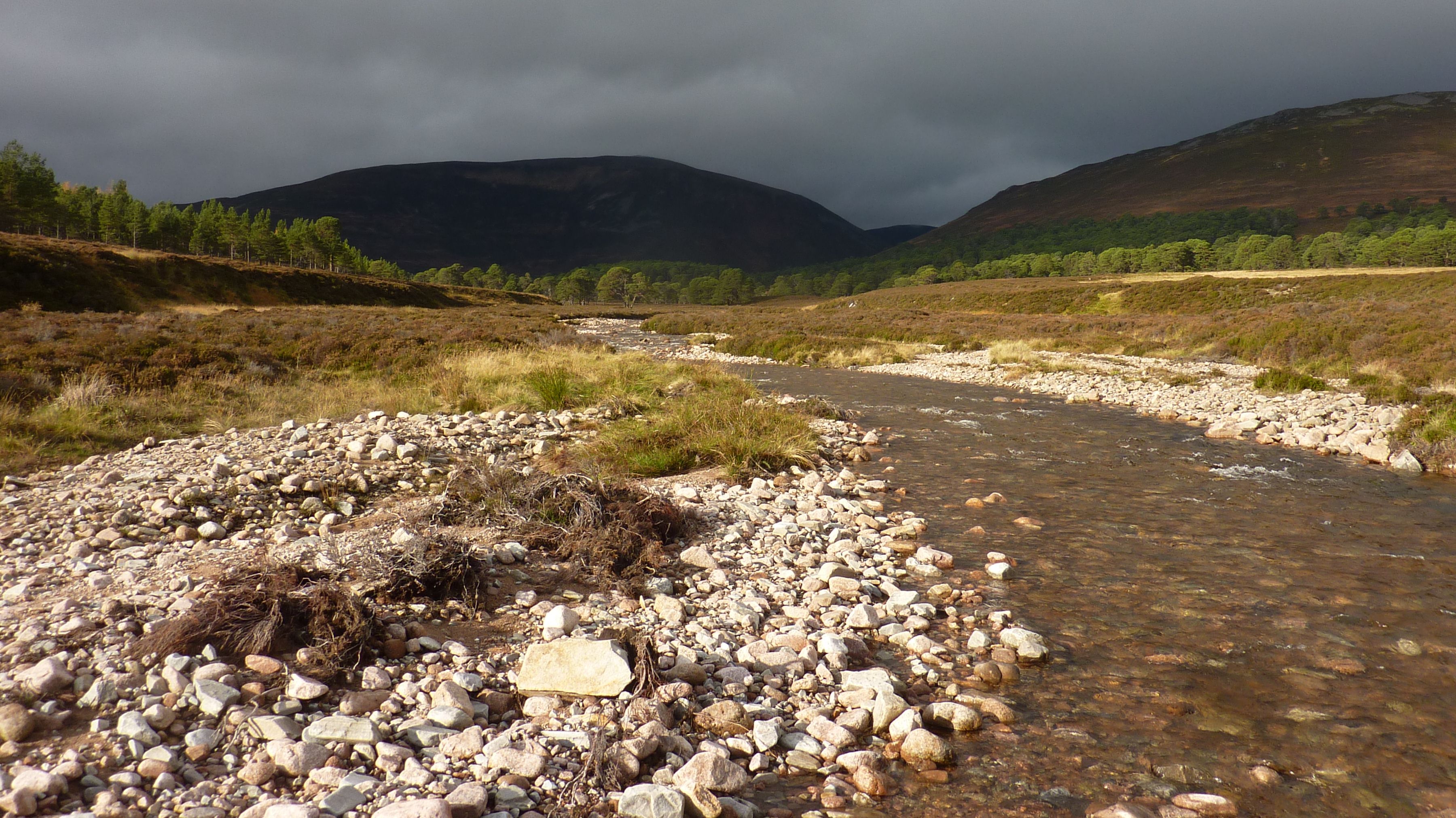
- Further up Glen Quoich
-
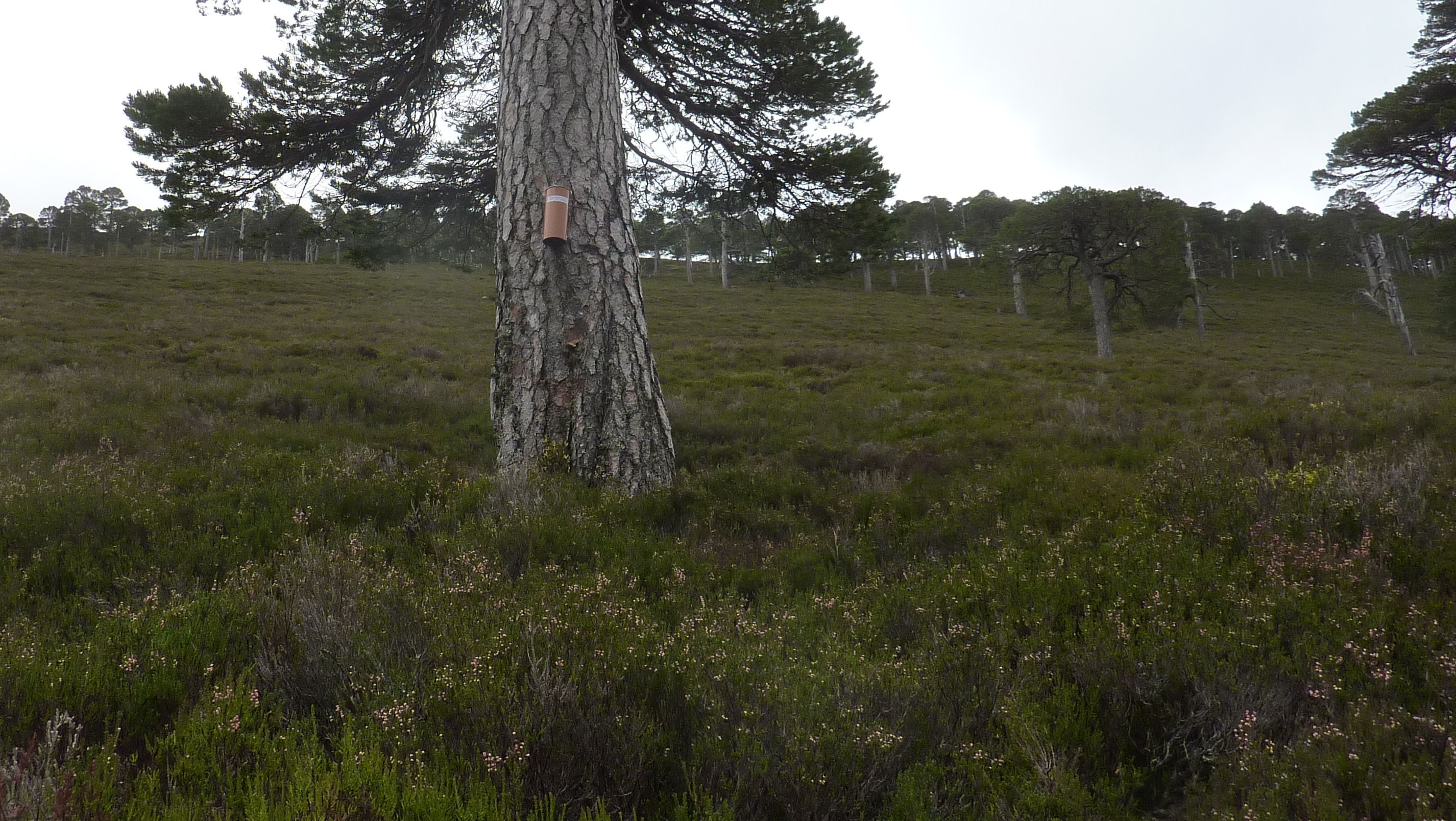
- A hair tube, and a nice tree for a picnic. You can see here how there are lots of beautiful old scots pine, but no obvious youngsters yet
-
- Andy and I look after the Big Fire, with a great view of some of the reserve
Choughs on the BBC, hang on, I recognise them…
A couple of days ago Fran Miller sent me a link pointing out that some Cornish choughs had made it onto the BBC.
http://www.bbc.co.uk/news/uk-england-15357028
The link describes how four young choughs from West Penwith in Cornwall have made the journey North, up the Cornish coast, towards Newquay and Padtsow. If you’ve kept up with previous entries you’ll know that this group contains two of the boys from the brood that I was watching in the spring. And, even better, the picture shown on the BBC page is of Brownblue and Whitebrown, their proud parents, and the birds that I was blogging about at the time.
For some unfathomable reason, the BBC haven’t used one of my photos.
Another day out with Ron
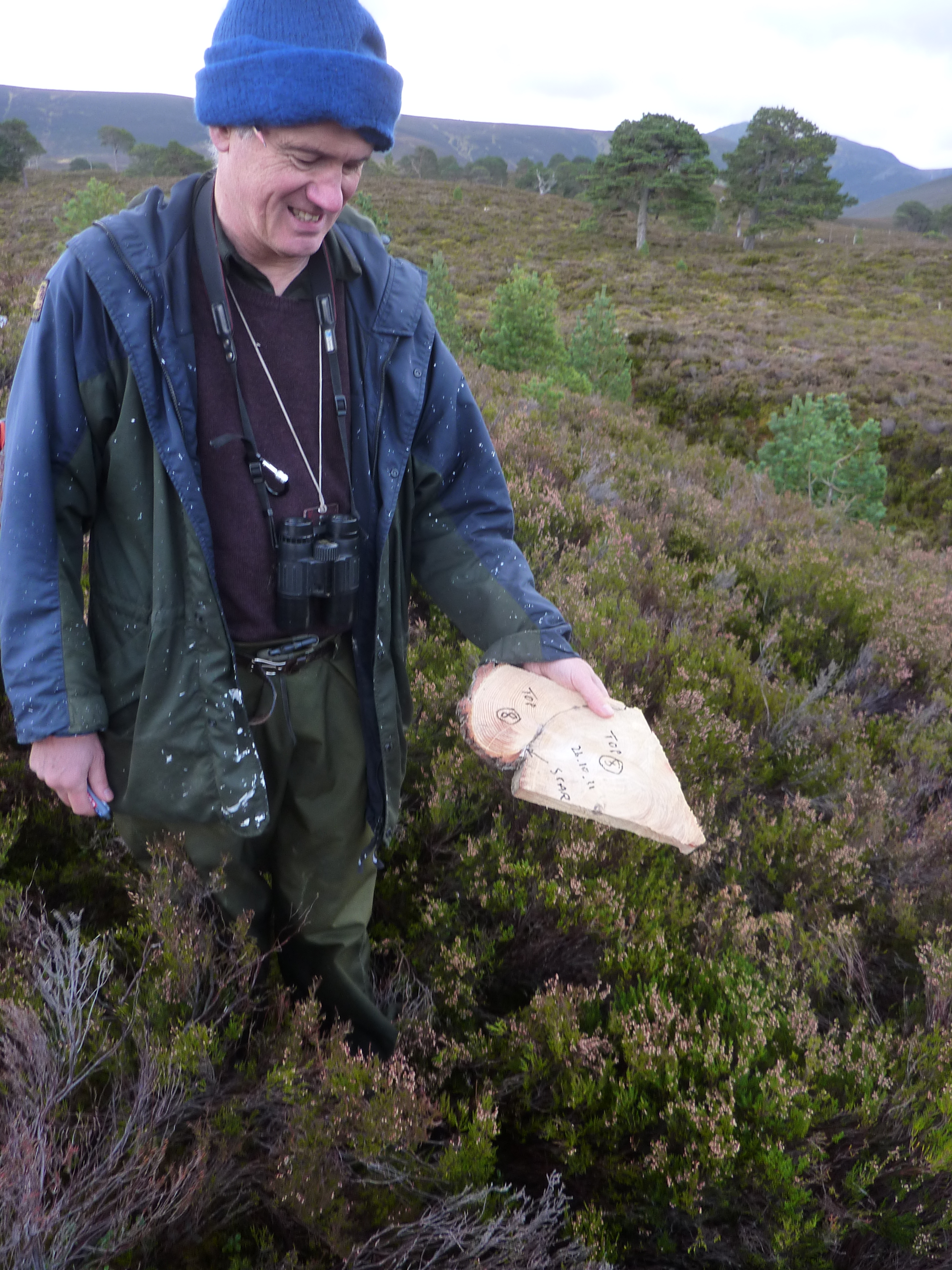
I’ve been lucky enough to spend another day with Ron Summers again today. This time Rachel and her friend CJ, both from St Andrews university, joined us. Rachel is studying how trees on the reserve can provide a map of when and where fires took place at Abernethy for her final year degree paper. Today they had a glorious chance to watch me cut wedges forth from Scots pines with a carefully wielded chainsaw.
-
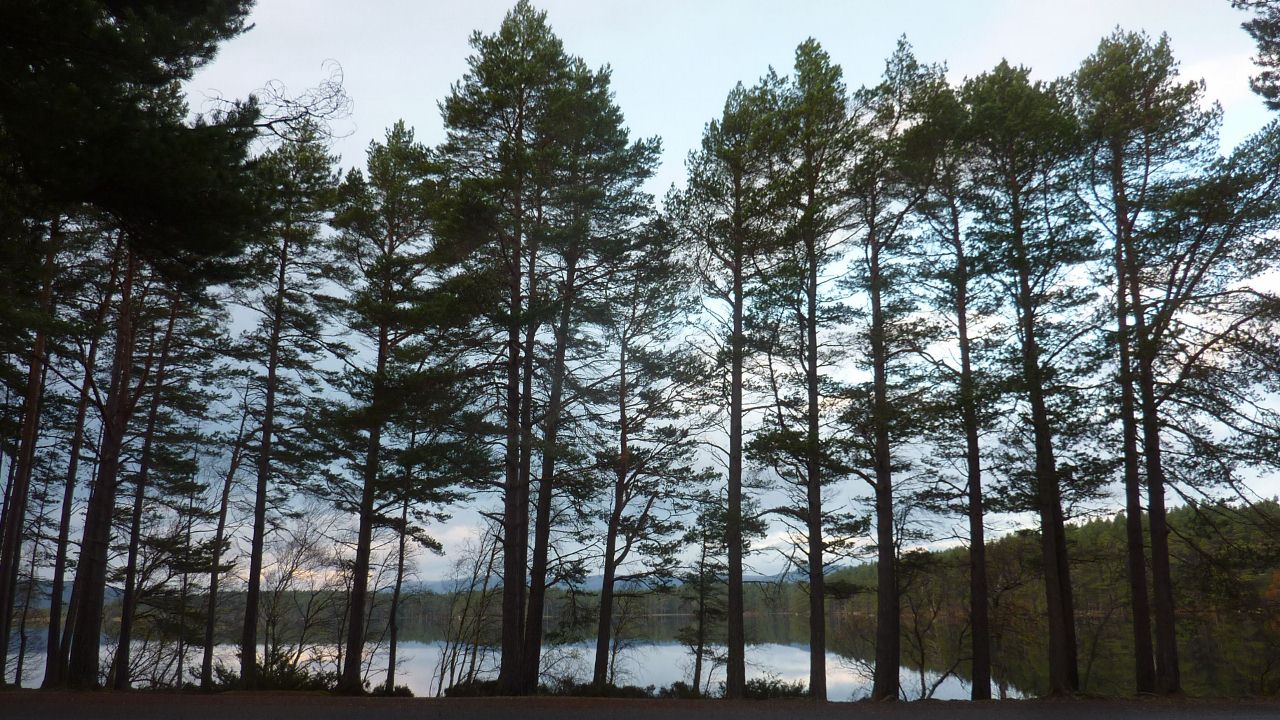
- Loch Garton
-
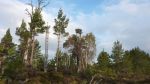
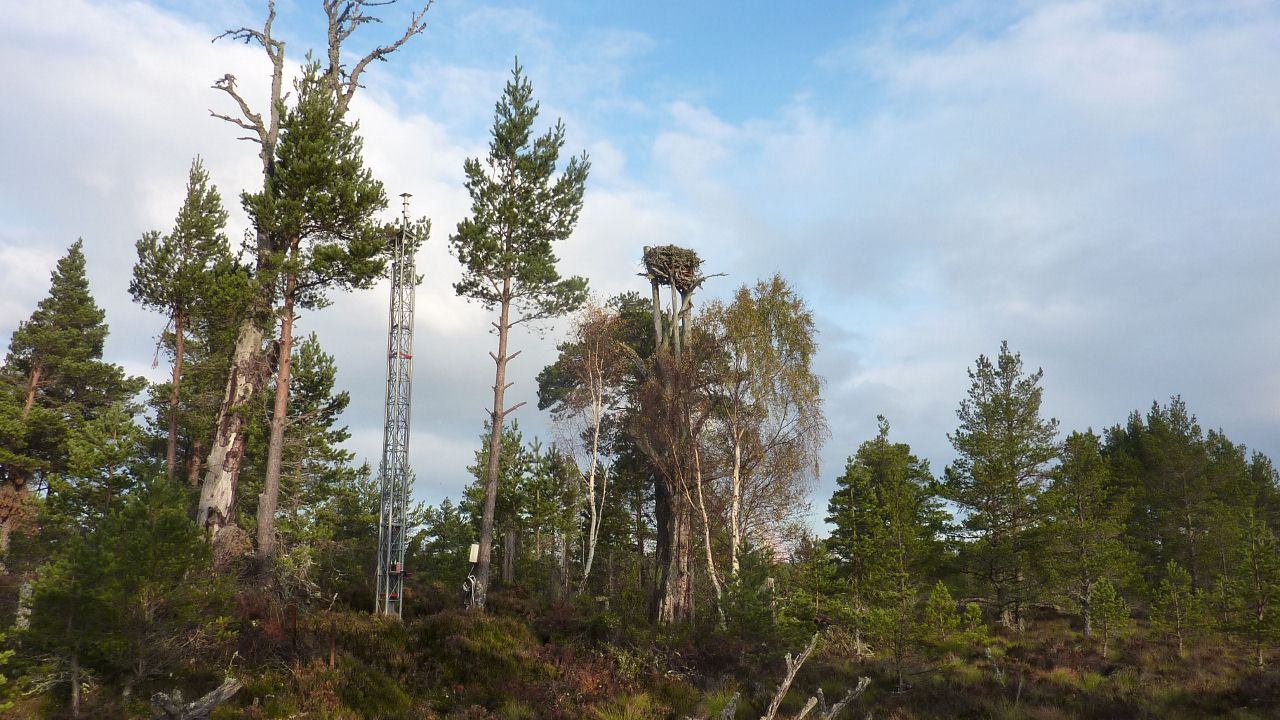
- Who would live in a house like this?
-

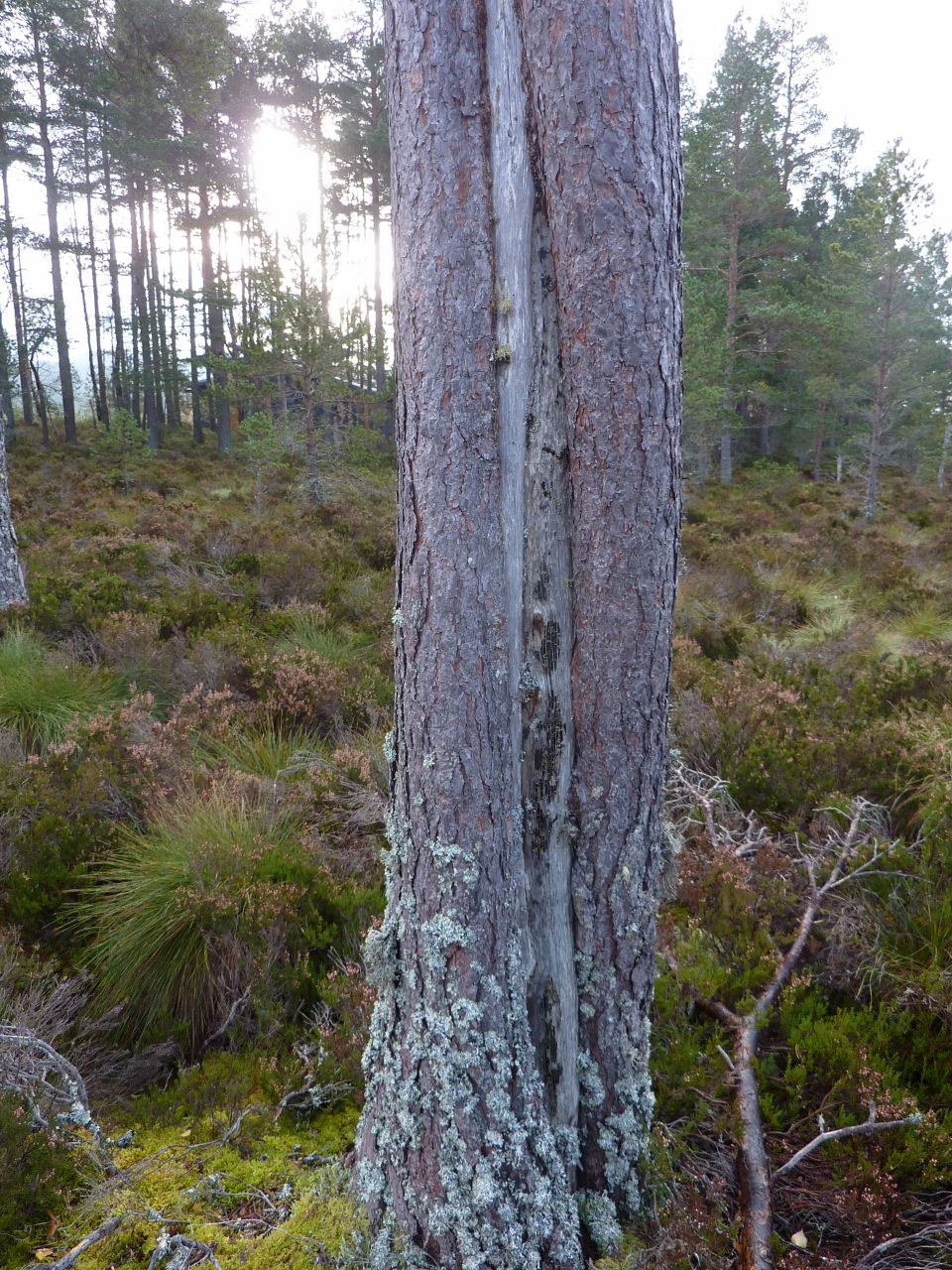
- Not one, but two firescars (you can see where the first is charred)
-
- Ron and a wedge.
-
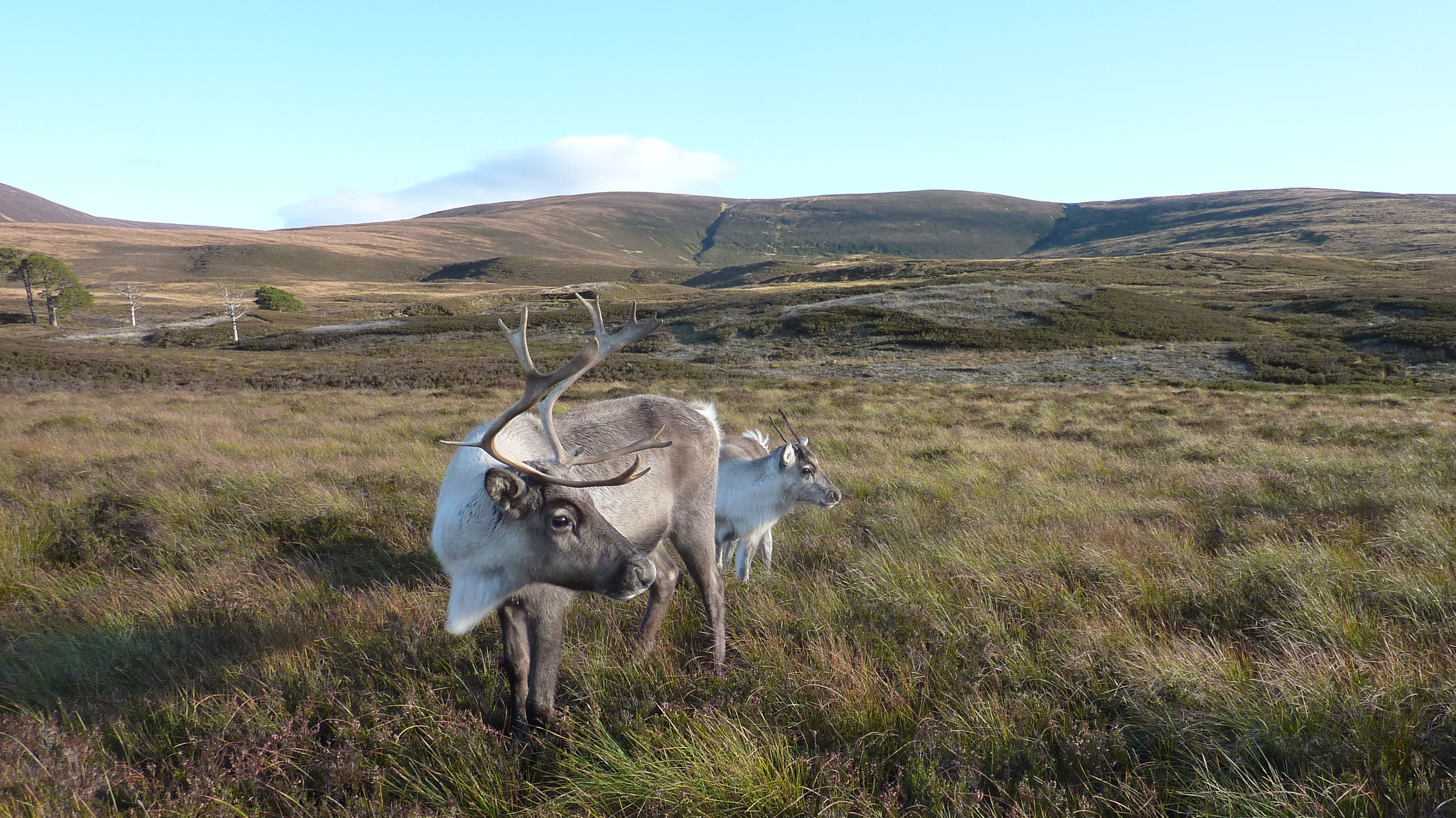
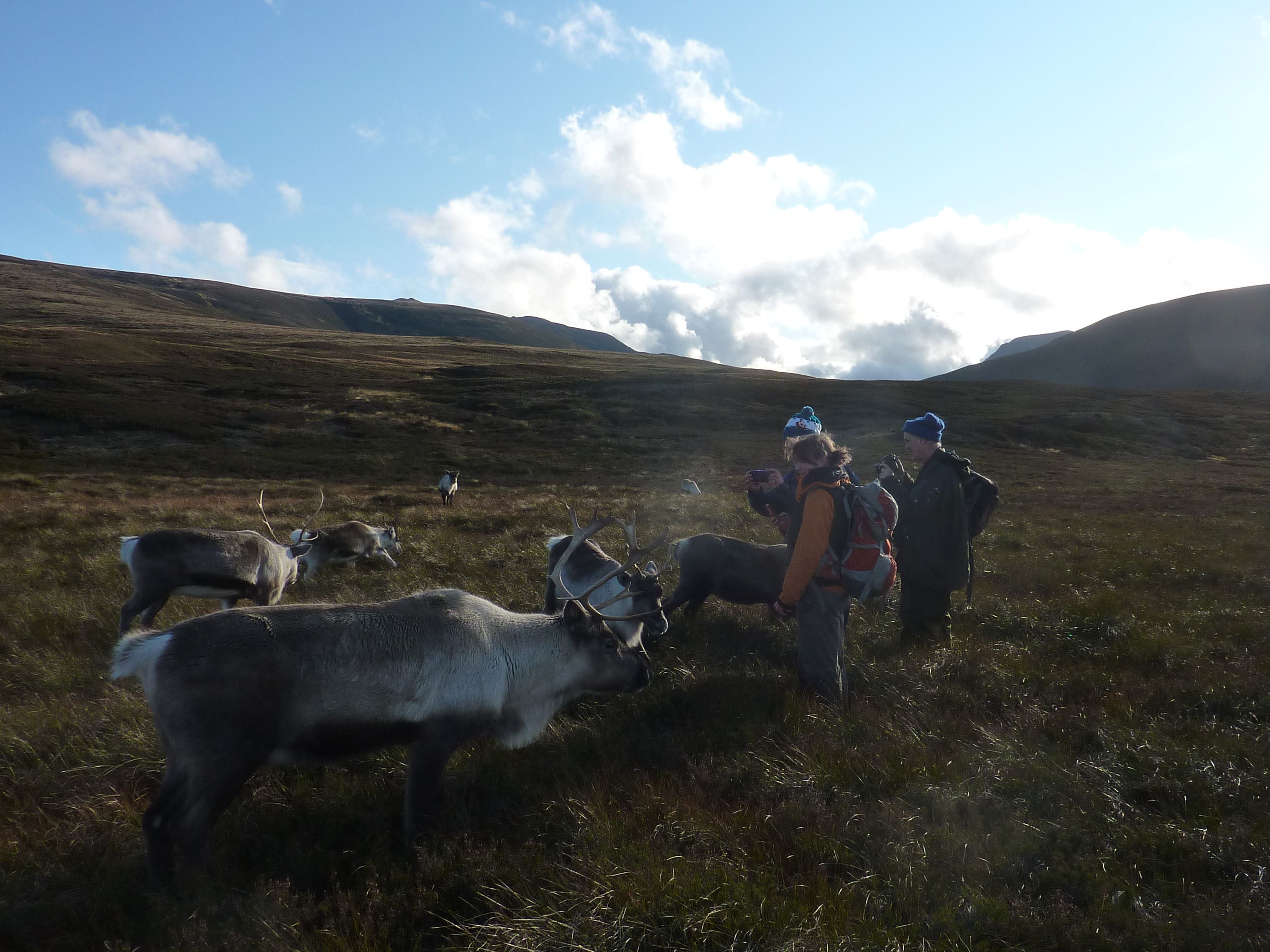
- Reindeer sometimes wander onto the reserve from the local reindeer farm

-
- They are fantastically cute, but not welcome visitors, as they eat the regeneration
-
- Ron uses his special reindeer communication skills to call them over to meet Rachel and CJ
-
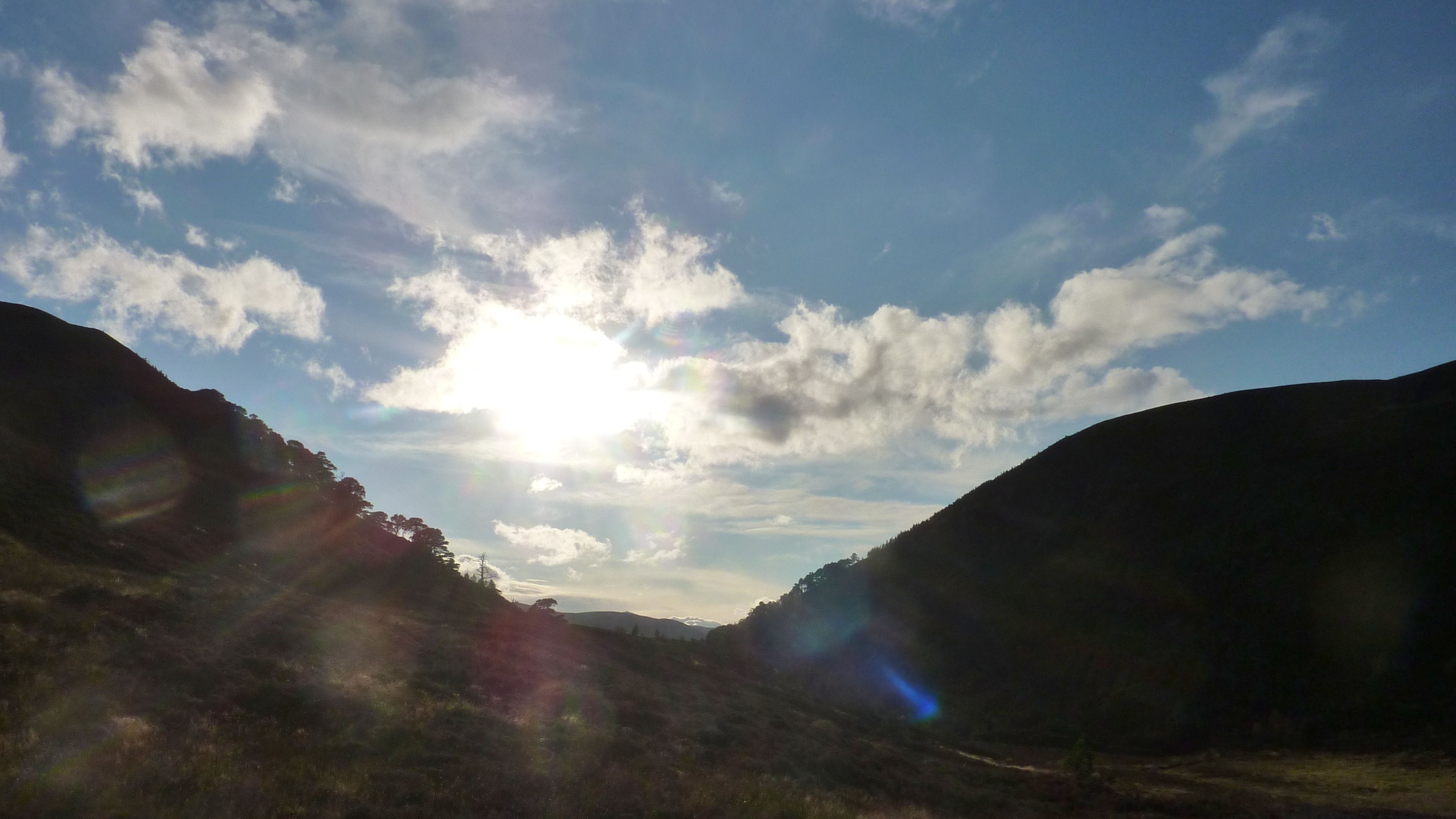
- Looking South into Glenmore FCS estate
Reserve work…
Just to give you an idea of what I’m up to… Yesterday myself, Alice, the two short-term vols (Andy and Andy), and Gregg, who’s on secondment from the RSPB Scotland office created deadwood in the morning. This involves killing trees (generally pine) in a plantation in a variety of ways, to give space to broad leaf trees or granny pines and let light through to the forest floor.
As I have a chainsaw I ring bark trees, damage them (so they are more susceptible to being blown over), or high stump them. The non chainsaw folk are, meanwhile, pulling trees over with a winch, or ‘totem polling’ them. The aim is to leave the majority of the deadwood standing, as this generates invaluable woodland habitat for birds and invertebrates. It sounds harsh, but the plantation is densely packed, and we can create a lot of deadwood by working on just a small percentage of the trees.
In the afternoon we strengthened a fence around an experimental regeneration enclosure. I then had to rush back to the lodge to enter the Osprey satellite tracking data for the week. The news on that front is that the two young that we’re tracking have both made a successful trip to Western Africa, and appear to be fishing and hanging around on the rivers in that part of the continent.
Today, myself, Gregg and the two Andy’s accompanied Bob (one of the wardens) to Craigmore wood, another part of the reserve, where we checked the fence and removed rogue Norway spruce from the site. We also checked fences near Mondhuie and Lyngarrie.
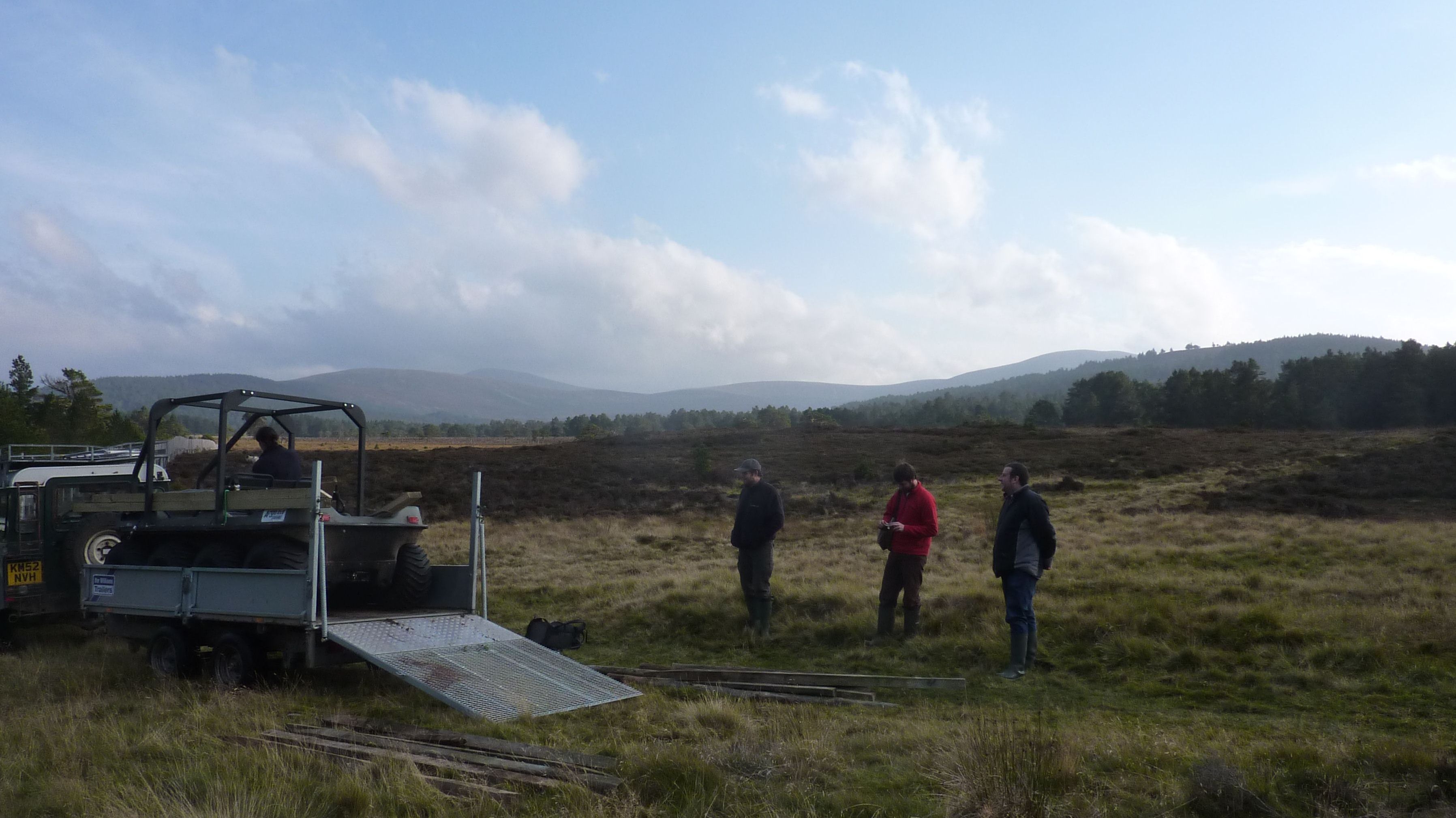
From left to right, Alice, Gregg and the two Andys.
Mar Lodge with team Pine Marten
Laura Kubasiewicz and David Bavin are currently staying at Forest lodge while they research the habits of local pine martens for Laura’s PhD. Having collected data from Abernethy they are now collecting hair tube (a tube that the pine marten climbs up to get bait and in the process leaves hair on a strategically positioned sticky pad) and scat samples from Mar Lodge. I was lucky enough to tag along with Laura and Dave for the day to see Mar Lodge and get a bit more experience in collecting samples (with blue sterile gloves on)
Mar Lodge is a massive estate owned by the National Trust. At first sight it seems idyllic, with beautiful fast flowing burns and stately granny pines mixed with the odd colourful larch. However, a little more thought and I realised that all is not so well on the estate. There are a good number of snags (standing dead trees, in this case scots pines, likely to have died in the last 50 years), and some fallen dead wood, and there appears to be very little significantly sized regeneration. Having said that, it appears that the National Trust Scotland (NTS) are on the case. They have recently opened up their management plan for consultation and the reduction in deer numbers over the last 5 years has started to lead to significant changes in the ground flora, and an increase in seedlings.
As for the pine martens, we found lots of scat and some hair in one of Laura’s hair tubes. Pine martens have quite big territories, but Laura can find out how big by genetically testing the hair from the hair tubes. This allows her to determine individuals and their gender.
-
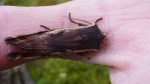
- This red sword grass (Xylena vetusta) was hiding in one of the hair tubes.

-
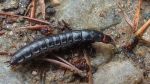
- A beetle larva, possibly ground (carabid) beetle.

-
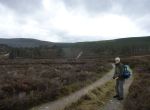
- Laura at Mar
Trees for Life week at Plodda Lodge and Glen Affric, 15th – 22nd Oct
I’ve just finished Focalising the last ever TFL week at Plodda Lodge. Over the last two years Plodda has become my favourite TFL accommodation. For me it has a very intimate feel with a communal eating area and a single bunk room. It’s funny, I can remember avoiding it during my early volunteer weeks, because I was put off by the idea of a single bunk room, but due to some last minute changes to the work week schedule in early 2009 I was asked to go there for my first week as a Focaliser. I was joined on the week by some good friends, from TFL and some I knew outside of the organisation, and I can remember lying in the bunk room one night, listening to everyone breathing/shuffling/talking in their sleep (a couple of them seemingly talking nonsense to each other!), and thinking that I felt an incredible feeling of well-being in amongst them.
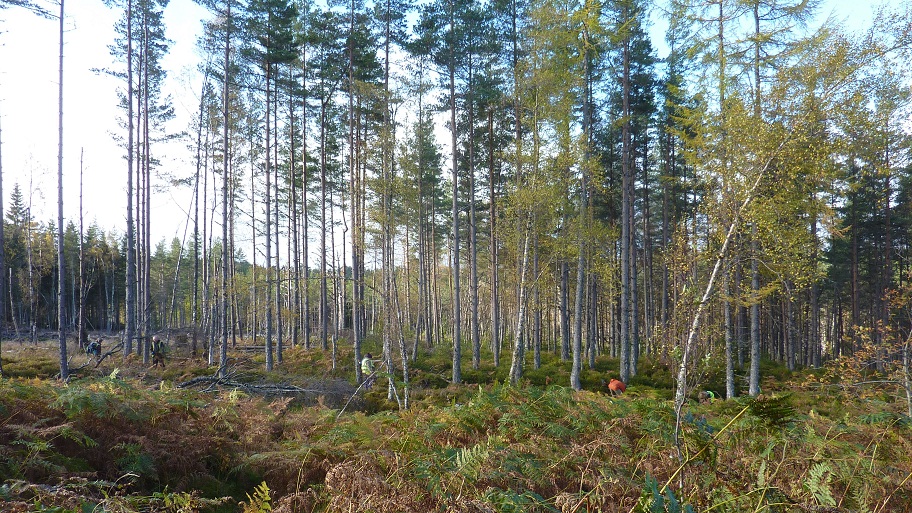
During this week we carried out non-native tree weeding on three of the days, removed a few hundred metres of fencing on a wet day at Kerrow wood, and spent a day in the nursery. One of the weeding sites was alongside Loch Affric, which is in a fantastic, rugged setting. On our last day there we took the opportunity to visit the Athnamulloch bothy, a place that TFL have used for work weeks in the past.
Special thanks to Mick, my co-focaliser, and to Gordon and Julie for their support during the week. In some ways this was the most interesting week I’ve spent with TFL, and I’m grateful that I was able to share it with such a considerate group of people.
I look forward to catching up with the trees from the nursery in a couple of weeks at Dundreggan. Here are some photos from the week. Not many nature ones I’m afraid, as it’s pretty hard to tell if I’m taking a decent picture without an lcd screen or viewfinder on my disabled camera. The ones of Plodda falls and from the hills up near Loch an Eang are taken on our day off.
-

- Pulling ‘exotics’ out from under native tree species
-
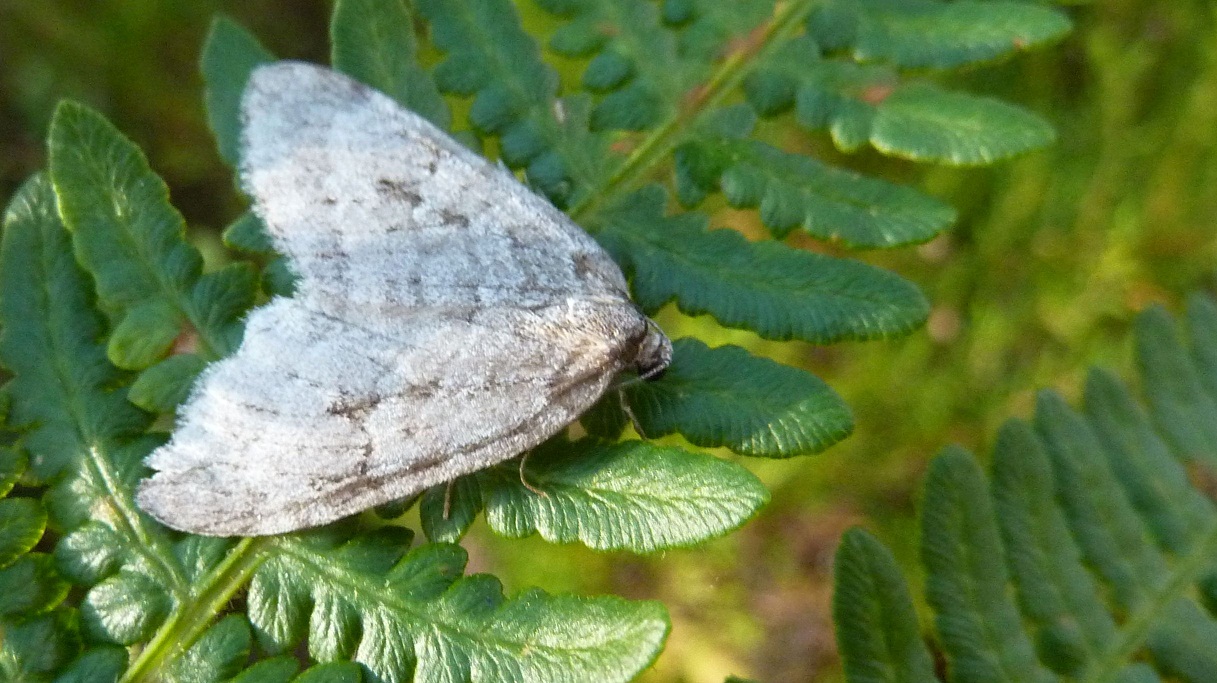
- Autumnal moth (Epirrita filigrammaria)
-

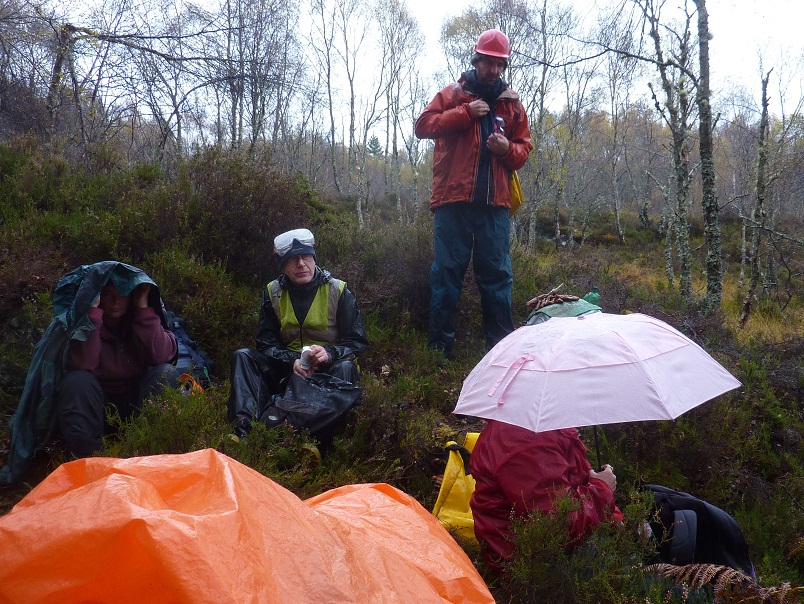
- Tina sports the first umbrella I’ve ever seen on a work week
-

- The fine weather continues during our day in the nursery

-
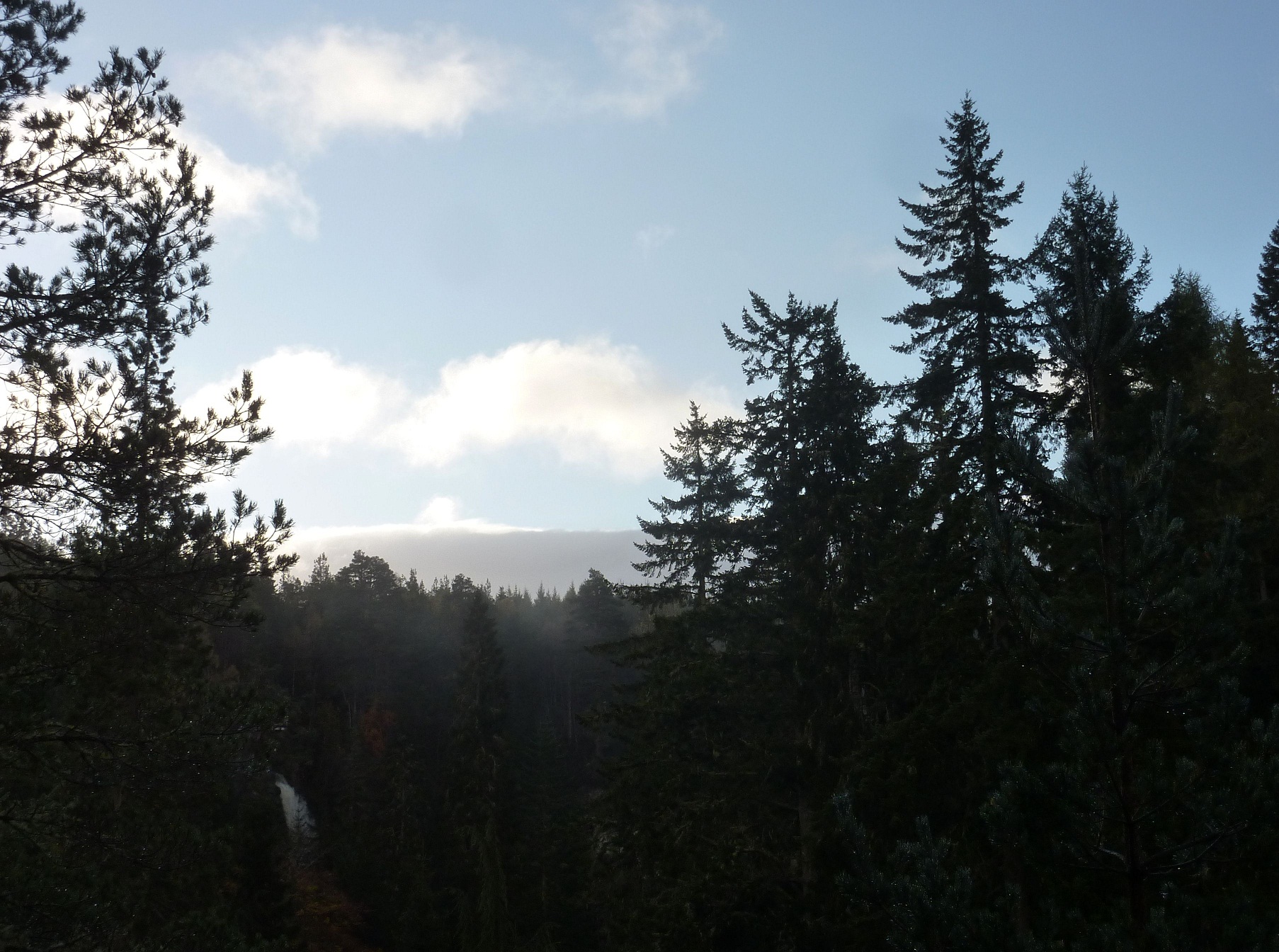
- Plodda falls
-

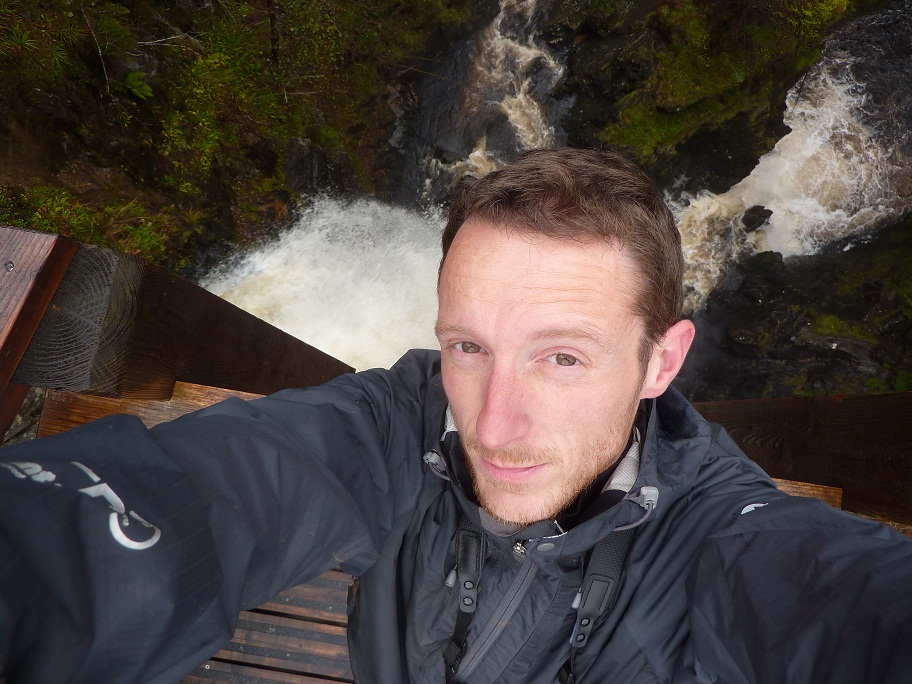
- The blogger demonstrates significant courage to hang his head over a sizeable drop
-
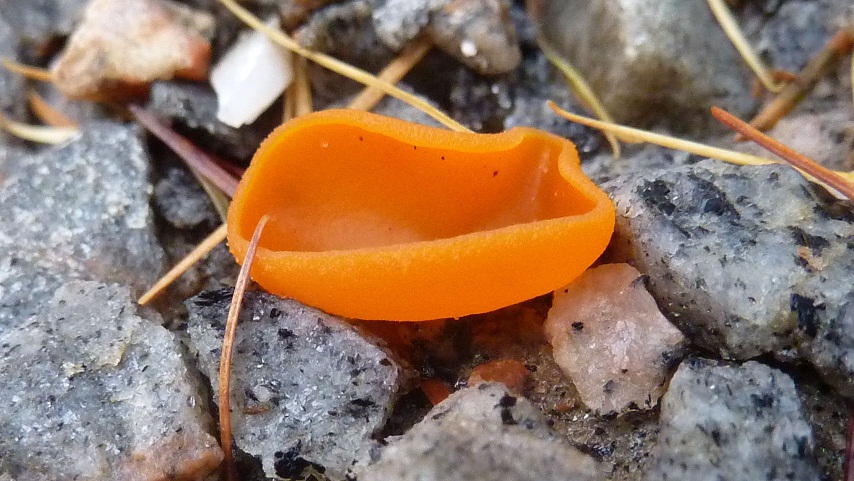
- Orange peel fungus (Aleuria aurantia)
-
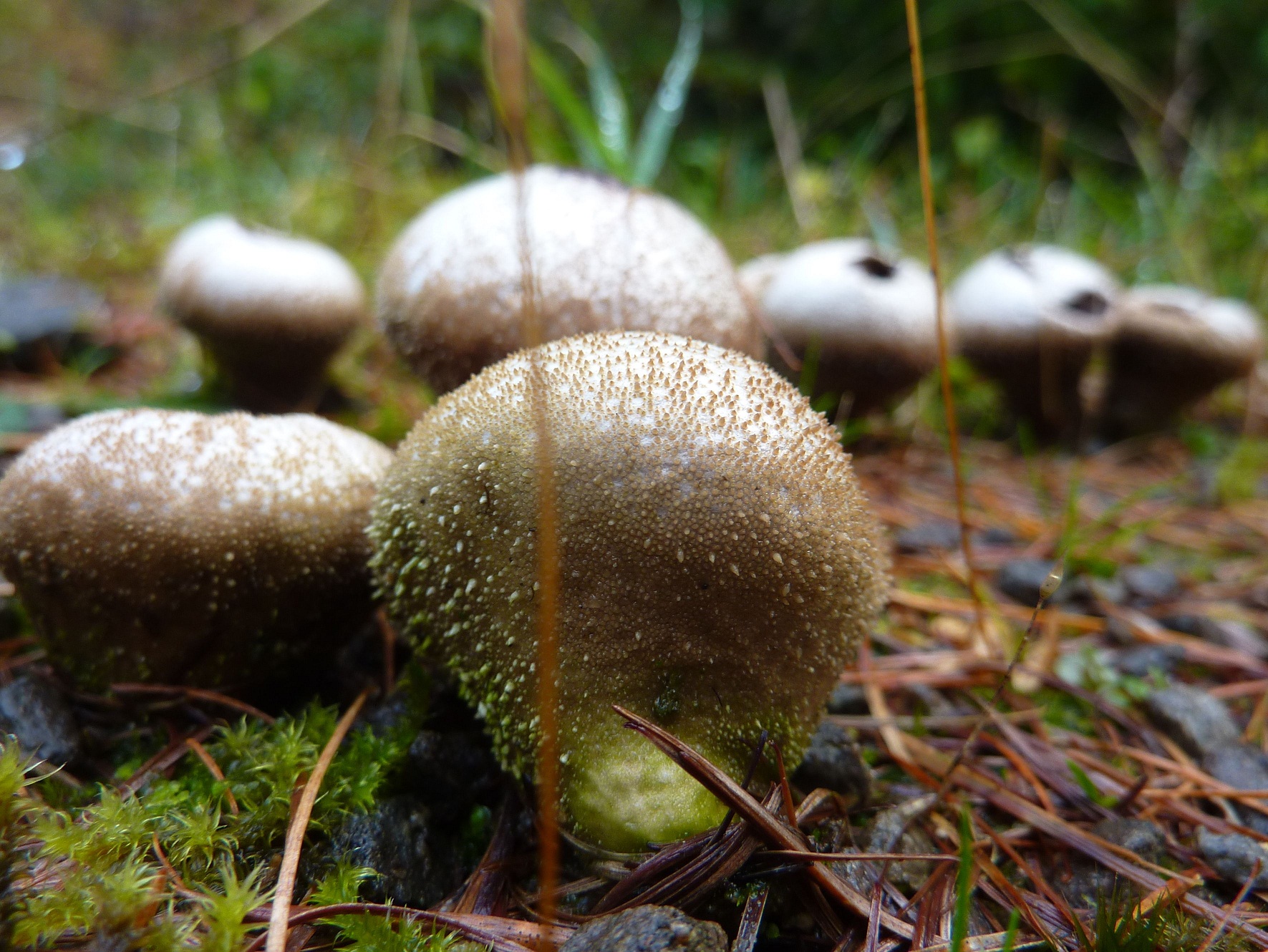
- Common puffball (Lycoperdon perlatum)
-
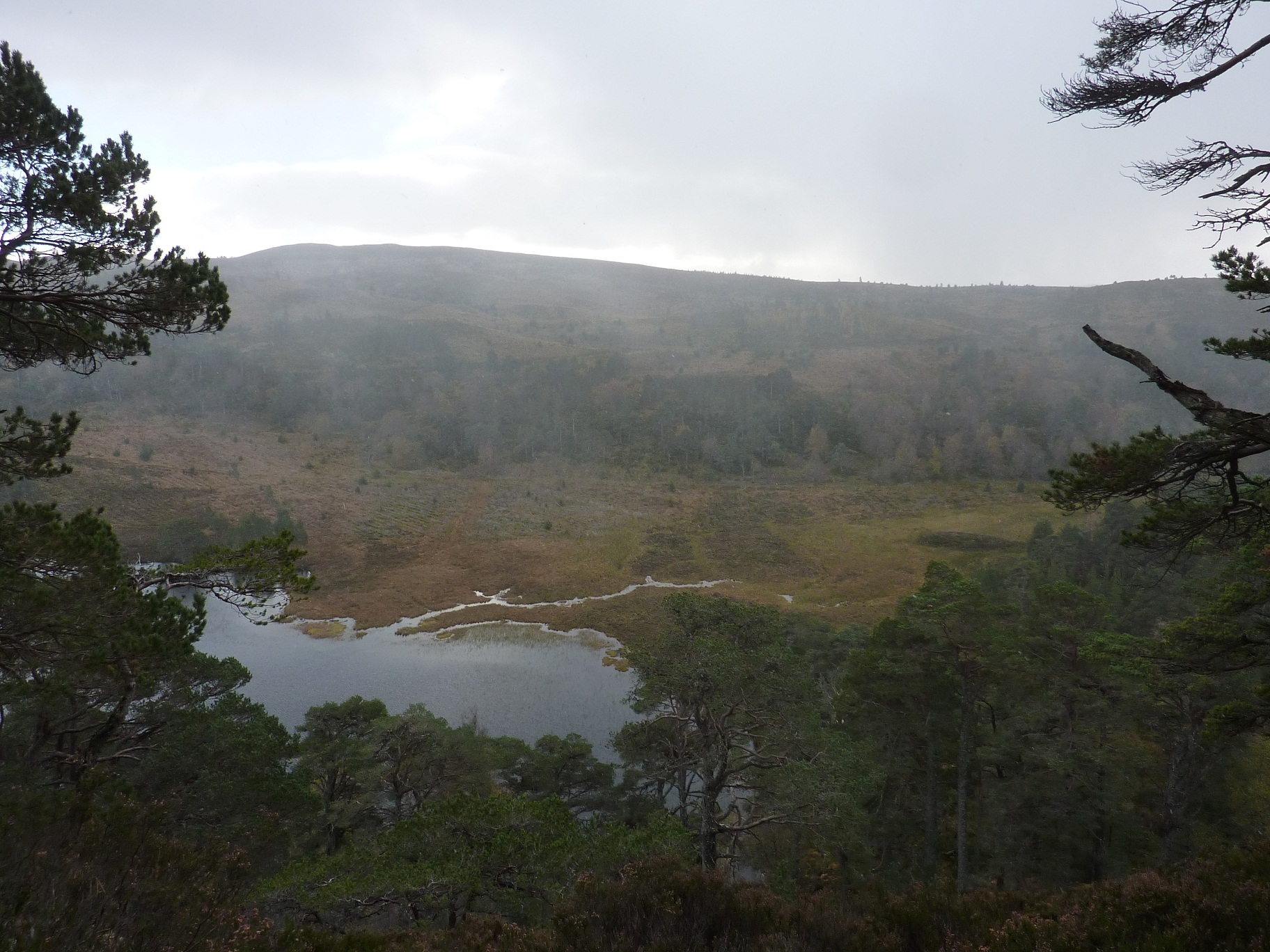
- Ha, I almost fell asleep here on my day off. When I looked up it was snowing
-
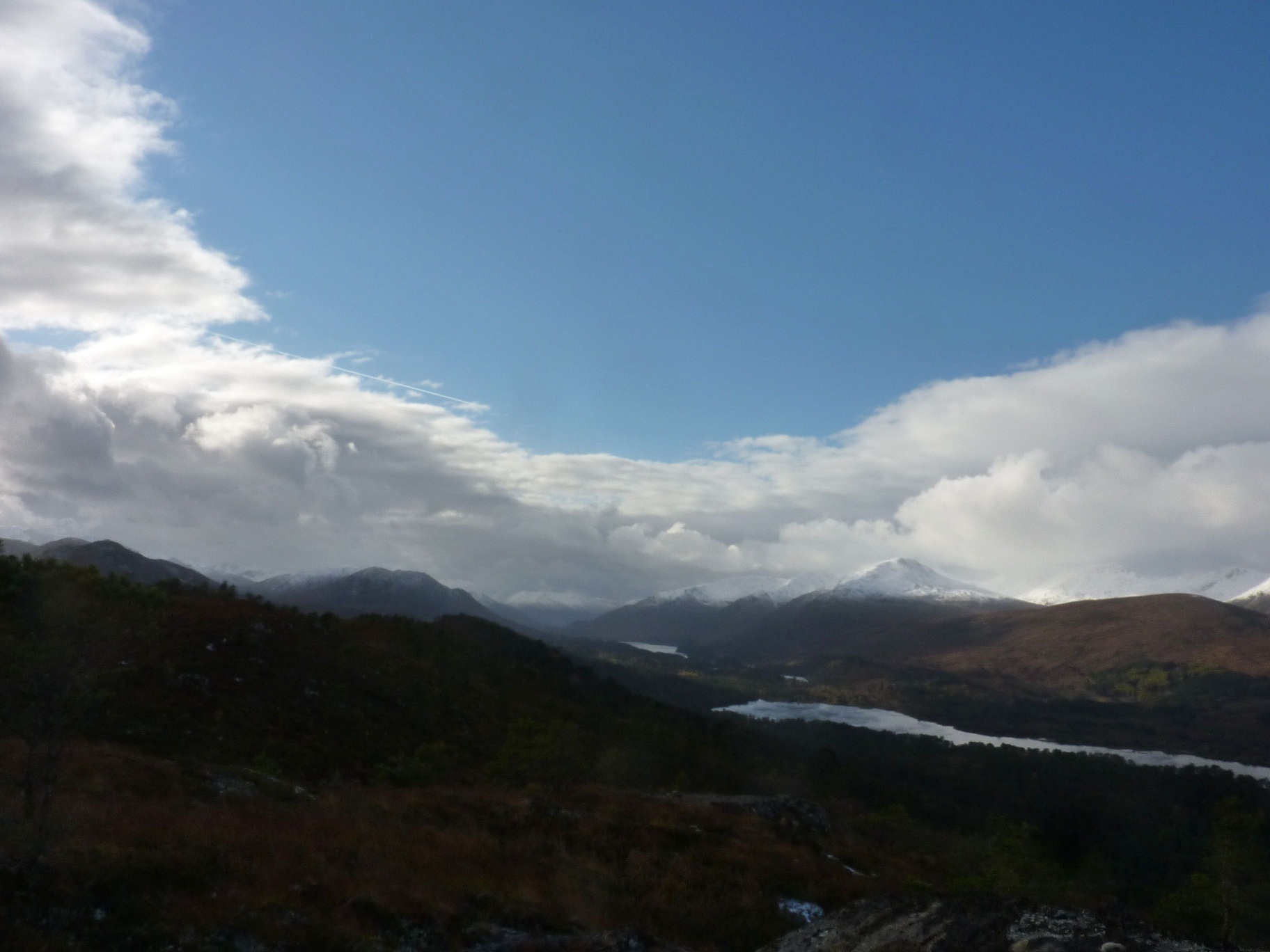
- Glen Affric
-
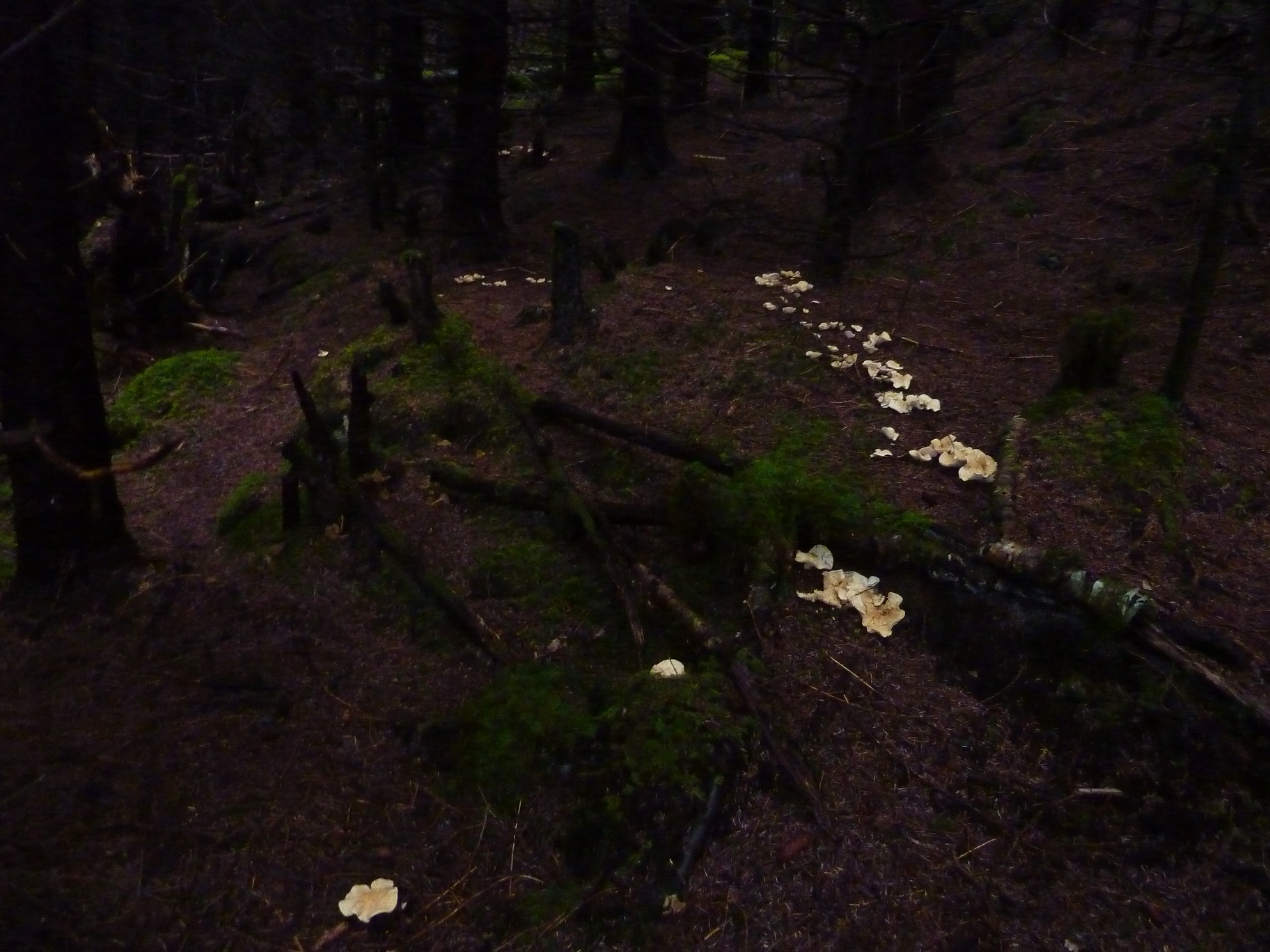
- Where the wood fairies have been dancing
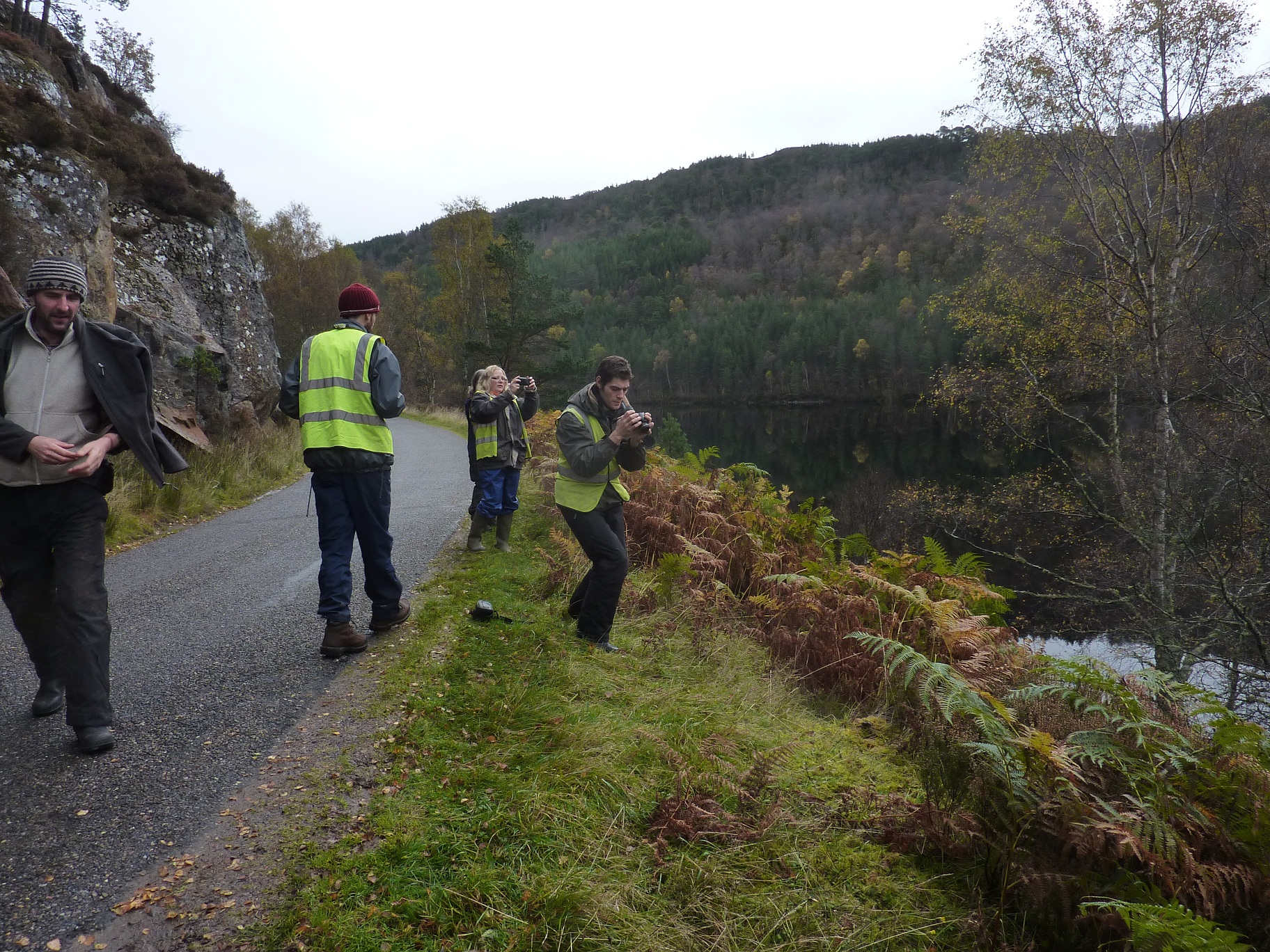
-
- Neil Kirkwood is available for all types of outdoor photoshoots
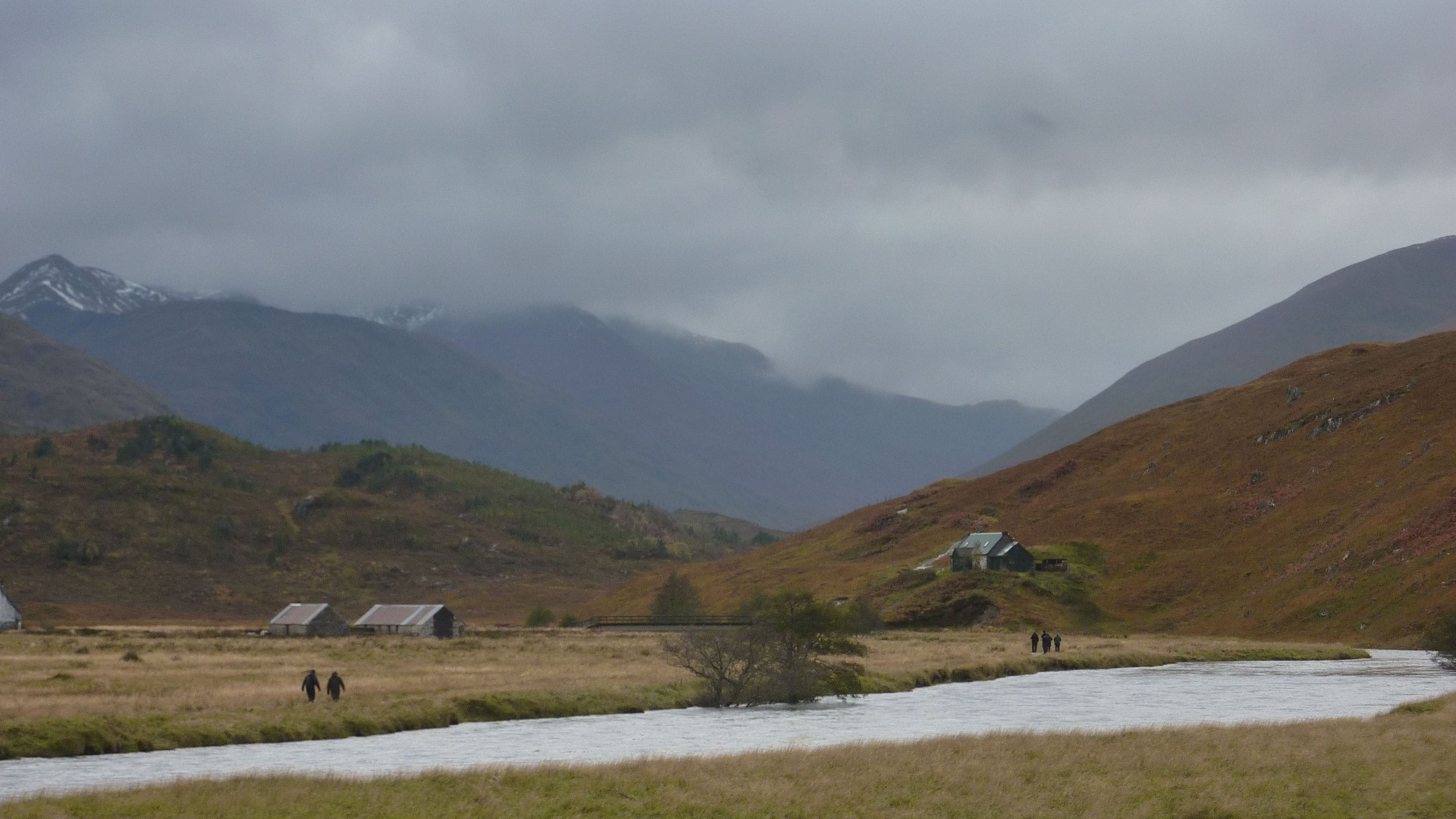
-
- Athnamulloch
-
- After half an hour Chris has nearly climbed to the top of the tree
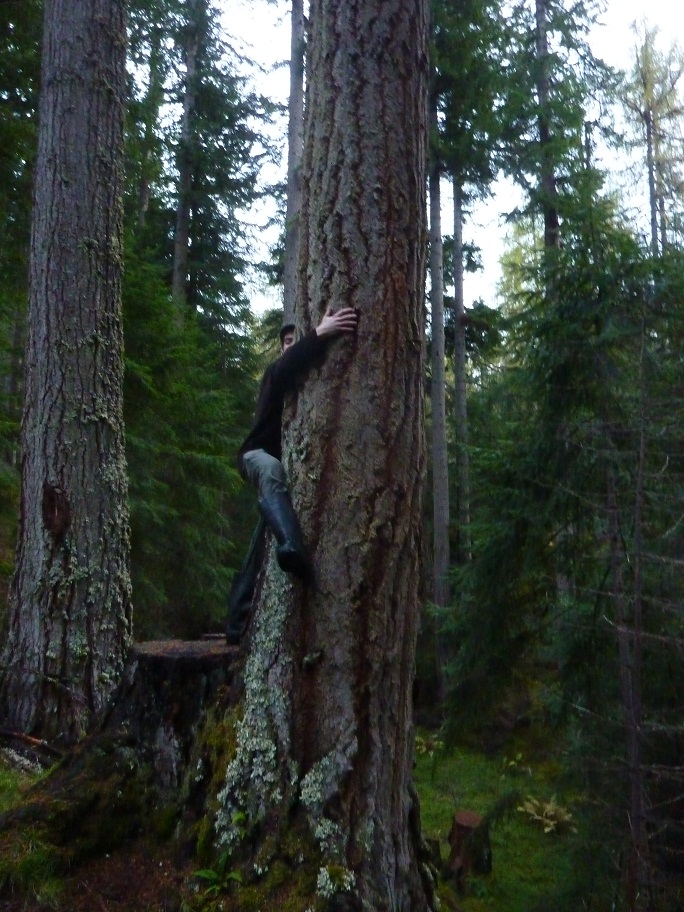
-

- There are 3 of these shots, and this is the least funny, but at least we look fairly normal
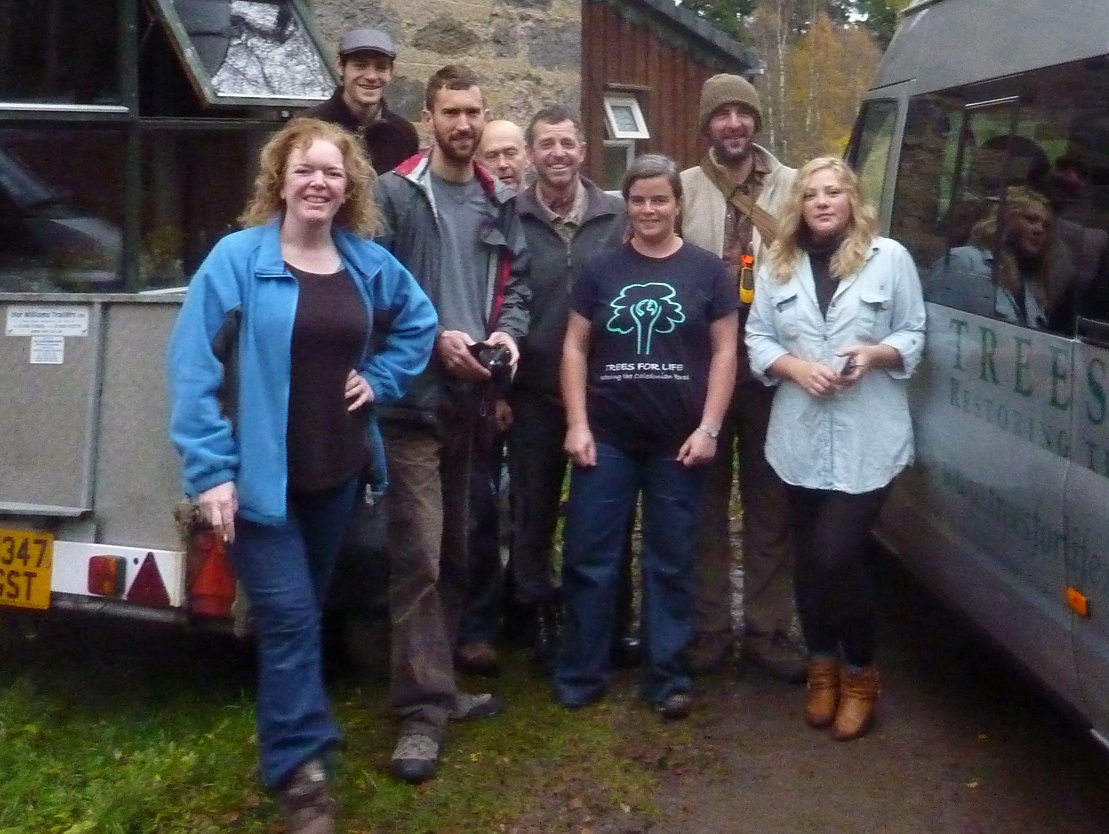
The dam builders
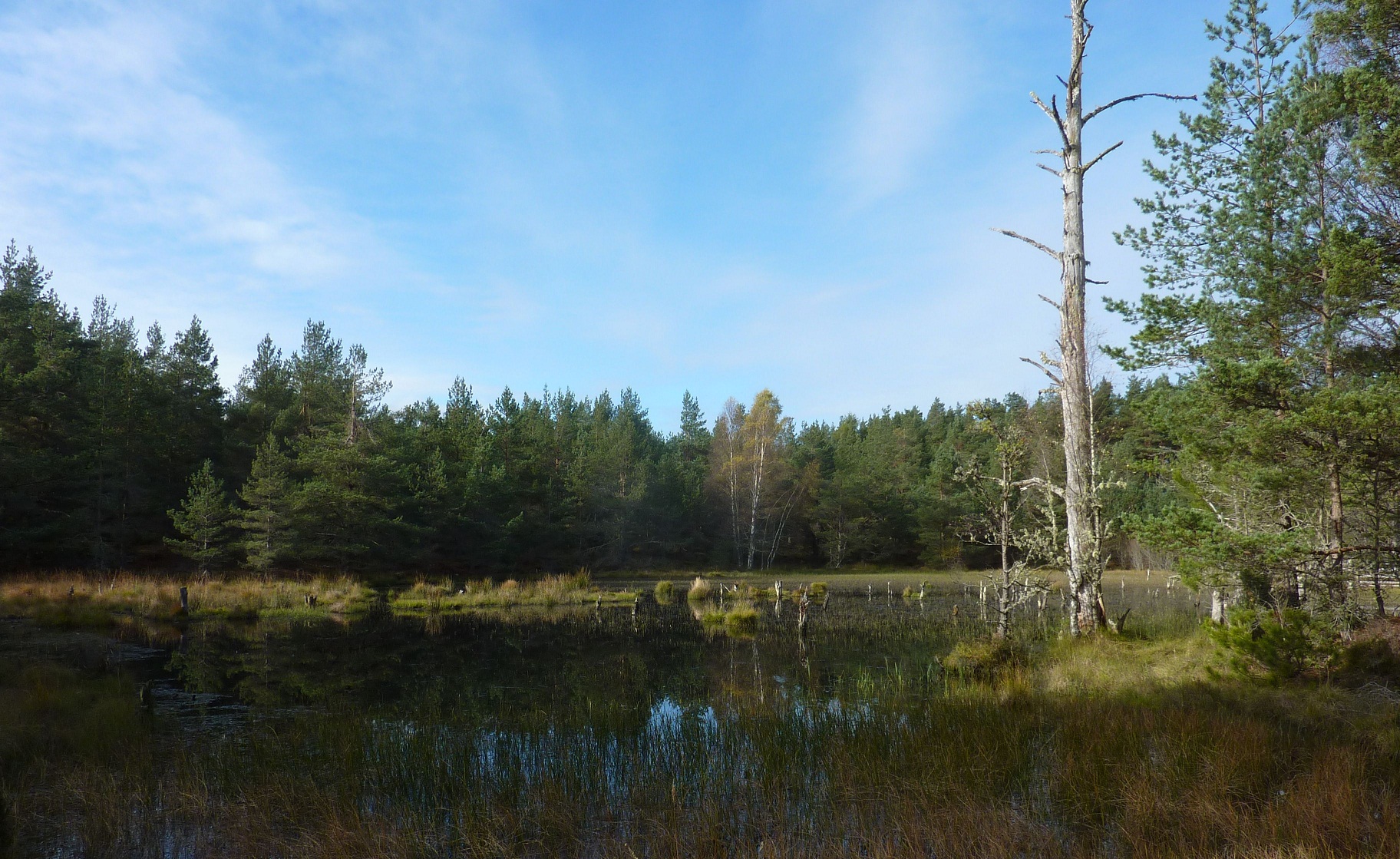
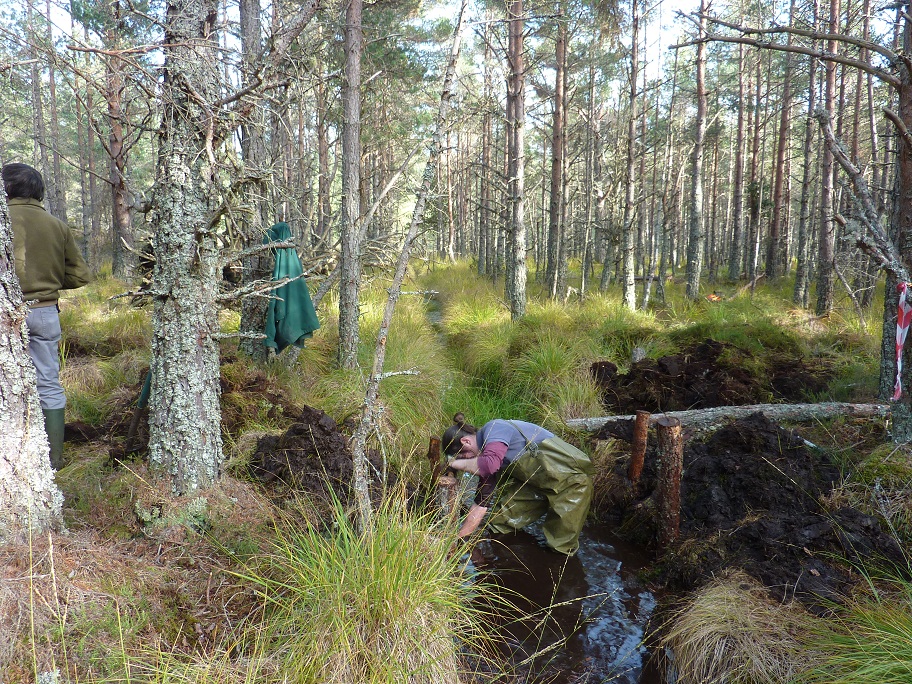
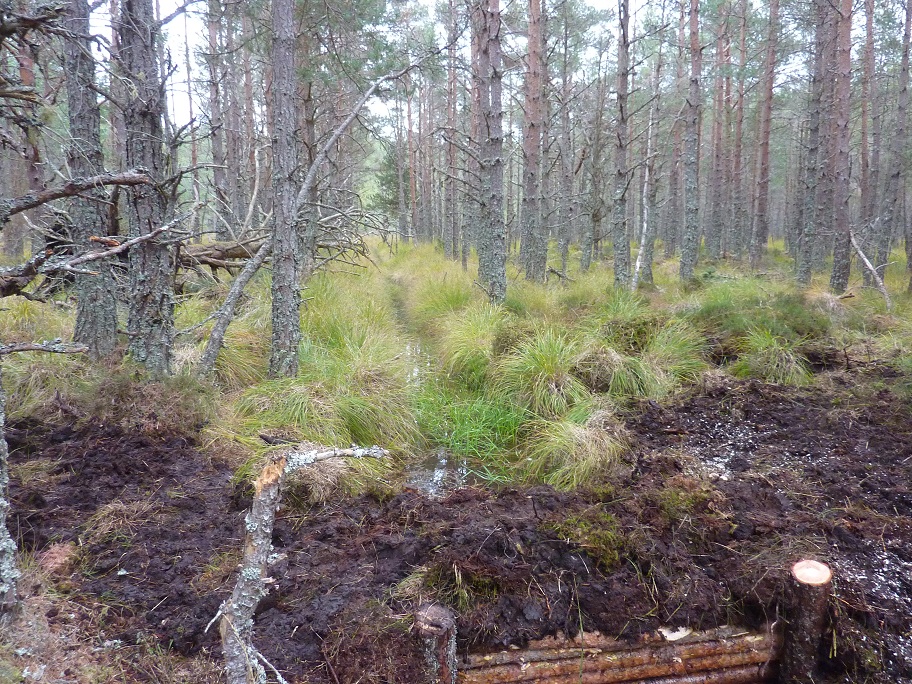
Ross has kindly given me two projects to look after while I’m here at RSPB Abernethy. One is to manage the roadside regeneration on one of the woodland tracks (Mondhuie), and the other is to build a series of dams to block some drainage ditches. The ditches were dug shortly after world war two when trees were in short supply and much of the land was being used to produce a timber crop. Now the RSPB are restoring the area, near Loch Garton, to it’s original bog wood habitat, to help the many species that live there.
It just so happens that dam building is a good team sport. One person gets to put on a large pair of waders and stand in the ditch while the others dig turf, saw up some wood for the structure, stand in the plastic lining, and generally help pack the dam with peat and turf. It’s also great to be able to see the results as the water level rises behind the dam.
-
- The Dragonfly Loch
-

- This is likely to be the only time I see Alice in waders.
-

- Dam fine.
Abernethy strikes back…
I’ve been here for almost two weeks now, and so far I’m down a mobile phone and half a camera. Whilst out walking on my first weekend at the reserve it rained a lot and I mistakenly took my mobile from my pocket a couple of times to check the time. Alas, on one of these inspections the screen went blank and the phone has not worked since, despite then spending 3 days on a radiator.
On Monday I was out with Ross Watson, Operations Manager and one of the wardens here, and we had to do a fair bit of walking about in rocky burns, and when I next pulled out my camera it became apparent that the LCD screen had taken a knock. This makes photography somewhat more exciting as I’m now unable to see what the picture is like that I’m taking with the camera, and I have to wait to download it onto my laptop to view.
Last week duties included spending a day with the pupils from Grantown Grammer School carrying out non native tree removal and creating dragonfly ponds, and cutting wedges out of older scots pine with RSPB Scotland’s senior research biologist, the brilliantly knowledgeable Ron Summers. Ron is working with a student from St Andrews to identify when fires took place across the reserve. To do this Ron first identifies a tree with a fire scar (see picture below) and the wedges that I cut from the trees are then analysed as the rings show both the age of the tree and in which years the fires took place.
I was also lucky enough to spend two days on a 4×4 course in Aviemore. Many thanks to Andy Burnett for his skill and patience. Now I just need to get a 4×4 vehicle stuck on a steep slippery hill to practice some of the techniques (quickly stick it in reverse, accelerate back down the hill, it goes against everything my nerves tell me to do…).
Ok, enough waffle, time for some pictures (mostly taken while I could still see what I was taking pictures of)…
-
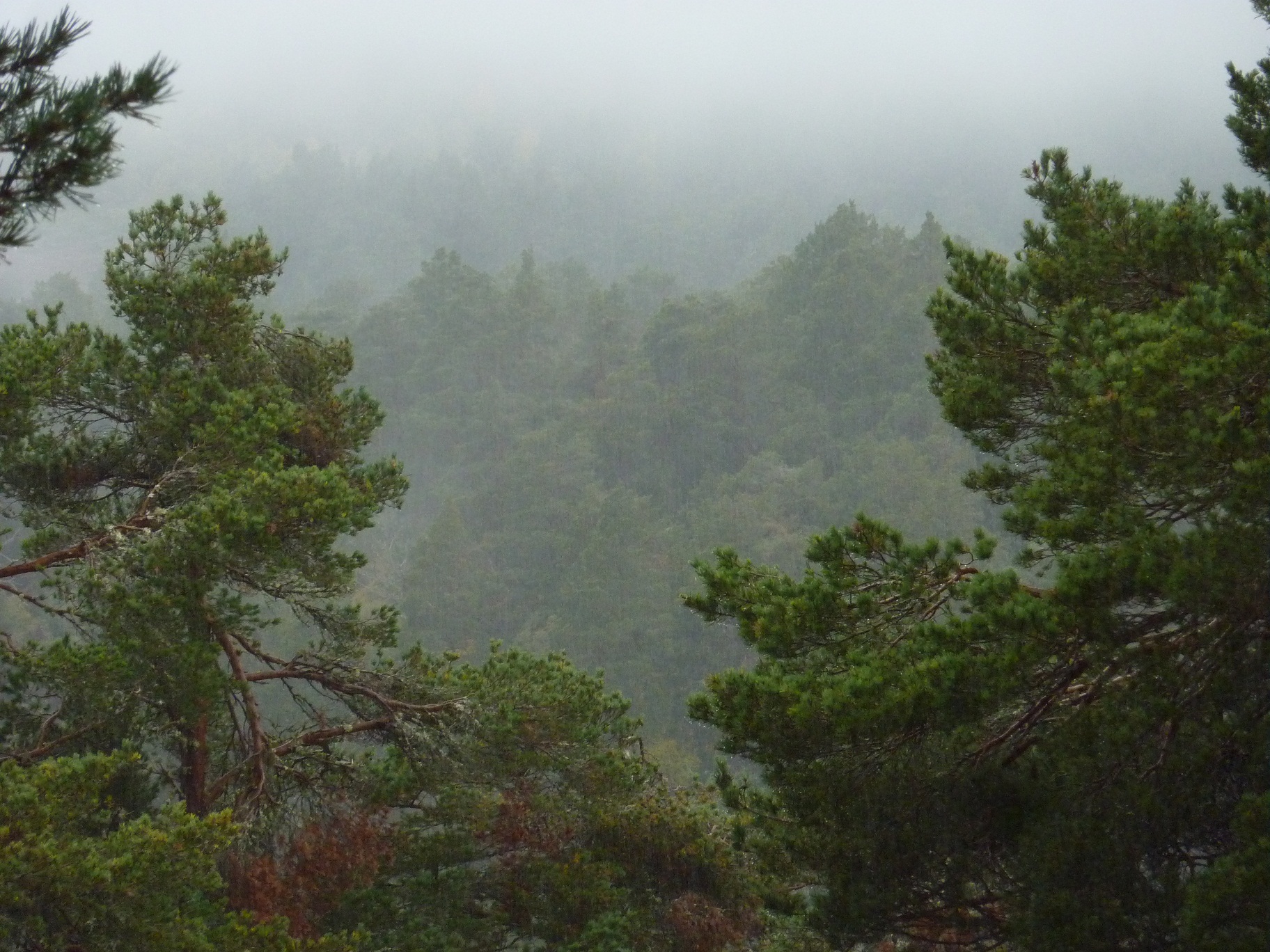
- This weather destroyed my mobile.
-
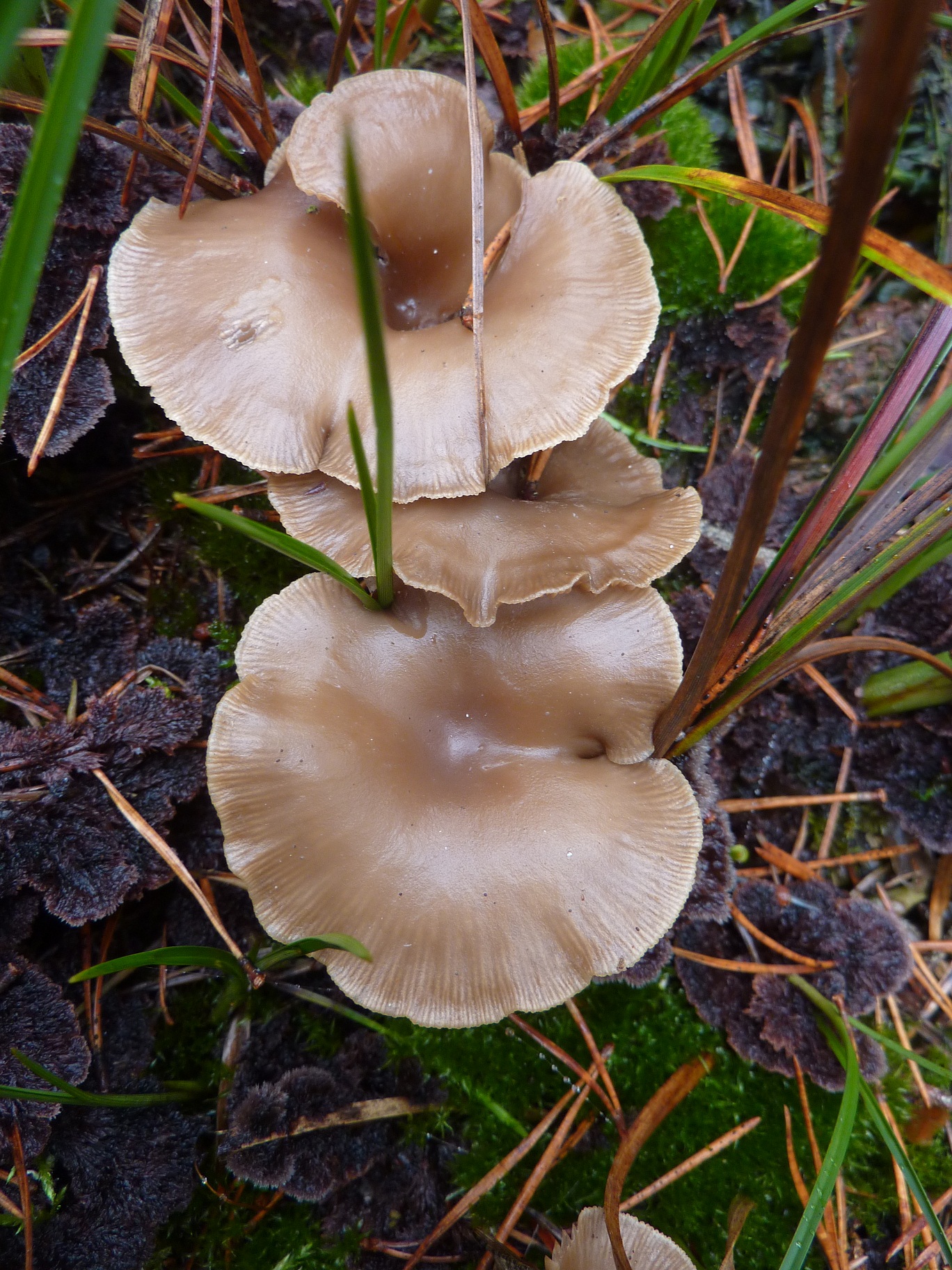
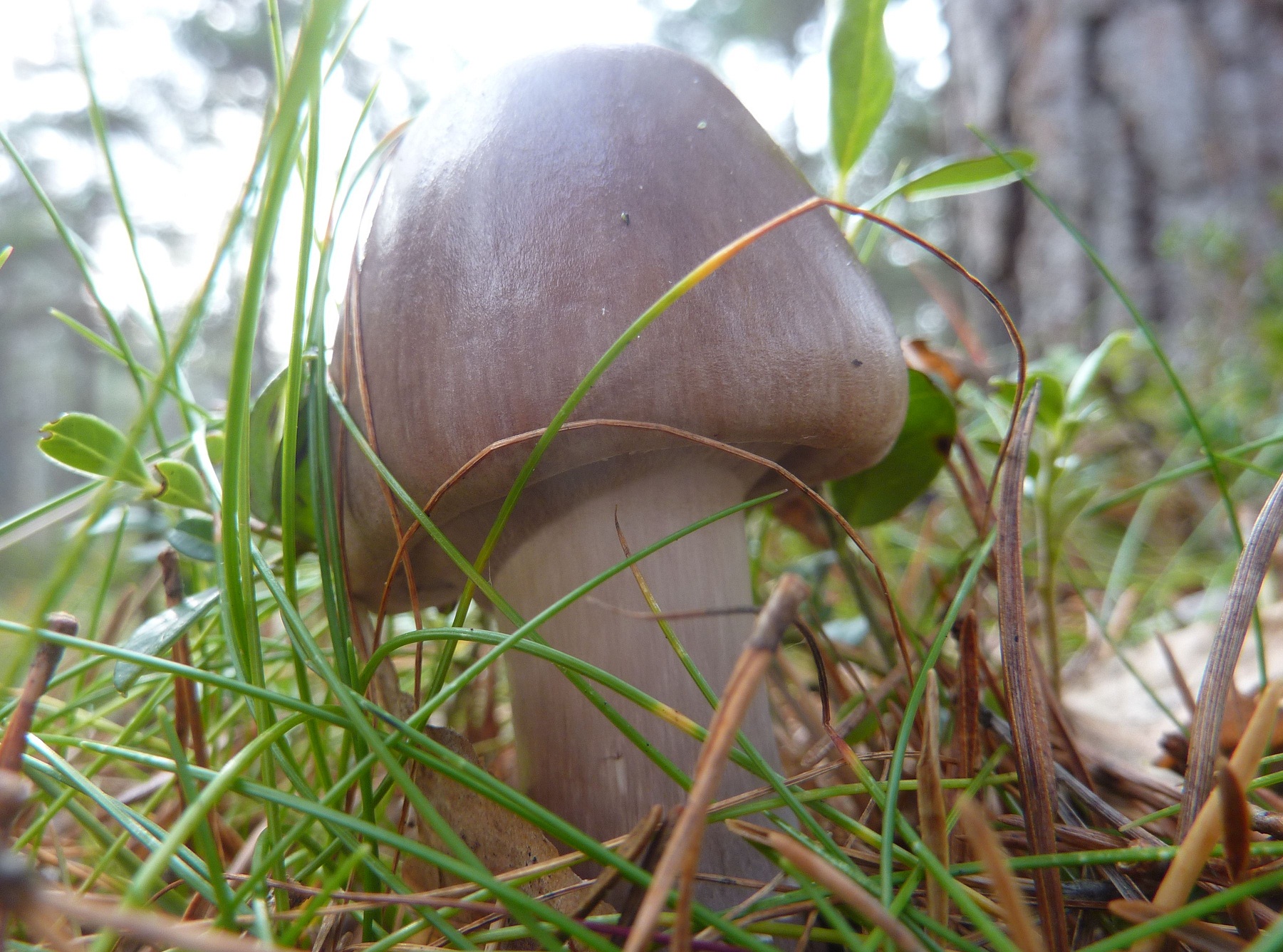
- Can’t believe I can’t identify this…
-

- …or this. Any help would be much appreciated.
-
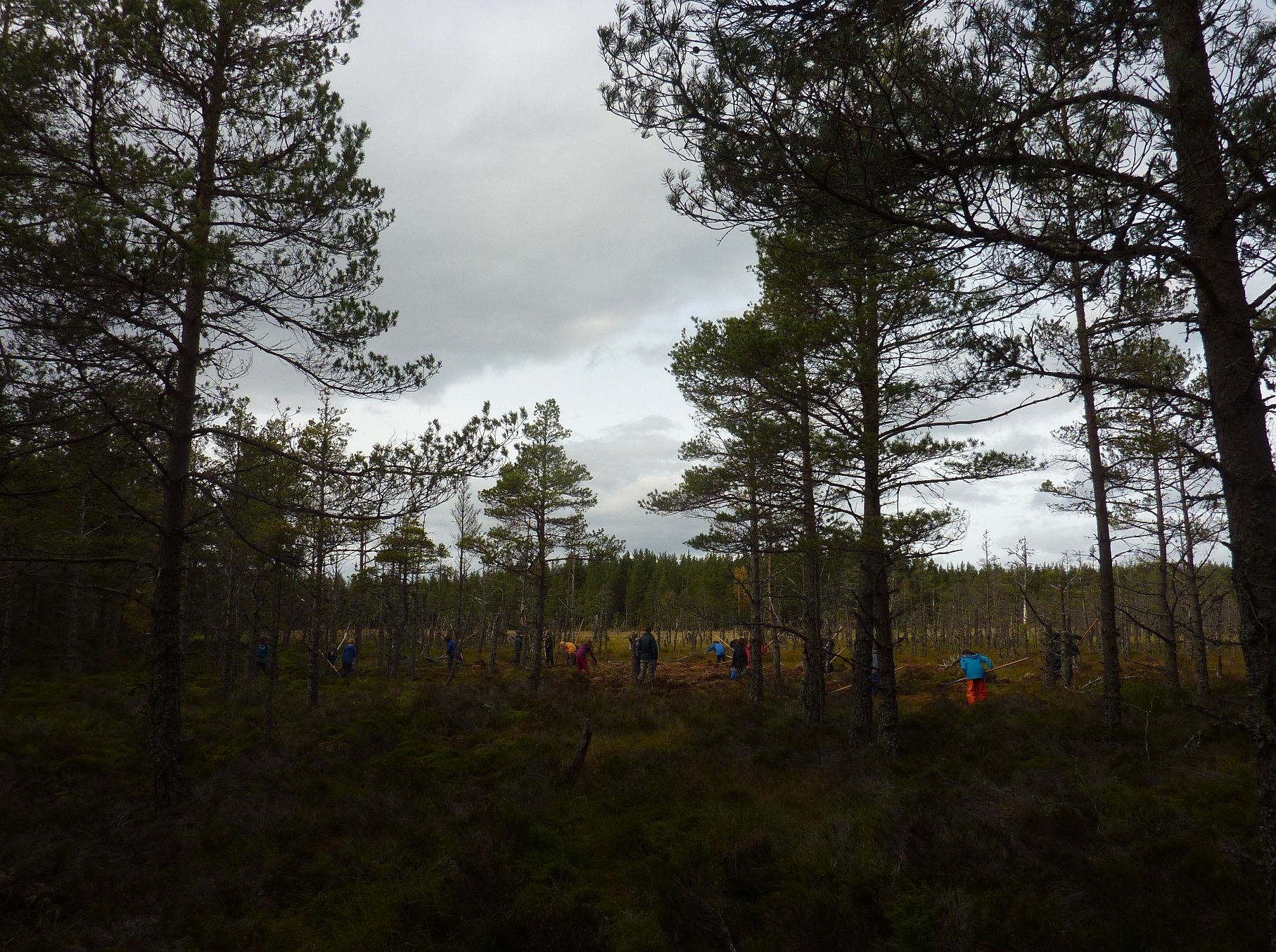
- The Grantown kids using weed rakes to create dragonfly ponds
-
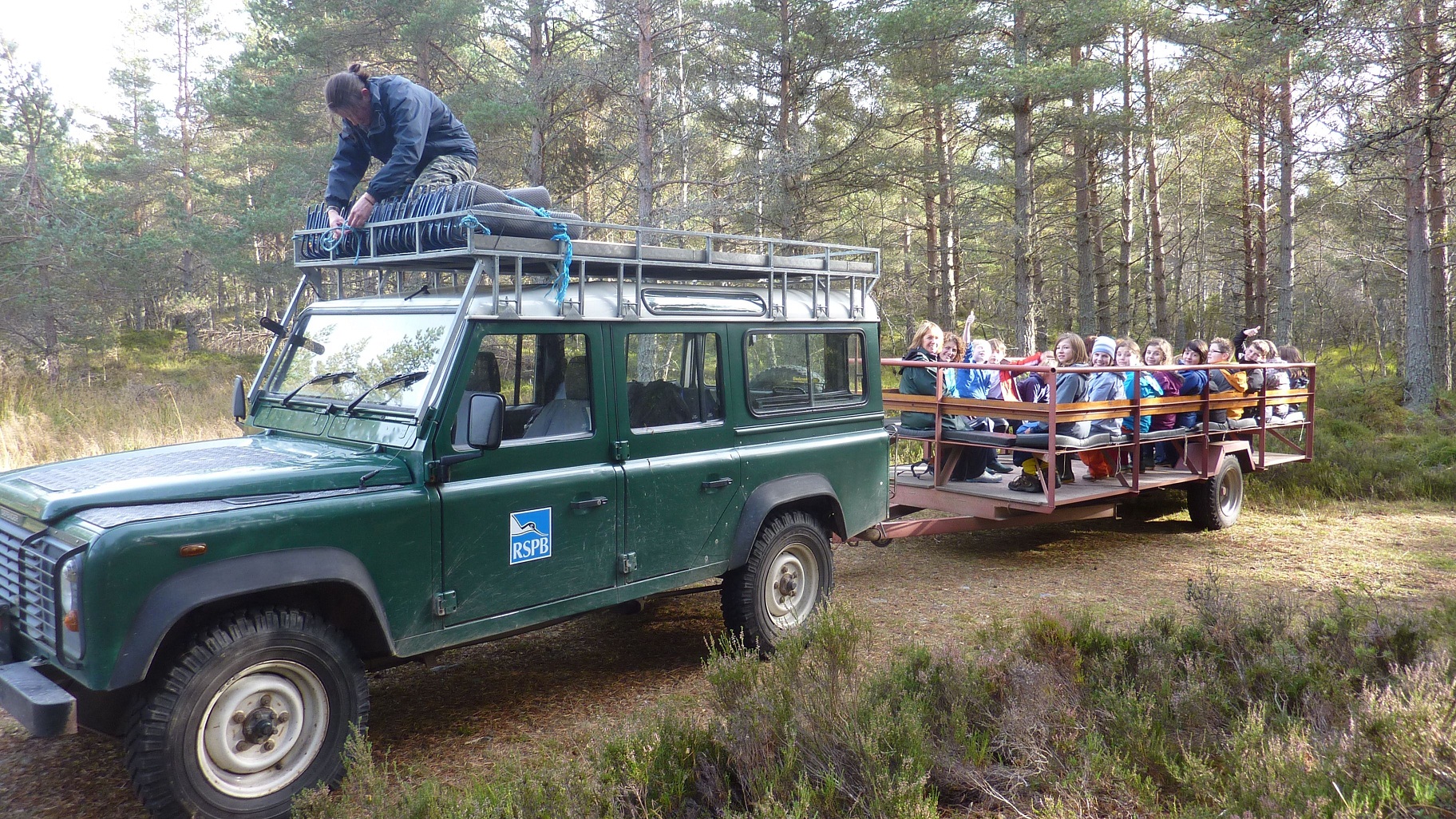
- Before they all fell out…
-

- Forest Lodge
-

- Ron examines the wooden wedge for fire scars
-
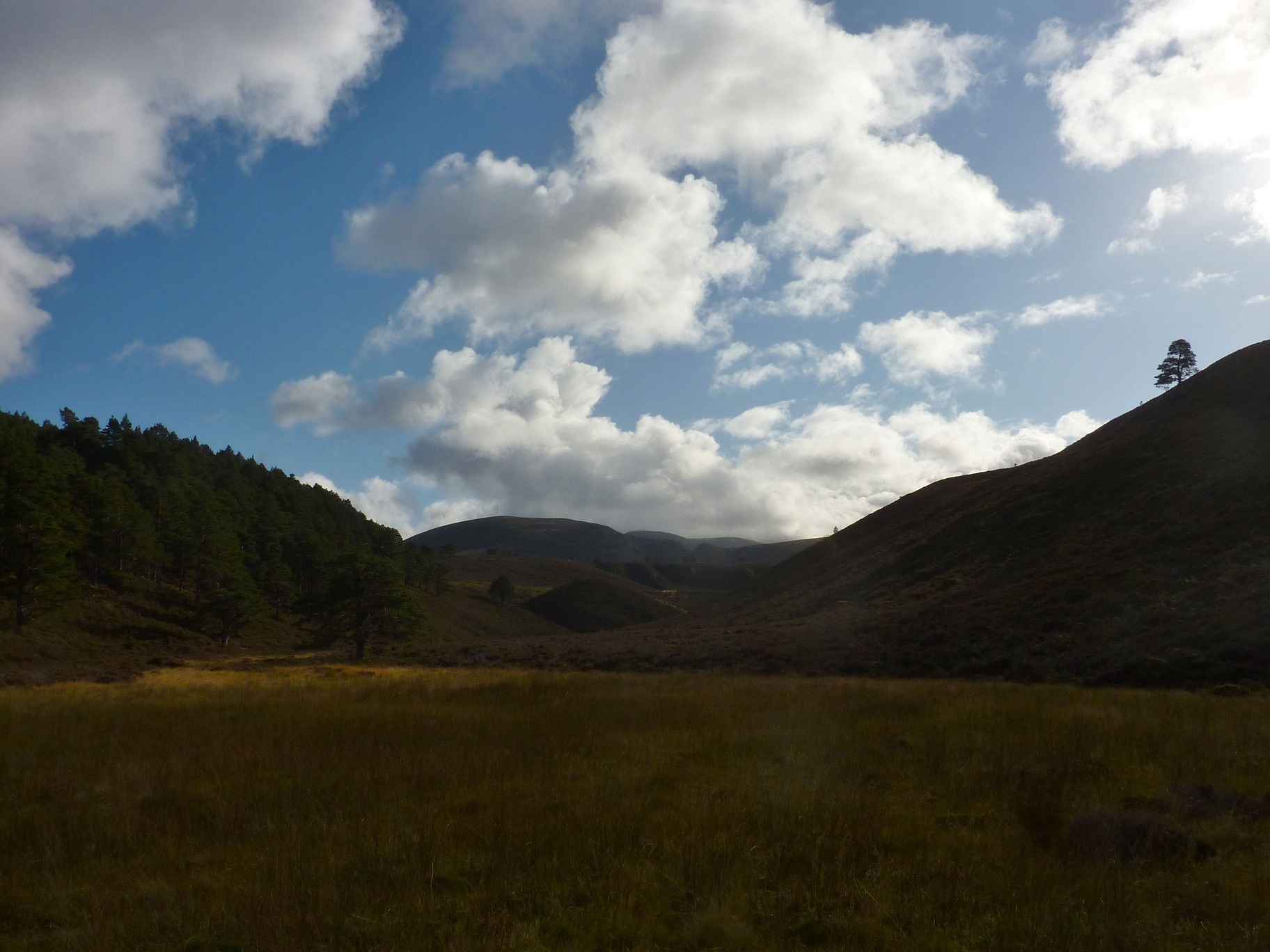
- Allt Clais an Eich
-
- Cyclosa conica. Gorgeous.
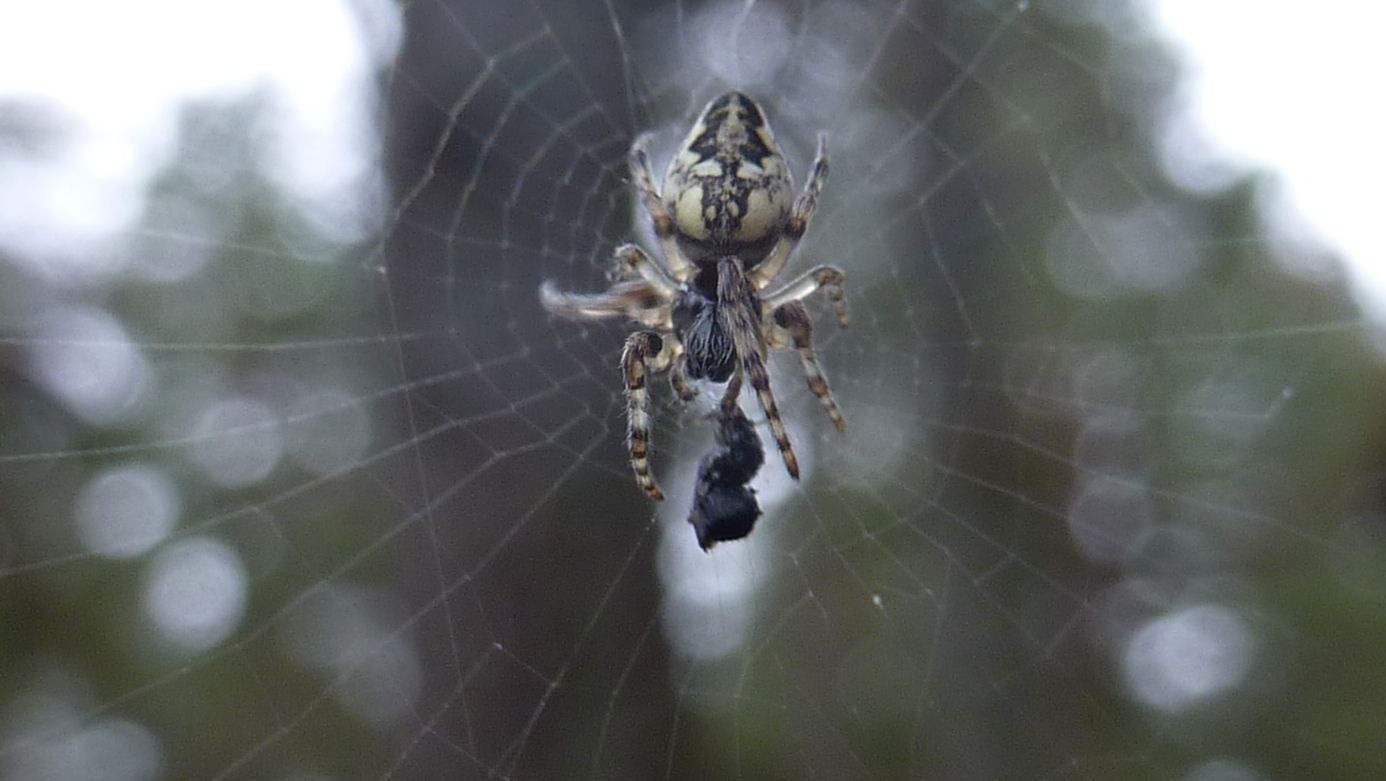
-
- A bat. I know I should do better. I’ve looked through bat pictures and think it might be a pipistrelle?

-
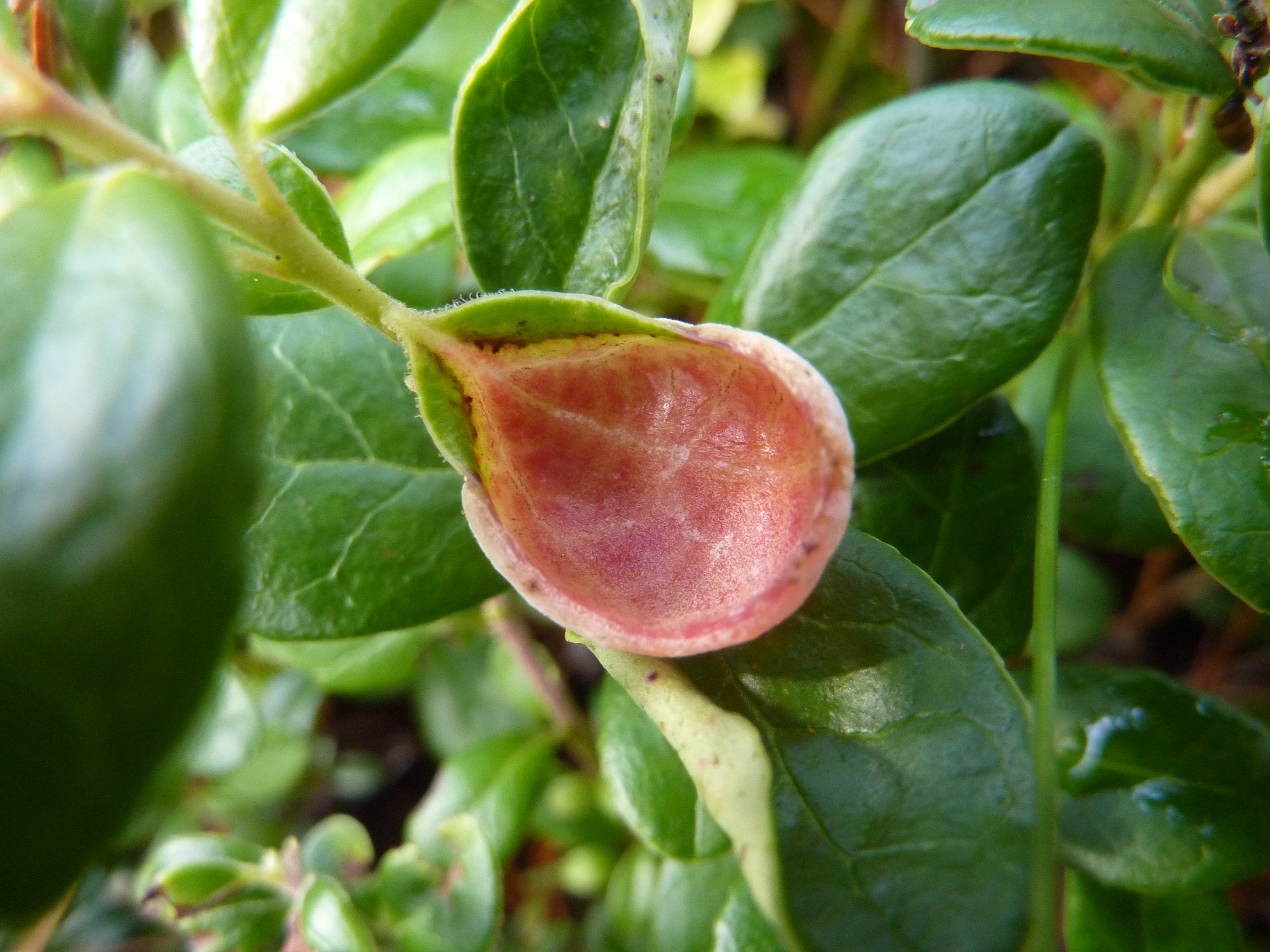
- This gall is caused by the cowberry redleaf fungus (Exobasidium vaccinii)
-
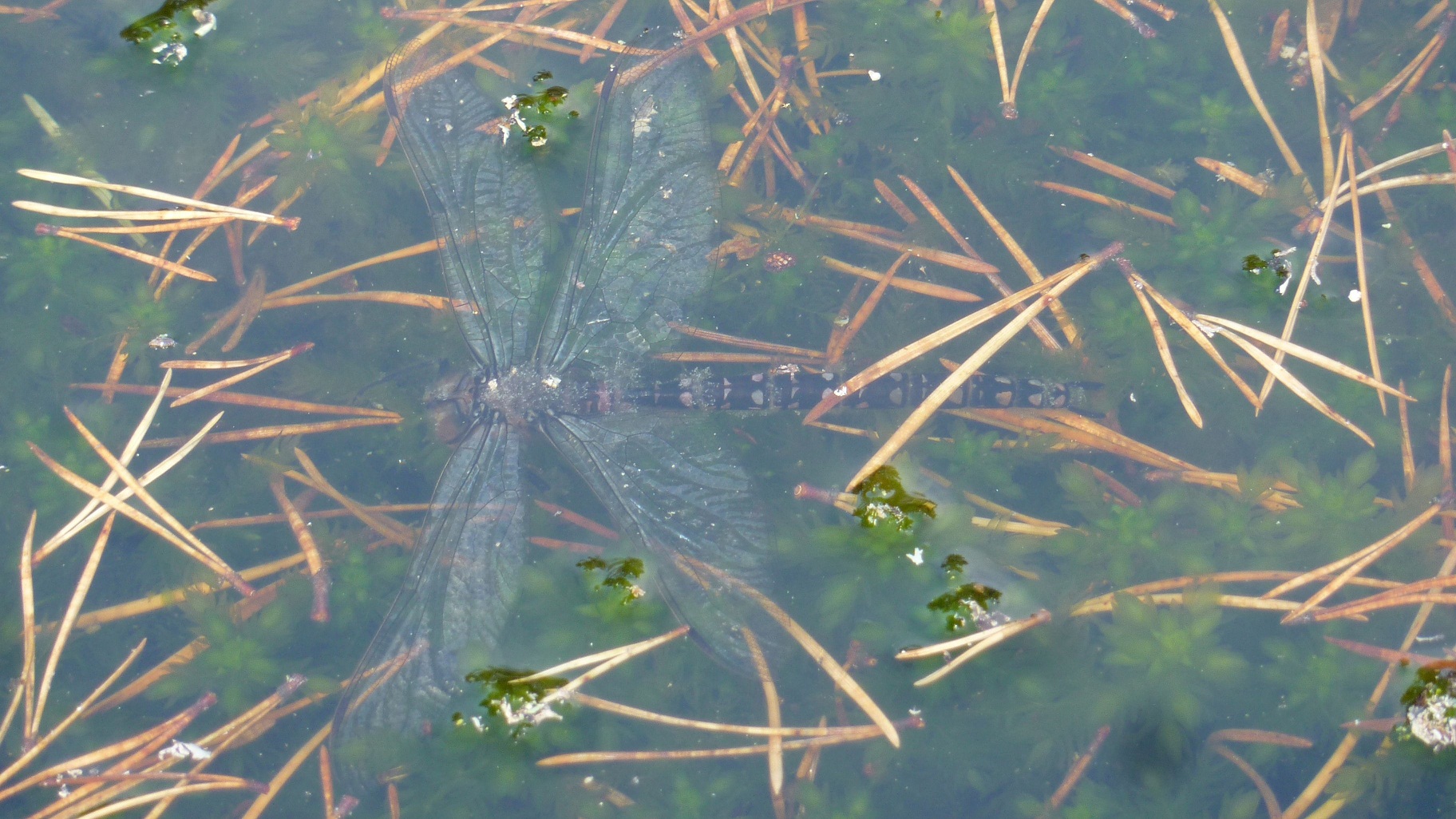
- I think this would have been a common hawker. Now it’s loch detritus.
-
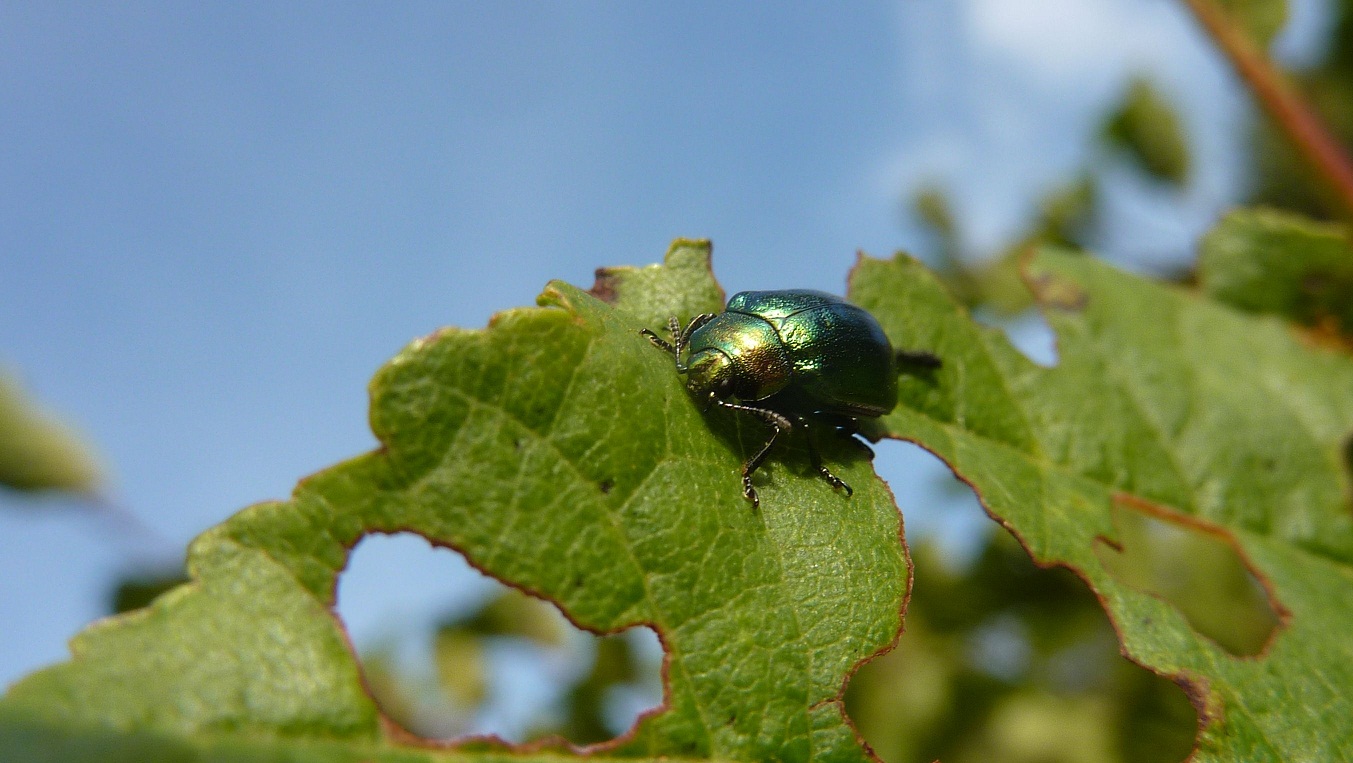
- Green. Iridescent. Amazing. Chrysomela aenea.
-

- These black grouse are practising for the big spring time lekk

Fairy Glen and a bench
I’m back at RSPB Abernethy. I’m excited. This place is fantastic. 14000 hectares of which one third is already wooded, one third is regenerating and one third is montane habitat. Not only that, they also have capercaillie, pine martens, crested tit, red squirrel and the occasional golden eagle. I’m going to be here for six months as the long term residential volunteer. If it’s going to snow this winter there won’t be more snow anywhere in the UK than here. Probably.
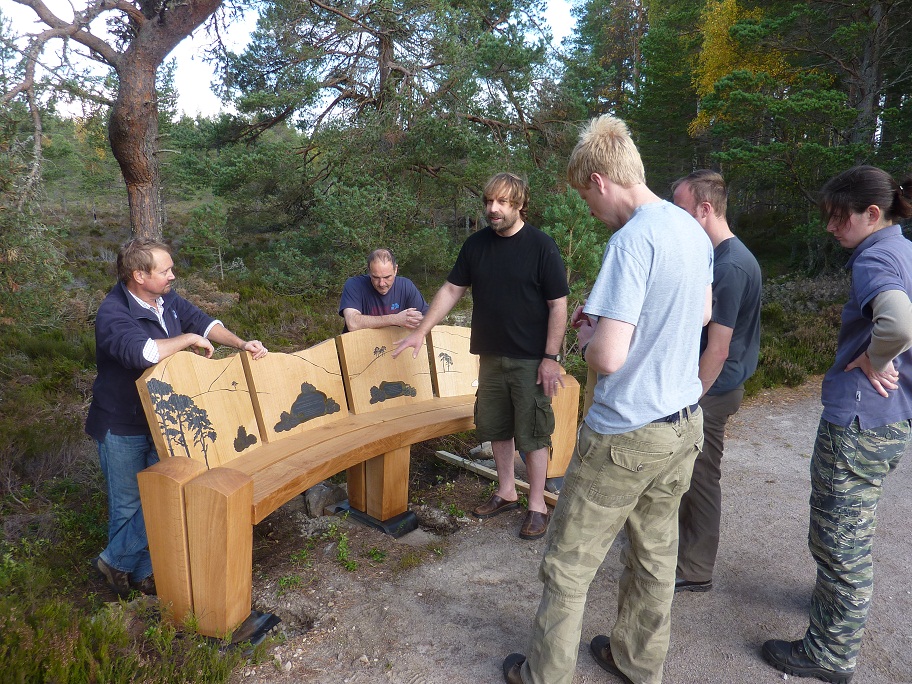
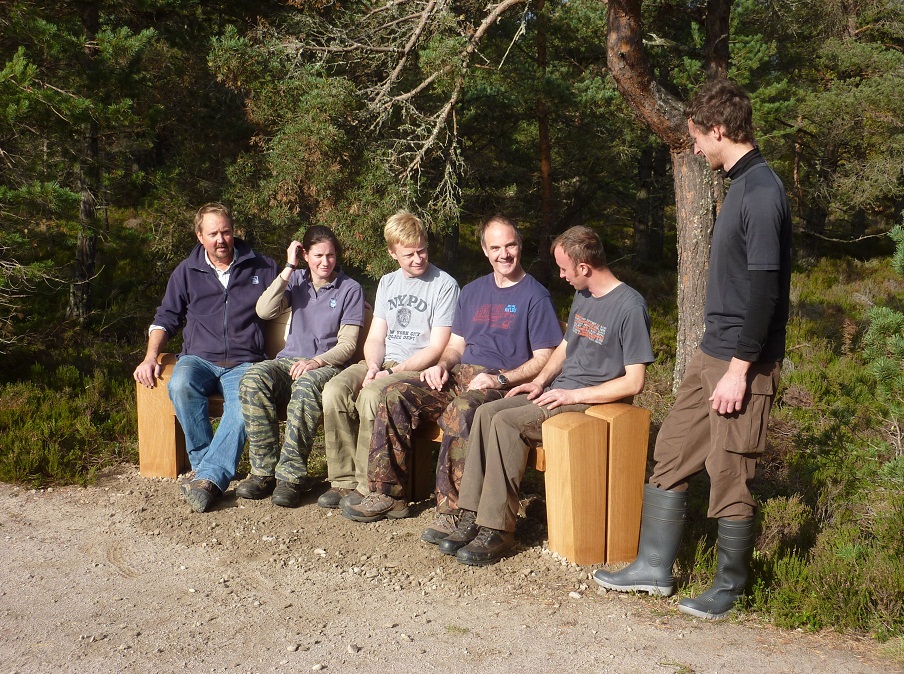
For my first day’s work myself and the two current short term volunteers went along with Alice and Ian to join Kate at the Fairy Glen to clear some fallen trees from over the burn/stream (please ignore as appropriate for your country of origin). Today, my second day, we helped install a rather nice bench up near the Osprey Centre, and I received an ‘induction’.
-
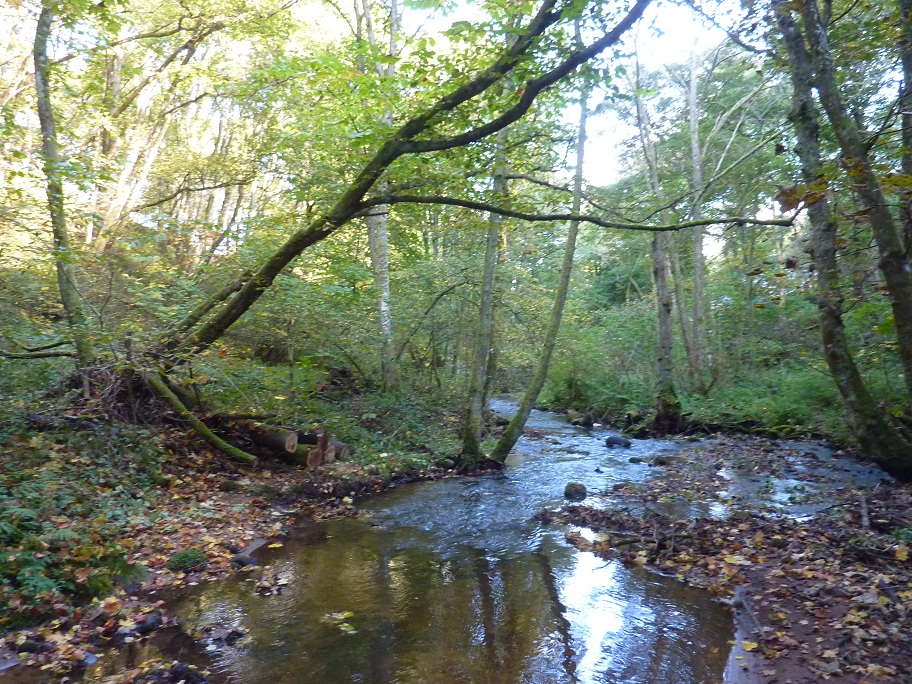
- The Fairy Glen, with some signs of non-fairy activity
-
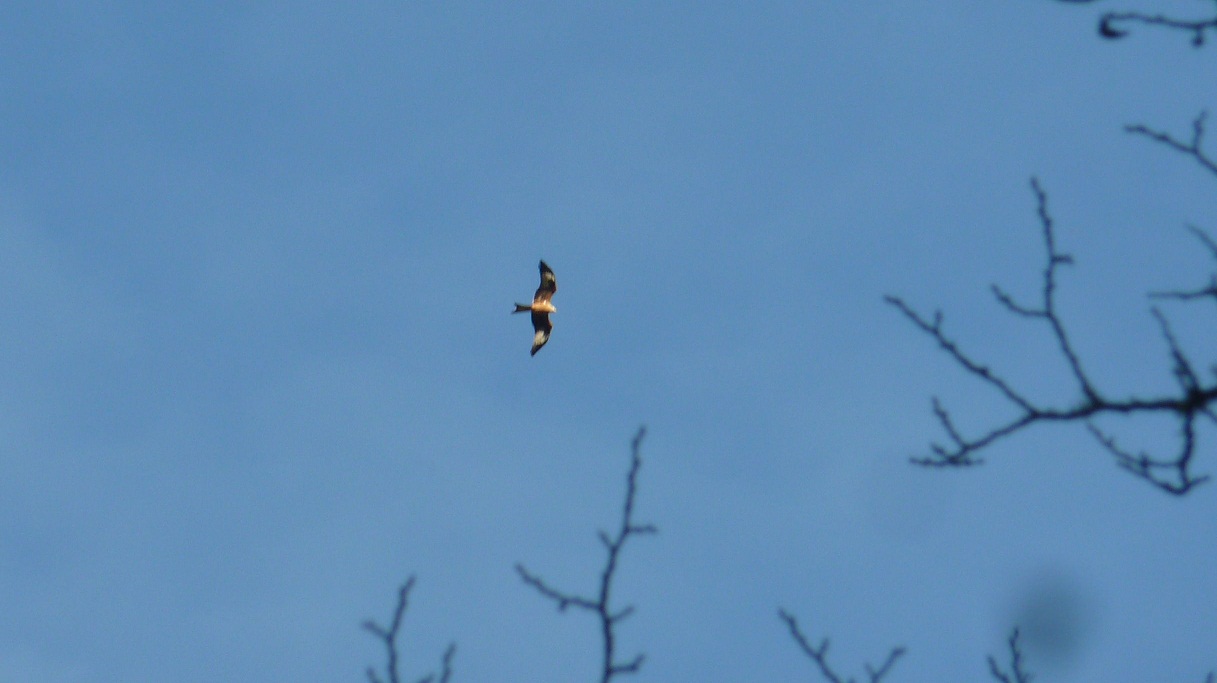
- A quick shot of a red kite
-
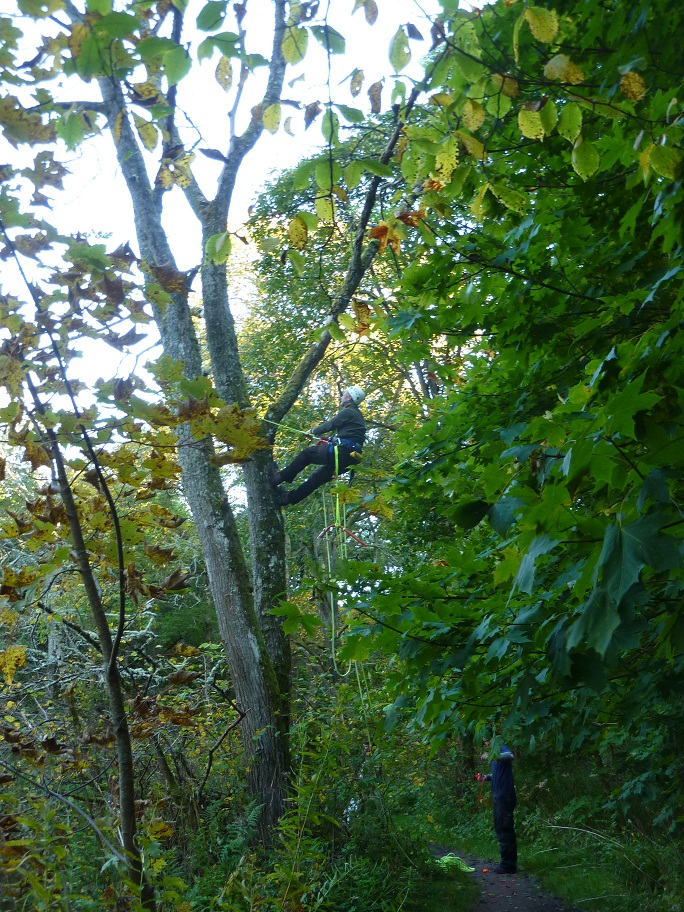
- Ian tries to get a better shot of the red kite
-

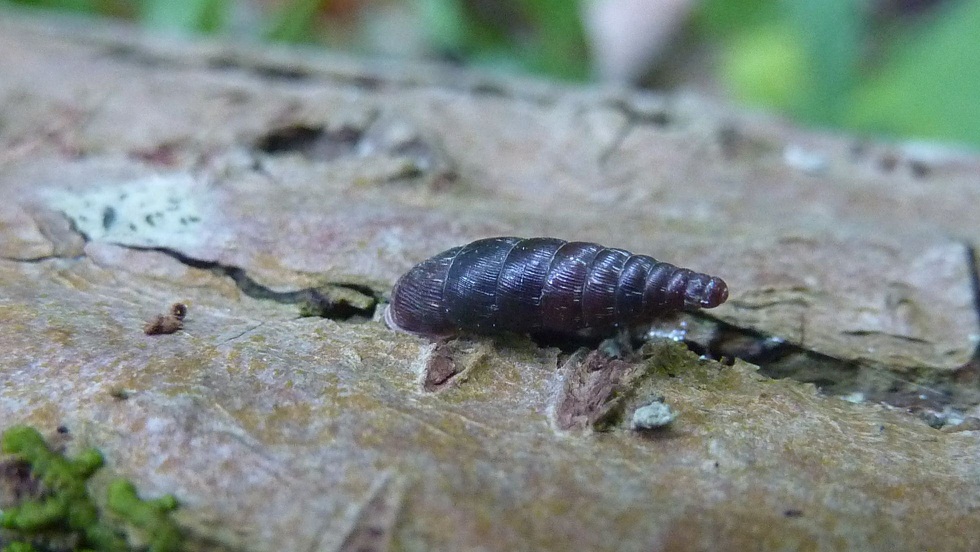
- I think this may be Clausilia bidentata. Massive at 10mm long. Perhaps the fairies ride these.
-
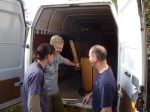
- This morning…
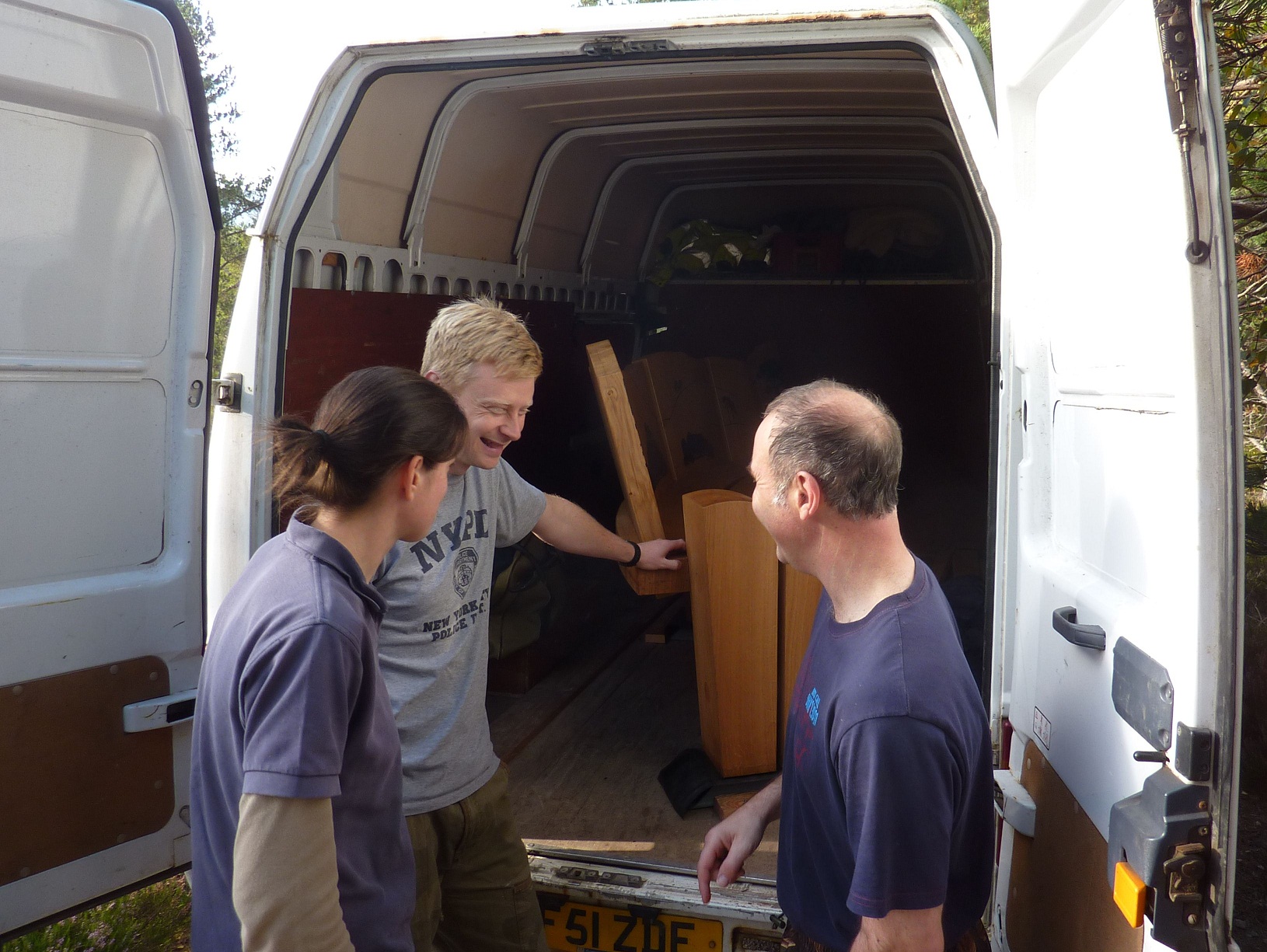
-
- …with 6 people lifting. Patrick shows us his rather attractive handywork
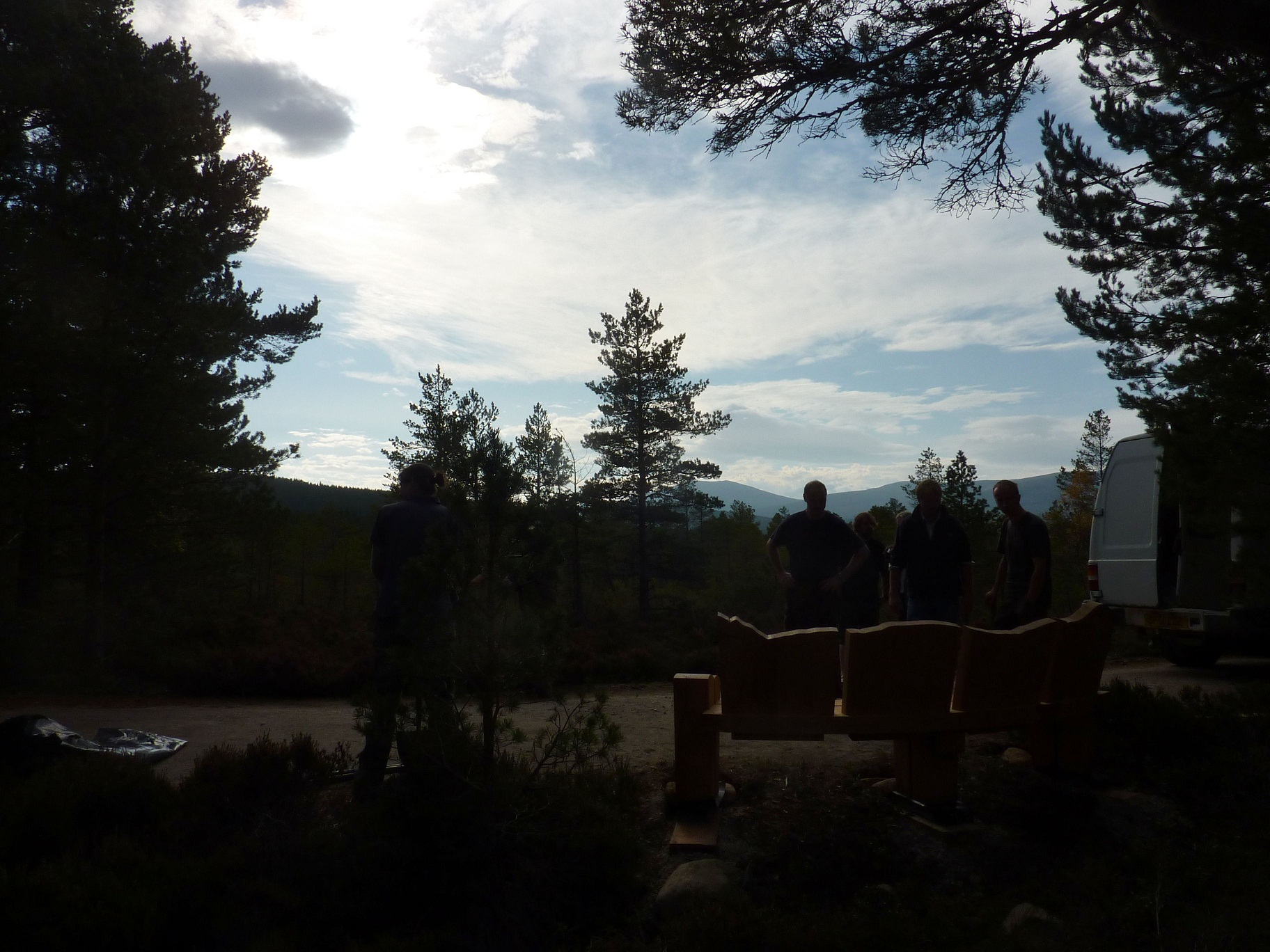
-
- I’m warmly welcomed into the team
Time to head North for the winter
So, it’s time to begin my winter placement at RSPB Abernethy. While I’m in Scotland I’ll also be doing a couple of Trees for Life weeks, but for most of the next 6 months I’ll be based at Forest Lodge, near Nethy Bridge. I have stayed here before back in February 2010, when I was lucky enough to see fantastic amounts of snow. I’m hoping for similar weather this winter.
On my way North I stopped off in Cardiff for Tim’s 70s/80s themed birthday party (unfortunately my photos from this, some of which are hilarious, are temporarily unavailable due to the weather at Abernethy getting the better of my mobile – they are now posted here), before meeting up with Lee at John’s, and then driving the rest of the way here today. It (RSPB Abernethy) is every bit as big as I remember, but, unfortunately, a lot warmer.
-

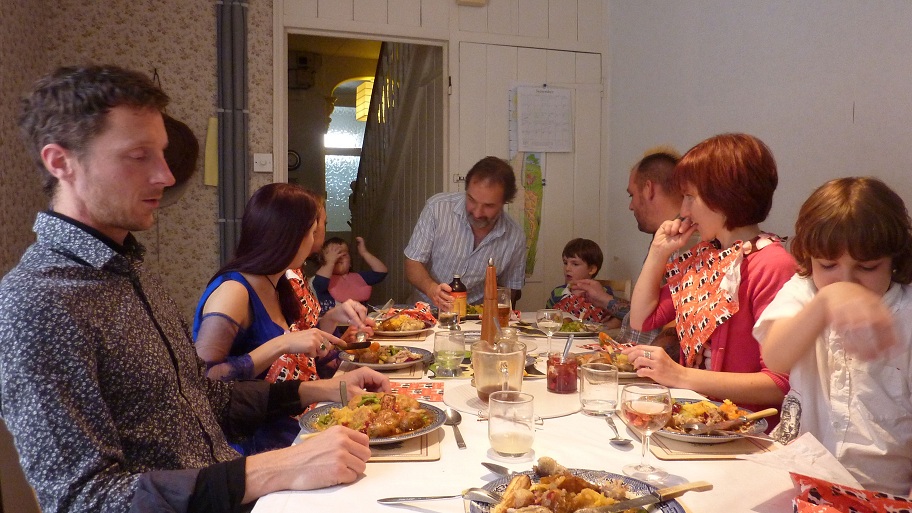
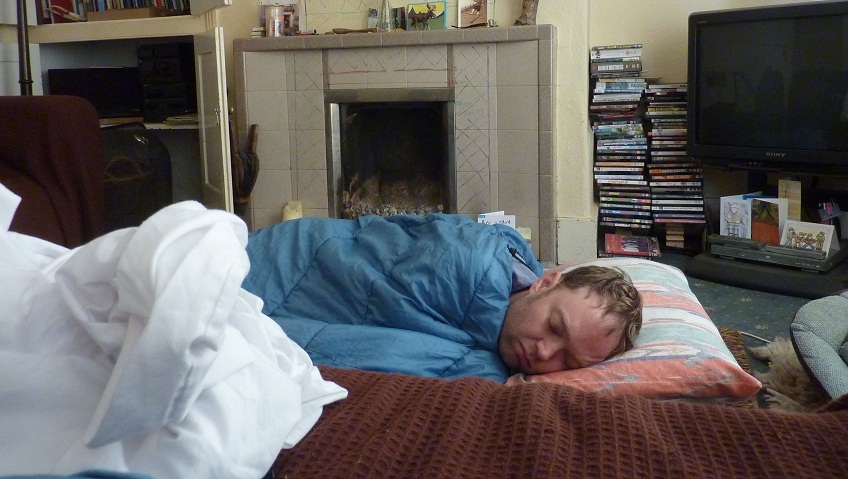
- My last meal with the family before my trip North, but someone else is stealing all the attention
-
- Lee, c’mon, we’ve not seen each other for years…
-
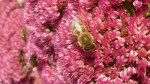
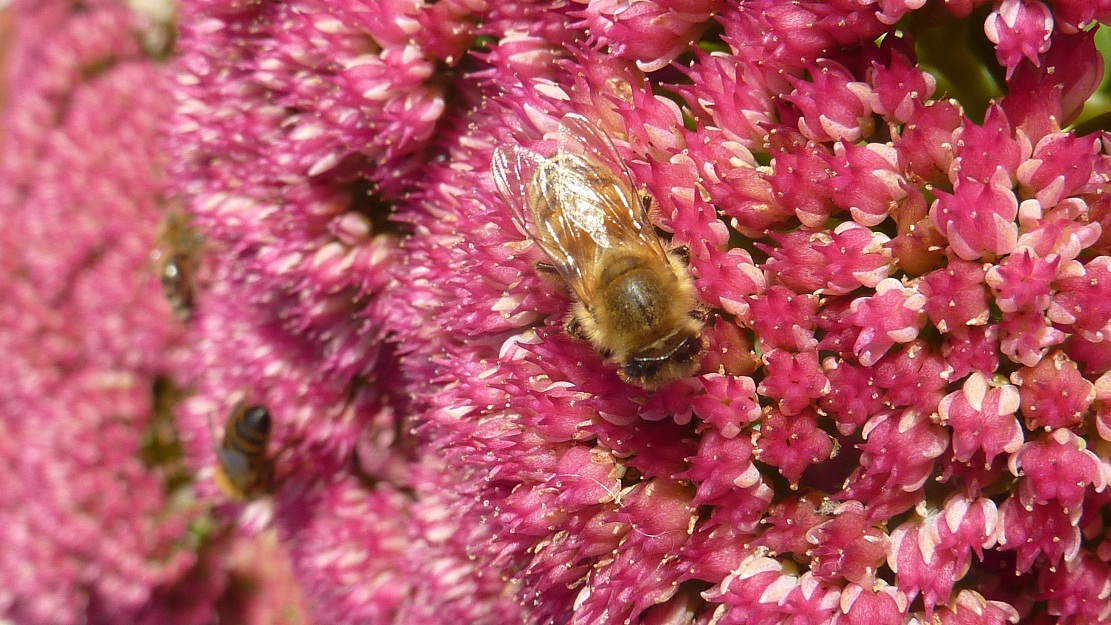
- John’s bees
-
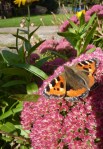
- John’s butterfly

-
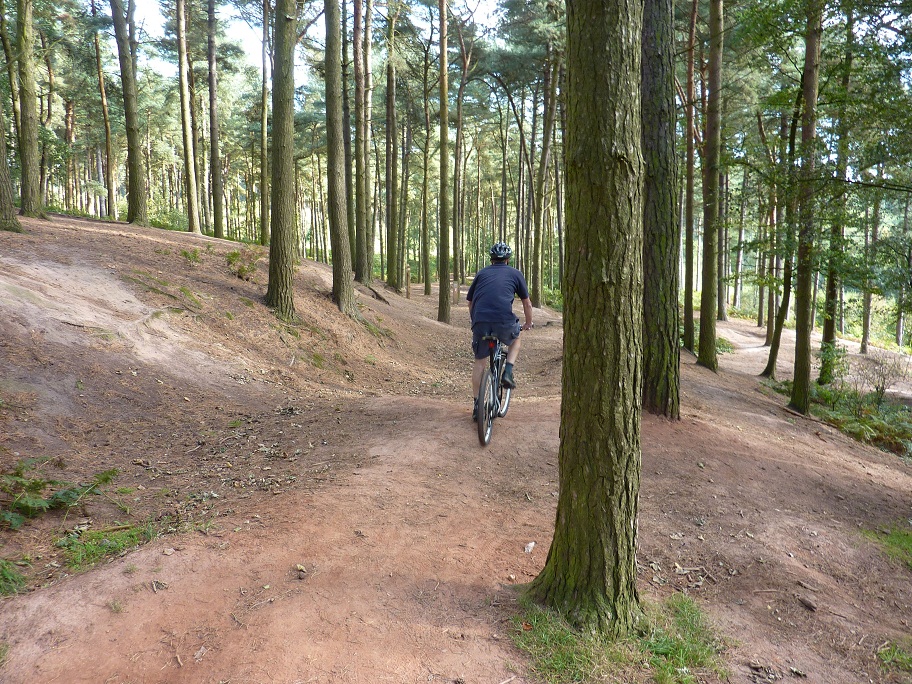
- Lee gets up for an afternoon cycle in Delamere forest
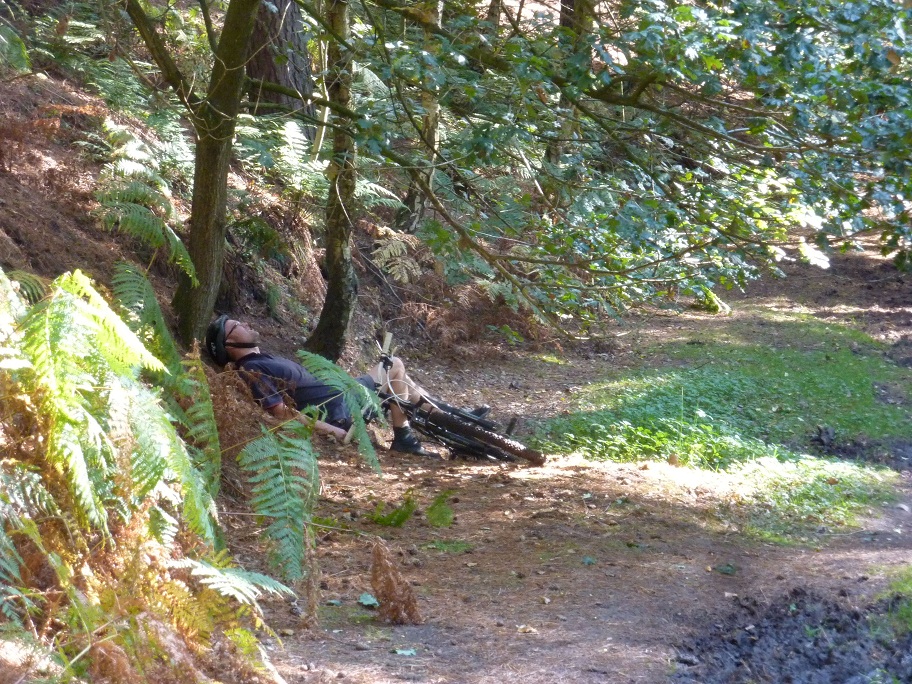
-
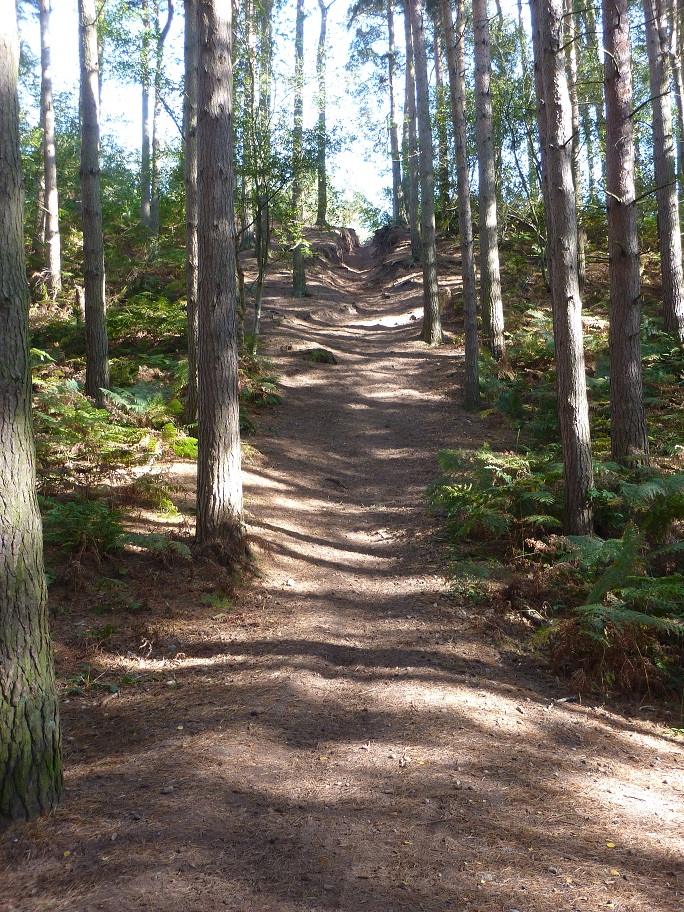
- Nice bit of downhill, don’t ask me to ride back up it though
-

- Beautiful
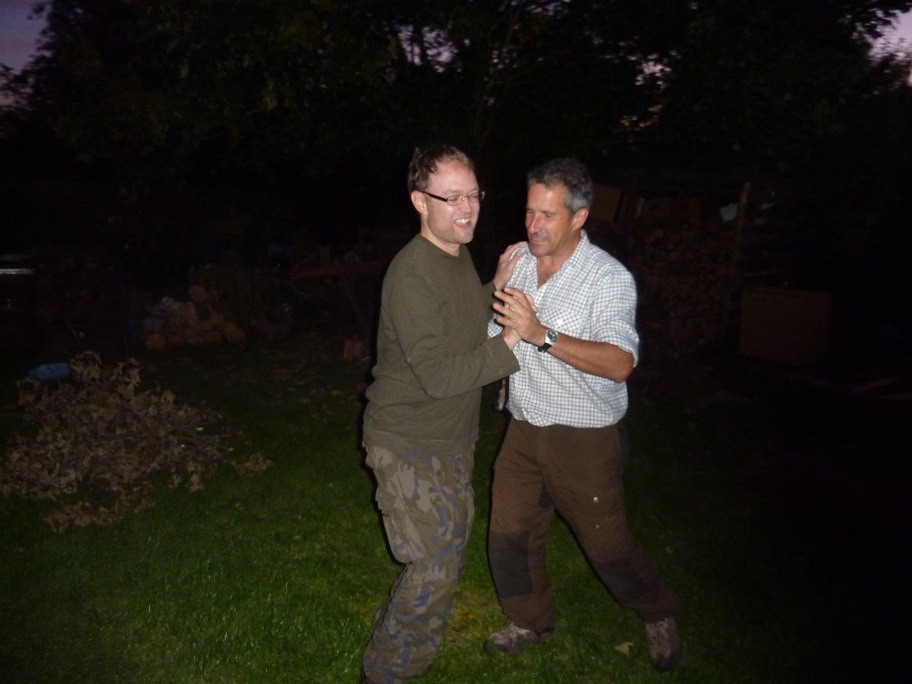
Tim’s 70s and 80s night
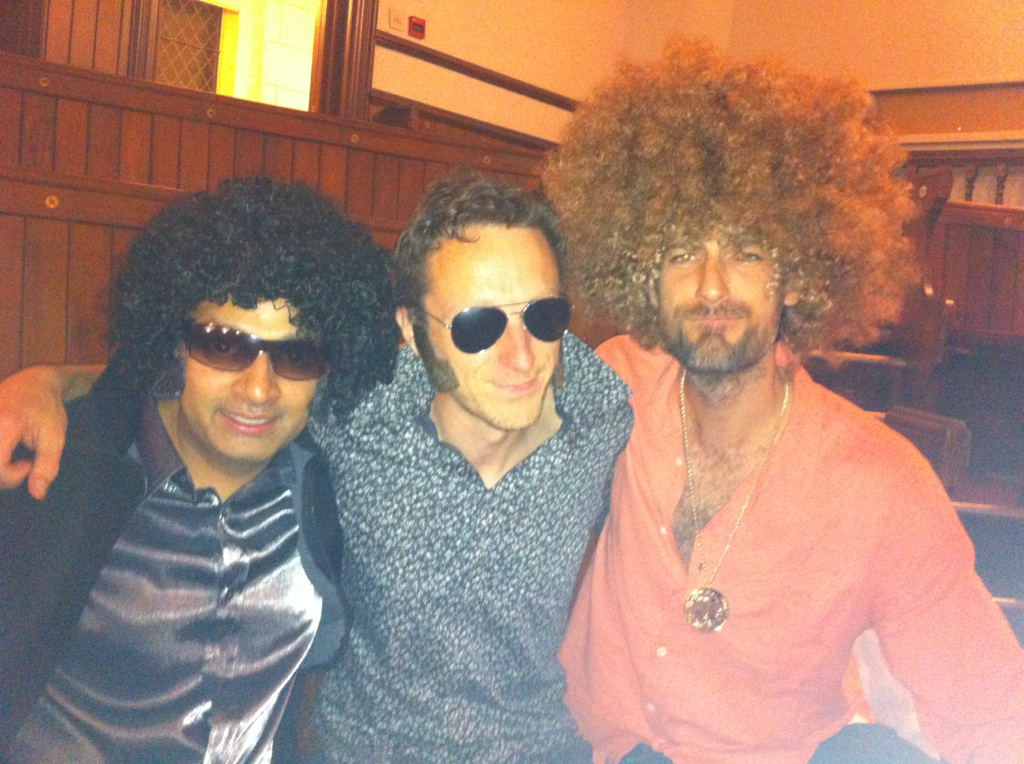
Tim has finally hit the big 3 9 so Julie carefully arranged for him to have the birthday present he’s always wished for, a surprise birthday party. She also gave the party a 70s and 80s theme, which is why the event deserves a post all of its own on here. Check out these photos. Tim, by the way, is meant to be Jimmy Saville, not a Swedish Ozzie Osborne.
-

- We grace the streets of Cardiff

-

- Alison, Rama and Karn forgot to dress up
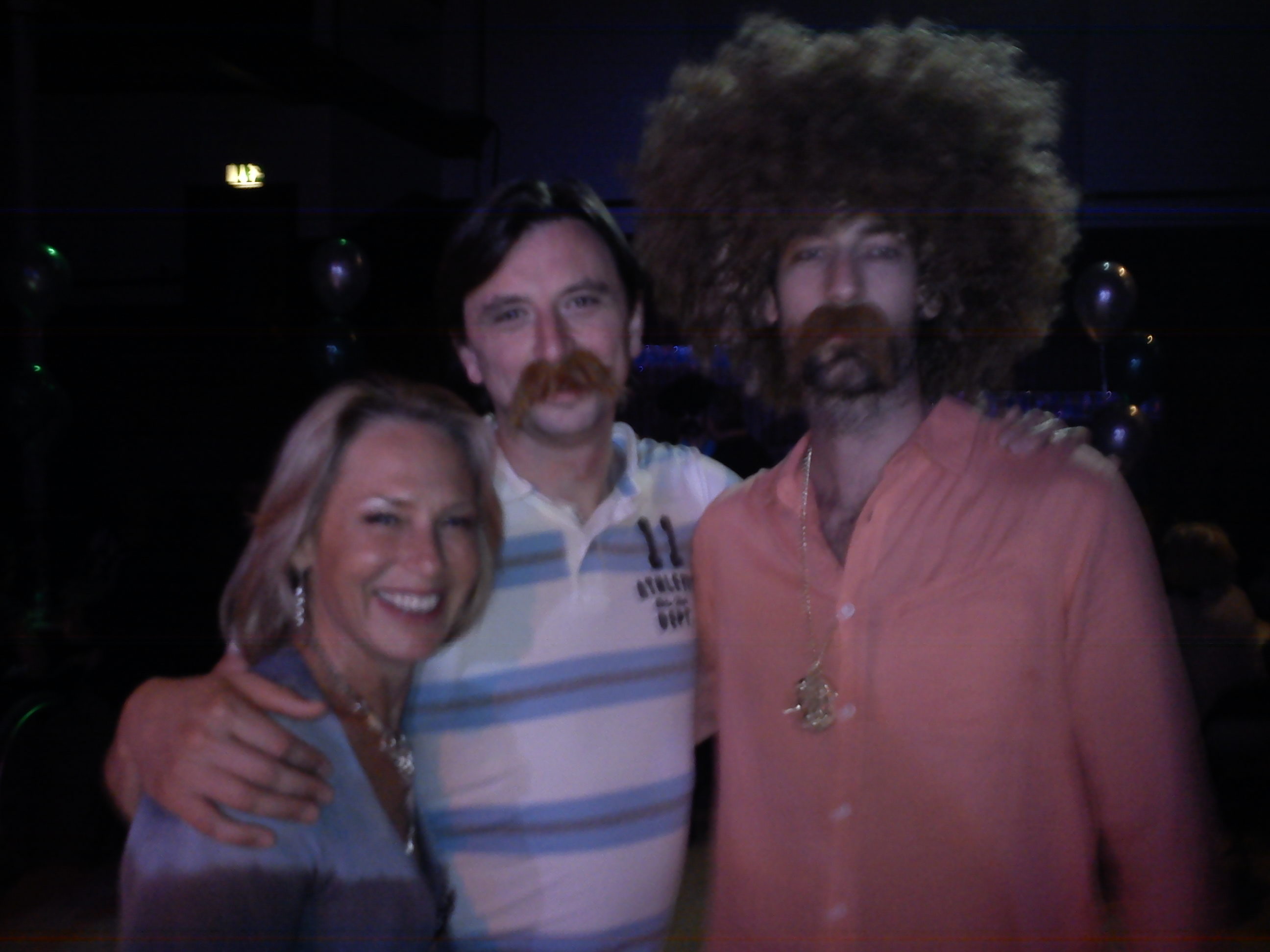
-

- Whereas Mike, Ju and Manoj…

-

- Manoj is clearly actually from the 70s

-

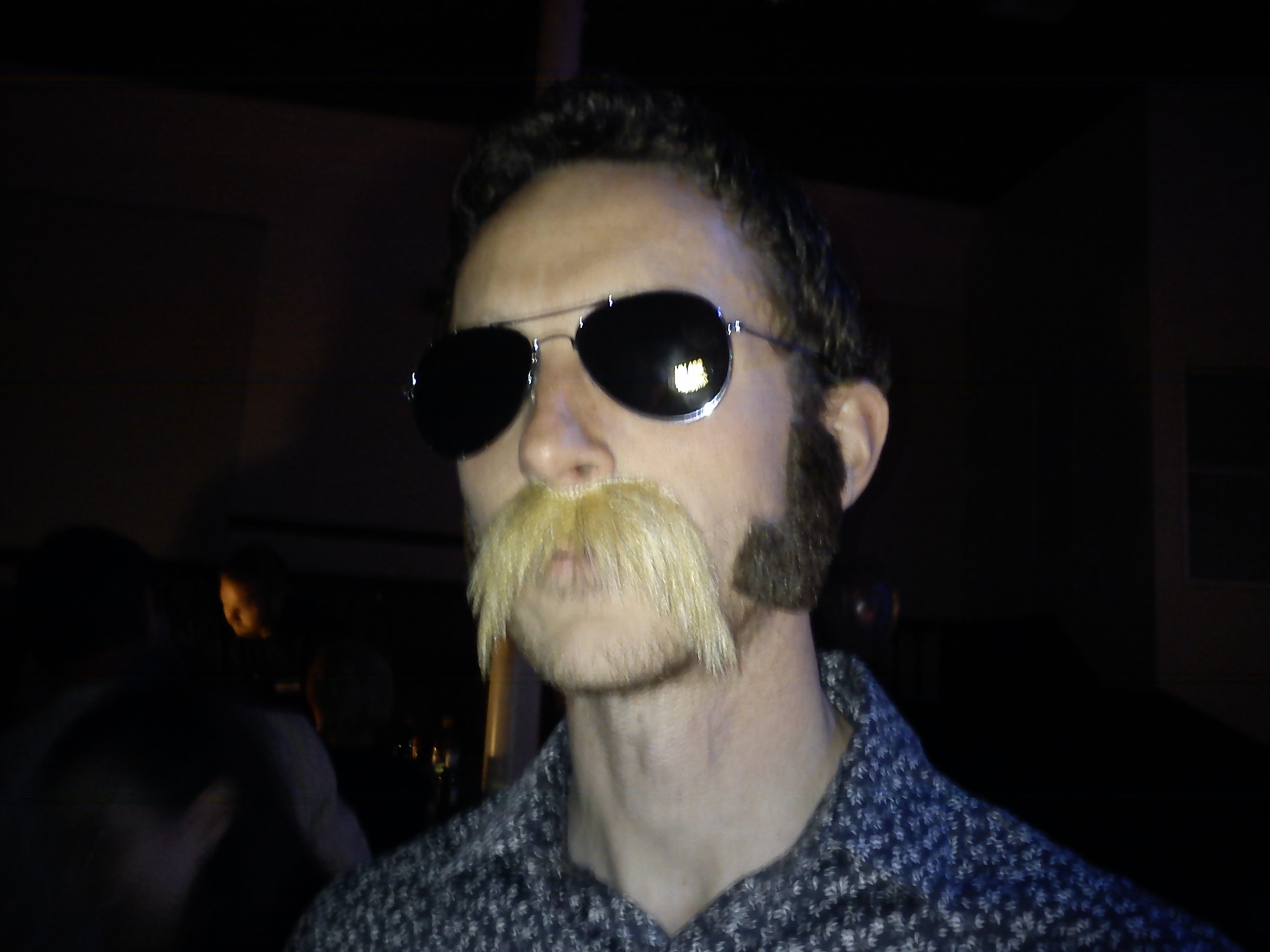
- Whilst it would take many years for me to grow this amount of facial hair, it would actually be this colour naturally
-

- Tim couldn’t make it, so the real Jimmy Saville came instead

-

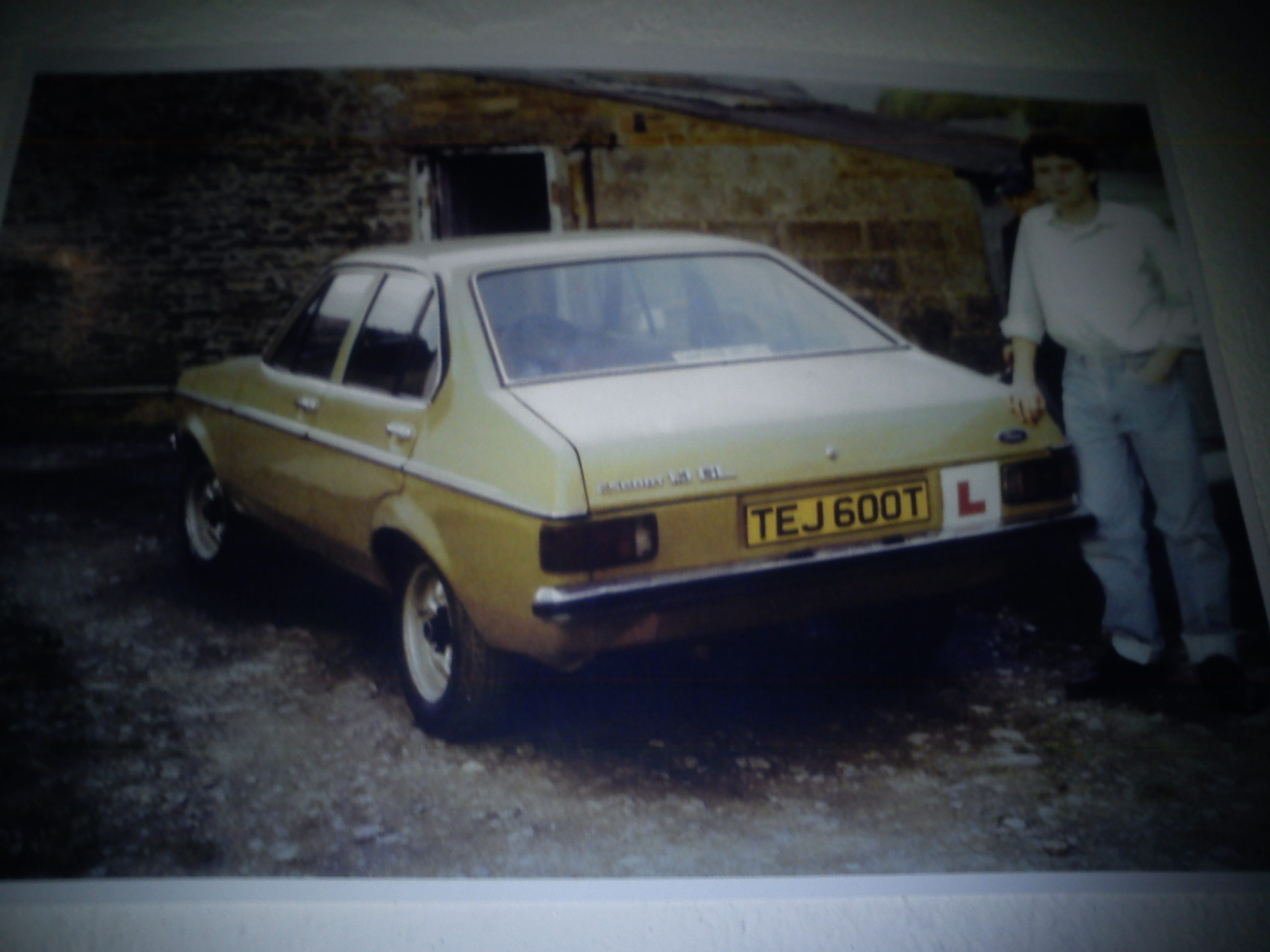
- This is Tim in his pre-Jimmy Saville days. Mike and Tim once produced a song called Ford Escort. Tim, if you ever read this it would be great if you could leave the lyrics in a comment…
Shaldon and the Teign
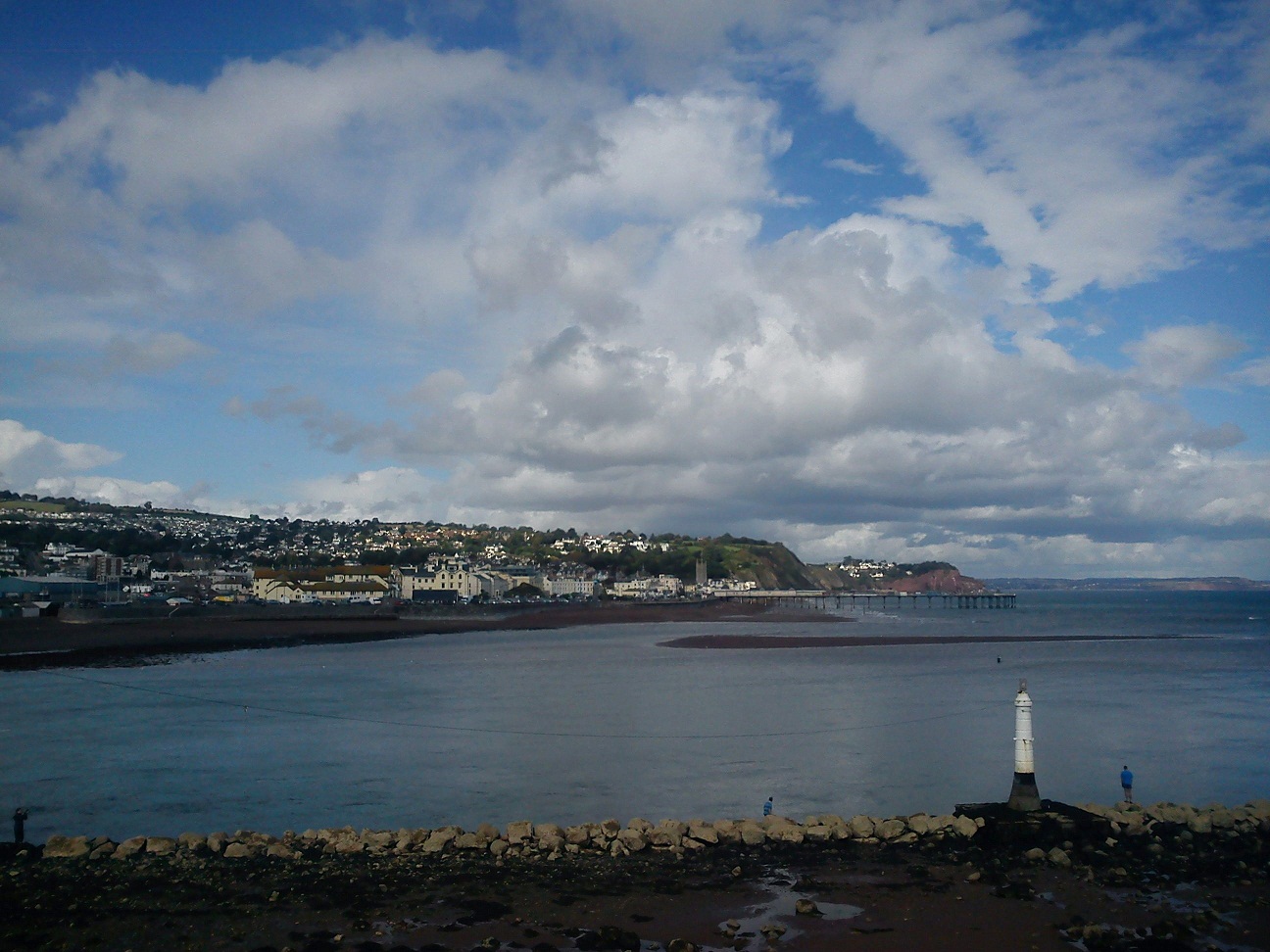
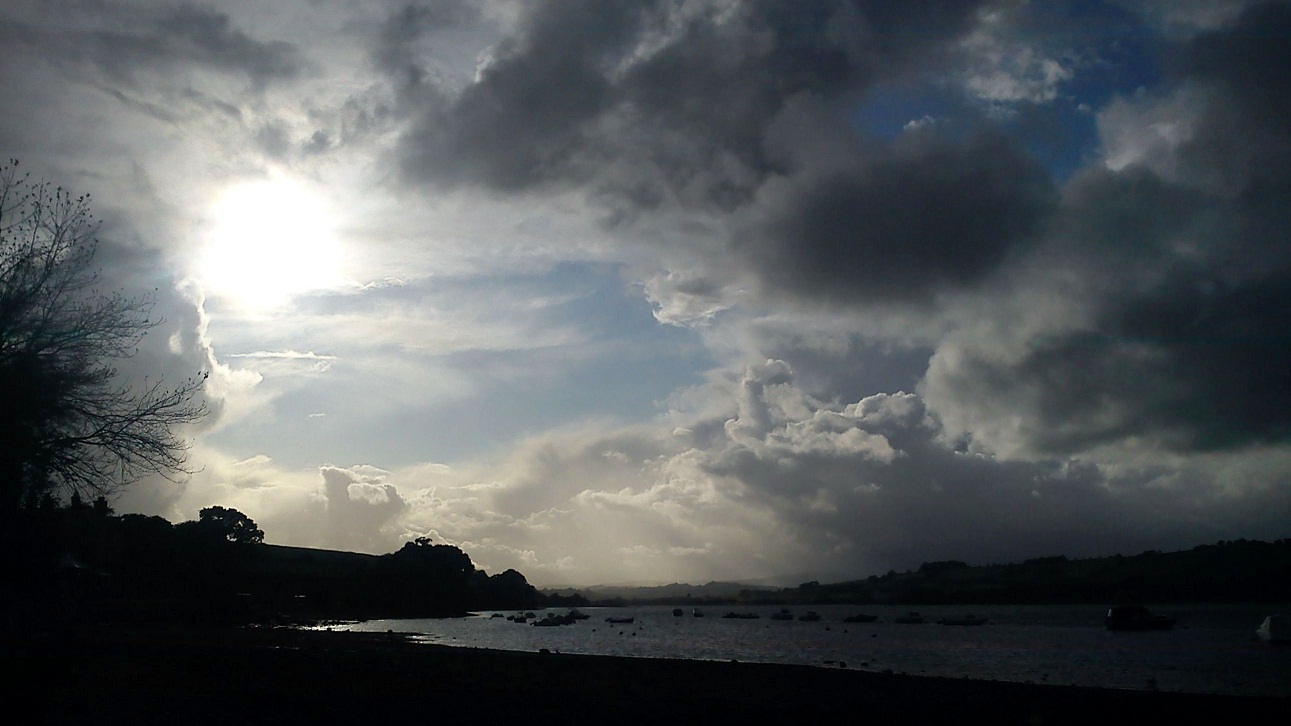
Today, myself and (activity) Dave carried out a recce of a walk that he’s planning for his walking club, around Shaldon and through Labrador bay. Labrador bay is RSPB managed for farmland birds (especially Cirl bunting), and I helped plant some of the hedges earlier this year. Not much progress to report on that front yet, so here are some pictures of the river Teign.
-

- Looking Northeast over the Teign estuary
The day the tour came to town
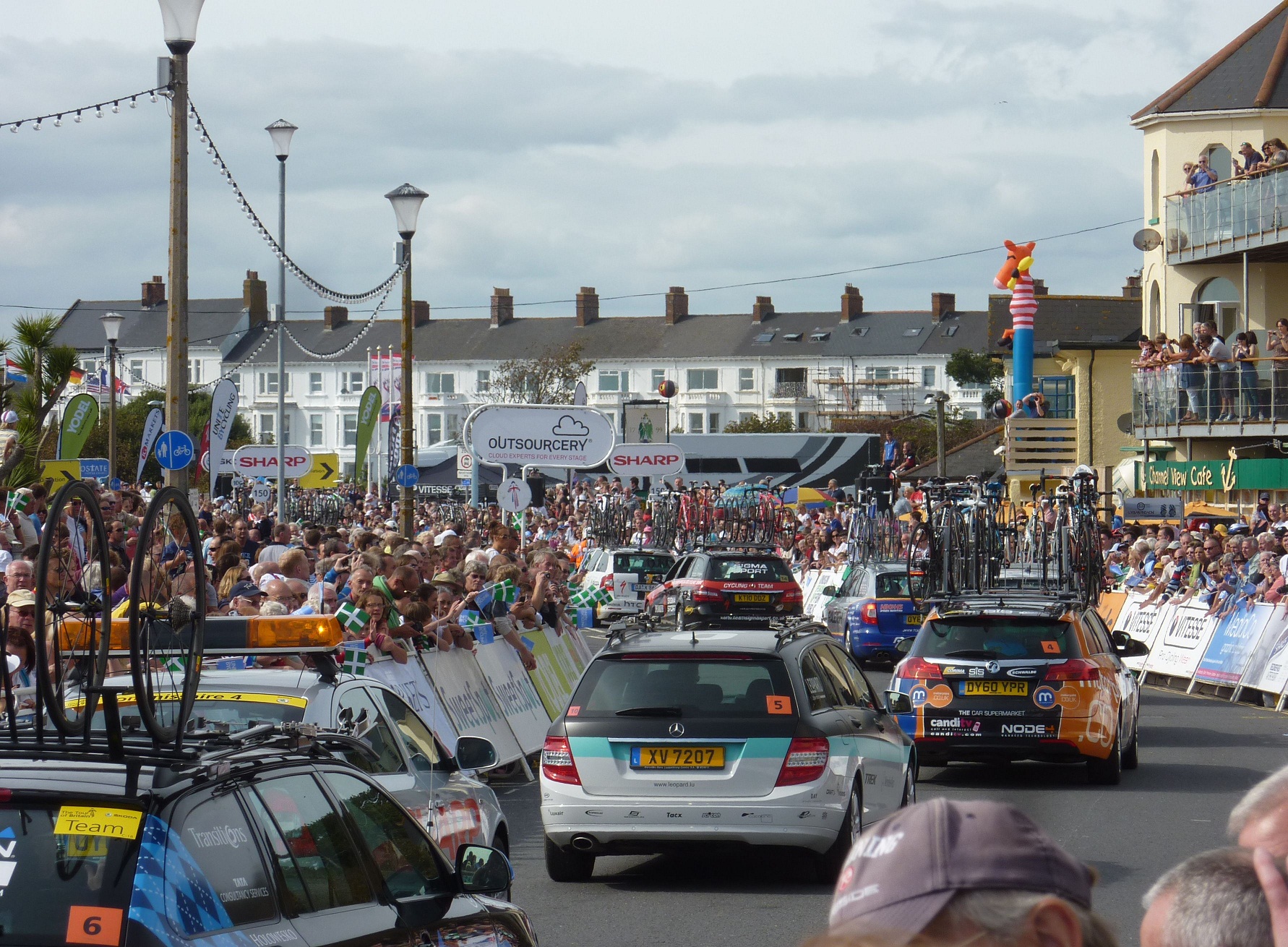
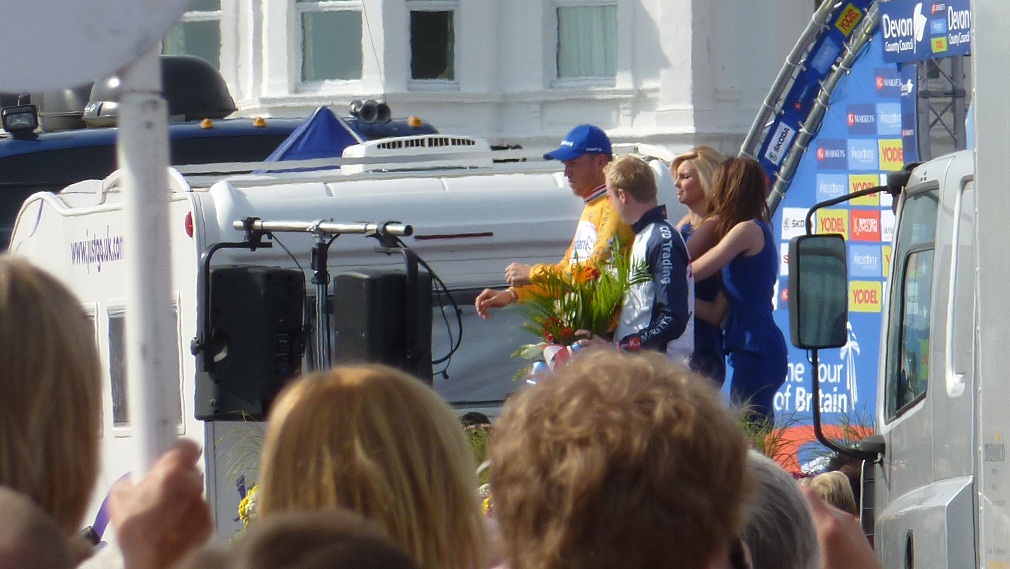
There were big crowds in Exmouth today for the Devon stage of the tour of Britain cycle race, which finished on the esplanade. The stage was won by Mark Renshaw, just ahead of team-mate Mark “Cav” Cavendish. Some other cyclists also finished the race, or at least came cycling past were I was standing, some 200m from the finish line. I’ve included some cutting edge pictures below, one of which is of a spider.
-
- Here they come…

-
- Here I’ve cleverly ignored the leader in order to focus on Mark “Cav” Cavendish
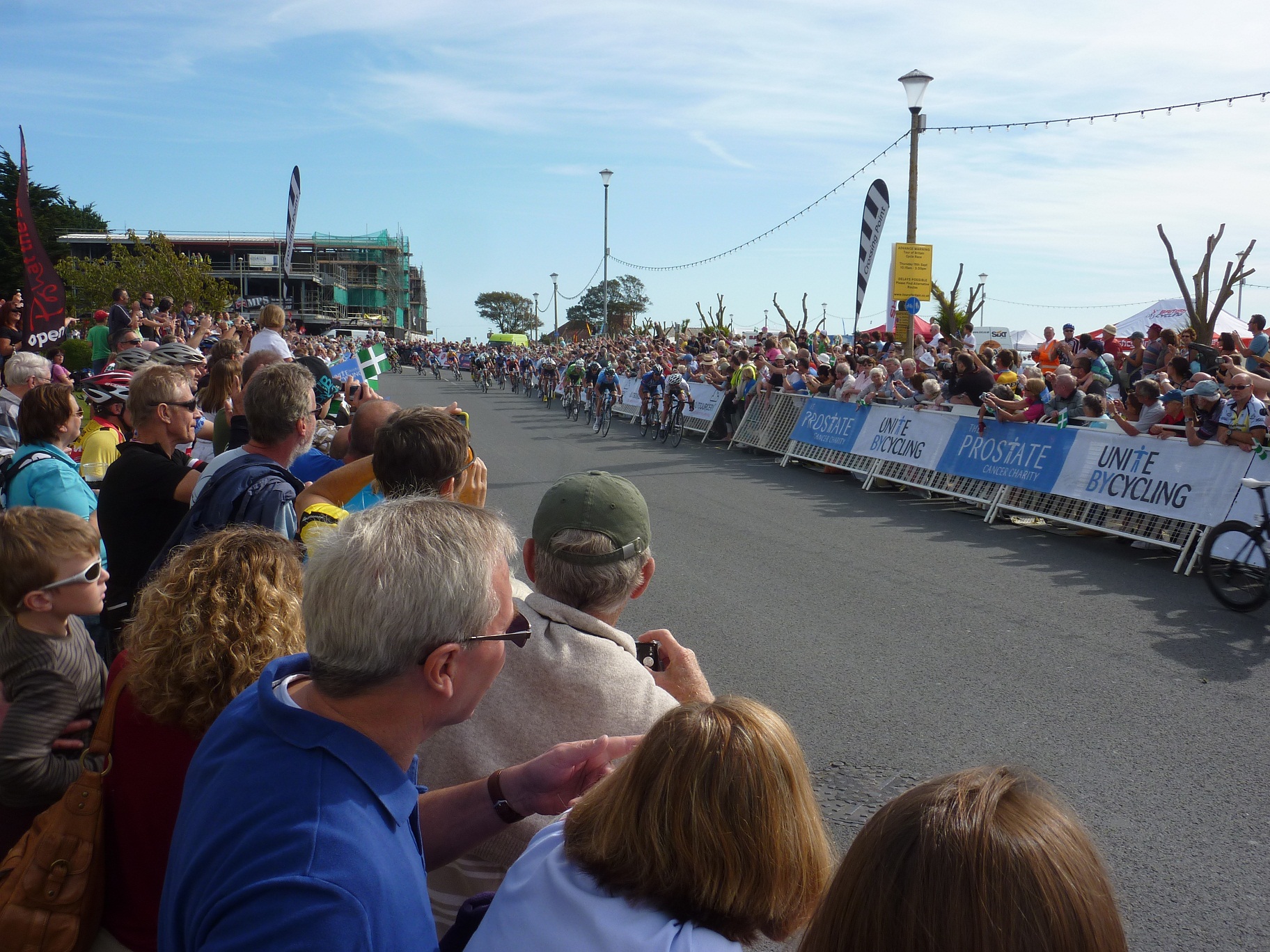
-
- The riders go by in about 2 seconds, then we get to watch cars with bikes on their roofs. Great.
-

- Lars Boom has some help to apply the yellow leaders vest thing
-
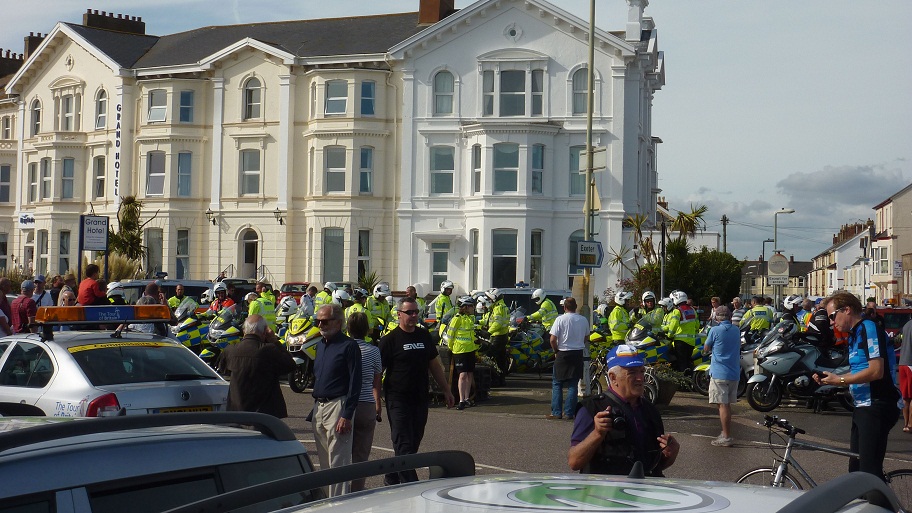
- The event happened to coincide with a police bikers convention
-
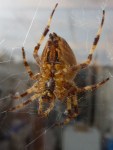
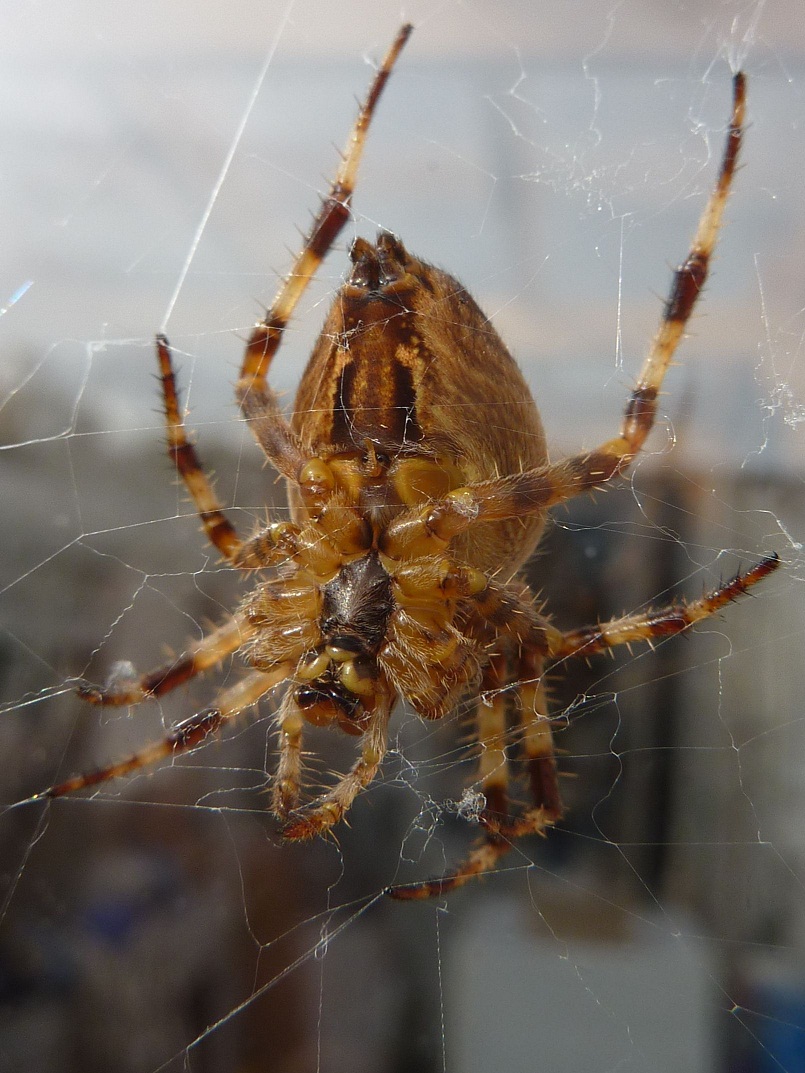
- In other news, our gorgeous friend Araneus diadematus has turned around
A quick update on the choughs
The news is that Whitebrown and Brownblue were being seen regularly near Land’s End with their three boys (Orangered, Orangelime and Orangegreen). There are some photos of the birds on the Cornish chough blog here and here. However, recent sightings now put at least two of the new boys (Orangelime and Orangegreen) up near Newquay/Watergate bay, having travelled up there with a male and female youngster from the other Penwith brood from this year. With Whitebrown and Brownblue being young enthusiastic parents it doesn’t surprise me that the boys have quickly started to travel long distances from home. I just hope that they have a safe winter.
A day out on Aylesbeare
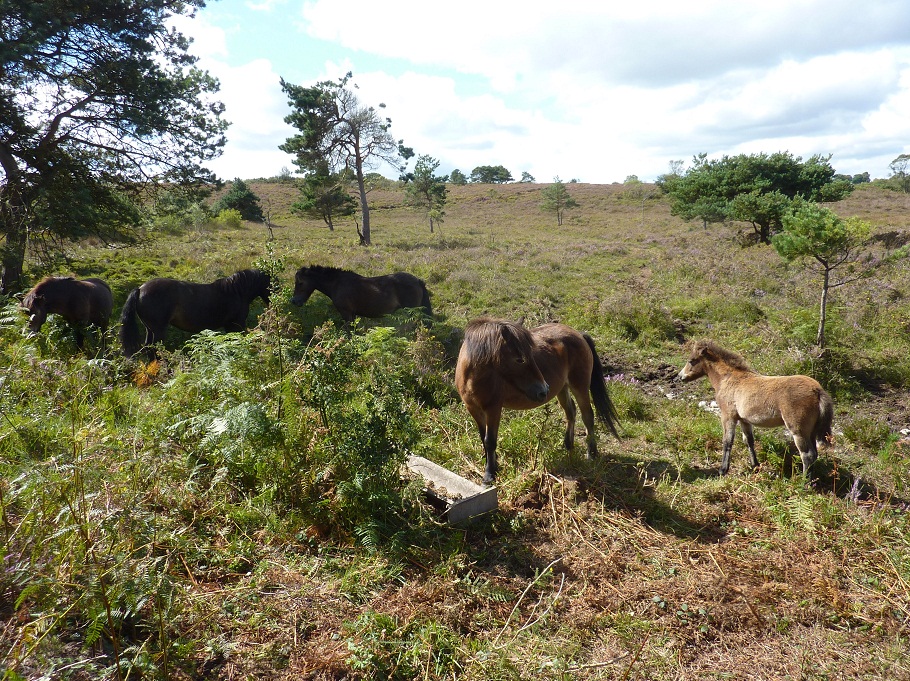
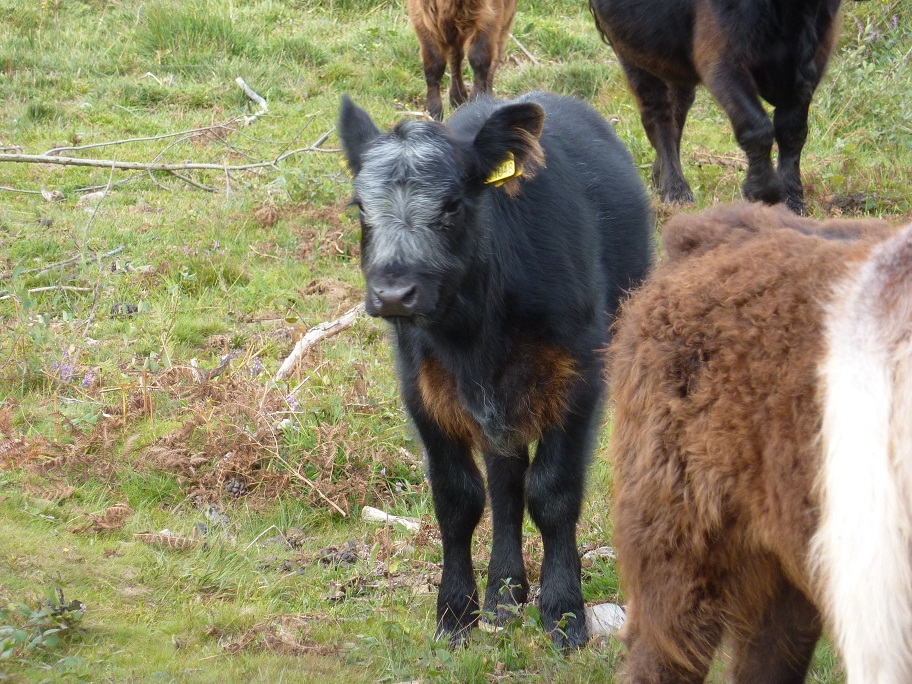
In order to catch up with Tom and Damian from RSPB Aylesbeare (who came out to Dartmoor to help out on the Red Backed Shrike project), I spent today with them as they went round the reserve sites feeding the stock. Putting (Galloway) cattle and local horse breeds out is an environmentally appropriate way to manage heathland. This reduces the need to remove scrub during the winter using powered machinery and burning, and therefore cuts down on emissions and the impact on the ground (contrary to some misinformed local opinions). Now, if you’re going to ask me about whether some of these areas should be heathland, well, that’s a debate for another day.
-
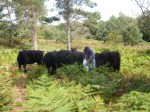
- Tom and some cows

-
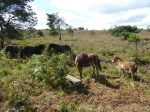
- Ponies on Aylesbeare common
-
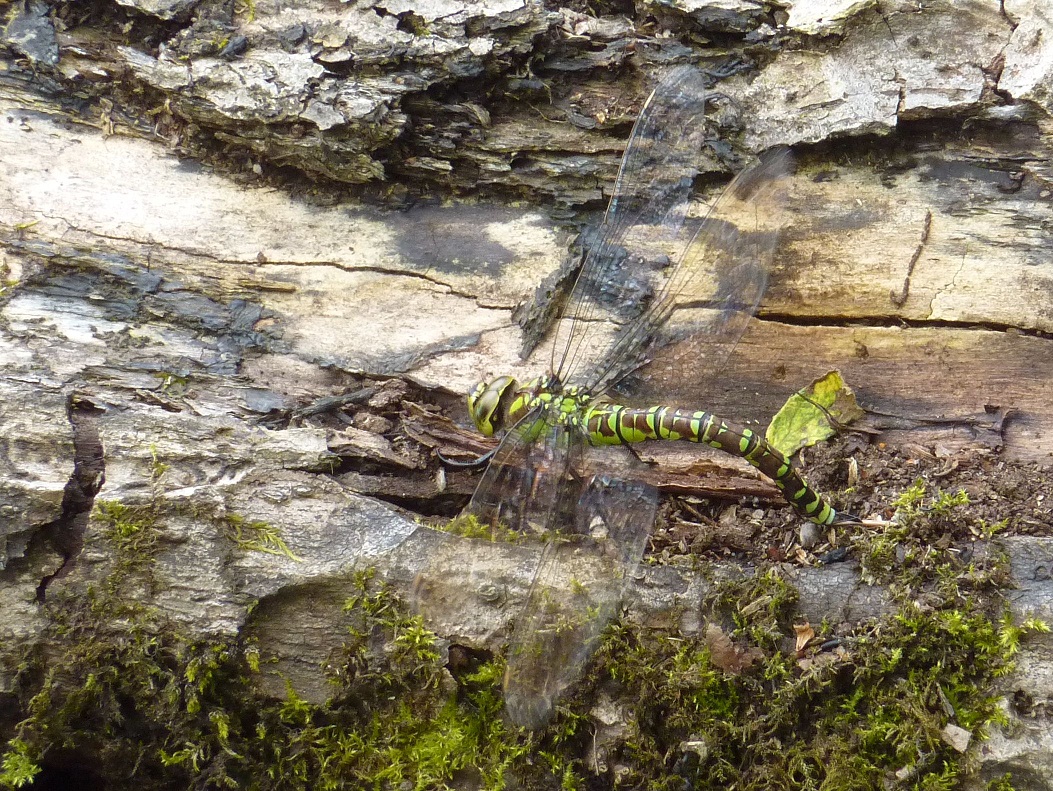
- Southern hawker dragonfly (Aeshna cyanea)
-
- Looking towards Sidmouth from Fire beacon hill

-
- More of Devon, looking West

 Life since the office
Major endorsements